Tag Archives: Church

We finally understand the Hosannas

GOSPEL: Matthew 21:1-11

…8A very large crowd spread their cloaks on the road, and others cut branches from the trees and spread them on the road. 9The crowds that went ahead of him and that followed were shouting, 

 “Hosanna to the Son of David!… (Read the whole passage)

There is something somewhat alien about the gospel lesson today. 

Crowds. Big gatherings of people. Mobs and masses lining the road that leads into the Jerusalem. People touching each other, jostling for a better view, putting their clothes down on the road. Our COVID-19 captivity is only a few weeks old, but this scene from the triumphal entry does not match the world that we know. 

I am still preaching to a camera in an empty building. You are all not sitting in your normal pew, but gathered around screens big and small to worship. And people closer to home are joining us for worship from across the country and across international boarders. 

And likely none of us have seen a group of people standing close together if we have seen a group at all. 

Today we enter into Holy Week, the most important week of our liturgical year and in our life of faith as the Body of Christ. It is also one of the most ritualized times for the church. We usually gather with palm branches and process into the sanctuary, and we hear the passion story from Matthew to begin our Holy Week observance. On Thursday we usually gather to remember the Last Supper by sharing meal together. On Good Friday we usually go to Golgatha with the same hymns and readings each year. And on Sunday, we usually welcome the news of the risen Christ with the same easter breakfasts, sunrises services, trumpets and celebratory Easter hymns that we have sung for lifetime. 

Except it won’t exactly be like that this year. 

This year we will do some of those things, adapt others, and postpone more until we can meet again in person. 

Yet, despite out isolation and our inability to congregate, despite the lack of crowds, there is also something about Palm Sunday that is more familiar and understood than ever before. 

I think today we get the Hosannas. 

So often we mistake the Hosannas for Alleluias. Exclamations of Praise and Thanksgiving. But Hosanna does not mean “praise the Lord” or something similar. Hosanna instead means something very different. 

Hosanna means save now. 

Salvation Now. 

Save me now. 

Hosanna. 

And doesn’t that change the whole moment?

Crowds lining the road, calling out to the one riding into Jerusalem, and asking for, begging for salvation. Hoping that this Messiah, this saviour is the one who will come and fix their problems, end their troubles, defeat their enemies, take away their helplessness. 

Even as we are relegated to our homes, to physical distancing and isolation, we know what it is like to cry out next to our neighbour for healing, hope or salvation. We have been crying Hosanna online, in emails, in phone calls and texts. Crying Hosanna because we feel helpless, because the thing that we have been told to do fight this pandemic is nothing. Stay home, stay small, pull back from regular life. A helpless, small feeling indeed. 

Before this pandemic moment, I had always assumed that everyone lining that road into the city knew what each other meant. It always seemed that those crowds were asking for salvation from the same thing. 

But if there is anything that the anxiety, worry, fear and uncertainty that this COVID-19 global health pandemic has revealed, it is that we can all be calling for salvation at the same time, while having very different and varied ideas about salvation means and looks like. 

In fact, the thing that brings us together, that probably brought those crowds together on that road, is the collective action of calling out as one body. Even as what salvation looks like for each voice may mean very different things.

In a helpless situation – COVID-19 today, oppression by a foreign and powerful empire 2000 years ago – we all search for something to hold on to, something that we can do to stop feeling helpless, something that gives us even the smallest sense of control. 

For us these days, it is calling for masks, finding loopholes to leave our homes, demanding the government act to protect jobs and businesses and economic sectors. 

For more COVID-19 testing, for more data and projections, for closing borders. 

For keeping borders open, for more health care staff and beds, for places other than hospitals for COVID-19 patients to be sent to. 

For flights home for Canadians abroad, exceptions to disembark quarantined cruise ships, exceptions to visit the elderly in care home.  

For closures, lock downs and shelter-at-home orders to keep everyone everywhere physically distanced. 

And on and on and on. 

We are all crying out for something, all shouting Hosanna these days. But Hosanna from or for what? Well, that depends on who you ask. 

And those crowds with palm branches lining the road into Jerusalem had equally chaotic and contradictory reasons to shout Hosanna, expecting salvation for different reasons and to come in different ways. 

So today, we get the Hosannas maybe more than we ever have before. We get something now that most people throughout history understood and felt every day of their lives… that the world is more dangerous and more precarious place than we have known for the past 70 years in North America. 

A world were most people feel pretty helpless against the dangers of the world. 

And today, Jesus just rides a donkey right into the middle of it all. Jesus just rolls on in to the chaotic, unsafe, and terrifying world that God’s people seem to be living in, that we seem to have fallen into like a bad dream. 

Just as Jesus rolled up to the river Jordan. 

Was driven on into the desert.

Met Nicodemus in the middle of existential crisis. 

Strolled up to the Samaritan woman at the well. 

Happened upon the blindman. 

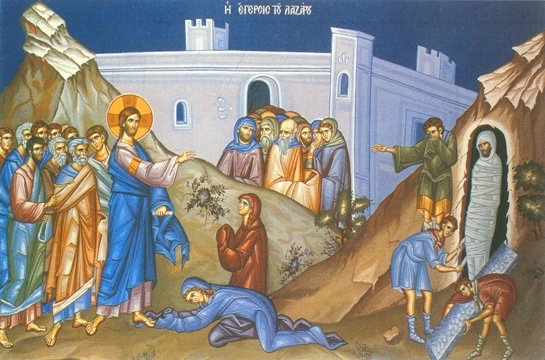
Walked the road to Bethany with Mary, Martha and eventually Lazarus. 

Just like he has always done, today Jesus is entering straight into the middle of human messiness and suffering, chaos and loaded expectations, desperation and struggle, sin and death. 

Just just rides right into the middle of it, with a mob wanting him to fix it. Fix it all. 

Hosanna – save now. 

And Jesus heads right on in to do that. 

Right to the middle of the pandemic of sin and death. Right to the middle of the mobs demanding action from the leaders and rulers, right to the leaders and rulers brushing their problems under the carpet or on to the cross. 

Just heads right on in. 

Even as we brace ourselves for the worst weeks of this crisis ahead of us. 

Jesus is riding right into the middle of our pandemic. 

Jesus is crossing borders in trucks loaded down with much needed medical supplies and equipment. 

Jesus is standing at grocery store check outs for hours on end, even as angry customers refuse to physical distance properly.

Jesus is teaching students from virtual classrooms, meeting with patients over the phone, giving concerts on Facebook live, taping messages of hope to windows, ringing bells at shift change. 

Jesus is rolling into a quarantined hospital rooms with a reused N95 mask on.  

Jesus is keeping vigil in an outbreak ridden personal care home. 

Jesus sitting at the bedside of the dying, when no one else is allowed to be present. 

Jesus is heading into the middle of pandemic and chaos, straight to betrayal, arrest and trial. 

And Jesus is on his way to the cross. 

To the thing that no one had in mind when they cried Hosanna. That none of us has in mind when we cry Hosanna. 

No one but God. 

And there in the middle of our Hosannas, Jesus will confront the thing that fuels all our fears, the thing that puts us one edge, the thing that we are utterly helpless to prevent. 

Death. 

Jesus takes our Hosannas right to death. 

And the thing that we fear, the thing that is underneath all our varied Hosannas. 

Well Jesus will deal with that thing.

Jesus will confront and transform death into something new. 

Something unexpected. 

Something found in empty tombs, in upper rooms, and long walks between cities. 

Something that that we cannot see yet from Palm Sundays on crowded streets, or crowded Facebook pages and live streams.

Jesus will transform death itself into the answer for our Hosannas.

Jesus is riding into the middle of Jerusalem, into the middle of pandemic, right into death itself.

And will bring our Hosannas and us with him.

And will bring all of it and us to new life. 

* This sermon was prepared in collaboration with my partner in life, ministry, and parenting, The Rev. Courtenay Reedman Parker

Lazarus, COVID-19 and the Thing we are All afraid Of

The sermon starts at about 23:00 mark

GOSPEL: John 11:1-45

1Now a certain man was ill, Lazarus of Bethany, the village of Mary and her sister Martha. 2Mary was the one who anointed the Lord with perfume and wiped his feet with her hair; her brother Lazarus was ill. 3So the sisters sent a message to Jesus, “Lord, he whom you love is ill.” 4But when Jesus heard it, he said, “This illness does not lead to death; rather it is for God’s glory, so that the Son of God may be glorified through it.” 5Accordingly, though Jesus loved Martha and her sister and Lazarus, 6after having heard that Lazarus was ill, he stayed two days longer in the place where he was. (Read the whole passage)

Sermon

Today is the final Sunday in the season of Lent. This means we stand on the precipice of Holy Week. And unlike the predictions of some world leaders out there, we will NOT have full churches on Easter Sunday. 

In fact, the calendar may say that Lent is ending, but it feels like our wilderness journey is just beginning. The school and public services closures that were predicted to last weeks, are now being planned for months. Business are shuttering their doors, the economy is suffering even as the government plans significant supports for businesses and employees alike. 

And then there is the truly grim news, reports of more and more confirmed cases of COVID-19. Followed by equally hard to hear news of deaths resulting from the illness.

Our Lenten journey began in the wilderness with Jesus, then moved to the nighttime with Nicodemus. Then into the daylight with the woman at the well, followed by the blindman last week. 

Today, Lent gets a little more real. We have been headed here since Advent and Christmas, but we have been able to skim over the real issue for weeks. The themes and images of Lent:  desert and fasting, existential questions in the night, social isolation at the well, a community in chaos around the blindman who could now see… they have all skirted the real issue. The real issue that we face today and that will confront us through Holy Week. 

It is of course the thing that the whole world has been thrown into chaos over. It is the real thing that all the social distancing measures are about, the real reason why we are trying to flatten the curve. 

In fact words the words Coronavirus and COVID-19 have become euphemisms, words that hide the real thing we are talking about. 

Jesus says it out loud to his disciples as they plan to go to to Bethany. 

“Lazarus is dead.”

Death. 

Once you make the connection it is unmistakable. Nearly every time you hear the word coronavirus or COVID-19 in the news, replace it with the word “death” and you will be able to see what the panic and fear is about. 

But it isn’t just physical death. It is the death of what once was, of what we used to be. The world has changed, and we can feel it. Things won’t go back to what the once were, this won’t be just a little 3 week enforced staycation… this is a game changing moment for all of us. 

I once heard an Old Testament scholar describe his experience of receiving a cancer diagnosis. As he sat in his doctor’s office and received the news, it felt like the soundtrack of his life was turned off. All of his dreams, hopes and plans that filled the world around him just disappeared. And there was nothing, silence, emptiness. 

Modern people he said, “fill the sky with ourselves.” We loom large in our own little existences. And God…God is far away. 

Yet, for the ancient people of the Old Testament, they didn’t see themselves in the same way. They were small. God was big, God filled the world.

And yet these days our soundtracks have been turned down, if not off completely. We have been compacted into our homes. Our hopes and dreams and plans put on hold, or (Hashtag) #cancelled. 

We are being made small by a thing that we cannot see, but that we know is there. 

As Jesus makes his way to Bethany, Martha comes and meets him on the road. And her soundtrack had almost certainly been turned off by the grief she was experiencing. Her life put on hold by the death of her brother. But perhaps more significantly, I wonder if her experience of God was turned down too. With her brother dead and buried, the God of Life that was supposed to fill the world probably seemed distant or not there at all.  

Martha says something that many of us may probably feel. 

“If you had been here, my brother would not have died.”

She wants to go back. Back to the before time, back to when the soundtrack was on. She wants her brother back, she wants her own life back. And she knows that Jesus, that this one sent by God, could have done something. 

Jesus and Martha talk, Jesus promises her bother will rise again, but Martha doesn’t hear it the way Jesus means it. She knows the promises, but they seem far away. Something for later, not something that matters in the present moment, not when there is a fresh body in the grave. 

Then Jesus meets Mary on the road. She too knows that Jesus could have done something, yet she seems more resigned to the moment, there is nothing left for her but grief. And so Jesus joins her as he can, weeping with her even knowing what he is about to do. 

There is something so very tangible about this scene from the Gospel of John. Those who have grieved a loved one already know it. But as we all face the uncertainty of pandemic, as the days and hours slow to a crawl and the world becomes more and more silent… we know in a new way what that walk to Bethany was like. 

We might want our soundtracks to fill the sky again, or we might be resigned to our unknown fate with nothing to do but weep. 

But we are are walking to Bethany today, and will keep walking for the foreseeable future… 

Yet, even as God feels far away or gone altogether… Jesus does not abandon us to the silence. 

Even as we feel small and compacted, surrounded by silence and fear, Jesus doesn’t leave us to wither. 

But Jesus doesn’t just show up at the end. 

Jesus walks the Bethany road with these grieving sisters. 

Jesus walks our down our road of social isolation and pandemic with us. 

And Jesus speaks the promise of God to Martha, the imminent promise of new resurrection and new life… even though she cannot hear or comprehend it. 

“I am the Resurrection and the Life”

Words spoken to Moses in burning bush, words spoken to disciples fearful of the storm. 

And Jesus weeps with Mary, because the experiences of this life cannot just be glossed over with a happy ending. They change us, and so God weeps with us, God sits with us, feels with us, loves us in the midst of all the things of this life. 

Jesus doesn’t just skip to end, but walks the road with these sisters, with his disciples, with us. 

And only then, once they have walked the road Bethany, once they get to tomb, Jesus shows Mary and Martha that the promises of God are not far off. 

And still, as Martha protests because she can still smell death in the air. 

And still, as we can hear and see the news, as we feel small and helpless… 

Jesus shows us that the promises of God are not far off. 

Jesus has stone rolled away.  

Then with the same voice that spoke over the waters of creation, 

the voice that speaks over the waters of baptism, 

with this voice Jesus calls the dead man from his grave. 

“Lazarus, come out!”

And out walks death itself.

“Mary and Martha, come out!” 

Except it isn’t death. 

“My beloved children, come out!”

It is life. 

And the promises of God are revealed.

This isn’t going back to the before time. This is the new thing that God is making after. 

This is the promise that is revealed on the third day. This is the empty tomb discovered by the women early on the first day of the week. This is what comes at the end of the walk to Bethany. 

And we are still on our walk to Bethany. 

We are still looking back to the before time. 

Yet Jesus declares that I AM’s promise of resurrection and life are closer than we can comprehend. 

And we are weeping, resigned to an unknown future. 

Yet, Jesus weeps with us, neither abandoning nor forsaking us, but showing us God’s love poured out for us.

And today, Jesus promises, that our Bethany road, our COVID-19 road, our road of life will come to an end too. 

And Jesus will call out to us, 

My children, come out!

And we might see and hear and smell and feel like death. 

But New Life will surprise us, the God of Resurrection will surprise us, 

By filling our skies anew, not with our own hope, dreams and plans,

But with the grace, mercy and love of God that meets us on the way.

Amen

Worship in the age of COVID-19 – Coming Together to Stay Apart

***This sermon can be viewed as a part of streaming worship on my congregation’s Facebook page: http://www.facebook.com/sherparkwpg. ***

The Sermon starts at about 20:30 mark of the video

GOSPEL: John 9:1-41

...6When he had said this, he spat on the ground and made mud with the saliva and spread the mud on the man’s eyes, 7saying to him, “Go, wash in the pool of Siloam” (which means Sent). Then he went and washed and came back able to see. 8 (read the whole passage)

Okay…

So if you are feeling like this is a little weird raise your hands. It’s weird to be watching me on your phone, tablet, or computer, rather than sitting here in church, in your favourite pew with family and friends. 

It is weird for me too. Weird to be standing in a empty church, having worship with what feels like myself. I am talking to my phone like it is a person. 

But here we all are, on our own or with just immediate family. And for most of us, we probably haven’t spent much time with others during the course of the past week. The last 10 or so days have felt like the world has been turned upside down. It started two Wednesdays ago, I was watching the Oilers play the Jets (cheering for the Oilers, of course) when it was announced that the NBA had suspended its entire season. There was this feeling that things were going to change. 

Today, so many places are closed, public spaces, private businesses, schools and churches. Stay home as much as possible is the advice, the instructions from our leaders and public health officials. 

And so we are doing it for the sake of one another. We are staying home in order to keep our neighbour safe. Because any one case of COVID-19 might just be like a mild flu, or uncomfortable few days. But it can be deadly for the most vulnerable among us, the elderly and those who are immunocompromised. And too many of those cases at once can overwhelm the health care systems, as it already is in places like Italy. 

And so we stay home, and stay away. As as I like to put it, we are coming together to stay away. 

We are moving our social interactions to the phone, texts, emails and online. Someone tweeted a few days ago, “I didn’t expect to be giving up this much for Lent.”

And it is like a Lenten Fast… one that I hadn’t even really imagined was possible only 3 weeks ago when Lent began. We are fasting from in-person community, fasting from each other. 

Here in the church, we are fasting from the body of Christ. Fasting from being part of this community that gives us our identity as we gather week after week for worship. 

And we are also fasting from the Body and Blood of Christ. Not by our choice, but fasting none-the-less. It is weird how the Body of Christ that is the church is all mixed in with the Body Christ that is the Bread and Wine. Fasting from one means we fast from the other. 

So we look forward with joy to the time when we will gather, in-person, again to received one another as the body of Christ and to receive the Body and Blood of Christ – which is all mixed together into one. As my liturgy professor liked to say, “Swirling around the Cup are your siblings in the Body of Christ.”

As we continue our lenten journey in this new experience of worship, we have come a long ways. From the Valley of Ashes, to the desert with Jesus, to Nicodemus asking questions in the night, to the Samaritan woman at the well. Today, we hear the familiar story of the nameless blindman. 

The blind man who wakes up one day only to have Jesus stroll into his life, and turn his sight on. Instead causing a celebration in his community, it throws the people around the blindman into chaos. They want to know who did this to him, who just changed his fortune, his role and place in the community. You see as a blind person, he was the charge of the community to care for. It may have been pitiable, but he had a place in the social order. 

But Jesus threw that out window. 

And the religious leaders are angry, his parents are frightened, the community confused. 

Of course it isn’t about the man’s blindness. It is the disruption he represents to his community. If he could wake up one day and have his place in the world changed like this, could it happen to the rest of them?

This story takes on a whole new way of describing our world right now doesn’t it?

We are communities in chaos, communities wondering about what might happen to us, if we might wake up one day to find our world just tossed out the window. 

And in the midst of this chaos, it is hard for us to slow down and listen. The people around the blindman don’t really stop to hear his story, they want to know what or who caused this seemingly arbitrary change of fate. They are worried about comes next for them. They are seeking to find some way to control this agent of change. 

We are worried too about what comes next for us, and that makes it hard for us to slow down and hear each other’s stories. We are only looking for the data, the information that might give us some control over the forces of our world that affect us, changing everything we know. 

And interestingly the community in chaos stays in chaos, even at the end of this story. The blindman receiving his sight has changed them forever. 

But then Jesus comes back. 

He finds the blindman, or formerly blindman, again. 

Now remember the man had been blind from birth. Even as he was questioned by his community, he wouldn’t have known who he has talking to. Maybe he recognized voices, but he wouldn’t have known who, or even what, it was that he was looking at. 

So when Jesus comes back, he slows down. He asks the blindman what he believes, what he knows. And then he introduces himself. 

The very first person that the blindman comes to know by sight is Jesus. Because Jesus slowed down enough to know the blindman… first at the beginning and now at the end. 

In this new mode of existence, new way of being in the world, the first person that the blindman knows is Jesus. Even in the midst of the chaos of the community, even as people are fearful and panicking about what may come next, Jesus comes back for the formerly blind man, comes back to continue the transforming work of bringing the gospel to life. Not because the blindman had newly functioning eyes, but because this man now knew the Messiah, the one sent by God to save. 

And so it is with us. 

Even in the midst of our community chaos, even as we don’t know what might come next for us. 

Jesus is coming back for us. 

Even as this world terrifies us and we don’t feel like we recognize anything anymore. 

Jesus is coming back for us. 

Jesus is coming back for us, but also doing what Jesus has always been doing in us. Helping us to see anew, just who God is and where God is at work. Doing the work of transforming us for God’s new world. 

Jesus is helping us to see that new life comes in unexpected places, opening our eyes to know that even in the midst of the chaos, that new life comes into being, that Messiah is working to transform us and this world. 

So yeah, today is a weird day. 

The beginning of something we haven’t see before. And we don’t know what is coming next. 

But Jesus is strolling into our lives as well, right when we lest expect it. And Jesus will introduce himself to us, letting us know that he is the first person we will meet in God’s transformed world. 

Letting us know that we are not left on our own, but brought into the Body of Christ, scattered today, but still at home in God.

Amen

HOW TO CLOSE YOUR DOORS AND STILL BE CHURCH: COVID-19 Pastoral Letter

Here is a Pastoral Letter that I shared with my congregation, which you are welcome to adapt and use in your congregation in the face of suspending public gatherings.

Dear friends,

Grace and Peace to you from our Lord and Saviour, Jesus who is the Christ.

I am sure you have been listening to and reading the news. Each day brings more restrictions on our daily lives. School classes suspended, more workers working from home, the closing of public places like libraries and recreation centres, and now restaurants and bars in some jurisdictions. 

I am sure you feel anxious and nervous as I do. We don’t know what is coming next for us and we don’t know how long we will be here. 

Here at the church, we are not immune to the changes either. Our leaders have been offering guidance over the past number of days, as the Bishops distributed pastoral letters that encouraged us to change our behaviour and worship to limit the spread of COVID-19, particularly to those who are most vulnerable. 

As this Pandemic situation progresses, we are learning that this is not enough. That the best way to combat the spread of the coronavirus, is to practice social distancing. And the best way to social distance, is to stay home as much as possible.

Following the recommendations of our Bishops, with the care of one another first and foremost in mind,

The time has come for us to enact a suspension of all our public, in-person gatherings. 

Beginning immediately, there will be no public events at the church, no committee meetings, or other types of gatherings with many people in attendance. Our worship services will be moved entirely to an online streaming format. Our meetings as they are needed, will be done over zoom. 

We do not know for how long these measures will be enacted, but at a minimum we will not be worshipping until Holy Week and anticipate the suspension lasting longer. 

It is a hard decision to make. Gathering as a community is so central to our identity as people of faith. I already am missing seeing you and it is only been 48 hours since we last met. And yet, suspending our in person gatherings does not mean we are closed, does not mean we are no longer a community, does not mean that we stop being the church, the body of Christ. 

So what can we do?

Streaming 

Well, as has already begun last week, worship services will be streamed on our Facebook Page. Anyone can access our Facebook Page, even if you don’t have a Facebook account. www.facebook.com/sherparkwpg.

Our Sunday morning, services will continue to begin at 10:30am. 

Mid-week Lenten services will continue on Thursday evenings. 

All streamed services are available afterwards, so if you are late there is no worry, you can still start from the beginning. 

Giving

As I mentioned in my last Pastoral letter, this will be a time when so many will have affected incomes, including the congregation. 

I encourage you to continue to give to support the church. 

I will do my best to maintain a presence in the office, and to make the church available for drop-offs. 

Additionally, the mailbox will be monitored daily. So offering can be mailed or dropped of (Remember no cash, just cheques). 

You can also consider donating through our PayPal account, which is found at www.sherpark.ca/donate

There you can make one-time donations, or set up a recurring donation. 

Finally, many of you already give through Pre-Authorized remittance. Consider increasing if you are able. Get in touch with the church office and our treasurer team if you would like to begin. 

In this weeks and months in particular, those with fixed incomes will be an asset to the congregation,  beyond.  

But giving offering isn’t going to be the only way to give. 

Caring

There are many in our community who will be affected by this time of social distancing and isolation. 

Those who use the services of the food banks and shelters that we support will need extra support. So Consider dropping off extra food a supplies if you are able. Call head or make an appointment to come at a time when someone can be here to receive the items. 

Others will be without transportation, many will be self-isolating because of age or compromised immune systems. Consider helping by picking groceries, perscriptions and supplies. Get in touch with the church if you need help in this way or can help in this way. 

Checking-In

Finally, we are community. We are connected and belong to each other, even if we aren’t gathering. Phone, text, email, Skype, FaceTime, write letters. Being at home doesn’t mean we cannot connect. 

If anyone would like a regular phone call or check-in, let me know and we can make arrangements!

We are living in strange and unprecedented times. No one knows where will be next week, next month, next year. But we do know that this is going to change us. Our part is to let that be a change for the worse or the better. 

Thankfully, we also have a God who has something to say about this time of hardship and suffering. The isolation and distance will not define, we will remain children of God. The possibility of sickness will not change to whom we belong. The One who names we bear will always be the one who brings us from death into life, from seemingly hopeless graves to rolled away stones and upper rooms. 

We are Christ’s. No virus, or enforced time alone will change that. 

And so Almighty God

Father, Son, and Holy Spirit

Bless, preserve and keep us

This day and forevermore 

Pastor Erik+

A Pastoral Letter During the Days of COVID-19 – How Churches Can Respond

Here is an adapted pastoral letter that I sent to my congregation, which hopefully will give you some ideas of how to respond to the COVID-19 Global Pandemic:

Monday, March 16th, 2020

Dear friends in Christ, 

Grace and Peace to your from our Lord and Saviour

As each day brings us new changes and adaptions to our lives as our community, nation and world attempts to combat the COVID-19 Pandemic, it is very easy to be overwhelmed by it all. 

Everything and everyone feels hysterical. As the world closes down, people also rush to find ways stock up on provisions and supplies, including an abundance of toilet paper!

Let us be mindful of the urging of Public Health Officials and leaders to remain calm. Nearly all changes being made to how we conduct our lives are precautionary and preventative. They are efforts to slow the spread of the virus so as not to overwhelm health care workers and hospital capacities. 

Churches are also adapting and changing as seems prudent. 

Church Services Streaming and Online

On Sunday March 15th, we began live streaming our worship in addition to our in person gathering. Many Churches already live stream, and many began last Sunday too. 

(You can access our live stream from our Facebook Page www.facebook.com/sherparkwpg )

NOTE: You do not need a Facebook account to access a Facebook page, just an Internet capable device. Anyone can watch!

For those who know members who aren’t online, help them to get online as much as possible. Now might be a good time to teach email, basic social media, video calling and more. At the very least, share with them the information that the church is sending out during this time!

Alternate Ways to Give

As is being regularly reported, there are going to be economic effects to the closure and shut down of many places that rely on the public to gather. Many small business will suffer lost income. As we all try to stay home more, consider ordering delivery or take-out, consider calling local stores to see if they will deliver their wares to you, consider supporting businesses in whatever way you can. 

The church will also be affected, as services anticipate smaller numbers for worship, or the likelihood that public gatherings will be suspended (in person). Please consider as you are able, ways that you can continue to give and support the churches during this time. 

And many churches will try to keep their offices open as much as possible: checking phone messages, picking up the mail and being present. Consider dropping off or mailing in offering. Consider sending post-dated cheques if possible. 

Many churches also have ways to give online. A good time to begin using online tools! 

Thank you to those who are already giving through Pre-Authorized remittance, that choice will make a significant difference in the weeks and months to come. 

Changes to services and programs 

Expect that the churches will have changes to programs and worship services. It difficult to imagine, hard to change and anxiety inducing. But it doesn’t mean churches are closing. We still belong to each other and we still belong to God.  

Community Care Plans

In the coming days and weeks, we will have the opportunity to care for one another. Churches are unique communities who already practice communicating and organizing on a large scale. We can work together to help out those in need, delivering supplies, picking up mail or offering etc…

If you need help with getting groceries or other supplies, please email or call the church. If you can deliver or pick up things, let the church know so that you can be connected with those in need. 

As well it will be important for us to remember those in need to continue supporting the food bank programs that the church supports. Many churches will be making plans to collect extra food and supplies to be passed on to food banks.

Finally, I offer this prayer for our use at this time:

We pray to you almighty God, in this time of anxiety and apprehension. You are our refuge and our strength, a very present help in time of trouble. Do not let us fail in the face of these events. Uphold us with your love, and give us the strength we need. Help us in our confusion, and guide our actions. Heal the hurt, console the bereaved and afflicted, protect the innocent and helpless, and deliver any who are still in peril; for the sake of your great mercy in Jesus Christ our Lord.
Amen.

From Evangelical Lutheran Worship Pastoral Care

Yours in Christ, 

Pastor Erik +