Category Archives: Theology & Culture

The (lack of) moral authority of being a white male

The past few weeks have been hard to find motivation to write. This post was supposed to be about ‘being spiritual but not religious’ (that will come later), but it seemed like a trivial topic when considering events in Baltimore, events here in Winnipeg – the city where I live – and other issues of systematic oppression of non-white people in North America.

I will be honest, I don’t think it actually helps for white, male bloggers like myself to weigh in much on these issues. As a couple of other bloggers I respect, Mark Sandlin and David R Henson, point out in their Moonshine Jesus podcast, that there is a certain irony and hypocrisy in white males talking about race issues.

Baltimore is just another in a string of incidents (Ferguson, Staten Island etc…) that has brought to public attention the systematic discrimination of African-American people at the hands of the police, the judicial system and by legislators. And while it would be easy to wag my finger from Canada at these American issues, Desmond Cole recently published a scathing editorial recounting how he has been stopped by the police in Toronto more than 50 times, simply for being black. Not too long before that, a national magazine named the city I live in – Winnipeg, Manitoba – as the most racist city in Canada. Winnipeg is at heart of the Missing and Murdered Indigenous Women movement, we have recently had a serial killer (seriously!) arrested for murdering vulnerable indigenous homeless men and we have a number of incidents involving the violent assaults and deaths of young indigenous girls, some in the care of the government.

As all these issues swirl about the news cycle and water cooler, I cannot help but have the sense to let those closest to the issues (not this middle class white guy) speak to them.

And sure, it is uncomfortable because listening and learning can feel a lot like doing nothing at times.  But I also know just how important it is to refrain from speaking authoritatively about these realities (I am hoping that statement doesn’t make this whole post ironic) and instead listen and model listening for other white people like me.

It also uncomfortable to go against my social conditioning as a white male to contribute to the conversation, to make my voice heard, to speak out because my voice “counts”.

So with all my hesitation and discomfort around the issues that concern my white male privilege (ironic to say that this causes me discomfort, I get it), there have recently been a couple of things in my professional life that have forced me to operate in these systems of privilege despite my discomfort.

Now, it is has taken me a while to get to my point of writing this post, but here it is: As much as I try to escape or downplay my privilege, I cannot avoid it.

David Henson said in the Moonshine Jesus podcast that when he is asked to comment on the protests in Baltimore and the morality of “rioting”, his response is that “as a white guy who has done precious little to combat racism,” he doesn’t have the moral authority to pass judgement. I could feel the weight of that comment land on my chest as I listened to the podcast.

I couldn’t agree more – I do not have the moral authority to be the arbiter of these kinds of issues. Especially because I am a white male!

And yet, in a completely messed up way, because of the systems we live in, I am placed in that position regardless.

In the past few weeks, despite my hesitancy to comment as an “expert” or to judge as some kind of “moral authority”, our social systems push white males into these roles.

Recently, I was asked to give presentations, on two occasions, to concerned church groups about Islam and ISIS. I am no expert on the topic, other than a few religious studies classes in undergrad and a little research. Yet, for a group of concerned Christians, attempting to faithfully wrestle with these issues of the “other”, I offered the safety of being a “trustworthy” expert. Now obviously being a pastor made me trustworthy to these groups, but I am also certain being a white male contributed to my “expert” status. People are just used to trusting, following and listening to me. Yet, a muslim person would have been far better choice to speak to these issues.

And again, I was recently forced to face my complicity in systems of white middle class Christian privilege. I cannot give many details, other than to say I was responding pastoral request from someone on the margins, someone who was ethnically and religiously different from the privileged class – from me.

In that moment sitting at my desk across from the person making the request, I became incredibly aware of what it was to be put in a position of power simply because of my race and gender. I was being asked to make a moral judgement, that had little bearing on my life, but that held the balance of wellbeing for the “other”, for people on the margins, people with little social capital, people whose livelihood depended on the arbitrary decision of an un-invested white male authority figure.

To say that it was beyond uncomfortable for me misses the point. The reality is that I simply do not and cannot fully know what it is like to have to be subject to anther person’s authority simply based on their gender, and race. I cannot imagine the indignity, the sense of powerlessness, the unfairness, the frustration and rage, the resentment. I cannot know what it is like to feel that way.

As these issues of race and privilege play out in American and Canadian society, I now realize that there is something more than standing in solidarity, more than re-broadcasting the voices of the marginalized, more than listening and learning and leaving room for others to be heard that white people – white males – need to do.

We need to admit our complicity in these systems. We need to see how easily we slip into positions of power and authority without evening knowing. No, I didn’t create the system.

But I participate in it. Despite my best efforts to the contrary. 

These problems of racial, financial, religious and gender inequality will not change until those of us in the privileged class admit that we perpetuate the inequality. Changing the system will need hard work, it will require us to see the moments and acknowledge when become slip into the role of benevolent (or not) white overlords to the marginalized masses. We need to be willing to give up the part of our status that exists only through inequality. We need to admit that white  and male privilege exists even when we feel hard done by, when are struggling, when don’t “feel” privileged. We must contribute to change by being willing to admit that we do in fact participate in these unfair systems that mostly benefit us.

As Disney tells their employees about customer service,

“It is not my fault, but it is my problem.”

Racial, religious, financial and gender inequality is not my fault, but it is my problem,


Post Script:

The other day on Twitter,  Christian Blogger Jayson Bradley tweeted his frustration with another example of a white person not getting issues of race:

https://twitter.com/jaysondbradley/status/594499341718454273

To which I responded:

I think the phrase some commonly used by white people “I am not a racist but…” needs to be banned from use.

Maybe we could instead start these ill-conceived ideas on issues of race with:

“Racism is not my fault, but it is my problem, so…”

I think the ending to that statement would be much different.


Have found yourself uncomfortable because of white privilege? How do you participate in systems of privilege and oppression? Share in the comments, or on the Facebook Page: The Millennial Pastor or on Twitter: @ParkerErik

Confessions of a High Church Millennial – The Church according to ‘Friends’

As a pastor, I think a lot about group dynamics. I reflect on family systems and congregational systems. I wonder a lot about why groups of people behave in certain ways, sometimes to their own detriment.

My interest in group dynamics or systems thinking might be because I am a millennial. As Baby Boomers were the generation heavily involved in the Civil Rights movement, their focus was on the concerns of the individual, the individual lost in the shuffle of the masses, the person ignored by society, the one on the bottom. However, as Baby Boomers moved into leadership and power roles in the world, this concern for the individual has shifted to those in power and those at the top. Presidents and Prime Ministers are elected for providing individual tax cuts, not for offering society things like education, healthcare and a social safety net.

Millennials grew up differently. Our experience was tremendously focused on the group. Our education was often focused on group work, we were taught to consider others, to share, to be respectful, to work as a team. We are also the social media generation. We often define ourselves by the communities we keep.

28c79aac89f44f2dcf865ab8c03a4201So with all this in mind, let’s turn to Netflix, who made all 10 seasons of Friends available to watch recently.

It only took Courtenay and I a few weeks to binge through all the episodes. Friends became a kind of houseguest, hanging out in the background as we cooked, read, interneted, played with our son, or snuggled up for the evening on the couch.

Friends was a culture defining show during its run. The quirky group of six young adults in New York, getting their footing career and relationship-wise, represented the experience of Generation X. Friends was decidedly un-Baby Boomer-like in how it portrayed its main characters and the world around them. The characters on Friends were not from the dominant generation; there was an undercurrent all along the way that despite personal and professional success, they still lived under the thumb of “The Man” (the Boomer Man).

Friends brought the culture of a disaffected Generation X to the fore. Many of the Gen-Xers I know strongly identified with all things Friends. Yet, Friends was also important for Millennials. Particularly for older Millennials, Friends was a glimpse into the life we were about to live (not really, but it sure seemed like it).

I was in 6th Grade when Friends airing started in 1994. I was in my 3rd year of university degree when Friends faded to black for the last time. For Generation Xers, the cast of Friends was living life along side them. For Millennials, Ross and Rachel, Chandler and Monica, Joey and Phoebe, were like older siblings, or cool older cousins, the hip kids at the back of the bus. They were the people we wanted be when we grew up. They showed us what young adulthood looked like as we lived our teenage years and first years of adulthood.

Re-watching Friends this time around was a completely different experience. Sure, I knew what was going to happen, but I now know so much better what it is like to fall in love, get married, become a parent, look for work, get an education, straddle that time between adolescence and adulthood. I could see myself in the characters, rather than seeing that older sibling.

But as we made our way through the series, I started noticing something more about Friends, something about community and group dynamics, something about relationships and being part of a group. And, I think there is something to learn from Friends. Something that pastors, church leaders and people in the pews would do well to pay attention to.

What made Friends so special was that it was about deeply flawed people. The characters had deep personal flaws and their lives were greatly affected because of them. Sure plot elements were contrived and needed to fit within the elements of a sit-com, but every episode didn’t resolve neatly and nicely at the end. Relationships were affected in the long term. Life decisions had long term effects on the show. Characters started relationships and broke up, got married and then divorced. They lost jobs and started over. They had issues with addiction, mental health, infertility, sexism, racism, education. They had children and complicated relationships with family. They had all kinds of issues to confront – a lot like people in real life do.

The six characters on Friends are not that different from people in churches – people who come with all manner of complex life issues, people who are deeply flawed, people struggling with relationships, work and family.

And again, like a lot of church people these problems always hovered below the surface. Sometimes conversations about the weather, sports, what to eat for dinner, music, or pop-culture easily slipped into issues rising up and taking over. Old fights were always just one wrong comment from being dredged up again.

And still like church people, the characters of Friends struggled along the way. They didn’t always handle each other and their issues well. They weren’t perfect and couldn’t keep their problems from affecting their relationships and their happiness. Things didn’t always work out (as much as a sit-com could allow for that).

Watching all 10 seasons of Friends again, really hit my millennial sensibilities. All that time spent doing team-work and learning how to relate to others as a kid, all the time that I spend thinking about congregational systems and group behaviour, all of my interest in how we interact as people in relationship was piqued by Friends this time around.

The thing that hit me was how those six Friends stayed committed to each other despite each other’s flaws, despite the problems and issues, despite the conflict and hurts and pains. It is where Friends diverges from recent hits like Mad Men, Breaking Bad or The Big Bang Theory (where characters seem especially close to blinking on commitment). Their flaws didn’t consume them. Their commitment to each other was never in question.

And this is where Friends so often diverges from the Church. At least in my experience, church people won’t commit to the flaws in other people. We commit to the good stuff, the easy stuff. But when the painful stuff rises to the surface we don’t stick around. Well, at least we find it hard to stay present.

I think we could use a little more Church according to Friends. And I struggle as a Millennial – who was brow-beaten in school with how to manage group relationships – when church people (especially Boomers) are quick to abandon that commitment to each other when our flaws start to show, and especially when our flaws affect our relationships.

I imagine I am not the only Millennial who struggles with this.

And at the risk of making broad generalizations, I think there truly is a difference between Boomers and Millennials. I think Boomers were raised by a generation who suffered collective PTSD after World War 2. I think Boomers were taught to keep the flaws under the rug, to send the problems away when they come to the surface and to, above all, pretend like everything is okay. They were taught this because this is how their parents, the G.I. Generation survived The Great Depression and World War 2.

But when our group dynamic and congregational systems are focused around pretending that the problems don’t exist, that our flaws are hidden, that conflict should be avoided at all costs, it is really off-putting for Millennials who were taught to work things out. We were taught to let the problems come to the surface, to be laid out on the table.

I am a High Church Millennial. I am a Lutheran Pastor. There are a million reasons that I stay committed to the Church. And the flaws and failings, the hurts and sufferings of my fellow brothers and sisters in Christ are the last reasons that I would ever consider walking away from the church.

But if there was something that would push me away, it is how church systems and behaviours are built to avoid dealing with or even acknowledging those flaws and failings. It is really hard for me when otherwise intelligent, caring, compassionate individuals let unhealthy group dynamics and systems of behaviour rule. It is unbearable when we let… no, when we demand, that the status quo stomp on communities – on us.

If Friends can teach the Church anything, it is that we can get past our issues, we can love people despite their deep flaws, and most importantly, we can make the most important group dynamic be a commitment to loving each other.

I think Millennials need a church according to Friends, a church willing to commit to people, flaws and all.


Part 2 of Confessions of a High Church Millennial

Part 1 of Confessions of a High Church Millennial


Did you watch Friends? Have noticed unhealthy group dynamics in churches? Is there something we can learn? Share in the comments, or on the Facebook Page: The Millennial Pastor or on Twitter: @ParkerErik
It is Friday – God’s Friday

It is Friday.

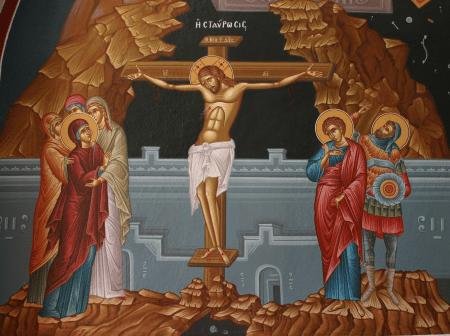
Today we live in Darkness. Today we sit and worship in the shadow of cross.

We have heard Christ’s story of passion.

We have heard of humanity’s betrayal.

We have heard of his suffering and death.

But we have not come to kill Jesus again.

We have not come to grieve and mourn his death again.

We are not reliving the crucifixion again,

We are not nailing Jesus to the cross again.

Today we remember.

We remember our part in the story.  Our shame and our pride.

We remember that when faced with God in flesh, when faced with God with us,

we put God to death.

We remember that humanity at its best, humanity’s finest minds, finest scholars, finest religious authorities, finest soldiers…. our best and finest understanding of the divine,

led us to kill God.

This is Good Friday.

It tells us who we are.

It tells us who try to be.

It tells us what happens when we try to be God in God’s place.

We are threatened by anything that would take away

our control

our power

our strength.

We couldn’t stand the idea of being able to see God face to face.

We couldn’t stand the idea of God telling us that we were wrong, that were are not God

We couldn’t stand the idea that we didn’t control what God wanted, what God said, what God did, what God thinks.

How could we not be in control?

We believe we are God,

we know what WE want,

what WE say,

what WE do,

what WE think.

So when we met God face to face,

When Jesus  healed, preached, taught, fed, exorcized demons and raised the dead to life

When Jesus let us see God, and that we are not God.

We plotted, planned, schemed and betrayed.

When we met God face to face,

We said no.

We used our greatest tool. Our strongest statement. Our godlike power.

Death. We put Jesus to death.

When God came to us face to face,

God said yes.

God took our greatest tool, our strongest statement, our godlike power

God accepted our death

And then God did what he had come to do.

And then God said what he had come to say.

And then God gave us his greatest tool, his greatest statement, his real godlike power.

God gave us himself.

God gave us his life.

God gives us New Life.

And the cross which stands so tall,

no longer stands for death.

The cross which stands so tall

now stands for life.

We tried to make the cross say no

But God has made it say yes.

We have tried to be like God

But God has come to be like us.

We tried to control God with death

But God will not be controlled

Life will not be controlled

Love will not be controlled

Forgiveness will not controlled

Grace will not be controlled.

God will not be controlled.

God has come to love us

God has come to forgive us

God has come to show us grace

God has come to give us life.

It is Friday.

It is Good Friday.

It is God’s Friday.

5 Truths we don’t want to admit about church decline

Last Sunday in my sermon, I wrote about Jesus overturning the tables in the temple, and noted that much of western Christianity is waking up the day after the tables have been overturned. Our prominence at the centre of society is long gone. Now we are dealing with the reality of numerical and financial decline. These days church leaders are looking to experts, programs,  and books that will help us figure out what on earth is going on, and why so many have just stopped coming to church.

As a millennial and a pastor, I regularly hear church people bemoaning the loss of young people. This is evident to me in the fact that I have been pastor to only a handful of people my age. The ‘Nones’ are the new buzz group that concerned church leaders want to reach. Church people want to understand why so many of my generation are opting for something other than church attendance and how that can be changed.

The other group current church people long for are the lapsed members I regularly hear church people wanting to “bring back.” Programs like Back to Church Sunday are popular. Mission and discipeship gurus are all over the place, helping pastors, church leaders and lay people figure out how to lead churches, how to figure out what on earth we are supposed to be doing as the Body of Christ.

And yet, with all the focus on our decline as Christians in the West, particularly, mainline Christians, important truths are rarely spoken about. There are realities that I think many of us can see, but we don’t want to admit are significant in our apparent “decline.”

1 Measuring decline by numbers causes us to lose sight of our mission. 

I admit, when I see a new face in church, or get asked to do a baptism, I am inwardly excited. New people, larger numbers of faces in the pews, increased giving. These are all easy indicators of success. Except they aren’t. Jesus didn’t say, “Go therefore and get bums in the pews and money in the offering plates in the name of the Father, Son and Holy Spirit.”

When churches measure our ministry by these numbers, our real purpose of preaching the Gospel and administering the sacraments becomes a selling feature. When our goal is full pews and offering plates, word and sacrament become the means of filling pew and offering plates.

“Success” takes on a different definition if we stop using numbers to measure it. Preaching the gospel is preaching the gospel whether it is to 2, 20, 200 or 2000 people. Oh, and yes, I have heard that accusation that this notion is just something that pastors of small dying churches cling to… yet if our success is measured by numbers we have lost sight of what the Gospel actually does in our lives.

2 Many of our sacred cows are causing our decline. (ie. Sunday School & VBS, Bible Study, programs, music groups, church committees)

There are always very important, very special things that churches do that we are simply unwilling to let go of. These programs or activities began as life-giving endeavours for congregations, but over time have lost their ability to meet the needs and purposes of congregations. I know churches full of seniors in communities that are populated with folks predominantly of retirement age who insist on having Sunday School. There are committees and programs that have become defunct or purposeless that churches refuse to axe, even though they become a struggle keep up and don’t achieve their founding goals.

As we cling to sacred cows we fail to see the unintended consequences that are hurting us. Sunday school was intended to teach kids the faith, but has allowed parents to abdicate responsibility of teaching faith in the home. Instead of empowering us to live out our baptismal callings, committees on Stewardship, Evangelism, Learning, or Support (among others) let us leave this important work to a committee that meets once a month. Programs allow us to turn basic practices of faith like studying the bible, evangelizing through relationship, ministry to children, youth, families or seniors into very compartmentalized sets of behaviour rather than natural activities of faith.

We so often hold onto things that are actually hurting us because of deep-seated senses of obligation or loyalty. We get so stuck wanting to not disappoint those who went before us that we fail to make our communities ready for those who will come after us.

3 God just might be calling us to die. 

So many churches (and people for that matter) live and behave as if they are going to last forever. We make choices as communities as if our current state is going to be our static condition for the rest of time. We don’t have urgency… or the urgency of our conditions causes us to respond with flight or fight or freeze responses. We freeze up and choose to do nothing in the face of crisis, even when we understand that doing something – anything – is necessary.

What if churches had “Bucket Lists”? What if we made decisions about what we choose to spend our time and resources on knowing that we will one day die? Instead of working so hard just to stay afloat in perpetuity, what if we looked at all the things we could do before the end. There are not many churches closing these days because they made bold choices, gambled their resources and failed. There are lots of churches slowly petering out, after years of just getting by.

Admitting that God might be calling us to die means changing the way we see death. We so often see death, especially the death of a church, as failure. What if we saw death as a natural part of life and ministry? What if death was expected for our churches? Maybe all those mission and vision, discipleship and evangelism gurus might not seem so important anymore.

4 Our problem isn’t lack of mission, it is wrong mission. 

Most mainline churches in North America were started less than 125 years ago. A lot were founded in the 40s, 50s, and 60s. Communities of the faithful saw a need for a worshipping church in their midst. So they gathered members, raised funds to build buildings and call pastors. Energy was high, excitement was infectious, people came because the purpose and mission was clear.

And then buildings were built, funds were raised, pastors called and programs started.

But the mission didn’t change.

Most of the gurus or consultants that church leaders are seeking today have the same message: we have lost sight of the mission. If this were true, I don’t think there would be enough to keep the members that most churches still have from dispersing to the wind.

I think churches still have a strong sense of mission – build the building, raise the funds for pastors and programs. We accomplished those things decades ago, yet we still are trying to organize ourselves around them. Maybe it isn’t breaking ground, but it is making sure the carpets are new, and light fixtures clean, and shingles are replaced. Maybe it isn’t calling that first pastor, but it is making sure the budget can afford to pay for a pastor.

We are still trying to band together around those fledgling goals of starting a new church, even though we achieved them years ago. We don’t realize how people who want more than buildings and funds for pastors and programs are put off by our single-minded concern for those things.

5 We have let worship become entertainment instead of community forming. 

Whether it is mega-church contemporary worship or cathedral mass, whether it is a small community gathered for song and prayer or simple liturgy… our attitudes about worship have been transformed by the world around us. Our consumer culture has been turning us into creatures seeking to be entertained, distracted, and looking for things that appeal to our preferences.

I have heard many faithful church members, who are generally concerned about growing in their faith, slip into talking about worship as if it was a menu of food to choose from or different acts of a play. We enjoy sermons, we like music, we appreciate readings.

We have stopped participating in worship. We have stopped seeing the role of the congregation as integral to worship happening. While most church members wouldn’t agree if asked, we act as if worship could happen without anyone in the pews. We approach worship like theatre that doesn’t need an audience, but that no one would put on without an audience.

Worship should be the ritual action of faithful Christians. Worship should be a way to grow in faith as individuals and as community through prayer, song, word, and sacraments. The things we do and practice in worship prepare us for life in the world. We practice confession and forgiveness, we practice sharing God’s story and our story, we practice washing and feeding and tending to the world around us. We practice reconciliation and prayerful concern for the world around us. The things we do in worship should shape how we live out our faith. Our desire to be entertained should not shape worship.

Admitting the truth to our decline.

Admitting the truth of our decline is not an easy business. When the mission, discipleship and evangelism consultants come by to tell us how to fix ourselves, the hand-wringing that results is easy. But talking about these truths about our decline and how these realities shape us is not easy stuff… in fact, it is nearly impossible.

The fact is, more churches tend to slowly die, rather than truly change and find new life. This shows that admitting these truths in order to change them is harder than dying. Most of the time we will choose to die.

But that is okay.

The flawed ministry that we are doing despite of and in the midst of these truths is not unfaithful ministry. In fact, working with dying, flawed, wrong missioned churches and people is exactly the kind of work our God gets up to in the world. And that is also where we are in trouble. Whether we like it or not, admitting these stark truths about ourselves as we die, is all too often just how God chooses to bring us into new life.

And that is the most important truth of all.


Are churches really facing up to their decline? What other truths are we failing to admit? Share in the comments, or on the Facebook Page: The Millennial Pastor or on Twitter: @ParkerErik

As always thanks to my wife, Courtenay, for her editorial help and insight. You can follow her on twitter @ReedmanParker

The Day After Jesus Cleared the Temple – The reality of church decline

John 2:13-22

He also poured out the coins of the money changers and overturned their tables. He told those who were selling the doves, “Take these things out of here! Stop making my Father’s house a marketplace!” (Read the whole passage here). 

Jesus has come a long way from the wilderness to here. We began Lent as Jesus went for 40 days in wilderness to do what God has always done… to search for God’s people in the desert. But this time we weren’t there. So Jesus returned to civilization to begin his preaching and teaching. Last week, Jesus began preparing his disciples for what was to come – death and resurrection. And Peter would have none of it. Peter’s fears got in the way of seeing what God was up to.

Today, Jesus strikes out for a place very opposite of the wilderness. Jesus heads straight to the heart of Jerusalem society – the temple, God’s dwelling place, God’s house. The temple was a bustling place of business. There were pilgrims coming and going from all over Jerusalem. Pharisees debating religious law. Priests performing sacrifices. And lots of people selling things. Selling animals for sacrifice. Kosher food and clothes. Selling whatever a religious person might need in order to access the temple appropriately.

For most Jews the temple was the experience of a lifetime. It was something that took time and money, and was not easily afforded. The temple was a place for rich folks to come and go from, for those in the middle to visit occasionally, and for those on the bottom, the poor had no hope of ever getting the chance to make it into the temple.

But it had not always been so. All the rules about sacrifice and ritual that the temple was based on were not about keeping people out when they were first given to the people of Israel. Instead, they were meant as means to talk about God in a communal and shared way. They were meant to facilitate the communal practices of worship and prayer. They were meant to make it easier for everyone to access God’s love and God’s forgiveness of sins. As people tried harder and harder to follow the letter of the law, to be faithful Jews, they created more and more barriers to God, rather than making access easier.

By the time Jesus comes to the temple, the cost and process for even getting into the temple, an enormous building surrounded by huge imposing walls meant to protect the holy of holies, was so cumbersome that only the rich and privileged had real ease of access.

It is not surprising that Jesus seems to lose his cool. Jesus running around with a whip, overturning tables and yelling is not the Jesus we are used to. Jesus declares, “Stop making my father’s house a marketplace”. These words are more profound than we imagine. In greek ,the word for household is oikos and from that comes the word oikonomos or in english: economy. Jesus’s words could be heard this way:

Stop making my father’s economy a marketplace

What had begun as a means for the people of Israel to access God, was now a money making machine. It was a place for entrepreneurship, for making money. And the exclusive product being sold was God.

So now… this is usually the point in the sermon where we would look at the parallels between story and us. And we don’t have to look very far in Christendom to see where God is being bought and sold. We can look to the prosperity preachers on Sunday morning TV, to the Christian book stores that promise to make our spiritual life grow, or places like FOX news who are using quasi-Christian beliefs to boost ratings.

But if we really look around ourselves here, or as Lutherans in Canada and the US, or as mainline Christians over all… I think we can safely say that Jesus wouldn’t have much cause to show up with a whip to overturn our tables.

If we are selling God here… we are not doing it very well.

We look a lot more like the day after Jesus has come through and upset the order of things. Now let’s not kid ourselves, the Jerusalem temple was certainly back to business as usual the day after Jesus overturned those tables. But the Jerusalem temple which had been built and rebuilt over the course of a 1000 years, would be destroyed for good within 40 years by the very same Romans that the Jews would soon be demanding to kill Jesus.

And after the Romans razed the temple for the last time, the Jewish people had to completely change the way they did religion.

Like the Jews after the destruction of the temple, our marketplace moment has come and gone. We were once the only show in town. We were once the centres of communities all over. Our religious leaders could phone prime ministers directly. Governments have mandated holidays on our holy-days. Public schools forced children to pray our prayers and read our holy books. On Sundays everything was closed and people couldn’t do anything but come to us. Lutherans, Anglicans and Catholics, we were planting churches and starting congregations left and right 40, 50, 60 years ago. We were the ones who controlled access to God.

In order to have people walk in our doors, all we had to do was build a building and raise the money to call a pastor. And Sunday Schools were bursting, confirmation classes full, choirs robust, Sunday worship was bustling.

Yet, like the people of the Jerusalem temple we began to lose sight of what our purpose was. In Jerusalem, providing access to God’s love and forgiveness was transformed into making the right sacrifices, being ritually clean and worshipping only in God’s holy temple. Forgiveness became a way to sell sacrificial animals, to earn money for maintaining the temple, to bring people from all over to Jerusalem.

For us, providing a place for the Body of Christ to hear the word and receive the sacraments has been transformed into maintaining structures and budgets. Sermons and worship have become selling features to pay for buildings and to fill offering plates. We have flipped the functions of our building and budgets with gathering for word and sacrament. Instead of buildings and budgets being tools that allow our faith communities to gather to hear God’s word, to be baptized and receive communion;  attractive, flashy worship becomes a tool we use to keep our budgets viable and buildings open.

But somewhere along in the past few years, Jesus showed up and declared,

Stop making my Father’s house a marketplace.”

And like the temple authorities who protest, we have lost sight of what our buildings and budgets are for in the first place.

Yet, Jesus has a curious answer for us.

“Destroy this temple and in three days, I will raise it up”

Jesus is not talking about the physical structure. Jesus is not going to be found in the walls here. Jesus is not hiding in our wallets waiting to be put into offering plates.

Jesus is reminding us who builds this church in the first place. Jesus reminds us whose faithfulness is building the Body of Christ.

Hint: it is not our faithfulness.

God is the one who is providing the means for forgiveness. God is the one who comes to us in word and sacrament. God’s faithfulness is the purpose of our gathering together, week after week. Buildings, temple walls, balanced budgets, ritually purified coins, programs that bring the people in, animal sacrifices… these are not the things that show us where God is.

God is in the person, the flesh of Jesus who comes and meets us in our misguided attempts to be faithful.

God is the One we meet in the Word, in the words of faith proclaimed here, over and over. Words like forgiven, mercy, grace. Like Gospel, baptism, communion. Like peace, love and welcome.

God is the One that we feel and encounter in water, bread and wine. Who we touch as we embrace our brothers and sisters in faith. Who we hear with words of eternal life, with words just for us.

Jesus is reminding that God can raise up the body of Christ without bricks or mortar, without budgets and programs. God can build churches just with people, with a book, with bread and a cup. None of us can do that, no matter how strong our faith. 

As faithful as we try to be by building holy places for people to meet God, as upside down as get things as we try to sell God to pay for our holy buildings, Jesus is coming out of the wilderness to meet us right in the heart of our marketplaces. Jesus is coming right to the middle of our bustling temples.

And Jesus, for a a while now, has been relieving us of the burdens of buildings and budgets. Jesus has been overturning our tables and whipping us back into shape. And it is Jesus that shows us that God’s temple, God’s church is not buildings and budgets, but people, the Body of Christ.

Jesus shows us that our overturned tables have not been turned upside down, but instead Jesus has turned them and us…

Right side up.