Category Archives: Theology & Culture

5 Truths we don’t want to admit about church decline

Last Sunday in my sermon, I wrote about Jesus overturning the tables in the temple, and noted that much of western Christianity is waking up the day after the tables have been overturned. Our prominence at the centre of society is long gone. Now we are dealing with the reality of numerical and financial decline. These days church leaders are looking to experts, programs,  and books that will help us figure out what on earth is going on, and why so many have just stopped coming to church.

As a millennial and a pastor, I regularly hear church people bemoaning the loss of young people. This is evident to me in the fact that I have been pastor to only a handful of people my age. The ‘Nones’ are the new buzz group that concerned church leaders want to reach. Church people want to understand why so many of my generation are opting for something other than church attendance and how that can be changed.

The other group current church people long for are the lapsed members I regularly hear church people wanting to “bring back.” Programs like Back to Church Sunday are popular. Mission and discipeship gurus are all over the place, helping pastors, church leaders and lay people figure out how to lead churches, how to figure out what on earth we are supposed to be doing as the Body of Christ.

And yet, with all the focus on our decline as Christians in the West, particularly, mainline Christians, important truths are rarely spoken about. There are realities that I think many of us can see, but we don’t want to admit are significant in our apparent “decline.”

1 Measuring decline by numbers causes us to lose sight of our mission. 

I admit, when I see a new face in church, or get asked to do a baptism, I am inwardly excited. New people, larger numbers of faces in the pews, increased giving. These are all easy indicators of success. Except they aren’t. Jesus didn’t say, “Go therefore and get bums in the pews and money in the offering plates in the name of the Father, Son and Holy Spirit.”

When churches measure our ministry by these numbers, our real purpose of preaching the Gospel and administering the sacraments becomes a selling feature. When our goal is full pews and offering plates, word and sacrament become the means of filling pew and offering plates.

“Success” takes on a different definition if we stop using numbers to measure it. Preaching the gospel is preaching the gospel whether it is to 2, 20, 200 or 2000 people. Oh, and yes, I have heard that accusation that this notion is just something that pastors of small dying churches cling to… yet if our success is measured by numbers we have lost sight of what the Gospel actually does in our lives.

2 Many of our sacred cows are causing our decline. (ie. Sunday School & VBS, Bible Study, programs, music groups, church committees)

There are always very important, very special things that churches do that we are simply unwilling to let go of. These programs or activities began as life-giving endeavours for congregations, but over time have lost their ability to meet the needs and purposes of congregations. I know churches full of seniors in communities that are populated with folks predominantly of retirement age who insist on having Sunday School. There are committees and programs that have become defunct or purposeless that churches refuse to axe, even though they become a struggle keep up and don’t achieve their founding goals.

As we cling to sacred cows we fail to see the unintended consequences that are hurting us. Sunday school was intended to teach kids the faith, but has allowed parents to abdicate responsibility of teaching faith in the home. Instead of empowering us to live out our baptismal callings, committees on Stewardship, Evangelism, Learning, or Support (among others) let us leave this important work to a committee that meets once a month. Programs allow us to turn basic practices of faith like studying the bible, evangelizing through relationship, ministry to children, youth, families or seniors into very compartmentalized sets of behaviour rather than natural activities of faith.

We so often hold onto things that are actually hurting us because of deep-seated senses of obligation or loyalty. We get so stuck wanting to not disappoint those who went before us that we fail to make our communities ready for those who will come after us.

3 God just might be calling us to die. 

So many churches (and people for that matter) live and behave as if they are going to last forever. We make choices as communities as if our current state is going to be our static condition for the rest of time. We don’t have urgency… or the urgency of our conditions causes us to respond with flight or fight or freeze responses. We freeze up and choose to do nothing in the face of crisis, even when we understand that doing something – anything – is necessary.

What if churches had “Bucket Lists”? What if we made decisions about what we choose to spend our time and resources on knowing that we will one day die? Instead of working so hard just to stay afloat in perpetuity, what if we looked at all the things we could do before the end. There are not many churches closing these days because they made bold choices, gambled their resources and failed. There are lots of churches slowly petering out, after years of just getting by.

Admitting that God might be calling us to die means changing the way we see death. We so often see death, especially the death of a church, as failure. What if we saw death as a natural part of life and ministry? What if death was expected for our churches? Maybe all those mission and vision, discipleship and evangelism gurus might not seem so important anymore.

4 Our problem isn’t lack of mission, it is wrong mission. 

Most mainline churches in North America were started less than 125 years ago. A lot were founded in the 40s, 50s, and 60s. Communities of the faithful saw a need for a worshipping church in their midst. So they gathered members, raised funds to build buildings and call pastors. Energy was high, excitement was infectious, people came because the purpose and mission was clear.

And then buildings were built, funds were raised, pastors called and programs started.

But the mission didn’t change.

Most of the gurus or consultants that church leaders are seeking today have the same message: we have lost sight of the mission. If this were true, I don’t think there would be enough to keep the members that most churches still have from dispersing to the wind.

I think churches still have a strong sense of mission – build the building, raise the funds for pastors and programs. We accomplished those things decades ago, yet we still are trying to organize ourselves around them. Maybe it isn’t breaking ground, but it is making sure the carpets are new, and light fixtures clean, and shingles are replaced. Maybe it isn’t calling that first pastor, but it is making sure the budget can afford to pay for a pastor.

We are still trying to band together around those fledgling goals of starting a new church, even though we achieved them years ago. We don’t realize how people who want more than buildings and funds for pastors and programs are put off by our single-minded concern for those things.

5 We have let worship become entertainment instead of community forming. 

Whether it is mega-church contemporary worship or cathedral mass, whether it is a small community gathered for song and prayer or simple liturgy… our attitudes about worship have been transformed by the world around us. Our consumer culture has been turning us into creatures seeking to be entertained, distracted, and looking for things that appeal to our preferences.

I have heard many faithful church members, who are generally concerned about growing in their faith, slip into talking about worship as if it was a menu of food to choose from or different acts of a play. We enjoy sermons, we like music, we appreciate readings.

We have stopped participating in worship. We have stopped seeing the role of the congregation as integral to worship happening. While most church members wouldn’t agree if asked, we act as if worship could happen without anyone in the pews. We approach worship like theatre that doesn’t need an audience, but that no one would put on without an audience.

Worship should be the ritual action of faithful Christians. Worship should be a way to grow in faith as individuals and as community through prayer, song, word, and sacraments. The things we do and practice in worship prepare us for life in the world. We practice confession and forgiveness, we practice sharing God’s story and our story, we practice washing and feeding and tending to the world around us. We practice reconciliation and prayerful concern for the world around us. The things we do in worship should shape how we live out our faith. Our desire to be entertained should not shape worship.

Admitting the truth to our decline.

Admitting the truth of our decline is not an easy business. When the mission, discipleship and evangelism consultants come by to tell us how to fix ourselves, the hand-wringing that results is easy. But talking about these truths about our decline and how these realities shape us is not easy stuff… in fact, it is nearly impossible.

The fact is, more churches tend to slowly die, rather than truly change and find new life. This shows that admitting these truths in order to change them is harder than dying. Most of the time we will choose to die.

But that is okay.

The flawed ministry that we are doing despite of and in the midst of these truths is not unfaithful ministry. In fact, working with dying, flawed, wrong missioned churches and people is exactly the kind of work our God gets up to in the world. And that is also where we are in trouble. Whether we like it or not, admitting these stark truths about ourselves as we die, is all too often just how God chooses to bring us into new life.

And that is the most important truth of all.


Are churches really facing up to their decline? What other truths are we failing to admit? Share in the comments, or on the Facebook Page: The Millennial Pastor or on Twitter: @ParkerErik

As always thanks to my wife, Courtenay, for her editorial help and insight. You can follow her on twitter @ReedmanParker

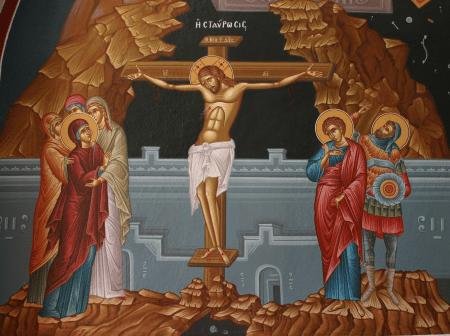
The Day After Jesus Cleared the Temple – The reality of church decline

John 2:13-22

He also poured out the coins of the money changers and overturned their tables. He told those who were selling the doves, “Take these things out of here! Stop making my Father’s house a marketplace!” (Read the whole passage here). 

Jesus has come a long way from the wilderness to here. We began Lent as Jesus went for 40 days in wilderness to do what God has always done… to search for God’s people in the desert. But this time we weren’t there. So Jesus returned to civilization to begin his preaching and teaching. Last week, Jesus began preparing his disciples for what was to come – death and resurrection. And Peter would have none of it. Peter’s fears got in the way of seeing what God was up to.

Today, Jesus strikes out for a place very opposite of the wilderness. Jesus heads straight to the heart of Jerusalem society – the temple, God’s dwelling place, God’s house. The temple was a bustling place of business. There were pilgrims coming and going from all over Jerusalem. Pharisees debating religious law. Priests performing sacrifices. And lots of people selling things. Selling animals for sacrifice. Kosher food and clothes. Selling whatever a religious person might need in order to access the temple appropriately.

For most Jews the temple was the experience of a lifetime. It was something that took time and money, and was not easily afforded. The temple was a place for rich folks to come and go from, for those in the middle to visit occasionally, and for those on the bottom, the poor had no hope of ever getting the chance to make it into the temple.

But it had not always been so. All the rules about sacrifice and ritual that the temple was based on were not about keeping people out when they were first given to the people of Israel. Instead, they were meant as means to talk about God in a communal and shared way. They were meant to facilitate the communal practices of worship and prayer. They were meant to make it easier for everyone to access God’s love and God’s forgiveness of sins. As people tried harder and harder to follow the letter of the law, to be faithful Jews, they created more and more barriers to God, rather than making access easier.

By the time Jesus comes to the temple, the cost and process for even getting into the temple, an enormous building surrounded by huge imposing walls meant to protect the holy of holies, was so cumbersome that only the rich and privileged had real ease of access.

It is not surprising that Jesus seems to lose his cool. Jesus running around with a whip, overturning tables and yelling is not the Jesus we are used to. Jesus declares, “Stop making my father’s house a marketplace”. These words are more profound than we imagine. In greek ,the word for household is oikos and from that comes the word oikonomos or in english: economy. Jesus’s words could be heard this way:

Stop making my father’s economy a marketplace

What had begun as a means for the people of Israel to access God, was now a money making machine. It was a place for entrepreneurship, for making money. And the exclusive product being sold was God.

So now… this is usually the point in the sermon where we would look at the parallels between story and us. And we don’t have to look very far in Christendom to see where God is being bought and sold. We can look to the prosperity preachers on Sunday morning TV, to the Christian book stores that promise to make our spiritual life grow, or places like FOX news who are using quasi-Christian beliefs to boost ratings.

But if we really look around ourselves here, or as Lutherans in Canada and the US, or as mainline Christians over all… I think we can safely say that Jesus wouldn’t have much cause to show up with a whip to overturn our tables.

If we are selling God here… we are not doing it very well.

We look a lot more like the day after Jesus has come through and upset the order of things. Now let’s not kid ourselves, the Jerusalem temple was certainly back to business as usual the day after Jesus overturned those tables. But the Jerusalem temple which had been built and rebuilt over the course of a 1000 years, would be destroyed for good within 40 years by the very same Romans that the Jews would soon be demanding to kill Jesus.

And after the Romans razed the temple for the last time, the Jewish people had to completely change the way they did religion.

Like the Jews after the destruction of the temple, our marketplace moment has come and gone. We were once the only show in town. We were once the centres of communities all over. Our religious leaders could phone prime ministers directly. Governments have mandated holidays on our holy-days. Public schools forced children to pray our prayers and read our holy books. On Sundays everything was closed and people couldn’t do anything but come to us. Lutherans, Anglicans and Catholics, we were planting churches and starting congregations left and right 40, 50, 60 years ago. We were the ones who controlled access to God.

In order to have people walk in our doors, all we had to do was build a building and raise the money to call a pastor. And Sunday Schools were bursting, confirmation classes full, choirs robust, Sunday worship was bustling.

Yet, like the people of the Jerusalem temple we began to lose sight of what our purpose was. In Jerusalem, providing access to God’s love and forgiveness was transformed into making the right sacrifices, being ritually clean and worshipping only in God’s holy temple. Forgiveness became a way to sell sacrificial animals, to earn money for maintaining the temple, to bring people from all over to Jerusalem.

For us, providing a place for the Body of Christ to hear the word and receive the sacraments has been transformed into maintaining structures and budgets. Sermons and worship have become selling features to pay for buildings and to fill offering plates. We have flipped the functions of our building and budgets with gathering for word and sacrament. Instead of buildings and budgets being tools that allow our faith communities to gather to hear God’s word, to be baptized and receive communion;  attractive, flashy worship becomes a tool we use to keep our budgets viable and buildings open.

But somewhere along in the past few years, Jesus showed up and declared,

Stop making my Father’s house a marketplace.”

And like the temple authorities who protest, we have lost sight of what our buildings and budgets are for in the first place.

Yet, Jesus has a curious answer for us.

“Destroy this temple and in three days, I will raise it up”

Jesus is not talking about the physical structure. Jesus is not going to be found in the walls here. Jesus is not hiding in our wallets waiting to be put into offering plates.

Jesus is reminding us who builds this church in the first place. Jesus reminds us whose faithfulness is building the Body of Christ.

Hint: it is not our faithfulness.

God is the one who is providing the means for forgiveness. God is the one who comes to us in word and sacrament. God’s faithfulness is the purpose of our gathering together, week after week. Buildings, temple walls, balanced budgets, ritually purified coins, programs that bring the people in, animal sacrifices… these are not the things that show us where God is.

God is in the person, the flesh of Jesus who comes and meets us in our misguided attempts to be faithful.

God is the One we meet in the Word, in the words of faith proclaimed here, over and over. Words like forgiven, mercy, grace. Like Gospel, baptism, communion. Like peace, love and welcome.

God is the One that we feel and encounter in water, bread and wine. Who we touch as we embrace our brothers and sisters in faith. Who we hear with words of eternal life, with words just for us.

Jesus is reminding that God can raise up the body of Christ without bricks or mortar, without budgets and programs. God can build churches just with people, with a book, with bread and a cup. None of us can do that, no matter how strong our faith. 

As faithful as we try to be by building holy places for people to meet God, as upside down as get things as we try to sell God to pay for our holy buildings, Jesus is coming out of the wilderness to meet us right in the heart of our marketplaces. Jesus is coming right to the middle of our bustling temples.

And Jesus, for a a while now, has been relieving us of the burdens of buildings and budgets. Jesus has been overturning our tables and whipping us back into shape. And it is Jesus that shows us that God’s temple, God’s church is not buildings and budgets, but people, the Body of Christ.

Jesus shows us that our overturned tables have not been turned upside down, but instead Jesus has turned them and us…

Right side up.

Confessions of a High Church Millennial – Is Liturgy a Fad?

A few days ago a news story came out that McDonald’s is slumping because of upstart restaurants like Chipotle or Freshii or Shake Shack are appealing to the desire of millennials to customize, rather than standardize their food.

The church can probably learn something from this, but if anything the message is millennials are not opting for the things the world expects.

So imagine my surprise this past week when I read two articles about the movement of evangelical millennials leaving their mega-church roots for boring old traditions and liturgy found in Catholic, Anglican and Lutheran varieties.

Actually, this is not new, but has been an underground trend for a while.

Popular writer and blogger, Rachel Held Evans is about to come out with a book on her journey from Evangelicalism to the Anglican/Episcopalian fold. Nadia Bolz-Weber embodies millennial culture and is succeeding at navigating the cultural commute from hipsters to the Eucharist. The Barna Group even recently released data on millennial preferences of church architecture, which suggested that churches that looked like traditional churches were preferred over auditorium style buildings.

Christian millennials seem to live in this multi-layered world of reading the bible on their iPhone and tweeting in church, while singing ancient plainsong and praying prayers spoken by saints of centuries past.

And maybe this makes sense in the context of the hipster trends that have even infected my millennial hair and eyewear. My generation is instagraming photos of our knitting projects and writing our first draft blog posts on typewriters (see blog tagline above).

Yet all of this makes we wonder. Is Liturgy just another version of a millennial hipster fad? Are looms, vinyl record players and vespers things we are going to commit to for a lifetime?

Honestly, I don’t know. I don’t know if Liturgy is going to be the Christian fad of the late 2010s like Power Point was the fad of the early 2000s.

At the same time, I think there is something deeper going on when it comes to millennials and liturgy. Particularly, when it comes to evangelical millennials finding liturgy and jumping in with two feet.

Now as a High Churchly Millennial myself, I should confess that I have not actually been a pastor to more than a handful of folks my age. The vast majority of my parishioners have been boomers or older. In fact, one of the concerns of Catholics, Anglicans and Lutherans is how to retain our own “young” people.

So for evangelical millennials to begin wandering into our spaces is surprising, but I have a few theories about this trend. Evangelical churches are doing something with their people that many mainliners have mostly given up on decades ago – evangelicals are creating biblically literate Christians.

I have been teaching confirmation (two years of Lutheran indoctrination for 12 and 13-year-olds) classes for a decade in some form or another. And while I love reading the bible with students and talking about issues of faith, it is clear that we are not introducing our children to the bible beyond once a week classes with the pastor. When I ask kids if they know the basic details of many of biblical stories, including the life and ministry of Jesus they rarely come up with any.

What’s worse is that this biblical illiteracy is not limited to teenagers… it is rampant among mainliners. Evangelicals, on the other hand, have much more established cultures of bible reading. Evangelicals are encouraged to read the bible daily and to engage in group bible study more rigorously than many mainliners.

And this is where the experience of Liturgy comes in.

Liturgy is scripturally rich. The prayers and music texts are full of biblical images… images that come and go fast. A Eucharistic prayer might reference creation, Abraham and Sarah, Eljiah being fed at the river, David and Goliath, Ezekiel and the dry bones and then Jesus all in a few lines. If you can’t move quickly between stories and images, it can begin to sound like jargon and non-sense. I suspect a lot of mainline folks, especially bored teenagers, feel completely lost during a lot of liturgy.

As our need to be connected to and to understand what is happening around us increases through teenage years and into adulthood, biblically rich liturgy can become an experience of alienation. People don’t know what is going on or why the presider is yammering on about all these people with old sounding names. This is when the old trope that “Liturgy is boring” starts to get thrown around. Yet, most teachers know (and pastors should too) that kids who claim school is boring, often do so because they are not comprehending basic concepts and are struggling to keep up with what is going on. Many mainliners are in this boat.

Now imagine instead, you are a biblically literate teenager or young adult. You know your bible. You have done sword drills, and trivia. You have memorized verses and verses of the bible. And yet the worship you attend is 15 praises songs, which may or may not have a few psalm verses as lyrics, 3 extemporaneous prayers, and is concluded by some dude in a graphic t-shirt lecturing for 45 minutes on the ten principles of prayer found in Malachi chapter three.

I can see why, when biblically literate evangelicals end up in a Lutheran or Anglican worship service, they find a whole new playground of biblical worship. All of a sudden the richness of the biblical narratives come alive. Biblical images are used abundantly. Bible stories are quoted frequently. Scripture is read aloud regularly. The biblical knowledge of personal devotion and youth group becomes the new language of prayer and song, of ritual and community. You are thrown into the divine drama and you are with a community who is practicing and acting it out together.

By things we have done, and things we have failed to do” weighs heavy on our hearts as we confess these words in community, and then receive the gift of absolution and forgiveness.

Lord, to whom shall we go? You have the words of eternal life” takes on new meaning when the acolyte processes the big bible down into the midst of the people in order to hear the gospel read.

Peace be with you” is embodied when we say it as we embrace fellow Christians around us.

This is my body, given for you” is felt when a hunk of bread is torn from a loaf and placed in our open hands and we feel flesh the of the one giving us this bread meeting our flesh, somehow bringing together earthly bread and divine body.

Liturgy has the ability to awaken the richness of the core narratives of faith in ways I have never experienced elsewhere. I can’t imagine another means of embodying the bible – embodying the Word of God – so deeply as we do in the liturgy.

Now, I am not saying that mainline millennials are not able to appreciate liturgy. Nor am I saying that evangelical millennials are about to become liturgy loving Catholics, Anglicans or Lutherans.

But rather I am trying to make some connections that point to bigger issues among Christians in North America and the West in general. The fact is many evangelicals seem to be good at keeping early church’s serious commitment to catechesis, yet have dropped many of liturgical commitments. While many mainliners have maintained the liturgical commitment of our forbearers, we have dropped much of the catechetical commitment to introduce our young and our new members to the bible and to the richness of the biblical narrative. The two dynamics play into each other in ways that none of us anticipated.

So back to my first question: Is liturgy just the latest hipster fad among millennial christians? I cannot really say. I wish and hope it isn’t. But I also know that vestments and their fabrics (all the funny robes that priests and pastors wear) excite me in the same way others of my generational cohort might be excited by bee-keeping or printing presses or growing organic gardens or listening to vinyl.

Yet, I would posit that there is something deep and more profound in liturgy, even with all its ancient adornments and traditions. Liturgy is rooted in the rich and beautiful biblical narratives that help us to make sense of the world – or perhaps show us how God is making sense of us.

Even if liturgy and vestments and ancient ritual appeals to my millennial and hipster sensibilities, I know it is a life long interest, a life long calling if you will, to continually encounter God in ways that Christians have been encountering God for centuries.

And that’s no fad.


If you want to read part 1 of Confessions of a High Church Millennial, you can find it here.

Is Liturgy just another hipster fad? Are millennials drawn to liturgy differently than previous generations? Share in the comments, or one the Facebook Page: The Millennial Pastor or on Twitter: @ParkerErik

This Ash Wednesday, I can’t do ‘Ashes to Go’ or ‘#Ashtag’

ashtag-selfie-ashwed-churchmojo-squareThis morning a blogger and writer that I like to read and whom I respect, David R Henson, posted an insightful blog post about the problems with #AshTag.

As I prepare for Ash Wednesday, my own thoughts have been swirling around how to approach and understand this first day of Lent. As David considered the problem of Ash Wednesday selfies posted to social media using the hashtag #AshTag, one line in particular caught my attention.

The systemic push within the church for Ash Wednesday selfies is an exercise in whistling past graveyards.

Needless to say, I won’t be posting an Ash Wednesday selfie (one would think that Shrove Tuesday or Mardi Gras would be the big selfie night).

AshestoGo4But another Ash Wednesday innovation that I have surprised myself by not being terribly interested in is ‘Ashes to Go.’ Ashes to go is where clergy go out to street corners and subway platforms to offer ashes to those passing by. Often clergy do this in full vestments.

I am all for getting out in the world. I totally agree that churches need to look beyond themselves for ways to connect with the world around them (see my last post). And I would never claim that the intentions behind these two practices(?) are not well-intentioned. Nor would I say that Ashes to Go, in particular, doesn’t produce some amazingly powerful encounters between clergy and folks about town.

But there is just something missing for me.

Again David Henson makes the point:

“The whole world saw Christians standing on the virtual street corner praying and making their fasts public spectacles. We did the exact thing the Gospel for the day asked us not to.”

For me, Ash Wednesday has a deeper context.

A few years ago, during a shared Ash Wednesday service with another congregation, I got to watch a good friend and colleague place ashes on the forehead of his six-year-old son. It was a powerful moment for this parent to have to declare to his own son, “Remember that you are dust, and to dust you shall return.”

This year, I will put ashes on my own infant son’s forehead and speak those words.

And over the past 6 years of ministry, I have scattered ashes and sand on many caskets. I have uttered the words “earth to earth, ashes to ashes, dust to dust” over the bodies of those who have died of painful, fast-acting cancer, over murder victims, over those who have taken their own life, over children, over those who have suffered for years with diseases like Parkinson’s or MS. The ashes are real in these moments, they aren’t just symbolic.

For me, the ashes are not to be taken lightly.

For me, the ashes are a reminder of my own tenuous mortality.

For me, the ashes cannot be separated from confession, from Gospel, from Eucharist.

For me, the ashes are not mine to give, but it is the church’s job, our job to receive them.

This is not to say that I would refuse anyone ashes tomorrow night. I wouldn’t.

But Ash Wednesday is the church’s chance to confess, to admit our failures, to declare that we are dead, that our bodies, blood, sweat and tears – that even our buildings and budgets –  will all be ash one day.

And I cannot deliver that message in 30 seconds on a street corner.

Perhaps, I could stand on a street corner in full vestments make confession to strangers and ask passersby to put ashes on my forehead. Maybe ‘Ashes to Go’ would make sense to me then.

But more importantly, I can’t leave Ash Wednesday at the ashes. I can’t just stop at the part where I am dead. I have to hear the Good News. I have to hear that God makes me alive. That God makes us alive.

And as a preacher, I need to preach that news too. I need to invite the Ashen Assembly to the table of the Lord, to receive the bread and wine that makes our dry bones and ashes come to life.

To me, smiling goofily into my smart phone for an #AshTag selfie, or standing on a street corner in my vestments handing out fast food ashes has missed an important part of Ash Wednesday.

The reality that we are really dead, like body-in-a-casket-being-lowered-into-a-grave dead.

And the reality that only God can make us alive.

The thing is, we need Ash Wednesday, all of it.

And the ashes aren’t really the point.


What is Ash Wednesday for you? Have you received Ashes to Go or have you #AshTag-ed? What was your experience? Share in the comments, or one the Facebook Page: The Millennial Pastor or on Twitter: @ParkerErik

6 Ways Churches do Ministry like We are Dying Anyways… (or how keeping everyone happy is killing us)

When I talk to colleagues and church members it doesn’t take long to hear stories of congregations and churches fighting over the details of ministry: the style of worship, the number of staff to hire, the colour of the carpet, the need to have a Sunday School (even in churches with few or no kids).

Most of the fighting is about opinion and preference rather than issues of substance. Churches are great at having disagreements over the details and turning the details into insurmountable differences. A good friend of mine (also a pastor) has often said, “Church politics are so vicious because the stakes are so low.”

Church leadership, church boards, staff and pastors wring their hands and tying themselves in knots trying to keep churches happy. I know pastors who run around 7 days a week working themselves to death trying to be everywhere, do everything and make sure everyone gets what they want from church. It is almost comical that so many of us consider this “ministry.”

As I was writing my sermon for last Sunday, it occurred to me that a ministry focused on making people comfortable and happy is doomed. In fact, it sounds eerily like palliative care.

The amount of palliative care ministry that many congregations are doing is incredible.

Now to be clear, true palliative care for those facing the end of life, particularly with illness is very important work – holy work even. However, when the regular ministry of the church starts to look like the holy work of making people comfortable as they face the end of life, we have a problem.

Here are some examples:

1. Trying to keep everyone happy.

Hospitals generally try to treat illnesses and make people better. Schools try to teach and form students. But the only institution that I can think of, whose chief goal is keeping people comfortable, is a hospice or palliative care institution. Churches and Pastors whose primary aim is keeping people happy are basically doing palliative care.

2. Focusing exclusively on people already here.

Churches have become really good at focusing on insiders. Churches worry about what their members will think about new initiatives or programs. They are concerned about losing even a single discontent member and are constantly searching for any hint of displeasure among the rank and file. Churches like this worry about new people showing up and upsetting the established, delicate balance. Palliative care is about focusing on those in the program, not about seeking new patients.

3. Avoiding conflict at all costs.

When there is only a limited amount of time left, why ruin it by fighting? Avoiding conflict is rooted in the hopes that problems will just go away if we ignore them. And the reality ism in palliative care most problems do just go away eventually – you know, that whole death thing. Death is a great problem solver. When churches simply brush conflict under the carpet, they are hoping it will just go away. And yet, the only way conflict goes away in churches is if all those involved die… and even then it can linger.

4. Being comfortable.

Comfort is a big concern for those in palliative care. It is also a big concern in churches. Many churches want members, visitors, seekers, basically anyone who enters to feel comfortable. They say things like, “people shouldn’t have to work to understand what is happening.” “It should feel like you are in the comfort of your own home.” “Church should be casual and welcoming – make people feel comfortable in their own skin.” Last time I checked, comfort was not really on high on Jesus’ priorities. I don’t recall him ever praising anyone saying, “Your faith has made you comfortable.”

5. Everything becomes about preference.

Churches worry a lot of about people liking things. We fight over getting our own way when it comes to worship, programs, facilities, planning. How we worship, the bibles we read, the food we eat, the chairs we sit in, the paint colour on the wall all becomes a matter of preference. Pastors and leadership can start to worry whether they have provided the right mix of preferences for members. We become like a nurse asking if a patient wants more pillows or blankets, chicken or beef for dinner.

6. We talk a lot about decline and dying.

Maybe the biggest resemblance to palliative care is when churches begin talking a lot about decline and dying. Now, I am not saying we should avoid identifying trends and history. But unlike someone with a terminal illness, it takes a certain amount of hubris (conscious or unconscious) to think we are finally the ones who will kill all our churches. But more importantly, churches are not terminal patients. Imagine someone who gets to a certain age, starts getting a few grey hairs or wrinkles, maybe has some aches and pains, and then starts talking all the time about dying imminently. It seems absurd. Because it is absurd. Yet this is what so many churches are doing whenever they meet to discuss and plan their future.

As I said before, true palliative care and palliative care institutions do important work. They provide care and dignity to people who are facing their last days. Please don’t take what I am saying to be a condemnation of that work, but rather a lens through which to see how we as pastors, leaders and church folk are approaching ministry.

When our ministry as churches and congregations takes on the character of palliative care, we have lost the plot. We become insular groups of people, looking after our own and worst of all, waiting to die (even if we don’t know it).

But the thing is, God doesn’t do palliative care. As far as I can remember, Jesus never helps people die in the gospels. God is about Life. New Life. Abundant life. Life where there should only be death. God doesn’t make us comfortable as we die. God makes us uncomfortable so that we can live.

And I would like to say that I don’t have answers for how to turn self-centred ministry to our dying selves into life-giving God-focused ministry…

But I do know.

We all know.

  • Stop talking about how we are dying all the time. Or at least recognize that our dying is only a part of God’s alive making.
  • Turn our focuses outward, stop worrying so much about people who are in the pews already and think about ministry to those who are not in the pews… yet.
  • Conversation. Dialogue. Talking. Communicating. We need to talk less about the things we like or don’t like about church (maybe forget talking about them at all), and begin talking about what ministry is happening. Talk about what God is doing in our lives and in our communities.
  • Do the hard work of living as a community, instead of dying. Living is uncomfortable, it is conflictual, it makes some unhappy at times, and requires us to live with uncertainty about what is coming next.

Ministry that looks like palliative care is killing us. Or least it us letting us as pastors, churches, and Christian hasten our journey towards communal, institutional death.

And worst/best thing is, we aren’t terminal.


Has ministry become like Palliative care in your context? Should we be focused on making people comfortable? Share in the comments, or one the Facebook Page: The Millennial Pastor or on Twitter: @ParkerErik