Tag Archives: ministry

The Temptation to Avoid Lent Altogether

Matthew 4:1-11

Jesus was led up by the Spirit into the wilderness to be tempted by the devil. He fasted forty days and forty nights, and afterwards he was famished. The tempter came and said to him, “If you are the Son of God, command these stones to become loaves of bread.” But he answered, “It is written,

‘One does not live by bread alone,
but by every word that comes from the mouth of God.’” (Read the whole passage)

Last week, the story of Transfiguration concluded with Jesus, Peter, James and John, leaving the spectacular experience of the mountain behind to go back down. And by Wednesday, we were surely in the valley… the valley of the shadow of death. We confessed our sin, we were marked with ash and reminded that we are dust and to dust we shall return.

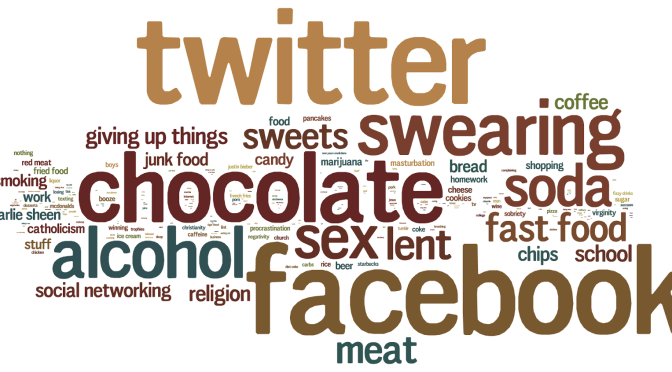
And now, one week from the transfiguration mountain top and 4 days from the ashes, we go out into the Lenten wilderness with Jesus. Like Jesus, we are about to spend 40 days in a wilderness of sorts, and like Jesus it is a wilderness about temptation. During the season of Lent, the tradition is to give something up, like meat, or chocolate or coffee, or TV, or Facebook. Sometimes people take something on, like daily bible readings, prayer or devotion.

But our Lenten journey is not all that different from Jesus’, in that during the next 40 days, the temptation will be to hold our ground and not to the lenten stories into our lives. The reason people give things up in Lent is only a little bit about disciplining oneself, and so much more about making room in our hearts and lives for the story of Jesus. To make room so that Jesus’ story starts getting air time in our minds and hearts, not just on Sunday morning, but each day. We practice making space for 40 days throughout Lent, so that when the story of Christ’s passion and resurrection finally come during Holy Week, there is room for us to hear it, to take it in, to be transformed by it as people of faith.

So, the 40 days of the Lenten season are about making space for the story of Jesus in our lives, and the temptation will be to hold our ground, keep our lives full with the other stuff. Perhaps some years we do better than others, but each Lent begins with this story of Jesus in the wilderness to remind us of just what our own wilderness experience is about.

The story of Jesus temptation is an interesting yet uncomfortable one for us. It is one of the few instances in scripture where people are not part of the story. There are no crowds or disciples, no pharisees or scribes or temple priests. Just Jesus in the wilderness fasting and praying. And then a figure who is called three different names appears in order to tempt Jesus. The devil, the tempter and Satan. And while we might imagine some kind of demonic presence, or half goat-man with red skin… the accuser or the Ha Satan is much different in scripture. The accuser is a figure who represents the prosecutor of God’s heavenly courtroom.

So after Jesus has been in the wilderness 40 days, the tempter arrives thinking that he can get Jesus to abandon the identity given him just before his wilderness excursion, the identity that God voice thundered from the heavens as Jesus is baptized, “This is my son, the beloved, with him I am well pleased.”

And so the tempter begins, “If you are the son of God…”

And yet something seems off.

The temptations aren’t quite right. Stones into bread, leaping from the pinnacle of the temple, power in exchange for worship. Jesus seems hardly phased. In fact, he almost seems annoyed with each passing attempt the accuser makes.

The tempter has misread his target, he has made assumptions that don’t hold with Jesus. The tempter thinks that Jesus will be just like all those people of faith who have gone before. The Old Testament is full of stories of the people of God falling from their identities, back into a pattern of sin and failure. Like Abraham and Sarah who doesn’t believe in God’s promises, the Israelites who complained to Moses to take them back to the better life as slaves in Egypt, like King David who couldn’t resist a beautiful woman… God’s people have the habit of falling off the bandwagon into sin and then crying to God for help. God tells the people to repent and then re-establishes their identity.

The tempter thinks Jesus will fall into sin just like the rest, when he is in his wilderness, he will turn from the identity given him in baptism and turn to consumption, spectacle and power.

And yes, the tempter understands people quite well.

These temptations aren’t temptations for us as well, but not in the same way they aren’t for Jesus.

They aren’t temptations because you can’t be tempted to do something you are already doing. We are happy and voracious consumers of the world around us. Perhaps not stones into bread, but minerals and glass into phones, we line up with our money. Fossil fuels into energy for cars, homes, batteries and we defend our right to oil like it is free speech. Sweat labour into cheep products that we buy, use and throw away – the parking lots of the discount retailers are rarely empty.

But it doesn’t end there.

We love a good spectacle. It might not be jumping off a temple, but funny impersonations of floundering presidents, envelope gaffs at the Oscars, sports championships with great comebacks… or even the local gossip about our neighbours whose marriage is on the rocks, that family member with the addiction or that co-workers who doesn’t know they are about lose their job. We love a good spectacle… we might not jump from the temple, but if someone was and there would be angels to catch them, we would be setting up chairs and selling popcorn to watch.

And of course there is power and worship. We have always known that power and its misuse makes our world go round… striving for power is not so much a temptation but a sport in our world.

And so if Jesus was like the rest of us, the tempter would have succeeded. The pattern of God’s people falling away into sin from the identity given to them by God would have continued as it always had.

But Jesus is different and the tempter doesn’t see it yet.

And so when the tempter tries to push Jesus into old patterns, Jesus won’t have it. His identity was announced and declared in his baptism, and there is no going back.

So when the tempter offers bread, Jesus reminds him that bread alone does not nourish, but instead the word of God.

And when the tempter offers a spectacle, Jesus counters with a refusal to be tested.

And then when the tempter just offers power, plain and simple, Jesus has had enough and shoos the tempter away.

Jesus knows who he is… and that this new baptismal identity cannot be left behind or forgotten. There is no turning away this time, God’s plan is the redemption of all creation. God is not leaving it up to the people, up to us to repent and turn back to God. God has come in flesh to go with us wherever we go, whether we fall or whether we repent, God will be there.

The tempter has no clue that Jesus is about to establish a new pattern for God’s people. A new way for us to be in relationship with God.

A pattern that is not about falling to sin, repentance and return.

But instead a pattern that begins with forgiveness and mercy. And that continues with this word of God that is better than bread, that fills us with hope and life. A pattern that isn’t a spectacle but that is a ritual. Not something that we gawk at individually, but that we practice and experience collectively and in community. A liturgy that takes us out of ourselves, and closer to God.

It is a new pattern that isn’t about us and our ability to get it or figure it out. God realized that humanity will never stop falling away into sin. So in Christ and in the Church, God established a new pattern for us. One that forgives us of our sin, that fills us with real food and real life, one that takes out of ourselves and away from our own hype and spectacle, so that we can make room for God and God’s story of good news in our lives.

The temptation of Lent is to not really experience it at all. The temptations of the tempter is to keep being what we always have been and to stay in the same patterns we know well.

But Jesus takes us into the wilderness to break our old ways and establish new ones. Jesus strips our old patterns and habits away in order to make room. To make room for God’s story, to make us ready for the passion and resurrection story to come, to transform us in ways that we can barely see and know, but that alter us right at the core of our being.

Jesus is helping us to give-up our old selves this Lenten season, to make room for new identities which we cannot leave behind as God declares us “Beloved Children of God.”


Photo credit: http://klskorner.blogspot.ca/2015/02/things-i-suck-at-lent-2015-version.html

Why Christians are Uncomfortable with Transcendence

Matthew 17:1-9

Then Peter said to Jesus, “Lord, it is good for us to be here; if you wish, I will make three dwellings here, one for you, one for Moses, and one for Elijah.” While he was still speaking, suddenly a bright cloud overshadowed them, and from the cloud a voice said, “This is my Son, the Beloved; with him I am well pleased; listen to him!” (read the whole passage)

When I was 17, I had the privilege of going to Germany with my High-school’s concert band program. In addition to concerts and staying with host families, we had the chance to visit historical sites, including cathedrals and churches.

If you have ever been to any of the great cathedrals of Europe, you will know that very few Canadian churches compare to the grandness of a great gothic cathedral. In Cologne Germany, we toured the cathedral. Before cell phones and digital cameras, I had to stand down the street from the cathedral to fit the church into 3 frames stacked on top of each other to take a picture of the cathedral with my film camera.

And when you walk inside, everything draws your eyes up. The arches and fresco paintings, the very high ceilings and domes. There is a pipe organ hanging from the ceiling that is itself nearly as big as a tour bus, not to mention all the pipes that would easily fill our church. There are half a dozen tours available in different languages, and despite there being hundreds of tourists milling about, the church felt very empty when I stood inside the vast space.

The cathedral’s size and design, the towering spires and gothic arches, are meant to convey one simple message. God is big. Very Big. And you are small. Very small.

The fancy word for this is transcendence. God’s transcendence was the message of the cathedral. God filled the world from the ground to the sky, and from nearly any point in the city, the cathedral’s towers could be seen. God seemed to fill every mountain and valley, every nook and cranny of creation. It was human beings who intruded humbly into a world that is God’s and not the other way around.

Today, Jesus and the disciples go up the mountain of transfiguration, and while there Jesus is transformed into dazzling white. Elijah and Moses (two pillars of Hebrew faith) show up, just to make it clear that Jesus and this moment is a big deal. If there is any word to describe what the disciples are experiencing, it would be transcendence. God is filling their world from ground to sky, in every direction and in every nook and cranny.

Yet, the transcendence is not a comfortable feeling… and who can blame the disciples? Wouldn’t we be equally confused to see a transfigured Jesus on a mountain top with Moses and Elijah?

Yet, Peter thinks he has figured things out. He suggested building a dwelling place, or a church or temple on the mountain top. A place where he can put transcendent Jesus and his buddies Moses and Elijah into boxes. Boxes where they can be easily contained and managed.

Peter has the same instinct with God that we so often do. Peter wants to change the transcendent experience of the divine into a imminent one.

Now, what is the imminence of God you ask?

Well, the opposite of transcendent. Imminence is the closeness and nearness of God. The comfortable and the intimate. It is having coffee and reading the morning paper on a lazy weekend morning. It is a snuggling in a nice warm blanket to watch a movie on a snowy day.

Imminence is manageable. And Peter is trying to turn the Transcendence of the Transfiguration into the imminence of God in a comfortable and manageable box.

Peter’s instinct is the same as one we often share. We too get uncomfortable with the bigness of God, with a God who fills the ground to the sky, who is in every nook and cranny in creation. We prefer a cozy and comfortable God, who makes us feel nice and warm, who is manageable.

An imminent God doesn’t challenge us or threaten us. The cozy faith that is only about feeling the warmth of family and friends and coffee and passive entertainment of church and worship is one that we can unconsciously strive for. In fact, Christians in North America often think that the solution to our decline is to make God even more imminent, even more cozy and comfortable, more entertaining and non-threatening.

Yet, the God that our world seems to be longing for is a God who is bigger than the troubles of the world, not a warm blanket that makes us feel nice. The world longs for a God that is bigger than war and violence, than poverty and injustice, than discrimination and inequality. The world needs a God who transcends those things in the world which we no power against, a God who is greater than evil, bigger than suffering, stronger than death. Because we all know that these things are lurking around us, and that even this week we know in our community that we have no power over when tragedy steps out of the shadows.

And so despite Peter’s desire to build literal secure boxes to keep Jesus, Moses and Elijah in, God interrupts it all. As if the Transfiguration couldn’t get more transcendent, God breaks open the heavens and fills the world with God’s voice, and speaks directly to the disciples. And with the same message from the moment of Jesus’ baptism “This is my son, the Beloved, with him I am well pleased.” But this time God adds, “Listen to him.”

And with this, the disciples finally realize what this moment is. And they fall to their faces in fear. The transcendence of this mountaintop has finally hit them. They have been struck by the message: God is big, very big. And you are small, very small. But not in terms of significance, but relationally. God’s bigness, God’s transcendence fills our world. God cannot be contained in a box and restricted to a mountain top. God is filling the world, God is filling the disciples world and our world. And God the Father has sent Jesus the Son to do the filling so the disciples ought to pay attention to their friend and teacher.

And all of a sudden, everything is back to normal Jesus isn’t in dazzling white, Moses and Elijah are gone. It is just the same four who walked hiked up the mountain are left to go back down.

But Jesus has done what Peter and what we cannot. Peter tired to turn the transcendent into the immienent, to fit a Big God into a small and cozy box, just we often try to do in our churches and communites, in our boxes of faith.

But Jesus turns to the imminent into the transcendent. Jesus take the imminent experience of being a teacher and friend of the disciples, of being close and near and intimate, of being comfortable and manageable and Jesus bridges us to the transcendence of God. For you see, even though the white closes and the pillars of faith are gone, the voice of God is no longer speaking from the heavens… the transcedence is still there.

Jesus and disciples go back down the mountain, yet the bridge to the heavens remains. And ir remains through Jesus himself. Jesus is bringing the heavens down to with him to the people. Through Jesus God is about to fill creation with God’s grace and mercy again.

Through the Jesus who will go to the cross, to the next mountain of Golgatha where the heavens will be opened again, this time as the powers of death are defeated.

And it is the same bridge to the heavens, to the transcendence of God that Jesus brings to us. No matter how comfortable and cozy we want our faith to be, Jesus bridges the imminence with the transcendent.

With intimate words of confession and forgiveness, Jesus opens us up to the mercy of God.

With water that drenches our head and hands, Jesus proclaims our identity in the Kingdom of God.

With words of eternal life spoken on our lips and in our ears, Jesus declares that God’s love for all creation is also for each and everyone one of us.

With bread and wine served with our hands and eaten with our mouths, Jesus joins us to one another and to the Body of Christ across time and space.

It was not the mountain top or the bricks and mortar of the cathedral that permitted the transcendent to exist in our midst. Rather, God is bridging us to the divine each time we gather as the body of Christ. And then Jesus brings that bigness into our small places of our lives.

On Transfiguration Sunday, in these transcendent places, Jesus opens up the heavens and connects us to the Kingdom of God. Because no matter how much we want a warm blanket God, we need a God who is bigger than all the great powers of our world. We need a God who transcends sin, suffering and death…. A God who brings heaven down into the valleys of life and who shows us that God is bigger than it all.

Floating Down the River with Jesus

Matthew 3:13-17

Jesus came from Galilee to John at the Jordan, to be baptized by him. John would have prevented him, saying, “I need to be baptized by you, and do you come to me?” But Jesus answered him, “Let it be so now; for it is proper for us in this way to fulfill all righteousness.” Then he consented. And when Jesus had been baptized, just as he came up from the water, suddenly the heavens were opened to him and he saw the Spirit of God descending like a dove and alighting on him. And a voice from heaven said, “This is my Son, the Beloved, with whom I am well pleased.”

Sermon

Imagine wading knee deep into the water. The water swirls around our feet. It is cool, and refreshing. The movement is gentle and easy. It feels good to be in the water.

We have been floating down the river for a while now. Each year, we hop into the boat together and start the trip all over again in Advent. We float towards Christmas and through Epiphany. It is a journey that is familiar yet also new each time we take it. It is a Journey that begins with end times, that stops to hear John’s sermons and questions. Then it makes its way, with Mary and Joseph to the stable manger. The journey flees with the Holy Family to Egypt to avoid Herod’s murderous actions, and we also come with the Magi to worship this baby revealed as God.

Today we pick up speed and fast forward 30 years, we float down the river Jordan where Jesus is baptized by John. Jesus’ baptism is an unusual story, an uncomfortable scene for Christians. Why does Jesus need to be baptized? For forgiveness of sins? Repentance? What does it say about John as he baptizes instead of being baptized? In many ways the story of Jesus’ baptism invites more questions as we hear it again.

In Advent, we heard John’s preaching on the river bank. His stiff condemnation of the crowds and his warnings of the Messiah. This time, when Jesus shows up, John seems very different. The confidence and boldness are gone. He is indecisive and questioning. Jesus insists on being baptized. And so John relents, without a fight. This doesn’t sound like the John of a few weeks ago.

But John and the crowds do not see what is going on. They are hoping for a powerful Messiah. A warrior who will end injustice and who will remove foreign powers from control in Israel, but Jesus is not those things. It is the beginning of the problems that John, the disciples, the crowds, the Pharisees, scribes and temple authorities will have with Jesus. Some will want an ally, some will want a powerful warlord, some will want Jesus to go away. But Jesus simply refuses to fit their categories. Jesus is going to show us God in ways that don’t see.. that we can’t see… that we refuse to see.

Remember the feeling of standing in the water, feeling the cool fresh flow around our legs? Well the further we float, the more the current picks up. The gentleness is replaced by force and weight. The water doesn’t smoothly pass by. It pushes and grabs, it pulls and drags. The cool gentle stream that cooled our feet now pulls us in and drag us along. The power of the river is more than we could have ever imagined.

Like the crowds who gathered along the banks of the Jordan, we gather to wait also. We are waiting for the world to get better. But it doesn’t.

As we tried to pause and rest over Christmas, Life and Death soldiered on in the world. There were still tragedies, shootings, war and illness. The news of violence still bombarded us from our newspapers, radios and TVs.

The world hasn’t changed all that much since John and Jesus met in the river. Sure, we drive cars, live in heated houses and can talk to anyone on the other side of the planet instantly. But, like the crowds who stood listening to John, our world still is filled with violence and death. More shootings in the news, violence in Turkey and Syria, scandal among political leaders.

The weight of all of this threatens to drown us in the inability to care any more. We hear the reports, read the news articles and it is too much to take, too much to grieve for. Not only is it hard to see what is going on as Jesus is baptized by John, it is hard to see where God is at all.

Today, it might feel like the cool refreshing water of the river has pulled us in and dragged us under. The current is churning and spins us about. We bounce in all directions, sputtering for air, aimed over the cliff, over the waterfall.

This is not what the river journey begun in Advent is supposed to be like.

This is not what God is supposed to allow to happen in the world.

We are not supposed to drown in the waters of grief and apathy!

(Pause)

And a voice pierces the chaos.

“You are my beloved. With you I am well pleased”.

Words of promise, words of hope.

As John dunks Jesus down into and then brings him up out of the water, as breath and air flood back into empty lungs, God speaks. God speaks in a way that hasn’t been heard since the beginning of creation. God speaks and the world is transformed.

We tumble over the waterfall, we plunge into the deep pool at the bottom. We are squeezed and crushed under the weight, we can’t tell which direction is up. Death under the waters seems imminent.

And then all of a sudden, while we are tossed about in the churn, not knowing which direction is up or down, we pop up and out of the water. The rushes back into our lungs. This is where God’s action begins. In drowning, in death. This is as strange a place as we can imagine God to be working. And yet, God speaks as Jesus comes out of the water “You are my beloved children and with you I am well pleased”. What a weird and wonderful God who can push us below the surface in order to make us His own. In order to give us new names as child of God, as Christian, as beloved.

This is why John doesn’t know what is going on when Jesus asks to be baptized. This is why we cannot see God working in the world. It is too radical, too unbelievable.

And yet, this is promise that was made to us in the waters of Baptism, and it is the promise that is renewed each day and remembered each time we witness another child being drowned AND raised in these waters of life. It is a promise made that in the place we lease expect it, in death God is showing us something new, something life filled, something surprising. Something that can come only from a God like ours.

A God who comes into the world as baby born to a unwed teenage mother,

a God who lives a poor carpenter in 1st century Israel,

a God who died on a Roman cross as a common criminal,

a God who was raised from the dead and who in turn calls us to be drowned and then raised,

New life can only come from a God who does not act like we believe God should.

The radical God of water and Baptism comes to us in ways that are so unimaginable and so crazy, that we can hardly make them out. The journey that God is promises is not easy or gentle. The results of God’s work in the world is rarely what we imagine or hope for. Yet, as this unexpected God meets us in our world, and on our terms, we cannot help but be drawn in to this unexpected God whose story has become our story. Whose story we tell over and over again.

As we float down the river of Advent and Christmas, as we pass by Jesus and John in the river, we see again and anew the marvel of God’s love for us. We see a God who not only pushes us below the water to die, but who pulls us out again so that we may rise into new life. And today, we hear a God who speaks through chaos

“You are my beloved Children. With you I am well pleased.”

Amen.

And the Word Became Flesh -A Christmas Story

John 1:1-14

And the Word became flesh and lived among us, and we have seen his glory, the glory as of a father’s only son, full of grace and truth. (Read the Whole Christmas Gospel)

Sermon

And the Word became flesh.

This morning, on this feast of the nativity, we have made a long journey to be here.

Through the dark places, searching for the light. We have journeyed through Advent. We draped our sanctuary and our selves in the deep and rich blues of Advent, we let our eyes adjust to the dark until the distant starlight began to peek through the darkness. Our Advent waiting and wondering led to this moment of celebration at the birth of Christ.

We began 5 weeks ago with Jesus announcing the end of time, imploring us to Keep Awake. To open our eyes to the world around us.

We continued on with John the Baptist, who was preaching in the dark wilderness to “Prepare the way of the Lord,” the Lord who will come to straighten our crooked paths.

We then followed John to prison, to the dark night of the soul, wondering if all these promises of the Messiah were in fact true.

And finally, last week, we heard the announcement. Mary would bear a child named Jesus. And our darkness, the darkness of the entire cosmos was placed in contrast to the tiny baby growing in one young woman’s womb… and we wondered if this indeed was God’s plan to push the darkness back and keep it at bay. To bring light, THE LIGHT of GOD, into the world through a tiny baby born to insignificant people in a forgotten corner of the world.

And then last night, we walked with Joseph and Mary across country, to the town of David called Bethlehem. We submitted to the Emporer’s decree to be registered, we were denied a place to rest our heads, we squatted like refugees in animal barns, we heard the angels with the outcasts and we found out that God was indeed born into our dark world, bringing real light.

We also discovered, that this 2000 year old story is a story for 2016. That if Jesus was born into a world full of darkness back then, one where tyrants ruled, soldiers killed, people lived in fear, that certainly the darkness of our world is not too much for God. That Jesus does come into our darkness too. Messiah is born today, just as 2000 years ago.

But today, the Gospel of John pulls us back from the details of the story. John gives us the Christmas story again, but without shepherds and angels, barns and journeys, without even Mary or Jospeh.

John takes us to the heart, to the meat of the story.

And the word became flesh.

John’s story of incarnation is hardly one we could reproduce with a Sunday School pageant. John expects that we can separate the details of the story from the meaning of the story. What does it mean that the God of all creation has chosen to become incarnate?

Incarnation is one of those churchy words that pastors tend use, but that actually has a very earthy meaning.

The flower with a similar name, carnation, gets its name from its fleshy colour.

Carnivale, the South American Mardi Gras festival is related to incarnation too. The great festival where you eat all the meat in the house before fasting during lent.

And carnivore, the scientific word for meat eater.

Carne means meat.

So that church word incarnation literally means”to take on meat.”

And the Word became flesh.

The birth of Christ is the moment when God puts on the meat of humanity, the flesh of our bodies. If you want to know what God looks like, look at the people around you, look at their skin and eyes and hair. When Mary and Joseph and those Shepherds looked into the eyes, of the christ child, they would have seen there all of humanity contained in flesh.

When the disciples and the crowds heard his voice, they would have heard the voice of the God.

When the lepers and the lame and blind were touched and healed by Jesus, they would have felt the touch of God.

When the soldiers nailed feet and hands to a cross, they would have pierced the Body of Christ.

But putting on our meat isn’t just about our physical bodies.

The incarnation is also how God puts on the flesh of our humanity. The darkness of sin and suffering and death. The flesh of the human condition, of limited, fragile creation. God takes on what it means to be human, to be created, to be us.

John’s Christmas story omits all the details that we tend to think the story is all about in order to bring us to heart or the meat of the matter. God has taken on our flesh in order to bridge the unbridgeable gap between God and a fallen, broken creation. God has become one of us in order to come near to all of us.

Sure, John’s version of the Christmas story might be missing a few of the familiar parts of the story, but fleshiness of the story, of the incarnation reminds us that of all the Christmas traditions we hold this time of year, the most true of them all is the one carry on with week after week. In the Eucharist as we share in bread and wine, we partake in God’s fleshiness. And we are reminded again and again that God takes on our flesh AND we take on God’s. That God’s light and life comes near to us again and again. Given and shed for us.

And as God comes near, as God becomes incarnate, God begins to reveal the light that has been missing from our world. We begin to see just how pervasive the darkness was. We begin to see that even the smallest bit of real light coming into life through a young woman giving birth in a barn is more light than we can handle. We begin to see that God comes and comes in small space, because even the smallest light pushes the darkness away, but the darkness can never diminish even the smallest amount of light.

The light shines in the darkness, and the darkness did not overcome it.

As we began in Advent seeing the dark places of the world, making our way from the end of the world backwards to the beginning, to the announcement of the coming Messiah, to going with Mary and Joseph to Bethlehem and with angels to shepherds, John tells us that our destination was here. Here with the Word in the beginning. Christmas is where God begins creation anew.

Christmas begins all things new, because the darkness of sin and death will no longer have hold over us. Because the old order of things has ended, and now the Christ born into flesh has come today.

Christmas according to John might not have all the details we think are normally part of the story, but John does take us to the heart, to the meat of the matter. John strips the details back to open ears to hear, our eyes to see, our hearts to know that this story of a babe being born to virgin in a stable in Bethelhem, is the story of God coming into our world, coming in order to be near to us again.

Hear John’s final line in the Christmas story once more:

Today, the Word becomes flesh and lives among us, and we have seen his glory, the glory as of a father’s only son, full of grace and truth.

Amen.

Not the Christmas we want but the Christmas we need

Luke 2:1-14(15-20)

In those days a decree went out from Emperor Augustus that all the world should be registered. This was the first registration and was taken while Quirinius was governor of Syria. All went to their own towns to be registered. Joseph also went from the town of Nazareth in Galilee to Judea, to the city of David called Bethlehem… (Read the whole Christmas Gospel)

Sermon

You may be expecting a story tonight.

For the past three years, Christmas Eve has been a chance to tell the story of Christmas in a fresh way, with modern versions of the Christmas story. However, tonight will be a bit different. Rather than something that sounds like a Vinyl Cafe story (Lake Wobegon for American readers), we are going to tell and hear the Christmas story with new ears to hear and new eyes to see. As the angels said to the Shepherds:

Do not be afraid; for see– I am bringing you good news of great joy for all the people

Like a lot of the world, 2016 has been a rough year for us. Politics has been messy and ugly. We have been subjected to constant news of war and violence and terror attacks around the world. There are near daily stories about the effects of climate change. Our culture and society is having conflicts around issues of race, gender, religion, and ethnicity. We never know when there will be another mass shooting, another earthquake or hurricane or forest fire. Any moment, another celebrity death will stream across social media feeds when we least need hear it.

And here at Good Shepherd we have born the weight of more than our share of illness, tragedy and death.

So maybe for you Christmas is just the same old, same old time for family, traditions and memories this year.

But it is probably the case that for most of us, Christmas lacks a little something. It feels a little duller and subdued. The magic just isn’t quite there for all the reasons that 2016 has been so difficult.

And we think that Christmas is supposed to have that special quality, that feeling of being different than the normal and mundane things of every day life. Christmas is supposed to lift our spirits, remind us of better things, be a time for sentimentalism and warm fuzzies. It is like that Christmas Card with Mary gazing lovingly down at newborn Jesus – it should melt our hearts. It should feel like special moment when we all sing silent night to candlelight, – glowing faces all around.

But this year it hasn’t been those things. Maybe tonight was supposed to be the chance to reclaim what Christmas is supposed to be…

So here is the thing.

The Christmas story that we know, the one that goes along with silent night, kids dressed up in cute outfits, family traditions waiting at home and presents under the tree… is not exactly the real version.

At the risk of sounding like the pastor grinch…

All the nostalgia is less about Christmas than we think. In fact, all those things that we listed earlier that made 2016 such a hard year… they speak more to Christmas than we want to think about.

When we hear that familiar story from Luke that we just read… it is easy to imagine the Christmas pageant or TV version.

But the very first line of story takes us to something a little more 2016 than we might be comfortable with.

“In those days a decree went out from Emperor Augustus that all the world should be registered.”

We have political leaders talking about a registering certain kinds of citizens, talking about values tests and ways of sorting us into good and bad.

Mary and Joseph were part of that group that was called upon to register, because of their religion, the colour of their skin, because of where they came from – they were part of a group that those in power wanted to track and monitor.

And so, like so many migrants forced to move their homes, regardless of age, health, ability or even whether or not they were pregnant, Mary and Joseph were forced to pack up their lives and move across country.

Perhaps for the first time in decades, we have a better understanding of what the Emperor was doing by announcing a registration, and it wasn’t good.

Like the millions of refugees around the world or like so many who live in poverty on our planet, Mary and Joseph had no safe place to stay. There was no refugee camp or shanty town to go to. There was no kind soul to take pity of them. All they could find was essentially a place to squat out of necessity.

And so Mary gave birth in a stable… but not the sweet and sanitary stable that we might imagine. But probably a cold and dark cave where the animals were kept. Imagine a refugee family hiding in an abandoned building or out in the woods… none of us would consider this a good place to spend the night, let alone have a baby. But this is where the mother of God was forced to give birth.

Then once the ordeal of child birth is over, a gang of Shepherds show up. Not the cute ones wearing bathrobes that we imagine. But shepherds who were the dregs of society, more like drug dealers and addics, not good and polite neighbours bringing casseroles, not well meaning aunts who stop by the hospital with flowers. But the kind of people that most of us would cross the street to avoid…. these misfits are the ones who show us first to worship this new born child.

But just to top it all off, Jesus is born to a teenage mom with an older man looking after her and her child despite not being the baby’s father. Jesus is born into the kind of situation where would we expect child and family services to intervene and remove the child. Yet, this is the family that God chooses to care for the Messiah.
Once the baby is born and somehow the holy family has survived everything from being forced from their homes to register, travelling across country, giving birth in squalor, being visited by the riffraff of society…. Mary and Joseph are left on their own. Left in a world where they have no home, where soldiers would be looking for them soon in order to kill the baby boy, where foreign powers and corrupt kings controlled their lives, where there was no safe place to live or hide, but the only safety was to keep moving out on the open road…

Hardly sounds like Christmas, does it?

Except this is the Christmas story.

And it is important that this is the Christmas story.

Because the warm fuzzy version is not what our world needs. The traditions and carols and movies and light strung up might make us feel good, they may even bring a certain joy and hope to our dark December…. but the TV version of the Christmas story will not save the world. It will not save us from all the things we need saving from.

In fact, in a world where we can name three major tragedies just this week in the Christmas Market in Germany, the war in Aleppo and fireworks explosion Mexico, the fact that the first century world of Mary and Joseph, the world of Caesar Augustus full of registrations and soldiers and refugees and danger…. that this world of 2000 years ago is very much like our world today…

This fact means that if God can be born to a teen mom and a step dad in 1st century occupied Israel, means that surely God can be born in our world.

That Jesus is found in Christmas markets struck by tragedy.

That Jesus is born in the bombed out rubble of Aleppo.

That the holy family passes through fireworks markets while on the road.

As much as we want the magic of Christmas,

The world needs the Messiah to be born,

The Christ who is willing to go and be found in the real Christmas places.

God in Christ is willing to be born among us in order that we can see that God has come near. Near to us in the ways and places that we need most. God comes near, God joins in creation, taking on our flesh to show us that we are not left alone to sort out this crazy world. That we go into the night with God along side us, that God is facing the dangers with us, that surviving our world, that confronting sin and death is precisely where God comes to meet us.

The good news of great joy at Christmas is that the God of light and life has not left us on our own, but comes into our world to live life with us, to give the small but enduring hope found in a baby that changes the world.

2016 might not feel much like Christmas as we know it, but it just might be the closest to the first Christmas we have ever been.

The story that we tell tonight is so much bigger and so much deeper than the feelings we try to recreate time of year. The real Christmas story, the real story of Jesus’s birth in our world is about all the feelings that we don’t want to have this time of year. It is about the fact that God comes to into a world that needs joy and hope and light.

So just as those Angels proclaimed: Do not be afraid.

Do not be afraid if Christmas doesn’t feel like we think if should this year…. because it is precisely into this world of ours full of difficulty, hardship and struggle that Jesus is born. Born in the city of David, born here among us

Amen.