Tag Archives: lent

Waiting for God’s Answers

John 3:14-21
Jesus said to Nicodemus, “Just as Moses lifted up the serpent in the wilderness, so must the Son of Man be lifted up, that whoever believes in him may have eternal life.
“For God so loved the world that he gave his only Son, so that everyone who believes in him may not perish but may have eternal life.

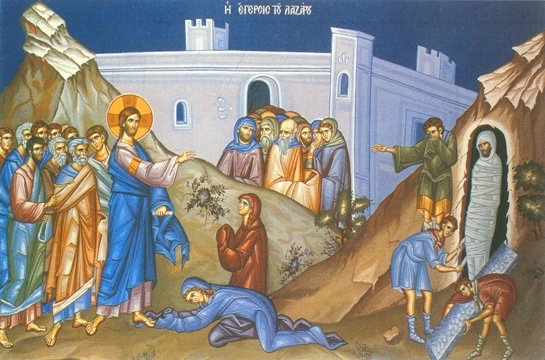
Each Lent  invariably leads us to and prepares us for Holy Week, for those most important 3 days of the church year: Maundy Thursday, Good Friday and Easter. We do so by journeying with Jesus from Baptism to Wilderness and from Wilderness to Jerusalem. Along the way, we hear hints and signs of what is come. In other years, Lent is filled with stories about Jesus’ ministry. He meets the woman at the well and tells her of living water. He heals a blind man by spitting in the mud and putting the mud on the blind man’s eyes. Jesus feet are anointed by Mary and he is prepared for burial. Jesus calls Lazarus from the tomb as a sign of what is coming on Easter Sunday. 

But this Lent is more of a slog than usual. This liturgical year as we focus on the Gospel of Mark, we are dropped into the major themes of Mark’s gospel. No one ever knows who Jesus is the Gospel of Mark, and Jesus tries to keep his identity a secret. He constantly tells the people around him not to tell anyone of his miracles. 

For the last 3 weeks of Lent, have been faced with the fact that we still do not truly know or understand who Jesus is and what Jesus is doing in the world. Jesus began 3 weeks ago by going into the wilderness. Into the wilderness to be tempted by Satan. But also into the wilderness to find us… into a wilderness that we have been wandering in for much longer than this season of Lent. Into Pandemic wilderness, into the wilderness of the decline of Christianity, and the wilderness of change. 

This year we went from wilderness  beginning Lent, to Peter’s rebuking of Jesus for talking about dying. But Jesus told him to “Get behind me, Satan”. Jesus was reminding Peter, and reminding us, that God has very different plans. God is going to save the world in a way that we cannot comprehend or imagine. 

Last week, Jesus overturned the market stalls in the temple. He told the animal vendors and money changers to get out. Jesus was furious that people were trying to sell a piece of God’s love. Jesus wouldn’t have it. Jesus reminded us that we cannot profit from God’s love, because God freely gives love and forgiveness away. 

This week, we hear some very familiar words from the Bible. “For God so loved the world…”. Christians of all stripes are encouraged to learn these words by heart. Luther called John 3:16 the Gospel in a nutshell. Yet, as we delve into the verses around 3:16, we discover that this verse is so much more than a simple explanation of the gospel taken out of context. 

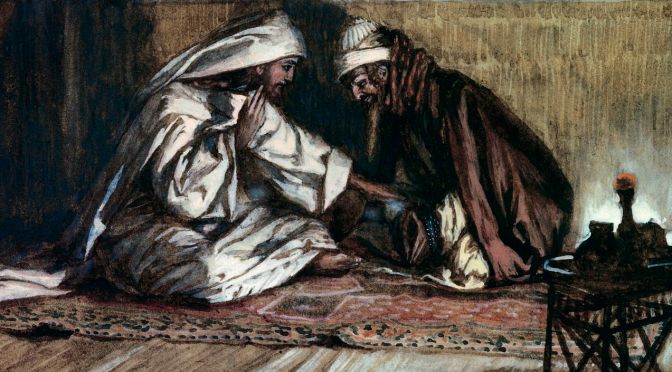
This familiar verse is in fact Jesus’ answer to a question. A question posed to him by the Pharisee Nicodemus, who has come asking question. Nicodemus whose world has been rocked by Jesus’ coming onto the scene. Nicodemus thought he knew the path to salvation – follow of the law of Israel and you will be righteous. And yet he also sees that Jesus has been sent from God, and Jesus doesn’t seem to live by the same adage. Nicodemus wants to understand how all these things reconcile, he asks Jesus how one can be born again. He wants stability and certainty, he wants to move on from this disruption that Jesus has introduced. 

Each week of Lent so far has felt like it is taking us from one wilderness to another, one moment of uncertainty to the next. A reminder that God’s promises can sometimes feel so very far from us, that stumbling from one uncertainty to another doesn’t always feel like we are getting somewhere. That our desire for answers and certainty are not usually met neatly and straightforwardly by God. 

Nicodemus comes with his questions trying to figure out his own life, and Jesus gives an answer about God’s plan that include all humankind and all creation. Jesus answers from a perspective that Nicodemus… that we… might not be ready to hear an answer from. 

So what does all of this mean? What is God up to? Where is God taking us? We want answers, we want to reconcile this messy confusing world that we are living in. Like Nicodemus we want to move on from the disruption. For him the disruption that Jesus brought to the religious order. For us the immediate and intense disruption of pandemic, the larger and slower disruption of decline, and the even larger and more pervasive disruption of a rapidly changing world. 

Waiting for answers, waiting for things to make sense, waiting to be relieved of our inconvenience and discomfort… waiting for God to finally get us to the next thing… it can make us squirm with anxiety like waiting in a long line-up for the bathroom or for a rainy day to let up so that we can go outside or for a slow moving train to pass by us at a railway crossing when we are in a hurry. 

In the midst of our waiting and discomfort God is working on us and it sucks. God is forming and shaping us, making us ready for the thing that is coming next, opening our perspective beyond ourselves and our inconvenience. 

Today, on the 4th or 40th Sunday of our Lenten wilderness,  God is preparing us for cross and for empty tomb… and it is hard to endure. 

And God’s work on us can hurt at first. It can feel like that first ray of sun light that stings the eyes after being in dark building. It can feel like the pain of a deep tissue massage, working out the kinks and knots. It can feel like those first painful and sharp breaths that come into our lungs after being dunked under the waters of a cold lake. 

This Lenten season, as God makes us ready for the salvation that is on its way, it can be hard to endure without the glimpses of Easter that we get in other Lenten seasons. We will not listen in as Jesus forgives the woman at the well. We won’t see with new eyes with the blindman. We won’t watch as Lazarus walks out of the tomb. Instead, we are reminded of where we are going. Of where we are going with Jesus. 

Jesus is on his way to be lifted up. Jesus is on his way up a cross. And from that most terrible place of suffering and death, from that Roman cross meant to be the most humiliating way to die, God is using Jesus to save the whole world. 

This is the promise that is made to us today, in the midst of our Lenten waiting for answers. Jesus has not come into the world to condemn it, but the world is condemned already. We are condemned already. We are dead already. Right from Adam and Eve we have chosen ourselves first and we have chosen death. We have chosen to be our own God’s. We have chosen to align ourselves with anything and anyone but God. 

Yet we also hear that God so loves the world. God so loves the world that has chosen anything but God. The world that would rather die than let God be in charge. This is the world that God loves. Love is how God chooses to judge the world, rather than with what we justly deserve. Our discomfort with waiting, our desire for answers and certainty push us so often towards darkness and death that God should let us have, but instead God gives of Godself over to our death dealing ways. God in Christ is given over to be lifted up and then shows us something new. 

God shows us life. Life instead of death. Light instead of darkness. Healing instead of suffering. And yes, it hurts to wait for that promise to be realized. It hurts to have those wounds and scars covered over. It hurts to look into that light when our eyes were accustomed to darkness. It hurts for our hearts to start beating when they have stopped and for breath to be forced back into our lungs when they are empty. 

But this is the God of John chapter 3 verse 16. A God who so loves… so loves… the world that God gave the son. God’s only son to a world that wants to die, but that now, because of the cross and because of Christ, will find out that death is the path to life. God loves us so much that God will come and be wherever we are in order to save us. 

God is going to save a world simply cannot wait through anymore discomfort or uncertainty.  God is going to save the world by dying, no matter how much we protest with Peter. God is going to save the world freely no matter how many market stalls we set up in God’s house.. God is planning to save the world, even when we just cannot wait a moment more for salvation…   

Even we cannot look beyond ourselves and our problems of the moment… Today, we are reminded that God’s salvation plan is for more than we can imagine. God’s salvation is given freely for us and for all.  

The Anxiety of Lent

Mark 8:31-38
And Peter took him aside and began to rebuke him. But turning and looking at his disciples, he rebuked Peter and said, “Get behind me, Satan! For you are setting your mind not on divine things but on human things.”

Last week Jesus went into the wilderness as is always the case on the first Sunday in Lent, and there he met us where we have been lingering for what feels like a year. The liturgical season came around again to meet us where we have been this whole time. And with that, we entered lent as the church, remembering that we are ash, and our alleluias put away. 

Our Lenten journey continues this week with some contradictory statements from Jesus. Statements that speak to the way Lent challenges us to examine ourselves: If try to save your life, you lose it. If you want to follow Jesus, deny yourself. If you want to live, you must die first. 

These kinds of contradictions define the the way that Jesus encounters creation, encounters us.  And in the season of Lent we take the time to consider what these contradictions from Jesus mean. 

Jesus begins by teaching his disciples that the son of man must be suffer, be rejected and die before rising again after three days. And Peter doesn’t like it, and he lets Jesus know. But like an old fashioned school teacher Jesus sends Peter to the corner of the room with the dunce cap. Jesus does not take kindly to Peter’s rebuke. Jesus has no interest in Peter’s fears. Jesus is not worried about dying, Jesus is talking about life. 

Peter is busy worrying, while Jesus is telling him, and the disciples and crowds, about God. And yet usually we are still with Peter, and these days more than ever we know about worrying about drying. Our lives are full of worry and fear and other myriads of concerns, so much so it is hard to live. Our fears and our anxiety seemingly control us and the world around us. And rightly so… we continue to live in an extraordinary time. Peter gets it, what is Jesus missing?

It is hard to not to have our fear and anxieties fed by the world daily. Turn on the news for a couple minutes and there is no escaping worry. Pickup a newspaper and try to find story without the word pandemic or COVID-19. Check social media or the internet and find people angered by government actions, whether they think pandemic measures are too much or too little. 

Fear makes us feel powerless and week, unable to see any hope. Anxiety has a hold over our economy, over our politics, over our communities, over our churches… over our very bodies. Like Peter, our fears cause us to do things that don’t make sense, like scolding our teachers or speaking before we think. Our fears hold us back, keep us from acting, keep us from risking, keep us from experiencing the world around us because we cannot imagine things turning out well for us. Like Peter, our fear and our anxiety prevents us from seeing God in our midst. 

This confrontation of our fears and anxiety is one of the inevitable meetings of Lent. Our fear makes it hard, impossible even, to see what God is up to in the world, what is God is doing in our very lives, despite our fear and anxiety. 

Peter’s fear is keeping him from hearing what Jesus is doing. And if Peter could get past his fear of Jesus’ death, he might take a moment to think a little longer about the rest of Jesus’ statement. Peter is planted too deep in his anxiety… he cannot hear the part that he should be asking about. “After three days rising again?”

But even when Peter misses the point, Jesus continues to make it. Jesus is not above contradiction. In fact, Jesus knows that it is in seeming contradiction that God’s work is done. Die and after three days rise again Jesus says. Lose your life to save it Jesus says. Take up your cross, follow and you will live, Jesus says. 

Peter is so busy being afraid and anxious, that he cannot hear that with God, death will lead to something new. 

So often, Peter’s fear is our fear. So often, we just can’t shake our fear to see God’s work around us. But that doesn’t mean that God isn’t doing the work. It just means, like Peter, we are going to be really surprised when we peer into that empty tomb on Easter morning. 

It is easy for us to look at Peter and wonder why he didn’t get it, but God’s work among us is just as shocking and just as hard to imagine. Jesus tells Peter that crucifixion is coming, and Jesus tells us that there is drying is happening all around us. Of course there is the tragedy of human death, but there is also all kinds of other deaths. Death and change. Changing communities and neighbourhoods, dying relationships, dying habits and ways of being, dying and changing institutions and structures. Our past is and so much of what was an old world is just slipping through our fingers, and there is a new world knocking on our doors. 

And all this makes us anxious. 

 Yet, Jesus isn’t giving us a warning, Jesus isn’t trying to get our hearts racing or making want to just pull the covers over our head and stay in bed each morning. 

Jesus is pointing us to the places where God is at work. 

Jesus is telling us what God’s work looks like. God’s activities in the world simply do not ease our fears or quell our anxieties. God’s work does not ease us into the future, or protect us from the unknown. Instead, God is doing something much more amazing than fitting into a box that our anxiety can handle. God is turning death into life. God is transforming us into disciples and evangelists. God is reconciling a broken world. God is showing us what it means to gain life. 

God is showing that us letting go of all the things that we hold on to, all the things that we fear losing – a world that we spent so much time and energy holding on to, that seems so foreign now –  God is showing us that fearing these things is not living. But rather, God’s version of life means being open to future, open to the other, open to God doing something completely unexpected in our midst. 

Jesus will have none of Peter’s fears today, nor will Jesus have any of ours. Instead, Jesus calls us to let go. Let go and God’s activities in the world will completely surprise and shock us. And still, even if we don’t let go, like Peter cannot, there is going to be an empty tomb waiting for us when we least expect it. 

Still the Season of Lent

*This is a guest sermon by the Rev. Courtenay Reedman Parker (Sorry for getting it up so late in the week!)

GOSPEL: Mark 1:9-15

And the Spirit immediately drove him out into the wilderness. 13He was in the wilderness forty days, tempted by Satan; and he was with the wild beasts; and the angels waited on him.

“And the Walls Come Tumblin’ Down”

Early in January I took part in a preaching seminar and text study for Lent, led by Rev. Dr. Karoline Lewis, professor at Luther Seminary, St. Paul. My sermons and our mid-week Lenten devotions will be informed and inspired by her study which was entitled “Sir, We Wish to See Jesus.”

Here we are, again (still?) in the the season of Lent. 

And for the third time since the start of Advent, we are hearing the story of Jesus’ baptism. For the third time in as many months we hear “and just as Jesus was coming up out of the water, he saw the heavens torn apart and the Spirit descending like a dove on him”

This gospel of Mark, for as short and succinct as it is – and with its less than satisfactory ending – has so much packed into it. Which is, perhaps, why we keep coming back to the beginning. Back to Jesus’ baptism. Back to pick up on a detail we missed the last two times: the heavens are TORN apart. 

Just as Jesus is named and claimed God’s beloved the heavens are torn apart. There is a split. A schism. The Greek word that is used here is “schizo” and the only other time that it is used in Mark’s gospel is the tearing of the temple curtain in Mark 15: “Then Jesus gave a loud cry and breathed his last. And the curtain of the temple was torn in two, from top to bottom” (Mark 15:37-38).

And usually, talk of splits in churches often cause us to feel uncomfortable and maybe even bring up uncomfortable memories or experiences of splits or other trauma we’ve experienced. 

But that is what Mark records at Jesus’ baptism: Just as Jesus comes up out of the water – breathing his first breath as a baptized child of God, the heavens are torn apart.

Torn apart. 

Split. 

Broke open.

This part of the story informs so much of what happens next: where God is, where Jesus goes – where we go next – into the wilderness. Not by choice. God’s Spirit drives… compels Jesus… and us there. Or as one seminary professor put it, the Spirit grabs Jesus by the scruff of the neck and tosses him into the wilderness. This wasn’t a weekend camping trip. This is a wilderness experience that will take Jesus from one place to another. 

It is Lent after all. 

And Lent takes us places. Specifically from one place, from the place of sin and death, to another… to forgiveness through the cross, resurrection, new and abundant life. 

PAUSE

Last year, we began Lent in some typical ways: we gathered here, in this place for Ash Wednesday. We confessed our sin before God, and we remembered that we are dust, and to dust we shall return. We began our midweek worship practice of Soup Suppers and gathering for Holden Evening Prayer. 

And mid-way through our Lenten discipline, our wilderness journey, the world changed.  We were thrust into wilderness. It is the Lentiest Lent that ever Lented we said.

It is now a year later. We have moved through every liturgical season together in and through pandemic. Ashes to ashes. Dust to dust. New life and new ways of doing and being church together even as we are apart. We have moved from Ashes and dust to new life of Easter. From growing in our faith in the season of Ordinary Time, marking festivals and feasts, and moving into the season of watching and waiting for our Lord to appear. We have celebrated the birth of Emmanuel – God with us – and have been led by the Epiphany star to see and hear and understand God in new ways. And just like that, we’re back to Lent once again… once again thrust by the Spirit back to the wilderness that is Lent… the wilderness that moves us from the mount of Transfiguration to Golgatha; from one way of being to turn us and re-turn us back to God. The wilderness that challenges our assumptions about who God is, and who we are as followers of Jesus (like, why am I STILL  in the wilderness?!).

We might be wondering how and where we encounter God in this time and place when the physical place we have long known and trusted to be the place where we encounter God and God’s people, our people, is not available or accessible to us – it might feel like we’ve been wandering the Lenten wilderness for longer than the 4 days between Ash Wednesday and today!

Because We have been in the wilderness… we are IN wilderness. 

And like God’s faithful before us, wandering the wilderness is not easy. It does feel at times like we are being torn apart. That our way of life is being torn apart. That we are separated from God… from one another… from the places and people we love… we might even feel torn from ourselves. Because we are being changed in this time too. 

On Ash Wednesday we are invited into the discipline of Lent – we confess our sin and remember our own mortality before God, our need for God’s saving grace in our lives and or world because we cannot save ourselves. We acknowledge and ask God to come to us… to be returned to God. 

So we really shouldn’t be that surprised when the Spirit drives us out the places where that will happen. 

Recently, I heard Bishop Jason reflecting on wilderness journeys asking, “are we wandering in the wilderness or living in the woods?”

Is this a transformative wilderness experience of listening to and for God, and being changed by God or are we simply hanging out in in this particular location? 

What does it mean for us, to us, that the heavens are torn apart?

What does it mean that we are torn apart – separated? From God and from one another?  That God comes into our messy and messed-up world, into the separations of life and death, rich and poor, religious and ethnic separations, socio-economic and racial barriers. All which separate us from one another and from God. 

What does it mean that God tears heaven apart to descend on us – into our world and into our being?

The beginning of the good news of Jesus Christ, the beginning of Jesus’ life as a baptized child of God includes the reality of God tearing the world open so that God can come down to be with Jesus as he is driven into the wilderness… so that God can be and WILL be and IS with us as we are driven to the wilderness places. 

This might not sound so much like good news. 

It’s messy and hard to look at – things being torn apart. 

It’s jarring and maybe counterintuitive. 

God comes to us, not on our terms, but on God’s terms. God’s Spirit descends into us in baptism and drives us to places we would not go and do not choose for ourselves. God’s terms turn the world upside down and tear the world apart in order to make the world new again. 

We can’t go back to the way things were before – we can’t un-see the tear… we can’t un-see the brokenness or simply go back to normal. We simply cannot just patch it back up and have it be the same as before. There will always be a tear. That is the point.

God comes into the world to change the world… to change us. 

And that happens in and through Jesus. 

Named and claimed in the waters of baptism. “You are my beloved son” – Jesus needs to hear this so that he can do what he is called to do. We need to hear it too! If God is going to tear everything down, we need to hear that we are God’s beloved AND that God’s Spirit descends on us as the Spirit drives us into the wilderness. 

We need to hear that we are God’s beloved AND that God’s Spirit is with us here and now in our wilderness wandering. We are not simply living in the woods but being led through wilderness with the Spirit leading and the angels attending even in the midst of wild beasts and temptation that want us to believe we can go back to normal even when we know that’s simply not the case. 

So, now what?

What will our ministry look like?

What shape will our faith and the way we live that faith out in the world and in our community and communities of faith look like – not just this Lent, but moving forward? What does it mean to DO ministry, to follow Jesus, to embody Jesus as the Body of Christ in this time and into the future God is leading us towards and in – to? 

The promise of Lent – the promise of God in Jesus – is that God comes to us. And that means… that requires breaking barriers… it means and requires the heavens being torn apart. God transcends all those things – places and people – even our selves – to bring the kingdom of God near, to proclaim the good news for all to hear. 

That God stops at nothing, not the barriers we place upon ourselves and others to, will tear open the very heavens God created to name us and claim us beloved – God’s own, to descend upon us so that even as we are thrust into places we do not choose for ourselves, we go trusting that we belong to God and that God does not leave us alone in our wilderness wanderings but walks with us through the valley of the shadow of death to new life so that we too can proclaim “the kingdom of God has come near; repent and believe in the good news” believing, even with it’s cracks and tears, that it is good news. 

May it be so. AMEN. 

Lazarus, COVID-19 and the Thing we are All afraid Of

The sermon starts at about 23:00 mark

GOSPEL: John 11:1-45

1Now a certain man was ill, Lazarus of Bethany, the village of Mary and her sister Martha. 2Mary was the one who anointed the Lord with perfume and wiped his feet with her hair; her brother Lazarus was ill. 3So the sisters sent a message to Jesus, “Lord, he whom you love is ill.” 4But when Jesus heard it, he said, “This illness does not lead to death; rather it is for God’s glory, so that the Son of God may be glorified through it.” 5Accordingly, though Jesus loved Martha and her sister and Lazarus, 6after having heard that Lazarus was ill, he stayed two days longer in the place where he was. (Read the whole passage)

Sermon

Today is the final Sunday in the season of Lent. This means we stand on the precipice of Holy Week. And unlike the predictions of some world leaders out there, we will NOT have full churches on Easter Sunday. 

In fact, the calendar may say that Lent is ending, but it feels like our wilderness journey is just beginning. The school and public services closures that were predicted to last weeks, are now being planned for months. Business are shuttering their doors, the economy is suffering even as the government plans significant supports for businesses and employees alike. 

And then there is the truly grim news, reports of more and more confirmed cases of COVID-19. Followed by equally hard to hear news of deaths resulting from the illness.

Our Lenten journey began in the wilderness with Jesus, then moved to the nighttime with Nicodemus. Then into the daylight with the woman at the well, followed by the blindman last week. 

Today, Lent gets a little more real. We have been headed here since Advent and Christmas, but we have been able to skim over the real issue for weeks. The themes and images of Lent:  desert and fasting, existential questions in the night, social isolation at the well, a community in chaos around the blindman who could now see… they have all skirted the real issue. The real issue that we face today and that will confront us through Holy Week. 

It is of course the thing that the whole world has been thrown into chaos over. It is the real thing that all the social distancing measures are about, the real reason why we are trying to flatten the curve. 

In fact words the words Coronavirus and COVID-19 have become euphemisms, words that hide the real thing we are talking about. 

Jesus says it out loud to his disciples as they plan to go to to Bethany. 

“Lazarus is dead.”

Death. 

Once you make the connection it is unmistakable. Nearly every time you hear the word coronavirus or COVID-19 in the news, replace it with the word “death” and you will be able to see what the panic and fear is about. 

But it isn’t just physical death. It is the death of what once was, of what we used to be. The world has changed, and we can feel it. Things won’t go back to what the once were, this won’t be just a little 3 week enforced staycation… this is a game changing moment for all of us. 

I once heard an Old Testament scholar describe his experience of receiving a cancer diagnosis. As he sat in his doctor’s office and received the news, it felt like the soundtrack of his life was turned off. All of his dreams, hopes and plans that filled the world around him just disappeared. And there was nothing, silence, emptiness. 

Modern people he said, “fill the sky with ourselves.” We loom large in our own little existences. And God…God is far away. 

Yet, for the ancient people of the Old Testament, they didn’t see themselves in the same way. They were small. God was big, God filled the world.

And yet these days our soundtracks have been turned down, if not off completely. We have been compacted into our homes. Our hopes and dreams and plans put on hold, or (Hashtag) #cancelled. 

We are being made small by a thing that we cannot see, but that we know is there. 

As Jesus makes his way to Bethany, Martha comes and meets him on the road. And her soundtrack had almost certainly been turned off by the grief she was experiencing. Her life put on hold by the death of her brother. But perhaps more significantly, I wonder if her experience of God was turned down too. With her brother dead and buried, the God of Life that was supposed to fill the world probably seemed distant or not there at all.  

Martha says something that many of us may probably feel. 

“If you had been here, my brother would not have died.”

She wants to go back. Back to the before time, back to when the soundtrack was on. She wants her brother back, she wants her own life back. And she knows that Jesus, that this one sent by God, could have done something. 

Jesus and Martha talk, Jesus promises her bother will rise again, but Martha doesn’t hear it the way Jesus means it. She knows the promises, but they seem far away. Something for later, not something that matters in the present moment, not when there is a fresh body in the grave. 

Then Jesus meets Mary on the road. She too knows that Jesus could have done something, yet she seems more resigned to the moment, there is nothing left for her but grief. And so Jesus joins her as he can, weeping with her even knowing what he is about to do. 

There is something so very tangible about this scene from the Gospel of John. Those who have grieved a loved one already know it. But as we all face the uncertainty of pandemic, as the days and hours slow to a crawl and the world becomes more and more silent… we know in a new way what that walk to Bethany was like. 

We might want our soundtracks to fill the sky again, or we might be resigned to our unknown fate with nothing to do but weep. 

But we are are walking to Bethany today, and will keep walking for the foreseeable future… 

Yet, even as God feels far away or gone altogether… Jesus does not abandon us to the silence. 

Even as we feel small and compacted, surrounded by silence and fear, Jesus doesn’t leave us to wither. 

But Jesus doesn’t just show up at the end. 

Jesus walks the Bethany road with these grieving sisters. 

Jesus walks our down our road of social isolation and pandemic with us. 

And Jesus speaks the promise of God to Martha, the imminent promise of new resurrection and new life… even though she cannot hear or comprehend it. 

“I am the Resurrection and the Life”

Words spoken to Moses in burning bush, words spoken to disciples fearful of the storm. 

And Jesus weeps with Mary, because the experiences of this life cannot just be glossed over with a happy ending. They change us, and so God weeps with us, God sits with us, feels with us, loves us in the midst of all the things of this life. 

Jesus doesn’t just skip to end, but walks the road with these sisters, with his disciples, with us. 

And only then, once they have walked the road Bethany, once they get to tomb, Jesus shows Mary and Martha that the promises of God are not far off. 

And still, as Martha protests because she can still smell death in the air. 

And still, as we can hear and see the news, as we feel small and helpless… 

Jesus shows us that the promises of God are not far off. 

Jesus has stone rolled away.  

Then with the same voice that spoke over the waters of creation, 

the voice that speaks over the waters of baptism, 

with this voice Jesus calls the dead man from his grave. 

“Lazarus, come out!”

And out walks death itself.

“Mary and Martha, come out!” 

Except it isn’t death. 

“My beloved children, come out!”

It is life. 

And the promises of God are revealed.

This isn’t going back to the before time. This is the new thing that God is making after. 

This is the promise that is revealed on the third day. This is the empty tomb discovered by the women early on the first day of the week. This is what comes at the end of the walk to Bethany. 

And we are still on our walk to Bethany. 

We are still looking back to the before time. 

Yet Jesus declares that I AM’s promise of resurrection and life are closer than we can comprehend. 

And we are weeping, resigned to an unknown future. 

Yet, Jesus weeps with us, neither abandoning nor forsaking us, but showing us God’s love poured out for us.

And today, Jesus promises, that our Bethany road, our COVID-19 road, our road of life will come to an end too. 

And Jesus will call out to us, 

My children, come out!

And we might see and hear and smell and feel like death. 

But New Life will surprise us, the God of Resurrection will surprise us, 

By filling our skies anew, not with our own hope, dreams and plans,

But with the grace, mercy and love of God that meets us on the way.

Amen

Worship in the age of COVID-19 – Coming Together to Stay Apart

***This sermon can be viewed as a part of streaming worship on my congregation’s Facebook page: http://www.facebook.com/sherparkwpg. ***

The Sermon starts at about 20:30 mark of the video

GOSPEL: John 9:1-41

...6When he had said this, he spat on the ground and made mud with the saliva and spread the mud on the man’s eyes, 7saying to him, “Go, wash in the pool of Siloam” (which means Sent). Then he went and washed and came back able to see. 8 (read the whole passage)

Okay…

So if you are feeling like this is a little weird raise your hands. It’s weird to be watching me on your phone, tablet, or computer, rather than sitting here in church, in your favourite pew with family and friends. 

It is weird for me too. Weird to be standing in a empty church, having worship with what feels like myself. I am talking to my phone like it is a person. 

But here we all are, on our own or with just immediate family. And for most of us, we probably haven’t spent much time with others during the course of the past week. The last 10 or so days have felt like the world has been turned upside down. It started two Wednesdays ago, I was watching the Oilers play the Jets (cheering for the Oilers, of course) when it was announced that the NBA had suspended its entire season. There was this feeling that things were going to change. 

Today, so many places are closed, public spaces, private businesses, schools and churches. Stay home as much as possible is the advice, the instructions from our leaders and public health officials. 

And so we are doing it for the sake of one another. We are staying home in order to keep our neighbour safe. Because any one case of COVID-19 might just be like a mild flu, or uncomfortable few days. But it can be deadly for the most vulnerable among us, the elderly and those who are immunocompromised. And too many of those cases at once can overwhelm the health care systems, as it already is in places like Italy. 

And so we stay home, and stay away. As as I like to put it, we are coming together to stay away. 

We are moving our social interactions to the phone, texts, emails and online. Someone tweeted a few days ago, “I didn’t expect to be giving up this much for Lent.”

And it is like a Lenten Fast… one that I hadn’t even really imagined was possible only 3 weeks ago when Lent began. We are fasting from in-person community, fasting from each other. 

Here in the church, we are fasting from the body of Christ. Fasting from being part of this community that gives us our identity as we gather week after week for worship. 

And we are also fasting from the Body and Blood of Christ. Not by our choice, but fasting none-the-less. It is weird how the Body of Christ that is the church is all mixed in with the Body Christ that is the Bread and Wine. Fasting from one means we fast from the other. 

So we look forward with joy to the time when we will gather, in-person, again to received one another as the body of Christ and to receive the Body and Blood of Christ – which is all mixed together into one. As my liturgy professor liked to say, “Swirling around the Cup are your siblings in the Body of Christ.”

As we continue our lenten journey in this new experience of worship, we have come a long ways. From the Valley of Ashes, to the desert with Jesus, to Nicodemus asking questions in the night, to the Samaritan woman at the well. Today, we hear the familiar story of the nameless blindman. 

The blind man who wakes up one day only to have Jesus stroll into his life, and turn his sight on. Instead causing a celebration in his community, it throws the people around the blindman into chaos. They want to know who did this to him, who just changed his fortune, his role and place in the community. You see as a blind person, he was the charge of the community to care for. It may have been pitiable, but he had a place in the social order. 

But Jesus threw that out window. 

And the religious leaders are angry, his parents are frightened, the community confused. 

Of course it isn’t about the man’s blindness. It is the disruption he represents to his community. If he could wake up one day and have his place in the world changed like this, could it happen to the rest of them?

This story takes on a whole new way of describing our world right now doesn’t it?

We are communities in chaos, communities wondering about what might happen to us, if we might wake up one day to find our world just tossed out the window. 

And in the midst of this chaos, it is hard for us to slow down and listen. The people around the blindman don’t really stop to hear his story, they want to know what or who caused this seemingly arbitrary change of fate. They are worried about comes next for them. They are seeking to find some way to control this agent of change. 

We are worried too about what comes next for us, and that makes it hard for us to slow down and hear each other’s stories. We are only looking for the data, the information that might give us some control over the forces of our world that affect us, changing everything we know. 

And interestingly the community in chaos stays in chaos, even at the end of this story. The blindman receiving his sight has changed them forever. 

But then Jesus comes back. 

He finds the blindman, or formerly blindman, again. 

Now remember the man had been blind from birth. Even as he was questioned by his community, he wouldn’t have known who he has talking to. Maybe he recognized voices, but he wouldn’t have known who, or even what, it was that he was looking at. 

So when Jesus comes back, he slows down. He asks the blindman what he believes, what he knows. And then he introduces himself. 

The very first person that the blindman comes to know by sight is Jesus. Because Jesus slowed down enough to know the blindman… first at the beginning and now at the end. 

In this new mode of existence, new way of being in the world, the first person that the blindman knows is Jesus. Even in the midst of the chaos of the community, even as people are fearful and panicking about what may come next, Jesus comes back for the formerly blind man, comes back to continue the transforming work of bringing the gospel to life. Not because the blindman had newly functioning eyes, but because this man now knew the Messiah, the one sent by God to save. 

And so it is with us. 

Even in the midst of our community chaos, even as we don’t know what might come next for us. 

Jesus is coming back for us. 

Even as this world terrifies us and we don’t feel like we recognize anything anymore. 

Jesus is coming back for us. 

Jesus is coming back for us, but also doing what Jesus has always been doing in us. Helping us to see anew, just who God is and where God is at work. Doing the work of transforming us for God’s new world. 

Jesus is helping us to see that new life comes in unexpected places, opening our eyes to know that even in the midst of the chaos, that new life comes into being, that Messiah is working to transform us and this world. 

So yeah, today is a weird day. 

The beginning of something we haven’t see before. And we don’t know what is coming next. 

But Jesus is strolling into our lives as well, right when we lest expect it. And Jesus will introduce himself to us, letting us know that he is the first person we will meet in God’s transformed world. 

Letting us know that we are not left on our own, but brought into the Body of Christ, scattered today, but still at home in God.

Amen