Tag Archives: Jesus

Even enough for the dogs

GOSPEL: Matthew 15:[10-20] 21-28
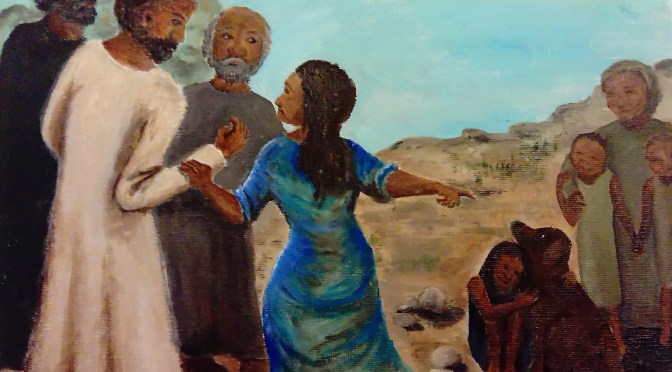
 23But he did not answer her at all. And his disciples came and urged him, saying, “Send her away, for she keeps shouting after us.” 24He answered, “I was sent only to the lost sheep of the house of Israel.” 25But she came and knelt before him, saying, “Lord, help me.” 26He answered, “It is not fair to take the children’s food and throw it to the dogs.”… (Read the whole passage)

Six months ago yesterday – March 15th – was the last time that we gathered in-person for worship. At that time, we imagined a few weeks of lockdown and then a return to normal. Six months later, social distancing is still a thing, lockdowns and restrictions of various degrees are sill  in force. And this pesky little virus continues to overtake our attention. Even as protests over police killings continue to erupt, even as political scandals make headlines, even as hockey resumes only to disappoint (sorry Winnipeg and Edmonton and Toronto), even as Tornados tear through the province, even as a woman of colour is historically named to the ticket of an American presidential candidate… the coronavirus still is the most important issue in our world. This month case numbers are rising, and the daily death toll remains tragically high. Many stress over going back to school and going back to work. Six months of the world still turning with all of the usual turmoil and historic events, that by themselves would make 2020 a memorable year… and the Coronavirus pandemic has gripped us all that entire time putting everything else in the back seat. 

Throughout this summer we have been hearing the story of Abraham and Sarah and their descendants. Today, we finally her the last story of our Genesis wanderings. Sarah and Abraham’s great grand-son Joseph, who had been sold into slavery because of the jealousy of his brothers, has risen to power in the court of Pharaoh. And when famine comes into the land of Jacob, his family and herds, he sends his sons to find help in Egypt. There they meet Joseph, though not knowing it is him, and Joseph plans to recuse his starving family by bringing them to the abundance of Egypt. 

This story of Joseph rescuing his family may not seem on the surface to have much to do with the story of Jesus that we hear today, as he encounters a persistent Canaanite woman who is advocating for her sick daughter. And yet how Jesus and the disciples came to be standing in gentile territory to be annoyed by the persistence of Canaanite woman is deeply connected to the Israelites picking up and moving into Egypt at Joseph’s direction. 

For you see, soon after the story of Joseph, we start Exodus and story of Moses and the Israelites slavey in Egypt. As foreigners living under oppression, God promises Moses and God’s people that he will deliver them to the promised land. When the Israelites escape Pharaoh and Egypt, they wander the desert for 40 years only to eventually settle in the land of Cana. The land of Canaanites. 

Centuries later, as Jesus and the disciples stand in gentile territory, annoyed by the presence of this gentile woman pressing Jesus for a miracle, they have forgotten that their ancestors were themselves granted reprieve and salvation by a foreign nation. They once were a lost people wandering the deserts only to come to the land they were now in, as outsiders looking for hope and promise. 

Instead, the disciples insist that this Canaanite woman be sent away, as she is an unclean outsider and foreigner, unworthy of their attention. And at first, Jesus almost seems to agree with his followers. 

“I was sent only to the lost sheep of the house of Israel.” He declares. 

That doesn’t sound like the Jesus we usually hear from in the gospels. 

And still the woman presses Jesus. He responds in a most un-christlike manner comparing her to a dog stealing food meant for children. 

This does’t sound like the caring and compassionate Jesus we usually know and hear in the gospels. Yet, there is also something about Jesus’ response to this woman… something almost comfortable. 

The disciples probably felt like they finally understood what was happening and weren’t clueless. Jesus was falling in line with how they understood the world, with how they expected the rules to be followed, with how they saw the boundaries between peoples, nations, tribes and religions. 

And there is a certain guilty comfort and security that we probably don’t want to admit. Because we too know what our first instinct is in similar situations. We too like clear distinctions and boundaries, we like knowing who is in and who is out. And finally Jesus is giving us some clue about who can be counted out from God’s love… even if we don’t actually know any Canaanites personally, we do know that we aren’t them and they aren’t us. And feels like we are on the inside. 

That first thought, that first instinct, that first reaction to set the boundary, to call some people worthy and others not… that is what is getting us, the whole world, in heaps of trouble these days. From the new, almost daily uncovering of racist, sexist, homophobic and transphobic institutions, to the way we police and protect our world, to the way we engage in political discourse. This first thought and instinct has led us to create bloated city police departments across the continent. It has given way to racist attacks against the first woman of colour named as vice-presidential candidate for a major US party. It is why the Canadian Museum for human rights (of all places) needs to hire a new CEO to fix racism and sexism in their workplace. It is why here in Manitoba there has been so much shame heaped on those in our community of who have tested positive for COVID-19. 

Whether we like it or not, we are those disciples asking Jesus to send that Canaanite woman – and her troubles – away. 

We are human beings whose first instinct is to set the boundary and do our best to make sure no one crosses it.  

We are people simply casting about for some certainty in a difficult and chaotic world, even if it sometimes comes at the expense of others. 

But then just as Jesus has put her down and in her place, the Canaanite woman makes one final appeal for her daughter. 

“Yes, Lord, yet even the dogs eat the crumbs that fall from their masters’ table.”

Surely by this point our hard hearts have been exposed, the disciples’ annoyance with this persistent Canaanite woman, our first instinct to set the boundary and keep the undesirables out are revealed. 

Would the disciples still want Jesus to send her away at this point? Would we?

Whether we know the answer or not, Jesus responds. 

Jesus responds and he is back to his compassionate if not scandalous self. 

He commends the woman for her faithfulness. A gentile, a woman, a Canaanite of all people… full of faithfulness. 

But Jesus doesn’t just open up a spot on the edge of the kingdom of God, he doesn’t just do the bear minimum for her. 

Jesus opens the Kingdom wide, Jesus expands the space for this woman to be more than just a charity case, more than a forgettable instance of healing. Jesus commends the woman for her faith, for her insistence on proclaiming her trust in God. Jesus elevates her to the level of disciples, to those tasked with going out and proclaiming the word, to preacher and proclaimer of the good news. In one short line this woman, seeing the need of her own daughter and discerning God’s presence in her midst, proclaims the coming of God. 

She proclaims that God has enough for all, enough for the down trodden and lowly of the world, enough for even the dogs. 

And we cannot help but wonder if Jesus was holding our first thought, our first instinct up for us too see. To show us just how cruel a world is that makes distinctions about who is in and who is out to determine who has access to God’s mercy. To see the cruelty of turning a person in desperate need away because they didn’t belong to the right tribe, the right political party, practice the right religion, work in the right job, come from the right country, speak the right language, bear the right colour of skin. 

And after holding up our first thought for us to see, Jesus holds up God’s first thought about us. God who chooses to be revealed in the most unlikely of places. In the Canaanite cities of Tyre and Sidon, through a Canaanite woman pleading for the healing of her daughter. In this gentile, this woman, this brand new follower of Jesus, God preaches the gospel of grace and mercy. 

God’s first thought is the good news given for us, for all of us, for the most unlikely of us. The grace of God given even to the dogs eating the table scraps from the floor. 

God ’s first thought is to use methods and people we would never expect to preach the gospel of mercy and grace. God gives us the promise of mercy anew in church structures built on Facebook, Youtube and Zoom. And God has given us all the people and more that we once hoped would come back to us – but not how we imagined. God proclaims the good news for us and for the world with new voices that we wouldn’t have heard from within our walls and boundaries.

And so here we are in this August of pandemic… and all too often our first thought turns us to set boundaries and declare some to be on the outside of God’s love. And yet God is surprising us in the most extraordinary ways, by sending us the most extraordinary people to proclaim to us the good news of God’s mercy, given in such abundance that even the dogs have enough. 

And through this Canaanite woman, through these unexpected means of pandemic realities, God is preaching the good news to the world in new and unexpected ways. Six months ago, back in Egypt it all seemed so unimaginable to us… and here we are in Cana and God is revealing to us a promised land that we have yet to fully understand… but where the Good News is given anew for us and for all, even for the dogs eating table scraps.
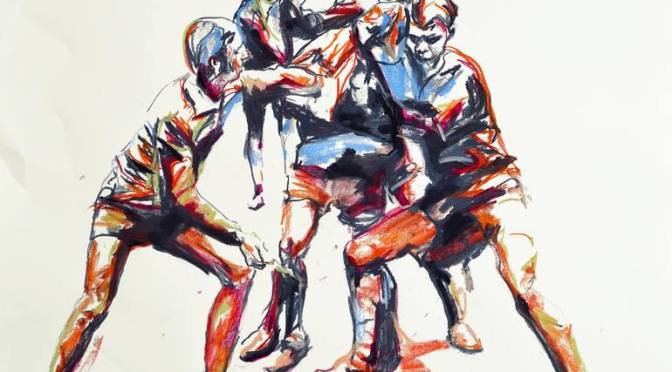
Wrestling with God, a hungry crowd of 5000 and a surviving a pandemic

GOSPEL: Matthew 14:13-21
16Jesus said to them, “They need not go away; you give them something to eat.” 17They replied, “We have nothing here but five loaves and two fish.”

If you were all here in person, I would probably begin with an informal survey where you would raise your hand. Even though you aren’t here, we are going to try it anyways. I’ll pretend like I know what your answers are. 

So 4 and half months into this pandemic, who here is feeling a little tired of social distancing measures? 

Most of you? Okay, that makes sense. 

Who here is ready to go back to normal? 

Everyone? I can see that. 

Who has learned or acquired some new skills or abilities during this time, such as new technologies or cooking and baking or puzzles or new workout routines? 

Ah, yes, I see a lot of hands up. 

Who here finds themselves judging pre-pandemic tv shows by pandemic standards, as in hey those people aren’t social distancing!? 

Yup, a lot us. 

Who finds themselves judging others about their social distancing while out and about in public?

Be honest now. Yeah, most of us eh?

Who here has bent a social distancing rule to see family or friends? 

Yeah, almost all of us.

Who is ready of trust that most other people will diligently follow restrictions in order to keep us all safe?

That few of you… umm hmmm… 

Okay, who feels completely confident in government plans to re-open our economy safely and without unnecessarily increasing risk? Including the re-opening of schools?

Anyone? I am not surprised. 

Who is anxious about jumping back into fully participating in public life before a vaccine? 

Wow… most of us… yup….

So on the surface our little informal survey shows a pretty mixed response. Most of us are pretty tired of all the pandemic restrictions and ready for life to go back to normal. Yet, we also are finding it hard to trust that our neighbour and trust political leaders to safely guide us through this pandemic. And most of us are guilty of bending the social distancing rules ourselves. 

So we want all this stuff to be over, but we aren’t sure we are ready to trust the outside world. 

This Sunday, on the 9th Sunday of Ordinary Time, we continue with the story of Jacob and his family (the grandson of Sarah and Abraham). We also hear a family story from Jesus’ life and ministry, the feeding of the 5000 with five loaves and two small fish. And in both, there is a glimpse of just where we may be at these days.

Jacob is the second born Son of Isaac. And Isaac the second born Son of Sarah and Abraham. Abraham is one of two brothers. And from Abraham all the way to Jacob’s own sons, God shows a surprising pattern of preferring second born sons to pass on the covenant, the promise given to God’s chosen people… when of course by normal Hebrew custom, the double portion and birthright was passed on to eldest sons. 

So far we have heard the stories of Isaac following his brother Esau by holding onto his heal right out of the womb. And then tricking his older brother out of his birthright for a bowl of stew. Jacob then met the angels of God descending from heaven on a ladder. And last week Jacob was tricked himself into years of servitude in oder to marry the woman he loved. Women with whom he would father 13 sons and more daughters. 

Yet, finally this week we meet Jacob in an unusual place. He is into solitude. Despite being surrounded by his wives, children, servants and herds he is fearful about finally being reunited with his estranged brother. 

As Jacob sends his large posse ahead, he spend the night alone on the river Jabbok. There he encounters and then wrestles with God. 

While Jacob encounters and wrestles with God alone, the disciples are wrestling with things in the midst of a great crowd. Shortly after the popular John the Baptist was executed by King Herod, a community in shock gathers around Jesus. Even as Jesus mourns his cousin, he is confronted by a community in crisis. A great crowd gathers before him and he teaches and heals them. 

By the end of the day, the disciples are worried about feeding the masses. They implore Jesus to send the crowds to the villages for food. But Jesus tells them to feed the crowds and all that they can come up with 5 loaves and two fish. Seemingly not enough for 5000. 

Jacob’s lonely dark night of the soul and the disciple’s consternation about the feeding the crowd may seem to have little in common at first glance, yet in both stories there is wrestling with circumstances. Jacob wrestles not just with the unknown stranger in his tent, but with the prospect of meeting his estranged brother across the river. The disciples wrestle not just with feeding the crowds, but with understanding just what is going on with their beloved teacher as he compassionately preaches to the masses in crisis. 

Mixed feelings about complicated situations all around. 

Certainly we recognize the wrestling. Certainly we recognize the difficulty understanding just what and who we are wrestling with and why. 

As we struggle with how long this pandemic is lasting with no clear timeline for an end in sight we wrestle with our feelings of wanting life to go back to normal and fearing a serious outbreak of the virus in our community. 

Jacob chooses to wrestle with this stranger and to focus on winning a blessing, rather than the looming confrontation with his brother in the morning. The disciples become event planners and managers for Jesus, focusing on the practicality of feeding the crowds rather the looming confrontation between their Messiah Master and the religious authorities (like his cousin John just faced). 

And our wrestling pushes us to focus on issues other than the big ones before us. Our whole world is debating the technicalities of safe re-opening. We are twisting ourselves in knot over border closures, self-quarantine requirements, safely opening malls and hair salons, remote working conditions, school and day care reopening and of course resuming in-person church services. We are trying to avoid thinking about how this prolonged pandemic and 2nd wave realities will force us re-evaluate how we structure out society, what we consider safe working conditions, how we support families, the elderly, students rather than forcing so many to live on the brink of financial ruin just to keep our consumption of cheap products habits afloat. 

We would rather wrestle all night and demand a blessing or mask wearing then consider what our world needs to become on the other side of this pandemic. We would rather event plan the catering than consider just what God might be already up to in our midst, changing and transforming and preparing our community for the next thing by giving us what we need. 

And yet, as Jacob wrestles, God blesses him with a new name. Israel – the one who wrestles with God (and wins!). A new name confirming his identity as the bearer of his families birthright, the covenant and promise of God’s chosen people. An identity confirmed by the embrace of his brother Esau, whom God had blessed in the way that Esau needed.

And as the disciples distribute the loves and fish, they discover that their Messiah teacher insists on being revealed even in event planning. As they pass the food around the meagre offering blessed by Jesus, they discover an unimaginable abundance. Enough food to feed thousands and 12 baskets left over – enough for the 12 tribes of Israel (the 12 sons of Jacob). 

And certainly, as we wrestle with our pandemic world… with our event planning and insistence on the things we imagine to be of importance, God is already at work preparing to surprise us with the very things we need. 

With the abundance of covenant promise. 

With the blessing and identity that we have trouble accepting. 

With the revelation of the divine even in event planning. 

God is already at work bestowing us with the gospel promise of life and salvation no matter how we gather to hear it – in person or online. 

God is already preparing to walk with us into places that we never imagined we would fear, workplaces and schools, malls and restaurants. And God promises to go with us out into the world or stay with us at home. 

God is already carrying our tired and aching souls. Tired from pandemic, tired from compliance. Aching for community, aching for the familiar. 

God is already where we need God to be, even when, especially when, we would rather wrestle with some other problem, focus on some other issue to keep from having to face the looming danger, the presenting problem, the uncertainty of today that was unforeseen yesterday, and the uncertainty of tomorrow that is unimaginable today.

And so today, with mixed feelings prevalent in our hearts and minds, with wrestling with the things we think we can control in the face of problems and overwhelming anxiety… we go with Jacob across the Jabbok river, we collect the abundance of 5 loaves and two fish with the disciples…

Today, God is already before us, already in our future, already preparing us for the world we need to face. God is already making ready the blessing and abundance we need. 

Today, God reveals to us again that God is already ahead of us, already in the places we have mixed feelings about going toward… And God promises that no matter what will befall us that our future is held in God’s hands. 

The Kingdom of Heaven Isn’t In Hidden Places But In Surprising Places Meant to be Found

GOSPEL: Matthew 13:31-33, 44-52
{Jesus] put before [the crowds] another parable: “The kingdom of heaven is like a mustard seed …
He told them another parable: “The kingdom of heaven is like yeast that a woman took and mixed in with three measures of flour until all of it was leavened.”
“The kingdom of heaven is like treasure hidden in a field, which someone found and hid; then in his joy he goes and sells all that he has and buys that field.

It was a month ago that I last preached a sermon to you. And a lot can change in a month’s time. 

A month ago COVID-19 was slowly but surely being socially distanced out of our communities (although with some alarming rising case numbers in the US). Our province of Manitoba was talking a lot about restarting economies and lifting restrictions. The protests of May were falling out of the public awareness and the end of school and summer plans were on the minds of most. 

Today, surging case numbers across Canada and a tsunami of cases numbers and deaths are crashing into our neighbours to south. Our Manitoba government’s plan to further lift restrictions to near normal levels of activity was met with swift push back from citizens. Political leaders in Canada are under ethics violations for possibly giving wealthy government contracts as favours to a cozy with politicians WE charity. And south of border an unstable President with strong facist tendencies is sending in secret police to escalate non-violent protests and punish protestors all while looking like the “law and order” candidate to his electoral base of support.

No to mention the persistent issues of racism, discrimination (such as recent attitudes towards Hutterites in Manitoba in response to covid outbreaks) police brutality, the unavailability of childcare for working parents, questions about a safe return to school in the fall, the outsized effect of this economic downturn on women and the recovery being put on the back of essential workers who are often the poorest among us. 

Phew… does that about cover the last month?

Nothing in 2020 has been normal or expected and each day, week, month brings with it things that we wouldn’t imagine being possible. 

And somehow in the midst of this unimaginable world we are living in, we are left to sort through what God might have to say about all of it, and just where the good news of the Kingdom of God might be. 

Today, we continue along into our season of green Ordinary Time. Jesus again is speaking in agricultural terms and in parables. And the people of Genesis, the descendants of Abraham and Sarah continue to navigate their way through the world with God’s covenant promise along side them. Their complicated story continues with Abraham and Sarah’s grandson Jacob making agreements for marriage only to be tricked into having to do twice as much work in order to get the woman he wants to marry. 

And somewhere in the collision of our COVID world and Jacob, Leah and Rachel’s reality, we find something of our story being retold in the biblical witness. Somewhere in the parables of Kingdom that Jesus tells today, we are reminded of where the Kingdom of heaven is revealed. 

Today, Jacob sets out to make a deal Laban for marrying his daughter Rachel. Jacob as you recall is Abraham and Sarah’s grandson, son of Isaac and Rebekah. Jacob we already know is a trickster. He has tricked his older brother Esau out of his inheritance and wrestled with God. Yet, when it comes time to negotiate with Laban he meets his match and Laban tricks Jacob into marrying both of his daughters for 14 years of work. 

But of course there is a back story here. Laban is not some vague relative as the story suggests, but the brother of Jacob’s mother… Laban is Jacob’s uncle. And when Laban was younger, Abraham sent his favourite servant to find a wife of Jacob’s father Isaac. Laban was in charge of that negotiation too. But the clever servant managed to trick Laban to giving Rebekah away for less than he wanted, by appealing to divine Providence. 

So this time Laban is ready to negotiate, maybe even to get back with interest what he lost out on by negotiating harder and tricking Jacob. 

So now let’s set aside. The problematic aspect of this story. The close family relationships, the sale of women as if they are chattel to be owned and traded for. 

This family is a complicated system and web of relationships. And we know that after this Jacob ends up fathering children from 4 women, Leah and Rachel and their two maids, Bilhah and Zilphah. And the 12 sons that result become the forebears of the 12 tribes of Israel, with the most famous son, Joseph, whom after being sold in slavery by his brothers saves his family from slavery by bringing them into Egypt… which then leads us to the story of Moses and so on. 

In fact, the twists and turns of the story of the family of Sarah and Abraham feel awfully familiar. Jacob puts in the time and work with the promise of getting what he wants at the end, only to find out he has to start all over sounds a lot like what many of us are feeling after months of staying home only have to a resurgence of the virus. 

What Jacob imagined for his life and what he ended up getting in Rachel and Leah and his many children sound an awful lot like the expectations we hold for coming out on the other side of this pandemic wanting things to go back to normal while at the same time knowing that 2020 is going to change our lives and world forever in ways we cannot imagine. 

As the new coronavirus surprises at each turn,

As we grow tired of restricting our lives for what can feel like an invisible benefit,

As we juggle keeping people safe, healthy both physically and economically during this pandemic, 

As politicians make messy promises and make self-serving decisions,

And as the people of the world having unimaginable stressors placed on us…

Maybe we are just an extension of the story of Abraham and Sarah’s family. 

And maybe as they did, we might wonder what does God has to do with us? What does God have planned for us? Where is the good news of the Kingdom of heaven?

As Jesus speaks in parables today, he describes the Kingdom of God over and over again. The Kingdom of God is like… Like mustard seed, like yeast, like a treasure in a field, like a fine pearl and so on. 

And we might wonder, why is that the Kingdom seems to be in hidden places? 

But I think that it isn’t about where the Kingdom is hidden, but that the Kingdom is found. Found in unexpected places, founds where we wouldn’t usually think to look, found in the messy and surprising places of life. 

The message of these parables isn’t that God’s kingdom is hidden from us, but that it is constantly being found. Found where? Amongst our complicated and twisting and turning lives. And boy do we know about complicated, twisting, turning life, don’t we?

The Kingdom of heaven is constantly showing up in places we never imagined it would be, so that in our complicated, twisting and turning lives, the good news of God’s love and life given for us keeps finding us. 

The Kingdom of heaven that was promised to Abraham and Sarah in the covenant at the beginning of their story, and that God keeps bringing back to this family, this chosen people over and over again as they cast about in the wilderness. 

The Kingdom that we got used to hearing promised to us in person, at church, and next to our neighbour, at the font and at the table, has been finding us through computer screens, through zoom calls, text messages and over the phone. 

The Kingdom of God that is hard to see, hard to know, hard to believe some days, is finding us unexpectedly and surprisingly the care that we have been giving to one another in hard and difficult times of which we don’t when the ending will come. 

Today, our story, like Jacob, Leah and Rachel’s seems to start and stall. Our world, like theirs, is a world with twist and turns and challenges and surprises. And yet in the midst of that, the promise that God made in beginning, the promise of the covenant, the promise of the Kingom, the promise of love and live given for us…. That promise somehow keeps finding us. The God of that promise keeps finding us, keeps showing up where wouldn’t expect to find God, or to be found by God. 

And God promises that the complications of this life won’t overwhelm us, that the surprises of this world will not define us… but rather the Kingdom of Heaven will. 

God promises that when we wonder where God is in this messy world of ours, that God is coming and finding us in the Kingdom of God. 

There Is No Going Back To Normal Or the Glory Days – This is the Beginning

GOSPEL: John 17:1-11
1After Jesus had spoken these words [to his disciples], he looked up to heaven and said, “Father, the hour has come; glorify your Son so that the Son may glorify you… 11And now I am no longer in the world, but they are in the world, and I am coming to you. Holy Father, protect them in your name that you have given me, so that they may be one, as we are one.” (Read the whole passage)

Today, we arrive at the seventh and final Sunday in the season of Easter. Easter 2020 must be, without a doubt, the most memorable Easter in our memories. “We are living through history” has been an oft’ repeated phrase of the pandemic era. And our Easter journey as people of faith has not been that far off from our lived reality. Hiding out in locked rooms for fear of the outside world is an essential Easter experience. Having no frame of reference, no experienced story to tell that makes sense of our new world is an essential Easter experience. And being prepared as disciples of Jesus for an unknown future is an essential Easter experience. 

As we prepare to the flip the page on Easter with Pentecost Sunday next week, we slide between Easter realities. In John’s gospel we slide back to Holy Week where Jesus prays for his followers just as he is about to go the cross. In Acts, we hear Jesus and the disciples having a conversation about what happens next to this fledging Easter community. 

The disciples come to Jesus with a request to go back, to return the Kingdom of Israel.  To a specific dream of the“glory days.” A vision that requires a deep dive into the history of Israel.  A specific moment in time, after Moses, after the promise land, beginning with King David but before foreign nations began threatening their borders and before they were exiled and occupied by the Romans. And of course not during the reign of one of the bad or mediocre Kings, but one of the greats! Of course they forget that even during the best of times, God was still sending prophets into their midst telling them to repent and get their act together. 

After all the disciples had seen, from following the call of Jesus from their fishing boats to witnessing the resurrected Christ appear behind locked doors, and their burning question is “are we going back?”

Sound at all familiar?

If you have spent any time reading, watching or listening to the news, you know that the world is wondering when things are going to reopen: from sports to shopping to public spaces – including places of worship. In fact, in many cases, Christians have been at the forefront of the demand to for political and public health leaders to loosen restrictions on gatherings. 

And you would think of all the people demanding that things go back to the way they used to be, we would know better. 

Because we have been longing to go back to what we remember as the glory days, long before this pandemic hit the world. But of course, nailing down what we think we want to go back to is not as easy or straightforward as we think. It was only a matter of weeks ago that we were concerned with declining resources and aging populations and shrinking congregations. Is that what we want to return to? Or is there a more specific place we want to go backwards towards? Do we want to go back to the days of church buildings full of worshippers and bursting Sunday Schools? To a time when women, people of colour and LGBTQ2SIA+ people were prevented from holding positions of leadership in the church? To the time when many churches were homogenous cultural enclaves? To the time when pastors were paid in the chickens and made pastoral visits in order to shame members into handing over their offering?

Our desire may be to go back to the good old days, but which good old days might be hard to answer. 

It is normal to lament what was. Especially when we don’t know what is or what will be. But we have to admit it is strange to long for something that most of us can agree wasn’t that good… something that, if we’re really being honest needed change?

So when the disciples ask their question, Jesus not so gently tells the disciples that they have no clue what is coming next for them, and it isn’t their job to know. That is up to the Father. Instead they are just along for the ride, they are simply witnesses to the activity and plans of God in the world. 

The disciples had no clue that they were about to preach the gospel in all kinds of languages to all kinds of people baptizing them by the thousands. Nor did they know that most of the early church communities would small groups of 12 or 25 people spread throughout the Roman Empire and would be ministered to by a former Pharisee and murderer of Christians who liked to write letters. They did not know their little group of followers would spawn generations upon generations of faith communities proclaiming the gospel to all the ends of the earth.

They had no idea what their path would be as Jesus ascended to the Father. 

Yet as John describes to us, Jesus knows that his followers don’t have a clue what is in store for them. They are dreaming of the return of rose-coloured glory days, of going back to some imagined time of greatness that is certainly better in their imaginations than the real thing. 

They cannot help but look back with nostalgia and hope for the glory days again. 

And yet as Jesus prays, he names the ways in which his disciples belong to each other, that their life together is a reflection of Christ, peek into the Trinity, the relationship between Father, Son and Holy Spirit. All along Jesus has been stitching this rag tag group together, shaping and moulding them for the next phase, the next chapter. Transforming them into this newly birthed community of the gospel. A community defined by the life of Christ, a community tied into the very death and resurrection of the One sent to save. 

That even as they have no idea where they are about to end up, Jesus has been preparing them to be what God needs them to be. 

A community of faith, 
of imperfect and flawed people 
who may not know where they are going, 
but who proclaim that the risen Christ 
is their way, their life and their truth. 
That the cross and empty tomb have changed them 
and all creation 
for the kingdom that has God envisioned. 

And so here today, what does this mean for us? 

We who long to return to normal, even as we begin to recognize that life as we knew it will not, cannot to be the same as it was. We come to the end of Easter, in the midst of this time of global uncertainty longing for comfort of the past. 

And we too are just as clueless about what comes next for us as the disciples were. No matter our desire to go back to normal, to go back to the glory days, to restore the kingdoms of our imaginings… there is no going back. And more importantly, we aren’t the one steering the ship anyways. 

Yet, Jesus’ reminds us today, with Pentecost on the horizon, that our future is known by God. And that we too are being prepared for what comes next for us. 

That Jesus is sticking us together into One Body, 
preparing us yet again to be new communities of faith, 
birthed into the story of Christ’s death and resurrection. 
That the cross and empty tomb redefine us, 
even in a world of declining churches, 
even in a world of pandemic closures… 
God is transforming us into the very body 
that will proclaim the Good News to the world, 
through whom God will proclaim 
forgiveness of sins and salvation in the waters, 
in whom God feeds the world with God’s own Body – the Body of Christ given for us. 

And so yes on this 7th Sunday of the most memorable Easter we have known, we are reminded again that God has the regular habit of setting us off in new directions when we least expect it. And that the destination is not for us to know, nor what things will look like when we get there. But only that God is the one leading us, that we belong to one another in Christ and that the sprit goes with us. And that Christ has been preparing us for this moment long before we even had a clue.

The season of Easter may be coming to an end…

but Christ promises us that this new resurrected life in this Easter community is only beginning. 

Amen. 

Unexpected Shepherds and the Good Shepherd

GOSPEL: John 10:1-10
Jesus said:] 1“Very truly, I tell you, anyone who does not enter the sheepfold by the gate but climbs in by another way is a thief and a bandit. 2The one who enters by the gate is the shepherd of the sheep. 3The gatekeeper opens the gate for him, and the sheep hear his voice. He calls his own sheep by name and leads them out… (Read the whole passage)

The early church understood the 7 week season of Easter to be like one great day of celebration. Time kind of gets mushy in Easter, unlike other seasons of the church year where we are so often counting the weeks as they go by. And while many comparisons to our pandemic isolation have been to the season of Lent, there have been also similarities to Easter. Disciples hiding out in upper rooms, sticking to small groups and avoiding crowds, time becoming mushy and hard to keep track of. We just might be living the most authentic Easter season of our lives. 

Today, we are four weeks into the season of Easter, nearly a month since first hearing about the women going to the tomb early on the first day of the week. And yet, today is the first time that we are moving on from that first day. We divert somewhat to familiar images of the pastoral Jesus. Psalm 23, and John 10. Shepherds and sheep. Comforting images of the love and care of God, poured out for us. 

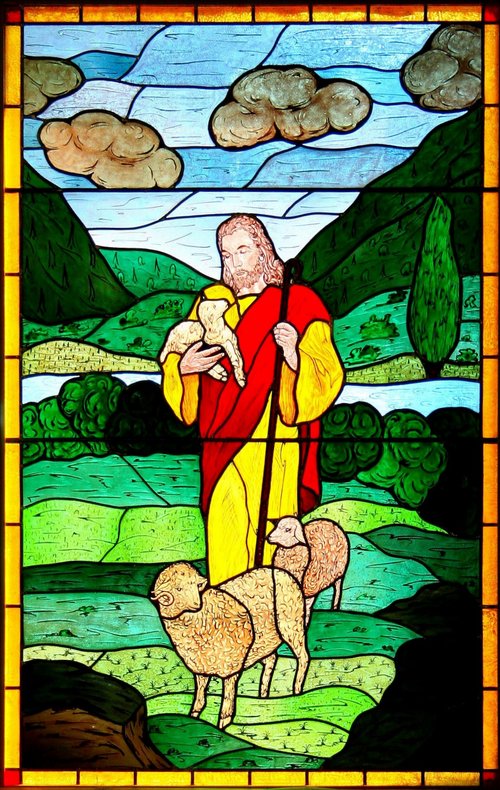
The church that I grew up in had a stained glass window of Jesus the Good Shepherd, a blonde hair blued-eyed Shepherd lovingly gazing at the lamb he is holding in his arms. An imagine imprinted on my mind, that often surfaces on this fourth Sunday of Easter, or when I hear psalm 23. 

And there is a certain amount of comfort and safety that we imagine into the image of the Good Shepherd, especially in times of struggle and hardship… such as in this moment in time. 

In John’s Gospel, Jesus gives us another comforting image of the Shepherd, who is known by the sheep. The Shepherd who lays down as the gate to the pen to provide protection for the sheep. 

Yet, Jesus isn’t talking his disciples or the hungry crowds about the Shepherd, but rather the  Pharisees. The Pharisees who have just criticized him for healing the Blind man… a story that we heard only a few weeks in Lent. Jesus is speaking to those who bear responsibility for caring for the sheep, caring for the community. To the religious and community leaders who are balking at any change to the social order, even if it comes in the form of  healing a blind beggar in their midst.

As Jesus describes the familiar voice of the shepherd, he also describes the voice and motives of the thieves, bandits and strangers… labels he is applying to the religious leaders. Jesus suggests that not everyone charged with the care of the community is tending to that charge as they should. They are instead more concerned with the status quo, with keeping the power and control in their own hands and out of the hands of others…. Whether it is Jesus wantonly offering God’s love and care, or a blind man becoming self-sufficient. These are voices and leaders who are calling the sheep into danger for their own gain, their own selfish purposes. 

Does this sound at all familiar?

As we enter into week 8 of lockdown and staying at home, the calls to #OpenforBusiness are starting to get louder and louder. Here in Manitoba, we are beginning the slow yet still ambitious move of opening up some businesses tomorrow – hair cuts and restaurant patios and select other businesses will be aloud to open. Even as public health officers tell us it is isn’t exactly safe yet.

This pandemic moment has taught us a lot about the voices that we listen to, the voices who call us sheep to follow. And what is clear is that there are those in our world too, charged with caring for our communities who might not have our best interests in mind. 

And while Jesus declares that the sheep know the voice of the Shepherd, I am not so sure that it is easy for us to recognize. In fact, perhaps what is clear is that most of the voices out there are seeking something from us other than our wellbeing. Our votes, our dollars, our consumption, our attention, our productivity and labour… even our willingness to be sacrificed for the sake of profit and maintaining social order. And all with promises fo green pastures, still waters, prepared tables, and cups running over. 

Knowing the shepherd’s voice is one thing, hearing the shepherd’s voice at all is another. And if the Pandemic has made something clear, it’s that shepherds and their voices are not heard as often as they should be. 

So as Jesus declares that the sheep know the shepherd’s voice, we might be asking, do we really know it?

_______

We always hear Psalm 23 on Good Shepherd Sunday, but there is of course a reason far more common for us to hear this most familiar of psalms. 

Over the years, as I have presided at many funerals, I have often read Psalm 23 as I lead mourners into worship. Pall bearers and casket, followed by grieving family. And in that moment, we enact that what the familiar psalm describes. We walk together into the valley of the shadow of death.

You see the Good Shepherd does not promise us that everything is green pastures, still waters, and abundant tables and cups. Rather, the Good Shepherd is honest about the world, about the dangers and risks. The Good Shepherd tells us that the there are dark valleys ahead, there is the shadow of death in store. And there is no going back, no staying in the green pastures. There is only forward into our future.  

However, the Good Shepherd also promises to lead us through the valley of the shadow of death. 

Jesus promises that the sheep know the Shepherd’s voice not because the sheep are good sheep, but because the Shepherd is a Good Shepherd. The Good Shepherd whose only concern is the well being and care of the sheep. The Good Shepherd who knows the sheep. The Good Shepherd who gathers and collects the confused and lost sheep, wherever we are going – green pastures or dark valleys. 

And as we navigate this shadow valley of pandemic, there have been voices emerging from the fray, voices whose only concern has been our health and well being. Shepherds who didn’t know they were shepherds only a few months ago. 

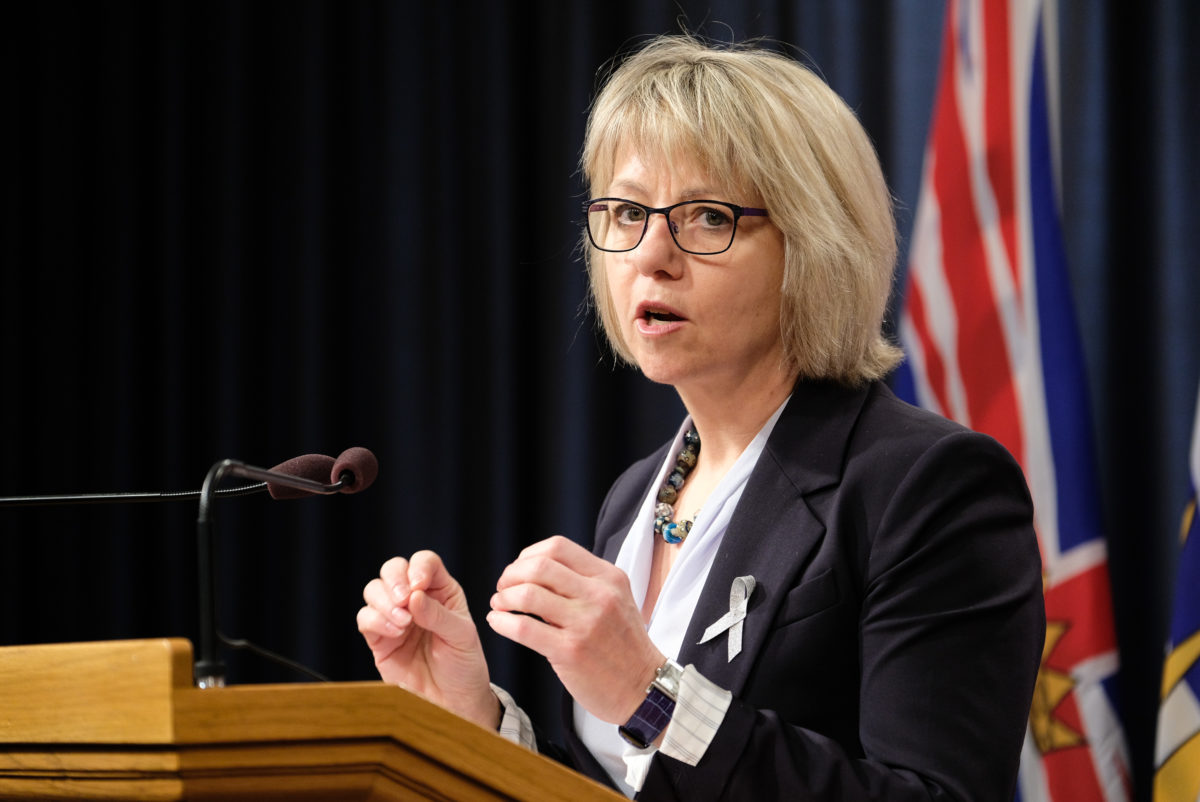
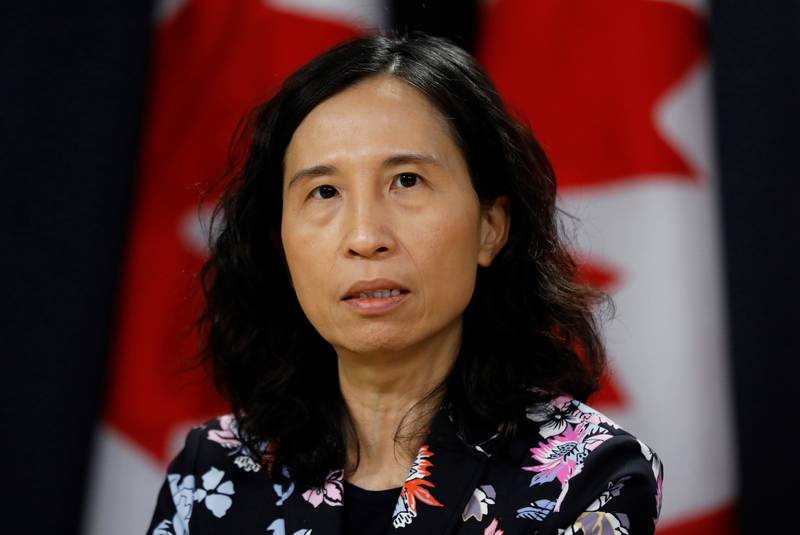
Often in this pandemic the voices of Chief Public Health Officers have cut through the fray of the voices out there calling us to follow. And these unexpected shepherds have surprised us by being singularly focused on our health and well-being…  voices that are seldom heard among the leaders of our world. Shepherds that tell us the truth, that do not promise all green pastures and still waters, but who warn of the valley of the shadows of death ahead. 

But Shepherd voices who also promise to lead us through. 

To lead us through the dark valleys to whatever lies in wait for us on the other side. 

To go with us all together. 

And this promise is of course the promise of the Good Shepherd. 

In this pandemic moment, our whole world feels as though it is gathered at the back of a church about to walk into the dark valley. Yet today, the Good Shepherd promises that we do not go alone, that the Good Shepherd will see us through, that the shadows of death will not be the end of our story, that there is life on the other side.  

This is the only voice, the only promise that really matters. 

And so on this fourth Sunday of Easter that on the surface it feels like we have moved on from Easter morning, the promise of the Good Shepherd takes us right back to the empty tomb, right back to glimpse of the other side of the shadow of death. 

The Good Shepherd comes to us in the middle of Easter because the Good Shepherd is an Easter Shepherd, a shepherd whose voice knows the sheep, whose voices knows us and knows what we need, a shepherd who has been through the valley of the shadow of death and promises us see us through, to the other side and into New Life.