Category Archives: Theology & Culture

Why Pastors Shouldn’t Work More than 40 Hours a Week – And Why Most Do

“If you want to see me on my day off, you will have to die.”

A veteran pastor shared this line with me that he uses to protect his day off. He sets the boundary that the only work he is willing to make exceptions for, on his day off, is imminent death or funerals.

Managing work time and hours as a professional in ministry is a constant struggle. I don’t know many pastors who work less than a 45 hour a week, with many working 50 or 60 hours. Being “busy” and over-worked is the norm for most in ministry (as it is for many in our busy-ness focused society).

After 7 years of being in ordained ministry, I still have difficulty understanding just why so many pastors feel the need to work more than full time. While I have never heard anyone articulate it this way, I suspect many pastors have a sense that the first 40 hours are for the salary, and the rest are for Jesus. I am sure there are a few church folks who may agree, but I think this is a sentiment that originates with pastors themselves.

Many pastors are running around going to every church event, dropping everything for every hospital call or shut-in visit, answering every phone call, arriving before every church meeting and staying for the meeting after the meeting in the parking lot. It seems like many pastors and the churches they serve are completely content with the idea that the pastor is omni-present in body… while never being able to focus well – in mind and soul – on anything in particular.

I once attended a retirement party for a pastor leaving a long time call to institutional ministry. While it was a celebratory event, there was a certain awkwardness about the whole thing. The community he served thanked him for his tremendous service, while his family made jokes about their husband and father that was never home. And when he was home, he was bringing work with him. The community that this pastor served basically thanked this pastor’s family for sacrificing quality time with their husband and father… for Jesus?

I don’t think this is a healthy way to do ministry, nor do I think that Jesus calls pastors to be work-a-holics. 

A few weeks ago, I came across an article by Eugene Peterson called, “The Un-busy Pastor.” It is an article that has resonated with me, even though it was written the year before I was born.

The idea of an “unbusy” pastor seems like a rarity: A pastor who takes the time to contemplatively read scripture so that she is drenched in the word. A pastor who prays often enough and in such a way that she exudes calmness and wisdom. A pastor who is isn’t so busy running around from function to function, that she has time to listen when real listening is needed.

I don’t know what the cultural value of being busy in 1981 was when Euguene Peterson wrote about the unbusy pastor, but certainly being busy in 2016 is sign of importance. Now pastors have no exclusive claim to being busy in today’s world, but like so many other professions and jobs out there, being busy seems to be the way pastors show we are doing our job and worth our keep.

I can’t help but think of the contrast between the omni-present, omni-doing pastor with the idea of the unbusy pastor who, according to Peterson, focuses on prayer, reading scripture, and unhurriedly listening.

Decades ago as the church in North America became heavily prescribed and institutionalized post-WWII, the role of pastor shifted from leader, expert and resident theologian of a community to the chief do-er of ministry for a community. This means the culture now is one where instead of leading communities that do ministry, pastors do ministry on behalf of churches.

However, in the past 10 or years this has started shifting back. As churches contend with the big “change” happening around them (rapid technological advancement changing the way communities organize and interact coupled with decline of institutional christianity), many are realizing that communities need to be a part of ministry again. It can’t all sit on the shoulders of the pastor. As that shift takes place and pastors start doing less so that they can provide leadership and expertise, pastors will have to better understand how to prioritize their time.

In Eugene Peterson’s article the Unbusy Pastor, he suggests that being a busy pastor (as many pastors are) is actually a sign of laziness:

“The other reason I become busy is that I am lazy. I indolently let other people decide what I will do instead of resolutely deciding myself. I let people who do not understand the work of the pastor write the agenda for my day’s work because I am too slipshod to write it myself. But these people don’t know what a pastor is supposed to do. The pastor is a shadow figure in their minds, a marginal person vaguely connected with matters of God and good will. Anything remotely religious or somehow well-intentioned can be properly assigned to the pastor.”

Taking control of our own schedules and prioritizing is essential as pastors shift from chief do-ers to expert leaders, but so is understanding how a pastor’s time is valuable to a faith community.

To that end, I think there are 3 competing ways in which a pastor’s time is valuable to congregations. Balancing these three will be essential for healthy ministry in the future.

1. Quantity

Society, at least legislatively speaking, thinks that about 40 hours of work a week is enough for most full time jobs. Yet, as pastors became the chief do-ers of ministry decades ago, added responsibilities meant more time. And as pastors worked to prove their value to their congregations, they worked more and more and more.

But when quantity of ministry is the highest value, it necessitates a decline of quality. You cannot write a good sermon if they are all Saturday night specials. You cannot plan for the future, if it takes all your energy to get through the day. You cannot attend to the needs of the community as a whole, if you are running from individual to individual like a nursemaid. You cannot take the time for prayer, reading scripture or to really listen, if your calendar is full of the appointments made by others.

2. Flexibility

Churches tend to hold their functions when most people are not working, which means pastors work when most people are off. Evening and weekends. Standard eight hour work days wouldn’t work for ministry. This means that usually a pastor’s day(s) off are a weekday, and that often pastors might find themselves without something scheduled on a weekday morning or afternoon. This flexibility works well for pastors and is a benefit to congregations, as churches wouldn’t be very good places for community if they operated on bank hours.

But when pastors start to work bank hours AND evenings and weekends, the boundaries around work-life balance disappear. Pastors set an expectation that they can be anywhere, anytime. Congregations then embrace that behaviour. Then when pastors do try to have boundaries, they have to say things like, “If you want to see me on my day off, you have to die.” Flexibility is important for ministry, but not a the cost of a balance of personal time and space. Nor at the cost of a healthy relationship between pastor and congregation, but that is for another blog post.

3. Expertise

Seminary training gives pastors tools and knowledge that simply cannot be found in other ways. The training and education shapes and forms a pastor into a person who should be a scholar of the bible, a competent provider of pastoral care, a theologian and liturgist, an administrator and leader of systems, and an educator and teacher among other things. Of course not all gifts and skills are equal among pastors, but there is a certain expertise that is brought to the table with a pastor. I know that I have studied the bible in ways that my parishioners have not. I know that I have been trained to care for emotional and spiritual needs in ways that most of my parishioners have not. I know that my understanding of theology and liturgy is resource that my congregation wouldn’t have access to without me.

But expertise takes time to keep up and maintain. It takes a sharp, well-rested mind to dig back to readings and lectures buried in the recesses of the brain. It takes time to keep up on current articles and books about ministry or theology or administration. It takes intentionality to leave the mind time to ponder and reflect on the bigger picture of ministry in the parish. The expertise a pastor provides is like a that of a doctor or lawyer or other professional. It should be seen as something that church people cannot receive elsewhere or on their own. Just like Dr. Google is not a substitute for a real doctor, nor is Pastor Google a substitute (says the pastor on his blog).

The balance between quantity, flexibility and expertise has long been weighted towards quantity. The sacrifice has been quality expertise. Too many pastors boast about not reading any books since seminary, nor having the time to do continuing education.

The church for the future needs less of a chief do-er of ministry and more of an expert leader. Pastors need to re-balance. Lots of ministry can happen in 60 hours a week, but good ministry should only take 40. After that you are not likely helping your congregation in their ministry, nor providing the leadership and expertise that the church has been longing for, for some time now.

As congregations and the Church contends with a changing world, Christians need pastors who can help prioritize the mission of the gospel. A pastor cannot help people grow in relationship with Jesus if that pastor is too busy filling his or her days with un-prioritized busy work.

Ultimately, the proof will be in the pudding. Thriving, healthy, mission and Jesus minded congregations will be led and served by unbusy pastors. 


Are you a pastor who works more than 40 hours a week? Why? How much do you think pastors should work and why? Share in the comments, or on the Facebook Page: The Millennial Pastor or on Twitter: @ParkerErik

Being Threatened by Jesus

Luke 13:31-35

King Herod was not a well liked King.

He was a puppet King for the Romans… who probably didn’t really care about who was King over the backwater province of the empire, Judea. The people of Israel didn’t care for Herod, knowing that he was all about power. But like most people in power, Herod made the right allegiances. With Rome and with the religious authorities.

So when the Pharisees come to Jesus with a Message, he knows they too are puppet authorities, doing the puppet King’s dirty work in order to hold on to their own power and privilege.

Today, on the second Sunday of Lent we continue with Jesus who can’t help but be confronted by people who think they have power. Last week it was the Devil tempting Jesus to misuse the power of incarnation, the power that comes along with being God, and being God in flesh. The Devil’s temptations set the stage for the recurring theme that Luke’s gospel holds up for us this Lenten season. The Devil tries to offer Jesus power. And now the Pharisees come to Jesus with a warning. They sound sympathetic, maybe even concerned for Jesus. Herod is out to get you, they warn. And it just so happens that getting rid of Jesus might also be convenient for them too.

Herod, the unpopular King and the righteous yet conspiring Pharisees, are concerned about their power. They are concerned about Jesus’s impact on their power and privilege. They have worked to build alliances, with their unpalatable overlord Romans, and with each other. Their power is tenuously held and only maintained by fear and division. With soldiers who intimidate, with control over money, over the temple, over the city of Jerusalem.

Yet, no matter their work to maintain their power, they cannot gain the confidence and support of the people. Yet, Jesus who doesn’t seem to be looking for any power, is wandering the countryside, living off the generosity of others. Jesus is popular and therefore powerful in the eyes of Herod and the Pharisees. And while he hasn’t made a play for their power yer, they know it will come. And so they conspire. They will frighten Jesus off. Just as they frighten the people with soldiers or unrighteousness. They only see Jesus as a threat who must be dealt with.

Power in our time looks much different. It is not so much based in the ability to control God’s forgiveness like the Pharisees did, nor is it based in political allegiances with foreign occupiers. Politicians and corporations don’t rule over us, but pander to us. The days of religion holding damnation and judgement over the head of society may be recent enough to remember, but fewer and fewer people seem to care. And even those of us who who still do participate in organized religion, probably feel like religious leaders have little power to dictate the terms of our salvation.

Yet, there is something we do hold in common with Herod and the Pharisees.

Feeling threatened by Jesus.

There is a something inside of all of us that gets anxious and concerned when Jesus starts talking about what God wants for us. For those who have been coming to adult study, you will recognize the language of the tangled, twisted thing inside of us. That thought in the back our minds, that feeling that makes our blood pressure rise. It is the thing inside of us that makes us fearful of our different skinned neighbours. It it the thing that makes us resentful of the poorest and most vulnerable in our communities for being dependant on government welfare. It is the thing that inside of us that closes us off to people who think differently than we do. The twisted tangled thing makes us want to hoard more and more for ourself, makes us fear difference, makes us angry when we think we haven’t received our fair share.

The twisted, tangled thing is what Martin Luther called the Old Adam, the Old Sinner.

It is sin.

And the sinner inside of us bristles when Jesus starts talking about the first being last, and losing our lives to save them. The sinner doesn’t like the idea that God’s forgiveness isn’t earned, but instead given away freely.

The twisted tangled sinner is the part of us that thinks power will save us. That controlling the world around us will keep us from being hurt. That protecting ourselves from anyone different from us is the way to be safe.

And when Jesus starts talking about giving up power, the old sinner feels threatened. And when Jesus starts talking about prophets being stoned and hinting at crucifixion, the old sinner will have none of it. Like the Devil who thought power was the purpose last week, the old sinner thinks power is our salvation.

The pharisees warn Jesus that Herod is willing to kill Jesus for the sake of power.

Herod is worried that his power could be taken by the popular preacher Jesus.

How wrong can Herod and the Pharisees be?

How completely off the mark can the twisted, tangled sinner inside of us get?

Jesus has come in weakness, not power.

Jesus has come to be open, not closed off.

Jesus has come to be vulnerable, not fearful.

Jesus has come to show love.

Love that will change us.

Love that will undo the twisted, tangled thing inside of us.

Love that risks being hurt, being unsafe, being weak in order to come close and near. Love that gathers and holds us together under its wings.

Love that couldn’t care less for power.

Herod and the Pharisees don’t live in a world of love. They don’t know how to let go of the little power that they have. They can’t see that Jesus hasn’t come for power, they cannot see how Jesus is trying to show God’s love to the world.

And Jesus knows this. Jesus knows that the same crowds will chant “Blessed is He who comes in the same of the Lord” on Sunday, will shout crucify by Friday because they want a King of power, not a King of love.

Jesus knows that the Pharisees who are warning him to get away will cry to Pilate to do their dirty work.

Jesus knows that the King Herod will defer to the power of Rome to finally rid his Kingdom of this popular preacher.

Jesus knows that their desire for power will lead to death.

It is the way of the Old Sinner.

Herod and the Pharisees don’t know that Jesus is willingness to die for the sake of love, will save the world.

But we do.

And still this Jesus who saves the world, who endures our greatest power of death to show love, still threatens us.

Because the old sinner within us who pushes us to fear, to resent, to be closed off, to hoard and to control… this old sinner, this twisted and tangled thing knows that the love of Jesus will change us. That love will untwist and untangle. That love will forgive and show grace.

And Jesus knows that love makes us anxious, that old sinner, the twisted and tangled thing doesn’t want to be loved. Jesus knows that loving us will transform us. Jesus knows that loving us will make us care less about ourselves and more about others. Jesus knows that love will make us less afraid, less closed off, hoard less, control less, worry less. Jesus knows love will makes us let go of power…

Herod wasn’t a well-liked King and the Pharisees weren’t well-liked religious rulers. We are people threatened by love.

And Jesus isn’t either of these things either. Not puppet King, nor religious overlord, nor symbol of power and influence.

Jesus is a mother hen with nothing but love to give. Love for sinners who feel threatened. Love for tangled and twisted people who get anxious.

And just like stubborn chicks who need their mother hen, Jesus love will gather and change us too.


*Thanks to Nadia Bolz-Weber for the “twisted-tangled” language for sin

How Churches Confuse the Method for the Mission

Who remembers Kodak? Who remembers taking photos with Kodak film? Does anyone know what happened to the Kodak company in 2012? Who still takes photos with film cameras?

In a recent blog post, Pastor and Blogger Carey Nieuwhof compares Kodak and the church. He suggests that Kodak made a fundamental mistake in understanding their company’s mission.

In many ways,” He writes, “Kodak sabotaged its future by refusing to respond to the massive changes in culture. 

Kodak bet too much of its future on the past (film photography). It lost.

He goes on:

Imagine what might have happened if someone at Kodak had asked:

Are we in the film business, or the photography business?

If Kodak was in the film business, the future would be dim.

But if Kodak had decided it was in the photography business, the future could have been very different.

Instead, Facebook decided it was in the photography business when it bought Instagram. And Apple decided it was in the photography business when it developed the iPhone.”

“Too many leaders mix up method and mission. That’s one of the things that happened to Kodak [and that’s happening in journalism].

It’s also an epidemic in the church world.

This mistake is so easy to make in leadership.

A method is a current approach that helps you accomplish the mission. It’s how you do what you do.

The mission is why you exist.

The problem in most churches is people (including leaders) get very fond of their methods.

When Carey Nieuwhof talks about METHODS, what kind of things do you think he is talking about in the church? – PAUSE –

I suspect that there are a lot of examples he is thinking about, here are a few:

1. When I was is my first congregation, I had a member who was adamant that we have a Sunday School program – even though there were no Sunday School aged children attending the church.

The method of Sunday School had become more important than the mission to help people grow in faith.

2. This past week as pastors and other leaders gathered with our Bishop  to talk about worship, Carey Nieuwhof’s article came up in terms of the methods of worship over the mission of worship.

Churches will devout tremendous resources to particular methods of worship: contemporary or traditional, organs or praise bands, music before 1950 and music after, what’s considered to be more formal, or liturgical, verses what is more casual in worship styles – the list goes on.

The method – or preferred style – of worship has become more important than mission of proclaiming the gospel in the worshipping assembly.

3. Or the ultimate example, congregations focussing on attendance and budgets in order to keep their doors open – and failing to see that buildings and budgets are just methods.

The mission is – and has always been – helping others grow in their relationship to Jesus.

Churches, along with Kodak, are not immune from mistaking the method for the mission.

So at this point, you might be wondering what does all this method and mission talk have to do with the temptation of Jesus?

The devil, like Kodak and many congregations, has mistaken Jesus’ methods for Jesus’ mission. As the devil happens along Jesus wandering and fasting in the wilderness, he forgets what he has likely just heard and witnessed as Jesus was baptized and what we heard repeated again on Transfiguration Sunday. The devil has forgotten that the Father has just declared Jesus the Son, the devil has forgotten that the Father and Son are one God.

And having forgotten that, the devil tries to tempt Jesus with power and its misuse. The devil mistakes God’s mission to be one of power. The devil sees only the method of the incarnation – God becoming flesh. And the only purpose for God coming into the world that the devil can imagine is power.

Turn rocks into bread the devil urges – show God-like power over creation.

The devil tries again and offers that Jesus could rule over nations and peoples – show God-like power over humanity.

And the most desperate temptation, the devil dares Jesus to jump from the pinnacle of the temple – as if forcing God to act and save Jesus shows God-like power.

With each successive temptation, the devil is trying to get Jesus to use his power, the power of an incarnate God. And the devil gets more desperate with each offer, trying to get Jesus to do something with all that power. The devil has mistaken the method – God coming to creation in flesh – for the mission.

The mission that Jesus reminds the devil, that Jesus reminds us of, each time he responds:

One does not live by bread alone… but by every word that comes from the mouth of God.

Worship the Lord your God and serve only Him.

Do not put the Lord your God to test.

These are not the responses of a noble pious man resisting temptation in front of the devil. Jesus isn’t reciting bible verses for his own benefit.  We cannot split apart the trinity, split apart Father and Son when it feels convenient. When Jesus speaks, it is God speaking.

One does not live by bread alone, Jesus says, for it is I who gives you life.

Worship the Lord your God, Jesus says, for it is I who will gives you a place in this world.

Do not put the Lord your God to the test, Jesus says, for I have not come to show my power, but to show my love for all creation.

The method, God becoming flesh, is only to serve the mission.

And the mission is God’s deep and abiding love for the world. For each and everyone of us. 

And it is not just the devil who needs this reminder. We need it too. As individuals, and as communities. We need to be reminded that we exist in service of God’s mission. That all the things we do are in service of God’s mission. Whether it is Sunday School, or bible study or individual study and prayer, we serve God’s mission of growing in faith. Whether it is with organs or rock bands, old hymns or new songs, formal reverent liturgies or casual intimate gatherings we serve the mission of announcing God’s love.  Whether it is with grand buildings and large staffs, or rented space and volunteers, we serve God’s mission by being the places where forgiveness and mercy are offered. Where sinners are washed with Holy Baths. Where the hungry are fed with bread and wine. Where the dying are given words that breathe into us new, and eternal, life.

God’s mission is front and center today on this first Sunday in Lent, as Jesus refocuses us back to the heart of the issue.  And it’s no mistake that the story of the temptation of Jesus is always told on the first Sunday of Lent. It focuses us on the heart of the issue between God and us. And from now until Easter we are headed towards the core of the conflict, between method and mission, a conflict between power and love. Our desire for power, and God’s desire for love.

And as the devil tries to tempt Jesus, he doesn’t know where Jesus is headed. But we know how the conflict ends. We know the end of the story. Humanity’s desire for power leads to death on a cross on Good Friday. God’s desire for love leads to life and an empty tomb.

And the same story plays out here among us. Our desire might be to control the methods, to make how we do church the most important, but God’s desire is for the mission, to make the “why” the most important. Lest we forget that the mission comes before the method, God has a habit of stripping us of our methods. This Lent, God is calling us to look at whether our focus is on the methods we use, or on God’s mission for the church and us. God is leading us into the wilderness, calling us to leave our attachment to our favourite methods behind, challenging our assumptions  about power and then God is reminding of us what is most important.

Like Kodak who thought they were a film company rather than a photography company, the church too has a habit of mixing up the method for mission.

But unlike Kodak, God does not let us stay mixed up for long. Instead, God comes into our world and reminds us that isn’t about methods, not about the programs we have nor music or worship styles, nor buildings nor budgets.

The mission is God’s love. Everything else comes second. 


(*Thanks to my wife, Courtenay, for co-writing this sermon with me)

On Ash Wednesday, we confess our sins of Mardi Gras.


Last night parades marched down streets all over the world. Dancers in elaborate costumes danced. Partiers around the globe partied. Musicians played beats and sounds that kept party going. The crowds took in Mardi Gras or Carnival. Maybe some of us ate pancakes and maple syrup. Maybe we cut off or shrived the fat of ham and sausages for Shrove Tuesday.

Tuesday was the last day of normal. They last day of full flavoured enjoyment. The day to use up the fat and the sugar in the house. It was almost like the day to finish the Christmas baking, to leave the last of the holidays behind.

Because today the fasting begins. Today we begin towards a different part of the story. The wondrous births, the visits from foreign kings, the dramatic baptisms, the mountain top wonders are done.

Today, we descend into the valley of Ashes. Today we hear the words:

Remember that you are dust and to dust you shall return.

When God reached down into the dirt of creation, when God grabbed the dirt in God’s hands, felt the dust and clay between God’s fingers, do you supposed God knew that the Adam, the first human of creation, the dirtling, was what would be made. Or did it take a while for Adam to take shape? Did God need to work the dirt before Adam appeared?

Adam was created from dust and ash, from dirt. He was formed and moulded with God’s very hands, and Eve too was formed in the dirt, for she was split from Adam.

Did God know then, as God worked the dirt into torso and arms and legs that Adam and Eve would eat the fruit? Did God know as hands and feet were formed, as finger nails and hair, eyes and teeth took shape that the human beings would choose power and temptation? Did God know as God breathed breath into their lungs and brought them to life that the Adam and the Eve, the dirt creatures would choose the fat, the wild abandon, the risk of death? Did God know that they would choose Mardi Gras without knowing it would lead them to Ash Wednesday?

Remember that you are dust, and to dust you shall return. 

On Ash Wednesday, we confess. We confess our sins of Mardi Gras. We confess our original sin. We confess that we choose ourselves, our own pleasure, our own comfort, our own security, our own fears, our own neurosis ahead of others. We confess that we cannot see beyond ourselves, we cannot escape our selfishness, we cannot stop getting in our own way.

Today, we confess our sins and we mark ourselves with Ash.

Remember that you are dust and to dust you shall return. 

Today, we cannot escape that the consequences of our choices mean death. Adam and Eve ate the fruit and they died. Abraham and Sarah laughed at God and they died. Moses lashed out in rage, and he died. King David lusted for Bathsheba and he died. Peter denied Christ and he too was crucified. Paul murdered Christians and he rotted in prison.

Their choices meant death.

And our choices mean death.

We let the weak and vulnerable fend for themselves. We make our world sick for the sake of stuff. We allow a few to hoard much and call greed “good business”. We call for war because we are more afraid of people on the other side of the earth than we are of the injustices and tragedies that are killing us here.

We keep choosing the fruit. The fat. Mardi Gras.

As if we forget that our choices lead to Ashes.

And so today, God says

Remember that you are dust, and to dust you shall return.

But God doesn’t leave us in the dust. God doesn’t let our Mardi Gras choice be the end of us.

On Ash Wednesday God reminds who we are, but also who God is.

God says Remember that you are dust because I became dust with you.

To dust you shall return because I returned from the dust as well.

Remember that you are my dust and I am your dust.

Remember that I became dust on the cross, and returned from the dust as I walked from the empty tomb.

Remember that I returned your fruit. I returned your fat. I turned Mardi Gras into Ash Wednesday. And Ash Wednesday into Good Friday. And Good Friday into the 3rd day, the First Day of the Week.

Today, the choices of yesterday, our Mardi Gras choices, our choices of self before others, our choices of now before the future, our choice of consumption and destruction over conservation and reconciliation. Our choices lead us to ashes and to death.

Remember, that you are dust and to dust you shall return, says the Lord.

But remember also, says the Lord, that I am the one who formed you from the dust and dirt. I am the one who held you in my hands, who first loved you. I am the one who breathed life into you.

I did it once, says the Lord… and I will do it again.

Amen. 

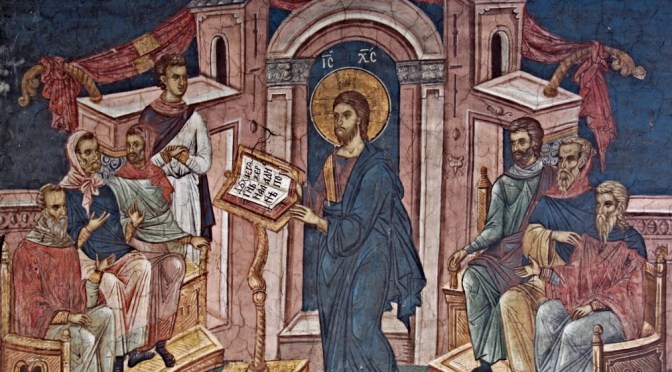
Afflicting the Comfortable Nazareth Synagogue

Luke 4:21-30

And he said, “Truly I tell you, no prophet is accepted in the prophet’s hometown. But the truth is, there were many widows in Israel in the time of Elijah, when the heaven was shut up three years and six months, and there was a severe famine over all the land; yet Elijah was sent to none of them except to a widow at Zarephath in Sidon. There were also many lepers in Israel in the time of the prophet Elisha, and none of them was cleansed except Naaman the Syrian.” (Read the whole lesson)

Sermon

We are challenged today, our comfort is afflicted. Good News is meant to comfort the afflicted, but today the comfortable are challenged to change… and this is Good News. It is hard to hear, it unsettling and even rises up our anger, but it is still Good News. As we work and strive to find our place in the world, as well as our place in the pews here… all that is overturned right in front of our eyes.

For us it was last week, but for Jesus and the people of the Nazareth Synagogue, it was only moments ago that he stood before them and boldly proclaimed that the Spirit of God had anointed Jesus to preach good news to the poor, release to the captives, sight to the blind, freedom to the oppressed and forgiveness of debts in the Jubilee year. And then Jesus sat down and preached that “Today, this scripture has been fulfilled in your hearing”. And today, we get to see and hear the response he gets – and its not nice.

After hearing Jesus’ nice sermon, the people are amazed, they are comforted in the midst of their cushy seats in the Nazareth synagogue. They marvel that here, Joseph the carpenter’s son has such beautiful words. They imagine beautiful scenes of their lives being eased, of the burdens laid down and their bumps and bruises soothed. But this is NOT the sermon that Jesus is preaching… he has not come back to his home town to sooth his friends and family. Jesus has come to preach about real suffering, about real change and about real people.

(Pause)

Grace was working her job waitressing job, about to take payment from a customer. The woman was frantically digging through her purse trying to find her wallet and money. Her child was tugging on her sleeve begging to leave. Grace gestured to the side and asked her if she wanted to take a minute while others paid, but the woman didn’t seem to understand and only got more agitated. The scarf that covered nearly all of the woman’s head but her face was beginning to come loose as she looked for something to pay her bill with. The woman looked up at Grace and started explaining, but doesn’t realize she was speaking Arabic.

Behind the woman, Grace could hear other customers complaining,

“These immigrants expect a free handout when they come here”

“Why does she wear that thing on her head? Nobody in this country cares if you see a woman’s head!”

“You should have to learn English to be allowed into Canada!”.

(Pause)

Jesus comes down on the people of the Nazareth Synagogue and he comes down hard. He has come to preach the good news to them also, but they cannot see past the energetic 10 year old running around town playing with the other boys and helping out with his father’s carpentry. They cannot see that Jesus is not Joseph’s son at all. And this is why Jesus comes down hard, Jesus is confronting their complacency, confronting their understanding of the world, and using strong and bold words to do it.

God provides food for Elijah and the widow. God heals Naaman in the Jordan river from his leprosy, just as Elisha said would happen. Jesus reminds the people of their own history, of the prophets who had already come to bring good news and Jesus reminds them of a condemning fact… Elijah was sent to a gentile woman, to a pagan widow and her son. Elisha healed a Syrian with leprosy, a solider and a conqueror. Jesus reminds the comfortable folks of Nazareth that God send prophets to heal outcasts and sinners, gentiles and the unclean… the Messiah is not just coming to make the lives of the righteous and chosen people easier.

Jesus would get us jumping out of our seats too if he were preaching here today. He would remind us that his own body and blood, that the bread and wine we share today, is not just to feed 5th generation prairie German, Icelandic or Norwegian Lutherans, but that Christ has come to feed the poor, the outcast, children, the old, the mentally ill and the sick. He would tell us that healing and reconciliation is also for immigrants, Muslims, Jews, Hindus, women, visible minorities.

But when Jesus afflicts the comfortable he doesn’t go halfway. Jesus challenges the people of the Nazareth and challenges us to see where, in our hearing, God is at work. Jesus is saying that God’s work happens with more kinds of people than imagine, AND also happens with us, amongst us, through us. Jesus demands our participation in God’s work. Jesus dares us see how we fit into the work of God right her and now. This pokes us in our comfort zone and makes defensive. We are the ones already here, what more does God want from us? But for Jesus being here is only the first step. Jesus sees the gospel working through us for the poor, the blind, the imprisoned, oppressed and indebted.

But this is not what the people of Nazareth came to hear, Jesus is challenging their comfort and they get enraged and they decide to hurl Jesus off a cliff. But he escapes. Yet, the rage of the people will catch up with him. From today onward, Good Friday is in our horizon as Jesus barely escapes execution by a mob. The rage of the Nazarites is the same rage that will shout “crucify him”, the same rage that will nail his wrists and feet to a cross. But that time is not yet. Resurrection is still coming and the people of Nazareth haven’t seen the fulfillment of God’s promises yet…God’s promises that include more than Ancient Hebrews and Prairie Lutherans. God’s promises that transform us, and we become less comfortable the more we hear them.

But the rage of righteous entitlement, the rage that believes it deserves God’s love and that is willing to put God to death for changing the rules… Today, this rage loses its power, and God’s power to free, to release, to heal, to feed, and to forgive steps out of the shadows and stands in our midst, it defies our attitudes, escapes being hurled into oblivion and continues on with its mission.

(Pause)

As the poor woman standing at the counter, realized that she had forgotten her wallet, the tears began streaming down her face. Voices behind continued to mutter and complain. And then all of a sudden two 20 dollar bills appeared on the counter, and a smiling face was standing next to her. Grace recognized Marlena from church at St.David’s

“Here take this, and pay for your meal.” Marlena said. “You don’t know me, but I have seen your family walking down the street, you are my neighbour”.

With tears still streaming down her cheeks, the grateful muslim woman reached out and took the hand of this kind stranger, thanking her profusely in arabic.

(Pause)

Today, the Good News hurts us, as we see ourselves in the folks of the Nazareth Synagogue. But its still Good News anyways, as we discover again that God’s love is not based in our comfort, in what pew bears the shape of our behind, but rather its based in God’s openness to a world full of imperfect variety. And God’s love is happening right here and now.

Jesus takes two stories of God’s great compassion and uses them in a new way. Jesus reminds the comfortable folks of Nazareth and comfortable Lutherans of the prairies that God’s love is so much broader than we can imagine. Jesus pushes our comfort zones and enrages us. And still despite our attitudes, despite our rage at being challenged, Jesus promises reconciliation and healing, for which we are given front row seats. For today Jesus has proclaimed that along with God’s chosen people, lepers and gentiles, widows and pagans, and immigrants to a foreign land…  we all are the beloved of God. Even if that makes us uncomfortable.

Amen.