Category Archives: Theology & Culture

How Churches Confuse the Method for the Mission

Who remembers Kodak? Who remembers taking photos with Kodak film? Does anyone know what happened to the Kodak company in 2012? Who still takes photos with film cameras?

In a recent blog post, Pastor and Blogger Carey Nieuwhof compares Kodak and the church. He suggests that Kodak made a fundamental mistake in understanding their company’s mission.

In many ways,” He writes, “Kodak sabotaged its future by refusing to respond to the massive changes in culture. 

Kodak bet too much of its future on the past (film photography). It lost.

He goes on:

Imagine what might have happened if someone at Kodak had asked:

Are we in the film business, or the photography business?

If Kodak was in the film business, the future would be dim.

But if Kodak had decided it was in the photography business, the future could have been very different.

Instead, Facebook decided it was in the photography business when it bought Instagram. And Apple decided it was in the photography business when it developed the iPhone.”

“Too many leaders mix up method and mission. That’s one of the things that happened to Kodak [and that’s happening in journalism].

It’s also an epidemic in the church world.

This mistake is so easy to make in leadership.

A method is a current approach that helps you accomplish the mission. It’s how you do what you do.

The mission is why you exist.

The problem in most churches is people (including leaders) get very fond of their methods.

When Carey Nieuwhof talks about METHODS, what kind of things do you think he is talking about in the church? – PAUSE –

I suspect that there are a lot of examples he is thinking about, here are a few:

1. When I was is my first congregation, I had a member who was adamant that we have a Sunday School program – even though there were no Sunday School aged children attending the church.

The method of Sunday School had become more important than the mission to help people grow in faith.

2. This past week as pastors and other leaders gathered with our Bishop  to talk about worship, Carey Nieuwhof’s article came up in terms of the methods of worship over the mission of worship.

Churches will devout tremendous resources to particular methods of worship: contemporary or traditional, organs or praise bands, music before 1950 and music after, what’s considered to be more formal, or liturgical, verses what is more casual in worship styles – the list goes on.

The method – or preferred style – of worship has become more important than mission of proclaiming the gospel in the worshipping assembly.

3. Or the ultimate example, congregations focussing on attendance and budgets in order to keep their doors open – and failing to see that buildings and budgets are just methods.

The mission is – and has always been – helping others grow in their relationship to Jesus.

Churches, along with Kodak, are not immune from mistaking the method for the mission.

So at this point, you might be wondering what does all this method and mission talk have to do with the temptation of Jesus?

The devil, like Kodak and many congregations, has mistaken Jesus’ methods for Jesus’ mission. As the devil happens along Jesus wandering and fasting in the wilderness, he forgets what he has likely just heard and witnessed as Jesus was baptized and what we heard repeated again on Transfiguration Sunday. The devil has forgotten that the Father has just declared Jesus the Son, the devil has forgotten that the Father and Son are one God.

And having forgotten that, the devil tries to tempt Jesus with power and its misuse. The devil mistakes God’s mission to be one of power. The devil sees only the method of the incarnation – God becoming flesh. And the only purpose for God coming into the world that the devil can imagine is power.

Turn rocks into bread the devil urges – show God-like power over creation.

The devil tries again and offers that Jesus could rule over nations and peoples – show God-like power over humanity.

And the most desperate temptation, the devil dares Jesus to jump from the pinnacle of the temple – as if forcing God to act and save Jesus shows God-like power.

With each successive temptation, the devil is trying to get Jesus to use his power, the power of an incarnate God. And the devil gets more desperate with each offer, trying to get Jesus to do something with all that power. The devil has mistaken the method – God coming to creation in flesh – for the mission.

The mission that Jesus reminds the devil, that Jesus reminds us of, each time he responds:

One does not live by bread alone… but by every word that comes from the mouth of God.

Worship the Lord your God and serve only Him.

Do not put the Lord your God to test.

These are not the responses of a noble pious man resisting temptation in front of the devil. Jesus isn’t reciting bible verses for his own benefit.  We cannot split apart the trinity, split apart Father and Son when it feels convenient. When Jesus speaks, it is God speaking.

One does not live by bread alone, Jesus says, for it is I who gives you life.

Worship the Lord your God, Jesus says, for it is I who will gives you a place in this world.

Do not put the Lord your God to the test, Jesus says, for I have not come to show my power, but to show my love for all creation.

The method, God becoming flesh, is only to serve the mission.

And the mission is God’s deep and abiding love for the world. For each and everyone of us. 

And it is not just the devil who needs this reminder. We need it too. As individuals, and as communities. We need to be reminded that we exist in service of God’s mission. That all the things we do are in service of God’s mission. Whether it is Sunday School, or bible study or individual study and prayer, we serve God’s mission of growing in faith. Whether it is with organs or rock bands, old hymns or new songs, formal reverent liturgies or casual intimate gatherings we serve the mission of announcing God’s love.  Whether it is with grand buildings and large staffs, or rented space and volunteers, we serve God’s mission by being the places where forgiveness and mercy are offered. Where sinners are washed with Holy Baths. Where the hungry are fed with bread and wine. Where the dying are given words that breathe into us new, and eternal, life.

God’s mission is front and center today on this first Sunday in Lent, as Jesus refocuses us back to the heart of the issue.  And it’s no mistake that the story of the temptation of Jesus is always told on the first Sunday of Lent. It focuses us on the heart of the issue between God and us. And from now until Easter we are headed towards the core of the conflict, between method and mission, a conflict between power and love. Our desire for power, and God’s desire for love.

And as the devil tries to tempt Jesus, he doesn’t know where Jesus is headed. But we know how the conflict ends. We know the end of the story. Humanity’s desire for power leads to death on a cross on Good Friday. God’s desire for love leads to life and an empty tomb.

And the same story plays out here among us. Our desire might be to control the methods, to make how we do church the most important, but God’s desire is for the mission, to make the “why” the most important. Lest we forget that the mission comes before the method, God has a habit of stripping us of our methods. This Lent, God is calling us to look at whether our focus is on the methods we use, or on God’s mission for the church and us. God is leading us into the wilderness, calling us to leave our attachment to our favourite methods behind, challenging our assumptions  about power and then God is reminding of us what is most important.

Like Kodak who thought they were a film company rather than a photography company, the church too has a habit of mixing up the method for mission.

But unlike Kodak, God does not let us stay mixed up for long. Instead, God comes into our world and reminds us that isn’t about methods, not about the programs we have nor music or worship styles, nor buildings nor budgets.

The mission is God’s love. Everything else comes second. 


(*Thanks to my wife, Courtenay, for co-writing this sermon with me)
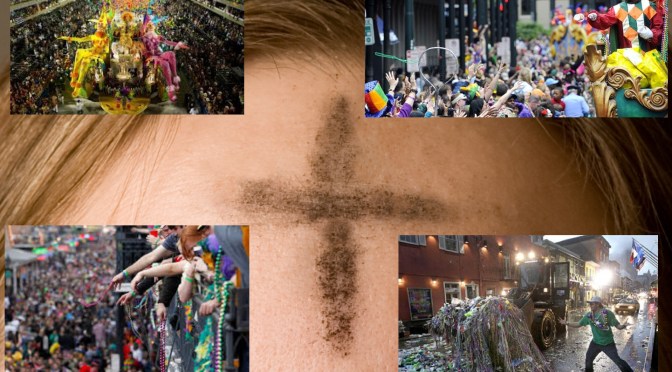
On Ash Wednesday, we confess our sins of Mardi Gras.


Last night parades marched down streets all over the world. Dancers in elaborate costumes danced. Partiers around the globe partied. Musicians played beats and sounds that kept party going. The crowds took in Mardi Gras or Carnival. Maybe some of us ate pancakes and maple syrup. Maybe we cut off or shrived the fat of ham and sausages for Shrove Tuesday.

Tuesday was the last day of normal. They last day of full flavoured enjoyment. The day to use up the fat and the sugar in the house. It was almost like the day to finish the Christmas baking, to leave the last of the holidays behind.

Because today the fasting begins. Today we begin towards a different part of the story. The wondrous births, the visits from foreign kings, the dramatic baptisms, the mountain top wonders are done.

Today, we descend into the valley of Ashes. Today we hear the words:

Remember that you are dust and to dust you shall return.

When God reached down into the dirt of creation, when God grabbed the dirt in God’s hands, felt the dust and clay between God’s fingers, do you supposed God knew that the Adam, the first human of creation, the dirtling, was what would be made. Or did it take a while for Adam to take shape? Did God need to work the dirt before Adam appeared?

Adam was created from dust and ash, from dirt. He was formed and moulded with God’s very hands, and Eve too was formed in the dirt, for she was split from Adam.

Did God know then, as God worked the dirt into torso and arms and legs that Adam and Eve would eat the fruit? Did God know as hands and feet were formed, as finger nails and hair, eyes and teeth took shape that the human beings would choose power and temptation? Did God know as God breathed breath into their lungs and brought them to life that the Adam and the Eve, the dirt creatures would choose the fat, the wild abandon, the risk of death? Did God know that they would choose Mardi Gras without knowing it would lead them to Ash Wednesday?

Remember that you are dust, and to dust you shall return. 

On Ash Wednesday, we confess. We confess our sins of Mardi Gras. We confess our original sin. We confess that we choose ourselves, our own pleasure, our own comfort, our own security, our own fears, our own neurosis ahead of others. We confess that we cannot see beyond ourselves, we cannot escape our selfishness, we cannot stop getting in our own way.

Today, we confess our sins and we mark ourselves with Ash.

Remember that you are dust and to dust you shall return. 

Today, we cannot escape that the consequences of our choices mean death. Adam and Eve ate the fruit and they died. Abraham and Sarah laughed at God and they died. Moses lashed out in rage, and he died. King David lusted for Bathsheba and he died. Peter denied Christ and he too was crucified. Paul murdered Christians and he rotted in prison.

Their choices meant death.

And our choices mean death.

We let the weak and vulnerable fend for themselves. We make our world sick for the sake of stuff. We allow a few to hoard much and call greed “good business”. We call for war because we are more afraid of people on the other side of the earth than we are of the injustices and tragedies that are killing us here.

We keep choosing the fruit. The fat. Mardi Gras.

As if we forget that our choices lead to Ashes.

And so today, God says

Remember that you are dust, and to dust you shall return.

But God doesn’t leave us in the dust. God doesn’t let our Mardi Gras choice be the end of us.

On Ash Wednesday God reminds who we are, but also who God is.

God says Remember that you are dust because I became dust with you.

To dust you shall return because I returned from the dust as well.

Remember that you are my dust and I am your dust.

Remember that I became dust on the cross, and returned from the dust as I walked from the empty tomb.

Remember that I returned your fruit. I returned your fat. I turned Mardi Gras into Ash Wednesday. And Ash Wednesday into Good Friday. And Good Friday into the 3rd day, the First Day of the Week.

Today, the choices of yesterday, our Mardi Gras choices, our choices of self before others, our choices of now before the future, our choice of consumption and destruction over conservation and reconciliation. Our choices lead us to ashes and to death.

Remember, that you are dust and to dust you shall return, says the Lord.

But remember also, says the Lord, that I am the one who formed you from the dust and dirt. I am the one who held you in my hands, who first loved you. I am the one who breathed life into you.

I did it once, says the Lord… and I will do it again.

Amen. 

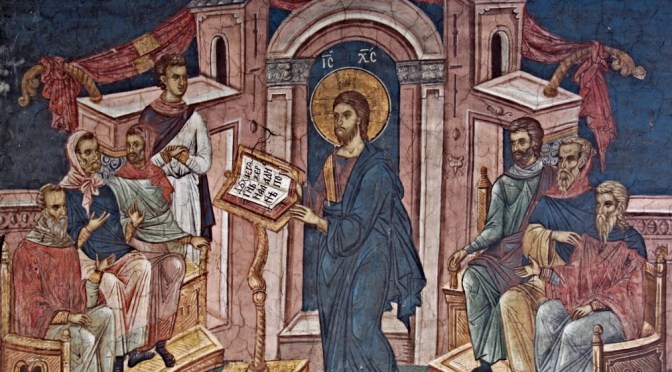
Afflicting the Comfortable Nazareth Synagogue

Luke 4:21-30

And he said, “Truly I tell you, no prophet is accepted in the prophet’s hometown. But the truth is, there were many widows in Israel in the time of Elijah, when the heaven was shut up three years and six months, and there was a severe famine over all the land; yet Elijah was sent to none of them except to a widow at Zarephath in Sidon. There were also many lepers in Israel in the time of the prophet Elisha, and none of them was cleansed except Naaman the Syrian.” (Read the whole lesson)

Sermon

We are challenged today, our comfort is afflicted. Good News is meant to comfort the afflicted, but today the comfortable are challenged to change… and this is Good News. It is hard to hear, it unsettling and even rises up our anger, but it is still Good News. As we work and strive to find our place in the world, as well as our place in the pews here… all that is overturned right in front of our eyes.

For us it was last week, but for Jesus and the people of the Nazareth Synagogue, it was only moments ago that he stood before them and boldly proclaimed that the Spirit of God had anointed Jesus to preach good news to the poor, release to the captives, sight to the blind, freedom to the oppressed and forgiveness of debts in the Jubilee year. And then Jesus sat down and preached that “Today, this scripture has been fulfilled in your hearing”. And today, we get to see and hear the response he gets – and its not nice.

After hearing Jesus’ nice sermon, the people are amazed, they are comforted in the midst of their cushy seats in the Nazareth synagogue. They marvel that here, Joseph the carpenter’s son has such beautiful words. They imagine beautiful scenes of their lives being eased, of the burdens laid down and their bumps and bruises soothed. But this is NOT the sermon that Jesus is preaching… he has not come back to his home town to sooth his friends and family. Jesus has come to preach about real suffering, about real change and about real people.

(Pause)

Grace was working her job waitressing job, about to take payment from a customer. The woman was frantically digging through her purse trying to find her wallet and money. Her child was tugging on her sleeve begging to leave. Grace gestured to the side and asked her if she wanted to take a minute while others paid, but the woman didn’t seem to understand and only got more agitated. The scarf that covered nearly all of the woman’s head but her face was beginning to come loose as she looked for something to pay her bill with. The woman looked up at Grace and started explaining, but doesn’t realize she was speaking Arabic.

Behind the woman, Grace could hear other customers complaining,

“These immigrants expect a free handout when they come here”

“Why does she wear that thing on her head? Nobody in this country cares if you see a woman’s head!”

“You should have to learn English to be allowed into Canada!”.

(Pause)

Jesus comes down on the people of the Nazareth Synagogue and he comes down hard. He has come to preach the good news to them also, but they cannot see past the energetic 10 year old running around town playing with the other boys and helping out with his father’s carpentry. They cannot see that Jesus is not Joseph’s son at all. And this is why Jesus comes down hard, Jesus is confronting their complacency, confronting their understanding of the world, and using strong and bold words to do it.

God provides food for Elijah and the widow. God heals Naaman in the Jordan river from his leprosy, just as Elisha said would happen. Jesus reminds the people of their own history, of the prophets who had already come to bring good news and Jesus reminds them of a condemning fact… Elijah was sent to a gentile woman, to a pagan widow and her son. Elisha healed a Syrian with leprosy, a solider and a conqueror. Jesus reminds the comfortable folks of Nazareth that God send prophets to heal outcasts and sinners, gentiles and the unclean… the Messiah is not just coming to make the lives of the righteous and chosen people easier.

Jesus would get us jumping out of our seats too if he were preaching here today. He would remind us that his own body and blood, that the bread and wine we share today, is not just to feed 5th generation prairie German, Icelandic or Norwegian Lutherans, but that Christ has come to feed the poor, the outcast, children, the old, the mentally ill and the sick. He would tell us that healing and reconciliation is also for immigrants, Muslims, Jews, Hindus, women, visible minorities.

But when Jesus afflicts the comfortable he doesn’t go halfway. Jesus challenges the people of the Nazareth and challenges us to see where, in our hearing, God is at work. Jesus is saying that God’s work happens with more kinds of people than imagine, AND also happens with us, amongst us, through us. Jesus demands our participation in God’s work. Jesus dares us see how we fit into the work of God right her and now. This pokes us in our comfort zone and makes defensive. We are the ones already here, what more does God want from us? But for Jesus being here is only the first step. Jesus sees the gospel working through us for the poor, the blind, the imprisoned, oppressed and indebted.

But this is not what the people of Nazareth came to hear, Jesus is challenging their comfort and they get enraged and they decide to hurl Jesus off a cliff. But he escapes. Yet, the rage of the people will catch up with him. From today onward, Good Friday is in our horizon as Jesus barely escapes execution by a mob. The rage of the Nazarites is the same rage that will shout “crucify him”, the same rage that will nail his wrists and feet to a cross. But that time is not yet. Resurrection is still coming and the people of Nazareth haven’t seen the fulfillment of God’s promises yet…God’s promises that include more than Ancient Hebrews and Prairie Lutherans. God’s promises that transform us, and we become less comfortable the more we hear them.

But the rage of righteous entitlement, the rage that believes it deserves God’s love and that is willing to put God to death for changing the rules… Today, this rage loses its power, and God’s power to free, to release, to heal, to feed, and to forgive steps out of the shadows and stands in our midst, it defies our attitudes, escapes being hurled into oblivion and continues on with its mission.

(Pause)

As the poor woman standing at the counter, realized that she had forgotten her wallet, the tears began streaming down her face. Voices behind continued to mutter and complain. And then all of a sudden two 20 dollar bills appeared on the counter, and a smiling face was standing next to her. Grace recognized Marlena from church at St.David’s

“Here take this, and pay for your meal.” Marlena said. “You don’t know me, but I have seen your family walking down the street, you are my neighbour”.

With tears still streaming down her cheeks, the grateful muslim woman reached out and took the hand of this kind stranger, thanking her profusely in arabic.

(Pause)

Today, the Good News hurts us, as we see ourselves in the folks of the Nazareth Synagogue. But its still Good News anyways, as we discover again that God’s love is not based in our comfort, in what pew bears the shape of our behind, but rather its based in God’s openness to a world full of imperfect variety. And God’s love is happening right here and now.

Jesus takes two stories of God’s great compassion and uses them in a new way. Jesus reminds the comfortable folks of Nazareth and comfortable Lutherans of the prairies that God’s love is so much broader than we can imagine. Jesus pushes our comfort zones and enrages us. And still despite our attitudes, despite our rage at being challenged, Jesus promises reconciliation and healing, for which we are given front row seats. For today Jesus has proclaimed that along with God’s chosen people, lepers and gentiles, widows and pagans, and immigrants to a foreign land…  we all are the beloved of God. Even if that makes us uncomfortable.

Amen. 

Annual Meeting Season: What church budgets say about ministry (It’s not good.)

As we begin the new year, most churches are entering Annual Meeting season. Budgets will be proposed and approved. Reports on how the past year’s ministry has gone will be presented. Plans for the year will be laid out.

For a lot of church people, annual meetings are a necessary evil. Boring meetings about boring things. But annual meetings have a significant effect on ministry. If you really want to know what a congregation values, look at the budget. If you want to know what a denomination focuses on, look at the budget.

Churches might put things like “All are Welcome” on signs, but have nothing in the budget for hospitality ministry.

Churches might have mission statements about growing in faith or serving the poor, but have no budget lines for educational resources or funds directed to outreach.

While what churches have failed to budget for or invest in is interesting, what they do put their time, energy and money towards is even more interesting. And so often churches invest in things that simply make no sense and make one wonder what is actually trying to be accomplished. In fact, churches often invest in or put their resources into ventures that have little chance of yielding fruit. 

Let me explain with some examples:

Lutherans in Canada have been primarily rural during our history. Most of our congregations are in rural communities. This made sense as it has been only in the past decade or so that the shift in Canadian society has been from a majority rural to majority urban population.

Generally urban congregations tend to be larger with more resources. Rural congregations tend to be smaller with fewer resources. So seeing struggling rural congregations, church leadership tends to invest in places where the church is struggling. Our seminary has developed an entire institute devoted to rural ministry offering a Doctor of Ministry degree in rural ministry. Multi-point and regional parish ministry is being explored and developed to help a few pastors serve many congregations in a team setting. Rural congregations are often given travel subsidies for church events. Skype and other video conferencing technology is being used to include rural folk.

This is all good and rural congregations deserve good ministry.

Yet, all our efforts are fighting against the demographic realities of shrinking rural communities. There are fewer and fewer people to minister to in rural contexts. We are putting disproportionate resources towards smaller groups of people.

At the same time, because urban congregations are perceived as large and self-sufficient, we leave them be. Yet, they are shrinking too and it is not related to demographics. In fact, there are more people than ever who have no church affiliation living down the street, within blocks, driving by urban churches every day. Shrinking urban churches are the result of changing culture, mission-drift, a lack of evangelism and failed education systems in churches. 

Yet, there is little energy, time, resources or even concern going into helping urban churches understand the people that live next door to them.

Many urban churches are now at a place where they simply cannot communicate or connect with 21st century culture. This isn’t about phones and projector screens in church, but about understanding that most people 70 and under engage community differently – through smart phones and social media. People understand their real life world through an online lens, from scheduling birthday parties, to finding restaurants to eat at, to getting their news, to listening to music or watching TV etc…

And another example:

Churches will bend over backwards to keep nearly comatose Sunday School programs alive. They will long for the youth to come and “get involved.” They want young adults to “come back” to church in order to get take up the jobs that older people want to give up. Precious volunteer energy and resources are spent on doomed to disappoint ministries. Yet, the things that they are asking of kids (to attend regular faith education programs) and youth (to fill most leadership roles in worship), adults are mostly unwilling to do themselves. They expect young people to want to do things that older people want to stop doing… it makes no sense.

But perhaps more importantly, we have hit another demographic tipping point where there are more over 50-year-olds in Canada than under 50-year-olds. That means at best, a church can hope for 1 family of 4 for every 2 empty nest couples in church. If you have 30 couples over 50 in church, you will only have about 15 families. Of course it will seem like the young people aren’t around… but that is because they don’t exist.

Churches long for young adults and young families thinking that they will have the time, energy and money to keep congregations going. Yet increasingly, young adults and young families are under-employed, highly indebted people with precious discretionary time on their hands and who are trying to make it through a high cost time of their lives.

Yet the Baby Boomers, the richest generation in history, are reaching the end of their careers. The largest group of retired people ever is about to have loads of time and money on their hands. Why don’t we have Sunday School for them? Retiree workers instead of youth workers? Why don’t we want 65-year-olds putting on an alb and lighting the candles in worship?

Many churches spend a lot of angst on young people, who (demographically speaking) don’t even exist. But the people who do exist, a glut of boomers, are largely ignored. 

Why do congregations, church bodies and leaders so often see their hope and future in unrealistic visions of church? Why do we invest in ministries and activities that have little chance of yielding fruit for us?

I don’t know if there is one answer. I think it has to do with fear of disappointing those led us into faith in the first place by doing things differently than they did. It has to do with longing for a return to the glory days of the past. It has to do with a fear of change, and our world is full of change these days.

Now, I wish this was the part of the blog post where I explained the magic bullet to turning this poor investment strategy, this poor ministry culture around. But I don’t know the answer.

Well, let me rephrase. I do know the answer… and so do you.

But the answer is hard work.

Churches need to look around ask what faithful ministry looks like in their context. Find out who our neighbours are. Find out what the needs of our communities are. Ask what opportunities is God putting before us. Discern who God is calling us to serve. Be willing to let go our expectations and vision for ourselves, and ask who God is calling us to be.

Strive to be faithful in our investments and ministry planning rather than successful. 

This Annual Meeting season instead of seeing long boring meetings about boring reports and boring talks, consider it an opportunity to discover where God is leading our congregations and communities.

Who knew Annual Meetings could be that?


What does your church invest in? How can you see where your priorities are? Do you love Annual Meetings? Share in the comments, or on the Facebook Page: The Millennial Pastor or on Twitter: @ParkerErik

Refugees Welcome – God sent YOU to us

John 1:1-14

In the beginning was the Word, and the Word was with God, and the Word was God. He was in the beginning with God. All things came into being through him, and without him not one thing came into being. What has come into being in him was life, and the life was the light of all people. The light shines in the darkness, and the darkness did not overcome it. (Read the whole passage)


Sermon

As the plane descended, it broke through the orange grey cloud cover. As Mara looked out her window, she could see the lights of the city sprawling off in all directions. There were little cars and trucks moving along streets and highways. Buildings rose up tall in some places, and in other areas fields and parks broke up rows and rows of houses. All of it was covered in white… like a great sandstorm had covered the city, but not quite.

Soon the airport and runway came into view. This was a the 4th and final landing that she, her husband Yusef and her two year old son Isa would be making on their long journey. 72 hours before, that had left the Zataari Refugee camp for Amman Jordan.  In Amman they boarded a plane destined for Canada. They had been chosen for resettlement. They had been interviewed, screened, and interviewed some more. When the news came that they has been chosen to go to Canada, they couldn’t believe the news.

The plane touched down and began taxi-ing into the terminal. The plane was nearly empty with only a few dozen others. It was dark outside and the family was tired. They gathered their belongings to exit the plane. However, as Mara and Yusuf made their way up the gangway and through the airport, their anticipation was beginning to build. They were about to finally arrive at a new life, in a safe country. Mara noticed right away that there were no soldiers or guards, nor police officers to be seen Late at night the airport was nearly empty, except for the friendly airline staff waving them on towards the baggage claim with smiles and greetings. The government officials who had been with them the whole way were leading the group as they walked.

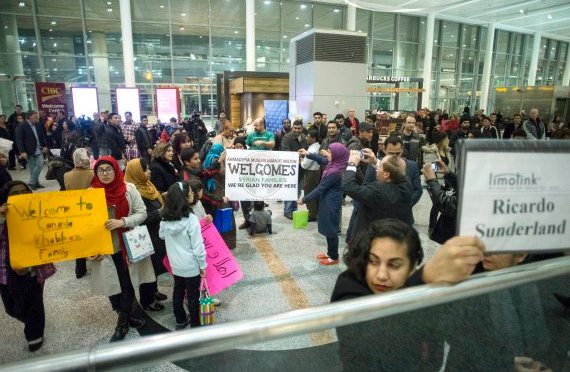
Through a final set of security doors, the group spilled into the escalators leadings down to the baggage area. The quiet airport all of sudden was filled with noise. There were people shouting and cheering, clapping. As Mara, Yusuf and Isa stood at the top of the escalators she could now see crowds of people. Hundreds – waiting just for them. Many were holding signs. In English and Arabic,

“Welcome Refugees. You are home”

As the group rode down the escalator it was thrilling. The gathered crowd began singing (Mara would later discover that they were singing O Canada). People were handing out coffee cups that looked like Christmas sweaters. And little sugar-coated balls of dough to eat.

The government officials were helping the refugees to find their sponsors, but Mara had already spotted hers. There was a group holding a sign in Arabic with their names on it. Underneath their sign it said, St. David’s church. Mara noticed it because Yusuf’s family had always said they were related to the great King of Israel – David.

There were about 20 church members. An older priest, surrounded by all kinds of people. A woman stepped forward and wrapped her arms around Mara – Marlena the woman said pointing to herself.

“My name is Mara” Mara said practicing the English she had been learning for the past two years in the Zataari Camp.

After many more hugs and introductions, Isa was off playing with boy and girl around 11 or 12 years old. Yusuf was trying on a number of winter coats the group had brought. Mara couldn’t believe all these people were there for her family.

Soon the three were packed up in a big SUV and on their way to their new home. Marlena and her husband Jim with their children David and Lizzie took the family to their new apartment. Mara was exhausted but exhilarated. She didn’t know how relieved she would feel to finally be safe, for the first time in years. For the first time since she and Yusuf had left Damascus with only what they could carry and walked to Jordan. She had been quite pregnant at the time and she had given birth to Isa their first night in Jordan. During the past 2 years they had lived in a Refugee camp wondering if they would ever go home again, wondering if they would ever have a home again. Isa had been a Refugee, a stateless person, a homeless person his entire life. He didn’t have a home until now. But now he was, with his parents, a Canadian.

Marlena’s family said goodbye and promised to be back the next day. They would be going to church for Christmas Day. Yusuf put Isa to bed while Mara explored their new home. It was full of furniture, food and more. Finally late into the night, Mara and Yusuf, happy and content, drifted off to sleep…

In the morning, the doorbell rang. Mara went to the door. It was Marlena.

“Are you ready to head… Where did you get that sweater?” she asked surprised.

“They gave to us in camp” said Mara.

“What? How?” said Marlena.

“C-L-W-R” Mara said trying to remember the letters.

“I gave that sweater to the Lutheran church across from our church to years ago, that is incredible that YOU have it.”

Mara was wearing a St. Francis Xavier University shirt. It said Volleyball on the back. Marlena pointed to the arm. Stitched onto the arm it said Marlena – 1994.

“Amazing” said Marlena. “Just amazing.”

The two families arrived at St. David’s about 5 minutes before church was to start… they were greeted by too many people to remember. Finally, the two families found their pew on the right side of the sanctuary.

Father Angelo processed into the sanctuary to begin worship and the congregation began singing, “O Come All Ye Faithful.”

Two years in the refugee camp and now two days in Canada had been full of unfamiliar things, this church was more like home than either Mara or Yusuf expected. They were Syrian coptic. The liturgy at St. David’s was very familiar to how they worshipped back in Syria. Even though they couldn’t always keep up with the English, the familiar pattern of standing and praying and singing reminded them of life back in Damascus. They listened to the sermon, they joined in the prayers when they could, and they went forward to receive communion. Father Angelo smiled as he put some bread in Isa’s hands.

At the end of the service, Father Angelo made a few announcements. And then he slowed down and said very clearly,

“As-salamu alaykum” which means Peace Be with you in Arabic.

“Today, we are also welcoming very special new members. Yusuf, Mara and Isa are joining us from Syria.” before he could finish people started clapping.

Overtop of the clapping Father Angelo asked the family to stand.

Marlena leaned over to Mara and Yusuf and gestured to stand. Uncertainly Mara stood up, Yusuf picked up Isa and joined her. As they stood the clapping almost immediately died out. People were gasping and some were even pointing. Mara became very self conscious. Trying to formulate the English words, she said, “Thank you. God has blessed us and given you to us. We are so happy.”

Still people were staring and pointing, until Mara realized they were pointing behind her. Behind Mara, Yusuf and Isa hanging on the wall was a Christmas Banner. It was a dark navy blue starry sky above a brown desert. Walking across the desert were two figures, one holding a child. Mary and Joseph fleeing to Egypt. Mara looked strikingly like Mary, with her white headscarf, blue sweater and blue dress matching Mary’s look exactly. Yusuf’s shaggy hair and beard, with his brown corduroy sport jacket and brown pants matching Joseph’s brown tunic. Even Isa’s red shirt and white pants mimicking the infant Jesus’ white and red clothes.

Father Angelo finally broke the moment.

“No” he said. “No, God did not give us to you. Here you are in our church, a family from the house of David who had fled across the same sands as the holy family, who has known fear and danger, who has sought refuge in a foreign land.”

Father Angelo took a breath.

“No, God did not give us to you. God has sent YOU to us. We are blessed because you have been given you us. You are the ones that we have been waiting for. The ones that we needed to receive here. You are the ones who have reminded us that we have not saved you. But you have saved us. Your little family has travelled across the world to remind us that we are the ones who needed the saving. That God is the one coming into our world in order to bring light into our darkness.”

Father Angelo took another breath and then said,

“The angel said to them, “Do not be afraid; for see– I am bringing you good news of great joy for all the people: to you is born this day in the city of David a Savior, who is the Messiah, the Lord.”

Amen

*This is part 3 in the series. Part 1 is here. Part 2 is here.