Tag Archives: Sermon

It is Friday – God’s Friday

It is Friday.

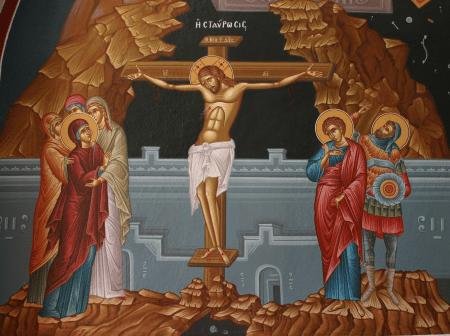
Today we live in Darkness. Today we sit and worship in the shadow of cross.

We have heard Christ’s story of passion.

We have heard of humanity’s betrayal.

We have heard of his suffering and death.

But we have not come to kill Jesus again.

We have not come to grieve and mourn his death again.

We are not reliving the crucifixion again,

We are not nailing Jesus to the cross again.

Today we remember.

We remember our part in the story.  Our shame and our pride.

We remember that when faced with God in flesh, when faced with God with us,

we put God to death.

We remember that humanity at its best, humanity’s finest minds, finest scholars, finest religious authorities, finest soldiers…. our best and finest understanding of the divine,

led us to kill God.

This is Good Friday.

It tells us who we are.

It tells us who try to be.

It tells us what happens when we try to be God in God’s place.

We are threatened by anything that would take away

our control

our power

our strength.

We couldn’t stand the idea of being able to see God face to face.

We couldn’t stand the idea of God telling us that we were wrong, that were are not God

We couldn’t stand the idea that we didn’t control what God wanted, what God said, what God did, what God thinks.

How could we not be in control?

We believe we are God,

we know what WE want,

what WE say,

what WE do,

what WE think.

So when we met God face to face,

When Jesus  healed, preached, taught, fed, exorcized demons and raised the dead to life

When Jesus let us see God, and that we are not God.

We plotted, planned, schemed and betrayed.

When we met God face to face,

We said no.

We used our greatest tool. Our strongest statement. Our godlike power.

Death. We put Jesus to death.

When God came to us face to face,

God said yes.

God took our greatest tool, our strongest statement, our godlike power

God accepted our death

And then God did what he had come to do.

And then God said what he had come to say.

And then God gave us his greatest tool, his greatest statement, his real godlike power.

God gave us himself.

God gave us his life.

God gives us New Life.

And the cross which stands so tall,

no longer stands for death.

The cross which stands so tall

now stands for life.

We tried to make the cross say no

But God has made it say yes.

We have tried to be like God

But God has come to be like us.

We tried to control God with death

But God will not be controlled

Life will not be controlled

Love will not be controlled

Forgiveness will not controlled

Grace will not be controlled.

God will not be controlled.

God has come to love us

God has come to forgive us

God has come to show us grace

God has come to give us life.

It is Friday.

It is Good Friday.

It is God’s Friday.

The Wilderness is Not what We Think

Mark 1:9-15

And the Spirit immediately drove him out into the wilderness. He was in the wilderness forty days, tempted by Satan; and he was with the wild beasts; and the angels waited on him. (Read the whole passage here.)

Sermon

We have come a long way from the mountain of Transfiguration. Last week, Jesus stood on the mountain with Peter, James and John, and was changed into dazzling white. Moses and Elijah showed up and God spoke to all gathered there. Yet, by Wednesday, we had come down from that mountain, and we were faced with our own sin, our brokenness and our mortality on Ash Wednesday. And as we begin Lent, Jesus is tossed into the wilderness. 

This pattern of Transfiguration to Ashes to Wilderness is one that we repeat each year as we move from the season after Epiphany into Lent. On the first Sunday of Lent of each year we hear the story of Jesus’ temptation in the wilderness, which sets the tone for our Lenten journey. The story of Jesus’ temptation represents both the beginning of Jesus’ earthly ministry, but also is the first step of Jesus’ path to the cross.

Yet, in the year of the Gospel of Mark, the story seems to lack key elements. In fact, the temptation part of the story is obscured by two stories that we have already heard in the past few weeks. In January, we heard the story of Jesus’ baptism and we heard the story of Jesus entering Galilee to preach his first sermon, “The Kingdom of God has come near to you.”

The temptation part of the story is told in only 5 words by Mark, “He was tempted by Satan.”

And that is it.

No stones to bread. No power over all the kingdoms of the earth. No jumping off the temple.

In fact, Jesus is in the wilderness for 40 days, tempted by Satan, but also hanging out with the wild beasts and being waited on by Angels. Where is the fasting and praying? Where is the stoic resolve? Where is our example of resisting temptation? Mark’s version sounds almost like a spa vacation.

However, Mark remembers something that we have largely forgotten over time. The wilderness is not the place of trial and tribulation that we imagine. In fact, before Jesus arrived on the scene, the wilderness was actually the place where God met God’s people. God sent Abraham into the wilderness with the promise of land and descendants. Moses and the Israelites wandered the wilderness for 40 years, while God provided water from the gushing rock, and manna and quail to eat. Elijah was sent out as young man to save the people of Israel, and along the way God provided water at the stream and food delivered by wild ravens.

While the wilderness was a place fraught with danger, it was the place where God’s people met their God. God always showed up in the wilderness, and God’s people were not left to suffer alone.

When we imagine wilderness, we don’t usually think of it in these terms. We think of wilderness as the times and places, the experiences in our lives when God seemed absent. The times of illness or suffering, the times of workplace strife or family conflict. The times of addiction and doubt, of grief and depression. And yet, wilderness is no such thing. Wilderness is where God meets God’s people, while all these other things are simply part of the experiences of human life. They are part of the baggage we carry everyday.

Wilderness, as we hear about it in Mark’s gospel today, is the place where we go to leave our baggage, our troubles behind. Wilderness is where we are stripped of our burdens and our comforts, where day-to-day living, joys and sorrows, are left behind. Wilderness is where God takes us when we need to be renewed and refreshed, where we can let go and be cared for by God.

When the spirit tosses Jesus into the wilderness, it is not really about temptation like we usually hear with this story. In fact, the wilderness is the place where God goes to meet God’s people. And as Jesus waits in the wilderness with Satan, the wild beasts and the angels, there is something, or someone one curiously missing.

Human beings.

Jesus goes out to the wilderness, God goes out to the wilderness, just as God has always done and God waits. God waits for God’s people, and we don’t come. It is just the wild beasts and angels. And if there is any temptation on Satan’s part, perhaps it is tempting God to keep waiting and waiting for us. And just has God has always been, God waits for us in the wilderness. God waits the obligatory 40 days, long enough to be sure we aren’t coming.

And when God’s people don’t show up, Jesus does something new. Jesus breaks the pattern, God recognizes that waiting for us to come out to the wilderness isn’t working. We just can’t drop our baggage, we just can’t let go of life in order to find God.

And so Jesus gets up and leaves Satan, the wild beasts and the angels behind. Jesus goes to Galilee, goes to civilization, goes to where the people are. Goes to the place where they are living, where they are suffering, where their baggage is keeping them in place. God finds the people stuck in lives, stuck in their details and burdens, stuck with their obligations, their work, their family, their relationships. God comes to the place where human life is happening. God goes to where the people are and declares,

“The Kingdom of God has come near, repent and believe in the Good News.”

The wilderness is where God meets God’s people, and when the people won’t come to the wilderness, God brings the wilderness to us.

This is what our Lenten journey is about. God coming to us, bringing the wilderness to us. God’s coming and stripping us of our burdens, of our obligations, of our suffering and shame, of our self-centred focus. And God comes to meet us in whatever dark places we are in, whatever dusty, ashy places we exist in.

Jesus comes into our lives and delivers an ashy Lenten promise. 

Jesus promises that wherever we are, whoever we are, whatever we do, the Kingdom of God’s love is near to us, and that God’s enduring love will find us as we head toward death and resurrection. Towards crosses and empty tombs. From the first step of Lent, all the way to Easter.

Amen.

Jesus has not come to make us happy

Mark 1:29-39

…When they found him, they said to him, “Everyone is searching for you.” He answered, “Let us go on to the neighbouring towns, so that I may proclaim the message there also; for that is what I came out to do.” … (Read the whole passage here).

Sermon

For the past 3 weeks, we have been setting the stage with Mark’s gospel. Setting the stage for what starts next week. Next week Jesus will go up the mountain of Transfiguration, with Peter, James and John. He will change before their eyes into dazzling white and God will instruct the disciples to listen to him. And then Jesus will go down into the valley of Lent, down into the wilderness of temptation, down the road to Jerusalem and his journey won’t end until he heads up that second mountain, the mountain of Golgotha, the mountain that ends in a cross.

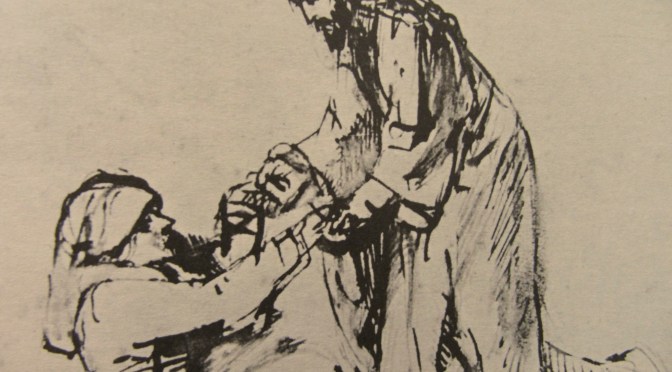
But today we are still laying the ground work. Jesus has been preaching in synagogues, exorcizing demons and today we glimpse Jesus’ healing ministry. Jesus leaves the synagogue of Capernaum and goes to the house of Simon Peter and Andrew. There Simon’s month-in-law is sick and in a bed. Jesus takes pity on the poor woman and heals her… and in an almost comical moment, she gets up and starts serving her guests.

And then everything gets crazy. The whole town hears that Jesus the healer is there, and they all come clamouring for healing. Everyone with a cough or cold, with a limp or back pain, with short sightedness or epileptic seizures, they are all hoping to have their illnesses cured.

Jesus starts the work of helping the needy masses, and yet we get the sense that this is not what Jesus is interested in. He isn’t playing doctor happily, and by early morning, he sneaks away to get some quiet and space. Jesus must have been wondering where all these people were when he was preaching in the synagogue.

And this is the dilemma that Jesus faces all the way through Mark’s gospel, the problem that Jesus faces all the way to the cross. When Jesus is healing people and exorcizing demons, the crowds flock to see him. But when he preaches the Kingdom of God coming near, people get upset. The authorities feel threatened. When Jesus brings his message to the people, the people get uncomfortable and begin to turn on him. They like it when they are getting something from Jesus, but when Jesus proclaims and declares change and transformation on their end, they back away and get upset. It is all well and good to be healed of a chronic condition, but suggest that the way the world works might change and people get antsy.

As Jesus spends the night healing in frustration, we can see a problem that still exists among people of faith today. God is easy to for us to seek out when we need something. When we need help, healing, comfort, God seems like an easy ask. When are in trouble, or have problems for which there seems to be no easy solution, we turn to God with relative ease.

As people of faith, it is all too easy for the ways we experience God to become about us. God becomes something we expect to be doing something for us. When life throws us those curve balls we turn to God to heal our hurts and pains, to solve our broken relationships and strained families. But even in our day to day, week to week, Sunday to Sunday relationship with God we can start to expect God to be doing something for us. We like to experience God on our terms. As people in the pews our terms might include the right music, entertaining sermons, 60 minute services, comforting bible readings and prayers, cushy seats. As pastors we like to deliver God on our terms, with liturgies planned to our liking, in bible texts that make the points we like to make, in prayers and hymns chosen to fit our themes.

When we don’t stop to think about it, it is easy to fall into the pattern of expecting that God is all about satisfying us, that we come to God waiting to be filled up, entertained, healed, set right and made comfortable.

But that is not what Jesus has come to do. Even still, as he spends all night attending to the masses as they demand to be healed, Jesus can only take so much. Jesus declares,

Let us go on to the neighbouring towns, so that I may proclaim the message there also; for that is what I came out to do.

That is what I came out to do.

Not to spend his time healing and exorcizing demons. But preaching the message.

Jesus has come to preach the message that Kingdom of God has come near, and that is not what the people are clamouring for. The people want their problems solved, they want comfort and healing, the want to be free from demons and evil spirits, they want things to go back to normal, things to be easy, things to be better. And what is the matter with Jesus? Why couldn’t he just stay a couple extra days, or a week and heal everyone? Is that to much to ask?

The issue that we discover today is this convergence of what the people want and what Jesus has come to do. The people want their symptoms treated, and Jesus wants to address the root of the problem.

It is far too easy for us to make God and faith and church about us. It is easy for us to come to God clamouring for healing and comfort, clamouring for God to approve of us and our ways of being in the world.

And that is not to say that Jesus is not the great healer, or that God doesn’t love us deeply just as we are. But God has bigger plans for us than comfortable pews and our favourite music. Jesus does so much more than make our fevers go away, or relieve us of our back pain.

Jesus has a message to preach. “The Kingdom of God has come near.”

And Jesus’ message cuts right to root of our issues. Jesus has come to deal with the source of our hurts and pains, of our griefs and sorrows. Jesus has come to address the reasons we put ourselves first, others second and God last.

Jesus has come to deal with sin and death. To deal with our sin, with our death. Jesus came come to meet sin and death by coming near. By coming near and joining with us in our sin, by taking on our death. And Jesus comes near to show us that sin and death are not the end. We are not here to be on palliative care, to only be comforted and relieved of our pain. Because that is what relieving us of our hurts and pains is. Because that is what comfortable faith is. Palliative care.

But Jesus has come to do the hard work of saving us. Saving us from ourselves, our self-centred, self-interested, deathly ways. And that is what Jesus has come to do.

That is what Jesus is doing.

Saving us from ourselves.

Amen.

What have you to do with us Jesus?

Mark 1:21-28

… a man with an unclean spirit, and he cried out, “What have you to do with us, Jesus of Nazareth? Have you come to destroy us? I know who you are, the Holy One of God.” But Jesus rebuked him, saying, “Be silent, and come out of him!”… (Read the whole passage here.)

Sermon

Today, we pick up in Mark’s gospel where we left off last week. Jesus has preached his first sermon, “The Kingdom of God has come near” and called Simon and Andrew, James and John to be disciples.

Now the group of them head to Capernaum, which becomes the home-base for Jesus’ ministry. It is the Sabbath, the day of worship, and they go to the synagogue. Jesus begins teaching, as was the right of any circumcised Jewish man. Usually, it was local scribes or rabbis who preached but sometimes travelling preachers like Jesus would come by to teach.

As Jesus begins, the congregation notices something different. Jesus is not teaching like the scribes. The scribes who were like walking encyclopedias of religious knowledge. The scribes were experts in the law, in the teachings and interpretations of the Jewish faith. The scribes didn’t innovate or interpret, they simply memorized what had been interpreted and written down by rabbis and other authorities long ago. New teaching was dangerous and probably heretical. It was important to stick to what they knew to be tried and true.

Yet, Jesus was preaching something new. Something different. Jesus was preaching from his own authority. Preaching like he had some special access to Moses, Elijah and the other prophets. Like he had special access to God.

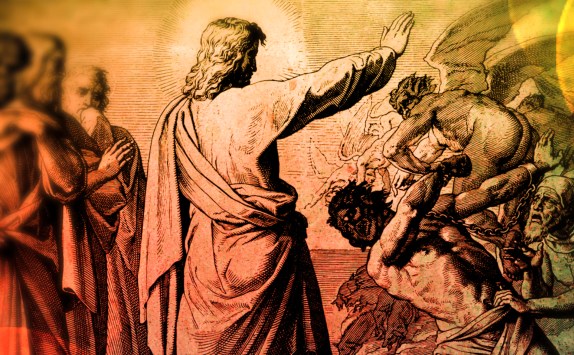
While most people weren’t sure what to make of this Jesus guy, who he was or where his authority came from, one person did. Or rather an unclean spirit did. While regular humans don’t see who Jesus really is, the supernatural unclean spirit knows. And the spirit knows that Jesus is a threat to the established order. The spirit knows that Jesus has come to turn things upside down. The spirit knows the world that he and the people around him are stuck in is the past. The comfortable systems, traditions and ways of being that they are used to are over. Jesus is going wreck things.

The spirit is the one who speaks.

What have you to do with us? I know who you are!

The man with a spirit might just be a man with an unclean spirit. But for Mark the man might also represent the ways in which that community, that world, was possessed by tradition. Stuck in past. Unable to introduce any change that threatens the status quo.

Sound familiar?

Churches these days often struggle with this issue. We often long for things to be as they once were. We long to have Sunday schools with 100 kids every Sunday, and services that are standing room only. We long for offering plates to beoverflowing, we hope for more baptisms than funerals. We long for the past, or at least the way we remember things to be.

As a faith community or as individuals we can be possessed by our past. We can fear change, block anything new, strive to keep things the same. As the old joke goes,

How many Lutherans does it take to change a lightbulb?

Change!??! That lightbulb was good enough for my grandfather, so it is good enough for us.

When the unclean spirit names the threat that Jesus is not only to the good deal that the spirit has possessing some poor man, but also the threat that Jesus represents the whole world of the people of Capernaum and beyond, Jesus will have none of it.

Be silent and come out of him!

Jesus will not be deterred by the anxiety and fears, or the unwillingness of the spirit or people to let go. Jesus is preaching a new world, Jesus is calling the people around him into the future, into a new way of living. Jesus’ new teaching is astonishing, radical, unheard of. And it comes from a place that people don’t understand, but that the unclean spirit gets. The unclean spirit knows that the old ways, that the established approved way of doing things is safe, is comfortable, it is known. The spirit knows that people would so often rather be possessed by trying to maintain the past than face the unknown future.

Be Jesus knows that God is calling us into something new and unknown. And Jesus knows that we need to be exorcized of our fears and worries if we are going to see God’s future. Because we are often possessed by maintaining our past, by trying to recreate what we once were. We hold onto the traditions, systems, and ways to doing things that were good for our grandparents and so, we believe, are good enough for us.

Now don’t hear Jesus wrongly. Jesus is not saying that the past is wrong or bad. Jesus is not saying that God wasn’t active in the past, or that God wasn’t working through the ways we used to do things. Often when churches and individuals face change, letting go of what we once were is so hard because it feels like we are dishonouring our forebears. It feels like we are saying our parents and grandparents were wrong, that they weren’t being faithful.

That is not what Jesus is saying. Jesus knows that God has been present among the people, among us the whole time. Jesus isn’t exorcizing us of our past. Jesus is exorcizing us of our holding on, of our resistance to change, of our need for safety and comfort. Of our fears and anxieties.

It is not the past that keeps us from seeing God’s future, it is our efforts to keep things the same, to recreate what once was, what we once were.  And Jesus’s new teaching is really about showing us that new world. Showing us God’s future. Showing that God is coming to, meeting us in the future. God knows we cannot go backwards.

And that is what is so radical to the people in the synagogue in capernaum, so radical for us today. God is not a God of the past, God is not about keeping things, keeping us the same. God is about resurrection, about turning death and forces that hold us back, into new and abundant life.

Let us pray,

O God, you have called your servants to ventures of which we cannot see the ending, by paths as yet untrodden, through perils unknown. Give us faith to go out with good courage, not knowing where we go, but only that your hand is leading us and your love supporting us; through Jesus Christ our Lord.

Amen.

‘Course Jesus isn’t safe. But he’s good.

It has been a while since my last post, but I am hoping to get back into posting after a few weeks of holidays. Welcome to 2015 on The Millennial Pastor. In the meantime, here is my sermon from today. See you around. 

Mark1:14-20

Now after John was arrested, Jesus came to Galilee, proclaiming the good news of God, and saying, “The time is fulfilled, and the kingdom of God has come near; repent, and believe in the good news.”… (read the whole reading here).

Sermon

“Then he isn’t safe?” said Lucy.

“Safe?” said Mr Beaver; “don’t you hear what Mrs Beaver tells you? Who said anything about safe? ‘Course he isn’t safe.

Today, we pick up the story just 14 verses into the Gospel of Mark. In the last two weeks we have heard the story of Jesus’ Baptism, and last week Jesus called Philip and Nathaniel. Today, he continues the call to Andrew and Simon, to James and John sons of Zebedee.

As this story comes 3 weeks after Epiphany, it seems to continue with the Epiphany theme. Epiphany tells the second half of the Christmas story. At Christmas, Christ is revealed to us as the child born in a manger – Christ revealed in flesh. On Epiphany Jesus is revealed to the Wisemen come to meet the Messiah born in Bethlehem – Christ revealed as the Son of God. Today, as Jesus calls these new disciples, he seems to be continuing his Epiphany journey, revealing himself as the Son of God.

But before Jesus calls these fishermen to follow him, he does something else interesting. He preaches his first sermon. The first words that Jesus speaks in the gospel of Mark are:

“The time is fulfilled, and the kingdom of God has come near; repent, and believe in the good news.”

The Kingdom of God has come near.

That sounds simple enough to our modern Christian ear.

But for the Jews that Jesus was preaching to, it was radical. And it was radical because the Kingdom of God was something that didn’t feel near. God was NOT close by. God was far away. God was too righteous, too holy, too big and powerful, to come near to sinful human beings. That was the whole point of the temple of Jerusalem. God lived in the centre, in the holy of holies, and people needed to be purified in order to come near to, to access God. God was dangerous, unsafe. Being in the presence of God would make anyone of us drop dead. The annual tradition of Yom Kippur, the day of atonement, was based on this idea. Some poor priest was send to the Ark of the Covenant at the centre of the temple to purify it of the sin of the people that had accumulated over the year. The priest was sent with a rope tied around his foot, in case he dropped dead being in God’s presence, so that his body could be pulled out.

This holy and righteous God was unsafe and dangerous, being near to God was not necessarily something to be sought out.

And yet Jesus comes preaching, “The Kingdom of God has come near.”

Jesus preaches a radical and dangerous message. One that upset the way the people understood their world, one that made their world unsafe. One with God near by.

eye-of-aslan“Is he a man?” asked Lucy.

“Aslan a man!” said Mr Beaver sternly. Certainly not. I tell you he is King of the wood and the son of the great emperor-beyond-the-sea. Don’t you know who is the King of the Beasts? Aslan is a lion – the Lion, the great lion.”

“ooh!” said Susan, “I’d thought he was a man. Is he – quite safe? I shall feel rather nervous about meeting a lion.”

“That you will, dearie, and no mistake” said Mrs Beaver; “if there’s anyone who can appear before Aslan without their knees knocking, they’re either braver than most or else just silly.”

“Then he isn’t safe?” said Lucy.

“Safe?” said Mr Beaver; “don’t you hear what Mrs Beaver tells you? Who said anything about safe? ‘Course he isn’t safe.”

Most of don’t worry about dropping dead when we come forward for communion, or when we walk behind the Altar. Yet, like the Ancient Hebrews, we too feel far away from God in our own way.

For the Ancient Hebrews, it was that God was too big, too righteous, too holy for human beings.

But for us, it is that we are too unrighteous, too small, too unholy for God.

As a pastor, one of the most common concerns that pastors hear from church people and non-church people alike is about not being good enough. We might not think that God is too good, but we often think we are too bad, too sinful, too flawed for God. So many of us sit in the pews and wonder if God would listen to our prayers. We wonder if God cares about someone like us and all the things we have done in our life. We believe that we have done things that are unforgiveable.

For many Lutherans, it is why we prefer pastors to pray, just incase God ignores a sinner like me. It part of why we hesitate to have communion more than 4 times a year, just incase it becomes corrupt by having regular contact with us. It is why we wait for children to be confirmed before they commune, in case they aren’t good enough.

But most of all, we worry that the selves we present to the world, the selves that we hide – our flaws and imperfections, our history and our baggage, the selves that cover up our shame and weakness… we worry that God sees our true selves. The naked, vulnerable, shameful versions of our selves.

And so while we might not be frightened of dropping dead in front of God, God is just as unsafe for us. For us it is not dropping dead, but dying of shame. Of being vulnerable and exposed in front of God.

This God. This God who is bringing the Kingdom near in a wild and untamed kind of way, is unsafe.

And still Jesus preaches his message.

“The Kingdom of God is near to you.”

And for the people of Ancient Israel, the wild, untamed, unsafe Jesus of Mark, declaring that the Kingdom is near is also declaring a world changing, life altering message. The Kingdom of God is near, not hidden away in the holy of holies of the temple. The King is near, the King who is too holy, too righteous for sinful humanity is coming near anyway. The King doesn’t care about holy or unholy, clean or unclean, this King wants to be with the people.

And so while the Kingdom coming near might have been unsafe, it might have resulted in death, it was also radical, transformational, it was incredible. The great king wanted to be near to humans, to you, to me. This is a King who cares about and is concerned with people. One who breaks the rules of clean and unclean, breaks the rules of lawful and unlawful, of righteous and unrighteous.

It is no wonder the disciples just drop their nets and follow. They were experiencing the presence of God like never before. Maybe they didn’t know in their heads just who Jesus really was, but in their hearts they must have been seized by nearness of God.

6a00d8341ec10c53ef00e54f60744f8834-800wi“Is he a man?” asked Lucy.

“Aslan a man!” said Mr Beaver sternly. Certainly not. I tell you he is King of the wood and the son of the great emperor-beyond-the-sea. Don’t you know who is the King of the Beasts? Aslan is a lion – the Lion, the great lion.”

“ooh!” said Susan, “I’d thought he was a man. Is he – quite safe? I shall feel rather nervous about meeting a lion.”

“That you will, dearie, and no mistake” said Mrs Beaver; “if there’s anyone who can appear before Aslan without their knees knocking, they’re either braver than most or else just silly.”

“Then he isn’t safe?” said Lucy.

“Safe?” said Mr Beaver; “don’t you hear what Mrs Beaver tells you? Who said anything about safe? ‘Course he isn’t safe. But he’s good. He’s the King, I tell you.”

Course he isn’t safe. 

But he’s good. 

He’s the King, I tell you. 

Here is the thing about being safe. It is safe to God stay in the holy of holies, to keep God at distance. And it is safe to keep God contained in neat and cozy Sunday morning church services.

But this morning, God isn’t safe.

Jesus is not preaching a safe sermon. Jesus is preaching a dangerous sermon.

The Kingdom of God has come near.

The Kingdom is near and we are left exposed, sins and all.

The Kingdom is near and God can see our shame and weakness.

The Kingdom is near and we cannot hide our true selves.

And so we come together, come to this place to meet the King who has come near to us. And we confess our sins, we reveal our need for love and forgiveness. We openly admit that we do not have life figured out, that we need God’s Word of eternal life. We declare that we are the hungry masses, that we need to fed by God’s body and blood.

And Jesus comes near to us.

Untamed, wild, unsafe, lion-like Jesus comes near.

And our lives, our worlds are changed.

Jesus comes near and changes us. Transforms us.

Jesus comes near and forgives us.

Jesus comes near and speaks a word of life to us.

Jesus comes near and feeds us with the Body of Christ.

Today, we hear Jesus’ first sermon. We hear Jesus revealed again and again to us. Revealed in flesh, revealed as the son of god, revealed as coming near. Today, we hear an unsafe sermon, one that threatens to knock us dead, or least to make us die of shame.

‘Course he isn’t safe.

But Jesus is Good.

Jesus is the King I tell you.

And this unsafe, untamed God might just make us die, but also shows us untamed and wild New Life.

Amen.