Tag Archives: Pastor Thoughts

All of our “whys?” might be different

A week into the season of Lent, and I cannot seem to escape reasons to continue thinking about some of the “Why?” questions at the heart of our faith. Of course, I brought it on myself by planning a Lenten study on the theme of “Why?” questions. 

But just a few days ago I was asked my professional opinion about what kind of groups qualified as Christian ministries or churches. For example, could a ministry to gang members that worked to “rehabilitate” former members (and still maintained some connection to gangs) be considered a legitimate ministry? The scenario was a complicated one, which I won’t share here. But the question did bring me back to that core question of Lent, asking “Why Church?”

The answers to this kind of question can vary wildly. In fact, if you were to poll most people sitting in the pews or watching church online these days, you would likely find some vastly different reasons for why folks are present or watching. 

The starting place for the question has to be sorting out these answers for ourselves before we can ask them of others, before we can begin to have conversations about what we ought to be and do together as communities of faith. 

Last week our Lenten study asked the question, “Why faith?” And it took us on a journey to explore why we believe in something or someone rather than believing in nothing. 

As we continue our Lenten study this week, we will be exploring “Why Christianity?” Why does this version of believing in something or someone capture our attention, imagination and faithfulness more than something else? Why don’t we believe in re-incarnation or the power of the human spirit or that Mohammed is the prophet of Allah?

I know that I won’t be able to provide THE answer or, maybe that I won’t be able to necessarily provide the answer that makes sense for you. But it is a question that I have been working on since I was young man imagining what I might be when I grew up and the idea of becoming a pastor kept floating to the top of the list of possibilities. 

So when you come and explore this question at our Soup+Bread Lenten study this week, or you just take some time to ponder this question on your own, I hope that exploring these “Why?” questions are a way for us to journey through Lent together. That, as we seek to understand who and what we are as a community of faith, and why we do what we do, it will help us seek God’s leading for our future. 

Blessings on the journey. 

Why Worship? – Pastor Thoughts

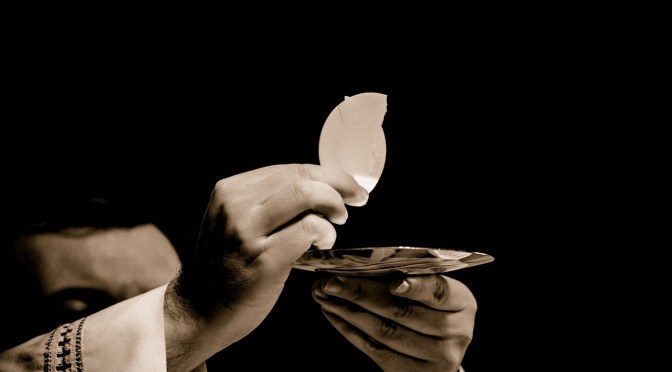
Back when I was still going to seminary (pastor school), I found myself in church on a Sunday contemplating, “Why are we all here, doing this?” When I stepped back, I really wanted to know why all the people who were there on Sunday had come to sing, pray, read the Bible and receive the bread and wine together. Why did they do this, instead of all the other possible things that they could do on a Sunday morning?

Our theme of asking ‘Why?” continues this week. 

So far our Lenten journey has taken us through “Why Faith?”, “Why Christianity?”, and “Why the Bible?”.

Now we ask,“Why Worship?”.

As we have unpacked these “why” questions in our Lenten study, we have examined why we have faith in something rather than in nothing. We looked at how the life, death and resurrection of Jesus offer a compelling experiment of God’s mercy and grace. We have seen the ways that Christ the Word is witnessed to in the pages of Scripture. 

On this fourth week we start to put some of these pieces together as we contemplate why we worship. 

As we have already explored, there are a whole lot of complicated reasons that bring us to church, but once we are here it isn’t always obvious to ask why we are doing this rather than that. Instead, we often default to “I like that rather than this” and congregations can fall into the dread worship wars. Strong lines of preference are drawn over music styles, worship times, service length, the frequency of communion and a host of other things that can be easy to fight about. 

But they aren’t matters of “why.” Why do we come together? Why do we sing and pray and hear the Bible together? Why is that stuff important to do together in a church building rather than alone or in some other place?

And if we are honest with ourselves and each other, a lot of people are asking why it is important to take the time every week to show up at all – and they are coming to the conclusion that it isn’t important. A big part of that might be because we don’t often talk about the “why” of worship, but operate with a system that says, “It just IS important and you should all know why!”

Back on that Sunday in seminary, I wanted to know why we were all sitting in the pews for this strange worship of which we were a part. People don’t generally sing, pray and read the Bible with other folks anywhere else in their world, did they? So why did we do it here?

I have been thinking about that question ever since. While I know that there are at least as many reasons as there are people in the pews, I think it has something to do with knowing that we simply cannot do faith alone. We cannot believe it, practice it, hear it, teach it, and pass it on alone. And so God brings us together, even if is strange. Especially because it is strange and we don’t do the stuff we do in worship just about anywhere else in our lives. 

If you want to really unpack this question, you will have to join us for Lenten study this week. But suffice it to say, after 15 years serving in parish ministry, I am starting to see that, despite all the weird things that we do as a part of worship, that God is up to even more incredible things with us. And that coming together for worship is one of the few ways we can begin to see and imagine what God is doing with us. 

Lent is for asking good questions

This is the fourth Lenten season of the Pandemic. It was during Lent that our first lockdowns began. Many people of faith remarked during that time that Lent never really ended in 2020. I think that remains true in 2023. 

Lent is a season for simplicity and paring back, for repentance and renewal. All the practices that make up Lent, giving things up or taking things on, are meant to be ways to disrupt our routines lived on autopilot, and make room for us to remember and reconsider our relationship with God and our call to discipleship 

One of the fundamental questions of Lent is “why?” Not only is this a question of Lent but a question of our time. 

As a new pastor in 2009 freshly out of seminary, I quickly realized that the “why” of church was often something we assumed but didn’t discuss. I realized that a big part of my role was going to be teaching people again (or maybe for the first time) why church matters. Life-long members, actively engaged folks, casual attenders and fringe members all the way to seekers and newcomers. It seemed that for many of the people I was serving then that it was assumed that we all knew why we should be at church, and that talking about it too much was a risky thing. 

I recall meeting with one family for baptism; the parents of the newborn were only a little older than I was. Grandma and Grandpa, who were strong active members of the congregation were insisting on the baptism, while the parents were hesitant. The mother said to me, “I haven’t been to church much lately. I stopped coming more because whenever I asked questions, I was told to stop questioning everything.”

I let that mother ask me any question she wanted about church, faith, the Bible and God. 

Asking questions, and specifically asking “Why?” is not only okay, it is important. A faith that cannot stand up to our questions is not truly faith at all but something more like a cult. A rich, deep and well-practiced faith is one where questions are essential, exploring “Why?” is the point. The church is one of the very few places in our world that has the capacity to address faith and the “why’s” of life, even when asked about the deepest parts of ourselves, our world and of God. 

This week as we start our Lenten study called “Why Church?”, we will take the time to lay out our questions and have conversations that have to do with anything we might be wondering, but that ultimately get to the heart of the matter. 

Asking “Why?” and taking the time to articulate “why” is so very important as we enter the Lenten wilderness and as we navigate the wildernesses of pandemic, declines, social change and change in our community and congregation. I invite you into this conversation and disciple this Lent. 

Let’s explore the questions together.

Getting from Transfiguration into Lent

On Valentine’s Day, I tried to order heart-shaped pizzas from Boston Pizza. I guess lots of other folks had that idea too, as their online ordering system crashed and no one would pick up the phone at our local BP. So we ordered from another place and from the time I left to get the pizza to about 12 minutes later when I left the pizza shop, the weather had gone from not snowing to a full-blown white out. 

I followed that up with a harrowing drive to Confirmation on the Perimeter Hwy (thanks for that suggestion Apple Maps GPS…).

It was all a potent reminder that even though our weather has been spring-like, winter is far from over in Manitoba.

In many ways Transfiguration Sunday, with its vivid story of Jesus going up the mountain with two disciples to be transformed into a divine figure surrounded by Moses and Elijah, is sort of like that spring-like time of mild weather in February –a respite. From Advent and Christmas through Lent and Easter, the pace of life in the church is busy and gets progressively heavier until Holy Week. 

Particularly, before we jump into the Lenten journey to Holy Week and the Cross, the Mount of Transfiguration offers a high-point vision that evokes the Risen Jesus and the Ascended Christ to come. 

The Transfiguration is an important hinge moment that holds Advent and Christmas together with Lent and Easter. It moves us from the story of the Incarnation and the Messiah being born into the world to Jesus’s work of Salvation and Resurrection. 

And yet, that mountaintop moment of Jesus’s Transfiguration is a tempting place to want to stay. Just like a mild winter without much snow to shovel is a thing we would love to be in full time, rather than a five-day respite from the cold and wind and snow. 

Similar to Peter, who wanted to build a dwelling on the mountain, we like the idea of a Church that looks and feels like the Transfiguration moment. The bright shining glory-filled moments feel good, safe and attractive. But it isn’t the norm. 

We know that the norm of faith and the day to day of life is a lot more like the journey of Lent – the wandering through the wilderness, the struggle to get from place to place, the uncertainty at where we will find ourselves at the end. Few days are spent on the mountaintop in life, but many are spent in the wilderness. This is true for communities of faith, for families and neighbourhoods, for nations and peoples. 

And while Jesus is TRANSFIGURED on the mountaintop, he was always the One who is revealed to be – he was always God come in the flesh. It is only his appearance that is changed this Sunday. 

In the process of faith, in the journey of Lent, through our time spent in communities of faith, we are TRANSFORMED. In the waters of baptism, through the hearing of the Gospel alongside our siblings in faith, through the Bread and Wine made Body and Blood, we are changed to our very core. Transformed from sinners into God’s beloved, made holy and righteous by the One who meets us with forgiveness and grace. 

The mountaintops feel great; they are respite for the moment. But it is along the way of faith that God is making us into new creations, into the people that we were first created to be in Christ. 

Remember the ‘Why?’ of Church – Pastor Thoughts

As you may have read last time, I spent last week in the mountains at the Alberta Study Conference. It is an annual event in Canmore (a beautiful little mountain town just outside of Banff), which is always a treat to visit. 

Study conferences are a chance to hear keynote speakers, spend time with friends and colleagues, and have the chance to get away for a bit. All important parts of finding some rest and rejuvenation in ministry, or really any vocation. 

But the other piece is having the change to step back and look at things with perspective. It is easy to get mired in the details and day-to-day of things, so taking intentional time to step back and ask some of the bigger questions is vital. Plus being surrounded by mountains has a natural way of granting some helpful perspective. 

Church life can be a race from Advent to Easter, a marathon and a sprint combined, that you are always feeling like you need to catch up. I was fortunate last week to have some good conversations with colleagues about ministry and to take the chance to sit with my thoughts. 

A lot of the conversation was centered on the fact that the church has a lot on our plate these days, change management chief among them. But along with navigating all the change that we facing, it is easy for us to forget why we are doing all this in the first place. 

This notion was confirmed again at our local clergy meeting here in Winnipeg this week. The Bishop remarked that 2023 will be a big year for the church, with several congregations facing big challenges and decisions. Change is happening already. But, along with the challenges due to pandemic, general decline, an aging population that isn’t replacing itself (our birthrate is only 1.4 in Canada!), climate change, political unrest, economic inequality and so on, the church seems to have difficulty articulating the purpose at our core. We can get so fixated on making sure we can keep the lights on, pay the insurance, fill council spots, print bulletins, find Sunday School teachers, etc., that we forget that all of those things actually have very little to do with our core mission. We aren’t communities whose core purpose is having money in offering plates, well maintained buildings and full council/committee rosters. 

Rather, all of those things are secondary or tertiary to why we exist. Offering and committees and buildings are simply the means to the end of “Church.” Our central purpose is to proclaim the Gospel, to tell the world of the Good News of Christ’s death and resurrection. 

Still, it can be hard to really know what that means. How do we proclaim that? Why is this 2000-year-old story important? It feels more concrete to focus on cleaning carpets, making sure the snow is shovelled and filling volunteer roles. 

I am someone who believes that we cannot talk enough about those big picture pieces that sit at the core of our being. Why Church? Why Jesus? Why the Bible? Why is all of that so important?

This Lent, we will be having Soup+Bread Studies after worship and we will talk about these questions. We will take the time to articulate – to say out loud again in conversation – why being a community of faith in this time and place is important, and why budgets, buildings and volunteers are needed to keep the church going. Not because we need budgets, buildings and volunteers, but because we are human beings living in a messy world in need of hope and light. Hope and Light that is found in the Gospel message heard in communities of faith just like ours. 

As we approach Annual Meeting Season, Transfiguration Sunday and Lent, I encourage you to take the time to get some perspective, to ponder ‘Why Church?’ and to be reminded of what the central things of faith are for us. 

Maybe that will be at our Soup+Bread study, maybe that will be by taking some time in prayer and scripture, maybe that is what we will be experiencing the entire Ash Wednesday-Lent-Holy Week cycle of worship or maybe it will be in another individual way. However you find that perspective, know that it will help you and us in following God’s call to whatever the church is going to go next, wherever God is calling us to follow in 2023 and beyond.