Tag Archives: ministry

Dying Well – Grieving My Father

This week has been a difficult week for my family. At the end of last week, my father was contending with what appeared to be a summer flu. Over the weekend, his symptoms worsened, to the point where he needed to be admitted to the hospital. While in the ambulance, he experienced a cardiac arrest.

For the past week, he was being treated for an infection for which the medical staff have struggled to determine the source. Because of complications along the way and a limited response to treatment, the decision was made to move him to palliative care. His heart was strong, but much of the rest of his body was failing. 

His family prayed and sang with him, and told him that we loved him.

Courtenay and I prayed the commendation of the dying with him, and we entrusted him into God’s care. On Saturday night, around supper time, my Dad breathed his last.

Requiescat in pace, Dad.

In the midst of a lot of texts, phone calls and FaceTime with family, I have been thinking (again) about my recent trip to Germany. 

A subtle theme in the story of Martin Luther’s life, and for all of society in the Late Middle Ages, was death. One of the most popular books in the 1400s and 1500s was a book called Ars Moriendi, written by unknown authors. The title translates into English as the “Art of Dying.” That was a time when the plague or Black Death was ravaging European populations. Death became seen more clearly as a regular part of life. Often parents did not give children a name until they were about five years of age, just to be sure that they would survive. Many believed that the opportunity to “die well” was a blessing. This meant to have one’s affairs in order, to be allowed to reconcile with anyone with whom one had a grievance, to say goodbye to beloved family and, most importantly, to face death knowing the promises of God’s salvation given in Christ. 

It is important to keep in mind that the Church at that time was selling indulgences as protection against sin and Hell, often using the fear of these things to keep people forking over their money. So dying well was one way to counteract the persistent fear of what might come after death. 

Of course, any pastor is familiar with being around a family’s journey of death and dying. But it still has hit me differently when the dying is happening to my family’s loved one. One of the struggles is in how the dying process can make one feel so lonely. Yet, I realize it is a journey that we all end up taking alone, even with others around us. 

In 1519, Martin Luther wrote a sermon entitled “Preparing To Die.” In it he emphasized the importance of trusting in God’s promises, that the forgiveness of sins found in the Sacraments of Baptism and the Lord’s Supper are signs that God has conquered sin, death and the Devil, so that we ought not fear. 

In the sermon, you can hear Luther’s foundational premise that God’s plan for salvation was for all people. Luther began addressing something that people knew well – death – an important topic of the day, and then he pointed to the Good News found in God’s promises. 

Ten years later, the plague came to Wittenberg. Luther refused to leave his congregation. Also during that time, Elizabeth Luther was born to Katie and Martin. She was a sickly child who died at six months of age. It is believed that during this time of plague and personal tragedy, Luther wrote the famous hymn A Mighty Fortress is Our God

Though we often sing it as a rallying cry and anthem of the Reformation, its words take on a different feel as a hymn of hope and comfort, especially the fourth verse, when one considers these as the words of a grieving father:

God’s Word forever shall abide,
     no thanks to foes, who fear it;
    for God himself fights by our side
    with weapons of the Spirit.

    Were they to take our house,
    goods, honor, child, or spouse,
     though life be wrenched away,
     they cannot win the day.

The kingdom’s ours forever!

Text: Martin Luther, 1483-1546; tr. Lutheran Book of Worship
Text © 1978 Lutheran Book of Worship, admin. Augsburg Fortress

P.S. Photo(s) from my trip to Germany: Luther was born and died in Eisleben. The first photo is of the baptismal font of the church where he was baptized. In recent decades the font was built into the floor as a large pool right in the chancel of the church. A tangible and visible image of dying and rising in baptism, by going into the ground and coming up out again. A sign of the resurrection promised in Christ when we will brought out of our graves into new life.

The second photo is a copy of Luther’s death mask. Medieval death masks were taken because it was believed they could “determine the state of one’s soul at the time of death.” A calm expression implied that one was welcomed by God.

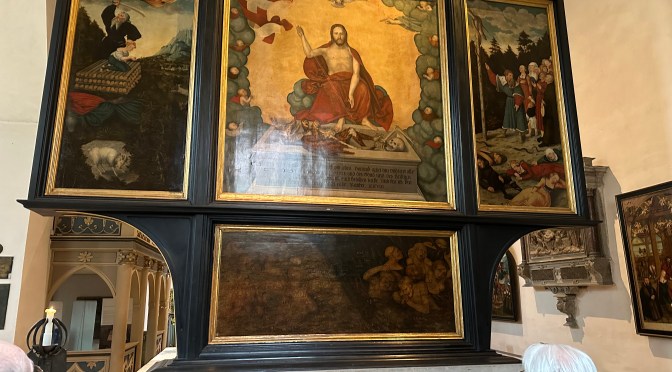
Header Photo: The back panel of the altar piece at the Stadtkirche in Wittenberg. A depiction of Christ defeating the powers of sin and death.

15 years – Pastor Thoughts

This week we observed those two beginning of summer milestones: Canada Day and American Independence Day. While both days have muted observations in Canada (the 4th of July for obvious reasons and July 1st for colonial ones), these two statutory holidays are signs of the beginning of summer.

The 4th of July is of particular significance to me for personal reasons – I was ordained to the ministry of Word and Sacrament on a hot and muggy day in Edmonton, Alberta in 2009. I was 26 years old, having just completed my Master of Divinity from Lutheran Theological Seminary in Saskatoon, and my Bachelor of Arts in History and Theology prior to that. It had been eight years of post-secondary schooling and I was ready to join the working world full-time. 

It was hard to believe that I was about to go from years as a long-time student to being given charge of the care of a congregation all by myself. As a student, my biggest responsibilities were getting assigned readings done, writing papers on time, and trying not to spend all of my student loans before the end of the term. In those first years of ministry, I certainly wasn’t the only person who was taken aback by someone so “young” serving as a pastor. I didn’t fit the usual stereotype of a grey-haired near retirement-age man that many expect pastors to be.

Now, I am fifteen years into this life of ordained ministry. While I know the joke is often that congregations think the ideal pastor is 30 years old with twenty-nine years of experience, at 41 years old and 15 years of experience, I have seen my fair share of things. I have served open country, small town, and urban/suburban congregations, big and small churches, across two different Synods in the ELCIC. Still, along with Pastor Courtenay, we are the youngest actively serving pastors in the MNO Synod. 

When I think back to that time before being ordained, I had begun my theological education at a Roman Catholic faculty at the University of Alberta. Studying theology in a non-Lutheran environment forced me to consistently research the Lutheran perspective – my perspective. Shifting to the seminary environment meant that my wondering evolved into what it means to be a Lutheran Pastor. 

That question has remained with me since. Many of you know that the heart of my Doctor of Ministry research is asking the same question. 

A few weeks ago, I wrote about how travelling to the places where Martin Luther lived and served brought a new perspective. Understanding what Luther did and wrote takes on a fresh new meaning when you go and walk the streets of Wittenberg, imagining Luther walking the same streets, dropping in on friends for a talk, gathering guests around his dining room table, preaching in the Town Church of St. Mary’s. 

Similarly, 15 years on the frontlines of ministry offers a perspective that you cannot get elsewhere. So much of what I learned prior to ordination has new meaning now when I imagine the communities, people and relationships that I have encountered serving. For some, this might feel like seminary doesn’t provide the right kind of learning for parish ministry, that it isn’t practical enough.  I think I see things differently. Just because things make better sense with some experience under your belt doesn’t mean you throw out the theoretical knowledge that you learn beforehand, rather it provides a deeper and richer understanding. 

At this 15-year mark, my hope is to keep learning from all that I experience AND from further studies. Just as understanding Luther by being where he lived AND reading what he wrote goes hand in hand, so does experience and study, 

We will see where this takes me and us, in 5,10 and 15 years from now.

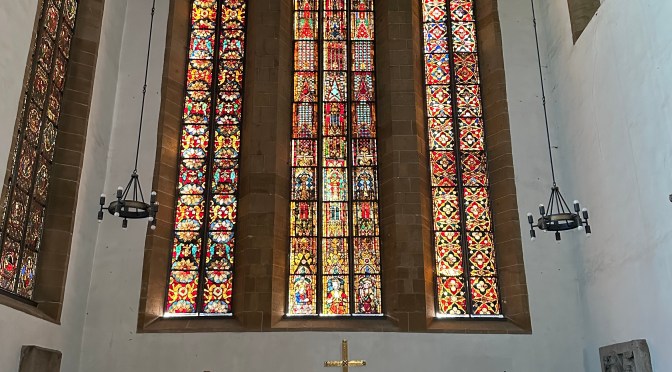
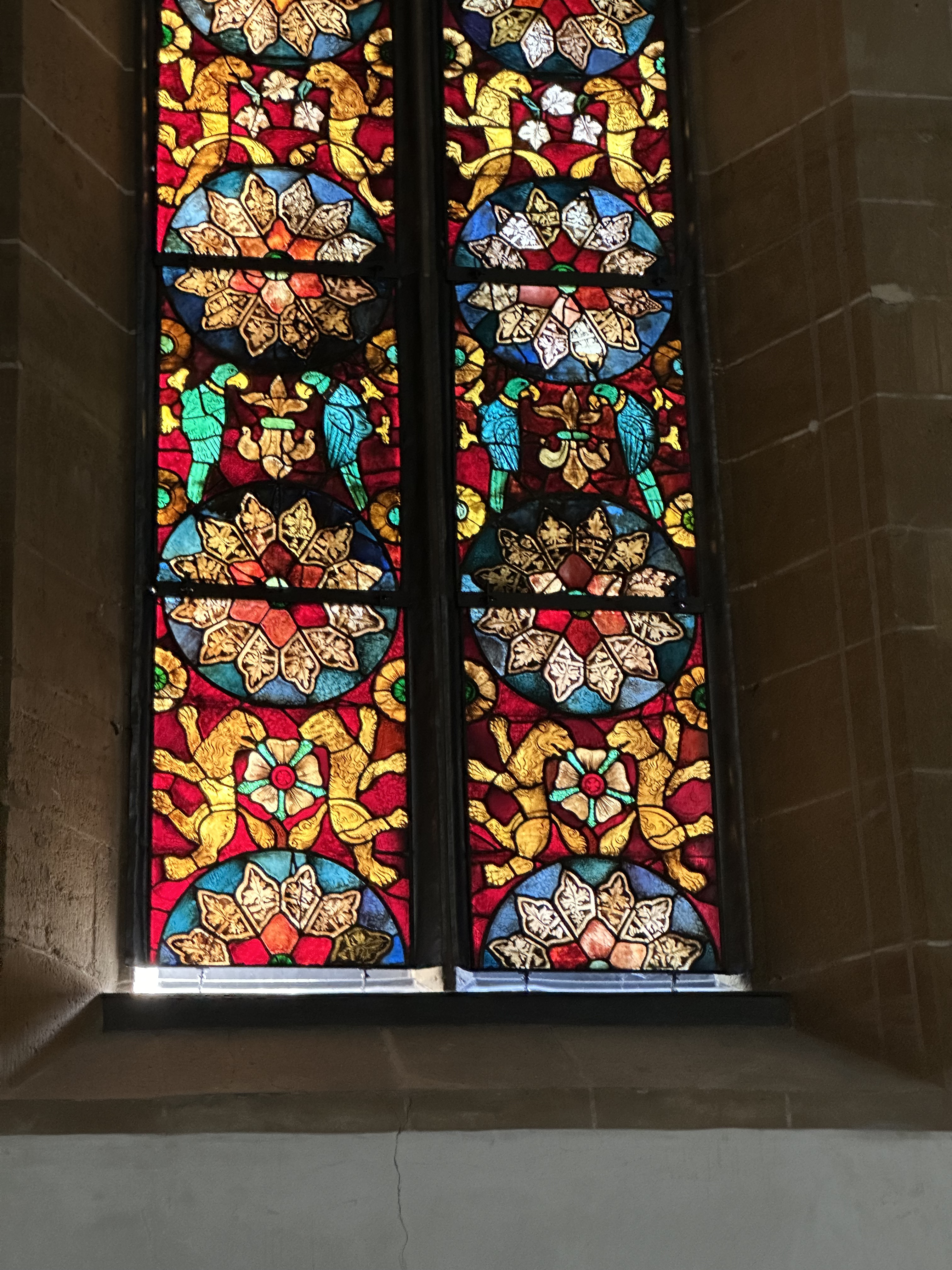
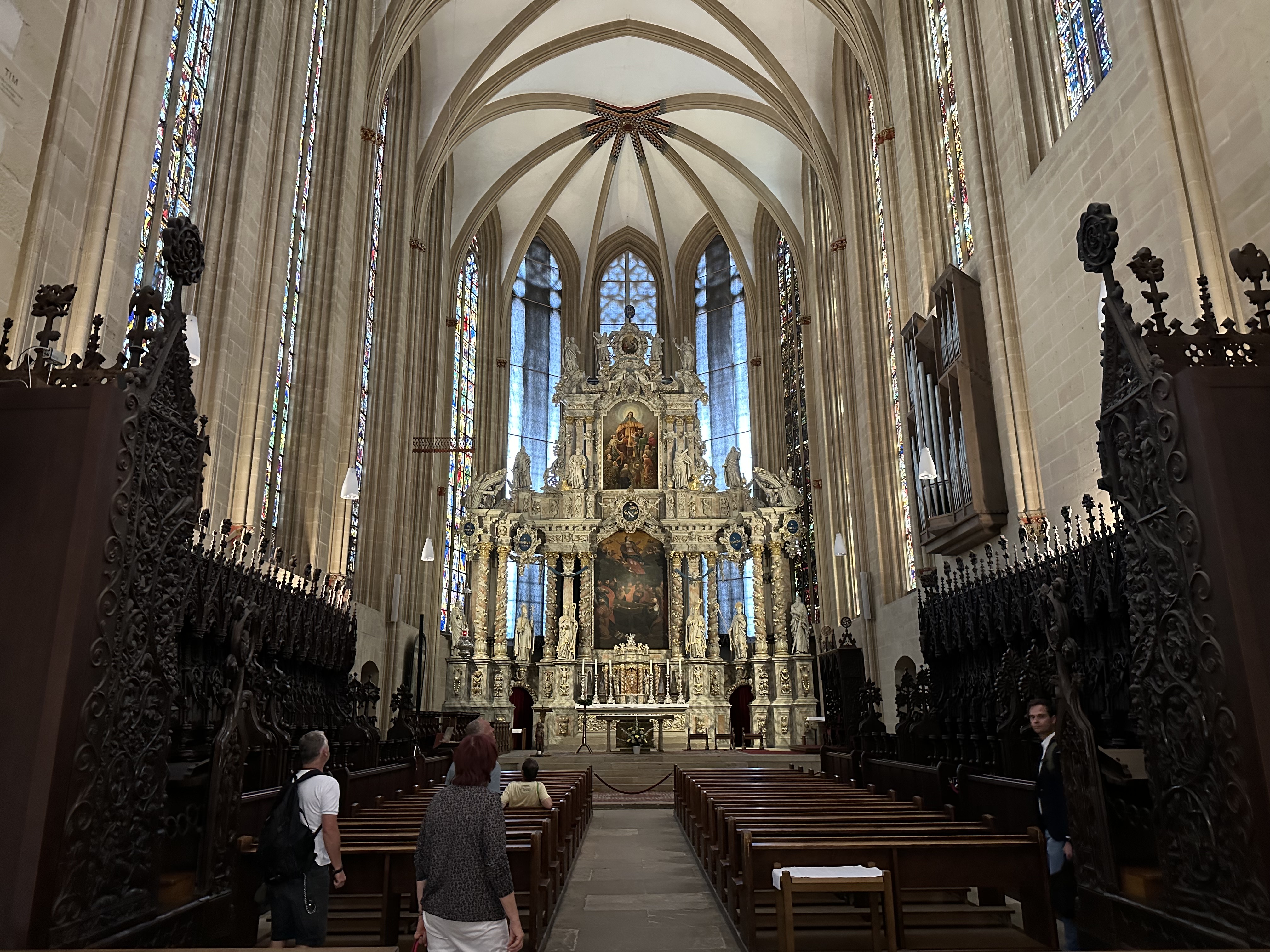
PS Photo(s) from my trip to Germany: [Above] The monastery chapel at Erfurt where Luther would have worshipped as a Monk. [Below] The stained glass was his inspiration for the Luther rose. The Cathedral in Erfurt where Luther would have been ordained a priest. My own ordination in 2009 and posing in a Luther cutout in Wittenberg.

It takes a community to raise a church – Pastor Thoughts

This week I am able to gratefully breathe a huge sigh of relief. Only a few hours ago, I hit send on an email with my finished research paper for the course associated with my trip to Germany in May. 

After 8000 words and 30 pages of delving into the deeper reaches of Martin Luther’s thinking about the gospel, the church and ordained ministry in the church, my brain is swimming back and forth between the 16th and 21st centuries. 

Considering that I often speak about the church moving out of the 20th century and into the 21st century, and yet I am spending so much time going back to the 1500s to look at what was happening in the church during that time. 

It isn’t that I have anything, in particular, against the 20th century.  Rather our circumstances today might have more in common than with the world 500 years ago than the world 50 years ago. 

At the time of the Reformation, most of Europe had been in the medieval era for 700 years. However, an important new invention called the printing press was making the spread of information possible in ways that people only a few decades prior could not imagine. 

I have seen printing presses before, but while in Wittenberg, we visited the museum of Lucas Cranach’s print shop. Lucas Cranach was the court artist for Prince Frederick the Elector (Frederick was one of seven German princes who together elected the Emperor). Cranach was a good friend of Luther. His print shop was just down the street from Luther’s house, and Cranach was often responsible for spreading Luther’s writings by re-printing them along with being the most prolific art house of its time. 

The striking thing about this is when you walk the streets of  Wittenberg, the print shop, Luther’s house, the town church, the prince’s castle, the university all within a few blocks of each other. These people doing these things all lived together. They were deeply intertwined in the community. 

Now, we are living in a time when communities are growing more fragmented in some ways, and while our capacity to be connected in other ways has grown leaps and bounds. 

I suspect that Wittenberg felt less like the slower-paced, deep-connection communities of 50 years ago and more like the fast-paced but fragmented community that we are today. 

In that world, Luther spent a lot of his time and energy thinking and writing about the importance of community. Something that I didn’t really even know until I began this research because Luther wrote so much!

It is a strong reminder in a time when there are realities in the world that pull us apart more than bring us together, that community needs to happen on purpose because it rarely happens by accident. Being connected and able to share information more freely doesn’t necessarily mean naturally created bonds that allow us to care more deeply. 

Rather, Luther saw that care for the neighbour in and through the gospel, the good of forgiveness, life and salvation allows us to love our neighbour freely. And those things happen on purpose. 

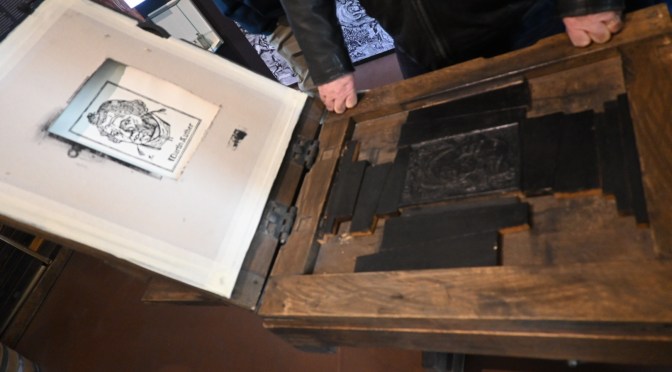
PS Photo(s) from my trip to Germany: A replica of Cranach’s printing press, with a picture of Luther ready to be printed. And two photos of his logo, a serpent with wings. The serpent was thought to be a symbol common to printers at the time.

The Gimli Glider and Leading the Church

Throughout the summer, I intend to share some of my reflections on my trip to Germany and reformation sites. However, I promise I won’t write about Luther and Germany every week. 

Rather, this week I have some thoughts about the clergy study conference that I attended in Gimli, Manitoba this week. For folks of a certain age, there is one thing above all else that Gimli is well known for. No, it is not the Crown Royal Distillery, not the big Viking statue. No, Gimli is known for the Gimli Glider. 

Our keynote presenter, Rev. Dr. Kyle Schiefelbein-Guerrero, Professor at Lutheran Theological Seminary in Saskatoon (AND my Doctor of Ministry thesis advisor!) began his keynote by talking about his love of plane crash documentaries. What a happy accident that our conference was in Gimli and our hotel even contained the official Gimli Glider museum!

But it wasn’t just for the sake of coincidence that Dr. KSG (as his students often call him) shared with us the fact that he has seen several documentaries about the Gimli Glider, it was to note that there is something important to learn from plane crashes. Something important for leaders in the church. 

Now that isn’t to say that the church, in its current state, is akin to a plane about to crash. But in these days of struggle and challenge, the church isn’t totally unlike a plane headed for disaster. 

Rather, two factors contribute the most to how serious plane crashes end up being. The first is “crew resource management” which is how well the crew can organize in a crisis. The second is “plan continuation bias.” This is the ability of leadership to adapt in the face of changing circumstances around them.

And certainly, there is something in those two factors that feels true about those things for the church in this moment. We can easily think of moments when churches have failed to organize and tend to the community they serve. And we can easily think of churches that have stuck to the plan at all costs, even when they were headed for doom. 

But in the converse, we see what things help us navigate the crisis moment – tending and caring for community while adapting to changing circumstances and innovating new pathways into the future. 

In the case of the Gimli Glider, the crew assured the passengers while preparing them for what was about to happen, while the pilot and co-pilot prepared to fly a plane like a glider while landing on a long-forgotten RCAF runway. 

In the case of the church, we have yet to fully prepare ourselves for what is happening. New pathways or alternate plans are still being worked out. Yet, even in free fall, God’s call to us is to continue sharing the gospel in word, sacrament and in our care for one another. Maybe we will be surprised with a landing as surprising and miraculous as the Gimli Glider’s. 

A home I didn’t know I had – Pastor Thoughts

It has been almost 3 weeks since I returned from the Reformation Study Tour to Germany that I was on in the first half of May. 

While I have told a few stories of my trip here and there and many photos of the trip were posted to Facebook, I am still processing and unpacking all that I had the chance to see and experience.  I had a busy few weeks immediately after my return, and it has only been the past few days that have had some time to reflect and ponder. 

I have been fortunate enough to travel some in my life. I have been lucky to be able to explore a fair bit of western Canada, to travel to the US for school, family holidays and work conferences. But it is my two high school band trips to Europe and my seminary cross-cultural trip to Peru that stand out. They were chances to be immersed in rich cultures, languages and histories different than my own (to a degree). 

There was something different about this trip to Germany, particularly to many of the important sites of the Reformation and to Martin Luther’s life. Even though I don’t have an ounce of German heritage, there was something familiar, something known that felt like I was connected to these places. 

After three connecting flights and three connecting trains, as we walked from the train station into the town of old Wittenberg, our tour leader and professor kept exclaiming, “I feel like I am home!”

Wittenberg is just a small town of 44,000 people, smaller than Brandon, Manitoba. Other than in 2017, it certainly isn’t the most sought-after tourist destination. Like so much of Europe, when you walk into the town, the buildings and architecture span the centuries in ways that we usually don’t see as Canadians. Buildings that are five, six or seven hundred years old might be right next to other structures built only in recent decades. 

But Old Wittenberg is much more of a time warp. Within five minutes of leaving the very modern train station, it feels like you step into the 16th century. Within moments our tour leader was pointing out various sites: Luther’s house, the University of Wittenberg where Luther was a professor, St. Marien’s Church where Luther was the pastor, etc…

We finally wound up at the Colleg Wittenberg, a dorm-style residence across the alley from the Lutheran World Federation office in Wittenberg. Two fairly unassuming buildings just around the corner from St. Marien’s and across the street from a donair shop.

It all felt so surreal. 

The history and origin story that is so central to my Lutheran identity, yet for me that had always been one found in books, lecture halls, church basements and in my imagination, was now real. The history and theology that have been so central to my academic, vocational and professional life for the past 20 years came alive in a way I did not anticipate. I was standing where Luther had lived. I was walking the streets where he walked, looking in on the church he served, just like he was an old seminary friend that I had come to visit. 

I couldn’t help but feel, just like the professor leading the trip, that this place was home too. A home that I didn’t know that I had until now. 

PS Here are photos from Germany: Some of the paintings of Lucas Cranach the Elder, who was the court painter of Fredrich the Elector of Saxony and a good friend of Luther’s. He was the most prolific artist of his day, credited with doing much to promote the Reformation through his art and art house which mass-produced his work.

Cranach’s art