Tag Archives: ministry

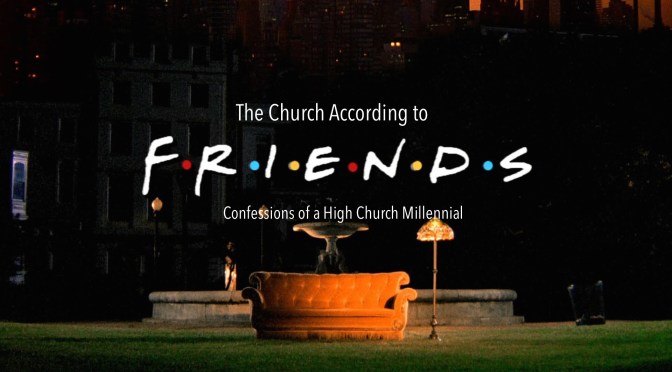
Confessions of a High Church Millennial – The Church according to ‘Friends’

As a pastor, I think a lot about group dynamics. I reflect on family systems and congregational systems. I wonder a lot about why groups of people behave in certain ways, sometimes to their own detriment.

My interest in group dynamics or systems thinking might be because I am a millennial. As Baby Boomers were the generation heavily involved in the Civil Rights movement, their focus was on the concerns of the individual, the individual lost in the shuffle of the masses, the person ignored by society, the one on the bottom. However, as Baby Boomers moved into leadership and power roles in the world, this concern for the individual has shifted to those in power and those at the top. Presidents and Prime Ministers are elected for providing individual tax cuts, not for offering society things like education, healthcare and a social safety net.

Millennials grew up differently. Our experience was tremendously focused on the group. Our education was often focused on group work, we were taught to consider others, to share, to be respectful, to work as a team. We are also the social media generation. We often define ourselves by the communities we keep.

28c79aac89f44f2dcf865ab8c03a4201So with all this in mind, let’s turn to Netflix, who made all 10 seasons of Friends available to watch recently.

It only took Courtenay and I a few weeks to binge through all the episodes. Friends became a kind of houseguest, hanging out in the background as we cooked, read, interneted, played with our son, or snuggled up for the evening on the couch.

Friends was a culture defining show during its run. The quirky group of six young adults in New York, getting their footing career and relationship-wise, represented the experience of Generation X. Friends was decidedly un-Baby Boomer-like in how it portrayed its main characters and the world around them. The characters on Friends were not from the dominant generation; there was an undercurrent all along the way that despite personal and professional success, they still lived under the thumb of “The Man” (the Boomer Man).

Friends brought the culture of a disaffected Generation X to the fore. Many of the Gen-Xers I know strongly identified with all things Friends. Yet, Friends was also important for Millennials. Particularly for older Millennials, Friends was a glimpse into the life we were about to live (not really, but it sure seemed like it).

I was in 6th Grade when Friends airing started in 1994. I was in my 3rd year of university degree when Friends faded to black for the last time. For Generation Xers, the cast of Friends was living life along side them. For Millennials, Ross and Rachel, Chandler and Monica, Joey and Phoebe, were like older siblings, or cool older cousins, the hip kids at the back of the bus. They were the people we wanted be when we grew up. They showed us what young adulthood looked like as we lived our teenage years and first years of adulthood.

Re-watching Friends this time around was a completely different experience. Sure, I knew what was going to happen, but I now know so much better what it is like to fall in love, get married, become a parent, look for work, get an education, straddle that time between adolescence and adulthood. I could see myself in the characters, rather than seeing that older sibling.

But as we made our way through the series, I started noticing something more about Friends, something about community and group dynamics, something about relationships and being part of a group. And, I think there is something to learn from Friends. Something that pastors, church leaders and people in the pews would do well to pay attention to.

What made Friends so special was that it was about deeply flawed people. The characters had deep personal flaws and their lives were greatly affected because of them. Sure plot elements were contrived and needed to fit within the elements of a sit-com, but every episode didn’t resolve neatly and nicely at the end. Relationships were affected in the long term. Life decisions had long term effects on the show. Characters started relationships and broke up, got married and then divorced. They lost jobs and started over. They had issues with addiction, mental health, infertility, sexism, racism, education. They had children and complicated relationships with family. They had all kinds of issues to confront – a lot like people in real life do.

The six characters on Friends are not that different from people in churches – people who come with all manner of complex life issues, people who are deeply flawed, people struggling with relationships, work and family.

And again, like a lot of church people these problems always hovered below the surface. Sometimes conversations about the weather, sports, what to eat for dinner, music, or pop-culture easily slipped into issues rising up and taking over. Old fights were always just one wrong comment from being dredged up again.

And still like church people, the characters of Friends struggled along the way. They didn’t always handle each other and their issues well. They weren’t perfect and couldn’t keep their problems from affecting their relationships and their happiness. Things didn’t always work out (as much as a sit-com could allow for that).

Watching all 10 seasons of Friends again, really hit my millennial sensibilities. All that time spent doing team-work and learning how to relate to others as a kid, all the time that I spend thinking about congregational systems and group behaviour, all of my interest in how we interact as people in relationship was piqued by Friends this time around.

The thing that hit me was how those six Friends stayed committed to each other despite each other’s flaws, despite the problems and issues, despite the conflict and hurts and pains. It is where Friends diverges from recent hits like Mad Men, Breaking Bad or The Big Bang Theory (where characters seem especially close to blinking on commitment). Their flaws didn’t consume them. Their commitment to each other was never in question.

And this is where Friends so often diverges from the Church. At least in my experience, church people won’t commit to the flaws in other people. We commit to the good stuff, the easy stuff. But when the painful stuff rises to the surface we don’t stick around. Well, at least we find it hard to stay present.

I think we could use a little more Church according to Friends. And I struggle as a Millennial – who was brow-beaten in school with how to manage group relationships – when church people (especially Boomers) are quick to abandon that commitment to each other when our flaws start to show, and especially when our flaws affect our relationships.

I imagine I am not the only Millennial who struggles with this.

And at the risk of making broad generalizations, I think there truly is a difference between Boomers and Millennials. I think Boomers were raised by a generation who suffered collective PTSD after World War 2. I think Boomers were taught to keep the flaws under the rug, to send the problems away when they come to the surface and to, above all, pretend like everything is okay. They were taught this because this is how their parents, the G.I. Generation survived The Great Depression and World War 2.

But when our group dynamic and congregational systems are focused around pretending that the problems don’t exist, that our flaws are hidden, that conflict should be avoided at all costs, it is really off-putting for Millennials who were taught to work things out. We were taught to let the problems come to the surface, to be laid out on the table.

I am a High Church Millennial. I am a Lutheran Pastor. There are a million reasons that I stay committed to the Church. And the flaws and failings, the hurts and sufferings of my fellow brothers and sisters in Christ are the last reasons that I would ever consider walking away from the church.

But if there was something that would push me away, it is how church systems and behaviours are built to avoid dealing with or even acknowledging those flaws and failings. It is really hard for me when otherwise intelligent, caring, compassionate individuals let unhealthy group dynamics and systems of behaviour rule. It is unbearable when we let… no, when we demand, that the status quo stomp on communities – on us.

If Friends can teach the Church anything, it is that we can get past our issues, we can love people despite their deep flaws, and most importantly, we can make the most important group dynamic be a commitment to loving each other.

I think Millennials need a church according to Friends, a church willing to commit to people, flaws and all.


Part 2 of Confessions of a High Church Millennial

Part 1 of Confessions of a High Church Millennial


Did you watch Friends? Have noticed unhealthy group dynamics in churches? Is there something we can learn? Share in the comments, or on the Facebook Page: The Millennial Pastor or on Twitter: @ParkerErik
It is Friday – God’s Friday

It is Friday.

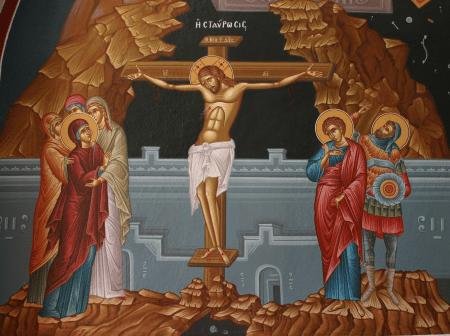
Today we live in Darkness. Today we sit and worship in the shadow of cross.

We have heard Christ’s story of passion.

We have heard of humanity’s betrayal.

We have heard of his suffering and death.

But we have not come to kill Jesus again.

We have not come to grieve and mourn his death again.

We are not reliving the crucifixion again,

We are not nailing Jesus to the cross again.

Today we remember.

We remember our part in the story.  Our shame and our pride.

We remember that when faced with God in flesh, when faced with God with us,

we put God to death.

We remember that humanity at its best, humanity’s finest minds, finest scholars, finest religious authorities, finest soldiers…. our best and finest understanding of the divine,

led us to kill God.

This is Good Friday.

It tells us who we are.

It tells us who try to be.

It tells us what happens when we try to be God in God’s place.

We are threatened by anything that would take away

our control

our power

our strength.

We couldn’t stand the idea of being able to see God face to face.

We couldn’t stand the idea of God telling us that we were wrong, that were are not God

We couldn’t stand the idea that we didn’t control what God wanted, what God said, what God did, what God thinks.

How could we not be in control?

We believe we are God,

we know what WE want,

what WE say,

what WE do,

what WE think.

So when we met God face to face,

When Jesus  healed, preached, taught, fed, exorcized demons and raised the dead to life

When Jesus let us see God, and that we are not God.

We plotted, planned, schemed and betrayed.

When we met God face to face,

We said no.

We used our greatest tool. Our strongest statement. Our godlike power.

Death. We put Jesus to death.

When God came to us face to face,

God said yes.

God took our greatest tool, our strongest statement, our godlike power

God accepted our death

And then God did what he had come to do.

And then God said what he had come to say.

And then God gave us his greatest tool, his greatest statement, his real godlike power.

God gave us himself.

God gave us his life.

God gives us New Life.

And the cross which stands so tall,

no longer stands for death.

The cross which stands so tall

now stands for life.

We tried to make the cross say no

But God has made it say yes.

We have tried to be like God

But God has come to be like us.

We tried to control God with death

But God will not be controlled

Life will not be controlled

Love will not be controlled

Forgiveness will not controlled

Grace will not be controlled.

God will not be controlled.

God has come to love us

God has come to forgive us

God has come to show us grace

God has come to give us life.

It is Friday.

It is Good Friday.

It is God’s Friday.

The Disappointment of Holy Week

Mark 11:1-11

…Many people spread their cloaks on the road, and others spread leafy branches that they had cut in the fields. Then those who went ahead and those who followed were shouting,

“Hosanna!

Blessed is the one who comes in the name of the Lord!

Blessed is the coming kingdom of our ancestor David!

Hosanna in the highest heaven!”

(Read the whole passage here).

Sermon

The Palms have been waved, and Hosannas sung. Today begins Holy Week, today we join with anticipation as the people of Jerusalem greet Jesus, riding into town like a King. This moment begins as sequence of events that pushthe people of Jerusalem and us from welcoming Jesus as a King to only days from now demanding death. During Holy Week, we re-live and rehearse this movement, this change in attitude towards Jesus, towards God. We rehearse this movement because as much as we would like to believe it belongs only to the people waving palm branches 2000 years ago, it is an experience that we know too well. It is expectation and hope met with disappointment and resentment.

The scene of the Triumphant entry is not easily identified by us for what it truly is. The idea of riding a donkey up a dusty road covered in palm branches, into an ancient city does not trigger memories or images for we modern people. Yet, for the people of Israel the symbol that Jesus represented was far more powerful than we imagine.

For us it would be better to imagine a Head of State stepping down the stairs of a private jet, being met by the welcome of cheering crowds and a band playing presidential music. Or we might be better to think of celebrities and stars walking down the red carpet to screaming fans and the flashes of media cameras. Or a motorcade with little flags on long black limos with motorcycles and big guys in suits with ear pieces and guns under their jackets.

Jesus is not just some guy on a donkey, and the reception he receives from the people is not just an impromptu greeting. Jesus has been headed towards this moment since he first rose out of the waters of the Jordan river and that voice thundered from heaven, “This is my son, my beloved.”

The people of Israel too, have been waiting for this moment. They have been anticipating the arrival of Messiah. They have been waiting for a King.

A King who was to hear the cries of the people.

A warlord who was to oust their Roman oppressors.

A spiritual leader who would re-establish the Kingdom of God on earth, with the Jerusalem temple at its centre.

And so when Jesus rides into Jerusalem on a steed, just like the Kings of Israel would have according to the Old Testament, the people believe that their salvation is near. They have high expectations for what is to come. They shout Hosanna, which does not mean Praise the Lord, but means Save Now. They believe that Jesus is One who has finally come to meet their expectations, to deliver on their hope, to save them from their problems.

We know this hope, we know this expectation. We have all longed for the one who will save us. Who will save us  from our problems, from our worries, from our brokenness, from our suffering and pain.

And again, we know the disappointment that will come. We know what it is like to have promises broken. We know that un-met expectations lead to resentment.

Holy Week is a reminder of this experience.

Holy Week is a practice in disappointment.

As much as we long for a saviour to come on our terms. A king from the house of David or a prime minister leading our party of choice. A warlord who will oust our oppressors, or a lottery ticket, romantic partner, job opportunity that will finally make our problems go away. A spiritual leader who will establish God’s Kingdom, or a pastor or program that will bring all the people missing from pews back to church (along with their wallets).

Our expectations for salvation. For our version of salvation will only lead to disappointment, this week more than ever.

This week, more than ever do we try to hold God’s feet to the fire for not being God in our image… and by Friday, Save Now becomes Kill Now.

But the disappointment is necessary. Because none of this has been about what we want. Jesus has reminded us all along the way, that our expectations, that our version of the world is not what he come for.

Jesus has come to do God’s work. Jesus has come riding a donkey, a symbol of peace, rather than the war horse of a conqueror.

And peace is what Jesus delivers. It will not be on our terms. It will not come by Thursday or by Friday morning. It will not happen in the Garden when Judas comes with soldiers. It will not be in Pilate’s court.

No, peace does not come on our terms. Salvation is not according to our version.

Instead, in the place where we have finally given up on peace, On Golgotha, where no one can imagine salvation. On the cross, where there is only death. God will deliver us from evil, and the King will finally sit on his throne.

On Good Friday, salvation will finally be on God’s terms.

We just won’t know it until Sunday.

Amen. 


What do churches do with people who want to see Jesus?

John 12:20-33

Now among those who went up to worship at the festival were some Greeks. They came to Philip, who was from Bethsaida in Galilee, and said to him, “Sir, we wish to see Jesus.” Philip went and told Andrew; then Andrew and Philip went and told Jesus. (Read the whole passage)

Sermon

Lent has been long and hard on us this year. Other years, this 5 week season of preparation for Holy Week is about opening us up to Jesus’ work in the world, helping us to see just where God is doing important work in our world. This year, Lent has not been so much about opening us to new understandings, but instead about peeling back our layers of self-interest and showing us how we get God wrong.

We began Lent as Jesus showed us that wilderness is not the scary place we imagine, but where God meets God’s people. We continued as Peter rebuked Jesus for talking about death, and we were shown how our fears get in the way of seeing God’s work. We then watched as Jesus overturned tables in the temple, accusing people of selling God and we were shown that our own tables have been turned right side up.

And last week, Jesus reminded us that the familiar verse of John 3:16 is not exactly the verse we hope to use to convert those around us, but instead comes in the context of a reminder of how we are condemned already… and it is in our dark world that God shines a light, even if that light stings a little.

As Lent concludes this week, and we prepare for Palm Sunday and Holy Week, the themes of this season continue. We are being shown the ways, that as people of faith, we miss the mark, despite our best efforts to be faithful.

Today, the disciple Philip is milling about the busy religious marketplace of Jerusalem. This scene actually comes after the triumphant entry, where Jesus rides into town on a Donkey.

Unlike Peter, James and John, Philip is not a leader among the disciples. He is more of a background kind of guy. Peter is the one who speaks up as the leader of the group, even if he is putting his foot in his mouth half of the time. James and John are vying to be Jesus’ second in command. The three got to go up the mountain with Jesus. But Philip is behind the scenes. While Jesus is teaching the masses, Philip is finding the boy with 5 small loves and 2 fish to feed the 5000. Today, Philip is away from the action, from the crowds surrounding Jesus.

And this is where some Greek Jews come to him. They are from far away. They have come to the Holy city for passover… perhaps this will be their only chance in a lifetime to be in Jerusalem for the festival. As foreigners, they are unfamiliar with the city, but they have probably heard about this rabbi and teacher who rode into town like a King.”Sir, we wish to see Jesus” they ask.

Philip, uncertain, goes to Andrew. Together, they leave the Greeks behind to go and talk to Jesus, who gives them a long speech.

If Philip were a church member today, he would be an usher or greeter. He would be one of those volunteers who like behind-the-scenes work. Peter, James and John might be up front preaching, reading the lessons, conducting the choir, or on church council. Philip would be in early to make coffee, he would probably have picked up some doughnuts for a snack after church. While others are up front leading or taking charge, Philip was the disciple looking for a place to eat or sleep, he is the one making sure that people are looked after and that everyone has what they need.

But when the Greeks come looking for Jesus, when that visitor walks in the door of the church, he knows how to pass out a bulletin or a cup of coffee… but he isn’t so sure about taking people to meet Jesus.

If I had to guess, it would seem that many church members are Philips. Faithful people diligently working behind the scenes, caring for each other.

And like Philip, the faithful and diligent behind-the-scenes disciple, we can be uncertain of what to do with people who ask us, “We wish to see Jesus.”

We know how care for each other, to make sure the bulletins gets passed out, the coffee made, the snow cleared, the potlucks served. We are great at signing new members up for mailboxes and getting them on committees. We know how to welcome new faces and familiar faces into our community, we know that the hospitality we extend has something to do with the God who welcomes us in the waters of baptism and saves a place for us at the table for bread and wine.

Yet, sometimes we are uncertain of how to respond to that very direct question asked by the foreigners, by the visitors among us. “We wish to see Jesus.”

Like Philip, we might go to Andrew instead. We might point a visitor asking for Jesus to the bathrooms, show them how to use a hymnal, we might ask the pastor to do the Jesus talk for us. Like Philip, believing in Jesus means serving and caring for those around us, making sure they are happy and comfortable and welcome. But also like Philip, talking about Jesus makes us uncertain, uncomfortable even.

And sometimes Christians and church people forget why people walk through church doors in the first place. We forget why we keep coming back again and again. We forget that the volunteer roles we sign up for, the jobs we agree to do, the relationships that become so important to us, the community we form and become a part of are not the things that make us the church. They are not the most important reasons we show up here on Sundays, or why a visitor would darken our doors.

These things are BECAUSE of the most important reason why anyone would show up in church.

God.

When the always helpful Philip goes to Andrew, and the two go to Jesus not sure what to do with these foreigners…

The Greeks are looking for the King who rode into Jerusalem. And visitors who come into a church may have many reasons that draw them in. And in the midst of being a busy community, we may forget the core reason of why we are here.

Yet, Jesus takes their question and steers it in a new direction.

Jesus says, “when I am lifted up from the earth, will draw all people to myself.”

God is busy drawing all people. All nations. All kinds, young and old, new and familiar, those leading up front and those behind the scenes… God is drawing all of us to the Christ who is lifted up on the cross. God is the ultimate reason that we are all here regular or visitor, seeking and searching or committed and devoted.

God is gathering us together, and God who is we are ultimately looking for when we show up at church. God is who makes the church the church. God is who finds us, even as we are uncertain at times with what to do with that question, “We wish to see Jesus”

Today, Philip, even though he is not sure how to Answer the Greeks, is still trying to be a faithful disciple and follower of Jesus.

And Jesus recognizes that too.

Jesus knows that our attempts to be faithful are often what get us in the most trouble. And still, God is here among us. God is working with our failing faithfulness and God is drawing us all to the cross. God is drawing us all to place where humanity’s attempts to be faithful ended with the execution of God in flesh.

And yet at the cross and again at the empty tomb, God will show us that it is God’s faithfulness does not fail. That God’s faithfulness is why we are here. And that God’s faithfulness will be on full display when Jesus is lifted up, drawing us all to God’s love.

Amen.

5 Truths we don’t want to admit about church decline

Last Sunday in my sermon, I wrote about Jesus overturning the tables in the temple, and noted that much of western Christianity is waking up the day after the tables have been overturned. Our prominence at the centre of society is long gone. Now we are dealing with the reality of numerical and financial decline. These days church leaders are looking to experts, programs,  and books that will help us figure out what on earth is going on, and why so many have just stopped coming to church.

As a millennial and a pastor, I regularly hear church people bemoaning the loss of young people. This is evident to me in the fact that I have been pastor to only a handful of people my age. The ‘Nones’ are the new buzz group that concerned church leaders want to reach. Church people want to understand why so many of my generation are opting for something other than church attendance and how that can be changed.

The other group current church people long for are the lapsed members I regularly hear church people wanting to “bring back.” Programs like Back to Church Sunday are popular. Mission and discipeship gurus are all over the place, helping pastors, church leaders and lay people figure out how to lead churches, how to figure out what on earth we are supposed to be doing as the Body of Christ.

And yet, with all the focus on our decline as Christians in the West, particularly, mainline Christians, important truths are rarely spoken about. There are realities that I think many of us can see, but we don’t want to admit are significant in our apparent “decline.”

1 Measuring decline by numbers causes us to lose sight of our mission. 

I admit, when I see a new face in church, or get asked to do a baptism, I am inwardly excited. New people, larger numbers of faces in the pews, increased giving. These are all easy indicators of success. Except they aren’t. Jesus didn’t say, “Go therefore and get bums in the pews and money in the offering plates in the name of the Father, Son and Holy Spirit.”

When churches measure our ministry by these numbers, our real purpose of preaching the Gospel and administering the sacraments becomes a selling feature. When our goal is full pews and offering plates, word and sacrament become the means of filling pew and offering plates.

“Success” takes on a different definition if we stop using numbers to measure it. Preaching the gospel is preaching the gospel whether it is to 2, 20, 200 or 2000 people. Oh, and yes, I have heard that accusation that this notion is just something that pastors of small dying churches cling to… yet if our success is measured by numbers we have lost sight of what the Gospel actually does in our lives.

2 Many of our sacred cows are causing our decline. (ie. Sunday School & VBS, Bible Study, programs, music groups, church committees)

There are always very important, very special things that churches do that we are simply unwilling to let go of. These programs or activities began as life-giving endeavours for congregations, but over time have lost their ability to meet the needs and purposes of congregations. I know churches full of seniors in communities that are populated with folks predominantly of retirement age who insist on having Sunday School. There are committees and programs that have become defunct or purposeless that churches refuse to axe, even though they become a struggle keep up and don’t achieve their founding goals.

As we cling to sacred cows we fail to see the unintended consequences that are hurting us. Sunday school was intended to teach kids the faith, but has allowed parents to abdicate responsibility of teaching faith in the home. Instead of empowering us to live out our baptismal callings, committees on Stewardship, Evangelism, Learning, or Support (among others) let us leave this important work to a committee that meets once a month. Programs allow us to turn basic practices of faith like studying the bible, evangelizing through relationship, ministry to children, youth, families or seniors into very compartmentalized sets of behaviour rather than natural activities of faith.

We so often hold onto things that are actually hurting us because of deep-seated senses of obligation or loyalty. We get so stuck wanting to not disappoint those who went before us that we fail to make our communities ready for those who will come after us.

3 God just might be calling us to die. 

So many churches (and people for that matter) live and behave as if they are going to last forever. We make choices as communities as if our current state is going to be our static condition for the rest of time. We don’t have urgency… or the urgency of our conditions causes us to respond with flight or fight or freeze responses. We freeze up and choose to do nothing in the face of crisis, even when we understand that doing something – anything – is necessary.

What if churches had “Bucket Lists”? What if we made decisions about what we choose to spend our time and resources on knowing that we will one day die? Instead of working so hard just to stay afloat in perpetuity, what if we looked at all the things we could do before the end. There are not many churches closing these days because they made bold choices, gambled their resources and failed. There are lots of churches slowly petering out, after years of just getting by.

Admitting that God might be calling us to die means changing the way we see death. We so often see death, especially the death of a church, as failure. What if we saw death as a natural part of life and ministry? What if death was expected for our churches? Maybe all those mission and vision, discipleship and evangelism gurus might not seem so important anymore.

4 Our problem isn’t lack of mission, it is wrong mission. 

Most mainline churches in North America were started less than 125 years ago. A lot were founded in the 40s, 50s, and 60s. Communities of the faithful saw a need for a worshipping church in their midst. So they gathered members, raised funds to build buildings and call pastors. Energy was high, excitement was infectious, people came because the purpose and mission was clear.

And then buildings were built, funds were raised, pastors called and programs started.

But the mission didn’t change.

Most of the gurus or consultants that church leaders are seeking today have the same message: we have lost sight of the mission. If this were true, I don’t think there would be enough to keep the members that most churches still have from dispersing to the wind.

I think churches still have a strong sense of mission – build the building, raise the funds for pastors and programs. We accomplished those things decades ago, yet we still are trying to organize ourselves around them. Maybe it isn’t breaking ground, but it is making sure the carpets are new, and light fixtures clean, and shingles are replaced. Maybe it isn’t calling that first pastor, but it is making sure the budget can afford to pay for a pastor.

We are still trying to band together around those fledgling goals of starting a new church, even though we achieved them years ago. We don’t realize how people who want more than buildings and funds for pastors and programs are put off by our single-minded concern for those things.

5 We have let worship become entertainment instead of community forming. 

Whether it is mega-church contemporary worship or cathedral mass, whether it is a small community gathered for song and prayer or simple liturgy… our attitudes about worship have been transformed by the world around us. Our consumer culture has been turning us into creatures seeking to be entertained, distracted, and looking for things that appeal to our preferences.

I have heard many faithful church members, who are generally concerned about growing in their faith, slip into talking about worship as if it was a menu of food to choose from or different acts of a play. We enjoy sermons, we like music, we appreciate readings.

We have stopped participating in worship. We have stopped seeing the role of the congregation as integral to worship happening. While most church members wouldn’t agree if asked, we act as if worship could happen without anyone in the pews. We approach worship like theatre that doesn’t need an audience, but that no one would put on without an audience.

Worship should be the ritual action of faithful Christians. Worship should be a way to grow in faith as individuals and as community through prayer, song, word, and sacraments. The things we do and practice in worship prepare us for life in the world. We practice confession and forgiveness, we practice sharing God’s story and our story, we practice washing and feeding and tending to the world around us. We practice reconciliation and prayerful concern for the world around us. The things we do in worship should shape how we live out our faith. Our desire to be entertained should not shape worship.

Admitting the truth to our decline.

Admitting the truth of our decline is not an easy business. When the mission, discipleship and evangelism consultants come by to tell us how to fix ourselves, the hand-wringing that results is easy. But talking about these truths about our decline and how these realities shape us is not easy stuff… in fact, it is nearly impossible.

The fact is, more churches tend to slowly die, rather than truly change and find new life. This shows that admitting these truths in order to change them is harder than dying. Most of the time we will choose to die.

But that is okay.

The flawed ministry that we are doing despite of and in the midst of these truths is not unfaithful ministry. In fact, working with dying, flawed, wrong missioned churches and people is exactly the kind of work our God gets up to in the world. And that is also where we are in trouble. Whether we like it or not, admitting these stark truths about ourselves as we die, is all too often just how God chooses to bring us into new life.

And that is the most important truth of all.


Are churches really facing up to their decline? What other truths are we failing to admit? Share in the comments, or on the Facebook Page: The Millennial Pastor or on Twitter: @ParkerErik

As always thanks to my wife, Courtenay, for her editorial help and insight. You can follow her on twitter @ReedmanParker