Tag Archives: lent

Why Worship? – Pastor Thoughts

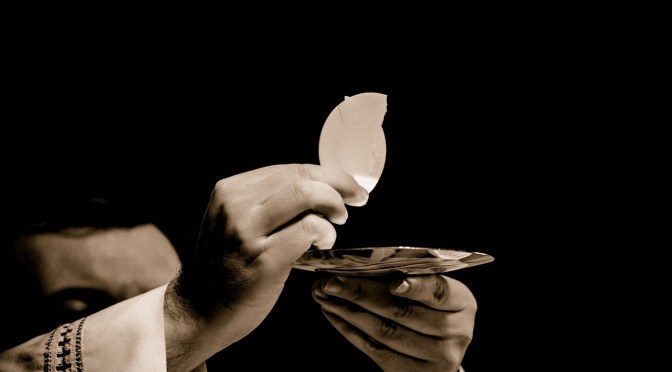
Back when I was still going to seminary (pastor school), I found myself in church on a Sunday contemplating, “Why are we all here, doing this?” When I stepped back, I really wanted to know why all the people who were there on Sunday had come to sing, pray, read the Bible and receive the bread and wine together. Why did they do this, instead of all the other possible things that they could do on a Sunday morning?

Our theme of asking ‘Why?” continues this week. 

So far our Lenten journey has taken us through “Why Faith?”, “Why Christianity?”, and “Why the Bible?”.

Now we ask,“Why Worship?”.

As we have unpacked these “why” questions in our Lenten study, we have examined why we have faith in something rather than in nothing. We looked at how the life, death and resurrection of Jesus offer a compelling experiment of God’s mercy and grace. We have seen the ways that Christ the Word is witnessed to in the pages of Scripture. 

On this fourth week we start to put some of these pieces together as we contemplate why we worship. 

As we have already explored, there are a whole lot of complicated reasons that bring us to church, but once we are here it isn’t always obvious to ask why we are doing this rather than that. Instead, we often default to “I like that rather than this” and congregations can fall into the dread worship wars. Strong lines of preference are drawn over music styles, worship times, service length, the frequency of communion and a host of other things that can be easy to fight about. 

But they aren’t matters of “why.” Why do we come together? Why do we sing and pray and hear the Bible together? Why is that stuff important to do together in a church building rather than alone or in some other place?

And if we are honest with ourselves and each other, a lot of people are asking why it is important to take the time every week to show up at all – and they are coming to the conclusion that it isn’t important. A big part of that might be because we don’t often talk about the “why” of worship, but operate with a system that says, “It just IS important and you should all know why!”

Back on that Sunday in seminary, I wanted to know why we were all sitting in the pews for this strange worship of which we were a part. People don’t generally sing, pray and read the Bible with other folks anywhere else in their world, did they? So why did we do it here?

I have been thinking about that question ever since. While I know that there are at least as many reasons as there are people in the pews, I think it has something to do with knowing that we simply cannot do faith alone. We cannot believe it, practice it, hear it, teach it, and pass it on alone. And so God brings us together, even if is strange. Especially because it is strange and we don’t do the stuff we do in worship just about anywhere else in our lives. 

If you want to really unpack this question, you will have to join us for Lenten study this week. But suffice it to say, after 15 years serving in parish ministry, I am starting to see that, despite all the weird things that we do as a part of worship, that God is up to even more incredible things with us. And that coming together for worship is one of the few ways we can begin to see and imagine what God is doing with us. 

Lent is for asking good questions

This is the fourth Lenten season of the Pandemic. It was during Lent that our first lockdowns began. Many people of faith remarked during that time that Lent never really ended in 2020. I think that remains true in 2023. 

Lent is a season for simplicity and paring back, for repentance and renewal. All the practices that make up Lent, giving things up or taking things on, are meant to be ways to disrupt our routines lived on autopilot, and make room for us to remember and reconsider our relationship with God and our call to discipleship 

One of the fundamental questions of Lent is “why?” Not only is this a question of Lent but a question of our time. 

As a new pastor in 2009 freshly out of seminary, I quickly realized that the “why” of church was often something we assumed but didn’t discuss. I realized that a big part of my role was going to be teaching people again (or maybe for the first time) why church matters. Life-long members, actively engaged folks, casual attenders and fringe members all the way to seekers and newcomers. It seemed that for many of the people I was serving then that it was assumed that we all knew why we should be at church, and that talking about it too much was a risky thing. 

I recall meeting with one family for baptism; the parents of the newborn were only a little older than I was. Grandma and Grandpa, who were strong active members of the congregation were insisting on the baptism, while the parents were hesitant. The mother said to me, “I haven’t been to church much lately. I stopped coming more because whenever I asked questions, I was told to stop questioning everything.”

I let that mother ask me any question she wanted about church, faith, the Bible and God. 

Asking questions, and specifically asking “Why?” is not only okay, it is important. A faith that cannot stand up to our questions is not truly faith at all but something more like a cult. A rich, deep and well-practiced faith is one where questions are essential, exploring “Why?” is the point. The church is one of the very few places in our world that has the capacity to address faith and the “why’s” of life, even when asked about the deepest parts of ourselves, our world and of God. 

This week as we start our Lenten study called “Why Church?”, we will take the time to lay out our questions and have conversations that have to do with anything we might be wondering, but that ultimately get to the heart of the matter. 

Asking “Why?” and taking the time to articulate “why” is so very important as we enter the Lenten wilderness and as we navigate the wildernesses of pandemic, declines, social change and change in our community and congregation. I invite you into this conversation and disciple this Lent. 

Let’s explore the questions together.

The smell of death filling the room

John 12:1-8
Six days before the Passover Jesus came to Bethany, the home of Lazarus, whom he had raised from the dead. There they gave a dinner for him. Martha served, and Lazarus was one of those at the table with him. Mary took a pound of costly perfume made of pure nard, anointed Jesus’ feet, and wiped them with her hair. The house was filled with the fragrance of the perfume. But Judas Iscariot, one of his disciples (the one who was about to betray him), said, “Why was this perfume not sold for three hundred denarii and the money given to the poor?” (He said this not because he cared about the poor, but because he was a thief; he kept the common purse and used to steal what was put into it.) Jesus said, “Leave her alone. She bought it so that she might keep it for the day of my burial. You always have the poor with you, but you do not always have me.”

Of all the stories of Jesus’ ministry that we have heard until this point during the pandemic, this scene may feel the most unsettling. Not because the story itself is strange or off-putting. But because of where we currently find ourselves. Having lived and continuing to live cautious lives and only considered careful measured forays into social settings. 

And the thing that sticks out to me more than anything is that it must have been almost hard to breathe. 

The smell of the perfume would have stuck in the room. It would have overwhelmed the noses of all present at the celebratory meal. In the before times, we all know someone who wears too much perfume or cologne, whether it is that strange aunt in the family, or teenage boys wearing too much body spray cologne. But I cannot remember the last time that I smelled someone else that doesn’t live in my house. Masks and social distancing have had the incredible effect of isolating us from the smells of being in community. 

Smells can overpower us like no other sense can. And certain scents can immediately recall memories long buried to time with incredible vividness. They can remind us more powerfully than a picture of past events, places or persons than just about anything else. The smell of chlorine can take you right back to that first time swimming in an indoor pool. Or the smell of pine trees can take you back to beloved Christmas memories. 

The smell today, the perfume that anoints Jesus’ feet cannot be taken lightly or be overlooked. A pound of perfume is not a delicate scent, and that seems to be Mary’s point. On this day, Jesus, his good friend Lazarus, and the disciples are being treated to a celebratory meal. Lazarus has been raised from the dead and this is the first time that Mary, Martha and Lazarus have seen Jesus since the miracle. Martha, as usual, is serving the dinner. She is giving thanks in her way. But Mary decides to give thanks in a different way. She wants to express her deep gratitude and her love for Jesus. It is the kind of emotional display that makes most of us uncomfortable, like two lovers passionately kissing in public. As Mary anoints Jesus feet, and then wipes them with her own hair, the rest of the guests at the party were probably feeling awkward. Washing feet was something that servants do. And using one’s hair as the cloth… well, that was just strange. Mary’s act is as extravagant and wild and passionate as it seems. Probably something that should have been saved for a private moment with Jesus. 

In the midst of this beautiful moment, this act of love and gratitude that Mary is giving to Jesus, Judas pipes up. “Why wasn’t this perfume sold and the money given to the poor?”. The moment is ruined. Judas has re-interpreted this lovely scene to his own ends. Perhaps he was uncomfortable with the display of affection, or perhaps as John suggests, he has other intentions for the money. Whatever Judas’ reasons, he wants to disconnect from the intimate and personal moment. He tries to make it about the impersonal and distant and abstract idea of how money should be used. Judas tries to make the moment about practicality and he almost steals away Mary’s extravagant love, diminishing her by rebuking her feelings. Judas tries to dismiss Mary’s love and gratefulness with his distant and impersonal righteous indignation. 

________________________________________________

I can very much get Judas’ discomfort, you probably do too. Having a display like Mary’s  can intrude in our space and feelings and sense of what is appropriate. And like Judas, we can seek to create distance, through power and manipulation, between ourselves and this deep display of affection. We fear what Mary is doing. We fear letting go of ourselves to God’s love and call for us. We fear the ways in which we might be changed, we might be vulnerable and unsafe, the ways in which our world and lives may become uncertain. 

And at the heart of our distancing, is our desire for control. We want to be in control of where we begin and end, to protect our bodies and feelings and tribes from risk and hurt. And we use whatever power we can. Money, judgement, shame. Mary’s act is not safe, it is wild and untamed. It is extravagant and passionate. This is not the way we think the world should work. “Don’t waste the money” we declare because we are uncomfortable with risk. “Don’t be so emotional” we cry out because we know loving so deeply can lead us to getting hurt. 

Our fear of being close, our need for control, gets in the way of opening ourselves to God’s love and call. Our discomfort puts practicality or pragmatism before others, before people. Judas only sees dollars being poured on Jesus feet. We often get bogged down by the resources being expended on our family, on our neighbours, on the church, on ourselves. Judas doesn’t see that what Mary is doing for Jesus is worth more than any amount of money. Often we find it hard to see that the families, friends, neighbours and ministries that we give our time and passion as being worth of the expense. It can be hard for us to let ourselves take  the risk being close, the risk of following and loving Jesus, the risk of being people who care about God’s mercy for the world too much. We know that all of that is very uncomfortable.

____________________________________________

For five weeks we have been immersed in the season of Lent. Immersed in this journey exploring the relationship of power and love.  We began with the powerful reminder of our mortality on Ash Wednesday. We hear the stories of temptation, lament, another year of grace, and prodigal love. We have kept from singing Alleluias, we have sung Lord have Mercy, Christ have Mercy, Lord have Mercy instead. And on this final Sunday before Palm Sunday, the deep symbol of death enters into our sanctuary. 

There is a pound of pure nard on Jesus feet. This perfume is one meant to keep the smell of death at bay. It is suppose to disguise the smell of a decaying body while it waits to be buried.  

Yet, so often the thing meant to distance and disguise, to protect us from reality comes to symbolize the very thing it is trying to hide. The perfume becomes the smell of death.

Jesus does not miss the symbol. Mary has anointed his feet with the smell of Good Friday, the day that we are slowly building to as we get closer to Holy Week. 

Jesus does not see waste, Jesus doesn’t need to distance himself from Mary. Jesus sees love, lavish, wild and untamed love. Jesus sees the future. “Leave her alone” he says, ”She bought it so that she might keep it for the day of my burial”. Mary is not anointing a king, or prophet. Mary is anointing a friend, teacher and son, who will be soon prepared for burial on Friday evening, and Jesus is reminding his disciples and friends one more time of all of this. The ministry, the parables, the miracles, the teaching in synagogues, the traveling the countryside. None of it is about the bottom line, none of it has been about being practical with money, none of it was about God staying distant and safe from creation. This moment is a foretaste of God’s imminent future.

When the time comes for Jesus’s body to be put into the ground, God will be accomplishing something new, something never seen. Something glimpsed as Lazarus stepped out of his tomb. God is accomplishing something new before the women even have the chance to anoint Jesus’ body on that Easter morning. God is about to turn the world upside, to bring new meaning to creation. Preparing for burial will no longer be preparing for death, but preparing for New Life. 

Here in this perfume filled room, where passionate and impulsive Mary has shown her love and thanks in her way, Jesus gives the whole world a new sign. God’s future is now about us. Jesus burial is about us. On Good Friday Jesus will be anointing the world with New Life. And God is bringing us all right into the middle of it, God crossing the bounds of our discomfort in order to love us.

What a contrast the walls and obstacles we put to protect ourselves, to our seeking to distance from God’s wild and untamed love. We try to protect ourselves by appealing to power, money, and supposed morality all because we are uncomfortable with God’s love. God risks it all, even death, to come close, to take on and wear our flesh, so that we will know love. 

Judas is uncomfortable with the perfume filled house, he wants to step back and distance himself. Make things about money, or poor people, or whatever else that is safe to feel. But Jesus stays present and near for Mary’s gesture of love, and then Jesus tells us that God is only coming closer. Coming in the familiar smells of Holy Week. 

Like any powerful perfume, there is no distancing ourselves from God’s love after this. Today God’s Love comes near to us in perfume that anoints Jesus feet, it will come on palms branches next week, it was waft from the table at Maundy Thursday. And it will comes so close on Good Friday, we will nail it to the cross to distance ourselves from it.

But after three days, God’s love will burst forth, uncontrolled, untamed, wild, passionate, extravagant. And it will be love that we can see, touch, taste and of course, love that we can smell.

Parable of the Prodigal Son or Prodigal Father?

Luke 15:1-3, 11b-32
So Jesus told them this parable:
“There was a man who had two sons. The younger of them said to his father, ‘Father, give me the share of the property that will belong to me.’ So he divided his property between them.

The definition of the word prodigal is: a person who spends money in a recklessly extravagant way. Or someone who is wastefully extravagant.

I don’t know about you, but I feel like I could use some wasteful extravagance in my life. For two long years we have been living small, keeping to ourselves, pairing down. Nothing these days happens with reckless abandon. Everything is cautious and circumscribed. If that prodigal son was feeling even a bit like we do, it is no wonder he was looking for signs of life elsewhere. 

This story of the prodigal son is a familiar story that most of us could probably retell the if we were we put on the spot. In fact, the term “prodigal son” can be applied to a person or situation, and most people will know the meaning. Even if most Christian images and symbols are being forgotten in culture, the prodigal son and his story endures. There must be something about this story that bears familiarity to our own experience and lives. 

But the problem with familiarity is that meaning can be reduced and simplified. The power of the parable can be lost. And the prodigal son, like all good parables that Jesus tells, is not meant to be a simplistic, straight across comparison where the Father equals God, and the son equals humanity. Instead, good parables demand that we put ourselves in the shoes of all the characters, that we put God in the shoes of all the characters, and even consider that we or God might not be any of the characters. 

A few years ago, a good friend who is also a pastor, shared about his experience teaching his confirmation class the parable of the prodigal son. To help the class embody the parable, he had the students act out the story. They found it easy to play the prodigal party boy son and the dutiful older brother. But when it came time to be the father who ran out to welcome home his lost son, the students would stand and wait with hands on hips, a frown on their face. Or they would scold the returning son for making his father worry. Some even grounded the son when he returned. They just couldn’t imagine a parent who welcomed a delinquent child home without some kind of reprimand.

This well-known parable maybe has something much deeper and radical to say to us that we usually remember. It is easy to assume that the parable of the Prodigal Son is a moralism about doing the right thing. Older son good, younger son bad. Don’t be a younger son, we think is the moral of this tale. But that judgement is not one the text actually makes and to really hear what the parable is saying, we have to step away from the morals and lessons that we assume from the get go.

As with all the parables of Jesus, we need to consider the audience. There are two very different groups that Jesus is speaking to. The first is tax collectors and sinners. Those who owed debts and those who collected, but both of whom were believed to be excluded from God’s forgiveness and mercy. Contrast them with the second group, the Pharisees and scribes, the virtuous religious authorities and leaders who controlled access to God forgiveness and mercy. An audience who represented two very different experiences of God’s love. 

With these two groups in mind, Jesus tells three parables about lost things, the third being about a man with two sons. The younger son asks for his share of his inheritance to strike out on his own in the world. But before we can set to the task of judging this son for his dissolute living, it is important to understand Jewish inheritance practice. In Jesus’ day, it was the norm that the elder son would inherit a double portion of his father’s wealth. The older son in this story would get two thirds of the inheritance, while his younger brother just one third. But not all things were divided this way. As land belonged to families or tribes, the older son would become the one in charge of all the land of his father. He would control not only two thirds of his father’s wealth, but all of his father’s land, his father’s tenants, workers and slaves. And this would include his younger brother. So while we assume that the younger brother is some party animal or that he can’t wait for his father to die to get his hands on his money, it might actually be the case that the younger brother just doesn’t want to spend the rest of his life working under his self-righteous jerk of an older brother. 

And while it might be easy to assume, like his older brother did, that the younger son went and lost his inheritance by immoral living, we don’t really know. It could have been a combination of circumstances, such as poor choices, famine, or being alone in a foreign land. 

Yet, to put the weight of the parable’s meaning on the younger son’s repentance and return home is to miss a key feature of good Hebrew story telling. The last part of the story is often the point. 

And the last part of the story is all about the older son. 

The older son’s refusal to celebrate his brother’s return is more than a mere attitude problem. This older son has fundamentally missed the point. As his father invites him to the banquet, the older son stands in judgement of both his brother and his father. He is indignant. He believes that he is the righteous one. He believes that he has earned his rightful place in his father’s house. He thinks his hard work and obedience entitles him to his father’s wealth and lands, to his father’s position and power. He complains that his father hasn’t recognized his virtue, not even with a modest young goat to enjoy with his friends. Yet, his father has killed the fatted calf for his delinquent brother. The injustice! Never mind that every goat and calf, every robe and ring, every slave and servant (including the younger brother) will one day belong to him. 

It is easy to see the parable of the Prodigal Son about one good son and one bad, yet when we set our assumptions aside and unpack the depths of the story, we can see that it is both sons who are equally lost. And we can see it is isn’t about trying to be more like one son over the other. Instead, we see that there are times in our lives where we have felt self-righteous and indignant, like we have earned our place in the world and more. And there might be other times where we have felt unworthy and unloveable, like we couldn’t possibly be shown mercy and compassion. 

Still, even with a perspective shift in how we see the sons, we are just as unable as those confirmation students to see the radical love of a parent, who loves without reprimand or condition. Yet, the newly understood lostness of both sons helps to sharpen for us just how loving this father is. 

The name western Christians have given this son says much about how we understand this parable: The Prodigal or Wasteful with Money Son. But the Eastern Orthodox church calls this parable the Loving Father. 

Whether it is the son who thinks he is unworthy and undeserving of his Father’s love or it is the son who is indignant and believes that he has earned more than he has received, the father seeks out his sons. Both sons. The well-to-do land-owner father runs down the road in a very undignified fashion welcome his lost younger son home. The generous and compassionate father still goes out to plead with his ungrateful and resentful older son, despite his son’s rejection. This father does not judge, this father does not reprimand, this father does not set condition on his generosity. 

Even when younger takes advantage of his father and loses all that he has been given. Even when older cannot see that he has not actually earned anything, but that his father has freely given all that he has to his son. Both sons are given love and mercy and grace by their father. If anyone is prodigal, if anyone is wastefully extravagant it is the father who is lavish with his love. 

What a radical image of God’s love and forgiveness for Jesus’ audience? A reminder to the Pharisees, Scribes and those of us who think we have earned it, that God’s love cannot be earned because it is already given freely. A reminder to the tax collectors, sinners and those of us who feel unworthy or undeserving, that God’s love is given freely and does not need to be earned. 

This Lenten season we have been confronted again and again with the relationship of love and power. Today, we are shown an image of God’s love that is more generous than we can imagine. 

Today, our Prodigally loving God shows us just how far God will go to find us.  

Love that couldn’t care less for power

Luke 13:31-35
Some Pharisees came and said to Jesus, “Get away from here, for Herod wants to kill you.” He said to them, “Go and tell that fox for me, ‘Listen, I am casting out demons and performing cures today and tomorrow, and on the third day I finish my work. Yet today, tomorrow, and the next day I must be on my way, because it is impossible for a prophet to be killed outside of Jerusalem.’ Jerusalem, Jerusalem, the city that kills the prophets and stones those who are sent to it! How often have I desired to gather your children together as a hen gathers her brood under her wings, and you were not willing! See, your house is left to you. And I tell you, you will not see me until the time comes when you say, ‘Blessed is the one who comes in the name of the Lord.’”

King Herod was not a well liked King. 

He was a puppet King for the Roman who didn’t really care about who was King over the backwater province of the empire, Judea. The people of Israel didn’t care for Herod, knowing that he was all about power. But like most people in power, Herod made the right allegiances; with Rome and with Hebrew the religious authorities. 

So when the Pharisees come to Jesus with a Message, he knows they too are puppet authorities, doing the puppet King’s dirty work in order to hold on to their own power and privilege. 

Today, on the second Sunday of Lent we continue with Jesus who can’t help but be confronted by people who think they have power. Last week, it was the Devil tempting Jesus to misuse the power of incarnation, the power that comes along with being God and being God in flesh. The Devil’s temptations set the stage for the recurring theme that Luke’s gospel holds up for us this Lenten season. The Devil tries to offer Jesus power. And now the Pharisees come to Jesus with a warning. They sound sympathetic, maybe even concerned for Jesus. Herod is out to get you, they warn. And it just so happens that getting rid of Jesus might also be convenient for them. 

Herod, the unpopular King and the righteous yet conspiring Pharisees, are concerned about their power. They are concerned about Jesus’s impact on their power and privilege. They have worked to build alliances, with their unpalatable overlord Romans, and with each other. Their power is tenuously held and only maintained by fear and division. With soldiers who intimidate, with control over money, over the temple, over the city of Jerusalem. 

Yet, no matter their work to maintain their power, they cannot gain the confidence and support of the people. Yet, Jesus who doesn’t seem to be looking for any power, is wandering the countryside, living off the generosity of others. Jesus is popular and therefore powerful in the eyes of Herod and the Pharisees. And while he hasn’t made a play for their power yet, they know it will come. And so they conspire. They will frighten Jesus off. Just as they frighten the people with soldiers or unrighteousness. They see Jesus as a threat who must be dealt with. 

Like the Pharisees, our world too is full of misuse of power. As we watch an awful and tragic invasion of Ukraine, we see a desperate despot casting about for power and former glory. Closer to home we also see politicians and corporations pandering to our consumerist desires in the hopes of acquiring our votes and our dollars. We also look about and see our unhappy neighbours, friends and families lashing out at the world, frustrated by all the ways they feel their power and freedom slipping from their grasp. We look at this community and other churches like it, and we see something that once occupied a place of central power and importance in the world, being slowly sapped of energy and resources, crumbling before our very eyes. 

Power does that. Power makes the powerful manipulate and play games. The loss of power splits, divides and demoralizes. 

And in all of that, the powerful King Herod, the power hungry Pharisees and we who feel as though we are leaking power, all share in one thing:

We all feel threatened by Jesus. 

There is a something inside of all of us that gets anxious and concerned when Jesus starts talking about what God wants for us. A thing inside of us that is tangled and twisted. That thought in the back our minds, that feeling that makes our blood pressure rise. It is the thing inside of us that makes us fearful of our neighbours. It it the thing that makes us resentful of having to change our lives for the sake the world around us. It is the thing that inside of us that closes us off to people who think differently than we do. The twisted tangled thing makes us shout our opinion louder, makes us wall ourselves off to the other, makes us fear difference, makes us angry when we feel aggrieved. 

The twisted, tangled thing is what Martin Luther called the Old Adam, the Old Sinner.

It is sin. 

And the sinner inside of us bristles when Jesus starts talking about the first being last, and losing our lives to save them. The sinner doesn’t like the idea that God’s forgiveness isn’t deserved, that we aren’t entitled to it.  

The twisted tangled sinner is the part of us that thinks power will save us. That controlling the world around us will keep us from being hurt. That protecting ourselves from anyone different from us is the way to be safe. 

And when Jesus starts talking about giving up power, the old sinner feels threatened. And when Jesus starts talking about prophets being stoned and hinting at crucifixion, the old sinner will have none of it. Like the Devil who thought power was the purpose last week, the old sinner thinks power is our salvation. 

The pharisees warn Jesus that Herod is willing to kill Jesus for the sake of power. 

Herod is worried that his power could be taken by the popular preacher Jesus. 

How wrong can Herod and the Pharisees be?

How completely off the mark can the twisted, tangled sinner inside of us get?

Jesus has come in weakness, not power. 

Jesus has come to be open, not closed off. 

Jesus has come to be vulnerable, not fearful. 

Jesus has come to show love. 

Love that will change us. 

Love that will undo the twisted, tangled thing inside of us. 

Love that risks being hurt, being unsafe, being weak in order to come close and near. Love that gathers and holds us together under its wings. 

Love that couldn’t care less for power. 

Herod and the Pharisees don’t live in a world of love. They don’t know how to let go of the little power that they have. They can’t see that Jesus hasn’t come for power, they cannot see how Jesus is trying to show God’s love to the world. 

And Jesus knows this. Jesus knows that the same crowds will chant “Blessed is He who comes in the same of the Lord” on Sunday, will shout crucify by Friday because they want a King of power, not a King of love. 

Jesus knows that the Pharisees who are warning him to get away will soon cry to Pilate to do their dirty work. 

Jesus knows that the King Herod will defer to the power of Rome to finally rid his Kingdom of this popular preacher. 

Jesus knows that their desire for power will lead to death. 

It is the way of the Old Sinner. 

But Herod and the Pharisees don’t know that Jesus is willing to die for the sake of love, willing to die to save the world. 

But we do. 

And still this Jesus who saves the world, who endures our greatest power of death to show love, still threatens us. 

Because the old sinner within us who pushes us to fear, to resent, to be closed off, to divide and to control… this old sinner, this twisted and tangled thing knows that the love of Jesus will change us. That love will untwist and untangle. That love will forgive and show grace. 

And Jesus knows that love makes us anxious, that old sinner, the twisted and tangled thing doesn’t want to be loved. Jesus knows that loving us will transform us. Jesus knows that loving us will make us care less about ourselves and more about others. Jesus knows that love will make us less afraid, less closed off, less divided, less controlling, worry less. 

Jesus knows love will make us let go of power… 

Herod wasn’t a well-liked King and the Pharisees weren’t well-liked religious rulers. We are people threatened by love.  

And Jesus isn’t either of these things either. Not puppet King, nor religious overlord, nor symbol of power and influence. 

Jesus is a mother hen with nothing but love to give. Love for sinners who feel threatened. Love for tangled and twisted people who get anxious. 

And just like stubborn chicks who need their mother hen, Jesus love will gather and change us too.