

Our Lenten journey hasn’t been easy this year. The themes we have explored have ranged from the clash of kingdoms to human unwillingness to receive in the incarnate Christ, to our anxieties over the judgement of our sinfulness, to the loving father whose sons were lost in worlds of their senses of entitlement.
This fifth Sunday presents us with the story of Mary, the sister to Martha and Lazarus. As Jesus eats a meal with friends, she anoints his feet with expensive perfume, an act of extravagant love in preparation for Jesus’ burial which is being foreshadowed in the moment.
Yet, Judas objects to such a waste of perfume, pointing out that the money could have been used to feed the poor.
We have all been present for these kinds of moments. Something beautiful, tender and loving is ruined because someone cannot handle the depth of emotion, or so it seems.
It makes me wonder how two people can see the same event and moment in time with such diametrically opposed perspectives about what is going on. One person sees a beautiful act of love and another person sees a wasteful overindulgence.
This question is relevant to our moment in history. As Canada faces an election, and our longtime national neighbour to the south, the United States, pursues aggressive trade tactics, it boggles the mind how we can be so divided on how we perceive the leaders running for election and those enacting ruinous financial policies on the whole world.
One side looks at a particular leader and sees a vile, destructive, untrustworthy person, while the other side sees a champion and protector. How can we look at the same things and see them so dramatically differently?
How can one person see a hero in someone when another person looking at the same individual sees only a villain?
As human beings, we have to live with one another while, at the same time, we represent an impossibly diverse spectrum of opinions and tastes.
Judas is right⎯using the money for the perfume could feed many people. Mary is also right⎯the act of love is for Jesus who is on his way to Jerusalem and Good Friday. But cannot Judas also see the loving beauty in this sacrifice of perfume? But cannot Mary see that she is being extravagant and indulgent?
These final weeks in Lent leave us in much the same situation as the previous weeks. The Kingdom of God and the Kingdom of Satan remain in conflict. God’s people continue to be unwilling. The unproducing fig tree’s fate remains unknown if only delayed a year. The prodigal son and his older brother haven’t yet been transformed by their father’s love.
Judas sees only money being poured onto the floor and down the drain; Mary sees only the end coming for her much-beloved friend.
Maybe that state of tension and uncertainty is the point. Maybe that is where human life is lived, in the tension between creatures that cannot see through each other’s eyes.
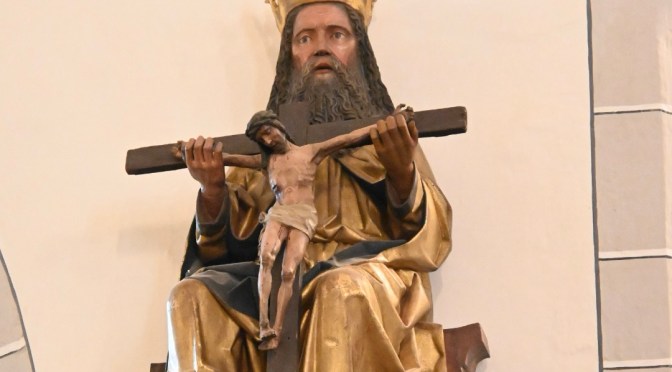
Yet, somehow in that unresolved tension between us, Jesus comes and stakes his cross into the ground, into our hard hearts… and there God’s love is revealed. There, while we cannot see each other, it is revealed that God sees and understands us.


 The Millennial Pastor