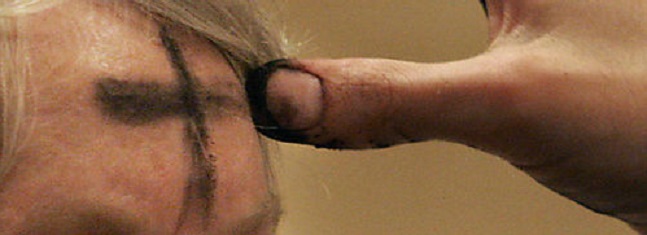
Floating Down the River with Jesus

Matthew 3:13-17

Jesus came from Galilee to John at the Jordan, to be baptized by him. John would have prevented him, saying, “I need to be baptized by you, and do you come to me?” But Jesus answered him, “Let it be so now; for it is proper for us in this way to fulfill all righteousness.” Then he consented. And when Jesus had been baptized, just as he came up from the water, suddenly the heavens were opened to him and he saw the Spirit of God descending like a dove and alighting on him. And a voice from heaven said, “This is my Son, the Beloved, with whom I am well pleased.”

Sermon

Imagine wading knee deep into the water. The water swirls around our feet. It is cool, and refreshing. The movement is gentle and easy. It feels good to be in the water.

We have been floating down the river for a while now. Each year, we hop into the boat together and start the trip all over again in Advent. We float towards Christmas and through Epiphany. It is a journey that is familiar yet also new each time we take it. It is a Journey that begins with end times, that stops to hear John’s sermons and questions. Then it makes its way, with Mary and Joseph to the stable manger. The journey flees with the Holy Family to Egypt to avoid Herod’s murderous actions, and we also come with the Magi to worship this baby revealed as God.

Today we pick up speed and fast forward 30 years, we float down the river Jordan where Jesus is baptized by John. Jesus’ baptism is an unusual story, an uncomfortable scene for Christians. Why does Jesus need to be baptized? For forgiveness of sins? Repentance? What does it say about John as he baptizes instead of being baptized? In many ways the story of Jesus’ baptism invites more questions as we hear it again.

In Advent, we heard John’s preaching on the river bank. His stiff condemnation of the crowds and his warnings of the Messiah. This time, when Jesus shows up, John seems very different. The confidence and boldness are gone. He is indecisive and questioning. Jesus insists on being baptized. And so John relents, without a fight. This doesn’t sound like the John of a few weeks ago.

But John and the crowds do not see what is going on. They are hoping for a powerful Messiah. A warrior who will end injustice and who will remove foreign powers from control in Israel, but Jesus is not those things. It is the beginning of the problems that John, the disciples, the crowds, the Pharisees, scribes and temple authorities will have with Jesus. Some will want an ally, some will want a powerful warlord, some will want Jesus to go away. But Jesus simply refuses to fit their categories. Jesus is going to show us God in ways that don’t see.. that we can’t see… that we refuse to see.

Remember the feeling of standing in the water, feeling the cool fresh flow around our legs? Well the further we float, the more the current picks up. The gentleness is replaced by force and weight. The water doesn’t smoothly pass by. It pushes and grabs, it pulls and drags. The cool gentle stream that cooled our feet now pulls us in and drag us along. The power of the river is more than we could have ever imagined.

Like the crowds who gathered along the banks of the Jordan, we gather to wait also. We are waiting for the world to get better. But it doesn’t.

As we tried to pause and rest over Christmas, Life and Death soldiered on in the world. There were still tragedies, shootings, war and illness. The news of violence still bombarded us from our newspapers, radios and TVs.

The world hasn’t changed all that much since John and Jesus met in the river. Sure, we drive cars, live in heated houses and can talk to anyone on the other side of the planet instantly. But, like the crowds who stood listening to John, our world still is filled with violence and death. More shootings in the news, violence in Turkey and Syria, scandal among political leaders.

The weight of all of this threatens to drown us in the inability to care any more. We hear the reports, read the news articles and it is too much to take, too much to grieve for. Not only is it hard to see what is going on as Jesus is baptized by John, it is hard to see where God is at all.

Today, it might feel like the cool refreshing water of the river has pulled us in and dragged us under. The current is churning and spins us about. We bounce in all directions, sputtering for air, aimed over the cliff, over the waterfall.

This is not what the river journey begun in Advent is supposed to be like.

This is not what God is supposed to allow to happen in the world.

We are not supposed to drown in the waters of grief and apathy!

(Pause)

And a voice pierces the chaos.

“You are my beloved. With you I am well pleased”.

Words of promise, words of hope.

As John dunks Jesus down into and then brings him up out of the water, as breath and air flood back into empty lungs, God speaks. God speaks in a way that hasn’t been heard since the beginning of creation. God speaks and the world is transformed.

We tumble over the waterfall, we plunge into the deep pool at the bottom. We are squeezed and crushed under the weight, we can’t tell which direction is up. Death under the waters seems imminent.

And then all of a sudden, while we are tossed about in the churn, not knowing which direction is up or down, we pop up and out of the water. The rushes back into our lungs. This is where God’s action begins. In drowning, in death. This is as strange a place as we can imagine God to be working. And yet, God speaks as Jesus comes out of the water “You are my beloved children and with you I am well pleased”. What a weird and wonderful God who can push us below the surface in order to make us His own. In order to give us new names as child of God, as Christian, as beloved.

This is why John doesn’t know what is going on when Jesus asks to be baptized. This is why we cannot see God working in the world. It is too radical, too unbelievable.

And yet, this is promise that was made to us in the waters of Baptism, and it is the promise that is renewed each day and remembered each time we witness another child being drowned AND raised in these waters of life. It is a promise made that in the place we lease expect it, in death God is showing us something new, something life filled, something surprising. Something that can come only from a God like ours.

A God who comes into the world as baby born to a unwed teenage mother,

a God who lives a poor carpenter in 1st century Israel,

a God who died on a Roman cross as a common criminal,

a God who was raised from the dead and who in turn calls us to be drowned and then raised,

New life can only come from a God who does not act like we believe God should.

The radical God of water and Baptism comes to us in ways that are so unimaginable and so crazy, that we can hardly make them out. The journey that God is promises is not easy or gentle. The results of God’s work in the world is rarely what we imagine or hope for. Yet, as this unexpected God meets us in our world, and on our terms, we cannot help but be drawn in to this unexpected God whose story has become our story. Whose story we tell over and over again.

As we float down the river of Advent and Christmas, as we pass by Jesus and John in the river, we see again and anew the marvel of God’s love for us. We see a God who not only pushes us below the water to die, but who pulls us out again so that we may rise into new life. And today, we hear a God who speaks through chaos

“You are my beloved Children. With you I am well pleased.”

Amen.

A lament for 2016 and hope for 2017

Matthew 2:13–23

16When Herod saw that he had been tricked by the wise men, he was infuriated, and he sent and killed all the children in and around Bethlehem who were two years old or under, according to the time that he had learned from the wise men. 17Then was fulfilled what had been spoken through the prophet Jeremiah:

18“A voice was heard in Ramah,
wailing and loud lamentation,
Rachel weeping for her children;
she refused to be consoled, because they are no more.”

(read the whole passage)

It’s still Christmas, the 8th day. Yet, the magic of the season that we normally carry with us through New Year’s never really landed for us this year. The tragic stories of this past year kept coming at us, even on Christmas Day. More celebrity deaths, more conflict around the globe, more political messes. A fragile ceasefire is finally holding in Syria on the eve of 2017.

And so with the hopes that this year might be different, that a new and different number on the end of our dates will bring something different to the world.

So it can feel like an ominous sign when Matthew gives us the darkest of Christmas stories today, the commemoration of the Holy Innocents.

The story of the massacre of the Holy Innocents, of all the toddlers and babies in Bethlehem, is not an easy story to hear. Our hearts can ache simply hearing about the death of children, we just know, somewhere deep inside of us, that this is unbearably sad. There is no need to compare it to the tragedies of human history that have followed since. We know what the slaughter of children was like for that town of Bethlehem, because it has not stopped. Children die each day, all over the world, of hunger, war, disease and poverty. This is not just an entire community in grief and mourning, it is a whole world. A world now even more desperate for a Messiah.

Today, on the 8th Day of Christmas, Jeremiah speaks for us all:

A voice was heard in Ramah,
wailing and loud lamentation,
Rachel weeping for her children;
she refused to be consoled, because they are no more.

Jeremiah’s words first expressed the grief of the people, the mothers of Israel, as they wept for their children who had been taken away to exile in Babylon. They are words that the people of Bethlehem would have known. But they now carry new meaning as they are stamped again to the hearts of the mothers of Bethlehem. Tragedy upon tragedy. Heartbreak upon Heartbreak.

The words that have been stamped upon the heats of parents again and again through time. Last year it was the parents of Aleppo, the mothers whose babies suffer from Zika, mothers whose grief is too much to bear even when their daughter is 60 years old and has lived a life in the Hollywood spotlight.

The darkness is still lingering in our world.

Yet….

Yet….

Yet… Jeremiah’s words do not go unheard. The weeping of Rachel and of all the mothers of Israel is not ignored. God speaks to this suffering. God speaks to the people that Jeremiah first wrote to, God speaks to the mothers of Behtlehem and God speaks to all who know tragedy, pain and loss.

Thus says the Lord:

Keep your voice from weeping,
and your eyes from tears;
for there is a reward for your work,
says the Lord:
they shall come back from the land of the enemy;
17 there is hope for your future,
says the Lord:
your children shall come back to their own country.

17 there is hope for your future,
says the Lord:
   your children shall come back to their own country.

God has not forgotten the cries of his people, and God’s messiah, Christ has come into the world for a purpose.

The newborn Messiah does not escape to Egypt. Instead, the Messiah travels the path of his people. The Messiah goes down the roads they have traveled and gathers his people along the way.

Just as the nation of Israel fled from Pharaoh in the Exodus, so too will the Messiah follow their path to Egypt and back to the promised land.

And just as the exiles of Jeremiah’s day returned from Babylon to Jerusalem, to the holy city, the Messiah is also on his way to Jerusalem.  Egypt and Babylon are just the beginning of the Messiah’s journey and the Messiah becomes Israel’s journey.

As the Messiah escapes to Egypt it is truly only a delay of King Herod’s order for death.  The destination of Messiah, from the moment he laid in the manger, and was worshipped by shepherds and magi, is the cross. Christ the Messiah is going to the land of the dead.

This is the hope, this is the promise that the Lord speaks to the people of Israel. This is the promise that is beneath the star, that is born into the stable, that is in the little baby in Mary’s arms. The promise is not just a baby, but a baby that will die. But not just die, but that will rise again. But that will not just rise again, but who will bring us back from the land of the enemy, who will call us to rise from our graves too.

Today is the first day of a new year, hopefully a different year after the difficulties of the last one. Matthew’s Christmas story is an ominous beginning. And while we may have hope for 2017, things look bleak. The world seems to be headed into a period of darkness, or put another away, the relative stability of past decades may be something we are leaving behind.

And still, it in to this troubled world that God comes to us… God comes to us as a baby shining light into our darkness. 

17 there is hope for your future,
says the Lord:
   your children shall come back to their own country.

Christ, the Baby Messiah, born in a stable manger, has come into our world, to bring us out of the land of the enemy. To pull us from the chaos from the despair of grief and loss, from tombs where we do not belong. And Christ shall bring us back to our home, back to the love God.

This is is the promise of Christ’s coming. This is the Hope that the Angels proclaimed. This is the Good News of Great Joy that was given to the Shepherds, and that has been passed on to us this day.


And the Word Became Flesh -A Christmas Story

John 1:1-14

And the Word became flesh and lived among us, and we have seen his glory, the glory as of a father’s only son, full of grace and truth. (Read the Whole Christmas Gospel)

Sermon

And the Word became flesh.

This morning, on this feast of the nativity, we have made a long journey to be here.

Through the dark places, searching for the light. We have journeyed through Advent. We draped our sanctuary and our selves in the deep and rich blues of Advent, we let our eyes adjust to the dark until the distant starlight began to peek through the darkness. Our Advent waiting and wondering led to this moment of celebration at the birth of Christ.

We began 5 weeks ago with Jesus announcing the end of time, imploring us to Keep Awake. To open our eyes to the world around us.

We continued on with John the Baptist, who was preaching in the dark wilderness to “Prepare the way of the Lord,” the Lord who will come to straighten our crooked paths.

We then followed John to prison, to the dark night of the soul, wondering if all these promises of the Messiah were in fact true.

And finally, last week, we heard the announcement. Mary would bear a child named Jesus. And our darkness, the darkness of the entire cosmos was placed in contrast to the tiny baby growing in one young woman’s womb… and we wondered if this indeed was God’s plan to push the darkness back and keep it at bay. To bring light, THE LIGHT of GOD, into the world through a tiny baby born to insignificant people in a forgotten corner of the world.

And then last night, we walked with Joseph and Mary across country, to the town of David called Bethlehem. We submitted to the Emporer’s decree to be registered, we were denied a place to rest our heads, we squatted like refugees in animal barns, we heard the angels with the outcasts and we found out that God was indeed born into our dark world, bringing real light.

We also discovered, that this 2000 year old story is a story for 2016. That if Jesus was born into a world full of darkness back then, one where tyrants ruled, soldiers killed, people lived in fear, that certainly the darkness of our world is not too much for God. That Jesus does come into our darkness too. Messiah is born today, just as 2000 years ago.

But today, the Gospel of John pulls us back from the details of the story. John gives us the Christmas story again, but without shepherds and angels, barns and journeys, without even Mary or Jospeh.

John takes us to the heart, to the meat of the story.

And the word became flesh.

John’s story of incarnation is hardly one we could reproduce with a Sunday School pageant. John expects that we can separate the details of the story from the meaning of the story. What does it mean that the God of all creation has chosen to become incarnate?

Incarnation is one of those churchy words that pastors tend use, but that actually has a very earthy meaning.

The flower with a similar name, carnation, gets its name from its fleshy colour.

Carnivale, the South American Mardi Gras festival is related to incarnation too. The great festival where you eat all the meat in the house before fasting during lent.

And carnivore, the scientific word for meat eater.

Carne means meat.

So that church word incarnation literally means”to take on meat.”

And the Word became flesh.

The birth of Christ is the moment when God puts on the meat of humanity, the flesh of our bodies. If you want to know what God looks like, look at the people around you, look at their skin and eyes and hair. When Mary and Joseph and those Shepherds looked into the eyes, of the christ child, they would have seen there all of humanity contained in flesh.

When the disciples and the crowds heard his voice, they would have heard the voice of the God.

When the lepers and the lame and blind were touched and healed by Jesus, they would have felt the touch of God.

When the soldiers nailed feet and hands to a cross, they would have pierced the Body of Christ.

But putting on our meat isn’t just about our physical bodies.

The incarnation is also how God puts on the flesh of our humanity. The darkness of sin and suffering and death. The flesh of the human condition, of limited, fragile creation. God takes on what it means to be human, to be created, to be us.

John’s Christmas story omits all the details that we tend to think the story is all about in order to bring us to heart or the meat of the matter. God has taken on our flesh in order to bridge the unbridgeable gap between God and a fallen, broken creation. God has become one of us in order to come near to all of us.

Sure, John’s version of the Christmas story might be missing a few of the familiar parts of the story, but fleshiness of the story, of the incarnation reminds us that of all the Christmas traditions we hold this time of year, the most true of them all is the one carry on with week after week. In the Eucharist as we share in bread and wine, we partake in God’s fleshiness. And we are reminded again and again that God takes on our flesh AND we take on God’s. That God’s light and life comes near to us again and again. Given and shed for us.

And as God comes near, as God becomes incarnate, God begins to reveal the light that has been missing from our world. We begin to see just how pervasive the darkness was. We begin to see that even the smallest bit of real light coming into life through a young woman giving birth in a barn is more light than we can handle. We begin to see that God comes and comes in small space, because even the smallest light pushes the darkness away, but the darkness can never diminish even the smallest amount of light.

The light shines in the darkness, and the darkness did not overcome it.

As we began in Advent seeing the dark places of the world, making our way from the end of the world backwards to the beginning, to the announcement of the coming Messiah, to going with Mary and Joseph to Bethlehem and with angels to shepherds, John tells us that our destination was here. Here with the Word in the beginning. Christmas is where God begins creation anew.

Christmas begins all things new, because the darkness of sin and death will no longer have hold over us. Because the old order of things has ended, and now the Christ born into flesh has come today.

Christmas according to John might not have all the details we think are normally part of the story, but John does take us to the heart, to the meat of the matter. John strips the details back to open ears to hear, our eyes to see, our hearts to know that this story of a babe being born to virgin in a stable in Bethelhem, is the story of God coming into our world, coming in order to be near to us again.

Hear John’s final line in the Christmas story once more:

Today, the Word becomes flesh and lives among us, and we have seen his glory, the glory as of a father’s only son, full of grace and truth.

Amen.

Not the Christmas we want but the Christmas we need

Luke 2:1-14(15-20)

In those days a decree went out from Emperor Augustus that all the world should be registered. This was the first registration and was taken while Quirinius was governor of Syria. All went to their own towns to be registered. Joseph also went from the town of Nazareth in Galilee to Judea, to the city of David called Bethlehem… (Read the whole Christmas Gospel)

Sermon

You may be expecting a story tonight.

For the past three years, Christmas Eve has been a chance to tell the story of Christmas in a fresh way, with modern versions of the Christmas story. However, tonight will be a bit different. Rather than something that sounds like a Vinyl Cafe story (Lake Wobegon for American readers), we are going to tell and hear the Christmas story with new ears to hear and new eyes to see. As the angels said to the Shepherds:

Do not be afraid; for see– I am bringing you good news of great joy for all the people

Like a lot of the world, 2016 has been a rough year for us. Politics has been messy and ugly. We have been subjected to constant news of war and violence and terror attacks around the world. There are near daily stories about the effects of climate change. Our culture and society is having conflicts around issues of race, gender, religion, and ethnicity. We never know when there will be another mass shooting, another earthquake or hurricane or forest fire. Any moment, another celebrity death will stream across social media feeds when we least need hear it.

And here at Good Shepherd we have born the weight of more than our share of illness, tragedy and death.

So maybe for you Christmas is just the same old, same old time for family, traditions and memories this year.

But it is probably the case that for most of us, Christmas lacks a little something. It feels a little duller and subdued. The magic just isn’t quite there for all the reasons that 2016 has been so difficult.

And we think that Christmas is supposed to have that special quality, that feeling of being different than the normal and mundane things of every day life. Christmas is supposed to lift our spirits, remind us of better things, be a time for sentimentalism and warm fuzzies. It is like that Christmas Card with Mary gazing lovingly down at newborn Jesus – it should melt our hearts. It should feel like special moment when we all sing silent night to candlelight, – glowing faces all around.

But this year it hasn’t been those things. Maybe tonight was supposed to be the chance to reclaim what Christmas is supposed to be…

So here is the thing.

The Christmas story that we know, the one that goes along with silent night, kids dressed up in cute outfits, family traditions waiting at home and presents under the tree… is not exactly the real version.

At the risk of sounding like the pastor grinch…

All the nostalgia is less about Christmas than we think. In fact, all those things that we listed earlier that made 2016 such a hard year… they speak more to Christmas than we want to think about.

When we hear that familiar story from Luke that we just read… it is easy to imagine the Christmas pageant or TV version.

But the very first line of story takes us to something a little more 2016 than we might be comfortable with.

“In those days a decree went out from Emperor Augustus that all the world should be registered.”

We have political leaders talking about a registering certain kinds of citizens, talking about values tests and ways of sorting us into good and bad.

Mary and Joseph were part of that group that was called upon to register, because of their religion, the colour of their skin, because of where they came from – they were part of a group that those in power wanted to track and monitor.

And so, like so many migrants forced to move their homes, regardless of age, health, ability or even whether or not they were pregnant, Mary and Joseph were forced to pack up their lives and move across country.

Perhaps for the first time in decades, we have a better understanding of what the Emperor was doing by announcing a registration, and it wasn’t good.

Like the millions of refugees around the world or like so many who live in poverty on our planet, Mary and Joseph had no safe place to stay. There was no refugee camp or shanty town to go to. There was no kind soul to take pity of them. All they could find was essentially a place to squat out of necessity.

And so Mary gave birth in a stable… but not the sweet and sanitary stable that we might imagine. But probably a cold and dark cave where the animals were kept. Imagine a refugee family hiding in an abandoned building or out in the woods… none of us would consider this a good place to spend the night, let alone have a baby. But this is where the mother of God was forced to give birth.

Then once the ordeal of child birth is over, a gang of Shepherds show up. Not the cute ones wearing bathrobes that we imagine. But shepherds who were the dregs of society, more like drug dealers and addics, not good and polite neighbours bringing casseroles, not well meaning aunts who stop by the hospital with flowers. But the kind of people that most of us would cross the street to avoid…. these misfits are the ones who show us first to worship this new born child.

But just to top it all off, Jesus is born to a teenage mom with an older man looking after her and her child despite not being the baby’s father. Jesus is born into the kind of situation where would we expect child and family services to intervene and remove the child. Yet, this is the family that God chooses to care for the Messiah.
Once the baby is born and somehow the holy family has survived everything from being forced from their homes to register, travelling across country, giving birth in squalor, being visited by the riffraff of society…. Mary and Joseph are left on their own. Left in a world where they have no home, where soldiers would be looking for them soon in order to kill the baby boy, where foreign powers and corrupt kings controlled their lives, where there was no safe place to live or hide, but the only safety was to keep moving out on the open road…

Hardly sounds like Christmas, does it?

Except this is the Christmas story.

And it is important that this is the Christmas story.

Because the warm fuzzy version is not what our world needs. The traditions and carols and movies and light strung up might make us feel good, they may even bring a certain joy and hope to our dark December…. but the TV version of the Christmas story will not save the world. It will not save us from all the things we need saving from.

In fact, in a world where we can name three major tragedies just this week in the Christmas Market in Germany, the war in Aleppo and fireworks explosion Mexico, the fact that the first century world of Mary and Joseph, the world of Caesar Augustus full of registrations and soldiers and refugees and danger…. that this world of 2000 years ago is very much like our world today…

This fact means that if God can be born to a teen mom and a step dad in 1st century occupied Israel, means that surely God can be born in our world.

That Jesus is found in Christmas markets struck by tragedy.

That Jesus is born in the bombed out rubble of Aleppo.

That the holy family passes through fireworks markets while on the road.

As much as we want the magic of Christmas,

The world needs the Messiah to be born,

The Christ who is willing to go and be found in the real Christmas places.

God in Christ is willing to be born among us in order that we can see that God has come near. Near to us in the ways and places that we need most. God comes near, God joins in creation, taking on our flesh to show us that we are not left alone to sort out this crazy world. That we go into the night with God along side us, that God is facing the dangers with us, that surviving our world, that confronting sin and death is precisely where God comes to meet us.

The good news of great joy at Christmas is that the God of light and life has not left us on our own, but comes into our world to live life with us, to give the small but enduring hope found in a baby that changes the world.

2016 might not feel much like Christmas as we know it, but it just might be the closest to the first Christmas we have ever been.

The story that we tell tonight is so much bigger and so much deeper than the feelings we try to recreate time of year. The real Christmas story, the real story of Jesus’s birth in our world is about all the feelings that we don’t want to have this time of year. It is about the fact that God comes to into a world that needs joy and hope and light.

So just as those Angels proclaimed: Do not be afraid.

Do not be afraid if Christmas doesn’t feel like we think if should this year…. because it is precisely into this world of ours full of difficulty, hardship and struggle that Jesus is born. Born in the city of David, born here among us

Amen.


The Christmas that 2016 needs – What to preach this Christmas

For so many people around the world 2016 has not been a good year.

Ugly politics with fascist undertones are popping up around the globe. Terrorism, refugee crisis, wars causing civilian tragedies, virus outbreak causing birth defects, climate change catastrophes, racism, sexism, bigotry, social regression, the fraying of democracy in favour of fear and division… the lists of bad things in 2016 are everywhere.

Perhaps, like me you are about to stand in the pulpit on the biggest day of your church year and you need to preach to people who you may not see for another year and to those you see nearly everyday.

Or maybe you are about to go and hear a preacher tell the good news that the angels told the shepherds about. And what you need most is for that good news of great joy to be not just a 2000-year-old story but a 2016 story.

For many wanting to preach and to hear the good news, we are going to be pushing back against a world that wants to bury its head in the Christmas sand. Deep down we know that the good news simply won’t come from nostalgia and sentimentalism.

We know that the falling snow at the end of Christmas movies won’t save us from sin and death.

We know that a bumbling hero putting on a Santa suit to “save Christmas” is no salvation at all.

We know that perfectly roasted turkey, beautifully wrapped presents, and old time Christmas favourites wafting from the radio are not the things that truly encompass the spirit of the season.

And we also know that getting all the food on the table on time, dealing with racist uncles and navigating sleeping arrangements at the in-laws are mostly harmless problems compared to the real stuff going down all over the world.

For many of us, 2016 has been the result of a long build up. Or should I say a long descent back into the same darkness that engulfed the world of 1st Century Israel, the world of Mary and Joseph. No matter what anyone claims, the stability that much of our North American world saw in the 1950s and decades following is not coming back. (Plus women, people of colour, and religious minorities will definitely not agree that this was a golden period in the first place).

So what are we left to preach for Christmas 2016? What is the good news for us?

Well, strangely the good news announced to those shepherds might be more fitting than ever in 2016.

In fact, if there is good news to be found in midst of all the darkness we have lived through this year… it is the same good news found in the darkness of the year of Messiah’s birth.

And that is:

If God can be born to a teenage mother engaged to an older man who wasn’t the father of her baby…

If God can live under oppression of puppet kings and foreign empires…

If God can be subjected to forced migration and registration simply because of ethnicity, religion or skin colour…

If God can have no place to live or sleep, no healthcare to be born with, no community to support new parents other than shepherds (the drug dealers and street gangs of the day)…

If God can be forced to flee in fear from the murderous death squads of a fearful despot, and only have pagan lands to go to…

If God can somehow after all that manage to grow up to fullfill the mission of salvation and reconciliation of all things…

Then certainly the Messiah can come to save us in all of our darkness.

No political leader, no terrorist act, no pandemic virus, no celebrity death, no climate disaster, no  refugees crisis, no cyber attack, no amount of fear or hatred or bigotry is too dark or too much for Messiah to come and save us from.

2016 has only managed to show us just how badly we need to be saved… and Christmas reminds us just what form that salvation arrives in.

So to my colleagues and kindred preachers, find the good news in the One whom we know has already come into our darkest world.

To my sisters and brothers of faith seeking good news this year, know that our world is in exactly the state that moved God action, that moved God to enter our world in the first place.

In 2016, preach that Messiah has come into our darkness, and that Christmas finally brings us some light.


And if you are really stuck, here are two sets of Christmas Sermons:

A story for Christmas Part 1
A story for Christmas Part 2

Mary and Joseph in Al Zataari
Refugees Welcome – God Sent You


What is the good news for you in 2016? Share in the comments, or on the Facebook Page: The Millennial Pastor or on Twitter: @ParkerErik

An iPhone Pastor for a Typewriter Church