Good Friday, Pandemic and the Cross

GOSPEL: John 18:1–19:42

The passion of our Lord Jesus Christ according to John. (read the passion gospel)

Sermon

The shadow of cross is dark and wide today. 

The presence of death feels closer than ever. 

The cross that is so often depicted standing behind mangers and stables at Advent,

stands tall above beds for the dying rather than for infants

and different makeshift shelters today. 

The cross is spoken of with words that we didn’t even know a few weeks or months ago. 

Novel Coronavirus, Covid-19. 

The cross is revealed with words that we really didn’t understand, and still have yet to grasp. 

Pandemic. 

The cross looms high and mighty over hospitals and temporary field units. 

The cross’s darkness has forced the world forced to stay home. 

The cross disrupts the work of governments, schools, businesses, public services and more. 

The cross demands the sacrifice of those who serve on front lines to risk health and safety.  

The cross is changing the world with numbers. Number that grow arbitrarily, numbers that terrify, numbers that signify entire lives ending while still in the middle of living, families unable to grieve, communities forced to adapt their care and support from afar.

The cross has arrived in a way that it hasn’t arrived in a long time, in a way that few alive today understand or comprehend. 

And Jesus has been nailed to it, left to struggle for breath, left to suffocate unable to bring air into his lungs out of exhaustion. 

Jesus has been nailed to it, unjustly, cruelly and for the gain of those in power, so that human greed and contempt can keep its grip on Godlike power. 

Jesus has been nailed to it at young age, as someone who shouldn’t receive a death sentence, as someone who simply got mixed up in political games beyond his control. 

Jesus has been nailed to the cross today, and it feels like just one more to add to the list of deaths, the list that we know has only begun being written. 

The shadow of the cross is indeed dark and wide. 

But it is not just pandemic and illness that makes the cross seem taller. 

The cross is still our moment of shame, our moment of attempted power, our moment of trying to put ourselves before God. 

The cross is still our human effort to put God to death, even as God keeps coming to us in life. 

We want power, we want security, we want safety. We want to control our world, especially as it spins out of control beyond us. 

We deny the danger, we forget to care for others, we put ourselves first, we try to use the power of death for our own gain. 

Even still the cross has existed in God’s heart since the beginning of creation.  

Even still Jesus goes to the cross knowing that it is God’s beloved creation putting him there. 

Even still God is willing to die because we demand it, because our sin and pride demand it, because our selfishness demands it. 

Yet today is the cross’s final day of power. 

And yet, the cross will become more than our death symbol looming large. 

And yet, the cross is God’s means to change our course and set creation on a new path. 

What has been there since the beginning, Christ bring to its end. 

Today Christ completes the journey towards creation. 

Today Christ completes the journey towards us.

Today Christ joins creation and creator together in fullness, 

undoing the damage of the fall, 

undoing the separation endured since, 

reconciling what was broken between us. 

What has always been the end, Christ now begins as something new. 

Today, Jesus goes where none of us can go and does what none but God can do.  

Jesus goes to all the places where cross is found. 

Jesus goes the hospitals and field units. 

Jesus goes to empty streets and quiet neighbourhoods. 

Jesus goes to the front lines at testings centres, and grocery stores, and public health offices, and nursing home windows, and emergency rooms and intensive care units.

Jesus goes to lonely quarantined people.

Jesus goes to temporary isolation housing for health workers. 

Jesus goes to stressed out, cooped up families. 

Jesus goes to hungry seniors waiting for food drop offs

Jesus goes to worried and anxious people whose hearts can find little peace.

Jesus goes to the grieving and the separated and the brokenhearted. 

Jesus goes to every place where the cross looms large.

Jesus goes to every corner touched by the shadow of the cross.

Jesus goes to death itself. 

And on the cross Jesus will take on our darkness,

take on our shadows and sin,

take on our suffering and trials and tribulations

take on our our illness and disease.

Jesus will take our death and make it God’s. 

And then Jesus will take us and make us God’s own. 

And Jesus will make the ending the beginning.

And Jesus will shake off our power of sin, our power of death, our power of the cross. 

And Jesus will start a new thing. 

A new thing on the cross, a new thing where we thought there was only death. 

Today in the dark and wide shadow, 

Today as the cross seems to stand above hospital beds and quarantine rooms.

Today when we use new words and forgotten words to describe death. 

Today Christ does a new thing.

Christ hangs on the cross, without breath in his lungs, with pandemic in the air

And prepares the world 

For New Life 

Amen.

Maundy Thursday: Washed into New Life

GOSPEL: John 13:1-17, 31b-35

 And during supper 3Jesus, knowing that the Father had given all things into his hands, and that he had come from God and was going to God, 4got up from the table, took off his outer robe, and tied a towel around himself. 5Then he poured water into a basin and began to wash the disciples’ feet and to wipe them with the towel that was tied around him. (Read the whole passage)

And so tonight we begin the journey of the Three Days, the most important observance of our liturgical year. So important that worship that begins on Thursday continues through Friday and finally concludes with the great feast following the Easter Vigil on Saturday. 

The cheering crowds lining the streets just a few days ago on Palm Sunday, ushering Jesus into Jerusalem have given way over the past days. Their enthusiastic Hosannas have faded from our hearing. No one is shouting ‘Save Now’ thinking that Jesus is the Messiah long hoped for. 

Today, the enemies are plotting. The expectant crowds of Palm Sunday are now frustrated, soon they will be shouting something else, demanding blood.  But tonight a much smaller group gathers around a meal. A group still larger than we can imagine. 1 teacher, 12 disciples, but also servants, perhaps some unnamed women (whom are always there though often forgotten). It is a dinner party that we still cannot quite imagine in our world these days. 

But it isn’t just any dinner party. 

If there is ever a night for us to gather and share in a meal as a community of faith it is on Maundy Thursday. And usually we do. We gather around a table, we worship in the context of a meal, rather than share a meal in the context of worship. 

Yet tonight, there isn’t a meal as we are used to. Instead we continue to fast, not by our choice, but by necessity. We fast as an act of sacrifice. We fast from the meal, because we are fasting from each other. We cannot shared in the Bread that is the Body because we aren’t sharing in the in-person gathering that is the Body. 

And yet despite this being the night of the Last Supper, curiously John’s Gospel doesn’t actually include a description of the meal. Rather, John focuses on water, on washing. 

In John’s Gospel, Jesus begins by washing feet. Not his own, but the disciples’.

He bends down as a house servant would, and washes his the feet of his dear followers and friends. 

What a striking image in the time of Pandemic. 

In the before time, foot washing was often an uncomfortable idea a best, and usual a no-go zone for many of us. Showing our feet to another human being is a step too far. Too private. Too personal. 

And to wash someone’s feet, in our day, is an intimate and up close experience. If you have ever received a pedicure you know that it is, at least at first, an exercise in trust and vulnerability. 

But tonight the feet aren’t really the point. Foot washing wasn’t so intimate in Jesus’ day. It was routine and normal. 

It is the water, the washing, the act of service. 

Because in our time of pandemic, washing has taken on a brand new meaning. 

Not washing someone’s feet, but washing our own hands. 

What was an afterthought for most of us up until a few weeks ago, is now an important act of service. To wash our hands is a lot more like Jesus’ washing the disciples’ feet than we ever imagined it would be. We wash in service of our neighbour, we wash to stop the spread, to flatten the curve, to care for our neighbours. Just as we are physical distancing and staying home. 

And perhaps in a way we have not understood before, Jesus’ act of washing feet in service of his disciples, in sacrifice of his usual status and position in the group becomes a sign of what is to come. 

Washing isn’t just about clean feet and clean hands. 

Jesus is foreshadowing what is to come, in just a matter of hours he will kneel not before his disciples, but before judges and authorities. He will be pushed down and treated as less than a servant. A criminal. A death row inmate. 

And Jesus will give of himself for the sake of others, for the sake of the world.

This act of humble service reveals to us anew where Jesus has been headed this whole time. And not just towards the cross, and not just to death. 

But to us. 

Jesus has been on his way to us since that the Angel visited Mary. Since being baptized and washed in the river. Since preaching and teaching, healing and working miracles all over Galilee. Since riding into Jerusalem just days ago.  

Jesus has been headed towards us, towards humanity. 

Jesus has been coming to bend down to wash our feet. 

Jesus has been coming to wash his hands and self isolate on the cross for our sake. 

Jesus has been coming to assure us that even though we cannot share in the promise of his presence of bread and wine, his promise of presence among gathered bodies in community, that he is present among us now none-the-less. 

He is present in our quiet places, in our homes and among families. 

In our hand washing and isolation for our neighbour.

He is present in hospital rooms and intensive care units.

Behind face masks and personal protective equipment.

Present in much needed packages dropped off on door steps and in mailboxes.

Present behind plexiglass shields showing up all around.

Present in meals for one, and FaceTime being the only source of human contact. 

Present in the fear, anxiety and uncertainty that abounds among us. 

And so on this night of foot washing, and fasting and commandments to love… we witness again the Christ who bends down to serve. To wash us in the waters, to meet our judgement and death, and give us God’s very self for the sake of the world… especially this world that is desperate and needing God’s presence.

Thus begins our journey of the Three Days, our journey to Good Friday and the Vigil of Easter, with the Christ who reveals himself as the one giving himself in service of world, for our sake, washing us into new life. 

We finally understand the Hosannas

GOSPEL: Matthew 21:1-11

…8A very large crowd spread their cloaks on the road, and others cut branches from the trees and spread them on the road. 9The crowds that went ahead of him and that followed were shouting, 

 “Hosanna to the Son of David!… (Read the whole passage)

There is something somewhat alien about the gospel lesson today. 

Crowds. Big gatherings of people. Mobs and masses lining the road that leads into the Jerusalem. People touching each other, jostling for a better view, putting their clothes down on the road. Our COVID-19 captivity is only a few weeks old, but this scene from the triumphal entry does not match the world that we know. 

I am still preaching to a camera in an empty building. You are all not sitting in your normal pew, but gathered around screens big and small to worship. And people closer to home are joining us for worship from across the country and across international boarders. 

And likely none of us have seen a group of people standing close together if we have seen a group at all. 

Today we enter into Holy Week, the most important week of our liturgical year and in our life of faith as the Body of Christ. It is also one of the most ritualized times for the church. We usually gather with palm branches and process into the sanctuary, and we hear the passion story from Matthew to begin our Holy Week observance. On Thursday we usually gather to remember the Last Supper by sharing meal together. On Good Friday we usually go to Golgatha with the same hymns and readings each year. And on Sunday, we usually welcome the news of the risen Christ with the same easter breakfasts, sunrises services, trumpets and celebratory Easter hymns that we have sung for lifetime. 

Except it won’t exactly be like that this year. 

This year we will do some of those things, adapt others, and postpone more until we can meet again in person. 

Yet, despite out isolation and our inability to congregate, despite the lack of crowds, there is also something about Palm Sunday that is more familiar and understood than ever before. 

I think today we get the Hosannas. 

So often we mistake the Hosannas for Alleluias. Exclamations of Praise and Thanksgiving. But Hosanna does not mean “praise the Lord” or something similar. Hosanna instead means something very different. 

Hosanna means save now. 

Salvation Now. 

Save me now. 

Hosanna. 

And doesn’t that change the whole moment?

Crowds lining the road, calling out to the one riding into Jerusalem, and asking for, begging for salvation. Hoping that this Messiah, this saviour is the one who will come and fix their problems, end their troubles, defeat their enemies, take away their helplessness. 

Even as we are relegated to our homes, to physical distancing and isolation, we know what it is like to cry out next to our neighbour for healing, hope or salvation. We have been crying Hosanna online, in emails, in phone calls and texts. Crying Hosanna because we feel helpless, because the thing that we have been told to do fight this pandemic is nothing. Stay home, stay small, pull back from regular life. A helpless, small feeling indeed. 

Before this pandemic moment, I had always assumed that everyone lining that road into the city knew what each other meant. It always seemed that those crowds were asking for salvation from the same thing. 

But if there is anything that the anxiety, worry, fear and uncertainty that this COVID-19 global health pandemic has revealed, it is that we can all be calling for salvation at the same time, while having very different and varied ideas about salvation means and looks like. 

In fact, the thing that brings us together, that probably brought those crowds together on that road, is the collective action of calling out as one body. Even as what salvation looks like for each voice may mean very different things.

In a helpless situation – COVID-19 today, oppression by a foreign and powerful empire 2000 years ago – we all search for something to hold on to, something that we can do to stop feeling helpless, something that gives us even the smallest sense of control. 

For us these days, it is calling for masks, finding loopholes to leave our homes, demanding the government act to protect jobs and businesses and economic sectors. 

For more COVID-19 testing, for more data and projections, for closing borders. 

For keeping borders open, for more health care staff and beds, for places other than hospitals for COVID-19 patients to be sent to. 

For flights home for Canadians abroad, exceptions to disembark quarantined cruise ships, exceptions to visit the elderly in care home.  

For closures, lock downs and shelter-at-home orders to keep everyone everywhere physically distanced. 

And on and on and on. 

We are all crying out for something, all shouting Hosanna these days. But Hosanna from or for what? Well, that depends on who you ask. 

And those crowds with palm branches lining the road into Jerusalem had equally chaotic and contradictory reasons to shout Hosanna, expecting salvation for different reasons and to come in different ways. 

So today, we get the Hosannas maybe more than we ever have before. We get something now that most people throughout history understood and felt every day of their lives… that the world is more dangerous and more precarious place than we have known for the past 70 years in North America. 

A world were most people feel pretty helpless against the dangers of the world. 

And today, Jesus just rides a donkey right into the middle of it all. Jesus just rolls on in to the chaotic, unsafe, and terrifying world that God’s people seem to be living in, that we seem to have fallen into like a bad dream. 

Just as Jesus rolled up to the river Jordan. 

Was driven on into the desert.

Met Nicodemus in the middle of existential crisis. 

Strolled up to the Samaritan woman at the well. 

Happened upon the blindman. 

Walked the road to Bethany with Mary, Martha and eventually Lazarus. 

Just like he has always done, today Jesus is entering straight into the middle of human messiness and suffering, chaos and loaded expectations, desperation and struggle, sin and death. 

Just just rides right into the middle of it, with a mob wanting him to fix it. Fix it all. 

Hosanna – save now. 

And Jesus heads right on in to do that. 

Right to the middle of the pandemic of sin and death. Right to the middle of the mobs demanding action from the leaders and rulers, right to the leaders and rulers brushing their problems under the carpet or on to the cross. 

Just heads right on in. 

Even as we brace ourselves for the worst weeks of this crisis ahead of us. 

Jesus is riding right into the middle of our pandemic. 

Jesus is crossing borders in trucks loaded down with much needed medical supplies and equipment. 

Jesus is standing at grocery store check outs for hours on end, even as angry customers refuse to physical distance properly.

Jesus is teaching students from virtual classrooms, meeting with patients over the phone, giving concerts on Facebook live, taping messages of hope to windows, ringing bells at shift change. 

Jesus is rolling into a quarantined hospital rooms with a reused N95 mask on.  

Jesus is keeping vigil in an outbreak ridden personal care home. 

Jesus sitting at the bedside of the dying, when no one else is allowed to be present. 

Jesus is heading into the middle of pandemic and chaos, straight to betrayal, arrest and trial. 

And Jesus is on his way to the cross. 

To the thing that no one had in mind when they cried Hosanna. That none of us has in mind when we cry Hosanna. 

No one but God. 

And there in the middle of our Hosannas, Jesus will confront the thing that fuels all our fears, the thing that puts us one edge, the thing that we are utterly helpless to prevent. 

Death. 

Jesus takes our Hosannas right to death. 

And the thing that we fear, the thing that is underneath all our varied Hosannas. 

Well Jesus will deal with that thing.

Jesus will confront and transform death into something new. 

Something unexpected. 

Something found in empty tombs, in upper rooms, and long walks between cities. 

Something that that we cannot see yet from Palm Sundays on crowded streets, or crowded Facebook pages and live streams.

Jesus will transform death itself into the answer for our Hosannas.

Jesus is riding into the middle of Jerusalem, into the middle of pandemic, right into death itself.

And will bring our Hosannas and us with him.

And will bring all of it and us to new life. 

* This sermon was prepared in collaboration with my partner in life, ministry, and parenting, The Rev. Courtenay Reedman Parker

Fasting from the Body of Christ and Fasting from the Eucharist

I don’t know if I remember the last time I went this long without communion. Maybe I never have. 

Public gatherings in the church that I serve have been suspended since the middle of March. On March 15th we last gathered for in-person worship with a Service of the Word. We last shared the Eucharist together March the 8th, over 3 weeks ago. And to be sure, those three weeks have felt like 3 years with the daily, hourly even, updates about the state of the COVID-19 Pandemic across the globe and in our respective nations and in our local communities. 

My congregation is far from alone, all churches in the city I live in can only have up to 10 people in attendance if they are still holding public worship. Most cancelled in-person gatherings weeks ago and have moved to streaming worship online or finding other means to maintain relationship and connections like phone calls, emails, recorded messages, letters, zoom meetings etc…

The need to practice physical distancing measures have been taken up for the sake of each other. A sacrifice of community for the sake of community. 

And it hasn’t been easy to cease our in-person gatherings. 

Many people are working from home, often with kids who are schooling at home. Others are health-care workers putting in long, stress filled hours. Still others are elderly or immunocompromised and self-isolating, not even venturing out for the basics but relying on others.

We all have been making do the best we can. We have been worshipping on Facebook live. I have been writing regular pastoral letters to our email list, on the phone with others, sending lots of texts. We are physically apart, but socializing and relationship maintaining as best we all can. 

But it is hard. 

There was a death in our church community, and the funeral was a small, private and brief grave-side service in the cold tundra of Manitoba. Not how we would usually gather to worship and pray in the face of death.

Still others have had surgeries cancelled,  and others laid off or losing business and income. 

Things aren’t normal, our community isn’t as it should be. There is something fundamentally changed and different about us in this time. 

We are fasting from each other. Not by choice, but by circumstance. 

I am starved for community. 

Even with the zoom meetings, Facebook live worship, and FaceTime calls. Even with the emails, social media, text messages and phone calls. 

We are fasting from community and it sucks.  

And for many Christians, this first fast is necessitating a secondary fast. 

The first fast is from the Body of Christ that is the gathered assembly: the people that you usually see in the pew next to yours, hear the voice of behind you during the hymns, hug during the sharing of the peace, pass the offering plate to, sidle up shoulder to shoulder with at the communion rail, shake hands with on the way to coffee and a cookie. The people that have attended to your baptism, and children’s baptism, and grand-children’s baptism, who have marked decades of Christmases and Easters with you, who have served egg-salad sandwiches with you at many funerals, flipped burgers with you at church picnics, called when your dad was in the hospital, baked a casserole when your grandma died, sent a card for your birthday. 

And not being able to gather for in person worship has meant not being able to share in the Lord’s Supper.

Fasting from one Body, means fasting from the other. 

In a world where so much feels like it is being ripped away, to have to sacrifice the Lord’s Supper can feel cruel. 

If you have been anywhere near clergy on social media in the past few weeks, you will have seen the prominent debate around this issue. In particular, a strong division over whether or not it is possible to have communion “online.” For a pastor or priest to preside on one end of the camera and for a parishioner to receive the Eucharist on the other end of the computer. 

Already several pastors and congregations have begun offering “virtual” communion. And this is being done so as to offer comfort and familiarity, connection and relationship. Which I completely understand as someone charged with the care of a congregation. I get it. 

And yet, I simply cannot deny that this time is uncomfortable and unfamiliar. It is disconnected and isolating. 

And trying to find a loophole through which to keep on as if nothing can change our worship life and the way we are connected as a community seems disingenuous. 

In fact, I wonder what it says to the world beyond our church communities about how this pandemic is affecting us. Even in the midst of this crisis that impacts nearly every arena of society, the only real impact on our worship life is watching church from the comfort of my couch or kitchen table rather than our favourite pew?

While I often try to name and promote the incredible power of social media and digital technology to create real honest community, I don’t pretend that it is no different than the in body, in flesh experience of in person community. The power of digital media is to create community despite being separated by distance or circumstance. To stay connected to family living far away, friends across the nation and across borders. And also create new connections. To meet new people across the world who share the same interests, passions and faith. Some of the people I most regularly talk to in my day to day life are people I have never met in person, yet people who hold an important place in my life.

But the power of in person community is to connect in an incarnational way. To recognize that my in flesh experience of my siblings in Christ imparts a sense of the incarnate Christ. To hear, see, touch, smell and taste the body of the assembly and the sacrament in person is to hear, see, touch, smell and taste Christ. And to do so very particularly in the Eucharist that we boldly claim is an embodied reality of the divine.

An embodied reality of salvation, forgiveness and life. 

This essential quality of the Lord’s supper cannot be communicated digitally, no matter our desire for it. When I order something from Amazon it doesn’t come flying out of my computer screen at my face. It still needs to be picked up off a shelf, mailed, transported, and delivered to me. 

The limitation isn’t the Holy Spirit’s, but the medium’s.

Yet!

And yet!

We still have the Word. 

The Word which has always been mediated outside of the body, in language, time and space. 

The church has from the beginning used the technology available to transmit the Word. Whether it was Paul’s writings and the writings of the early church, or the art and music of the Middle Ages, or the printing press of the Reformation or the telegraph, telephone, radio and television of the modern era. (None of which became means for transmitting the Eucharist remotely). 

The proclamation of the Word has always transcended bodies and mediums even as the Lord’s Supper has been deeply rooted in our bodies and flesh.  Our assembled body in worship – the local congregation or ministry community –  is transformed into the very Body of Christ that we partake in when we gather to hear the Word and receive the Lord’s Supper together. 

And so in this time of imposed fasting from the gathered Body of Christ found in local assemblies, we must also fast from the Eucharist. Not because church leaders, theologians and bishops have reminded us that it can be good for us… but because we have no other choice. Because we are staying home and staying away in order to love our neighbour.

Our fast from the Body of Christ has been imposed upon us by circumstance. No matter how much we, as clergy, desire to care for and love our people in the midst of crisis, we cannot continue to deny that we are not deeply affected and changed by the physical distancing measures of this time, even as they may last months. We cannot pretend that our worship life isn’t deeply altered by having to #StayHome. We cannot portray to the world that we are little enclaves of ritual unimpacted by the suffering of the world around us. We cannot find loopholes through this imposed fast, we are separated in a real and life-changing way. 

And most importantly we cannot continue to act as though the Word of God is insufficient. 

Because it is more than enough. 

The Word alone in this moment of crisis is all that we need. It is enough to offer the care and love that our people need. 

And it is the vital thing that we need to share with an imminently suffering world.

Sunday morning zoom communion seems empty and callous in the face of those dying alone in quarantine, to those unable to get a ventilator to fill their lungs with life saving oxygen, those unable to receive a hospital bed because there is a waiting list already, those suffering at home and unable to breathe enough to find some bread and wine to serve themselves, or too sick to keep down any food. Let alone all those who cannot be online. 

Virtual communion rings too true to the Eucharistic controversy in 1 Corinthians 11, where some would feast while others starved. It rings too true to one of the primary objections of the Reformers that priests were saying mass by themselves in dark corners of churches to earn merit remotely for paying customers.

We cannot try to tend to our own fears in our own little bubbles while the world suffers. We cannot try to pretend that our gathering in person, in physical bodies together as the local assembly is not an essential part of the Eucharist. We cannot give into the fear that God’s Word is not all that we need, even as we feel helpless to do much of anything meaningful.

God’s promise to us from the beginning of creation is that the Word alone in this or any moment of crisis is all that we need.

The Word’s promise of mercy, life and salvation might be the only hope that will bring any comfort to so many who are about to land in our laps as clergy and as communities of the faithful. Words that have to be spoke through phones and tablets held up to the dying in quarantine,  streamed to the scared and isolated suffering at home, to the overburdened front-line workers who may have no other source of strength left to care.

The Word of God is not only what we as the scattered Body needs, but the world needs right now. As governments strain and crack under the pressure, as people struggle pay rent and buy food, as we hope that a treatment or vaccine is around corner but will take some time, the Good News of Christ the Word meets us here and now. If there is an emergency that the church is about to face, it is not how to get communion to the faithful stuck at home, but how to speak God’s promise of grace, mercy and life to the sick, scared, grieving and dying among us.

And the Word of God will meet our needs, despite our fears.

The Word of God who brings life to the dying, mercy to the suffering, and comfort to the lonely is enough. 

The Word of God who has endured this passion journey before us is sufficient. 

The Word of God who promises that COVID-19 will not define us. That social distancing and isolation will not be all the we are. That death will not be our end. 

Even as Good Friday may loom larger than we ever imagined possible, the Word of God who walks with us out of the tomb at Easter is all the grace we need… God would not allow it to be any other way. 

And so we fast. 

Not because we want to or because it is good for us. 

But because it is simply reality. We fast for the sake of our neighbour, for the sake of the world. 

We fast from community, from the gathered Body of Christ. We fast from the Body and Blood of Christ, because we are fasting from community, from each other in flesh that reveals the incarnate Christ. 

And yet in us, God still proclaims the Good News that the world needs to hear, that we need to hear. 

And it will be enough. 

Lazarus, COVID-19 and the Thing we are All afraid Of

The sermon starts at about 23:00 mark

GOSPEL: John 11:1-45

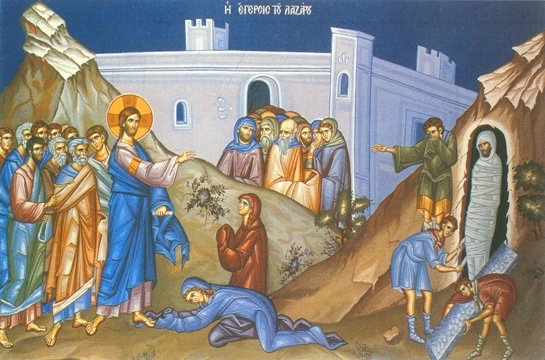
1Now a certain man was ill, Lazarus of Bethany, the village of Mary and her sister Martha. 2Mary was the one who anointed the Lord with perfume and wiped his feet with her hair; her brother Lazarus was ill. 3So the sisters sent a message to Jesus, “Lord, he whom you love is ill.” 4But when Jesus heard it, he said, “This illness does not lead to death; rather it is for God’s glory, so that the Son of God may be glorified through it.” 5Accordingly, though Jesus loved Martha and her sister and Lazarus, 6after having heard that Lazarus was ill, he stayed two days longer in the place where he was. (Read the whole passage)

Sermon

Today is the final Sunday in the season of Lent. This means we stand on the precipice of Holy Week. And unlike the predictions of some world leaders out there, we will NOT have full churches on Easter Sunday. 

In fact, the calendar may say that Lent is ending, but it feels like our wilderness journey is just beginning. The school and public services closures that were predicted to last weeks, are now being planned for months. Business are shuttering their doors, the economy is suffering even as the government plans significant supports for businesses and employees alike. 

And then there is the truly grim news, reports of more and more confirmed cases of COVID-19. Followed by equally hard to hear news of deaths resulting from the illness.

Our Lenten journey began in the wilderness with Jesus, then moved to the nighttime with Nicodemus. Then into the daylight with the woman at the well, followed by the blindman last week. 

Today, Lent gets a little more real. We have been headed here since Advent and Christmas, but we have been able to skim over the real issue for weeks. The themes and images of Lent:  desert and fasting, existential questions in the night, social isolation at the well, a community in chaos around the blindman who could now see… they have all skirted the real issue. The real issue that we face today and that will confront us through Holy Week. 

It is of course the thing that the whole world has been thrown into chaos over. It is the real thing that all the social distancing measures are about, the real reason why we are trying to flatten the curve. 

In fact words the words Coronavirus and COVID-19 have become euphemisms, words that hide the real thing we are talking about. 

Jesus says it out loud to his disciples as they plan to go to to Bethany. 

“Lazarus is dead.”

Death. 

Once you make the connection it is unmistakable. Nearly every time you hear the word coronavirus or COVID-19 in the news, replace it with the word “death” and you will be able to see what the panic and fear is about. 

But it isn’t just physical death. It is the death of what once was, of what we used to be. The world has changed, and we can feel it. Things won’t go back to what the once were, this won’t be just a little 3 week enforced staycation… this is a game changing moment for all of us. 

I once heard an Old Testament scholar describe his experience of receiving a cancer diagnosis. As he sat in his doctor’s office and received the news, it felt like the soundtrack of his life was turned off. All of his dreams, hopes and plans that filled the world around him just disappeared. And there was nothing, silence, emptiness. 

Modern people he said, “fill the sky with ourselves.” We loom large in our own little existences. And God…God is far away. 

Yet, for the ancient people of the Old Testament, they didn’t see themselves in the same way. They were small. God was big, God filled the world.

And yet these days our soundtracks have been turned down, if not off completely. We have been compacted into our homes. Our hopes and dreams and plans put on hold, or (Hashtag) #cancelled. 

We are being made small by a thing that we cannot see, but that we know is there. 

As Jesus makes his way to Bethany, Martha comes and meets him on the road. And her soundtrack had almost certainly been turned off by the grief she was experiencing. Her life put on hold by the death of her brother. But perhaps more significantly, I wonder if her experience of God was turned down too. With her brother dead and buried, the God of Life that was supposed to fill the world probably seemed distant or not there at all.  

Martha says something that many of us may probably feel. 

“If you had been here, my brother would not have died.”

She wants to go back. Back to the before time, back to when the soundtrack was on. She wants her brother back, she wants her own life back. And she knows that Jesus, that this one sent by God, could have done something. 

Jesus and Martha talk, Jesus promises her bother will rise again, but Martha doesn’t hear it the way Jesus means it. She knows the promises, but they seem far away. Something for later, not something that matters in the present moment, not when there is a fresh body in the grave. 

Then Jesus meets Mary on the road. She too knows that Jesus could have done something, yet she seems more resigned to the moment, there is nothing left for her but grief. And so Jesus joins her as he can, weeping with her even knowing what he is about to do. 

There is something so very tangible about this scene from the Gospel of John. Those who have grieved a loved one already know it. But as we all face the uncertainty of pandemic, as the days and hours slow to a crawl and the world becomes more and more silent… we know in a new way what that walk to Bethany was like. 

We might want our soundtracks to fill the sky again, or we might be resigned to our unknown fate with nothing to do but weep. 

But we are are walking to Bethany today, and will keep walking for the foreseeable future… 

Yet, even as God feels far away or gone altogether… Jesus does not abandon us to the silence. 

Even as we feel small and compacted, surrounded by silence and fear, Jesus doesn’t leave us to wither. 

But Jesus doesn’t just show up at the end. 

Jesus walks the Bethany road with these grieving sisters. 

Jesus walks our down our road of social isolation and pandemic with us. 

And Jesus speaks the promise of God to Martha, the imminent promise of new resurrection and new life… even though she cannot hear or comprehend it. 

“I am the Resurrection and the Life”

Words spoken to Moses in burning bush, words spoken to disciples fearful of the storm. 

And Jesus weeps with Mary, because the experiences of this life cannot just be glossed over with a happy ending. They change us, and so God weeps with us, God sits with us, feels with us, loves us in the midst of all the things of this life. 

Jesus doesn’t just skip to end, but walks the road with these sisters, with his disciples, with us. 

And only then, once they have walked the road Bethany, once they get to tomb, Jesus shows Mary and Martha that the promises of God are not far off. 

And still, as Martha protests because she can still smell death in the air. 

And still, as we can hear and see the news, as we feel small and helpless… 

Jesus shows us that the promises of God are not far off. 

Jesus has stone rolled away.  

Then with the same voice that spoke over the waters of creation, 

the voice that speaks over the waters of baptism, 

with this voice Jesus calls the dead man from his grave. 

“Lazarus, come out!”

And out walks death itself.

“Mary and Martha, come out!” 

Except it isn’t death. 

“My beloved children, come out!”

It is life. 

And the promises of God are revealed.

This isn’t going back to the before time. This is the new thing that God is making after. 

This is the promise that is revealed on the third day. This is the empty tomb discovered by the women early on the first day of the week. This is what comes at the end of the walk to Bethany. 

And we are still on our walk to Bethany. 

We are still looking back to the before time. 

Yet Jesus declares that I AM’s promise of resurrection and life are closer than we can comprehend. 

And we are weeping, resigned to an unknown future. 

Yet, Jesus weeps with us, neither abandoning nor forsaking us, but showing us God’s love poured out for us.

And today, Jesus promises, that our Bethany road, our COVID-19 road, our road of life will come to an end too. 

And Jesus will call out to us, 

My children, come out!

And we might see and hear and smell and feel like death. 

But New Life will surprise us, the God of Resurrection will surprise us, 

By filling our skies anew, not with our own hope, dreams and plans,

But with the grace, mercy and love of God that meets us on the way.

Amen

An iPhone Pastor for a Typewriter Church