Category Archives: Theology & Culture

Questions in the dark

GOSPEL: John 3:1-17

1Now there was a Pharisee named Nicodemus, a leader of the Jews. 2He came to Jesus by night and said to him, “Rabbi, we know that you are a teacher who has come from God; for no one can do these signs that you do apart from the presence of God.” 3Jesus answered him, “Very truly, I tell you, no one can see the kingdom of God without being born from above.” … 9Nicodemus said to him, “How can these things be?” 10Jesus answered him, “Are you a teacher of Israel, and yet you do not understand these things? (Read the whole passage)

Our Lenten journey takes us from the wilderness and desert of last week, to the dark of the night this week. And not just because of daylight savings time and a later sunrise this morning. Lent began last week as Jesus was driven out into the wilderness for 40 days of fasting and prayer, followed by temptation. We watched at Jesus showed us the way into the wilderness, into a moment of everything being stripped away that distracts from God.

On this second Sunday in Lent, rather than Jesus going into the wilderness seeking to grow in faith… it is a Pharisee, a leader among the people of Israel who is coming to Jesus for answers. Nicodemus comes to Jesus at night, in the darkness away from the prying eyes of the city, risking his reputation and safety in order to ask this wandering preacher who threatens the established order, just who he is. Nicodemus takes this risk of meeting with Jesus because he needed to know more, he needed answers of some kind.

Nicodemus might not be wandering in the desert, but he is showing us another kind of wilderness

Nicodemus begins by stating that he knows that Jesus is more than just a wandering preacher. The signs and miracles say so. Nicodemus wants to know more.

But Jesus is cautious. He answers cryptically, in case Nicodemus is a Pharisees intent on catching Jesus preaching heresy. And so Jesus and Nicodemus begin a somewhat strange conversation about being born again, about the physical impossibility and about the unknowable nature of the spirit.

“How can these things be?” Nicodemus asks Jesus.

Maybe it was then that Jesus knew that Nicodemus wasn’t interested in tricking Jesus into some trouble, but really just wanted to know more about who Jesus was. Maybe there was something in the way that Nicodemus asked the question, pleaded with Jesus to understand.

Maybe even a religious leader, a teacher of Israel did not understand what God was up to in the world, could not see the Messiah right in front of his own eyes, could not comprehend what the Christ coming in flesh meant for creation.

Maybe Jesus needed to know just what humanity and all creation did not know and couldn’t understand.

As Nicodemus comes in the darkness to ask Jesus his question, to ask for understanding, it is about more than idle curiosity. Nicodemus comes with true doubt, true wondering. Not just about Jesus, but about himself and the world. He wants to know who Jesus is, want to know if Jesus is the Messiah because Nicodemus wants to know if the world is worthy of redemption. Can God fix the problems, the suffering, the sin, the death. Can God save God’s people? Can Nicodemus be saved, is Nicodemus worthy of salvation?

These aren’t the questions one asks over lunch at the local coffee shop. This isn’t water cooler chit chat. These are the kind of questions that scroll through our minds when yet another news story about the Coronavirus is told on the evening news. It is the wondering that we succumb to at the end of the day, after all the busy-ness of the day has quieted down. It is the kind of questioning that keeps us awake at night, starting into the dark abyss. Nicodemus asks the kind of questions that can only be whispered at night in the hopes that no one really hears them.

We know these questions because we have probably asked them too. Can this world be saved? Is there something that can be done about war and violence that never seems to end? Is there safety in the face of illness and disease that is spreading indiscriminately? Will our political leaders be able to step up, finally, at this moment?

And of course there are the questions that narrow down from the global scale. Will my family be safe? Will my job be affected? Do I need to fear my foreign neighbours?

Not to mention the regular worries that keep us up at night about our lives, and relationships and futures.

So we get it. We know what Nicodemus is up to, what he is feeling when he shows us to asks Jesus what is going on? Nicodemus just wants to know if there is hope for his community, his family, for himself.

Last week, as the devil tempted Jesus in the wilderness he asked questions too. Questions that Jesus gave careful answers to.

And yet, as Nicodemus comes in the night, he needs something different. Not the warnings that Jesus gave to the devil, but assurance. Even as Jesus begins with cryptic answers about being born again and about the unpredictable spirit… Nicodemus presses for more.

“How can these things be?”

And Jesus knows that Nicodemus needs something different, something more.

And so Jesus begins with something familiar. Jesus uses an image that would have been well known to Nicodemus. If Nicodemus wants to know who Jesus is, look to the stories of God’s people that have been passed on for generations. To the story of the rescue of God’s people from slavery in Egypt. Rescue from sin and suffering, rescue from foreign powers and hardened oppressors, recuse from seemingly arbitrary and pointless death.

Just as the people of Israel were fleeing Egypt, only to be set upon by poisonous snakes, Moses lifted up the bronze serpent and the people of God looked upon it and were saved.

Nicodemus wants to know if his world can be saved by God, if the Messiah can do anything about this mess? Jesus reminds him of one of the lowest points of the people of Israel.

And then in one of the clearest passages of the bible – one that so many of us were encouraged to memorize as a concise articulation of the Gospel – Jesus gives it straight to Nicodemus.

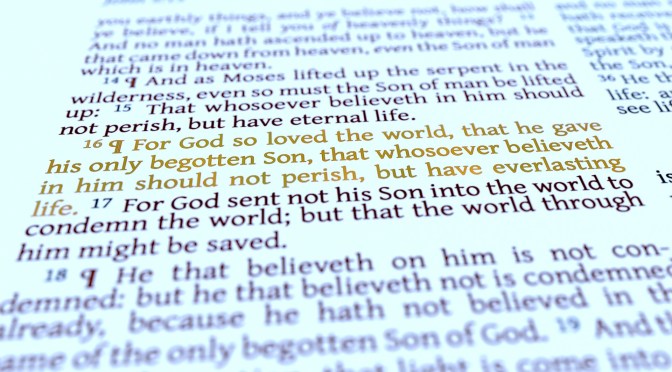
“For God so loved the world, that he gave his only Son…”

It is as if Jesus is saying, you see how God gave the people the bronze snake is their most desperate moment… well the Father is giving me to the world, in your most desperate moment.

If Nicodemus needed the questions that keep him awake at night answered, Jesus gives him what he needs. Jesus gives him an answer that gets right to the heart of Nicodemus’ fears and anxieties. Jesus gives an answer for which there can be no misunderstanding.

There in the dark night, Jesus shines a light on all the sin, suffering and death of the world and declares that even that stuff, God has a plan for.

It is not a fix in the moment and it isn’t about just making it all go away.

But it is a promise. A promise that there is hope and life on the other side. That all these things that keep us awake at night will not define us, they won’t control us, they won’t overpower us.

The Father has sent the Son, and the Son is on his way to save.

It is the same promise and hope that we are given week after week. Even as our nighttime anxieties and fears, our questions pile up… Jesus meets us here (even in the early morning) and reminds us again and again.

For God so loved the world…. For God so loved us… For God so loved you.

That all the sin, suffering and death. That the unending wars, and scary viral outbreaks, and rail blockades that divide us, and inept politicians who don’t seem to be able to do anything helpful… all the things that keep up at night…

That God has sent the Son for us in the midst of all that, and God has sent the Son to save.

To save us up high from the cross, to save us by walking with us out of empty graves.

To hear our nighttime questions and to go with us on lenten wilderness journeys.

“How can these things be?” We ask with Nicodemus.

And Jesus reminds us again, “For God so loved the world, For God so loves us.”

Amen.
#Blessed are…

Matthew 5:1-12

1When Jesus saw the crowds, he went up the mountain; and after he sat down, his disciples came to him. 2Then he began to speak, and taught them, saying:

  3“Blessed are the poor in spirit, for theirs is the kingdom of heaven. (Read the whole passage)

When Peter and Andrew, James and John hopped out of their fishing boats to follow Jesus, to fish for people… I wonder if they thought about changing their minds when they heard Jesus preach the sermon on the mount?

Since Christmas and Epiphany, we have found ourselves on a journey of revelation with Jesus. First it was the heavens opening up with God’s voice thundering over the crowds. And then it was the John’s disciples following this Jesus fellow to see what the fuss was about this. And then it was Jesus walking down the beach calling his first disciples, fishermen of all people, to come and follow.

Three moments early in the ministry of Jesus that reveal to us just who this baby that we were singing carols about only a month ago has grown into.

Today, we hear this first sermon of Jesus’ in the Gospel of Matthew, the familiar sermon of blessings.

Yet, as familiar as these beatitudes are to us, I think there is something uncomfortable about them, at the very least for those first disciples. They had probably expected that following a Rabbi was going to be an upgrade on fishing for a living, a chance to be respected members of the community, to join the upper echelon of religious authorities. And along with this change in their lot in life, the disciples probably expected to become the ones doing the judging rather than the judged. To be the ones measuring others by the rules of Israel rather than always being the ones failing to measure up.

And yet, in Jesus’ first sermon he throws that dream of his disciples out the window. Instead of a sermon on rule following and keeping the law, Jesus dives right into the heart of the human condition.

And when we start listening to the beatitudes, they quickly become a list of things that remind us the messy brokenness of humanity:

Blessed are the poor in spirit… those who mourn… the meek… those who hunger and thrift for righteousness… the merciful who need mercy… the pure in heart… the peacemakers… the persecuted.

In fact, the deeper into the Beatitudes Jesus gets, the less and less the blessings come through. Jesus cuts through the surface stuff, right to the heart of what it means to be a human beings in a broken world. The disciples probably imagined that they would get to ease into this stuff rather than deal with it on day one. They probably wanted to stay at the easy part of religion… how following that rules will earn us salvation… how being a good person will get us into God’s good books.

We certainly get what the disciples were probably feeling. It is much easier to stay in the surface stuff, the manageable and controllable stuff. Rule following and do-gooding.

It isn’t all that enjoyable to be confronted by the hard stuff, to have to think about big questions and hard problems. Isn’t it enough that the news is bombarding with hard and scary things every day. Things like the impeachment trial of the US president and all the political partisanship that comes along with it. Things like the New Coronavirus, something new to terrify us every time we turn on the TV or Radio or open up our phones. Or the othering and demonizing of Chinese people as if they are to blame for the virus. Things like earthquakes in the Caribbean, fires still burning in Australia, Brexit and newborns being removed from their mothers simply because they are Indigenous and considered high-risk.

Isn’t it enough to have to deal with all that stuff during the week? Why does Jesus to have to get into just how broken our world is too… isn’t church supposed to make us feel better? Isn’t Jesus supposed to make that stuff just go away? Especially if we just follow the rules and are good people?

It is easy to just drop the blessing part from the Beatitudes. It is easy to hear just the list of things that remind us our broken world.

Or rather, it should be easy. Except Jesus keeps coming back to blessing.

It is like he won’t let us forget. Jesus could have just said blessed once. Blessed are the poor in spirit, the mourning, the meek, those who hunger for righteousness…

But Jesus keeps coming back to blessing.

Just in case those listening to his sermon missed it. Just in case his disciples didn’t make the connection that here on this mountain, that this crowd of people, this crowd of the unwashed masses are precisely the people that Jesus was going fishing for.

Jesus keeps coming back to blessing.

9 times he says, “Blessed are…”

And the 10th time he says, Rejoice and be glad.

Blessed are.

Here in this midst of all these examples of the brokenness of the world… blessing.

Here, in this messy and hard struggle called life, is blessing.

We so often think of blessings as good things, so we struggle to understand the beatitudes as blessings. Blessings are health, wealth, happiness, comfort, escape, security, at least to our minds.

Yet, blessings in scripture is not those things. Blessings are not things to possess, not rewards for good behaviour or achievements for excellence.

Blessing is promise.

To bless something, or someone really, is to name the presence of God.

We know this already. We practice it every time we gather. We greet each other in the name of Triune God to begin worship, and we proclaim God’s promise to be with us as go. We bless the word we hear, we ask for God’s blessing as we pray. We bless the bread and wine, the Body and Blood of Christ by declaring that God is present in these gifts.

Blessing is the promise of God to be with us.

And so the Beatitudes are declarations of the places that God is going. The places where God is intending to do God’s work. The people to whom the Messiah is going to bring the good news of the Kingdom.

“Blessed are” Jesus says 9 times.

And it isn’t a list of all the people who are wealthy, healthy, happy, comfortable, and secure.

It is a list showing us real life, real brokenness and suffering, real struggle and hardship.

But also a promise and proclamation of all the places and people that Jesus is coming for. The people that Jesus called his first disciples to help him fish for.

And as hard as it is to be faced again with the reality of our broken world, it is God’s promise to meet us in the brokenness that truly matters. It the only thing that has something to say too all that other stuff we hear throughout the week.

Whether it is broken political systems and governments, or new viruses and a media hellbent on terrifying us, or the accompanying othering of people who we think are responsible, or earthquakes or fires or broken families.

God is with us all of that, and with us.

God is with us in as we die to sin and in new life in the waters of baptism.

God is with us as we hear again the promise of mercy and forgiveness for sinners.

God is with us making us one in the bread and wine we share transforming us into the Body of Christ.

Blessed are Jesus declares today… and yes.. this familiar sermon asks the disciples and us to again face the reality of our broken world.

But the blessings also reveals in Jesus, just where this promised Messiah is going, where this promised Messiah is calling us to go, and to whom this promised Messiah is sent.

Blessed are Jesus says.

Blessed are you for whom I have come and I will always be with.

Amen.

A Christmas Story – Mary and Joseph

As Mary watched the rocky road pass by underneath her, she noticed that she could no longer see her feet over her growing belly. Despite having having known lots of pregnant women in her short life, and seeing how big they got, it was different, very different when it was your body. She put her hand down to feel the baby within her.

And then she bounced. She was sitting in back of a fabric merchant’s donkey cart. The folded cloths and furs she was sitting on provided some cushion, but the road was rough and the cart was stiff.

She looked over at her husband Joseph walking beside the cart. Joseph used some of the little money he had to pay for Mary’s seat, she had only been able to walk for a couple of hours before it became clear that she would not be making the trip on her own power.

Mary watched Joseph as he walked. He was tired but he easily kept pace with the cart. The days of travel behind them hadn’t slowed him down. Jospeh was preoccupied… he had a lot on his mind. This long journey, their recent wedding, Mary’s unexpected pregnancy. Mary knew that her new husband was still sorting it all out.

She was too. This was not how she thought her life would turn out. Well, the pregnancy part. She knew that she was destined for marriage and motherhood… that was her lot in life. But despite her unplanned pregnancy, announced to her in an extraordinary way, things could have been much worse. Joseph could have walked away from her, but he didn’t. But they still had this child between them… and neither knew what that was going to mean for their future.

Mary looked past Jospeh and around her. The highway that they traveled down was busy. The two of them were among the many pilgrims criss-crossing the Judean country side going to their home cities and towns to be registered. The Roman occupiers had order it, and now the whole world seemed to be in chaos with people having to travel all over.

Joseph had to return to Bethlehem from Nazareth. Af first, he wanted to make the trip alone, but Mary had insisted on coming along, despite being very pregnant. She didn’t want to have her baby without him… he was the only one who knew the whole story.

______________________________

Bethlehem was bustling full of people returning home for the census. It was a small town outside of Jerusalem, and it was here that the mighty King David had grown up. His battle with Goliath had been not too far from here. Joseph was born into the prestigious tribe of David, not that it seemed to help him much, as he still had to work as hard as any other carpenter.

Joseph and Mary were hoping to stay with Joseph’s relatives. He still had cousins here. But even as he stopped at each home of relatives that he could remember from his childhood, he could see that this plan wouldn’t work for they were already full of family coming home for the census. Joseph seemed lost. Mary suggested they try the local Inn. It wasn’t much more than someone’s home. The owner told them he was full too.

Then he saw Mary’s large belly and told the couple to wait.

He took them around back… behind this section of the city was large outcropping of rocks. There was a cave just behind the Inn, some livestock milled about the cave entrance. Joseph stopped and proudly shook his head, he wasn’t going to sleep with the animals. But Mary waddled over to a spot that looked comfortable enough in the straw and sat down, her feet hurt. She wasn’t going any further, so Joseph swallowed his pride. They would have to make due here.

It wasn’t long after falling asleep that Mary woke up to the pain of a contraction. Her clothes were wet, as her water had broken. She shook Joseph awake, he wanted to go and get the Innkeeper’s wife, but Mary wouldn’t let go of him.

So throughout the night, the two stayed together. Mary leaned against her husband for what felt like days and days. The contractions came regularly and often. Early in the morning, when the Innkeepr came to water the animals he found the two in the midst of Mary’s end stages of labour. He ran and got his wife.

She came with swaddling cloths and hot stones. The Innkeeper’s wife checked to see if Mary was ready, she told Mary it was soon time to begin pushing.

Mary was exhausted, but like so many woman before her, she found the strength when she needed it. She held on to Joseph, his body serving as pillow, arm rests and head board.

The Innkeeper’s wife told Mary that one more big push was needed.

And then, just like that a newborn baby’s cries pierced the dark night.

The squirming wiggling crying newborn came gushing into the world. The Innkeepr picked up the baby boy, looked into his eyes and smiled. She handed the baby to Mary, who was overwhelmed with joy. She received her little boy against her body, who snuggled up to her knowing right away that this was his mother.

Mary gazed at her son, this child that had part of her body for the past 9 months who was now out in the real world. She was amazed at this sight, this child now here with them. Joseph looked down over her shoulder. He was transfixed. The uncertain look on his face from their long journey was gone. Joseph looked like a proud father. The new family of three sat together, finally having a moment to relax for the first time in days.

______________________________

Joseph woke up to the sounds of voices come from over the hills. Mary and the baby slept snuggled together, the baby was now wrapped in swaddling cloths. The Innkeeper’s wife must have cleaned and wrap the baby while Mary and Joseph slept.

The voices were shepherds coming in from the fields to the animals pens. Joseph stood up to watch the shepherd and flocks in the early dawn. As the sheep crowded into the pen, a few of the shepherds came right to the cave.

Joseph wasn’t sure what they would want… maybe he and Mary would have to move. He got set to plead their case, but the shepherds stopped before coming into the cave. They simply knelt at the cave entrance… almost as if they were praying.

Joseph stood there in wonder, how did these shepherds know?

As the baby squirmed against her body, Mary woke to the voices coming near to the cave. She slowly and carefully pulled herself off of the ground. The voices were coming closer. Carefully and deliberately she made her way to the entrance… there she could see a group of shepherds kneeling in prayer. She brushed past Joseph.

As she carried the baby, out into the open night, a few of the shepherd’s gasped.

“Its true! They child is here.”

One by one the shepherds came and knelt before her and the baby. And then without another word they quietly left and following the night sky back into the fields.

As Mary watched them go, Joseph finally came out of the cave. He came and wrapped Mary and the baby in his arms. As the first signs of sun light danced across the sky, he could see the face of this little baby that his and Mary’s life had been centred around for months now.

Their son looked like any other baby they had known… even though it wasn’t his, Jospeh knew that he would be this child’s father.

But as Mary gazed into the eyes of her newborn son, she whispered his name for the first time.

“Jesus”

She looked at Jospeh,

“His name is Jesus.”

And somewhere in this wiggling gurgling creature, in those newborn eyes and ears, in his wrinkly nose and soft newborn skin… the divine was present. Just as the Angel had promised.

A baby who carried the divine in flesh. A baby who bridged the gap between creator and creation. A baby who united a world longing for salvation with the one who was sent to save. A baby who was the promise of God embodied, the promise of God fulfilled.

It was hard to fathom. When Mary looked at her son she saw just a baby in one moment, and in the next it felt like she could see all things, all creation contained in flesh.

She remembered the stories the Torah, that usually when human beings gazed upon God they died because they could not stand something so holy. And yet here she was, holding God in her arms. God who had grown and been born of her body.

A little helpless child containing God in a human body. The God of Israel, the God of all creation. The Messiah promised for generations upon generations. Here in Mary’s arms. Here in this forgotten place that hardly anyone knew was the one who had come to save the world.

Here was Jesus – God with us.

Glory to God in the highest indeed.

Not the sweet Christmas story we remember

Matthew 1:18-25

Now the birth of Jesus the Messiah took place in this way. When his mother Mary had been engaged to Joseph, but before they lived together, she was found to be with child from the Holy Spirit. Her husband Joseph, being a righteous man and unwilling to expose her to public disgrace, planned to dismiss her quietly. (Read the whole passage)

I want to do a short survey with you. So please, raise you hand if you have seen or experienced any of the following in the past month. As we go through, look around and take notice of the amount of hands that you see up. As we get ready for Christmas, has anyone seen:

– Throngs of people in shopping malls or other stores?

– Someone returning home from being away?

– Frustrated parents and misbehaving kids?

– People enjoying Christmas music at a concert, in store, in their car, at home or at church?

– Tired faces pushing grocery carts loaded up with food?

– A person that you could tell would be in need of basic necessities this month, or who probably cannot afford presents, or food or anything else that goes with Christmas?

– A made for TV cheesy Christmas movie that warmed your heart anyways?

– A pregnant woman?

– A starry night, snow falling, and a nice arrangement of Christmas lights?

Now, these are all fairly common experiences for this time of year. There is the mixture of stress and hard work, joy at hearing a beloved carol again, grief and sadness because a loved one is not here for Christmas, anticipation and excitement as the day gets closer.

It is the last Sunday of Advent, and we still have the blues of the season up, the Advent wreath still has one candle unlit. But the signs are showing up that Christmas is close. Music is being made ready, the poinsettias are out, and after weeks of hearing bible readings about the end of the world, or about John the Baptist, we get to finally hear about some central Christmas figures.

The experience of Christmas seems to come, with more and more pressure, each year. Often, many of us spend a month or more preparing for just a few hours of gift giving, a few meals with family and friends, a few days that are supposed to fill us with enough joy to last an entire year. We work very hard to make the Christmas experience perfect.

And so when we hear Joseph’s story today, the contrast he and Mary present does not match the ubiquitous nativity scenes and holiday playlists that pervade this time of year.

In fact, Joseph’s story is much more like all the other parts of life that we pretend don’t exist at Christmas time. The parts we don’t like or that we struggle with. The parts that are hard and frustrating, that are disappointing and painful.

Joseph isn’t the first boyfriend to find out that his girlfriend is having a baby, and Mary isn’t the first woman to find out that she is pregnant when she has no plans to be. And they will not be the last unmarried couple that will have to deal with this problem. This story is much more like real life than it is one of those Christmas movies. In fact, this story really is inconvenient for our Christmas image. Christmas should be about the cutest couple you have ever seen giving birth to most beautiful baby in the most suitable of barn stalls. It is not about poor unwed mothers, and potentially adulterous unplanned pregnancies.

And only to add to the disconnect between what we imagine Christmas to be and what Joseph’s story actually says, when Joseph finds out that Mary was pregnant, his options included stoning his wife, because she was like damaged property which must be destroyed. Another option to stay with Mary was not possible either. Joseph would either be known as the guy who got his wife pregnant before they married, or the guy whose son is not really his.

But Joseph did not choose to go that route, instead choose a more humane option. He would dismiss her quietly, which probably meant that Mary would be returned to her father, and hopefully he could get the father of Mary’s baby to pay her dowry and marry her if possible. If not, than Mary’s father would have the option to stoning Mary himself, selling her into slavery, selling her baby into slavery or if he was rich enough –which he probably wasn’t — pay for her upkeep for the rest of her life.

Not the sweet Christmas story we remember.

(Pause)

Nelly had volunteered to direct the Christmas pageant at St. David’s, or rather she was the only one who hadn’t immediately said no when asked by Father Angelo. Nelly was busy enough this Christmas, but she decided that if she was going to do it, she would do the pageant right and put forward her best effort.

On the day of the first practice, she only had half the number of people she hoped for. But she decided to make due.

To the men she gave the roles of shepherds and magi. The women would be the angels. The little kids would be the animals. But for Mary and Joseph she only had one option for each. There was gangly teenage boy named Josh who simply didn’t seem like a magi or shepherd and quiet teenage girl named Grace who was dressed like an emo goth punk. The two could not look more out of place and uncomfortable in a church.

“This will not do at all” Nelly told herself. “Maybe I can find a better looking Mary and Joseph before next week”. For that first day however, Nelly dressed up these two out of place teens, and put them next to the manger. Josh could hardly see his lines because his hair was in his eyes, and Grace’s black eyeliner was so distracting, that the angels and shepherds giggled and whispered with each other every time she spoke.

At the end of the practice, Nelly was determined that she was not going to let these unsuitable kids ruin her pageant.

(Pause)

In many ways, the story of Joseph that we hear today, unravels and upsets our vision of the Christmas story. We don’t want Christmas to be like real life, it supposed to something different, or least that is what we are told to buy each December. All the commercials and ads promise the perfect Christmas, and each year, the world opens up their wallets in the hopes that if we buy enough and work enough, this Christmas will be perfect.

But our version of Christmas is NOT God’s.

God is telling a different story at this time of year. God is telling a real story, about real people. About people who have big problems, and no easy way out. It is about poverty, about unmarried parents, about unwanted babies, about judgment and the threat of death.

(Pause)

After four weeks of practices, and lots of begging and hoping and nagging, Nelly just couldn’t get anyone else to be Mary and Joseph. Josh and Grace were going to have to be it.

The night of the pageant came, and all the cast was gathered together after the dress rehearsal. The pageant was as polished as it was going to get. The little kids were running around pretending to be the animals they were dressed as. The shepherds and Angels were drinking coffee. Josh and Grace were standing by themselves, looking a little lonely… lost even. Nelly was still frustrated about them, they read their lines woodenly, and never loud enough. And Grace refused to off her black eye liner, and Josh’s hair still covered his eyes.

It was soon showtime. Nelly announced that there was five minutes until curtain up. As Nelly stood up to go and check on the crowd, she glanced over at Josh and Grace. Out of the corner of her eye, she watched as Josh reached down and grabbed Grace’s hand just for a moment, he squeezed it once and let it go. Grace looked at him and smiled. They were in this together. Josh and Grace against the world.

Nelly almost dropped her stage notes. She began to realize, that Josh and Grace were just like the real Mary and Joseph. All they had was each other, they weren’t perfect, or well suited for the role they were to play in God’s mission in the world, but they were all that God needed to work miracles.

(Pause)

Our perfect version of Christmas has never existed. As we stress and worry and prepare for the perfect Christmas, God is sending divine messengers to unmarried teens living in poverty. While we try to create perfect memories with seemingly perfect families, God is discarding the rules about pregnancy before marriage in order to send us a messiah.

God does not wait for the perfect moment to begin the work of the incarnation, the work of taking on our flesh and becoming like us. God starts in the most unexpected of places, with the most unexpected of people. With Mary and Joseph, with Josh and Grace, with you and me.

The story of Joseph shoves aside our idyllic nativity scenes, and our perfect Christmas pageant visions, in favour of a real story about real people. A story about shame, and danger and betrayal. But also a story about mercy, and compassion and grace.

For when Mary and Joseph get past the shame of pregnancy before marriage, when they get past the possibility of death for adultery, they become guardians of God’s promise.

God’s promise that cannot be re-created no matter how much shopping or baking or decorating or cheesy Christmas movie watching we do. It is God’s promise given to imperfect people, to imperfect us.

A promise whose name is God with us — Emmanuel. A promise whose name is God Saves — Jesus.

Amen.

Preparing for what we have not known or seen

GOSPEL: Matthew 3:1-12

1In those days John the Baptist appeared in the wilderness of Judea, proclaiming, 2“Repent, for the kingdom of heaven has come near.” 3This is the one of whom the prophet Isaiah spoke when he said,

“The voice of one crying out in the wilderness:

‘Prepare the way of the Lord,

make his paths straight.’ ” (Read the whole passage)

Happy Advent, you brood of vipers!

Invariably, every year ahead of the second Sunday in Advent, someone on social media, usually one my pastor friends will post a meme of John the Baptist. A hairy wild hermit prophet looking man who looks like he is shouting at something, with a caption that reads:

Happy Advent, you brood of vipers!

John the Baptist is a striking image during this time of year., if not an out of place one. You don’t find him in any manger scenes or on Christmas cards. He just doesn’t fit with what we normally associate with the Christmas season, and yet he is a central figure of Advent. Two of the four weeks of the season are always devoted to him and to his preaching out in the wilderness.

After we began Advent last week by talking about the end, about the end of time and God’s ends and purposes for us… which seemed like an unusual place to begin the new church year, we find ourselves in an equally unusual place for this second Sunday of Advent, heading out to the river Jordon along with the rest of crowds, going to hear if this wild prophet John the Baptist, Zachariah the temple priest’s son, has anything for us to hold on to.

The banks of the Jordan river provide an odd scene. While John himself dressed in itchy camel hair and eating wild insects off the land would have been a sight, the crowds who went out to hear him were just as interesting.

The people of 1st century Israel were people living in a world on the edge. They were a nation under occupation, the Roman Empire had the world under its thumb, including this backwater province of Israel, full of people who refused to worship in the Roman way. This world was slowly but surely crushing most people. It took everything to provide the basics of life, food, clothing and shelter. Taxes were steep and paid to the temple, the Jewish rulers, the Roman overlords, to the the crooked tax collectors and corrupt soldiers. People were restless and anxious for change, even as they clung to what little they had. And even the Empire itself was facing its own end, even if it would take centuries to crumble.

The people coming to the Jordan river were people under pressure, people being squeezed by a world that was broken and crooked. They were people looking for something to hold on to, for a return to to day when things were easier, to ethereal memories of milk and honey, to a time when they were on top.

And they were going out to John because they hoped that he would be the one to make things right, to Make Judea Great Again. But it wasn’t just the masses hungry for change that went to hear John, it was those who had power too. Those who had exploited the crisis of occupation to gain a little power and influence, to gather a few more table crumbs than their neighbours. Everyone was going to see John hoping that he was the one with the answers.

Even still they knew what he was preaching, it wasn’t as if it was a secret. He was brash and harsh, he called people names and offered scary warnings… and he wasn’t above shaming and scorning his audience. Yet they all went out anyways… they were people desperate for a fix for this world that slowly crushing the life out of them.

And so there the crowds were standing out on the banks of the Jordan, listening to wild prophet say things that no one else was saying, yet that spoke to their world in the ways that no one else was speaking.

Kind of sounds familiar doesn’t it. We have seen something like this story, only two thousand years newer… crowds frustrated with the world flocking to a charismatic speaker, thinking he has the answers.

In 2019, we understand first century Israel in ways that we couldn’t 5 or 10 or 25 years ago. We understand a world under pressure in ways that people haven’t really known for a while. We too are living in a world on the edge, a world being squeezed by broken systems of government, by the choices of foreign emperors or presidents, a world that is getting harder and harder to get by in, harder and harder to make a life in, harder and hard to have faith in.

If John the Baptist were preaching down on the banks of the Red River, we might find ourselves there too, along with the crowds.

And his words would feel like they resonate with us.

Prepare the way of the Lord – yes, we are ready for someone who is going to fix our problems.

Make his paths straight! – yes, this world is crooked and corrupt!

Wrath and repentance, axes and tree stumps, fires and chaff – yes, finally someone who is going to fix our mess.

But John hasn’t come to restore our former glory, to give us a little more of the things we are desperately holding on to, to take us back to when things were better.

You see, the thing about John and about Advent. They both point something, to someone we do not know and have not seen yet.

Of all the seasons of the the church year, Advent is one most focused on hope. On hope rooted in the actions and deeds of God still to come. In the fulfillment of God’s promises that we have yet to experience.

And John is not promising that he is the saviour, nor that he is the one who is coming to set the world right. In fact, he is clear that he is not. John is simply a herald and John is pointing to God’s promise of a new world. John’s announcing the fulfillment of God’s promise of reconciliation, God’s promise of mercy, God’s promise that the world as it is, is not what it will be. John is pointing to the light of Messiah illuminating the dark places and revealing the new thing that God is doing.

But John is also proclaiming that what is coming is something new and not yet seen, that Messiah is on the way to change the world in ways we cannot imagine.

That even as God has made the covenant with Abraham,

even as God as rescued God’s people from slavery in Egypt, even as

God sent the judges to protect and lead the people,

even as that God has given the Israelites King David and the Kingdom, even as God has sent the prophets in times of trouble,

even as God has returned them home from exile…

Even with all that God has already done, John proclaims that what God is now doing in the promised Messiah will transform all creation.

There is no going back, there is return to former glory, no holding onto to what little they have in this broken world.

This is not the path to salvation.

Messiah is coming to make the crooked and broken world straight and right. Messiah coming to cut down and away the old. Messiah is coming to burn away the chaff and gather up his wheat. Messiah is coming to baptize God’s poeple with the Holy Spirit joining them once again to the one who created them and all things.

This is what John is announcing down in the river banks to all the people of Judea and to us.

Messiah is coming to fulfill the promises of God in ways that we have not seen and do not know.

And even though it is not what the people of Judea expected to hear, nor fixing the crooked and broken thing of this world that we so desperately cling to…

The promise of Messiah is the promise we need.

It the promise proclaimed in the waters of baptism that join us once again to the Father who made us.

It is the promise given in bread and wine that transform us into the body of Christ.

It is the promise announced in the good news word spoken in our midst.

The promise of Messiah’s coming is the central promise of Advent, the promise that lays the foundation of this story of Jesus that have begun to to tell again. The promise that John the Baptist preached to those desperate crowds gathered on the river banks.

The promise that John preaches to us today.

That the crooked and broken paths and ways of this world will be made straight because the promised Messiah is on the way.