Category Archives: covid-19

Why we need this 3rd Pandemic Lent – Pastor Thoughts

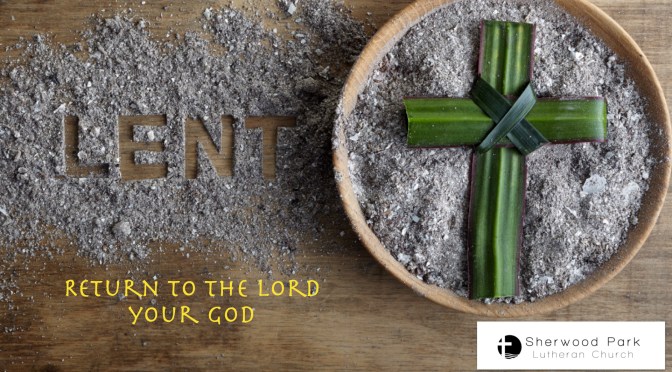
The season of Lent began this week with Ash Wednesday. This is the 3rd Lent to take place during the pandemic. 

There are many similarities between Advent and Lent, both are seasons of preparation that culminate with one of the two most important celebrations or feast days of the church year. 

I love Advent. Everything about it speaks to me. The shades of blue, big and small stories from the bible, images of light and dark, the hopeful anticipation in the midst of struggle. Advent is an exercise in contrasts. 

Lent on the other hand is not nearly as playful or vivid… sigh…

While Advent arrives with winter when it is new and exciting, Lent usually comes when we are ready to say goodbye to the snow. And before Lent takes us to Easter, we have to go through Holy Week. Holy Week which is intense, emotional and draining. 

Lent is less like preparing for the Holidays and more of a spiritual spring cleaning or exercise regime. 

Last year, as our second pandemic Lent arrived, many commented on how it felt like Lent had never ended. We had simply wandered in the wilderness for most of 2020 and the beginning of 2021. 

Yet today in March of 2022 when the pandemic that has dominated our attention for the better part of 2 years, it is about 4th place in terms of headline news right now.

Someone on Twitter commented that if the Four Horsemen of the Apocalypse were in a horse race, Famine and Death would have been strong for a long time. But Pestilence made a big comeback 2 years ago, only to have War surprise everyone in this homestretch. 

With all that is happening in our world these days – war, protests, economic disaster, disease and more – it can be hard to feel like our small Lenten practices are of any impact. It is a lot easier to watch, listen to, or read the news and feel hopeless about the world. 

And yet, I wonder if taking on a Lenten practice this year might be just what we need more than ever. It can look like giving something up like chocolate, coffee, tv or meat. It can be taking something on like daily prayer and scripture reading, giving alms, or watching mid-week Lenten services (Wednesdays at 7PM on the Facebook Page). 

Having something small and out of our usual routines to focus on each day as a way to draw our attention back to God may be just what is needed these days. When the problems of the world are too much to bear, those small reminders that we do not walk in this wilderness alone can carry us through to the promise of Easter. 

In the early church, Lent wasn’t just a season to wallow in the wilderness waiting for Good Friday. Lent was (and is) the season when catechumens (essentially adult confirmation students) would finalize their preparation for baptism at the Easter Vigil. And usually all those already baptized would join in the preparation as a reminder of their own baptism. 

Lent and its seasonal practices are meant to provide little disruptions in our lives. Moments and practices that wake us up from the rest of life, and turn us back to God. Turns us back to the promises of God found in baptism of forgiveness, life and salvation. 

Promises that we certainly need reminding of right now, week to week and day to day. 

And so I invite you to consider what your Lent will look like this year and what it might include for you.

Pastor Erik+

Practicing life and death with the ashes – A Sermon for Ash Wednesday

GOSPEL: Matthew 6:1-6, 16-21
Jesus said to the disciples:] 1“Beware of practicing your piety before others in order to be seen by them; for then you have no reward from your Father in heaven…
5“And whenever you pray, do not be like the hypocrites; for they love to stand and pray in the synagogues and at the street corners, so that they may be seen by others. Truly I tell you, they have received their reward. 6But whenever you pray, go into your room and shut the door and pray to your Father who is in secret; and your Father who sees in secret will reward you….

Growing up my family was committed to being in church every Sunday, and often another night of the week for youth or orchestra practice or another church event. 

But Ash Wednesday was one of those days that seemed to get lost in the shuffle of family life. The way it moved around because of Easter, it sometimes landed on the same night as sports or music practice, some years its was during reading week at University. 

Yet, on the years when we did make it, it felt like it came out of nowhere. 

Church has just been merrily humming along through Christmas and the new year. Stories of Jesus’ miracles and the memorable story of Jesus going up the mountain, being transformed into dazzling white. A story that I can remember occupying my imagination as a child. 

Then all of sudden, the brightness of that moment is gone and rather than a mountain top, Jesus is giving a dinner table lecture on pride and boastfulness. Jesus’ instruction to pray behind locked doors invoked the image of praying in the closet to my mind as a child. 

But then the year that I did my pastoral internship, my supervisor had me help him burn the palms from the palm Sunday the year before. And a strand of connection materialized, a circle from humanity’s act of welcoming and then crucifying Messiah was made. This Ash Wednesday confession both rooted us in our great sin of trying to be God in God’s place both before the day of ashes and in the time to come as we retold the story of Holy Week soon again. 

In my first years as a pastor, the weight of Ash Wednesday would eventually hit me like never before. Ash Wednesday in its pacing and words feels like a funeral liturgy. Funerals which can come at any time and out of nowhere, interrupting any season of life. 

A good friend and seminary classmate wound up serving neighbouring coigretaion, and so we shared Ash Wednesday worship. As we stood together at front of the church, while worshippers came forward to receive ashes, the blessing took on more weight. 

“Remember you are dust and to dust you shall return” takes on all kinds of new meaning when you have stood over a casket being lowered into a grave, and while dirt made the sign of the cross while declaring “Ashes to Ashes, Dust to Dust.” Especially so when you are imposing ashes onto the foreheads of spouses and siblings and cousins and friends of those whom you have blessed into the earth. 

As we made the sign of the cross in ashes on those that we served, finally it came time for my friend’s eldest son to receive ashes, maybe 5 or 6 years old at the time. I remember my friend stumbling back as if hit by a wall. He tried to compose himself to reach forward with his ashy thumb to mark his son. But he was barely able to choke out the words, “Remember you are dust…”

It is a pleasure to bless those whom we love. But it is a terrible burden to make that same sign of the cross in ash, to receive that sign of the cross in ash from those that we love – a souse, a child, a parent, a friend or even any cherished sibling in Christ. 

I could not help but think of that Ash Wednesday moment this week when I saw the video of Ukrainian father weeping as he hugged his young daughter goodbye. It was an Ash Wednesday moment seen around the world. 

For you see, Ash Wednesday truly the acknowledgement of the realities of sin and death in our world. WE confess both the truth of our sinfulness and the truth of our mortality.

And we practice. 

Just like in Nighttime Prayer, when we entrust our selves into God’s care through the night, it is an echo of the same blessing of entrusting ourselves to God that is said at funerals, the same blessing repeated at grave sides just before “ashes to ashes, dust to dust.” On Ash Wednesday we rehearse having ashes and dirt put on us in the sign of the cross.

But even if we do not make it to Ash Wednesday each year the Ashes – the signs and symbols of sin and death – are still all around us. The signs of humanity’s sin, and suffering, the signs of our morality and dying are all around us. 

What is the pandemic if not Ashes?

What were the convoy protests if not Ashes?

What is this war in Ukraine if not ashes?

And yet…

And yet even though the Ashes dominate the day, even though they seem to ever surround us… 

The ashes are not the real point of the day.

The Ashes are a symbol that blows away in the wind, that washes off without a problem, that disappears as easily as they appear. Their impermanence is the point.

The Ashes only ever reveal what is already and was always there – what is underneath the sign they mark.

The mark of the One who has claimed us from the beginning.

The sign of the One of will not leave us to our morality, who will not leave us to the ashes and dust.

The cross of the One who turns the Ashes into something new, who turns us into someones made new.

Just as the ashes are all around, so to is the sign of the one in whom we are made new. 

The Ashes remind us that we are finite beings on our way to death AND they also remind us that One whose Cross they are marked in is the God of Life. 

The One who is also all around, found among the ashes wherever they are.

The One is comes to us in Word, Holy Baths and Holy Meals. 

Who does not abandon us in the time to trial and tribulation, who holds pandemics, occupations and even war in God’s hands. 

The One whose cross marks our bodies forever a sign that while we practice for the time when we die… we also rehearse and practice the promise that we too, on the 3rd will be called forth from our graves, as the ashes fall away, into resurrection and new life. 

God’s Interruption of Our Expectations – A Sermon on Transfiguration

GOSPEL: Luke 9:28-36 [37-43a]
Now about eight days after these sayings Jesus took with him Peter and John and James, and went up on the mountain to pray. 29And while he was praying, the appearance of his face changed, and his clothes became dazzling white. 30Suddenly they saw two men, Moses and Elijah, talking to him. 31They appeared in glory and were speaking of his departure, which he was about to accomplish at Jerusalem. 32Now Peter and his companions were weighed down with sleep; but since they had stayed awake, they saw his glory and the two men who stood with him. 33Just as they were leaving him, Peter said to Jesus, “Master, it is good for us to be here; let us make three dwellings, one for you, one for Moses, and one for Elijah”—not knowing what he said. 34While he was saying this, a cloud came and overshadowed them; and they were terrified as they entered the cloud. 35Then from the cloud came a voice that said, “This is my Son, my Chosen; listen to him!” 36When the voice had spoken, Jesus was found alone. And they kept silent and in those days told no one any of the things they had seen. 

Today, we come to the end of an unusually long season after Epiphany… Nearly two months ago, a lifetime ago, we gathered with the wisemen around the Christ-child to worship this new king sent to save the people. And in the weeks that followed, the divine Christ was revealed to us in different ways, each time pushing us, making us ready for today. For this journey up the mountain of Transfiguration… because on the mountaintop everything changes and the world as know it will come to an end. On this mountain, Jesus charts a course that puts him on a collision course with our efforts to be like God, to be in control of our own fate. 

Transfiguration Sunday is a hinge Sunday, a Sunday that swings us from one part of the story into the next. From the dark of Christmas night, into the bright noonday desert sun of Lent. Transfiguration is that moment where the bright lights are too much to take in and our eyes need some time to adjust.

These past two months have shown us a world that we were not prepared to see, a world that we did not expect. It has felt as between Sundays, between the stories that showed us again and again the Christ revealed in ways – in his baptism, at the wedding of Cana, filling fishing hets on the lake, preaching in Nazareth, and preaching blessings on the plain…. In between of all that a Pandemic thought to be winding down has raged, our family friends and neighbours occupied streets in Ottawa, important border crossings and the roadways outside of provincial legislatures all in name of freedom, with some white supremacy accelerationismon the side. And then as if that wasn’t enough… a peace between western nations that has last, if not uneasily, for 70 years, was broken as Russian military forces invaded Ukraine. 

In in twist of sick irony, the bright lights of bombs and gun fire has revealed to us a whole new world. 

Back on the mountain of transfiguration, things begin innocuously enough down in the valley, where Jesus decides to bring a select few with him to climb a mountain. Peter, James and John… oh, and the rest of us… are chosen to follow Jesus up the mountain. If you have ever had the chance to climb a mountain, you will know that it is not as glamorous as it sounds. It is mostly staring at the ground and the feet of the person in front of you as you tiredly trudge uphill. Once in a while there is a stop or pause to admire a view, but then more trudging. 

So after Jesus, Peter, James and John have trudged up their mountain, the disciples are understandably tired, sleepy even. And in their tired and sleepy state all of a sudden, Moses and Elijah appear. The two greatest prophets of Israel. And they are standing next to Jesus… but not normal Jesus. Jesus in dazzling white, looking suitably prophet-esque himself. 

Now before unpacking what happens next, it is important to know about all the clues we missed up until this point. The religious practice of Israel of the day was centred around the Jerusalem temple and laws of Leviticus. Making sacrifices in the temple and keeping the laws to maintain one’s purity and righteousness was how you stayed in God’s good books. The burden of righteousness of salvation rested on the shoulders of people. And the Jerusalem temple and its priests were the chief judges and gatekeepers of righteousness, making sure that only those who could keep the law and make sacrifices were given righteous status. 

But before the levitical laws and Jerusalem temple, there were the prophets of Israel. Messengers appointed by and speaking on behalf of God who brought God’s righteousness and mercy and compassion to God’s people. These prophets were the patriarchs of Israel, Abraham, Isaac and Jacob. But chiefly Moses and Elijah. And these prophets represented God away from the temple, and apart from the following the law. They often came preaching from the wilderness, they met God on holy mountains, they brought the very voice of God to God’s people. 

So as Jesus and his disciples trudge up this mountain, the clues are there. Jesus is not aligning himself with the centre of religious authority, with the temple and its laws. But rather with the prophets of old, those appointed directly by God to represent God to the people. 

And there on the mountain of transfiguration, Jesus receives his prophetic appointment, just as Moses and Elijah did. Confirmation that God was sending Jesus, the Messiah, to bring God’s righteousness, God’s love and mercy to God’s people. 

And yet even in this moment Peter cannot escape the burden of keeping the law, the sense that he must do that work of saving himself. 

“It is good for us to be here, let us make three dwellings.”

Peter wants to preserve this holy moment and make it a holy place, a place where the faithful can go to earn their righteousness. Peter just cannot imagine a faithfulness that doesn’t include his responsibility to earn his salvation. Peter cannot imagine a faithfulness outside of what he knows and experienced outside of his expectations.

We see you Peter. And we know you. 

We totally get this feeling. 

As for the past 20 years our world slowly shifted and twisted away from our expectations, as the church slowly but surely stopped being a given in Canadian society, in the lives our neighbours, friends, and family… maybe even in our own week to week routines… We understood that feeling that Peter has… we know in our bones what the world is supposed to look like, we know what being faithful Christians takes. And it almost hurts things aren’t just woking they are supposed to anymore. 

Following the rules, paying taxes, working hard is not the guarantee of a safe, secure, peaceful life it once was. Showing up to church with an offering envelope – when Sunday morning didn’t conflict other more exciting options – isn’t the promise that church will just be there when we need it that it once was. 

And certainly these past 2 years have crumbled our expectations that life will just keep going as it always has, the pace of change accelerated while we have held on desperately to the hope that we can go back to what things were. 

Finally this week, the 70 years of relative security and comfort for the Western World has come crashing down. Where we go from here no one knows, but building a dwelling place on top of a mountain is possible any more. There is no going back. 

So yeah, we totally get Peter’s feeling of being burdened. We would almost certainly want to do the same thing if we were standing on that mountain, we would try to capture the moment, hoping to continue life as we once knew it. 

Yet, before Peter gets too far into his plans to hold on.

God interrupts. 

Just as God spoke in Jesus’ Baptism, just as God spoke over the waters of creation, God speaks again. 

“This is My Son, My Chosen, listen to him!”

And what is that Jesus has said?

Well, he has NOT told his disciples and the crowds that earning their righteousness comes through keeping the law and making sacrifice at the temple. 

In fact, the last time that Jesus said anything before going up this mountain was to predict his death. That he will suffer, be rejected and be killed. And on the third day be raised again. 

Jesus has just told his confused disciples that he is coming to meet God’s people, to meet them in the midst of their suffering and rejection. And to die just as they die. Jesus has just told his disciples that he has come to bridge the distance between God and creation, and has come to carry their burdens. 

Jesus has come to carry their burden of righteousness earning to the cross.

Jesus has come to carry our burden of faithfulness to the grave. 

Jesus has come to carry the burdens of God’s people so that we don’t have carry our burdens alone.

This Messiah born in the manger, baptized in the Jordan, who turned water into wine in Cana, who filled the fishing nets on the lake, who preached on the plain… this Jesus, transfigured Prophet of the most high God does not stay on the mountain for an important reason. 

God’s prophets are not sent to go up mountains.

They are sent to go down.  

To bring God down to God’s people. 

Jesus the Messiah is coming down the mountain with Peter, James and John… and the rest of us… so that we can know that it is not our burden to earn our righteousness nor our right to stay on the mountain-top. So that we can face our changing world, even though we would rather stick with a world that meets our expectations. 

Still, God has always been coming down to meet us and to carry our burdens, to walk with us in suffering, to show us the way through uncharted waters.

God comes down to meet us every time we gather as community, no matter how many of us there are. 

God comes down to us whether we are in church every week, or have forgotten that church entirely. 

God comes to down to us in a world that we hardly recognize, to remind that us in the midst of the chaos God reminds the same and holds us to a faith that roots us in the image of God, that gives us an identity in the Body of Christ. 

God comes to meet us in this place and in many more places of worship whether they are full or nearly empty, whether the budget is easy to meet or underwater, whether we follow the success comes easy or we have no idea where to begin. 

God comes to meet us because we are God’s people, weighed down with burdens that only God can carry. 

And so God comes to carry them and to carry us. 

In God’s Word spoken here, in the waters of God’s cleansing grace, in the bread and wine of mercy, Christ’ body and blood – in all these things, God comes down the mountain to us. 

And so on this Transfiguration Sunday, as we also go down the mountain with Jesus, we are reminded  God is always on the way down to us. 

Haven’t we seen this before? Pastor Thoughts on the Cycles of History.

For the first part of this week, I couldn’t shake feeling tired and worn out with a mild sense of impending doom. I am sure we have all been there lately. 

There are of course many possible reasons:

Omicron which has certainly broken us and changed this whole pandemic on its head. 

Then there were the “trucker/freedom” protests/ occupations happening across Canada. 

And the question of war that has been lingering in the air over Russia and Ukraine. 

When the news of troop movements followed by explosions and the real outbreak of war, it all started falling into place. 

I have seen this before… I think?

When I was in university, I had a predilection for two areas of study. The first was theology and Christian history, which probably seems obvious. The second was 20th Century history, particularly the two World Wars. In university I was often schlepping between theology classes and history of modern warfare classes. 

Though, I probably sounded like a raving lunatic to most, I have often thought there is a similarity between the past 20 years of history and the period between World War One, the Great Depression and World War Two. 

History can be viewed in cycles, and this 70 year period of relative economic and political peace for much of the (western) world has been an unusual blip on the timeline of humanity.

Finally this week the peace that the western world has known since 1945 was breached. There is now conflict on the soil of Europe for the first time since the Nazis were defeated. 

Our place in the cycle of history seems more assured now, and this is what I have “seen” before.

The war on terrorism and its intractability rings too true with World War One. This pandemic has had similar effects on us as did the Great Depression. And now the Russian Invasion of Ukraine is straight out of Adolf Hitler’s playbook, even down to the speech Vladimir Putin gave this week justifying his attack.

Even if western sanctions, the bravery of ordinary Ukrainian folks and political turmoil back in Russia ends this war before it spreads too far, the damage is done. The balance of our world’s order is forever altered. 

Now what does that have to do with us? With Christians about the world? Lutherans in Canada? With neighbourhood congregations?

Today, we don’t know yet. 

But I suspect it has something to do with our calling as people of faith. The world is stumbling from crisis to crisis. Institutions of governments and power are failing at providing an equitable and just world. People are on the edge. 

And as followers of Jesus, we have a message, a gospel promise that speaks directly to a suffering and dying world.

For people in need of hope, we follow a God of Hope. 

For people in need of new life, we are made alive in a God of empty tombs and resurrection. 

For people in need of love and mercy, we are called to care for a world in need.

As difficult as it is to be the church these days, the world has never needed us more. 

And so we keep following, know that wherever this world is headed, God in Christ is right there with us, giving us what we need.  

We are not okay – Giving up on COVID, Convoys, and the Right Wing Death Cult.

We are not okay.

‘We’ meaning civilized society broadly, North America and Canada more specifically. 

I think Omicron broke us. 

Human beings are usually quite responsive in a crisis. That’s why we open our wallets, send food and clothes, volunteer where we can. Earthquakes, forest fires, tornados etc… House fires, robberies, floods etc… Terminal illness, accidents, tragedies etc…

So when COVID first hit us last year, it was relatively easy for us to adopt a crisis mentality. Especially during a time when we were all affected, when so much was unknown and there was plenty to be afraid of. 

In short order, COVID-19 hit us hard.  People got sick and some people died. 

The reasons to follow public health orders seemed obvious then. 

Now, there were those early on who struggled making personal sacrifices for the sake of the many. Most notably the entitled and wealthy, celebrities and politicians (who couldn’t seem to stop having parties, travelling for holidays and generally breaking the rules that they set in place for the rest of us). 

There were also the chaos agents. People who had meltdowns in grocery stores. People who threw big house parties. People who could not bring themselves to follow any restrictions but instead starting casting about for conspiracy theories and deniability of reality. 

But for the most part, it seemed that the majority complied with the effort to reduce sickness, hospitalization and death.

Of course, as time went on, the segment of those who have been resisting and breaking restrictions during the past two years has grown and shifted from group to group. Some loudly protested and unexpected people turned into chaos agents, but we sort of had the masking, social distancing thing figured out. 

And then came the vaccines. Salvation. The end. Back to normal. 

While the majority couldn’t wait to roll up their sleeves fast enough, the chaos agents started banging the anti-vaxx drums. We all know how that went by the fall of 2021 and the Delta wave. 

More people got sick and more people died. Mostly unvaccinated people.

Meanwhile, the vaccinated were getting back to a new normal.  

It seemed like the narrative that we had heard all along (though with plenty of caveats from health experts) had come true. The crisis arc, though long, had come to pass. There was a pandemic, the scientists raced against the clock to find the cure (vaccine), and then we rolled it out as fast as we could. The lingering nature of the pandemic was hard, but there seemed to be natural arc that we had figured out and the crisis was ending. 

And then Omicron showed up. 

And it broke us. 

Or more accurately, Omicron turned the pandemic from a temporary crisis into a systematic problem. It felt like March 2020 all over again. The same problems repeating themselves, the cycle was restarted – so it seemed. 

Perhaps more accurately, cases exploded, resources for testing and contact tracing couldn’t keep up and the health system began to buckle.  

The thing that we had been warned to prepare for since March of 2020 happened. 

And again for the zillionth wave of the pandemic, people got sick and some people died. 

But in the face of this brutal Omicron wave, government leaders threw their hands in the air and said there was not more to be done. Everyone was going to encounter the virus. They bet on the fact that Omicron was “less severe.”

Meanwhile the chaos agents started collecting followers and the right-wing saw an opportunity. 

Making money, living our best lives, looking out of number one…. So many people decided that we just cannot put that off anymore, no matter the cost. No matter how many get sick, how many get long covid or myocarditis, no matter how many die… all of that is okay, as long as won’t have to wear masks in stores, or have smaller birthday parties, or zoom a little more often. 

And now vaccinated people were getting sick, it was the justification needed to loudly proclaim that none of the public heath measures of the past to years had done anything to stop the virus but only oppressed the average working person. 

Time to go back to normal no matter the cost. Hospitals full, healthcare workers burning out, business and institutions struggling to maintain staffing. Time to abandon the fight – death may come. But at least we can have our hedonism freedom. 

Now the pandemic can stop being a crisis. Conservatives governments and their hard right supporters have decided that we can now treat the pandemic like they do all other social problems and issues.

Whether it is climate change, white supremacy’s systems of power, sexism, homophobia and transphobia, poverty, economic inequality etc… It doesn’t matter if people get sick, if people suffer, if people are oppressed or if people die. 

The right has declared that hedonism freedom should reign. 

People should fix their own problems, the weak, the lazy, the less fortunate deserve what they have. Don’t let their issues infringe on my hedonism rights and freedom. 

Now we have Freedom Convoys ejecting conservatives political leaders for not bending the knee to the death cult. We have communities across the country being terrorized by the same kind of tactics that the Black Shirts of Italy and Brown Shirts of Germany used. The kind of tactics that I remember being taught that good democratic people know how to stand up to. 

So, given all of this, I am worried about us. Maybe more worried than I have ever been. 

We are not okay. 

We cannot get our act together on economic inequality, with billionaires more powerful than any feudal king ever was. 

We cannot seem to make progress on racism, sexism, and all manners of systematic bigotry. 

We cannot seem to make our leaders care enough about climate change to do something meaningful about it (see point about billionaries above). 

We keep trying to play political games with a virus, making trade-offs instead of decisive actions. 

And now a big chunk of society, the hard and growing right is imposing its death cult on our public health response too. 

Poor people can die. Marginalized people can die. The Earth can die. The sick can die. They all can die if they in any way threaten our hedonism rights and freedom.

I think we are sitting at a crossroads as a civilization. 

We can continue down the path of death. The one of political appeasement of a small voting base that is willing to hold the rest of us hostage rules the day… (convoys or billionaires, take your pick)

This path leads to more people getting sick and many more people dying because of economic inequality, climate change, white supremacy and a pandemic. 

Until… it all gets to be too much for the majority who will begin a revolution. A geo-polticidal crisis in the same lines as the ones we seem to face every 80 or so years (think WWI/Great Depression/WWII about 80 years ago). This is a repeating cycle of history. 

Or

We can make the choice to be better and care for each other, not just in the face of the pandemic. But in all things. 

We can adopt policies that redistribute wealth more equitably.

No one needs billions, it is a slap in the face of the inherent dignity of human beings for millions upon millions to suffer so that Jeff  Bezos can fly to “space” or dismantle historic bridges for his mega-yacht. 

We can actually make meaningful steps towards addressing climate change. 

We can decarbonize, actually turn to green energy and attend to the earth’s well being. 

We can dismantle white supremacy. 

We can root it out in every place, and insist on making space for those suffering under its thumb. 

We can empower society to weather the still-to-come waves of COVID that will keep hitting us until we vaccinate the whole world. 

This means knowing that we will get small as the waves hit, and expand as they subside. Things like Universal Basic Income, expansion of public universal healthcare and its institutions, direct support for more equitable and affordable housing will be our way through. 

There is a pathway out of the problems that we face. The question is, are we willing to take it?

The historian in me says that we are doomed to repeat history. 

But the Pastor in me has hope that we will find a different way.