All posts by The Rev. Erik Parker

iPhone Pastor for a Typewriter Church. Blogger, Podcaster | High Church Lutheran | Husband & Dad | Oilers fan in exile | He/Him

Can we kill the church?

It is no secret that Christianity in Europe and North America is in decline, at least in terms of numbers, attendance, budgets and societal influence. Christian leaders in the United States, in particular, are really starting to name and deal with this reality more and more. What many Americans may not know, is that Canada is about 20 years ahead  in this process, and the UK 20 years ahead of Canada. In a way, I am speaking from the future of American Christianity, if things continue on the same path of decline.
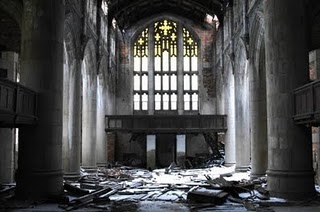
dying churchThere have been a number of articles and/or sermons, making their way across social media, exploring the “Dying Church.” Sojourners (sojo.net) has recently run a series called “Letters to a Dying Church.Mark Sandlin’s letter, in particular, articulates the decline of the influential church of the middle 20th Century that rested at the centre of western society. Mark describes a church that has moved into a fringe community that exists in the largely forgotten margins. The letter also articulates great hope in dying, and promise in God’s resurrecting work.

Meanwhile, while Sojourners was running their series, Nadia Bolz-Weber published a sermon entitled, “Stop Saying the Church is Dying.” Her sermon also articulates the distinction between the social-cultural church of influence, which is in decline, versus the church that proclaims the Gospel, administers the sacraments and declares forgiveness of sins. While her title provocatively suggests the opposite of the Sojourners series, the point is largely the same.

So, we all know that Christendom or imperial Christianity is losing ground and is, by all economic and social measures, dying. 

And we all know that the Church – that is primarily concerned with announcing the Gospel, providing the sacraments, providing the Body of Christ a time and place to gather and reconciling creation with creator – is alive and well.

But there is an aspect to all this dying talk that I find curious, if not troubling. It is hard to argue that the church isn’t dying or transforming from what it was a generation or two ago. However, I think there is a flaw in our diagnosis.

I think there is no small amount of hubris in the notion that the church is dying and we are killing it. Consider the weight of this claim. In nearly 2000 years, the church has survived barely getting off the ground for 400 years, it survived being imperialized, spreading across the known world, going to war, reformations, counter-reformations, splits, scientific revolutions, the discovery of new worlds, nationalism, revival, charismatic movements and global wars.

2361002313_58cdf68fffAnd while yes, the church is in decline by all social metrics and economic indicators like membership numbers, budgets and sociopolitical influence, do we really think that because current generations are more interested in iPhones, new age spirituality, worshipping God in sunsets and grocery shopping after kid’s soccer on Sunday mornings, that the church is going to die because of us.

Now let me be clear like Mark Sandlin and Nadia Bolz-Weber were clear, the Church, as the body of Christ, the spirit-led community tasked with proclaiming the gospel, administering the sacraments and declaring forgiveness of sins will continue to exist long after the structures of imperial Christianity are gone, long after the institution is gone.

But even that claim misses the point.

When I hear Christians talk about this institution-less, egalitarian, consensus church to come, I think we are dreaming. I think we have forgotten the realities of human communities. I think we have forgotten that almost immediately after the Ascension, Christian communities started setting up structures and systems to govern church life. And over time, these institutions have grown, changed, become flawed, reformed, and declined. But they are necessary.

Just like the rules of grammar that allow language to convey meaning, foster creativity and breed emotion, the structure, institution even, of the church allows the gospel to be preached, sacraments administered and forgiveness declared. More importantly, the free, open, consensus based community that many Christians hope for in the midst of decline is a church that will cease to exist faster than our current iteration. Without structures to carry on our practice, everything that we believe would be forgotten in a generation.

Even though the institution is guilty of oppression, violence, murder, war, discrimination and many other atrocities, the institution is also what carries the community through history. The institution bears the life of the community in a way that we time-bound humans cannot. The institution has preserved the good along side the perpetration of tremendous evil – a sinner/saint motif. All along the way, the institution has borne the witness of those who have gone before, whose words and music and art and actions are worth remembering beyond the lifespan of their originators. The institution is imbedded in our doctrine, theology and liturgy. The church is one, holy, catholic and apostolic, not because human beings have kept is so, but because in the traditions, structure and institution those four marks have somehow remained, by the guidance of the Holy Spirit. 

So what does this mean for our declining church? As much as many of us would like, we are not headed to a Christianity without buildings, budgets, and constitutions. We won’t get far without hierarchies, structures and systems. We will always need pastors, leaders and teachers. We even need, dare I say, bishops. Here is the thing, we can’t all preach and nor can we all listen. There will always be some doing one and some doing the other – that is structure.

So yeah, our current version of the institutional church will probably continue to decline, at least for a while. But church has never really successfully changed itself… rather the world has changed around it. In in 1950s, the church did nothing to create a society in desperate need of an institution to rely on, to find hope in, to experience reconciliation with. Decline has mostly happened to us as the Church today, and before we can adapt to that, our world will change again.

In fact, as economic inequality grows, as conflict looms in the Middle East and Eastern Europe, as the environment faces crisis, as nations and economies become increasingly globalized, I don’t think it will be long until people start looking for organized communities and institutional structures that proclaim the gospel, administer the sacraments, and declare the forgiveness of sins. Before we can do ourselves in, the world will need us again… in fact, the world needs us now. 

So, can we really kill the church?

We never had a chance.

The Featured Photo at the top of this post is the burned down St. Boniface Cathedral in Winnipeg - this is the new rebuilt one.
The Featured Photo at the top of this post is the burned down St. Boniface Cathedral in Winnipeg – this is the new rebuilt one.

So what do you think about all this dying talk? Is the church dying? Can we kill it? Share in the comments, on Facebook: The Millennial Pastor or on Twitter: @ParkerErik 

 

14 Things I Learned During 2 Days on a High Risk Labor and Delivery Unit

On May 1st, my wife, Courtenay, and I had our first child. We are overjoyed to have our son out in the world and in our arms. But it was quite the ordeal to get him here. For 9 months we did all the pregnancy planning. We filled our world with books, lists, websites, apps, maternity clothes (for my wife), baby stuff and plans for the labour and birth. We filled our hearts with hopes, dreams and fears for this child.

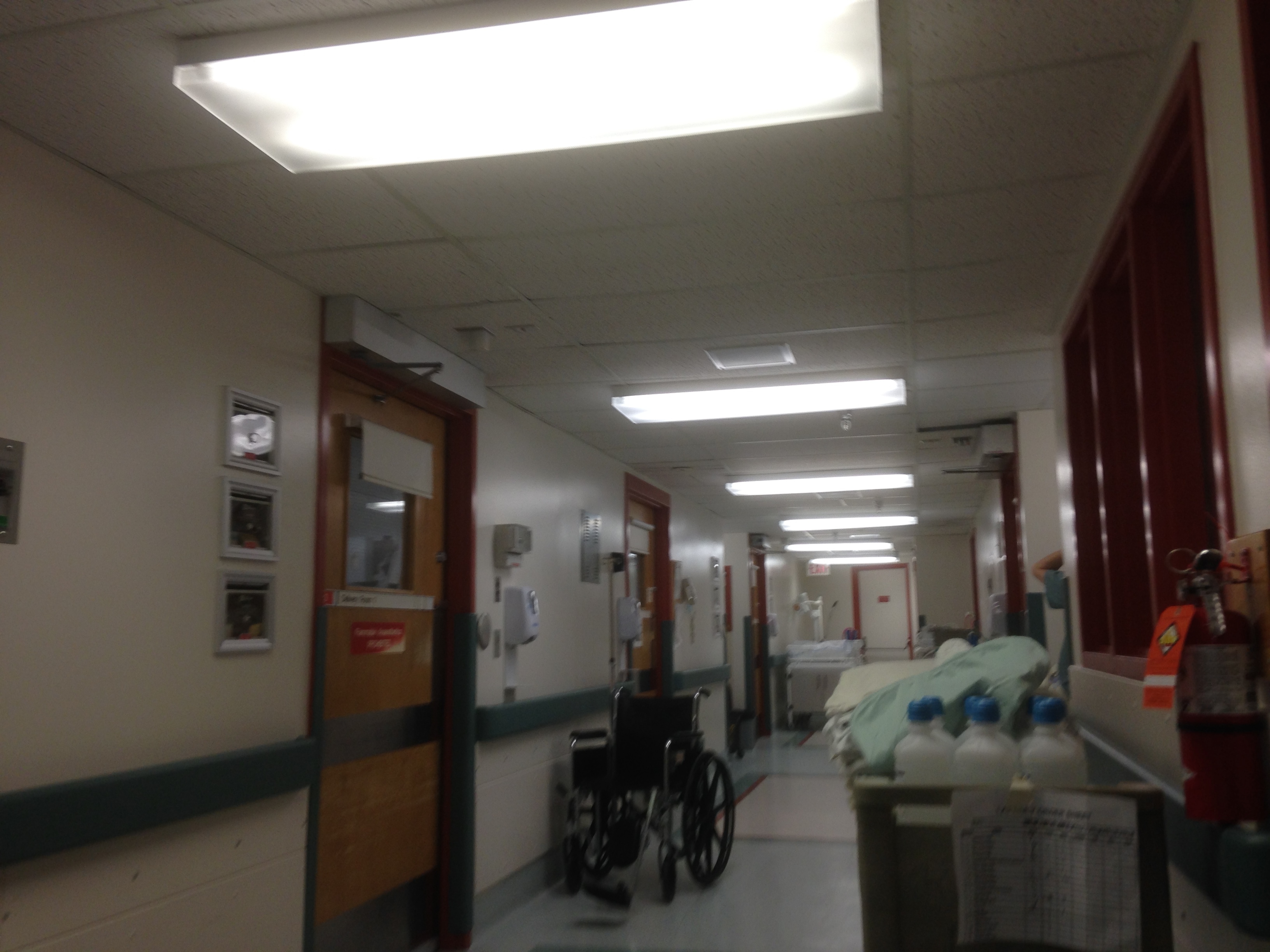
And then as the due date came and went, we were booked for a routine fetal assessment (extra involved ultrasound), and all of a sudden we found ourselves, with potential complications to an otherwise healthy pregnancy, being admitted to a High Risk Labour and Delivery unit – not where we planned on being for the birth.

IMG_0493Throughout the next 48 hours, neither of us slept for more than a couple hours and we endured a medically induced labour, all the way to the pushing stage, when my wife was told to stop pushing (and go back to the really painful part of labour) to help things progress. A few hours later we were faced with more waiting or a riskier than normal C-Section. Over the 48 hours, there were things about labour and delivery that I learned that no one teaches you in prenatal classes and that you cannot read about in a typical pregnancy book or website. They were the hardest 48 hours of my life. Here are some of the things I learned, from a husband’s perspective, about High Risk labour:

1. Things don’t go as planned.  When you are expecting a “normal” birth and show up for a routine ultra sound at a different hospital than your birth hospital and you hear the words: “We are keeping you here, looks like you’re going to have your baby today” – it is NOT COOL.

2. No seriously, when things don’t go as planned (and often they don’t) it sucks. Like the websites and books say, make your birth plan and imagine how you want birth to go when the day comes. And then be prepared to scrap it all, because when it doesn’t happen like you planned, you can be thrown for one of the biggest loops of your life.

3. No amount of preparation will give you a sense of being in control. You can throw out the lists, hospital bags, books, iPhone apps etc… You don’t actually need any of that stuff when doctors start talking about low amniotic fluids and uncertain kidney function. You can show up to have a baby with just your wallet, phone and your wife’s purse – and that is too much stuff.

4. The sounds of labour are… weird and frightening.  Women will generally sound like they are dying, shout profanity and cry out funny and ridiculous things in labour – and you can’t laugh. Well, not too loudly anyways.

5. Sometimes things don’t make sense. If the one questionable issue that landed you in the high risk unit turns out to be false you won’t get to leave. But the totally cool staff is going to come and hang out in your room as a place of refuge because you are friendly and chill. Especially, if your wife loves to chat them up and hear their life stories, even while she is in labour.

6. Singing happy birthday is not funny on a labour and delivery unit. You will think it is funny for about 2.7 seconds and then realize it isn’t. Not at all. Don’t sing it.

IMG_04927. Be prepared to do nothing. Most of labour and delivery can be doing nothing. You will just sit around, check heart beats, do more nothing, drink a glass of water, do nothing, take a walk, do nothing, sit around the hospital room looking at each other having exhausted 13 hours of conversation, then more nothing.

8. There are real life Dr. Houses (from the TV show House M.D.). There are doctors who will decide to admit you, decide your treatment, decide where you go and you will never see them, meet them or speak with them. I have been making hospital visits as a pastor for 6 years and I spent 3 months doing chaplaincy in a mental hospital – the fact that mystery, eye-in-the-sky doctors exist still shocked me.

9. Be funny. All the massaging, birth coaching, breathing stuff, being supportive is not as important as being funny. I don’t mean cracking jokes like an idiot. I mean being funny in ways that make everyone laugh especially the mom-to-be. Humour lightens the mood, keeps people relaxed and adds perspective. If you can keep the mom-to-be, other support people and hospital staff laughing, things will be so much better.

10. Labour does not look like the TV shows, websites, pre-natal class videos or grandmother stories of pre-1950 birth. Contractions can happen every five minutes like clockwork, of feel like general never ending menstrual cramps, or anything in between. Don’t expect anything, and you won’t be surprised.

11. You will not know when it is going to happen. Every time you feel like the baby about to come, it probably isn’t. Every time labour picks up a little steam, the baby is not about to come. The baby only arrives when the baby is good and ready.

12. Birth complications are terrifying and you will feel helpless. Doctors and nurses will be hesitant to give you definite answers. When hospital staff check vitals or labour progress and pause before speaking, the heavy weight of those silences will crush you. You will know that something isn’t right immediately and you will have no power to do anything about it.

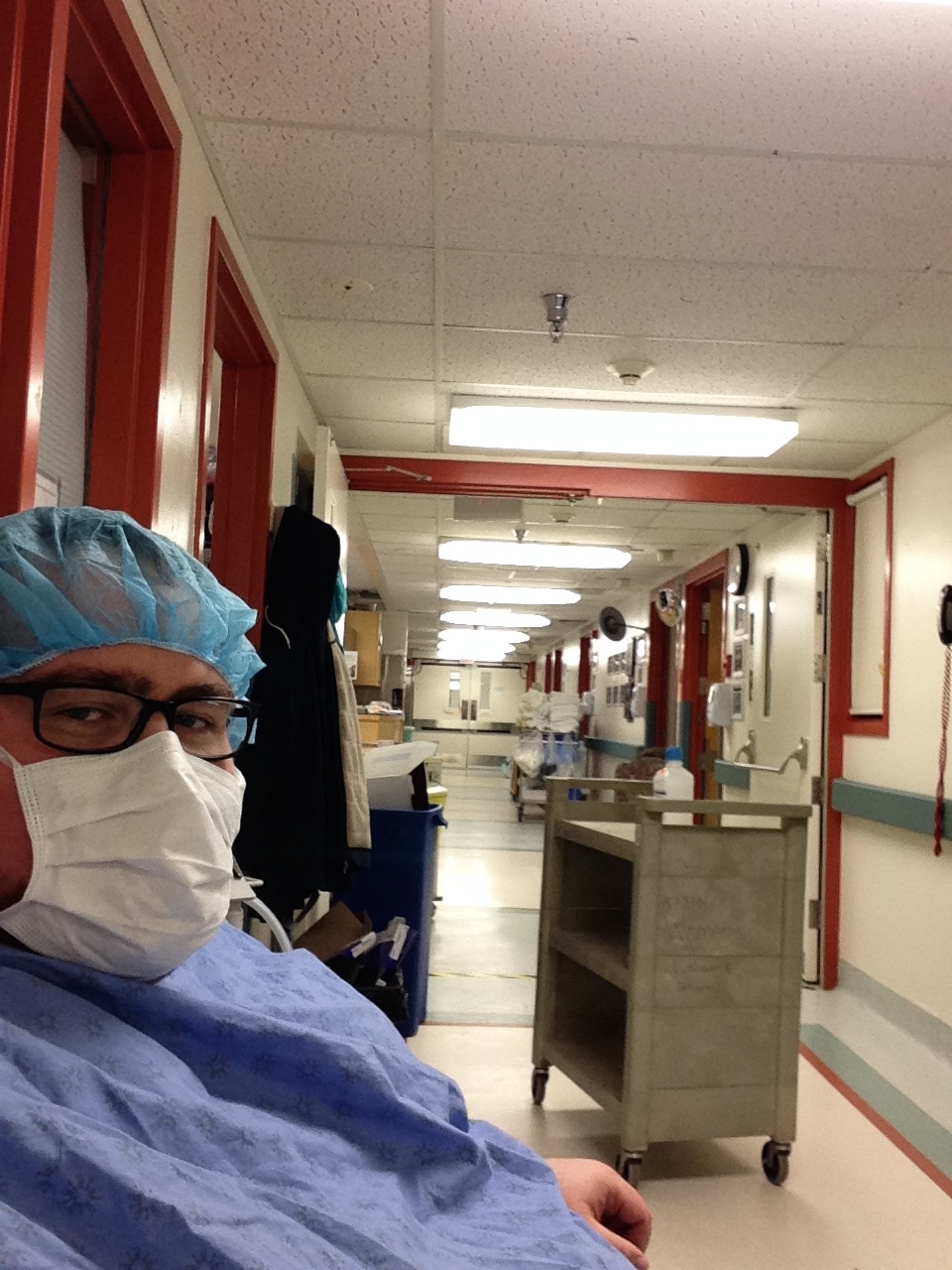
Erik waiting for the c-section to begin.

13. You will not know what worry is until your wife and unborn child are in danger. The fear of something happening to my wife and child were the scariest things I have ever encountered. Even after a few days of parenting now, I know that the extra caution you take while driving with a newborn on board, or the heart-skipping-a-beat moments when you sleepily almost lose your grip on a squirming baby are one thing. But knowing that if circumstances don’t change, as in some kind of extreme medical intervention i.e., C-Section, and the two most important people in your life are in grave danger, is entirely another level of worry.

14. You will never be as grateful for a baby’s crying than at birth. Standing behind the OR screen, with your wife, waiting for the doctors to pull that baby out is an indescribable moment. You only get to be there once, and you only get to feel that feeling with those three people once. Once is enough to last a lifetime.


For Courtenay and I, it had been 48 hours of waiting and labour before we finally got to meet our baby. Forty-eight of the most difficult, tiring, hard hours of our entire lives. But a healthy recovering wife and a healthy and beautiful baby boy was worth every moment of fear, concern, worry, sleeplessness. To see my amazing wife through the whole ordeal only makes me love her all that much more. And today, I look at the little miracle baby that finally emerged from the chaos and I cannot help but feel like Mufasa from the Lion King.

cub-cute-lion-lion-king-mufasa-simba-Favim.com-91525


Have your own hospital birth wisdom? Share in the comments, or on Facebook: The Millennial Pastor or on Twitter: @ParkerErik


For Unto Us a Child is Born… No Seriously, We Had a Baby. 

Many of you, family, friends, colleagues, parishioners, blog readers know that Courtenay and I were expecting our first child on April 22nd.  And many of you know that the due date came and went.

Well, on Tuesday, April 29th, Courtenay and I went for a routine fetal assessment. She was a week over due, and we were going to talk about induction with our Doctor.

However, the ultra sound revealed that the there was not much amniotic fluid around the baby, which could be a problem if it is not due to broken or ruptured waters. And if the water was broken, that meant it was time for a baby to be born.

So we were admitted to a hospital that was not the one we planned to birth at, and we didn’t have any of the things, like baby bag and hospital bag full of stuff that we planned to bring to the hospital for labour and delivery.

So despite our unpreparedness and surprise at being told the baby was going to be born soon,  Tuesday at 1:30pm we were beginning the long process to induction. Wednesday morning, Courtenay began feeling contractions and by 4:30pm the rest of her waters had broken.

Throughout the evening, Courtenay laboured like a professional. The nurses and doctors were so impressed, they continually thought she had an epidural because she was managing her pain so well. Around midnight (36 hours after we had come to hospital), Courtenay was told to push. Our nurse and doctor said she was an amazing pusher.

However, after an hour and twenty minutes of pushing, the baby just wasn’t co-operating. The baby just wasn’t in a good position to leave mom’s womb. All along the way, the baby showed perfect signs of health, according to the staff. This  was a pretty normal, non-invasive labour for a High Risk unit up until this point.

Erik waiting for the c-section to begin.

So after the pushing, the doctors wanted to let Courtenay and baby take a break to see if things could get into a better position for birth. But by 5:30AM, things were not progressing.

The doctor offered to let us wait to see if things changed, but recommended a Cesarian Section.

By 6:10AM Surgery had begun.

And at 6:17AM, on May 1st, 2014 our baby boy was born.

Oscar Kenneth David Reedman Parker

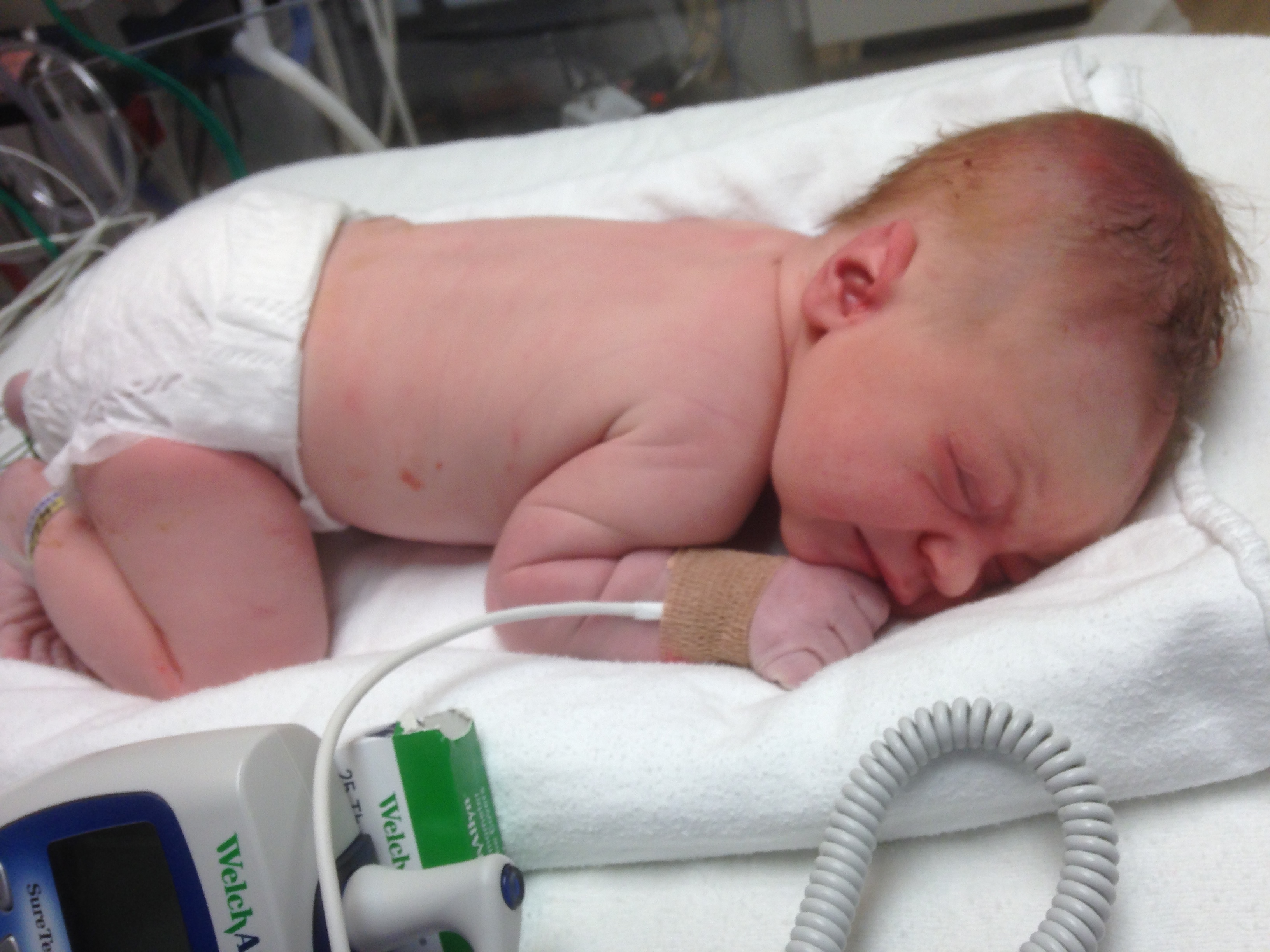
Oscar being assessed.

8 pounds 9 ounces. 22 inches long. Huge flipper feet like his dad, and strawberry blonde hair like his maternal grandfather.

He is a beautiful baby.

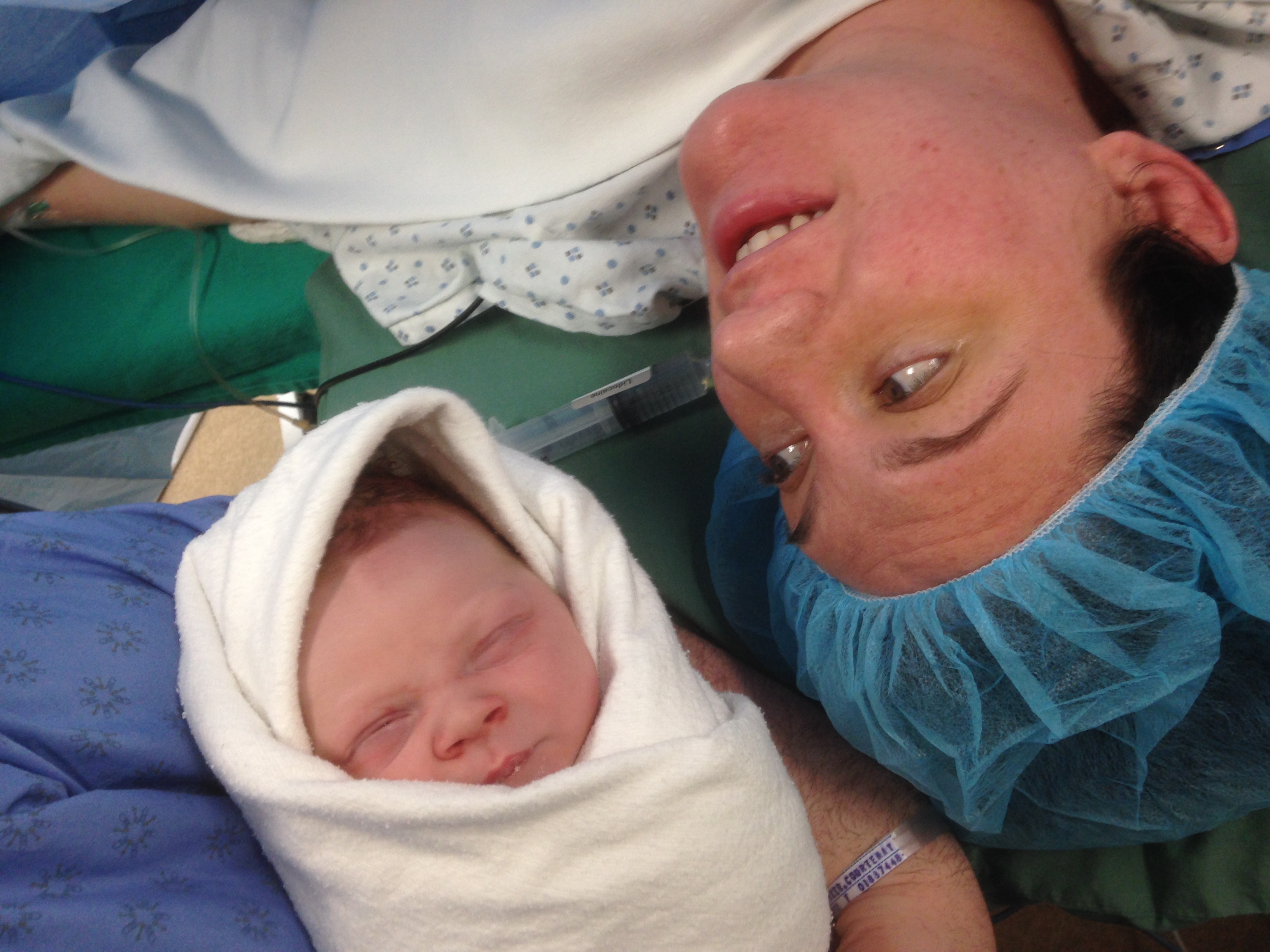
Courtenay meet Oscar for the first time.
Courtenay meets Oscar for the first time.


Although it was not the birthing experience we had hoped for, it was the result we wanted –  a healthy mom and healthy baby.

Erik gest to hold Oscar first.


To all our family, friends, parishioners, colleagues, and blog readers, we are excited to share this news. We know many of you hoped to  receive updates and news along the way, especially these past few days around the birth. It was a busy time for us and concrete hospital walls don’t make for good cell phone reception. In addition, there were stretches where Courtenay and I didn’t feel like we were in the loop either. Never the less, the pregnancy, labour and delivery are complete, and now we are looking forward to getting to know Oscar. There will be more here about our experience and the baby, so stay tuned for more. But for now, one more photo – with eyes open.

Our baby boy, Oscar!


Want to offer congrats, share in the comments, on Facebook or on Twitter: Erik= @ParkerErik and Courtenay = @ReedmanParker


Guest Post for April Fiet – My Fears, Dreams and Faith for an Easter Baby

april-fiet-sbBack in February, Rev. April Fiet wrote a great guest post – In Defense of Men in Ministry – here on the blog. I was honoured to have her write here. She is the first blogger that I have connected with over social media to the point that I would call her a friend!

I am honoured she asked me to write for her over at “At the Table with April Fiet.”

Click this link here >My Fears, Dreams and Faith for an Easter Baby

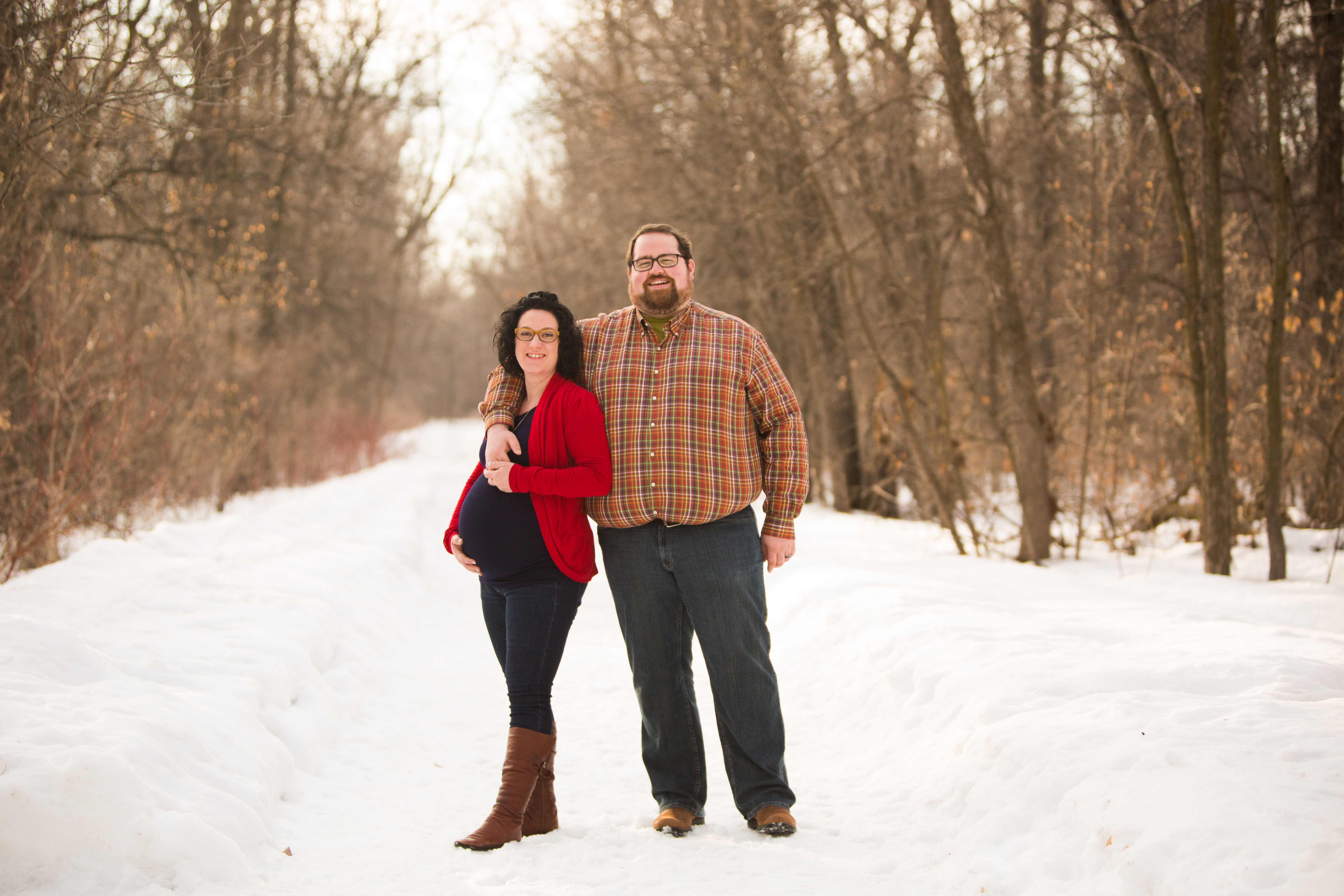
26MaternityFinal

As some of you know, Courtenay and I are expecting our first child. Well, the due date was yesterday and we are still waiting. But as we wait, I have been thinking in new ways about how this child-on-the-way will change our world. I was delighted to share about my hopes, dreams, fears and faith over at April’s blog.

So go read my post there, and then click around on her blog. She has some excellent stuff, like “RIP Women in Ministry” or “At least I’m Better Than You.

You can also find April on Facebook at April Fiet or on Twitter: @aprilfiet

As well, if you want to follow Courtenay, you can find her at @ReedmanParker on Twitter. 

And as usual, you can share here in the comments, find me on Facebook at The Millennial Pastor and on Twitter: @ParkerErik

Today, God is dead.

We have made it to the cross.
We began our journey on Ash Wednesday.
We have descended into the valley of Lent.
And now we are at the bottom.

We are at the foot of the cross.
High above us hangs the Messiah that we waiting and hoped for in Advent.
High above us is Jesus who called his followers from their fishing boats
and then healed the sick
and cast out demons
and taught in synagogues

High above us hangs the Christ who rode into Jerusalem a King
and the crowds shouted Hosanna, they shouted save now.
and the Christ ate with his disciples and gave them new bread and new wine.

High above us hangs the God nailed to a cross
by the same crowds who called him King,
by the best political and religious authorities of the day
by those whose power was most threatened by a God who had come close.

High above us hangs the symbol of our greatest power.

We have put God to death.

God_is_DeadToday, God is dead.

We have made it to the bottom of the valley of the shadow of death

And along the way we heard the shouts of Hosanna and crucify him come from our lips.
And along the way we felt the what it was like to hold the hammers and the nails in our hands.
And along we way we knew that the only way we could try to be God, to be our own little gods would be to use our most god like power.

Death.

God came to us.
God showed us his face.
God healed our infirmities.
God reconciled our shame
God called us out of our brokenness
God forgave of us our sin.

And all we could do was respond with death.

God_Is_Dead_by_deviantkupoGod is dead.

And creation killed God.
And humanity killed God.
And we killed God.

We are at the foot of the cross.
High above us hangs the greatest symbol of our power.
A dead God.

And little do we know.

God has come to show us, to heal us, to reconcile us, to call us, to forgive us.
God has come to receive our judgement and to take our death.

As the Messiah hangs, as the Christ hangs, as Jesus hangs, as God hangs, God is gathering us all beneath the cross.

Beneath death.

Beneath not just God’s death, but all death.
Humanity’s death
Creation’s death
All of our death.
Because death is our power.

But God has an even greater power.
God is gathering us at the foot of the cross. To show us greater power.
God is going to turn all of our death into something different.
Into something new.

God is dead.
And yet God is not ended.
And yet God is not over.
And yet God is not finished.

God is transforming death.
God is transforming us.
God is transforming everything.

cross-silhouette1God is not ended, death is ended.

God is not over. Death is over.
God is not finished. Death is finished.

We have made it to the cross.
We have come to the bottom of the valley, to the shadow of death
To the shadow of the cross.

And it is the here.

God is making all things new.
God is making us new.
God is making death into life.

High above us hangs Jesus the Messiah, Jesus the Christ, Jesus God in flesh.
Jesus who is putting death to death.
Jesus who is God’s great power.
Jesus who is life.