Only half way getting it with Jesus – Pastor Thouhts for Lent

Our Lenten journey has taken us from the wilderness where God waited for God’s people for 40 days. And when we didn’t go out, God came to find us. 

The next stop of Lent is the hustle and bustle of Greek Caesarea Philippi. A busy tourist stop where Jesus gathers his disciples to teach about what the Messiah must endure. Just before Jesus has asked them who people say that he is and who they say he is. Peter declared that Jesus was the Messiah. 

Then moments later Peter seems to forget and scold Jesus for talking about the Messiah dying. 

It seems that Peter only kind of got it, he only halfway saw just who Jesus was. 

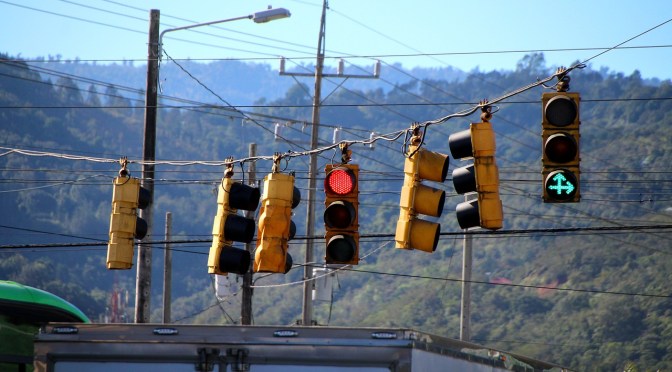
Only kind of seeing or only halfway understanding feels normal these days. All the chaos surrounding us feels like struggle and hardship swirling around. We try to make sense of our world, of the division, conflict and struggle that permeates our lives. Picking Jesus out of the storm can feel like a futile endeavour. 

Living our faith can seem like a mystery that we just don’t have the time to unpack or another burden added to our ever-growing list of burdens. How are we supposed to take up our crosses and follow Jesus if, like Peter, we only halfway understand who Jesus is and what Jesus is doing?

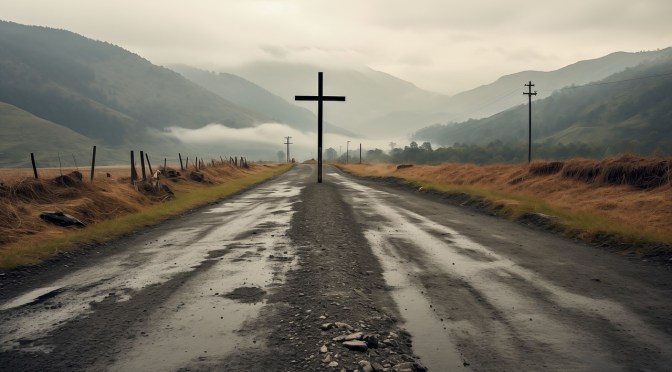
I think that is kind of the point. Jesus’ invitation to take up the cross is about accepting that the burdens and struggles are part of walking the path of faithfulness. But also a reminder that in the end, Jesus is the one who carries and then climbs up on the cross. 

Living a life of faith isn’t necessarily about perfectly understanding what God is up to in the world or what God is calling us to. But taking up the cross is practicing faithfulness amid the storms and chaos, understanding that hardship and struggle are part of the journey. 

And that ultimately, Jesus is going to be the one doing the Messiah’s work – the work of faith. We are the ones being worked on. 
Filling in Mark’s wilderness gaps – Pastor Thoughts for Lent

Each Lenten season takes its own shape and form, at least in my experience. Whether it is things going on in the world, things happening locally in the congregation, things happening in our personal lives or simply the fact of getting older, each year Lent has a different slant to it. Who can forget the Lenten season of 2020, during which we learned just how quickly the world and the church can adapt to change?

In addition to things happening in the real world, the variety of Lenten stories we hear in the yearly lectionary cycle also adds character to the season. 

Lent always begins with the story of Jesus facing temptation in the wilderness.  This year, in the year of Mark, we hear the shortest version of Jesus’ temptation. So short in fact, that the baptism story is tacked on before, just to give the text some length. Matthew and Luke provide extended narratives between Jesus and Satan or the Devil, describing three different temptations faced by Jesus. 

But Mark simply tells us that Jesus went into the wilderness for 40 days, to be tempted by Satan, with the wild beasts and waited on by angels. 

Mark’s version of the story is brief and to the point… at least on first reading. But when you slow down to hear and consider the picture that Mark paints with an economy of words, our imaginations are left to fill in the vast empty spaces. How did Satan tempt Jesus? Who or what are the wild beasts? What was Jesus doing for 40 days? What does it mean to be waited on by angels?

As we come back to the journey of Lent year after year and take the time to reflect on our own journeys—as a society, as a church community, as families and as individuals—the differences can be striking. Some years we get the struggle described in vivid narrative, as Matthew and Luke tell it. But other years we get Mark—a few details that evoke a lot of questions. 

This year may very well be a year for a Markan Lent. We know that we are in the wilderness and we know that the journey ahead is long. But it is hard to identify who or what the wild beasts are. We don’t know what the tempter is up to. The wilderness is hazy and unclear. We are left to fill in the gaps with our imaginations. 

And somewhere in all of that, God has sent angels to wait on us. We cannot always perceive them, but we know that somehow the mercy and grace of God come to us just the same. 

“Dad, you talk about depressing stuff a lot in your sermons” – Pastor Thoughts

Sometimes being a pastor and being a dad can intersect in interesting ways. Recently, my son was commenting on my sermons. Surprisingly, he seems to mostly appreciate my preaching, but in our most recent conversation he remarked, “Dad, you talk about depressing stuff a lot in your sermons.”

What followed was a good conversation about what kinds of things are important in sermons, and more generally the ways and places that God meets us and gets involved in our lives.

Over the past few weeks, we have heard stories about Jesus meeting people in a variety of places. Jesus was walking along the seashore and calling fishermen to be his disciples. Jesus met them where they were working. Jesus went preaching in the Synagogue in Capernaum. Jesus met folks where they worshipped and gathered as a community. This week Jesus goes to the home of Simon Peter’s mother-in-law and heals her there. Jesus meets people in their homes.

There has been a habit among Christians over recent decades to draw distinct boundaries between the places and times where we talk about God and where we don’t. Hence the idiom, “We don’t talk about religion and politics in polite company.” Religion, God and faith have been portrayed as private matters; churches are often seen as exclusive clubs where only members are privy to the content and conversations.

Yet, as we can see from the biblical witness, Jesus didn’t seem particularly limited about where he went and talked about God.

When we limit the places where we are willing to invite our faith into the conversation, it means that many people might never hear about God unless they enter into the right places at the right times. Similarly, because we are neither practicing nor in the habit of talking about God, it can quickly get uncomfortable when it is time for God to be the conversation topic.

But perhaps most importantly, when we limit the places where faith can be part of conversation and lives, we quickly forget that God has something to do with all of life – the places we work, the places we gather, the places we worship and in our homes. 

And in those places, there has been a lot of struggle lately. Struggle globally, locally, and individually. My response to Oscar’s comment was that my sermons have a lot of depressing things in them because the world has a lot of depressing things going on. But just naming the depressing things isn’t the point. Rather, naming them reminds us of the hope found in God’s love, mercy and grace, opening up a way to meet us in all areas of our lives. Wherever we struggle and suffer, God comes to meet us, bringing the promise of new life. 

Finding hope to hold on to – Pastor Thoughts

Mark is my favourite Gospel. This year we are in the Lectionary year of Mark.

As we begin hearing the stories of Jesus’s teaching and ministry, particularly stories around Jesus calling his first disciples and Jesus beginning to minister in the region of Galilee, I cannot help but think about how our world has rapidly become similar to that of the folks of the first century. 

Around the lifetime of Jesus, the Roman Empire had crept up around Israel, eventually occupying and conquering several areas including Jerusalem. King Herod and the Great and his sons – the Herodian Dynasty – were puppet rulers of the area kowtowing to Rome, exploiting the people and abusing their power. The Sanhedrin, the religious authorities were often more concerned with maintaining their power than fulfilling their duty of assuring that the people had access to God and God’s righteousness. (Oh, we will get deep in these weeds this year!)

All the authorities, systems of power and institutions of Jesus’ day were failing and corrupt, unable to offer much help or protection to people living in Judea and Galilee as they were supposed to. The powers of the day seemed incapable of dealing with the problems that their world was facing.

I think back in our own history to around the time of the election of Barack Obama in 2008. Even with a global financial crisis to deal with, we seemed on track to deal with most of the issues we were facing. Maybe racism would end with a black US president? Climate change didn’t seem that serious. 9/11 was solidly in the rearview mirror, politics didn’t feel that divisive and there were these new things called ‘iPhones’ taking the world by storm.

Fast forward to 2016 and the election of another US president. Then to 2020 and the outbreak of a certain virus. And there have been protests and convoys, inflation and shipping backlogs, and more economic troubles. War in Ukraine, war in Israel and Gaza. And that same guy from 2016 is back again. 

Similarly, the powers, authorities and institutions of our day don’t feel up to the task of dealing with the problems that felt manageable 15 years ago.

In and through all the turmoil, Mark found something to hold on to. The first followers of Jesus found something to keep them going forward. Our forebearers in faith were able to run the race and fight the fight despite everything seeming hopeless.

If there was ever a message that speaks to us today, it is the hope that Mark found in the life and story of Jesus. Even as the troubles of the world seem to overwhelm us, there is something to hold on to, someone who comes and holds on to us.

I am looking forward to hearing that story again and anew with you this year.

Pastor Erik+