Tag Archives: ministry

So… what really does make for good worship? It is not what you think.

allsaintsorthodoxchurch3Christian worship can be a vague and nebulous experience. Worship planners and leaders undertake the Herculean task of facilitating worship that works for people who need concrete experience to be engaged, people who need mystery to feel connected, people who need emotion to feel included, people who need things to make sense and words to be carefully chosen to participate.

Worship wars over style, content, music, leadership erupt all over the place. If you spend any amount of time close to the worship planning systems of a congregation, you will know that it is one of the most volatile, sensitive, political, emotional parts of being a church. Everyone has a opinion and preference when it comes to worship. Christians fight over music, style, liturgy, non-liturgy, sacraments, preaching, musicians, leadership, prayers, planning or anything else imaginable when it comes to worship.

And in my experience most people making their way to church on Sunday mornings, and especially those involved in planning and leading, miss the point of what makes good worship. We get so taken up by personal preference and opinion that we forget why we are worshipping in the first place.

And if anyone says, “Worship is to glorify God” that is code language for “My preferences and opinions are next to divine”. God is not so narcissistic that our worship needs to be constant praise and adoration of the divine. Worship is so much deeper than that. Worship is a much more tangled mess of interaction between human beings and God. 

So what makes for good worship?

Indulge me for a moment:

Imagine yourself caught up in a big crowd, jostling, movie along, being pulled to an unknown and unseen destitution. It is a hot summer day, yet people are relaxed and easy going. Simmering underneath is a sense of excitement among this big, big crowd. Finally, you stop moving and there are people as far as you can see in all directions.

The event you have been waiting for all afternoon finally begins. And you hear a voice projected over loud-speakers across the wide-open outdoor space. And unexpectedly the voice is not really that exciting to listen to “I am happy to join with you today…”. The voice continues, but all you can feel is the glare of the sun, bodies breathing, sweating, moving, twitching, coughing all around you. It is hot and bright and uncomfortable. You are not engaged with what you have come to be engaged with.

And then you hear this, “I have a dream that one day on the red hills of Georgia…” and suddenly you no longer standing in the hot, sweaty crowd a the Lincoln Memorial, but you are on the red hills of Georgia. And then you are in the sweltering humid heat of Mississippi. And then you are in Alabama, surrounded by little children, of all skin tones and races, playing together.

Most people don’t know this, but the first 3 and half pages of the I have a Dream speech were… well… not as memorable as the last 2 pages. It wasn’t until Martin Luther King Jr. left his script and preached a sermon he knew well that the crowd actually was taken up by his words.

The speech was a defining moment for the civil rights movement. But the transition in the speech from delivering an address to preaching a sermon is an example of two aspects of Christian worship.

Two sides of the same coin that pastors, worship planners and leaders struggle to achieve, and find hard to grasp. The first part of the speech shows worship just “not really working” and the second part is worship at its best.

Think back to my description of the ‘I have a dream’ speech. Or imagine reading your favourite book, or seeing a great movie, or going for a great run/walk, or listening to fantastic music. All of these things make you forget you are doing them, while are you doing them. You get lost in the content, lost in the world that they create. You forget you are watching actors on a screen, forget you are reading an author’s words on a page, forget you are out putting one foot in front of the other for exercise, forget that musicians are making sounds with instruments. You start watching stories and characters and worlds come to life, sound and movement transport you to a place different than the one you are in.

Worship at its best makes us forget we are watching a pastor leading liturgy, or hearing an organist hits keys on an organ, or hear a member read words from a book. We are transported into the ever flowing worship of the saints. We are taken into the story of God’s people and we become characters who have a role, not audiences watching actors.

And how do you know you are there? Only when you are rudely jolted back to reality. It is that loud cougher that reminds you that you are in the theatre. It is eye strain that reminds you that you are reading a book. It is fatigue that reminds you that you are out for exercise. It is a wrong note or cramped leg that reminds you that you are watching an orchestra in a concert hall.

It is so hard to know what about worship will pull us out of our grounded self awareness and into that new world. But it is easy to identify the things that pull us back to reality. The running commentary by the pastor between prayers and hymns. Interrupted flow by the worship leader getting lost. The organist missing a cue or starting some liturgical music part way through a prayer. The band leader deciding to give a short mini-sermon after the sermon to fix what the pastor said. A children’s message gone horribly wrong. A reader who misreads ‘sexual immorality’ for ‘sexual immortality’.

Now this is the part where I tell you that I don’t have any answers. I don’t know how to plan or lead worship that will feel like we are all watching our favourite movie for the first time, or like we are getting lost in a great book, or like we are going for that run where our body just moves effortlessly.

I have some suspicions of how to get there. It means getting out of the way as planners and leaders. It means dropping the commentary about worship while you are in worship. It means being deeply concerned with and aware of movement and flow, and knowing that worship is not a to do list, but a story that has a beginning, middle, climax and end. It is knowing that ‘Worship is to glorify God’ in the sense that when the Body of Christ gathers, we are taken into the story of God and God’s people, and the biblical narrative shapes us and becomes our story. It means being relaxed about the music styles that we use, being okay with many people participating even if they aren’t perfect, being joyful that the Body of Christ has another chance to gather this week and getting it right means simply being together.

All I can say is, enjoy the moments when you are lost in the worship of the saints, and pay attention to what jolts you away and snaps you back to that almost crushing awareness of yourself and the world immediately around you. And remember the best movies, best books, best music, best art are the best not because they are a certain style or only 60 minutes long. Nor the best because of who created it or because of the instruments that were used. They are the best because they draw us into their new worlds, even if for a moment. Just as God draws us into God’s world each week when we gather for worship.

So… what really does make for good worship? Share your thoughts in the comments below.

Christian Self-Sacrifice: Your Pastor is doing it wrong.

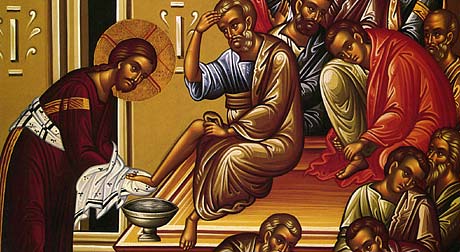
washing_feet_01Christians are called to self sacrifice and to give of themselves, their time, talents, energy, finances, commitment and heart to churches and other ministries.

As Pastors, we are called upon to be the ones who lead the way, who exhort our people to give and to model a self-giving, self-sacrificing lifestyle. What this ends up looking is like is pastors working 60-70 hours a week, trying to get to every meeting, trying to make every visit, preach the perfect sermon, lead the best bible studies and have office hours for drop in visits… not to mention counselling appointments, sweeping up the kitchen after youth and taking that extra half hour to deal with parking lot concern in the “meeting after the meeting”.

And I regularly hear the statement, “How can I ask my people to give if I am not leading the way”.

This style of ministry is very well intentioned. But it is utterly wrong headed and counter productive. Yes… I know that my colleagues and friends might disagree.

So let me start by making a confession:

I can count on one hand the number of weeks I have worked more than 40 hours in nearly 5 years in the parish.

I have lost count of the number of 35 hour weeks I have worked in the same period.

And guess what, not a single parishioner has ever asked about my hours. In fact most assume I am very busy (which I never say that I am), and most are very surprised when I can make time for them.

A part of this is that I am a fast writer. I can write sermons, reports, newsletter articles, blog posts in just a few minutes or short hours. I also very rarely have writers block. Now I know this might give me a good 5-15 hour a week head start on many of my colleagues. But now that I am done humble bragging, I think there is a much more important issue in regards to those other 20 hours that so many pastors are working over 40. And that issue is feelings.

Yup, feelings.

As pastors we encourage our members to give of themselves for many reasons. Because the hungry need to be fed, committees need members, Sunday school students need teachers, choirs need singers, sick and lonely people need visits, buildings need maintenance, etc…

But we also know that giving of ourselves is a very important part of our relationship with God and with our community. It feels good. And not in the self satisfying way, but in the soul- transforming-I-genuinely-know-the-other-and-God kind of way. So we encourage our people to give of themselves because we know that self-sacrifice is part of that soul changing work. 0511-1009-1319-0462_Black_and_White_Cartoon_of_a_Stressed_Out_Guy_with_the_Word_Overload_clipart_image

And because we know this as pastors, we often get ourselves into way too much of it and suddenly we are working 70 hours a week in a not so soul transforming way. I think there a few reasons for this:

  1. Pastors have hard time defining what our work is.
  2. It is an easy way to feel good when you are constantly on the front line of ministry.
  3. It feels really good to feel needed, and it is an easy way to be appreciated when we are praised for our busy-ness.
  4. Being busy is measure of value, specifically justification for our salaries.
  5. Many pastors lack the confidence to believe that our training gives us skills and knowledge that our people need. It just isn’t as evident to us as it is to doctors or lawyers or teachers who know very well that the people they work with need their expertise.

So here is the thing. We know that self-sacrifice and giving of ourselves feels good, and it is an easy way to justify our jobs.

But that stuff is in fact what we have been called out of and set apart from as those who fill the “office” of ministry in our congregations.

I went to a retirement party for a much beloved pastor. There were hundreds of people there, people from across the country. There were skits, songs, speeches, videos and many, many tears. And all night long there was this awkwardness because it was clear this pastor had sacrificed his family life… even brought home work for his family to do… The pastor’s family even gave speeches themselves saying their husband and father was never home and always working… but it was for Jesus.

I have heard colleagues tell me that their spouses won’t commit them to anything, or even tell them about kid’s concerts, sporting events or family functions because they know their pastor spouse will be absent.

This is more the sad norm than the exception.

Being a pastor changes the way we get to do that soul-changing work. We are set-apart from the normal stuff that everyone else gets to do and it is really hard, especially when you consider that most pastors were sent to seminary because they love and were good at that the stuff we call and exhort our parishioners to do. It is hard because the self-giving stuff that we encourage our people to do is above and beyond the 40+ hours they spend at their work, and we should be there too. It is hard because it is a powerful example to be leading the way in self-giving and sacrifice.

However, it always ends up messy. It is so easy for congregations to begin expecting 70 hour weeks, rather than seeing that those 30 hours as “extra”. Thom Rainer conducted an experiment to see what his council of deacons (or church council) expected him to be doing and how many hours a week he should spend doing it. The result, a 114 hour work week. And this was what the informed leadership expected of the pastor.

What begins as well intentioned modelling of self-sacrifice, morphs into congregations paying the pastor (and staff) to do most of the ministry of the laity or congregation. And a lot of my colleagues express this frustration, but don’t know any other way of doing things.

The answer is simple. The execution is hard. Stop giving 30+ hours of extra, dare I even say, “lay ministry” to your church.

This is extra hard for most pastors because leading the way in giving time and energy to the church is where that calling to ministry first grew.

This is what I know: My most important jobs are first and foremost Preaching the gospel and Presiding at worship. Doing those things with integrity takes 40% to 50% of my time. The rest is devoted to teaching, visiting the sick and dying, preparing people for baptism, marriage and funerals for another 20% to 30% and the last 20-30% is devoted to visioning, planing, getting everyone on the same page of mission and purpose.

What does that last piece look like? It is helping people to understand that the highest value and goal of being a church is to be a good worshipping community. A community that loves, respects and cares for each other, and a community that gathers and is formed first and foremost in worship.   When a congregation’s purpose is to be a good community formed in worship, the responsibility of the leaders becomes to name the destination and point the way. And it stops being getting all the jobs done… which is the goal of a church that is paying it’s pastor for 70 hours a week of ministry.

The first time I realized I was a Millennial.

I am a Millennial.

But I didn’t always know this.

I remember learning about Baby Boomers and Generation X in social studies, even as long ago as junior high. I also remember wondering where I fit in with these generations. My parents were boomers, I could do the math knowing they were born in the late 40’s. But the Millennials didn’t have their name yet. Was I Gen X? I had heard of Kurt Cobain but he died when I was in fifth grade. I was still in high school when the Dot Com bubble burst, not a new computer science grad out of work. I was barely in grade school when the Gulf war started, not of enlisting age. So of my friends have divorced parents, but we were not latch key kids, we were the beginning of everyone gets a trophy sports. Being a member of Generation X sounded cool… but I never quite fit in.

The first time I really realized that people born at different times have different experiences happened when I was 20. I was working at a bible camp. My best friend/camp director, and I had been away at a church youth event over the weekend. We came back to camp after a storm had knocked down trees. One large birch tree had fallen onto some live power lines running between buildings. We immediately began thinking of the people we needed to call: the county power company, an arborist, an electrician…and we went to get the phone book. On the way we met a volunteer. A man in his 70s who had been a life long farmer… probably a member of the GI generation or Silent generation. He scoffed at our idea to phone the experts. He set out solve the problem himself!

The next thing we knew he had the camp tractor, a small open cab John Deere, and a chainsaw. He drove the tractor right up to the tree, which was precariously leaning on a thin power line. He lifted the bucket so that it propped up the tree. We had no idea where this was going, but we knew it wasn’t going to be good. Then this old farmer started the chainsaw and started climbing up the tractor, up onto the engine, up the arms of the bucket and then stood in the bucket. Chainsaw running. No one else to run the tractor.

Having used the tractor myself several times, for more mundane things like mowing the lawn, pulling trailers and moving picnic tables, I knew that the bucket had several clear warning labels on it. One in particular had a stickman standing in the bucket with a big red circle with line through it stamped on the picture.

So 100 yards away my friend and I stood, covering our eyes as this old farmer leaned out of the bucket and had a leg dangling in the air 20 feet off the ground. Then he began to cut the tree, and off came the top, enough for him to use the tractor to guide the rest of the trunk down.

And the tree was off the power lines. The problem was solved. The old farmer was the hero of the day. And the whole time he acted like this was the most normal thing in world.

I looked over at my friend and said, “No wonder his generation got a lot more done than ours.”

With that statement I had articulated for the first time, how the experiences of different generations lead us to different ways of seeing and approaching the world.

Over the last few years, as the world has begun to get a clearer picture of “our” generation, I have gotten a clearer picture of myself. Like all millennials, I share an experience of the world different than the generations before me.

I wasn’t 18 until after Y2K, the worst (or best) thing that was going to happen to me on the millennium was that I might get to miss a few days of the 11th grade in the new year. I was in the second week of my first year of university when planes started crashing into buildings on 9/11. If I lived in the US, there might have been pressure on me to enlist for the 2nd Iraq war, a hot topic in my 20th century American History class. I took most of my class notes on a laptop, I could submit papers by email and professors were making websites with course material.

By the time I was finishing my MDiv in my mid-twenties, I had been on Facebook for years, I was building  world wide communities on online discussion forums, I was using a smartphone as my only phone line, and I had started and given up on several blogs.  My adult life has been defined by global terror crisis, global financial crisis, and the internet.

Mostly, the internet.

And in one important way my life has been defined by another characteristic – one that separates me from most of millennial peers. I have been a Lutheran Christian my whole life. I have been called to serve Jesus, to even be an authority within a religious institution. For most of my Boomer and older parishioners, the abnormality was being a non-believer. For most of my grade school friends, going to church was unusual thing to do.

This small distinction makes a world of difference. And in 4+ years of ordained ministry, this little fact has been changing everything. The grief that so many older church goers bear, wondering why society stopped sending people to church, is simply not an experience that I can share. I sometimes feel like I am at a funeral for a person I didn’t know. Everyone is mourning, but I can’t. Oh, I am also the pastor leading the funeral.

I suspect that it is going to be the reality of my vocation for a long time. Giving my people glimpses of this new world, being a glimpse in ways that I don’t know. I have been preaching, teaching, and talking about how the world is different than it was 50 years ago since I started ministry.

But that seems to be the life of a Millennial Pastor. For now.

What is a Millennial anyways? And why does the church want us?

IMG_1437So as not to be left out of the loads of internet conversation about this article written by American blogger, Rachel Held Evans, I figured I would throw in my two cents.

If you follow down into the comments section this follow up post to her first article, you can see that the blogosphere seems to be rather inspired by her thoughts. Her article reminded me of something I wrote just over 2 years ago for a local paper in Stony Plain, AB. 

First Published in the Stony Plain Reporter in May 2011                                                                                                  A Millennial’s Confession

I have two confessions to make. The first is to those who don’t regularly attend church or consider themselves religious: I am a Lutheran Pastor. The second is to those who are actively involved in churches as members and adherents: I am a Millennial. What is a Millennial you say? Well, we are a generation. We are the children of Baby Boomers, and we follow generation X and some call us generation Y. I was born in 1982, but those in my generation were born between the early 80s and early 2000s.

Many of us have a very different life experience than that our predecessors. Computers, the internet and cell phones have been around most of our lives. Our parents were not disciplinarians, but more like friends. We expect to work with others, and to be treated equally in the workplace and community, despite our perceived lack of experience. We see value in a variety of ideas and points of view. Many of us are passionate about the issues facing our world: the environment, poverty, education, politics. We also like things like social networking, video games, youtube, and bad reality TV. We grew up in a tolerant, multi-ethnic, multi-cultural, multi-faith world. Millennials are uncommitted to institutions, like the Church. We like options and having choice. Our parents, teachers, coaches, instructors, and community leaders have told us our whole lives that we can do anything and be anything. And we have been told that fixing the world’s problems will fall to us – we carry the burden of being hope for the world.

And for people of faith, we are the generation that is distinctly absent from most churches. In my denomination, I am the second youngest pastor serving in Canada. I am also the only 20 something that attends my congregation on regular basis (they do pay me to be there after all). A lot churches are wondering how to get us back, how to entice, attract and charm us into the Church. The rationale is that organ music, hymnbooks, pastors in white robes and old styles of worship are too boring for us (all of which our congregation uses in worship). But let me tell you this: rock bands, projection screens, video sermons and laser light shows won’t get us there either. If you catch us in a moment when we are not distracted by Facebook status updates or funny internet videos, we might tell you what we really want from Christians are honesty, integrity and meaning. We want to know that faith isn’t just a set of rules or ideas that we have to swallow whole. We want to know that faith isn’t easy but requires struggle. We want to know that being part of church isn’t just about dropping money in a plate, but about being welcomed, loved, forgiven and challenged by a community of faith.

And now some more thoughts on being a Millennial.

Being a millennial pastor, I often feel like I am living in this weird world where church members will ask me how to… well, get me back in church, or my generation. Yet rarely am I asked why I stayed, or how I was “retained”.  Many of my older colleagues, mostly Boomers, tell me and other young pastors that we are the hope of the church, usually with the weight of the church visibly sitting on their shoulders. Yet, we are rarely given the reigns to lead the church into future (although that is changing as my second call was to be the Senior Pastor of the biggest church in the synod I was serving).

And it feels even weirder to be intensely focused on as a group by church folks. Nearly 30% of people in Canada are boomers, making them the biggest age group alive. And I know scads of boomers have left the church too, yet how many of us are wondering where they went as much as where the Millennials went? I think the generational focus is bigger than the church, as we grow into adulthood as a generation, Millennials are changing and shaping the world we are encountering and it is making our Boomer parents uncomfortable.

Now, I am not sure that I, or we Millennials, have really got each other figured out. And only God knows what we would do at the helm of institutional church bodies. But as we constantly seem to wonder as Lutherans, as Mainline Protestants, as North American Christians “Where did the young people go?” Maybe one place to start answering the question is with the young people that are here. And the boomers don’t have to pass the buck to us quite yet (I think you could clean up the ecclesiastical and social messes you have made instead of leaving them to us), but you are more than welcome to include us Millennials in leading the church, heck society even, into the future.

Social Network Liturgy: Putting down the iPhone

I will be the first to admit it. I am addicted to my iPhone.

Most days I am much more willing to risk leaving my wallet or keys unprotected than my phone. I will leave my computer bag and my wallet  in the car in bad areas of town, but I won’t leave my phone on my desk in an empty church when I go to the water cooler in the adjacent room.

Electronic devices now dominate our time and attention. It is hard for many of us to be away from the constant stream of information. I am often glancing at facebook and Twitter, reading (writing) blogs, searching for something new to read, to learn, to laugh at, to be offended by, to think about, to distract.

This morning, in his opening essay, CBC Q’s Jian Ghomeshi talked about unplugging and being present. He gave two examples of experiences, a wedding and a concert, where attendees were asked to not use, and even surrender their devices, in order to be present and fully experience the event.

This is really hard to do.

This Easter I had the chance to simply sit in the pew because I was in between calls. During the sermon, the teenager in front of me was playing games on his iPod Touch. And his dad was watching over his shoulder, and his grandma was annoyed.

I think our default reaction is to be angry at a situation like this, to feel disrespected as pastors or long time church members. But here is the thing… I don’t think that teen had a choice. I don’t think his brain and body would have let him just sit and listen. He would have probably started “iWithdrawal” 30 seconds into the sermon.

This is sad.

A few posts back I wrote about Old and New Thinking, saying that the church really doesn’t know why people have drifted away. I also said that people might start drifting back, and we won’t know why either. But I think, without really doing it on purpose, the church has become a place to unplug, to fully experience the here and now. A rarity in our world these days.

Jian Ghomeshi mentioned a wedding and concert, occasional events that most of us might experience a handful of times a year. Yet, each week as I write my sermon, study scripture, prepare worship I have to slow down and be present. Each Sunday, as our congregation gathers, I get to put down the phone entirely. I get to fully engage and be present, to experience the here and now. The church, without being any different than it is now, provides a space to do that, week after week.

Liturgical worship is at one time a fully engaged experience of the present, and at the same time, the first and oldest form of social media. As I have heard it said, liturgy is like the stream of the faithful, of ritual and tradition, of history and community, of interconnectedness with people of all times and places. We get to wade, splash and swim in it, but the stream has been here long before us and will remain long after us. In liturgy we are bound together more powerfully than Facebook or Twitter, we see more deeply than Instagram, we weave stories and threads more powerfully than Pinterest, we proclaim wider scandal than Reddit, we experience something older and more forgotten than MySpace, we seek the lost and forgotten more thoroughly than Google+.

When many in our world begin to discover our devices are really satisfying that part of our brain that drives us to eat too much, drink too much, smoke too much, use too much… places where we can put down the devices will become sought after. In fact, Jesus says something to Martha about that this week.

And a place where we can put down the device but find an incredible social experience of community deeper than any network?

Well, the church will always be that place.