
Tag Archives: ministry

Evangelical drama needs Mainline experience

high-schoolThese days, Evangelicalism makes me feel old. And tired.

The week that Phil Robertson was suspended, I was preparing for the funeral of a 16-month old girl killed in a car crash. The week he was re-instated, I was preparing for a funeral of man who took his own life, leaving 3 young children behind.

Throughout the last few months as a famous pastor was accused of plagiarism, as the Pope was called a marxist, as the issue of the role of women in Evangelicalism continued to rage, as the war on Christmas rolled into full force, it just made me tired.

I watched as progressive Evangelicals bemoaned the state of their tribe. As some called for schism, as others resolved to quit fighting about it, even others thought about leaving altogether,  and still others spoke thoughtfully into the cacophony that is Christian twitter, blogs, and media.

All Christians in North America, if they are paying attention, are forced to watch the Evangelical tribe as it rumbles and quakes about whatever is the issue of the day is. And I cannot help but see it all as some grandiose high school drama.

________

There is the usual cast of characters:

The Football Team (Mark Driscoll, John Piper, John Eldredge). The crowds love them, but most cannot see that they are also the bullies. They are pretty sure the football is only for boys, and the only sport for girls is cheerleading.

The Rich Kids (Joel Osteen and Joyce Meyer). They are generally oblivious to the fact that there are other students at the high school. No one really likes them, but many want to be like them.

The Valedictorian (Rachel Held Evans). She is bright and well-liked, but constantly at odds with the football team for pointing out girls can play sports and the football team is getting too much money.

The Hipster School Newspaper Reporter (Micah J. Murray). He is interested in the truth and real stories. The football team can’t stand that he keeps writing about girls and the glee club.

The Debate Team (Zach Hoag, Tony Jones, Fred Clark, Benjamin Corey and others). They are passionate and articulate, and even agree about almost everything. But they often sound like they are fighting.

The Misunderstood Artist (David Hayward/Naked Pastor). Everyone loves his work, even if they don’t quite get it.

The Foreign Exchange Student (Sarah Bessey). Many love her, but the football team is suspicious because she has introduced this thing called “Jesus Feminism.” This new idea is causing quite the stir.

The Activist Club (The Junia Project). They are a group of passionate students, working to get their message out, and the football team is ignoring it at all costs.

(There are certainly more characters and roles than I have named here).

And there are us non-students. Those of us who are part of the story, non-Evangelical Christians, but not central figures.

There is Grandma (Roman Catholicism) and she has long been loved by the football team. Grandma used to knit scarves as Christmas presents for the team, but this year she decided that instead she was going to give goats and wells to poor people in their name and they didn’t like that at all. But the valedictorian, newspaper, activist club and debate team loved it.

And there is the star Substitute Teacher (Nadia Bolz-Weber), and the students think she is cool and hip, even members of the football team think she is badass. The students hear what she has to say as if it is fresh and new, but the same stuff the rest of the teachers have been saying for years.

(Again there are more characters than I can name.)

___________

So yes, I watch this drama and it is tiring, but there is no choice. As a young Lutheran pastor and a Mainline Christian, I know that many in my tribe feel the same, Evangelicals tire us out. They tire us out because we are the frazzled teachers and haggard parents to these high schoolers. We brought them into the world, and so we bear some responsibility for their drama. Yes, we can seem remarkably like their Grandma, but she and us had a big fight long before the high school students can remember, and we haven’t totally got past it yet. But as their parents and teachers, most of them find us uncool, irrelevant, wishy washy, out of fashion, and boring. There are a few who are starting to find us interesting and worth hearing out.

Still, Evangelicals need us. They need our experience, our wisdom, our calmness. They need our depth, our ability to see the grey areas of faith, our comfort with the tensions. They need us because we have been where they are going as they grow up. After our big fight with Grandma, we started fighting with each other, armies got involved, and people died. We have had our drama too.

And we need Evangelicals. We need their drama. We need their drama to remind us of how important this faith business, how important Jesus, is. Their drama reminds us of the passion we once had 500 years ago, of our own willingness to fight for every inch of the gospel. The high school might rumble and quake, and we will get tired of how loudly each mole hill gets argued over. But they keep us from getting apathetic, from getting too comfortable, and too familiar.

Hopefully, they will eventually come to see how they need us. Maybe they can stop looking for our flash when we offer rootedness. Maybe they will stop hoping for our strong declarations when we offer complex responses. Maybe they will stop seeking our innovation when we offer submission to the traditions of the faith community over time. Maybe they can stop wishing for big personalities from our pastors, when we offer professionalism and education.

Evangelicals, with their drama AND passion, need the Mainline.

Hopefully, we will accept that we need them. Maybe we can stop looking for their traditionalism, when they offer creativity. Maybe we can stop hoping for institutional cohesiveness for them, when they offer a grass roots touch. Maybe we can stop seeking them to honour what has “always been”, when they offer excitement for what is new. Maybe we can stop wishing their pastors will fit the mold, when they offer dynamic leadership. Mainliners, despite being tired AND experienced, need Evangelicalism.

In the meantime, despite myself, I will continue watching the high school, being exasperated by the drama and walking with my Evangelical brothers and sisters… because the Mainline needs them.

What do you think? Is Evangelicalism high school drama? Share in the comments or on twitter: @parkererik or on Facebook

Want more drama? Read: 12 Reasons Why Being a Male Pastor is Better

The Magic of Christmas is Gone – when a child dies

*Note: On December 16th, a 16th month old girl was killed in a car accident in our community. On December 21st, our congregation held the funeral. 

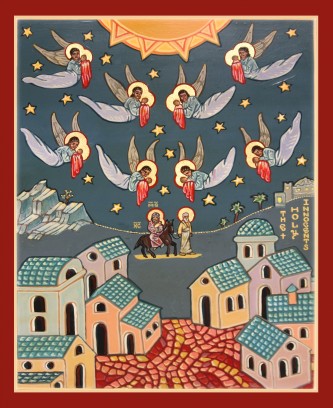
HolyInnocents-Atlanta-monkimage.php_Matthew 2:13–23

Today the magic is over. The real Holiday began on Boxing Day as thousands, even millions of people across Canada spent their time worshiping at the altars of Wal-Mart, Zellers, The Bay, Sears and more.

All that magic at Christmas, is as easily returned as a faulty watch or an unwanted pair of socks. Boxing Day, or Week, or whatever the tag line is, is a sobering reminder about how quickly the world forgets Christmas and moves on to more important things.

And the reality is, being out shopping seems a lot more normal than what we are doing here. In fact, we haven’t done anything in step with the rest of the world for quite a few weeks now.

All throughout December we decorated with blue instead of reds and green. We sang Advent hymns instead of Christmas carols. And on The Eve of the Nativity of Our Lord, we listened and watched as Christ was born in hotel room and visited by rejoicing Shepherds in the middle of the night. On Christmas morning, we sat down at a different meal, not turkey and mashed potatoes, but bread and wine, body and blood.

And this past week, when all the newspaper flyers and radio stations were telling us that we should be at the stores to get the big deals, we are here. We are here, listening and watching as the Holy Family escapes from real danger, and as all the other children in Bethlehem are massacred. The magic of Christmas is gone indeed.

The story of the massacre of the Holy Innocents does not seem like an appropriate Christmas story. Or at least is isn’t a story that you can buy, wrap up and then return on boxing day. However, it does follow the real Christmas story right in step. Last Sunday, Joseph saved Mary by choosing not to stone her when he found out she was pregnant. During the week, the two traveled a long and rocky road to Bethlehem full of thieves and other perils only to then give birth in the place where animals are kept. And now, as the paranoid King Herod orders the murder of babies under the age of 2, Jesus, Mary and Joseph escape to Egypt. The drummer boy, and the reindeer, and a tree adorned with lights and tinsel are not, and never have been, a part of this story.

Side by side, Boxing week, and this scene in Jesus’ life show us a darker side of the holiday. They show us the side of greed and fear, sides of cruelty and despair. They suck all the Christmas magic out of us, and leave us empty once more. The Joy of Christmas was supposed to last a year, but it has barely stayed with us a few days.

The story of the massacre of the Holy Innocents, of all the toddlers and babies in Bethlehem,  is not an easy story to hear. It is especially poignant this year as we had to burry an infant in our community. Our hearts ache hearing about the death of children, we know, somewhere deep inside of us, that this is unbearably sad. There is no need to compare it to the tragedies of human history that have followed since King Herod gave the order. We know what the slaughter of children was like for that town of Bethlehem, because it has not stopped. Children die each day, all over the world, of hunger, war, disease and poverty. This is not just Bethlehem or Selkirk in grief and mourning, it is a whole world. A world now even more desperate for a Messiah. Jeremiah speaks of grief for us all:

A voice was heard in Ramah,

wailing and loud lamentation,

Rachel weeping for her children;

she refused to be consoled, because they are no more.

Jeremiah’s words first expressed the grief of his people, the mothers of Israel, as they wept for their children who had been taken away to exile in Babylon. Then people of Bethlehem would have know the book of Jeremiah, and the story of the exile. But now they carry new meaning as they are stamped again to the hearts of the mothers of Bethlehem. And we know the stories of exile and the story of the Holy Innocents, but this year they carry new meaning as they are stamped upon our hearts. Tragedy upon tragedy. Heartbreak upon Heartbreak.

The darkness, that the Messiah was supposed to shine light into, appears to have returned.

Yet….

Yet….

Yet… Jeremiah’s words do not go unheard. The weeping of Rachel and of all the mothers of Israel is not ignored. God speaks to this suffering. God speaks to the people that Jeremiah first wrote to, God speaks to the mothers of Bethlehem and God speaks to us, to all who know tragedy, pain and loss. We hear the words of Jeremiah applied to massacre of the Holy Innocents, and applied to our tragedy. But Jeremiah doesn’t end with tragedy. Matthew only quotes tragedy, but the mothers and fathers of Bethlehem would have know what follows in the book of Jeremiah. And today, we hear this promise again:

Thus says the Lord:

Keep your voice from weeping,

and your eyes from tears;

for there is a reward for your work,

says the Lord:

they shall come back from the land of the enemy;

17 there is hope for your future,

says the Lord:

your children shall come back to their own country.

17 there is hope for your future,

says the Lord:

   your children shall come back to their own country.

God has not forgotten the cries of his people, and God’s messiah, Christ has come into the world for a purpose.

The newborn Messiah does not “escape” to Egypt. Instead, the Messiah travels the path of his people. The Messiah goes down the roads that the Israelites have traveled, so that God knows their suffering.

Just as the nation of Israel fled from Pharaoh in the Exodus, so too will the Messiah follow their path to Egypt and then back to the promised land.

And just as the exiles of Jeremiah’s day returned from Babylon to Jerusalem, to the holy city, the Messiah is also on his way to Jerusalem.  Egypt and Babylon are just the beginning of the Messiah’s journey. Jesus the Messiah is preparing to take on all the suffering of his people.

As the Messiah escapes to Egypt it is really only a delay of King Herod’s order for death.  Make no mistake, the destination of Messiah, from the moment he was laid in the manger, and was worshipped by shepherds and magi, is the cross. Christ the Messiah has been on his to the land of the dead this whole time.

And surprisingly, this is the hope, this is the promise that the Lord speaks to the people of Israel. This is the promise that is beneath the star, that is born into the stable, that is a little baby in Mary’s arms. The promise that is not just a baby, but a baby who will die. But not just die, but who will rise again. But who will not just rise again, but who will bring us back from the land of the enemy, who will call us to rise from our graves too…

There will be a lot of Christmas promises that are returned and exchanged for something else this week. There will be a lot of greed and darkness, that quickly returns into the world after what is supposed to be the most wonderful time of the year. And beyond our shopping malls and box stores, there will still be guns fired, hungry children, disaster, epidemic and suffering.

And it is in to this troubled world that God come to us… God comes to us as a baby shining light into our darkness and bringing the one Christmas promise that cannot be returned or exchanged.

17 there is hope for your future, 

says the Lord:

   your children shall come back to their own country.

Christ, the Baby Messiah, born in stable, sleeping in a stable manger, has come into our world, to bring us out of the land of the enemy. To pull us from the chaos of the shopping malls, from the despair of grief and loss, from tombs where we do not belong. And Christ shall bring us back to our home, back to the love God.

This is is the promise of Christ’s coming. This is the hope that the angels proclaimed. This is the Good News of great joy that was given to the Shepherds, and that has been passed on to us this day.

Amen


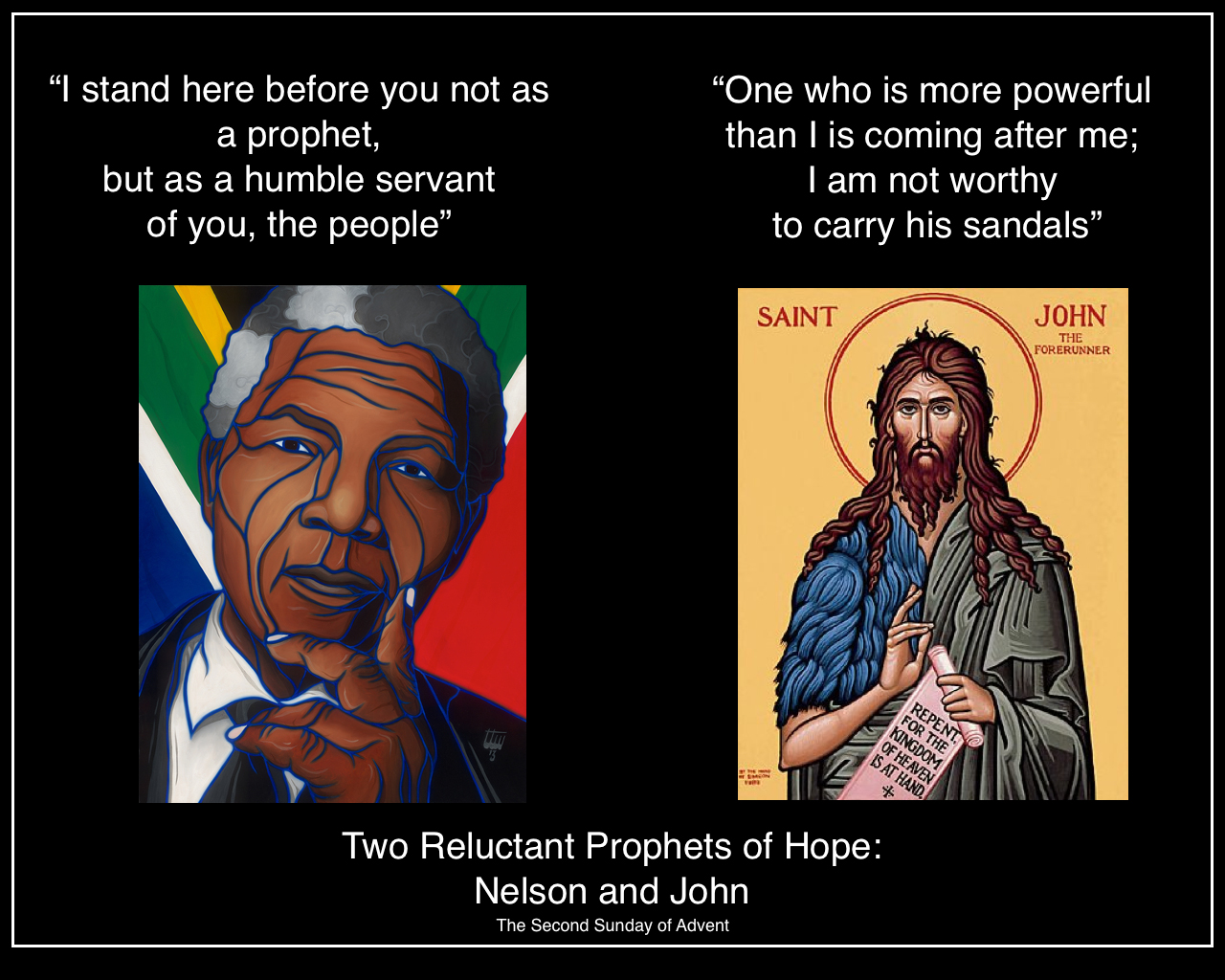
Two Reluctant Prophets: John the Baptist and Nelson Mandela

Nelson and JohnMatthew 3:1-12

In those days John the Baptist appeared in the wilderness of Judea, proclaiming, “Repent, for the kingdom of heaven has come near.” This is the one of whom the prophet Isaiah spoke when he said,

“The voice of one crying out in the wilderness:
`Prepare the way of the Lord,
make his paths straight.'”

Now John wore clothing of camel’s hair with a leather belt around his waist, and his food was locusts and wild honey. Then the people of Jerusalem and all Judea were going out to him, and all the region along the Jordan, and they were baptized by him in the river Jordan, confessing their sins.

But when he saw many Pharisees and Sadducees coming for baptism, he said to them, “You brood of vipers! Who warned you to flee from the wrath to come? Bear fruit worthy of repentance. Do not presume to say to yourselves, `We have Abraham as our ancestor’; for I tell you, God is able from these stones to raise up children to Abraham. Even now the ax is lying at the root of the trees; every tree therefore that does not bear good fruit is cut down and thrown into the fire.

“I baptize you with water for repentance, but one who is more powerful than I is coming after me; I am not worthy to carry his sandals. He will baptize you with the Holy Spirit and fire. His winnowing fork is in his hand, and he will clear his threshing floor and will gather his wheat into the granary; but the chaff he will burn with unquenchable fire.”

Sermon

Messiah is coming.

This was the promise that our Advent waiting began with. Each year, as we begin a new church year, we begin with waiting. As the world explodes Christmas everywhere, with sales and music, concerts and tv specials, we wait. We wait and sing hymns about preparing and getting ready. We pray for God to stir us up, for God move us as the Body of Christ. To move us with compassion and love for a world desperately in need of a saviour, desperately crying out for healing. As green and red colours dominate the  colour scape of our world, we decorate here with a defiant blue. Blue that symbolizes patient waiting and hopeful anticipation.

Today is the second week of Advent. Advent can feel at times like finishing your vegetables before getting dessert. It can seem like a punishment pastors force on congregations for having too much Christmas cheer in December. Advent is not really a  favourite of seasons for most of us. The stories in Advent are jarring. Advent always starts with apocalypse. John the Baptist’s crazy rantings mark the middle. The uncomfortable news of an unexpected pregnancy for an unmarried couple finishes Advent off. Advent is not the sweet picture of a mother and newborn in a cozy stable. Advent is very much about discomfort. We wait, we watch. We repeat the promise:

Messiah is Coming.

We acknowledge that we aren’t there yet.

Last year, the middle of Advent was marked by a mass shooting in an elementary school in New Town, Connecticut. This year, our Advent waiting will be marked by global grieving, remembering and celebrating Nelson Mandela. How very inconvenient and how very appropriate. Advent is about discomfort, and what could make us white, North Americans more uncomfortable than dealing with the legacy of a figure who challenged our position of privilege, a man who was jailed for 27 years because of the colour of his skin, and someone who then became an icon of forgiveness and reconciliation.

It is hard to not to think of Nelson Mandela as we hear John the Baptist preach this morning. John is standing on the banks of the river Jordan, out in the wilderness of Judea. He is a figure who is outside of the political systems of his day. He is not a priest preaching in the temple of Jerusalem. He is not a rabbi teaching in the synagogues. He is a prophet, a truth teller, preaching in the wilderness. And John’s message does not uphold the traditions. He is not hoping to help people learn or grow in their faith. He is pointing to the problems and injustices of the world. His message is a warning – the world, and us along with it, is going to be transformed.

We might expect that John’s warnings would be dismissed as crazy, the announcement of the change to come sounds impossible. He should have been all by himself preaching to the sand and locusts. But everyone has gone out to hear him. Those who are oppressed and suffering, the ones looking for hope, and those who are in power, the ones looking to maintain control. And his message is the same for all. Bear fruit worthy of repentance, do not rely on your position in the world. Messiah is coming and Messiah is going to turn it all upside down.

John’s message would have sounded unbelievable to his hearers. The rich were rich, the blessed were blessed, the clean were clean, the righteous were righteous. The people thought God wanted things that way, that God had chosen the powerful to be powerful. And the poor were poor, the cursed were cursed, the unclean were unclean, the sinners were sinful. The people thought that God wanted things that way too, that God had chosen those on the bottom to be on the bottom.

Apartheid in South Africa was based on the same ideology. White Afrikaners believed that God had chosen them, chosen white, rich, privileged people to rule over the black, poor, marginalized people of the continent. And many believed that this system was immutable and unchangeable. It is not just in South Africa that people have believe in a system of privilege like this. In the United States many felt white people had the right to own black slaves. Here in Canada, many felt that white Christians had the right to civilize indigenous peoples in residential schools.

And even still, we too, get caught up in believing that our world is as it should be. That the poor deserve to be poor, that the rich deserve to be rich. It is easy for us to unthinkingly assume that privilege belongs to a certain few. That we are owed something because of our gender, our skin colour, our economic status, our religion. Just like the scribes and Pharisees, we protest, “But we have Abraham as our Father.” as if we have earned our place in the world, earned our place in the eyes of God. Just like the crowds, we long for justice, but don’t believe it possible.

But today John the Baptist declares a new reality. Who your parents are, how much money you make, the colour of your skin, your ability to keep religious laws, the number of times you attend church in a year… none of those things matter to God. God is sending Messiah who will turn the whole world upside down. God is sending a Messiah who will repent us, who will transform us, who will burn our chaff away, our selfishness, our sinfulness, our sense of privilege and position. God is sending a messiah who will gather our wheat, who will gather our transformed, forgiven, renewed selves into God. God is not interested in maintaining our systems of power and privilege.

John declared that the system of power and privilege for a few were coming to an end. John threatened those in power, and gave hope to the marginalized crowds.

In the same way Nelson Mandela stood outside the systems of privilege and power, of white against black, of rich against poor. He was released from prison and began to show his people, and the world, hope. Hope in something new and different. Hope by showing us a new vision for the world, a new vision where all are treated the same and all are equally loved. Nelson preached the transformation of forgiveness and reconciliation.

John and Nelson preached a new reality, a transformed world. They preached the world of Messiah. John with stern warnings of axes and fire. Nelson with defiant humility and unwavering mercy. But neither John the Baptist, nor Nelson Mandela claimed to be the one who would bring about the transformations they imagined. They only pointed to the hope. They were prophets, prophets who pointed to the current reality and imagined a new one. They pointed to Messiah.

To the Messiah who is coming with the axes and fires of transformation. To the Messiah who is coming with forgiveness and reconciliation. To the Messiah who is coming to gather God’s poeple. Messiah who will name, claim and gather God’s people, rich or poor, black or white, powerful or powerless, clean or unclean, righteous or unrighteous. Messiah is who is coming into the world of the people standing on the banks of the river Jordan, Messiah who is coming to the people of South Africa and the world, Messiah who is coming here to us today. John the Baptist and Nelson Mandela pointed to the Messiah’s world.

For weeks now, we have been getting ready for Christmas, the songs, the decorations, the colours have been out for weeks. We have been looking forward to the big show at Christmas. But these preparations are only a small piece of Advent.

John the Baptist and Nelson Mandela get at the bigger task of Advent. The naming of reality. The prophetic word about the unjust systems that exist in our world. Systems like the temple of Jerusalem that withheld God’s love from the people. Systems like slavery, residential schools, Apartheid. Systems that perpetuate the economic, racial, gender and religious inequality of our present day. We name those things today, and then we declare, with John and Nelson, that Messiah is coming. Messiah is coming to throw out the old systems, to transform us into something new.

Today, as our Advent waiting continues. Today, as we hear anew the voice of John the Baptist. Today as we mourn the death and celebrate the legacy of Nelson Mandela, we are shown a vision of the Messiah. We made uncomfortable as our systems of power and privilege are threatened. We are given hope for a world that is changeable and that will not remain unjust and unfair. Today, we are declare the Advent promise anew.

Messiah is coming.

Amen.

I am at War with Christmas

war-on-christmasSomeone better tell Fox News and Jon Stewart that I really exist. I am the actual guy waging war on Christmas.

If you have been anywhere near the internet these past few days, you know that the annual “War on Christmas” meme is in full force, particularly on Fox News. Jon Stewart took advantage on Dec 3rd, to poke some hilarious fun at the idea that Christmas is under attack.

That being said, I think this year I am actually signing up. I think I  want to openly go to war with Christmas. Against Christmas. As Christmas’s enemy.

Every year as soon as Halloween is over, I see myself falling into the same patterns of avoiding Christmas. For nearly two months every year, I work hard not to have Christmas. So why not be open about it? Why not embrace the War on Christmas?

Throughout most of November and December, I do many things to keep Christmas from being celebrated. I try very hard to avoid saying “Merry Christmas”, and I prefer to be greeted with Happy Holidays. I even actually like the shorthand X-Mas. I make note of all the other holidays being celebrated in my calendar. Hanukkah, the Feast of St. Nicolas, Santa Lucia, Kwanzaa etc… I have even been able to cancel a few community/workplace Christmas pageants in the past few years and it felt great! I don’t think Christmas should be in schools, I don’t think it should be in the workplace, I don’t think it should be noted by public figures or politicians. If I could remove Christmas from most of the last 8 weeks of the year, I will have succeeded in my war.

Christmas music can be the worst! I generally don’t listen to Christmas music in my car or at home, and it irks me to have to listen to it when I can’t control the sound system. I complain when hear Christmas music in malls. The sound tracks playing in most commercial spaces make me want to thrown up. Christmas concerts annoy me, especially the ones on TV.  I get sick of Christmas music so quickly. It feels like the drummer boy is using my head as a drum. And when pop musicians make Christmas albums, I almost wish I was deaf.

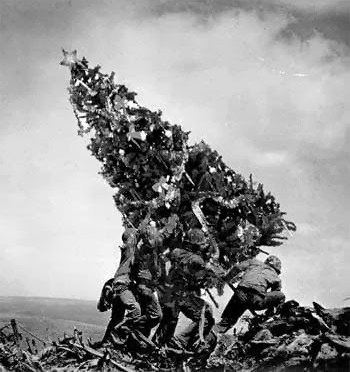
When I see decorations in public spaces, a part of me wants to tear them all down. All the green boughs, the red bows, the holly, the wreaths, the ornaments, all of it could just disappear and I would be fine with it. I just don’t get why people want Christmas lights all over the place, even if it does get darker sooner in November. I often criticize stores that sell Christmas merchandise and I try not buy any. Christmas inventory is so kitschy most of the time. I scoff at people who put light displays up on their house after Halloween. And don’t get me started on those who put up Christmas trees in November… it drives me nuts. What is the point of having a giant tree up for month in anticipation of present opening day?

Often, Christmas movies make me cranky. Christmas TV episodes, specials, and Christmas themed TV are almost always awful. It is like they are trying to capture some mushy, gooey feeling  that I want no part of.  But Christmas commercials and advertising needs to be banned from existence. Another “Ho ho ho” from Santa and I think I will lose it. You will find me in some corner sobbing as I whisper “No more Santa, No more.”

In my work life, I spend a lot of time encouraging the people around me to keep from celebrating Christmas too. I try to keep Christmas from invading my workplace and I always schedule work for myself on Christmas Eve and Christmas Day, and then after those big days, I have time with my family and friends. I am becoming more sure that the people I work with think I am the grinch who has stolen their Christmas joy, because I force them to put a lid on the Christmas celebrating.

Now with Facebook and Twitter becoming ‘War on Christmas’ battle grounds, I have become a Christmas grinch on social media. I have called out my friends for loving Christmas too much. I have advocated pairing down the celebration and toning down the cheer a notch.

In November and December most years, I just wish Christmas would go away. So when Fox News folks start complaining about the War on Christmas, I feel like saying, “Yeah, finally we are winning.” Christmas is getting what it deserves. It is getting pushed aside,  moved out of the way. I want something else to take its place, I want a new holiday for November and December.

Or rather, I want an old holiday.

For you see, I am a Lutheran Pastor.

And I love Advent. I think our world needs Advent. I think we all need Advent. When Christmas begins in November, it stops being what it is supposed to be, which is “The Feast of the Nativity.” When Christmas becomes a two-month long celebration of shopping and a chance to gorge ourselves in sentimentalism and nostalgia, it is not the “Mass for Christ’s Birth.”

Sarah Palin, one of the Popes of American Right-Wing Christianity recently said, “I love the commercialization of Christmas, it spreads the Christmas cheer.” She has missed the point. Obviously. But she has named an important reality. We just don’t want to deal with the things that Advent deals with. We want to avoid the harsh realities of life, and have a big party instead. A party that has now become the symbol of global inequality and broken social systems.

Christmas has no meaning on its own. Christmas is empty and vapid when it is a two month opportunity to increase debt and avoid real issues.

Christmas only makes sense at the end of Advent.

It only makes sense when we have waited and watched for Messiah. It only makes sense when we have longed with Israel to be released from captivity, exodus, exile, and oppression. It only makes sense when we have admitted our failings and imperfections, when we have admitted the suffering of the poor and lowly around us, the injustice of the marginalized and victimized, when we have admitted that we are complicit in perpetuating systems of violence, abuse, and death.

There is a reason, I wage war on Christmas each year. Because it isn’t Christmas yet. We haven’t got there, we have missed what needs to come before. As we long for Messiah through Advent, and discover again all the ways in which our world needs a Saviour, the Feast of the Nativity, the Feast of the Incarnation can finally take real shape. The coming of Messiah into our dark and broken world can finally be the light and hope we truly need.

Our world is still very much in need of a Saviour, our world is full of captivity, exile, exodus, oppression, conflict, suffering, poverty, systems of violence, abuse… and death.

We don’t like Advent because it means we aren’t there yet, and that feeling opens up a whole world of emotions, ideas and experiences that we don’t want. We want to be at the party, not sitting outside hoping to get in. But that is where most of the world is, sitting outside waiting to get in… and realizing they almost certainly never will.

So tone the Christmas down this year. Put out 4 candles, and wait with all those who still need a Saviour more than Christmas present.

And maybe after waiting with me, with Israel, with all those who still need saving, you will see why we don’t sing “Joy to the world” until we have  sung “O Come, O Come Emmanuel” first.

What do you think? Should we be at war with Christmas? Or is it okay to celebrate Christmas for two months each year? Share in the comments or on Twitter: @ParkerErik

Interested in some more snark:

12 Reasons Why Being a Male Pastor is Better
7 Reasons Church isn’t for You

The Heresy of Male Domination

Putting My Jesus Feminism to the Test

mi728x“Well, you could just have a baby.”

I hated it when people said that to my wife.

There was a time when people would regularly make this suggestion to her. She was unemployed, or the technical term in our denomination “without call”, at the time. We were hoping that there would be a position for a pastor or chaplain coming available close to where we were living, because we both wanted to be following our call to work for Jesus in the church. While the baby comment was probably offered with the kindest of intentions, the underlying idea was that her vocation as a pastor could be, and likely should be, easily set aside for the womanly vocation of motherhood.

My wife took all these comments in stride and with grace, eventually she would jokingly say, “This is the worst time to have a baby, I am unemployed and have student loans to pay”.

My wife could make a joke, but I was never impressed, and these comments bothered me. They still bother me when I think about them.

____________

When my wife and I decided to get married, we were living 1000 miles apart, serving congregations in different provinces and synods. We had been seminary classmates, but only started dating a few years after we graduated. We informed our Bishops of our desire to be serving in the same area, so that we could live together when we got married. We were willing to go anywhere.

In the year of our engagement, waiting and hoping for possibilities to open up, we eventually decided to both move. I was called to serve a congregation 100km from my first church, where there were promises of imminent openings for Courtenay, either in parish ministry or chaplaincy. It was just a matter of time.

I was being a given a fairly prestigious opportunity. The largest church in the synod (district/diocese etc…) wanted to call me as their Senior Pastor. This was pretty much unheard of – a 29-year-old pastor with 3 years experience in a small rural congregation becoming the senior pastor of a flagship congregation.

Many colleagues let me know that I had been given a big opportunity and that I had made it to the real show now. Some were concerned that the work load would be too much. Some felt the struggles that the congregation had been having for the last few years were too much for me to deal with. Others thought I would receive a wake up call once I got there. Still others weren’t sure I could manage such a large, multi-staff congregation, with so little experience. All my predecessors had been much older and more experienced pastors. I even heard through the grape-vine that accepting a call like that, to a congregation like that, was surely a sign that I was setting myself up to be a Bishop.

The congregation had contacted me in November, and it took until June before I actually moved. 3 months before our wedding, I started my ministry as the 29-year-old, engaged to be married Senior Pastor of a large Lutheran Church. And this whole time, these promised, imminent options had not become available… there was still no call or position for Courtenay.

__________

“Now listen here Missy! You leave the business and management of this church up to us. You just deal with the ministry.”

My wife has told me about many sexist, ageist comments she has received in her time as a pastor, but that one pisses me off the most.

I always had to hear about the comments from a distance, so when we got married and moved to the same place, the comments started coming for different reasons. They were patronizing statements masquerading as support:

“You will just have to wait because Pastor Erik has a call.”

“Maybe you can get a job somewhere else, there are lots of other jobs around”

“We hope that something comes open for you, because we really like your husband.”

“You could just have a baby, we would love that here.”

“It must be nice to be able to be at home all day.”

“You could come lead the ladies’ bible study or sing in the choir, those are pastor-y things.”

“We will pray that God helps you” (for my wife to see that she should be supporting my call)

“That is just the way older men talk to women, they don’t know any different.”

The worst was when friends and colleagues offered some of this unhelpful advice. As Courtenay was waiting for a call to parish ministry or chaplaincy, many people: family, friends, colleagues, parishioners would try to be supportive.

But so often, their words ended up minimizing my wife’s call to ministry. Somehow my call, because I was a man, because I was a Senior Pastor, because I couldn’t have babies through my body had become more important. It was like God had called me double or triple, and God had given my wife options – be a lady pastor or a mom or a housewife. Those 9 years of education and the call of the church don’t really matter because your body can make babies. Oh, and you have a husband now, so you are real woman and can do womanly things.

___________________

The leadership in the congregation was aware that Courtenay and I were waiting and were unhappy. For most people it only felt like a few months. For us, the process to find two calls had begun over a year before. When after only 6 months, I informed the leadership of the congregation that we were looking at the possibility of two calls elsewhere, people were understandably upset.

Prayer meetings were called and people were genuinely concerned. So many were starting to understand the difficulty that we faced with Courtenay being without a call and unemployed. Many people were wonderfully caring. Many people prayed for God to call my wife to something.

But for some, there was an undercurrent of frustration. There was the sense that Courtenay shouldn’t complain. Her husband was serving a church after all. Wives should support their husbands, especially if their husbands are pastors.

It was even suggested to me that I get my marriage in order, that perhaps we needed marriage advice or counselling to resolve the “impasse” between us.

_________________

Here is the thing, though.

There was no impasse.

In fact, I was the one who suggested we contact another Bishop. We knew of an area where there were 5 churches in our denomination looking for pastors.

Courtenay is amazing. She loves me enough that if I asked her to wait without a call for longer, she would have. She had been waiting for a year, and it would have been at least another, maybe longer as far as we could tell. She would have waited to make me happy.

But I couldn’t bear that. Every day I got to go to the office, I felt guilty. We had made a promise to each other – we could be pastors anywhere, but only married in the same place. I was, now, breaking that promise. We were married but not both serving. Important early years of her career could slip away, sitting at home with nothing to do.

The guilt wasn’t all. I often had the feeling I was the only person taking her call as seriously as mine. I was the only who believed that God had called her to be a pastor in active ministry, just as much as God had called me. I know that sometimes pastors who want to serve in a certain city have to wait, but the limit on my wife pastoring a church was me. I couldn’t do that to her, I couldn’t ask that of her. And I felt God calling me to consider a change, a move so that we could both serve Jesus and be together. I mean, that is why we moved in the first place.

Throughout the whole experience, I could never shake the feeling that people would respond differently if our roles were reversed. I could never drop the idea that if Courtenay got a job at Starbucks, a lot of people would be okay with that. There would be outrage if it were me picking up a service industry job. It always seemed that ‘having a baby’ was a viable alternative for Courtenay to pastoral ministry, but paternity leave would be frowned upon for me. Becoming a “Pastor’s Wife was not out of the question for Courtenay, but not even in the realm of possibility for me.

________________

So Courtenay and I left, after only 9 months of being the Senior Pastor of a prestigious church. We moved to a place where we could both be pastors and serve Jesus, and Jesus’ people.

This was by far, the hardest thing I have ever had to do as Pastor, as a Christian, as a husband. It would have been much easier to go with the tide. It would have been easy to claim that my call to this prestigious church was a priority. It would have been the easy thing to do to make my wife wait, for who knows how long, to do what God was calling her to do. God was also calling her to be my wife, right? It would have been easier to buy into the privilege that so many people were implicitly offering to me, and believe my call was more important than my wife’s.

The whole way along, there were people who ‘got it’ – people who were not satisfied with other options for Courtenay. Those people were great, and we needed them. But too many others were willing to rank our calls by our genders.

Being married to another pastor has completely changed the way I understand God’s call. God can call me to do God’s work anywhere, but I can only be married to my wife where she is. Yet, maybe more importantly, being married to a wonderful woman who is also as pastor, and to a pastor who is a woman, has shown me that we aren’t there yet. We haven’t made it as a Church. Even when we have female pastors and female bishops, we still have hang-ups about women in ministry. We still see men as the ‘default’ when it comes to our image of ‘pastor’, and we are willing to unthinkingly put women’s calls into secondary categories defined by gender.

Things are slowly getting better for women in the church. My hope is that more and more church people will start to get it. My hope is that one day people saying “You have or wait” or “You can have a baby” will be just as unacceptable to tell Courtenay as it currently is to tell me. My hope is, that one day, gender won’t define pastors in the church. My hope is that all of our callings, ordained or lay, in the church, in the world, in the home will be understood as equally valid.

For more on male privilege and women in ministry:

The Heresy of Women Submitting to Men

12 Reasons Why Being a Male Pastor is Better

10 More Reasons Why Being  a Male Pastor is Better
12 Years a Slave – Why Women Should be Equal in the Church

A Young Male Pastor’s Thoughts on Women in Ministry

Have you own story of your Jesus Feminism being put to the test? Share in the comments or with me on twitter @ParkerErik or follow my wife @ReedmanParker