Tag Archives: ministry

Guest Post for April Fiet – My Fears, Dreams and Faith for an Easter Baby

april-fiet-sbBack in February, Rev. April Fiet wrote a great guest post – In Defense of Men in Ministry – here on the blog. I was honoured to have her write here. She is the first blogger that I have connected with over social media to the point that I would call her a friend!

I am honoured she asked me to write for her over at “At the Table with April Fiet.”

Click this link here >My Fears, Dreams and Faith for an Easter Baby

26MaternityFinal

As some of you know, Courtenay and I are expecting our first child. Well, the due date was yesterday and we are still waiting. But as we wait, I have been thinking in new ways about how this child-on-the-way will change our world. I was delighted to share about my hopes, dreams, fears and faith over at April’s blog.

So go read my post there, and then click around on her blog. She has some excellent stuff, like “RIP Women in Ministry” or “At least I’m Better Than You.

You can also find April on Facebook at April Fiet or on Twitter: @aprilfiet

As well, if you want to follow Courtenay, you can find her at @ReedmanParker on Twitter. 

And as usual, you can share here in the comments, find me on Facebook at The Millennial Pastor and on Twitter: @ParkerErik

The Christology of Noah: A Theological Review

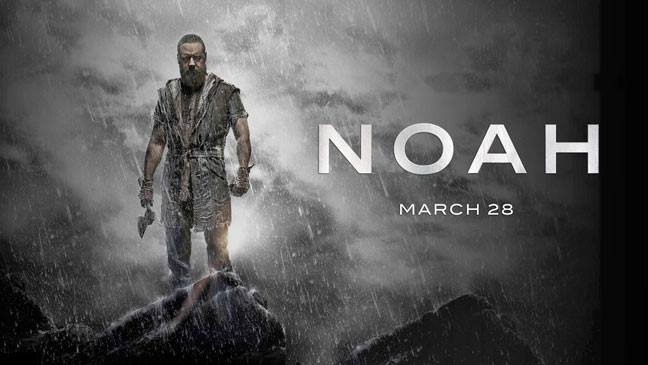
noah-movie-poster-castI saw Noah yesterday.

I loved it.

It was a beautiful story in terms of its cinematography, the visuals were stunning.

Now, a lot of the praise for Noah ends with the visuals. For some reason, many seem to think that Noah doesn’t follow the biblical narrative, and so the critique of Noah then continues with the movie’s faithfulness to the story… or lack there of.  Albert Mohler has written an absurd movie review, which makes me question whether he has even seen the movie or read the story. To all those who are complaining that Noah deviates from the flood narrative, I just want to say,

“Have you read the flood narrative recently?”

Noah is a deeply scriptural AND theological film. It tells the story of the biblical flood in a way that we need to hear it. No… Noah is not a word-for-word retelling of the flood epic found in Genesis 6-9. But any filmmaker who sets out to put Genesis 6-9, as written, to film will have missed the point before beginning.

Director/writer Darren Aronovsky has produced something as faithful and with as much integrity to the text of Genesis as I can imagine. The flood epic’s context (as in the stories that preceded and linger in Noah’s background) is always present in the movie. Aronovsky has not ripped this story out of the bible, but instead uses themes and images from all over Genesis.

Noah shows that Aronovsky has so thoroughly researched this story, that he puts most Christians and some scholars like Mohler to shame. Noah is a very biblical movie. Noah is a brilliantly biblical movie rich in scripture, unlike many other movies about the bible.

But let’s talk about Genesis 6-9 first.

Anyone who has actually read the flood story would know that it is a very redundant story. In fact, everything seems to be repeated over and over. It is almost like two different versions of the story have been layered on top of each other to make one story.
images-2Well, that’s because there are two stories. Two versions, different details. In one version it rains 40 days, another 150 days. Noah is told to take a pair of each kind of animal, then he is given instructions to take 7 pairs of clean and one unclean. The family enters the Ark twice.

Genesis 6-9 is not literal history. Noah was never a real person. Russell Crowe is now the most literal Noah that ever existed. The Biblical story of the flood is a nearly word-for-word, line-by-line rip-off of the Gilgamesh Epic. The Gilgamesh Epic ripped off the Atrahasis epic. The Atrahasis epic was based on the Sumerian flood epic.

The story of the flood does not belong to Christians. It doesn’t belong to Jewish religion. It doesn’t really even belong to the Bible. It is an Ancient Near Eastern story told by the people living in the floodplain of the Tigris and Euphrates rivers.

So when Darren Aronovsky “deviates” from the biblical account of the flood, he is working with a story that already has been re-told with generous liberties taken. The flood is a re-write of another story, which is the re-write of another, etc…  However, the movie Noah does something fascinating – Noah stitches together the early chapters of Genesis with other biblical themes. The biblical flood story doesn’t do this. In fact, Noah is a character hardly referenced outside of the flood narrative itself.

The Biblical Images in Noah’s Background – SPOILER ALERT

Darren Aronovsky has said in interviews, that he sees Noah has his midrash. A mid rash is a Rabbinical narrative sermon. It is the Jewish practice of re-telling the biblical narratives, and filling in the gaps of the story to make a theological point. Pretty much a sermon. If Noah is a sermon, it is brilliant one.

MV5BMjAzMzg0MDA3OF5BMl5BanBnXkFtZTgwNTMzOTYwMTE@._V1_SY630_SX426_The opening scenes of Noah are the first murder in the book of Genesis, and Cain’s murder of Abel becomes the foundation of the movie. This violent reality haunts every relationship, every action taken by Noah and his family. This murder continues being repeated, generation after generation, between brothers, between families, between peoples, between human beings and the earth. The murdering is endless, and thus ‘The Creator’ decides to start over, to wipe wicked human beings from the face of the earth.

Some would accuse Aronovsky of using the movie to spout modern environmentalist rhetoric about care for the earth, veganism even. This is not the case, Aronvosky is simply sticking to the text. Some of the earliest tensions in the Bible are the commands given by God to human beings in the creation stories. In Genesis 1, human beings are told to fill the earth and subdue it, to have dominion over it. In Genesis 2, human beings are told to serve and protect creation, to care for it and keep it. These competing views on the role of human beings towards the planet are not just a modern issue, they have been at odds since the beginning.

Lastly, there is a moment in the movie when Noah looks a lot like Abraham. Noah is Abraham’s ancestor to the 10th generation. At, what could be argued is the climax of the movie, Noah is standing above one of his offspring, knife in hand, ready to kill because of what he understands to be God’s command. This issue of families murdering one another, that begins with Cain and Abel, is not actually resolved with the flood. In fact, the escalation of murder that the flood turns out to be, is no solution to the problem of humanity’s death-dealing ways at all.

And while many would claim that this moment in the movie shows us the power of the human spirit because Noah chooses not to murder out of love, I think this is about God. God, or ‘The Creator’ as God is called in the movie, has no lines. God doesn’t even take a form, but is an implied presence. ‘The Creator’s’ role in the drama is still paramount, and I think Aronovsky is telling us about the important change of mind that God has after the flood. The human problem of death, of violence, of killing one another remains. Noah foreshadows what is to come with Abraham – someone willing to murder his own child for God’s sake.

Instead, God is changed, and God finds mercy towards human beings. The characters of Noah don’t actually change throughout the story. They experience tremendous hardship and tragedy, but they remain, at the end, who they were at the beginning.

In the flood epic and in Noah, it is God who changes. Aronovsky hasn’t missed this part of the story either. Which leads me to:

The Christological Character of Noah.

In a number of scenes in the movie, Noah is shown praying. Noah prays a familiar and biblical prayer – “I can’t do this.”
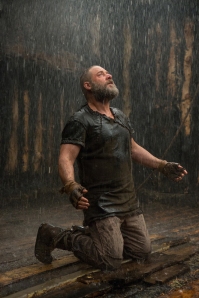
NOAHAt one point, Noah is on his knees asking God that this burden be removed from him. Noah might be a Genesis character, but this is a New Testament image. Like Jesus in the Garden of Gethsemane, Noah is asking that God would choose someone else.

The burden that Noah is given is not to build an Ark, not to predict a flood, not even to save the animals, as he seems to think is his burden for most of the movie. The real burden is to determine whether humanity is worth saving – whether or not humanity is redeemable.

Ultimately, we discover that this question isn’t answered, at least not by Noah’s actions. He saves his family, but in his mind this is failure. He has failed to perform God’s will for humanity, failed to wipe us all out.

However, as we see that more violence is not the solution or the way to prevent violence, God’s change towards mercy gives us the smallest clue or hint towards the dilemma facing God.

Whether Aronovsky knows it or not (and sometimes this is where stories become more than their tellers can control), God’s change to mercy is a key Christological question. With Noah, God realizes that asking humanity to redeem themselves and to prove themselves worthy of being saved is impossible. Noah realizes too that all humanity has the capability of sin within them.

The question of whether or not to save us all is really not answered until the garden of Gethsemane. As Jesus prays, “I can’t do this” it is not all about a human being afraid of being crucified. Rather, as Douglas John Hall suggests, the question of Gethsemane is whether God is going to complete the incarnation. God has shown up in flesh, God has lived in flesh, but Maundy Thursday is now the moment to decide if that last step – incarnate death – will be taken. Once this step is taken, God is going to complete the redeeming. God is going fulfill the reconciling. God-in-Christ is going to re-join creation with creator, re-join what was one in Eden.

As I watched Noah, I couldn’t help but see this question as the real issue. Is humanity redeemable? Aronovsky seems to have come to the same place that the bible comes to over and over again. Human beings just cannot redeem themselves.

And just maybe, as ‘The Creator’ shifts to mercy, Noah foreshadows a God who now knows this. God will be the one who will choose whether we are worth saving. Asking us to give up violence us will not suffice. God will need to take away the power of our violence by overcoming death. Life will become how we are redeemed. God will allow Godself to succumb – on the cross – to our desire for violence and death. And instead of responding with greater violence, with fire or flood, God will respond with resurrection and new life.

Noah is beautifully rich and beautifully deep. It is scriptural and theological to its core. If you want to see a movie about the bible?

Go see Noah. It will not disappoint.

images-1

Have you seen Noah? What did you think? Share in the comments, or  on Facebook: The Millennial Pastor or on Twitter: @ParkerErik

World Vision’s Decision Was Still a Watershed Moment

So I wrote a satirical response to the outcry from some Christians  in regards to World Vision’s decision to allow people in committed gay marriages to work there.

Today,  a World Vision employee wrote to me, in regards to that post, thanking me for the humour it added into, what I can only assume, has been an impossibly tough week. It broke my heart to imagine what those on the ground must be experiencing when 2000 people pull their sponsorships within a few hours.

Well, today the absurd got absurder.

World Vision reversed its decision today.

This is sad.

The letter from the board citied a mistake. They re-committed themselves to the “biblical understanding of marriage” (between one man and at least one woman, I guess).

But let’s not fool ourselves.

This is about bullying. This is about the same lobby that managed to get a secular cable network, A&E, to re-instate Phil Robertson, after he said some of the most vile and racist bigoted things you could say and still be published in GQ.

If A&E caved, World Vision didn’t stand a chance.

Evangelicals, especially conservative pastors, shame on you. Double shame on you, Gospel Coalition.

I know that change is hard, I know that you are reacting to the loss of your privilege in the world. And we all know that this reversal is temporary.

As much as I wonder how conservative, American, Republican, culture-war, nation-worship can can still be, in any meaningful sense, called Christianity, I am certainly not going to say farewell to Evangelicals, as they did to World Vision.

But I will offer this rebuke:  As your elder in faith, stop it. Stop acting like a bunch of teenagers and grow up. The I-am-taking-my-ball-and-going-home attitude is old and tired.

As one who has been ordained into a church and denomination that has had to get past many of our own demons, I know that growing up isn’t easy. But the world needs you to grow up, and soon.

In the meantime, for those who are completely lost, saddened and disheartened with what has gone with World Vision this week, let me say something:

World Vision is not the only Christian NGO out there. In fact, there are many who won’t succumb to the Evangelical Lobby anytime in the future. I am not saying stop supporting World Vision, not by any means. Keep signing up for sponsorships, don’t assume those 2000 are coming back. Keep sponsoring those kids you are already sponsoring!

But check out the Christian NGOs below as way of knowing that World Vision is not responsible as an NGO to hold within it the entire diversity of the church. Just as many pointed out, the work World Vision does with communities all over the world is the same, regardless of their employment policies.

Check them out knowing that, in fact, World Vision made the best decision for the communities they work with. World Vision was put into an impossible, no-win, situation and I think they did what was best. They asked, “How can we help as many people as possible?” And so they did what they could to stop the financial bleed.

In the meantime, also keep fighting for LBGT rights, fight for them in all areas of the Church. Fight for them knowing that World Vision’s reversal doesn’t change anything. The policy change on Monday was still a watershed moment for the church, today’s reversal just means the hill to climb is taller than we thought.

Just because the Gospel Coalition is afraid of Gay Terrorists, doesn’t mean we have to fear their conservative backlash. It only means we have them on the ropes.

ARDF_Logo-copy_noTMAnglican Relief and Development Fund


LWR-LOGO-HOME-RESIZEDLutheran World Relief


devp-logo-enCatholic Development and Peace


Screen Shot 2014-03-26 at 6.37.06 PMMennonite Central Committee


What do you think of the World Vision Announcement today? Will you change who you give your support to? Share in the comments, on Facebook: The Millennial Pastor or on Twitter: @ParkerErik


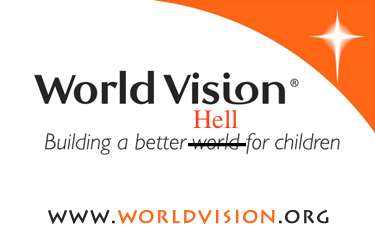
World Vision is sending us all to Hell!

World Vision is trying to send us all to hell.

If you don’t know what I am talking about, you haven’t been on the internet in the last 24 hours.

World Vision announced that they are going to start forcing African kids to marry into same-sex relationships, if not they will take away all their food. Seriously! Well… that is what these guys at the Gospel Coalition seemed to be saying…

Anyways, we all know that this is a huge problem. World Vision plans to employ only gay people so that they can transmit ‘gayness’ to as many Third World children as possible.

173720_20110408_174319_OCPNow, I have long been suspicious of World Vision. All their commercials and print ads have pictures of kids on them that I can only assume are not ‘Christian’. Most of those kids come from the Kenyan bush right? Isn’t that where Obama came from? We all know what that means! It only makes sense that he is pushing this same-sex marriage agenda to make us all gay. I didn’t vote for a gay Kenyan to be my president, and that’s not only because I am Canadian. But with World Vision now burning bibles (according to Franklin Graham) and feeding non-Christian children, they are bringing together two threats to the United States of Evangelicalism to make a mega threat –

Gay Terrorists!!!

But seriously, has anyone been checking to see what the faith statements of these sponsor kids are? I want to see signed statements on websites so I can know if we really should be “sponsoring” their eternal salvation for only $1 a day. Do they believe in Predestination or Free Will? What if they are Roman Catholic marxists like the Pope? Has anyone actually checked to see if the schools they are attending aren’t Madrassas? What if those doctors that these “sponsor kids” see practice Sharia medicine? (The NSA has probably just put me on a watch list for all the flagable words I have in this post).

Now, you might be saying, “But Erik, you live in a country that allows same-sex marriage!” To which I respond, this is okay because we had a white christian Prime Minister who introduced that law. But more importantly, do we want less gay premarital sex? Because letting gay people get married is the best way to keep them from having lots of sex!

Still, you might be saying, “But Erik, you serve in a denomination that blesses same-sex marriages!” To which I respond,  I am not turning any African kids into gay terrorists!

imagesWorld Vision just might be the last organization that ever believed in the bible, besides the Gospel Coalition. And now, because of their gay employees, they are threatening us all with the eternal fires of hell. What if the hard-earned money that I am sending to evangelize African kids is used instead to feed them, give them medical care, and clean water? They could very well grow up to marry someone of the same gender, and that is against God’s word! What if some of the money I give to World Vision goes to pay some of the salary of a World Vision employee? A Gay Employee!?!?! Will that make ME gay?!?!

So, I say stop supporting World Vision and their Gay Terrorism agenda! Because we all know what Jesus said about that:
“Feed My Sheep” John 21:17
“Let the little children come to me” Matthew 19:14
“For I was hungry and you gave me food” Matthew 25:35
“I am the bread of life” John 6:35
“Give them something to eat” Matthew 14:16

Er, um… We all know what Paul said about that:
“If your enemies are hungry, feed them” Romans 12:20
“Bear one another’s burdens” Galatians 6:2
“When you come together to eat, wait for one another” 1 Corinthians 11:33

I mean… We all know what Leviticus said about that:
“Their flesh [Pigs] you shall not eat, and of their flesh you shall not touch.” Leviticus 11:8
“nor shall you put on a garment made of two different materials” Leviticus 19:19
“But anything in the seas or the streams that does not have fins and scales, of the swarming creatures in the waters and among all the other living creatures that are in the waters—they are detestable to you” Leviticus 11:10

Oh right, this is one!
“You shall not lie with a male as with a woman; it is an abomination” Leviticus 18:22

So… We need to stop supporting World Vision because of this obscure verse of Leviticus, even though we don’t follow most of the other rules in that book!

And because… Gay Terrorists!

____________________________________________

Disclaimer: If it wasn’t clear already, the above post is satire and sarcasm. I fully support World Vision’s choice to hire employees in same-sex marriages. To read more about LGBT rights in the Church check this out: Why I should have spoken up for LGBT rights in the Church

So what do you think about the World Vision News? What do you think of the reaction? Share in the comments, on the Facebook Page: The Millennial Pastor or on Twitter: @ParkerErik


The Christian Horror Movie that will Win People to Jesus

So I have been listening to the Moonshine Jesus Podcast, with Mark Sandlin and David Henson. It is a basically half an hour of two ministers and bloggers talking pop-culture and theology over drinks. As many pastors know, this is what some of the best moments of seminary, and later on, what clergy conferences are all about. The podcast is great fun and worth a listen, you can find it on iTunes and here. In a recent episode Mark and David shared that there is a Christian Horror movie coming out called Final: The Rapture.

Now, I am not a big fan of Christian movies or Christian radio. I was subjected to far too much Touched by an Angel growing up, but I have to admit that the production quality of Christian music, TV and film has gone up dramatically since then. Recent movies like the Son of God or the Passion of the Christ, or even like Noah, show that the entertainment industry is investing in Christainment.

teaser-poster-final-the-raptureHowever, Christians themselves are also invested appealing to broader secular culture, and so we end up with movies, like Final: The Rapture, being made with the aim of appealing to a broader audience. The movie is being billed as a frightening story of what the end of the world will look like, full of violence, blood, death (no sex or swearing, of course). The producers themselves compare the movie to a Trojan Horse. They are hoping to bring people in with horror and send them out with the fear of Hell the love of Christ in the hearts.

If you watch the trailer, it is clear that this film is not top quality acting, writing, directing or production. But lots of horror movies aren’t these days and they do just fine at the box office.

The quality of the filmmaking isn’t really the issue.

Of course, it is absurd to try and trick people into “coming to Jesus” with a horror movie. Even with the poor filmmaking in mind, don’t spend too long thinking about how many times along the way there must have been opportunities for someone to point out to the producers that spending the money, time and effort on making such a film is ludicrous. It will hurt your brain to imagine that some poor schmuck in an editing room had to finally say, “Yes! This is it! The Christian horror movie that will bring people to Christ!” Don’t even start on all the actors, film crews, on-location personnel and more, who had to agree that this film was worth making.

The thing that really turns my brain inside-out is the motive to make this movie in the first place. It is a logical and theological fallacy that underpins this whole venture.

This movie might be billed by the producers as a bait and switch to bring people in with the horror and send them out with Jesus, but it isn’t. In fact, Jesus has little to do with it at all. The real aim is to bring people in with horror and send them out with Hell.

This is laughable at first thought, but there is something deeply troubling about this line of thinking. The bait and switch tactic is dishonest, but the real bait and switch tactic is terrifying and I can’t believe that Christians are still using this strategy. It appears that the producers of this movie are using Hell as a first ‘in’ to get people to believe in God. 

I don’t know if this is a conscious effort or some response to the New Atheism that fundamentalists seem to be fond of sparring with. However, trying to terrify people with Hell so much so that they open themselves to eternal damnation is cruel. But thinking that a fear of hell means an unconscious belief in eternal salvation? This is absurd!

Yet, as far as I can tell, this line of thinking exists. Fundamentalists seem to be saying that if we can get people to be afraid of Hell, then they will, by default, also believe in Jesus – maybe without even really knowing it. You can’t believe in Hell without then believing in God right?

This is the horrific part.

I don’t recall Jesus saying, faith the size of a mustard seed in Hell, will bring you into the Kingdom of God. I don’t recall Jesus telling us to go out and spread the Bad News of God’s wrath and damnation. I don’t recall Jesus giving Christians the ‘judgement and condemnation of God’ as an evangelism tool.

Most Christian music, TV and film verges on the hokey, even if the production value is getting better (especially in terms of music). And fine, if Christians need faith based pop culture – whatever. But if we think that we can trick people into heaven with an illogical, unscriptural fallacy?

Then we really have created a horror show. 

What do you think? Do Christians need their own pop culture? Does believing in Hell make people also Christians? Share in the comments, on Facebook: The Millennial Pastor or on Twitter: @ParkerErik