Tag Archives: Jesus

Sermon – Jesus and the spirits of fear that possess us all

Luke 8:26-39
Jesus and his disciples arrived at the country of the Gerasenes, which is opposite Galilee. As he stepped out on land, a man of the city who had demons met him. For a long time he had worn no clothes, and he did not live in a house but in the tombs. When he saw Jesus, he fell down before him and shouted at the top of his voice, “What have you to do with me, Jesus, Son of the Most High God? I beg you, do not torment me” — for Jesus had commanded the unclean spirit to come out of the man. (For many times it had seized him; he was kept under guard and bound with chains and shackles, but he would break the bonds and be driven by the demon into the wilds.) Jesus then asked him, “What is your name?” He said, “Legion”; for many demons had entered him. They begged him not to order them to go back into the abyss.

*Note: Sermons are posted in the manuscript draft that they were preached in, and may contain typos or other errors that were resolved in my delivery. See the Sherwood Park Lutheran Facebook Page for video.

The long season of green or Ordinary Time has begun, and for the next 25 weeks or so, we will be hearing the stories of Jesus ministry: his teachings, parables and miracles. In contrast to the stories and pacing of the the first half of the church year,  Ordinary Time or counting time has a way of meandering and lingering with the stories. There is no agenda or place to get to, simply hearing what Jesus is up to week after week is the point. And after a busy Advent through Easter, taking the time to slow down an re-orient ourselves in the Jesus story isn’t such a bad feeling. 

So today, we begin with an infamous and often quoted story from the gospel of Luke. Jesus and the disciples sail across the sea of Galilee to gentile territory and show up in the region of Geresa, a place where no self-respecting Jew would ever want to find themselves.

Geresa was a town on the other side of the sea of Galilee from Judea, it was a mixed territory, where Jews and Gentiles both lived. But Geresa more recently was also a Roman military outpost, where Roman soldiers were stationed. And because occupying soldiers need food and shelter, the towns people were forced to work in service of the army, raising pigs and hosting their oppressors. 

But Jesus doesn’t just show up in Geresa, the first person he meets there is a man possessed by unclean spirits. A man living in the town cemetery. An outsider. 

So when Jesus shows up in Geresa, he is showing up in a place that good jews would avoid at all costs because everything about this place is unclean. The town, the cemetery, the pigs, the possessed man. This isn’t just the discomfort we might feel visiting a poor, impoverished, rundown part of the city. This is about Jesus and the disciples coming into contact with the unholy, about Jesus becoming unholy himself. It isn’t just the possessed man who has an unclean spirit, but everything around this place seems to suffer from unclean spirits. 

And those who lived there, did as much as they could to protect themselves from the unclean spirits around them. The people shackled the possessed man in the cemetery in order to avoid his uncleanliness. The possessed man tries to escape the chains of the townspeople, so that he can avoid their shackles. The pigs are kept near the cemetery so that everyone can avoid the unclean spirits of the Roman occupiers. And by the time people figure out what Jesus is up to in their town, they even ask him to go away too, fearing what kind of unholy power he might possess. Of all the unclean spirits in this place, the greatest is not Legion or the Romans or the pigs. But fear. The unclean spirit of fear has gripped and paralyzed the people of Geresa. 

Certainly, if at any point in our lives we understand those poor folks in Geresa it is now. The unclean spirit of fear has been dwelling among us for a while now. We all remember when it first settled in… at least we think we do. Some might say it appeared the week that the NBA and NHL shut down, the week that the schools and churches and countless businesses closed their doors. 

But maybe it came about later when the protests erupted following the death of George Floyd. Or could it have been November 2020 as the world watched and waiting to see what would happen in the US Election… or then on January 6th on Capitol Hill. Maybe it was the lockdown of June last year, when we could not even meet with people outside our own households. Or this January as the trucker protests rolled towards Ottawa and to border crossings.

Or maybe it is right now as inflation and interest rates rise, making it harder to make ends meet. Maybe it is war going on in Ukraine, refugees arriving on our doorstep, continued calls for help. 

And yet the unclean spirits of fear didn’t just show up in 2020… We can see them all over the place going back in history. The presidential election of 2016, the 2008 financial crisis, 9/11. 

And just like the fearful people of Geresa, the spirits inhabit the world all around us. We know them on a large scale, we know them on the personal scale. We know them in world events, we know them on our streets, in our hospitals, in our community, in our neighbourhoods, in our homes. And as much as try to avoid coming into contact with the unclean spirits of our world, to avoid coming face to face with the things or people we fear the most. We end up possessed in some way or another. We end up ruled by the fears of the day. 

And in case we thought we could forget or pretend the unclean spirits of our fear don’t exist, we have been rocked by tragedy after tragedy these past weeks. Shootings in schools and churches. More unmarked graves discovered on the grounds of residential schools. More warnings of climate change, extreme heat after an extremely wet spring. 

The unclean spirits of fear push and pull at us. They demand that we protect ourselves from anyone or anything different. They make us feel like need to divide ourselves from the other, build walls to keep the other out, destroy the other in order stop feeling threatened. And thus fear begets more fear and violence begets more violence. 

But the most powerful thing that the unclean spirits of fear make us feel is stuck. They make us feel like we can never escape the other unclean spirits around us, like we can never make the dangers go away. 

And that is why Jesus’ presence in Geresa can seem like such a problem… he is too close to all the unclean spirits, too close for our fear’s liking. 

When Jesus shows up in Geresa, he does exactly what the unclean spirits of our fears keep us from doing. Jesus approaches unafraid. 

Jesus is not afraid of the unclean spirits. He doesn’t fear the town, or the cemetery, or the pigs, or the possessed man. And because Jesus is not afraid that the spirits will taint him, he is willing to meet and be with the community of Geresa. He is willing to meet the possessed man on the man’s turf, in the cemetery. When the possessed man begs for mercy, Jesus simply asks his name. 

And because Jesus is willing to brave the uncleanliness around him, Jesus does what we cannot. Jesus begins to reconcile and rebuild the people of Geresa. He sends the unclean spirit of Legion away. He sends the unclean spirits of oppression, division, intolerance and fear away. Jesus restores the man to community and the community to the man. 

Anyone else would have been afraid of becoming unclean in Geresa. Anyone else would have feared the unholy taint of unclean spirits. But when Jesus comes to this unholy place, God comes and meets the unclean and the unholy. And all of sudden, the fears that held everyone back don’t matter anymore. They don’t matter because the God of all creation, the Holy One of Israel, the Christ in whom we are God’s children makes the unclean clean. In Christ, God shows us how not fearing the unclean spirits, the unclean places, the unclean people allows God to see people instead of a condition. God sees beloved children instead of things to be feared and avoided. God shows us what it looks like to see beyond our fear, and how to see one another as brothers and sisters in Christ. 

This past week as council gathered to vision and discern our future, we knew there was a lot of on our plate, and lot challenges to face ahead. But as we talked and unpacked, we began to see that things aren’t all challenges and struggles. We remembered all the things we have been doing during these past years. All the music we made over lockdowns, the small groups that we started, the sermon packages that have been delivered, the continued meeting of youth, confirmation and young adults, even if in new ways. We saw the important work we have done solidifying the foundation, of making ourselves ready and prepared for what comes next, for the exciting opportunities that will undoubtedly come our way.

Sure there is so much to be worried about, so many things to occupy our concerns and fears in this world. Yet, Jesus has habit of showing up right in the middle of our mess, right along side the things that we imagine are insurmountable, and Jesus begins facing and encountering what we cannot do on our own. And from there Jesus begins to show us hope, Jesus shows us all that he is leading us into a hope and future that we would never expect or imagine. 

When the unclean spirits of fear threaten to divide us beyond all hope, to keep us stuck and afraid… God shows up. God shows up despite the uncleanliness. God shows up despite the fear. God shows up to free us to see one another as God sees us. As beloved Children of God. 

Plan B, C, D or E for the Church

GOSPEL: John 17:20-26
Jesus prayed:] 20“I ask not only on behalf of these, but also on behalf of those who will believe in me through their word, 21that they may all be one. As you, Father, are in me and I am in you, may they also be in us, so that the world may believe that you have sent me. 22The glory that you have given me I have given them, so that they may be one, as we are one, 23I in them and you in me, that they may become completely one, so that the world may know that you have sent me and have loved them even as you have loved me. 24Father, I desire that those also, whom you have given me, may be with me where I am, to see my glory, which you have given me because you loved me before the foundation of the world.

It was three days before my 30th birthday, and after 3 and half years of being a pastor, I felt like I had preached too many times on mass shootings in my short time in ministry. But the Sandy Hook elementary school shooting felt different, the unspeakably tragic nature of that event seemed like it would finally change the gun culture of our neighbours to the south. 

Instead,10 years later, is both too easy and too hard to recount countless shootings in nightclubs, hotels, places of worship, high schools and again another elementary school. 

And so here we are this week reeling from another mass shooting of children and teachers in Uvalde, Texas. 

Where will it end, O Lord?

Today, is the last Sunday in the season of Easter, but it hardly feels like a time to celebrate. And yet, in the midst of tragedy, we remember the horrific events to which the empty tomb is revealed as the good news. As the world has a way of laying death before our feet when we least expect, Easter has a way of turning even that reality upside down and revealing to us that new life that comes from the grave. As we ask when the violence will end, God reminds us that Easter is God’s answer for us in the midst suffering and death. 

And so… for these seven weeks we have been walking along with the disciples through their initial surprise encountering the risen Christ and then God’s calling these followers of Jesus as they are transformed into the Body of Christ – the Church. We have heard again how they were and we are being prepared to be the body of Christ in the world. And with all of it coming to a head on Pentecost next week, as we mark the birth of the church. 

But before we get there, we are left with two seemingly contrasting stories about where the early followers of Jesus were headed. 

In one, we are silent eavesdroppers on a conversation, a prayer between God the Father and Christ the Son. In it Jesus commends this little band of misfits, outsiders and the least likely leaders to his father. And what comes from this handing over is a promise that this community of Christ’s followers are not left alone, and that those who belong to Christ are brought into the life of the Trinity, into the mission and activity of the Father, Son and Holy Spirit. 

And then in the other story, we see the unfolding and surprising ministry of Paul and Silas as they go about the Greek world. As the two make their way to Phillipi with the intention of ministering to the fledging community there, they are interrupted by a slave girl who has been given the gift of divination. 

The slave girl and her interruptions soon become an annoyance to Paul… and so he decides to cast out the spirit possessing her. This gets Paul into trouble, and the slave girl’s owners set to Paul and Silas to beat them and have them thrown in prison because they have just lost their lucrative source of income. 

Once in prison Paul and Silas start another new ministry to the prisoners only to have that interrupted by an earthquake and then a fearful guard contemplating taking his own life, for whom Paul must again change course and do something about. 

While maybe not obvious at first, the contrast between the two stories is striking. In one Jesus promises divine providence for the community of his followers. In the other, every plan for ministry that Paul has goes off the rails because of interruptions rooted in tragedy and suffering. 

The promise that God will provide glory and providence for the community of faith and the reality of how ministry is experienced in practice seem to diverge quite a bit.

On some level we know what Paul and Silas were experiencing. We too tend to have certain visions for ministry. We bear expectations for what church, for what our community faith, should look like. And yet, we also know what it is like when those expectations and visions aren’t realized. We know what it is to have our visions for church interrupted by the wrong kind of people, to have suffering and tragedy interrupt our plans. 

Another mass shooting, ever increasing cases of pandemic-19, run away inflation, war in Ukraine all seem to make us feel as though God is far away from us. 

The struggles of work, family life, young children, aging parents, retirement planning, declining health, and figuring how to re-enter into an uncertain pandemic world get in way of taking time for faith. 

The realities of tight budgets, tired volunteers, and a past that seems better than the future, expenses that keep going up and dollars that didn’t go as far as they used to keep us from looking forward with hope and believing that God has good things in mind for us. 

Our visions and expectations for ministry are so easily interrupted these days, and along with brothers and sisters in faith here in the pews, across Winnipeg and Manitoba, across Canada and North America we don’t know what to do about it. 

Paul didn’t know what do either… and maybe that is the point. 

There is, of course, an interesting thing about the story of Paul and Silas: while they were being interrupted by the slave girl, she was telling everyone that these two men knew about salvation. And while Paul acted out of annoyance, he freed a suffering girl from possession. And while Paul was busy trying to minister to the other prisoners while in prison, it was the jailer who needed to hear the good news. 

Even in the midst of some of the worst things imaginable, some of the worst suffering – slavery, exploitation, violence and false imprisonment – the gospel finds a way through. Even though it was not what Paul was expecting, even though it wasn’t even according to plan B or C or D… the gospel broke into the world precisely in the midst of the interruptions of human suffering. 

It is not say that the good news only comes when there is bad stuff happening, but rather than in the midst of the mess and chaos of human life, the gospel has no problem breaking in. And the gospel doesn’t need our plans to be realized to be preached and to be heard. 

In fact, our plans seem to have relatively little to do with where the good news of Jesus who died and rose again for us is made known. 

Paul had one idea for Philippi, but God had another. 

And just maybe that is the promise that Jesus is talking about with the Father. Not a promise that our visions and expectations will be realized, but a promise that in the midst of the real messiness and chaos of the world, the gospel will break through and break in. 

The good news of this upside down, unexpected God found in Jesus wouldn’t make sense if it could only be preached when all the plans come together, when all the visions are realized, when all the expectations are met. The good news of this Jesus makes perfect sense preached in the midst of our plans gone wrong addressing the realty of our suffering world. 

Jesus’s promise that suffering and death are not the end makes sense when it comes to us in the midst of shootings, pandemic, inflation and war. 

God’s naming and claiming as God’s own in the waters of baptism reminds us of who we are as we navigate the struggles of daily life, of family, work, community, health, retirement and on and on. 

Christ’s presence among us in the Body of Christ remains the same even as congregations struggle to keep up with this shifting and changing world. 

The forgiveness and mercy of God help us to change and grow, even as we don’t always understand the people and things around us and how to adapt to them.  

The good news of this Jesus makes perfect sense preached in the midst of this community of misfits and outsiders called the body of Christ, it makes prefect sense that it comes to us in Word, Water, Bread and Wine shared here in our imperfect, messy, and chaotic community of faith. 

And so, on this last Sunday of Easter that doesn’t really feel Easter-y we hear two seemingly contradictory stories that fit perfectly together. That remind us that God always comes in our imperfections and plan Bs, Cs, Ds, and Es and struggling messy moments of suffering and surprise… because that is where we are. 

And where we are is where God in Christ breaks through to find us and tell us again of God’s promise of New life for us. 

Walking to Emmaus and re-learning the story faith

GOSPEL: Luke 24:13-35
Now on that same day [when Jesus had appeared to Mary Magdalene,] two [disciples] were going to a village called Emmaus, about seven miles from Jerusalem, 14and talking with each other about all these things that had happened. 15While they were talking and discussing, Jesus himself came near and went with them, 16but their eyes were kept from recognizing him. 17And he said to them, “What are you discussing with each other while you walk along?” They stood still, looking sad….

Everything about the Easter Sunday story suggests that it should wrap up the story of Holy Week. All the way back from when we shift from Christmas and Epiphany telling the story of Jesus’ birth, to the Baptism of Our Lord Sunday on which Jesus is set on the path of his ministry of the Kingdom. From that moment on as we journey through Lent, the climax of Good Friday is in the background. Lent is not a 40 day long Good Friday, but there is a narrative arc that we recognize. Like an epic movie everything along the way serves to hurdle us to the big confrontation moment on Golgatha beneath the cross of Jesus. 

The empty tomb should be like the hero emerging from the wreckage, the moment of celebration that brings the story to a close. 

Except it isn’t. 

The Easter morning stories are full of confusion and uncertainty and more questions than answers. The resurrect Christ doesn’t spawn a “hero escapes death so don’t ask too many questions just be happy” moment, but instead a whole new wrinkle to a story that supposed to be wrapping up. 

And here we are on the 2nd Sunday of Easter still unpacking just what on earth is going on. 

It seems that the story of Jesus is less like an epic movie and more like a serialized TV season that ends on a cliffhanger, and today we starting season 2. 

We pick up the story right after Peter has gone to verify the unbelievable story of the women last week. Two disciples are on their way to Emmaus, a town near to Jerusalem. 

On the way, these two are met by another traveller. This travelling companion incredibly seems to know nothing about what has just happened over the past week in Jerusalem. Yet when the disciples recount the story from trial and crucifixion to the morning reports of the empty tomb from the unreliable women.

To which the unknown travelling companion proceeds to explain to them how the events of holy week fit into the Scriptures. And still these two disciples don’t recognize that the one travelling with them is Jesus. 

It seems a bit absurd that these two wouldn’t be to recognize their teacher and master. Was Jesus wearing a disguise? Were they blinded by their grief? Did God close their eyes to seeing?

I think there might be another explanation, one that relates to us and this moment in time. 

2000 years on from the first Easter we are stilling figuring out how this story unfolds and works together, let alone those first disciples who had just lived through it. Stories are how we understand this world. Stories and narrative help us construct meaning. Stories are the vehicles for us to make sense of things. It is why we go back a rehearse in our mind the events of an experience that we cannot make sense of, it is why we rely on eye witness testimony so heavily, it is why we are enraptured by good movies, books, tv shows, songs, artwork or a good story teller. 

So these two disciples on the road to Emmaus didn’t recognize Jesus because they didn’t understand the story of Holy Week yet, they couldn’t see Jesus because they didn’t know or understand the story of how he could be walking with them. 

Throughout our journey we too are sorting out just what all we have lived through means for us. As pandemic waves rise and recede with different degrees and risk to our health…

As War in Ukraine and elsewhere stretches out into a longer and more horrific than we every imagined reality…

As we navigate global, national and local uncertainty from the price of milk to the dangers of gas ranges to ongoing and persistent weather and climate crisis… 

As we ponder and wonder and worry about the future of our local communities here, even here at Sherwood Park…

We too do not know the ending of our story. We don’t know how to piece it all together yet and there is no precedent, no version that we have heard before that will provide the guidance we so desperately want. 

And so seeing Jesus among us is just as difficult. Even as he walks with us along our paths we may be just as oblivious as those two disciples. 

Just as Easter wasn’t the end of the story but the next season or next chapter, our story is nowhere near ending…but instead how it will all shake remains to be seen and lived. 

So when Jesus join his disciples on their walk down the road to Emmaus, they have more questions than answers. But rather than just coming out with who he is, Jesus takes the disciples back to the beginning, back to the stories they do know. The stories of God’s people. To the scriptures, the stories of faith. Stories told to children from the moment they are born. Stories told in homes and in the synagogue, stories that help to mark the passage of the days and the years, stories that gave frames of meaning, symbols, images and metaphors that helped them to understand their lives and their world. 

And just as the prophets foretold the coming of Messiah, just as John the Baptist preached out the wilderness, just as Jesus himself preached in the towns and countryside while doing miracles, Jesus begins with the stories they know already. And then Jesus interprets the stories in light of the promised Messiah. 

Yet, still the disciples don’t recognize Jesus. 

So finally when they reach Emmaus, Jesus takes the disciples back to Maundy Thursday. To the breaking and blessing of bread, where Jesus had been revealed to his disciples anew in the ancient familiar meal of faith – the passover meal.  

And all of sudden, these two disciples have a story to tell. They have seen this moment before. They have seen this One breaking the bread before. They know this stranger, they recognize the Christ. The Christ who has come to give them a new story of faith to tell. A story that begins at the Last Supper, that descends to arrest, trial and crucifixion and seemingly ends on cross. But now a story that continues on the Third Day with empty tombs, appearances behind locked doors, and revelations in the breaking of bread. 

Jesus has tied all the events of the last week to their familiar stories of faith, and Jesus has given these disciples a new story to tell, a story that makes sense and meaning of crucifixion, death, resurrection and new life. Jesus brings together the ancient stories of faith to the story of the crucified and risen Messiah.

The story of faith that we have been telling for 2000 years since: Christ has died, Christ is Risen, Christ will come again. 

The story that Jesus is taking us back to in this moment, even in the midst of our crisis, our inability to make sense of things and to understand this moment. 

The story of faith that is grafted onto our bones from the moment we are born and then reborn in baptism. The story that is told in homes and at church. The story that helps us mark the passage of days and years. The story that gives us the frames of meaning, symbols, images, and metaphors that help us understand our world. 

And Jesus reminds us that this story of faith has room for us and our recent string of uncertainty and struggle. We might not have been here before, but the Christ who meets us on this journey has. 

Jesus walks along side us in our confusion and uncertainty, reminding us that our familiar stories of faith still have room for our unknown stories of our present. And Jesus promises to see us through, to see us all the way to the new reality that awaits us in this new world of ours. Jesus promises that even this world of frequent tumult and regular uncertainty is nothing new or out of the ordinary for God.

And from here, Jesus takes us back to our beginnings, to the familiar story of breaking bread that we know so well. And in this moment, in this story Jesus is present and known to us, even when we don’t fully understand what is happening and where we are going. 

And so as we search for our story to tell, for the story that will tell us how to live in this new upside down world, Jesus reminds that there is a story that we already know. It begins with the breaking of bread, and continues through suffering and death, but surprises us again and again with an empty tomb, new life and a risen Christ. 

Who Gets to Tell the Easter Story?

Luke 24:1-12
On the first day of the week, at early dawn, the women who had come with Jesus from Galilee came to the tomb, taking the spices that they had prepared. They found the stone rolled away from the tomb, but when they went in, they did not find the body. While they were perplexed about this, suddenly two men in dazzling clothes stood beside them. The women were terrified and bowed their faces to the ground, but the men said to them, “Why do you look for the living among the dead? He is not here, but has risen. Remember how he told you, while he was still in Galilee, that the Son of Man must be handed over to sinners, and be crucified, and on the third day rise again.” Then they remembered his words, and returning from the tomb, they told all this to the eleven and to all the rest. Now it was Mary Magdalene, Joanna, Mary the mother of James, and the other women with them who told this to the apostles. But these words seemed to them an idle tale, and they did not believe them. But Peter got up and ran to the tomb; stooping and looking in, he saw the linen cloths by themselves; then he went home, amazed at what had happened.

We have arrived. Through this long season of Lent, through the challenges of Holy Week. We have arrived at the day of the resurrection, the empty tomb and promise of a new creation. 

And yet there is some discomfort. This isn’t like Advent that builds to the birth followed by a couple of weeks of holidays over Christmas. Easter morning brings a lot of discomfort. If Maundy Thursday was the funeral lunch, and Good Friday the burial. Today is the moment of wondering, “Okay, now what?”

But it is more than just not knowing what comes next. It is more than sorting through all that has taken place. It is wondering about how this story will be told? Who will tell it? Who gets to tell it?

We can see already, that the question of who gets to tell the Easter story was there on the first morning. The disciples didn’t believe the first reports, they had to verify. 

And some 2000 Easters later, the question remain. Who will this Easter story? Who gets to tell it? Who should tell it? Questions that add some unexpected discomfort to our Easter experience. In a world of Pandemic, Protests, Inequality, Racism and Colonialism, War, Violence and death… who tells this Easter story is still a question we have NOT truly answered. 

Being uncomfortable with this story and who gets to preach it is not something new. In fact, Luke tells us that discomfort with the resurrection story and the ones telling it is as old as the story itself. 

Three women have gone to the tomb early Sunday morning. It was only on Friday, three days ago that they watched Jesus die on the cross. And because of the sabbath (Saturday), his body hadn’t been properly prepared for burial. They were on their way to do this last thing, one final act of love for Jesus. 

But they arrive at the tomb, and the stone is rolled away. Jesus’ body is gone. Luke says the women were perplexed, but that hardly seems to describe what these women were probably feeling. 

And then a couple of guys in dazzling white clothes show up and tell these “perplexed” women that Jesus has been raised from the dead. 

This isn’t an “Aha” moment. This is more of a “Holy (you fill in the blank)” moment. 

And in that “holy” moment the women are snapped from their grief, their perplexity, their terror and are reminded of what Jesus had been telling them the whole time. 

And they go racing back to tell the other disciples. 

And it is at this point that Luke really starts to get interesting. 

The women go back to tell their news to the “male” disciples. But the men think it is nonsense. Now what the english translation says is that the men think it is an “idle tale.” You know, the kind of inane chit chat of no importance that men think they can just tune out because it’s the womenfolk talking. But that is not what the greek says. The greek says the men hear the story as nonsense or crazy or nuts. The kind of story you hear someone tell and you respond by saying, “No way, that’s not possible, that didn’t happen.”

And then the english translation says the men didn’t believe the women, as if the men actually took the time to consider the content of their story. But the greek says the men didn’t trust the women. The story wasn’t believable because of who was telling it. The men didn’t bother listening to the story right from the beginning.

And then there is the last bit about Peter. Peter runs off to check the tomb for himself. Why would he do that if he didn’t trust the women enough to listen to their idle chit chat in the first place? Well, in most bibles there is a little footnote that comes at the end of this verse about Peter’s “checking on things” at the tomb.

The footnote that explains that verse 12 (this whole bit about Peter verifying what the women had reported) is not included in other ancient manuscripts. Or in other words, the verse is likely an addition to the story. 

So here we have this story of the resurrection that is hard enough to make sense of on its own but the real problem with this story seems to be not with the story itself, but with the people who have been chosen to tell it. The disciples think the women’s story is nonsense because they are untrustworthy women. Recent English translators, who still have a problem with the fact that women are the first ones to tell the story, try to turn the nonsensical report into an idle tale – something not even worth being listened to at all by the men. 

And to top it off, the early christian community added this bit about Peter verifying what the women reported so that somebody credible would be the one telling the story of the resurrection. Because Mary Magdalene, Joanna, and Jesus’ own mother Mary weren’t credible witnesses on their own because they were women.

Oh, how things haven’t changed.

As hard as it is to makes sense of somebody being raised from the dead, our real problem is still with who gets to tell the story. 

Christians have spent a lot of time and energy in the past 2000 years telling people who can and who cannot tell the story of Jesus. And it’s not just women. Christians at various times have told people of colour, LGBT people, poor people, uneducated people, and even lay people that they are not among God’s chosen story tellers. 

For some reason our issue has been less with the content of the resurrection story itself than the character of the ones chosen to tell it. 

Because it is hard to believe that of all the people to find the empty tomb, God sends the very people who were considered untrustworthy and unreliable as witnesses. 

How would this story have been different if the disciples simply trusted the women?

When the women arrive at the tomb, early on that Sunday morning they were expecting to find the body of Jesus. Mary’s son, Mary Magdalene’s and Joanna’s friend and teacher. They expected to be anointing a body with spices and oils. They were expecting to finish the Jesus story for good, one last goodbye to the one they loved. 

They most certainly did not expect that all that crazy talk that Jesus had been going on about for 3 years to be true. Betrayal, trial, crucifixion… and now resurrection. They did not expect to find the living among the dead, they did not expect that Jesus had been raised. 

They didn’t yet understand just what Jesus’ death and resurrection had accomplished. They did not know yet that the Risen Christ overturns and undoes the established orders of the world. The first order of which is the established order of death. The Risen Christ upends the order of death and replaces it with a new order, a new system, a new way – Resurrection and New Life. 

But Jesus doesn’t stop there. The Risen Christ also overturns the established order of power and privilege. It cannot be understated just how significant it is that the first witnesses (and therefore preachers) of the resurrection are those without power, those on the margins, those whose testimony is discounted before it is even given because they cannot be considered “trustworthy” by decent and proper folks.

When these women are met with news of the resurrection, they would not have expected that of all the disciples that they would be the ones called upon to deliver this news – Jesus has risen. They weren’t the leaders, the gifted ones, the talented ones, the respected ones. They weren’t even considered trustworthy by the disciples who knew them well. They were just women. They were forgotten, unimportant, unworthy. They were not the kind of people anybody would expect to be called upon to carry out such an important task. They were the wrong people. 

But for the Risen Christ, they were the right people. Because the God of New Life has turned the world upside down. Death is now Life. The Powerful are now the powerless. The weak and lowly are lifted up. And the wrong people to deliver this news, the wrong people like those women… for God, they are exactly the right people. 

The Risen Christ completely changes our world and our reality, Christ’s death and resurrection turns everything and everyone upside down. All the old orders, all the ways in which we told others and in which we were told we aren’t good enough – those orders, those ways are ended. And the Risen Christ says the good news of new life is for not just for the right people, not just for the wrong people. The Good News is for all. Resurrection and New Life is for us. 

And maybe that is crazy nonsense in a world like ours. 

But it is not crazy nonsense for God. 

Good Friday is neither special nor unique

John 18:1-19:42

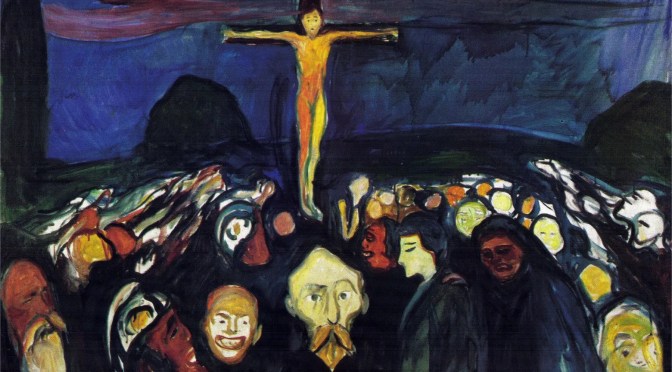
Good Friday is neither special nor unique.

What happens on Good Friday is no different than what happens others days. 

One falsely convicted man killed by a merciless and cruel government is barely even news-worthy in our world. 

Jesus was no unarmed black man killed by the cops, causing marches in the streets, social media hashtags and widespread shows of support. Jesus’ followers hid away after his death. 

Jesus was no Ukrainian family shelled in from of new cameras by careless or cruel Russian military. Only a few devoted followers wept for Jesus. The whole world weeps for Ukraine and the atrocities committed there. 

Jesus was no missing and murdered indigenous woman, no victim of residential schools. His beating, his death did not spark an inquiry. His unmarked grave did not spark an apology from the Pope himself.

There were no news reports for the crucifixion. There were no hashtags like #PrayforJesus. There were no flags to put on profile pictures, no pundits or reporters or commentators who talked and talked and talked. 

Good Friday is not special. It is just another day for us. 

Good Friday is everyday in our world. 

Just in the past year we have come up with so many new names for Good Friday, so many new names for the violence and death that we simply cannot end:

Kyiv, Bucha, Kharkiv, Mariupol. Shanghai, Tel Aviv, Sacramento, Kabul. Ukraine, Yemen, Sudan, Pakistan, Sri Lanka, Afghanistan.

Putin, the Kremlin, Zelenskyy, COVID-19, Variants, Omicron. Convoys, protests, truckers. Inflation, housing, poverty. January 6th, Capitol Riot, Insurrection. Residential schools, reconciliation, climate change.

Our list of new Good Friday words is so long we forget what we were listing off in the first place. 

Our list of new Good Friday words is so long that we forget them almost as soon as we create them. 

Our list of new Good Friday words makes us numb. 
Our list makes violence and death feel normal. 

The first Good Friday was not special. One man died on a cross. 

One man who angered those in power, so they go rid of him. 
One man who didn’t give the chanting crowds their King, so they started shouting crucify. 
One man whose own followers betrayed and abandoned him in his worst hour.

Jesus died like the rest of us, 
Jesus suffered violence and cruelty and hate like the rest of us,
Jesus was just another person to suffer an unjust and merciless death, 

The cross of Good Friday was not special.

Except that not being special is what makes Good Friday special.
We didn’t think that God would be on that cross. 
We didn’t think that God would die at our hands. 

The cross of Good Friday was not special, the violence of the death was not special, the ones who condemned were not special. 

The one who died was. 
The one who died changed everything. 
The one who died was God.

Today, God has died. On Good Friday God has died. 

And all those other words for Good Friday, for death and violence in our world. Those words from that list so long we forget. Those words lose their power. All those days of death and violence and suffering that seem to come at us unrelentingly from the news, from around the world, from our backyards.

All those Good Fridays that seem to happen far too often. 

They lose their power. 

Because the God who died, died with us. 
Because the God who died, lived with us. 
Because the God who died, loved with us.

God died on Good Friday.

But death did not destroy God. 
And God is not forgotten.
And God is not finished. 

Good Friday and all our other words for violence and death are not bigger than God is. 
On Good Friday, God who is bigger than death showed us something new. 
On Good Friday God gave us truly new words. Words that change the world.

Words likes:

Mercy
Forgiveness
Compassion 
Grace
Love

New words that God uses to change us. 

On Good Friday God dies with us.

But what is ended,
What is finished,
What is over is,
the power of death.

On Good Friday death is ended. 
On Good Friday death is no more
On Good Friday death will never have the final word.

Today, on Good Friday, God has a new word. 

One word that changes everything.  

Life. 

__________________________________

Artwork –  Golgotha by Edvard Munch, 1900.