
Tag Archives: Jesus

Only Messiah would be born in a grave

John 6:35, 41-51

Jesus said to the people…”I am the bread of life. Your ancestors ate the manna in the wilderness, and they died. This is the bread that comes down from heaven, so that one may eat of it and not die. I am the living bread that came down from heaven. Whoever eats of this bread will live forever; and the bread that I will give for the life of the world is my flesh.” (Read the whole passage)

We are talking about bread again… and in fact, we have been talking about bread for several weeks now, and we still have one more week to go in this detour into John’s Gospel. We have been slowly, piece by piece going through this conversation between the crowds and Jesus. The crowd of 5000 that was first fed with 5 loaves and 2 fish, and now the crowds that do not and will not understand who Jesus is and what Jesus is offering to them. 

But John is drawing our attention to a debate about bread, John is telling us what this bread actually means. In the Gospel of John, the dynamic between Word and Sign, word and bread is always lying underneath the surface. Jesus proclaims his Gospel in words, Jesus IS the Word of God, yet those who hear that Gospel, the crowds, the disciples, the pharisees and scribes, they all want signs, they all want bread. The words are supposed to be enough, but the demand for bread and signs never ends, and so Jesus shows who he is, as the Word made flesh, by doing miracles, healing the sick and the lame, casting out demons and finally by dying on a cross and being raised on the third day. And so in the Gospel of John, Word and Sign – Jesus and bread – are inextricably bound up together, they cannot be separated. There is the Word, the Good News of God’s Love, and then there is the Sign, the bread of Christ’s body to be shared. Word and Sign – Jesus and bread.

Today in the Gospel of John, we see that the good news and bread are one. Jesus is the Word made flesh to hear, Jesus is the bread made flesh to share. For John, we are given grace and we are given bread, and God gives them to us in the same package. The Good News comes in bread and body to be shared. Jesus gives himself to us in the flesh and in the bread of life. 

But today, this conversation about bread takes a turn. Up until now, the conversation has been about the divine, about the unwillingness of the crowds to see Jesus as God. Last week the crowds wanted to be able to perform the works of God. But today, Jesus goes a little deeper, goes right to the heart of reasons why the crowds, and why we, try to be God in God’s place. Its the reason that our sinful self wants to be in control. Jesus reminds the crowds, “Even your ancestors ate manna in the desert, they ate the bread from heaven provided by Yahweh Elohim, the God of Abrham and Isaac, the God who delivered you from Pharaoh and slavery in Egypt.  They ate that heavenly bread, and yet, even they died. 

Jesus is getting to the heart of what all the quibbling about bread is about. Jesus is reminding us of that fact that none of us likes to be reminded of. It doesn’t matter if your ancestors were the ones whom Yahweh fed with manna in the desert and it doesn’t matter if your ancestors were the ones whom God fed with bread grown in the fertile land Manitoba, WE ARE ALL GOING TO DIE. The crowds wanted to do the works of God, but the work of God is New Life, something that we must rely on God to do for us.

And so for us, death is real and death in unavoidable. The Old Adam, the sinful self, would rather quibble about bread any time. Being reminded of the reality of death, to be reminded of its constant presence, is never easy. Instead, its unsettling and for the Old Adam in us, it is the ultimate reminder that we are indeed not God. 

While we may live in perhaps the most peaceful country in the world, and while as a society, we try to pretend very hard that death is not real, or at least does not affect us, it does not take much to be reminded of how close it truly is. Read the newspaper or watch the news, and the stories of death abound. Drive by any number of the cemeteries that dot the highways here, and it does not take long to be reminded that dying is OUR reality. Death is our reality so much so, that we are born dying. We are born as beings unto death, our lives are aimed, right from the beginning towards our end. 

But just because death is our reality does not mean that death is God’s reality. Just because death is our end, does not mean that its God’s end.

American Pastor and Scholar, Paul Tillich, once told a story about a World War II. There was a Jewish man who managed to escape being sent to concentration camp in Poland.  After leaving his home and all that he held dear, the man was finally forced to live and hide in a Jewish cemetery with many others wartime refugees. In fact, he lived in an empty grave, all the refugees did. And there, they hid from the Nazis. 

One day, in the grave next to the one where he had taken up residence, a young woman was giving birth to a baby, giving birth the unlikeliest of places. In her delivery, she was assisted by an Old Man dressed in a dark shroud, presumably the grave digger. When the newborn child uttered its first cries in the world, the Old Man lifted the baby to heaven and said, “Great God, hast thou sent us Messiah? For who but Messiah could be born in a grave?”

(Pause)

 In the moment when death is certain, when the reminder that we all will die is so certain and life seems to be over, God in Christ is doing a work so amazing that the Old Adam in us does not want to believe its possible. God is making new life happen, God is making eternal life happen. In place where death’s power seems to be certain and absolute, God is granting us eternal life through Messiah, through Christ. 

Starting with 5 loaves and 2 fish, and onwards with quibbling about bread, quibbling about who Jesus is, God is there offering us eternal life. It is not John’s original idea to make bread and eternal life go together, but rather, this is the work of God. It is the work of God to offer us life in the Word of Christ, and life again in Body of Christ. It is, of course, no accident that the blessing after communion goes, 

“Now may the body and blood of our Lord Jesus Christ strengthen you and keep you in his grace until life eternal”. 

Today, Jesus reminds us that we will all die, no matter who we are, no matter who our ancestors were. But for Jesus, death is not the end, and there with us in the grave, we are given eternal life in body and blood. Jesus gives us God the Father, and along with the Father, we are given God’s love and mercy and grace. Death is real, death is unavoidable. We are not immune to its effects, we are not immune to the reality and constant presence of death. And still for God, even in the grave there can be new life. New Life that sometimes can come in something so totally unimaginable to us, new life that comes to us OUT of the grave. But the greatest promise of New Life, is that it always comes in God’s gift of eternal life. 

We are three weeks into the Gospel of John and its discussion on bread, three weeks into this story about the 5 loaves and 2 fish. And yet, in Christ in the Word and in this Sign of bread, we are reminded first that we will all die. But more importantly, we are also promised that we shall all live. We are promised that God is working in the world to bring us new life, new life in unexpected and surprising ways. New life out of the grave. Because only God would sent us good news in bread. Only God would be born in a grave.
Remember that you were aliens and strangers with no hope too

Mark 6:30-34, 53-56

The apostles gathered around Jesus, and told him all that they had done and taught. He said to them, “Come away to a deserted place all by yourselves and rest a while.” For many were coming and going, and they had no leisure even to eat. ….When they got out of the boat, people at once recognized him, and rushed about that whole region and began to bring the sick on mats to wherever they heard he was. And wherever he went, into villages or cities or farms, they laid the sick in the marketplaces, and begged him that they might touch even the fringe of his cloak; and all who touched it were healed. (read the whole passage)

We are coming to an end point of sorts. After this week, we will detour from Mark’s Gospel to hear 5 Sundays from John on the Bread of Life. And this scene from Mark today, is the culmination of something building in the background of these stories of Jesus’ preaching, teaching, healing, exorcising demons and arguing with the pharisees. 

Today, the crowds move from the background of the stories and take centre stage. The crowds were there as Jesus’ family tried to take him away and Jesus compared the Pharisees to Satan, they were there when Jesus taught in confusing parables which he only explained to his disciples in private. They were left behind as Jesus and the disciples rode that boat out into the storm. They were silent witnesses as Jesus healed Jairus’ daughter and the bleeding woman. And they watched as Jesus could do no deeds of power in his home town. 

After sitting always in the background and even after being avoided by Jesus and his disciples, the crowds, the poor, unwashed masses following Jesus around Galilee looking for hope and healing finally have their moment today. 

As Jesus and the disciples feel the pressure of the crowds, Jesus suggests that they all find some place quiet to go. So again, they try to escape the crowds by boat. But this time the crowds will not be fooled. They run around the shore ahead of Jesus and disciples. 

And while it isn’t totally explained just who these crowds are, the stories that they have been a part of and the background suggest that these are likely the common people of Israel. The poor, the disadvantaged, those on the outside, those who have little power in their world, those who excluded from political and economic upper echelons of society. Some might be beggars, those who bear disease or infirmity, but also everyday average people who try to work and care for their families, to eek out a living in Roman occupied Israel, which was a harsh and difficult place to live. These are the faceless, nameless masses of the world. The kind of people you pass on the streets, or in the mall or at the grocery store without much thought. People whose lives are mostly normal, if not unremarkable. People who don’t really get names or details of their own, they are just crowds. 

And the crowds have been ignored and forgotten for long enough, there is no pushing them aside anymore. They have come to Jesus and Jesus cannot keep putting them off anymore.

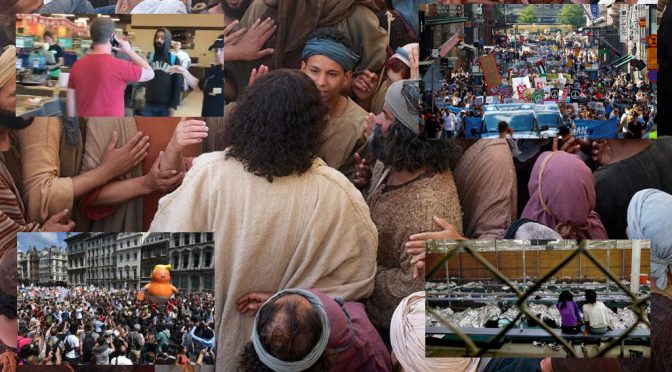
Maybe you feel the same way, but I can get what Jesus is feeling like today. The crowds of our world seem to asserting themselves in much the same way. Flip on the news and there are crowds gathering around every corner. Crowds on the streets of London and Helsinki to greet a certain world leader. Huddled masses appearing at the borders between Mexico and US, and the US and Canada. Crowds seen in fenced-in detention centres separating families, crowds at grocery stores looking on as some lunatic in a red t-shirt tries to call the cops because someone dared to have dark skin and a beard in his presence. 

The crowds seem to coming up front and centre in the news these days, in our social media feeds, and even on our doors steps. 

And it is easy to see those crowds as outsiders. As the lost and forgotten, the alien and strangers of our world. It can be overwhelming to imagine what we could possibly do for them Should be out in the streets with protest signs too? Should we be at the border with food and clothes to help welcome the lost and forgotten before their are thrown in detention centres? Should we step in front of a raving and angry person making a scene in a public place?

These don’t feel like our problems, they are the problems of other people, the problems people on the outside, foreigners and aliens and strangers. 

As the crowds press in on us and give us hardly a moment to rest or eat these days… Paul has some words for us. Some words first given to the Ephesians, but just as applicable today. 

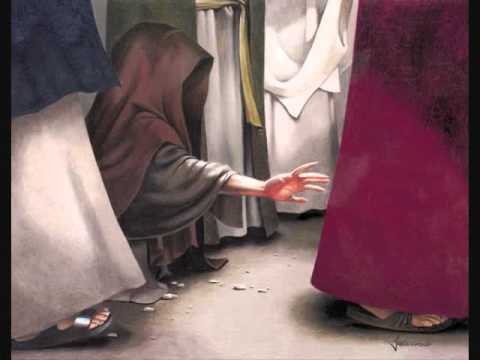
“…remember that you were at that time without Christ, being aliens from the commonwealth of Israel, and strangers to the covenants of promise, having no hope and without God in the world.”

Remember that you were once outsiders too. Outsiders to God’s love with no hope in this world. 

_________

As Jesus and the disciples land their boats back ashore, their attempt to escape the crowds seems to have been for naught. They crowds are pressing back in again, searching for some kind of hope and healing.

But this time something shifts in Jesus. Jesus has compassion for these desperate crowds. He sees them for who they are and what they need. They are lost and forgotten. They are aliens and foreigners. They are outsiders. 

And so Jesus finds them. 

Jesus remembers them. 

Jesus welcomes them.

Jesus knows them. 

Jesus brings them inside….inside into God’s mercy. 

And all of sudden, in a subtle but important shift, Jesus isn’t trying to escape anymore. He simply lets the crowds be. He lets them be around him, near him, and come to him. They are a part of who and where Jesus is. They are part of the family. 

As we sit in our comfortable churches, it is easy to feel like insiders, and even difficult to identify with those crowds on the streets of London and Helsinki, or the crowds in detention centres are borders, or the crowds witnessing racism in grocery stores. 

And as people of faith on the inside, we can even wonder where is God among these crowds today? Is God at work in the crowds in the streets of London and Helsinki? Is God handing out food and blankets at the borders? Is God stepping in between that lunatic at the grocery store and the poor victim of his rage? 

Maybe… God might be in those places…

Paul reminds us: 

“…remember that you were at that time without Christ, being aliens from the commonwealth of Israel, and strangers to the covenants of promise, having no hope and without God in the world.”

But Paul also says: 

“But now in Christ Jesus you who once were far off have been brought near by the blood of Christ. For he is our peace; in his flesh he has made both groups into one and has broken down the dividing wall, that is, the hostility between us”

Here is the thing, Paul isn’t reminding of what it feels like to be outsider… most of us were brought into this family of faith as insiders as babies and we don’t remember being outsiders. 

Rather, Paul is reminding of the gift of a place in God’s family that has been given to us. The free gift, the undeserved gift, the unearned gift of being a member of God’s family that Christ has given to us. 

Because here as we gather from far off, Jesus brings us near. Jesus gives us peace in reconciliation and forgiveness. Jesus makes us one in the Word of Good News that we hear, and Jesus breaks down the wall, the hostility between us. 

And Jesus is first here among this crowd and in these streets between us, gathering us at this table. And Jesus brings us bread and healing at the table, at the border between heaven and earth. And Jesus steps in-between us and sin and death to proclaim that those things are not okay and will have no place here anymore.

Paul reminds us that we were all once outsiders and and aliens and strangers. But Jesus has brought us in to the love and mercy of God, and Jesus continually brings us in, continually makes us – and the whole world – part of God’s family.

And so today, the crowds press in, on Jesus and on us. Yet are reminded that we are not the insiders removed from it all that we thought we were… Rather, we are the crowds too, and we now have a place near to Jesus, in the household of God. 

Jesus Crossing all the Boundaries

Mark 5:21-43

When Jesus had crossed again in the boat to the other side, a great crowd gathered around him; and he was by the sea. Then one of the leaders of the synagogue named Jairus came and, when he saw him, fell at his feet and begged him repeatedly, “My little daughter is at the point of death. Come and lay your hands on her, so that she may be made well, and live.” He went with him.

 …But the woman, knowing what had happened to her, came in fear and trembling, fell down before him, and told him the whole truth. He said to her, “Daughter, your faith has made you well; go in peace, and be healed of your disease.”…

…He took her by the hand and said to her, “Talitha cum,” which means, “Little girl, get up!” And immediately the girl got up and began to walk about… (Read the whole passage)

Last week, Jesus crossed the sea of Galilee with his disciples. As a storm blew upon them, the frightened disciples worried about a sleeping Jesus in the boat. But Jesus woke up, calmed the storm and wondered what the fuss was all about. 

Before returning across the lake to the point in the story we heard today, Jesus went to gentile territory. There Jesus found a demon possessed man loving with the pigs. Jesus conversed with the demon called Legion and Jesus exorcized the demon from the man. In the short trip Jesus crossed the boundaries of Gentile and Jew by crossing into Gentile territory, clean and unclean remembering that pigs are unclean animals to Jews, and of the normal and supernatural world by talking to a demon. 

In just that quick trip across the lake, Jesus showed that the boundaries most people observe, don’t scare him. 

And today, when Jesus lands back on the Jewish side of the sea of Galilee, the boundaries have been crossed and the rules broken. There is no going back now. 

Today, it is first Jairus who eschews social norms to throw himself at the feet of Jesus to beg for healing. Jairus, an upstanding leader in the synagogue, begging a wandering preacher for mercy for his sick daughter. 

And then the woman who had been bleeding for 12 years breaks nearly every rule imaginable to get access to Jesus. 

As Jesus responds to these two very different requests for healing, it can feel like one story jammed into another. Jairus and his dying daughter, and the woman who had been bleeding for 12 years. It can even feel disjointed and a bit like an interruption… in fact, Jesus starts to seem like a traveling medi-clinic. A place for the sick to go for healing, a source of power for those in need. But as we heard earlier in Mark, Jesus has not come to be miracle healer, but to preach the kingdom of God coming near. 

So what are these two stories of healing all about, if Jesus claims to be in the business of preaching the kingdom? Well, this story inside a story is not really about healing. Or rather, the healings are only the first details of what Jesus is up to. 

When Jesus arrives on the shore of Galilee, Jairus, a leader in the synagogue throws himself at Jesus’ feet and begs for help for his sick daughter. Jairus an important community leader, who would usually have a servant for errands like this, comes to Jesus directly. Jairus who should have considered Jesus an equal, if not subordinate, throws himself at Jesus’ feet. Jairus who should have requested, commanded, or ordered Jesus to help, begs. He begs immediately and without shame. In desperation, Jairus breaks the rules of what a man in his position should behave like. 

And then there is the bleeding woman. The woman who had been poked and prodded by doctors to no avail. The woman who had been suffering for 12 years in an unclean and impure state. The woman who is not allowed to be in public, or to touch others, especially men. The woman who has no voice and no advocate. The woman who pushes into the crowd and the who steals a healing without even asking Jesus. In her desperation, this woman crosses the boundaries of what polite and proper people should be and do.  

It is easy to gloss over these images of Jairus and the bleeding woman. It is easy to see no problem with a persons of prominence and authority throwing themselves at Jesus feet. No problem with the weak and powerless reaching for the fringe of Jesus cloak. 

But would it seem normal for the pastor or council members to throw themselves at the feet of the next motivational Christian speaker to come through town? Would we think it was alright for a street person, dirty, smelly and covered in sores and oozing wounds to push her way through the communion line to receive a blessing first?

No, we would not be okay with these things. They don’t follow the right order of things. We live a world with rules and boundaries, we define ourselves by those boundaries. 

We define each other by where we work, by what we drive, by the houses and homes we live in, by the clothes we wear, by the committees we serve on and the ways we involve ourselves in the community. We even know which pews belong to whom and where we like to sit week after week. 

Our worlds make sense when we can define the boundaries, when we follow the rules. We like knowing where others belong, so that we can know where we belong. We like defining the order of our families, and of our communities. We know who is first and who is last, and we like that knowing this gives us security, power and control. Our world is much easier to manage when there are rules and boundaries to keep things orderly.

And yet we also know that the rules and boundaries don’t always serve us. We know that sometimes people end up places where the rules push them down and grind them into the ground. We know that the boundaries can become walls, keeping people out and in the darkness, isolated and alone. 

The rules and the boundaries that we live by, that we hold onto so that we can feel safe and secure… can also hurt and exclude and we know it, because sometimes we are the ones being pushed down and we are the one stuck on the outside. 

But Jesus has this habit of doing things and going places that we cannot. Calming storms and talking to demons.  

Jesus crosses the boundaries and breaks the rules. 

Jesus crosses the boundaries and breaks the rules because Jesus wants to bring God close, the Kingdom of God near. 

As the woman who had been bleeding for twelve years crosses every social boundary imaginable and steals a miracle from Jesus, and as Jesus himself is not quite sure what has happened, Jesus’ demands to know who has touched him. We would expect that Jesus would have condemned and scolded this woman, but instead he stops to hear her story. And then he joins her. Joins her on the other side of the crossed boundary. She isn’t supposed to be out in public or touching people as a an unclean sinner… no one but family that is. And so Jesus steps out of the public space and into a familiar one… “Daughter” he calls the woman. Jesus makes her a member of his family, a person whom he can be close to even if she is unclean. “Your faith has made you well.” And then blesses her. By crossing the boundary, and breaking the rules, Jesus gives this woman the first bit of care and compassion, of healing and wholeness she has known in 12 years. And it wasn’t by healing her of her bleeding, but by joining her in her isolation. 

And then Jesus continues on to Jairus’s home, and he enters despite the news of the little girl’s death. The waiting crowds tell him not to enter… they know the boundary that has come to this place.

And yet having just crossed boundaries to heal the woman bleeding for 12 years, perhaps Jesus is inspired to keep going. To keep crossing boundaries. He comes near to a sick person, a possibly dead person, and intrudes on a grieving family. 

But Jesus knows that the little girl will rise. 

Because Jesus is going to cross another boundary to join this little girl, this second daughter that he meets today. 

Jesus crosses the uncrossable. 

Jesus reaches across death and brings the little girl back to life. 

Jesus crosses the boundary of death. 

Jesus also crosses the boundary of resurrection and new life. 

And we saw it coming all along, because we know that story already. We tell it every week. 

For you see, for all of our rules as human beings, we keep telling the story of God in Christ who breaks the rules. 

Christ who gives forgiveness even though it is undeserved. 

Christ who washes in the waters of baptism even though we are unclean. 

Christ who brings peace even though there is conflict. 

Christ who makes us one even though we are many. 

For you see, for all of the boundaries that hem us in, we keep telling the story of God in Christ who crosses the boundaries and joins us where we thought God should NOT come. 

Christ joins us as the incarnate God, born into creation. 

Christ comes to us in the Word of God, spoken through human voices and heard with human ears. 

Christ becomes us in the bread and wine, and we become Christ in Body and Blood. 

Christ gathers us together from every nation and tribe and corner of the earth. 

Crossing boundaries and breaking the rules shouldn’t be a new or surprising thing for us, because almost from the very moment we gather until we are sent out, God is doing just that in, through and with us. 

God is crossing boundaries and breaking rules in order to name us as daughters and sons, making us part of God’s family, bringing the kingdom near to us. 

No matter how much we love rules and cling to boundaries, God will always be willing to break and cross them, in order to love us more. 

Do you not care Jesus?

Mark 4:35-41

 A great windstorm arose, and the waves beat into the boat, so that the boat was already being swamped. But he was in the stern, asleep on the cushion; and they woke him up and said to him, “Teacher, do you not care that we are perishing?” He woke up and rebuked the wind, and said to the sea, “Peace! Be still!” (Read the whole passage)

For the past few weeks, Mark has been taking us on an intense ride through the beginning parts of his gospel. The pharisees began by plotting to kill Jesus for healing a man with a withered hand on the sabbath, Jesus’ family believed he has crazy and wanted to take him away, and last week Jesus told parables about the Kingdom of God being like the mustard bush, the worst weed in the garden. 

Yet still, with our own news is full of extremes… world cup upsets, legalization of another kind of weed, and of course children being ripped from families at the US border… it isn’t like these intense scenes from Mark are that different from what is going on around us.

Today, of course, is no different. The disciples find themselves on an ill fated boat ride with Jesus. As they cross the sea of Galilee, a violent storm comes upon them. As fisherman, they shouldn’t have been surprised as violent storms have the habit of coming on suddenly on Galilee. But even as experienced fisherman, they wake Jesus because they are afraid of drowning. 

“Teacher, do you not care that we are perishing?”

It is a rather loaded question. It is not a direct request for help. It is not the usual cry to God that we might expect. It is not a “Help me God or Save me Jesus”. 

It is almost as if the disciples are saying, 

“Wake up Jesus! Wake up so that you can drown with us!”, 

And Jesus does wake. Jesus wakes up and rebukes the wind. He literally muzzles it. He tells the waves to stop and be still. And then Jesus chastises the disciples. 

“Why are you afraid? Have you still no trust” or more accurately, “Why are you cowardly? Do you still not trust?”

And then something interesting happens. The wind and the waves were calm. But the disciples become fearful. More than fearful. They fear a great fear. They are Terrified upon terrified. Frightened upon frightened. 

And instead of looking to Jesus, they look to one another. 

“Who is this in the boat with us? Who is this guy that even the wind and the waves obey him?”

We know these fears of the disciples well. We have been through the storms of life too. 

Our storms might not be found in boats, but they rock us just the same. They are the accusations that so many throw about, “Do you not care about children being ripped rom their parents?” They are the fears of trade tariffs and economic hardships. They are broken relationships and hurting families, illness and disease. Our wind and waves are change and upheaval. In our congregations, our cries to Jesus and asking if he cares are about the future, about declining numbers, about uncertainty and conflict. And sometimes it can feel as if these storms hit us, one after another. 

But all of these fear and worries sit on above a greater fear buried deep within us.  fear that comes from a more primal place. Fear rooted in sin, in self centeredness. Fear rooted in our wanting to be God in God’s place. Fear that shows itself when we are faced with the reality that God is in control and we are not. Fear that makes us wonder, who is this Jesus. Who is this Jesus that is in the boat with us, in our homes with us, in the church with us?

Whether we admit it or not, we like to think that Jesus is only around when we bother to pray or read the bible, but probably goes home when we are busy. We like to think God is an ever available problem solver, always waiting but never intruding. And as congregations, we act as if were we ever to close up shop, God would close up shop too. 

And so on days like today, when the storm is calmed and we cannot help but see God in the world and in our midst, we are left with the disciples asking, “Who is this Jesus?”

Who is this Jesus?

The storm is the least of the disciples’ problems. In fact, the disciples ask the question that is at the core of their being. “Do you not care that we are perishing?”

Do you not care? 

We long to know that we are cared about, that someone, something out there believes that we matter. 

And does this Jesus actually care?

Does Jesus care about us, about me?

Deep within us is the fear that no one cares, that God does not care about us. That we don’t mean anything, that we are of no value. When the dispels ask Jesus, “Do you not care that we we are perishing?” It wasn’t about the storm, it was the fear that Jesus might not actually care about them after all.

Do you not care Jesus?

And yet, it is precisely because God cares has come to be ride with us in our boats. Because God cares about sin and death that God has been born in flesh. 

God has come to live life among us, and God come to die with us. 

It is isn’t the storm of wind and waves that Jesus has come to still. 

It is the storm of death. 

Jesus has come to muzzle death. 

Jesus has come to die on the cross in order to silence death.

As the disciples wonder at who is this Jesus that is in the boat with them, their wonder is not truly about this one among them who even the wind and wave obey. It is a wonder about whether this God in flesh actually cares about them, about creation, about all of us. 

And for us who know the end of the story, the wonder is no different. The wonder and fear of the one who can muzzle and silence death from cross still doesn’t make us certain that we are cared about.

But that is our stuff.  

Because Jesus still comes into our boats. Just as Jesus road in the boat with disciples, Jesus rides with us into our storms, our places of fear and uncertainty. The places where we fear that no one cares about us, we fear that we will die and becoming nothing.

Just like the disciples whose fear was only multiplied by not knowing who this Jesus is, we too fail to see Jesus in the storms and in the calm. And yet, Jesus gets into our boats anyways. Jesus comes into our world, lives among us and goes to the cross anyways. Because there in the boat and in the storms, there on the waters of creation where the distance between creation and creator is shortened… Jesus claims us. Jesus names us as God’s own. In the waters of baptism, Jesus reminds us that whether we live or we die, we belong to God. 

God is in control whether we like it or not. God is saving us from sin and death whether we see it or not. God is loving us, whether we like it or not. 

“Do you not care that we are perishing? “

“Do you not care God?”

And there in our boats, in our storms, in the midst of our accusations and fears, Jesus reminds of just how much God cares for us. That no matter the wind and the waves, we belong to God. That no matter how many jobs might be lost because of one man’s pride, or how many families might be separated because of cruelty and fear, or no matter what dangers that might cause us to believe we are dying we encounter, 

Jesus is with us, in our boats, in our cages, in our fears and in our anxiety… reminding us that we are not alone, and wether we live or wether we die, we belong to God. 

And even when we still have no faith, 

God has faith in us and for us,

because God cares for us, 

and for all. 

The Kingdom Growing Like A Weed

Today’s sermon is a guest sermon from Rev. Courtenay Reedman Parker, who you can find on twitter @ReedmanParker:

GOSPEL: Mark 4:26-34

  …3[Jesus] also said, “With what can we compare the kingdom of God, or what parable will we use for it? 31It is like a mustard seed, which, when sown upon the ground, is the smallest of all the seeds on earth; 32yet when it is sown it grows up and becomes the greatest of all shrubs, and puts forth large branches, so that the birds of the air can make nests in its shade.”


Parables. Those ever elusive illustrations that Jesus used throughout his ministry to teach people about God and God’s kingdom. These simple stories often begin in the same way: “The kingdom of God is like…” and use a variety of literary devices to get the point across including charm, humour and exaggeration. Jesus liked parables – a lot! There are 40 parables recorded in the bible. Which means there were probably more that were never recorded in the big book of our faith. Jesus’ stories from every day life made what he was saying accessible to his audience. At the same times, parables are also a little like riddles, it takes some time to figure them out!

Today we encounter not one, but two parables about the growing, sprouting, spreading of the Kingdom of God. Living in an agrarian and agricultural culture, it makes sense that Jesus would use illustrations and imagery that would be familiar to his audience: the sower and the seed make sense.

But I’m not convinced that these parables are as accessible as they once were. And it’s possible, if Jesus were here with us, he might not talk about scattering or sowing seeds.

If Jesus were here with us, he might say that the kingdom of God is like a video that goes viral…  

We are all familiar with youtube, and what it means for something to go viral, right?

Whether it is a clip from a famous movie, to a stunt that a group of kids are performing in the back yard, or a recipe video. 

Going viral is when a video that is posted on the internet is widely shared, or spread through internet sites such as youtube, social media like twitter and facebook or over email. 

I’m not talking about malicious viruses that invade our computers or videos that are posted on the internet in order to harm or defame others… What I am talking about is how technology has transformed the ways in which we communicate with one another and how we are able to spread and share information all over the world with the click of a button – actually, we don’t even use buttons anymore now that we have touch screens…

Which brings me back to that little mustard seed… not so unlike that unsuspecting video that makes it way onto youtube and before you know it, it’s being featured on the nightly news, or your inbox is filled with video clips of the awe inspiring and the humorous moments of life.

For Jesus to compare the kingdom of God to a mustard seed seems a little strange, who’s ever heard of anyone wanting a mustard tree? – PAUSE – after some research on the topic, it turns out, not too many people.  In the ancient near east very few people would go out of their way to plant mustard because it is very hard to control. You know the saying, it grows like a weed? That sums up mustard. Once it gets into the ground, its spreads and takes over entire plots of land. Jesus’ comparison would be akin to saying the kingdom of God is like a dandelion. Not too many people like dandelions precisely because they are incredibly difficult to control. We try to contain them… get rid of them… but they keep coming back: growing and spreading and showing up in the most unexpected and unwanted of places. Who wants that?

As it turns out, God does. 

The message and meaning of the parable is this: There is an incredible growth of God’s reign in the world. We can talk about the incredible growth of God’s reign in a person’s life, in our own lives. The focus of the parable is growth, explosive growth, enormous growth. Each parable has a unique contribution to make to our understanding of the reign of God, and this parable focuses on the incredible growth that is part of the reign of God. *

God’s love… God’s reign in the world is growing like a weed. 

God wants our lives and our faith to grow and spread in much the same way: uncontrolled, unruly and unaffected by any limits or controls we might be tempted to place on it. – And we do get tempted! We don’t like weeds. For starters, they are not very pretty. Not to mention, they are impossible to tame and grow when and where we want!

In the church, we tend to confuse God’s kingdom with the church, which can quickly become our kingdom. And we tend to see growth only from a numeric point of view. How much, how many, how often? 

That’s NOT what Jesus is talking about. In this parable, Jesus is pointing out that the way God’s kingdom… God’s Word… God’s will grows in our hearts and souls and minds… in our whole beings. 

Jesus is describing that the way God’s kingdom will grow, will not be in the ways we expect. In fact, it will be in the most unexpected and even undesired ways that the seed is planted, grows and spreads to far reaches that on our own we never could have imagined. 

Most of the time, when something is posted, the person who has posted it has no idea whether or not it will get 5 hits – you know, from your parents and grandparents and your best friend – or 5 million hits. But what you do know, is that it is scattered out there in the world, waiting to sprout and grow in ways we do not yet know.

And the key to growth? Scattering seed with wild abandon. The key to growth is a willingness to risk failure. That’s right, in order to risk growth of any kind, we must first be willing to fail. 

One thing we know from the scriptures about the Kingdom of God, is that it is not dependant on our getting it right – or even getting it at all – even the 12 disciples get extra help when they don’t understand.

In God’s kingdom seeds are sown… faith grows out of those seeds… those small, seemingly insignificant seeds that are scattered in the richest soil and within the rockiest and seemingly inhospitable ground and left to grow. Somehow, those seeds, our faith, sprouts, grows –  not because of anything we do, but through what God in Jesus is doing through us.


http://www.sermonsfromseattle.com/series_b_seed_growing_automatically_GA.htm Accessed June 16, 2012.