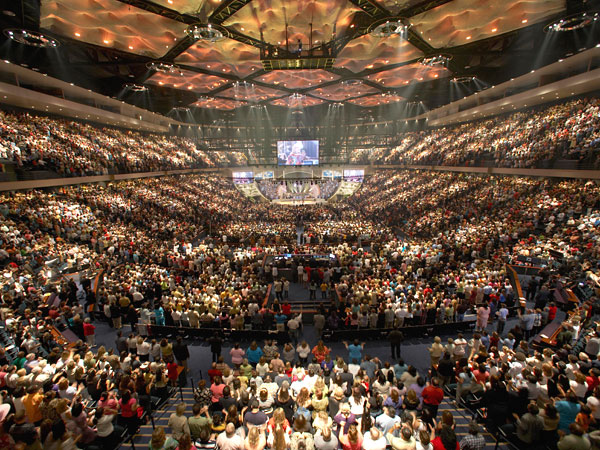
Tag Archives: Church

A Sermon for a Confirmation Class that isn’t Coming Back to Church

Matthew 22:15-22

…Then he said to them, “Whose head is this, and whose title?” They answered, “The emperor’s.” Then he said to them, “Give therefore to the emperor the things that are the emperor’s, and to God the things that are God’s.”… (Read the whole passage here).

Sermon

This morning, after hearing 10 faith statements from our confirmands, we hear Jesus and the Pharisees having a discussion. They are debating how to be someone who has faith in God, and someone who lives in a world full of political and economic powers that divide our attention and allegiances. Do we ally ourselves with God, or Caesar, the symbol of world power. It is all part of our journey through the Gospel of Matthew that began last year, but particularly through the summer we have been hearing Jesus’ teaching along side of our human desire for control, power, easy answers, black and white categories and so on.

And it would seem natural at this point to tie confirmation or affirmation baptism that we will celebrate next week with some kind of choice to stand up for faith, for you confirmands to become “adult Christians.” Kind of like the choice between God and Caesar that Jesus is talking about today. And yes, confirmation has that aspect to it. There is something distinctly adult about standing in front of the church and sharing out loud what Jesus means to you. And some think that confirmation is about making the adult choice to stand up for Jesus.

So confirmands, I think it is important to recognize what you have just done. You have been bold and brave to share your faith and to do it in front of the whole church. But not only have you done that, but you have shared your faith statements after more than two years of study and learning, of classes and community, of coming to this strange place with these strange people while most if your peers and friends were sleeping in on Sunday mornings.

Now your bravery this morning is certainly an example to the rest of us, and we are all proud to see you, our young people, standing among us sharing your faith. But some honesty in this moment is called for as well.

This may be difficult to hear, but bear with me. After the last two years of classes and studying and learning about faith, a lot of you, maybe even most of you will not come back to church very often after next Sunday. A few of you might become regular and active church members, but likely not many. And after today, there will be a lot of things, a lot of other options that will pull you, and that pull all of us away from church and away from faith.

But the options and other things to do on Sunday mornings are not the only thing that will pull you away. And again bear with me.

The things that we talked about in confirmation God, faith, church and the bible, are probably not things that your parents talked much about with you. And studies show that if faith is not talked about in the home, the chance of youth staying involved in church is very low. But this is not about blame. Your parents didn’t talk about faith to you, because their parents didn’t talk to them about faith. And your grandparent’s parents didn’t talk to them about faith.

And even though the small catechism that we used in confirmation to help us learn about the ten commandments, lord’s prayer, apostle’s creed, baptism and communion was written by Martin Luther for parents, particularly fathers to use to teach their children about faith… the church for hundreds of years has been making people think that God and the bible can only be talked about and learned about at church. And that is our fault – pastors and church leaders fault – we are to blame for why parents are not teaching the faith to their children.

So confirmands, (and families), you have now heard me say that most of you will probably not be back to church after next Sunday. But I want to be clear that this is not to make you feel bad. In fact, if the reason you and your families come to church is because you feel like you should… then I don’t want you to come. Church is not a should. Faith is not a should. God is not a should. But back to that in a second.

Remember the debate that Jesus has today about the Emperor on the coin, giving to God what is God’s and giving to Caesar what is Caesars. This is not an easy task. If we feel like we should come to church, but we want to sleep in, or do homework, or go shopping, or play sports, or dance, or whatever… we might try to go to church like good little girls and boys should… but that will last only a while until what we want to do seems much more interesting.

Giving to God what is God’s sounds nice, but let me tell you, giving to Caesar what is Caesar’s is a lot more fun.

And here is the thing about church.

If you are looking for great music, the radio will always have something that sounds better. If you are looking for an entertaining sermon, tv and movies will always be more appealing. If you are looking for food that tastes better than bread and wine, any restaurant has better. If you are looking for fun youth events, family programming, or seniors groups, the YMCA, the mall or and most community groups can do more than we can.

The church is just not as cool as the world, as cool as Caesar’s stuff and so the church won’t be entertaining enough to make you come. Guilt won’t be enough to get you out of bed on Sunday mornings. Becoming regular church attenders after next Sunday is something you will have to want to do. And our responsibility is to make this place somewhere that you would want to be.

And so what does the church have offer? What would make you want to come instead of feel like you should?

Remember Jesus talking about Caesar and God. When the Pharisees asked Jesus about paying taxes with Roman coins, he asked for a coin because it has the picture of the Caesar, the emperor on it. And next to emperor’s picture two words were printed – “Caesar God”. The romans thought that their Emperor was God, and so when Jesus said, give to Caesar what is Caesar’s and give to God what is God’s, he wasn’t really talking about this choice between God and the world. Caesar and his image on the coin represented humanity’s desire for control, our desire to be powerful, our desire to define God and Godly power. Jesus is reminding us that this is not true. Jesus is saying that we don’t always get to decide who we are, nor do we get to say who God is.

The world, things like school, sports, shopping, tv, dance. Things like power, money, security, control, black and white answers etc… these things are trying to tell us that we get to decide who we are. That we can be anything we want. A rock star, an NHL hockey player, a marine biologist, a doctor, that we can be rich, young, never sick, famous and powerful.

So what does the church, what does God tell us? Here at church God doesn’t let  us decide who we are, but tells us who we are. God tells is in Baptism that we belong to God. That we are children of God and that is the most important identity we have. In communion, God tells us what we are members of the Body of Christ, of this family of faith that gathers here at Good Shepherd and that gathers as Christians all over the world. God tell us who our family is, God gives us brothers and sisters in faith, who are there for us when we struggle, there for us when we celebrate, there for us in daily life.

In God’s church, we are welcome no matter what. We don’t have to be anyone special, we don’t have to be achieve anything, or commit to anything. In God’s church, we are not told us that we should do anything. In church we hear what God has done for us, we hear how Jesus is working in our lives, and we are promised that when we fail, when we are broken and suffering, and when we die, that God is there putting us back together, giving us new life.

So confirmands, today you have given us your faith statements in front of family, friends and the congregation. You have been brave and bold to speak, and we are proud. And while I reminded you that confirmation is not graduation from church, meaning after next Sunday you are not done church, but invited to engage church more. Don’t hear the message today that you should come to church. Faith, church and God are not things you should do.

Instead, hear today that in this place, with these people, with this God you are welcome no matter what, that you are a part of this family and that you belong here and belong to God. And when all those Caesar things, those world things fail to turn you into the things you want to be, here you will always belong, always be family, always be loved. Here, God will always tell you who you are.

Amen. 


Have thoughts on should go to church vs. want to come to church? Share in the comments, on Facebook: The Millennial Pastor or on Twitter: @ParkerErik

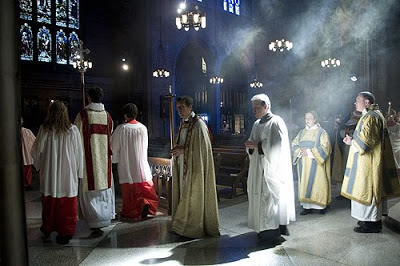
Confessions of a High Church Millennial

I have a confession to make. It will probably be surprising for many to hear from a millennial:

I am a high-church liturgy nerd.

For many of my 31 years in the church, I have been told that my generation is a group of moths attracted to the glitz and glamour of projections screens showing videos in church, electric guitars and drum kits playing the music we can hear on Christian radio and cool, hip preachers who speak “authentically.” And sure, I have been to my fair share of churches, campfires, and youth services that cater to the “youth.” I have even enjoyed them greatly!

Somewhere along the way, this has led to the assumption by everyone (and no one) that my generation’s desire is only for the new. And this desire is often held up along side our narcissistic tendencies to take selfies, post our dinner plans on twitter, and live in our parent’s basements.

It just so happens that these same lazy narcissistic millennials are currently the concern of so many church members. Churches spend a lot of energy worrying about what interests us and wondering why we don’t come to church (anymore).

I know millennials are not the first generation to be the object of the church’s and society’s attention. When I was a little, churches were trying to be contemporary then too… trying to attract boomers and their young families with 70s folk music. As a child of the 80s, my church had more than a few 30-40 something guys standing behind lecterns with guitars, singing special music that sounded like an Eagle’s song with Christian lyrics.

And then Generation X got its 15 minutes of attention…During my tween and teen years, the Gen-Xers were doing Friday night youth services once a month with songs from artists like Brian Doerksen, Petra, Amy Grant, and Third Day. The Gen-Xers, we were told, would come for this. As a teen watching this unfold, I hadn’t quite processed what it meant for the church to be so concerned with making sure 20 somethings stayed in church. I didn’t understand why Friday night youth services, token 20 somethings on church council and money for expensive sound systems and projectors was going to keep the young adults, just a little older than me, in church.

Yet, despite all the catering to what the young people supposedly want, what I do remember from church of my childhood is liturgy.

image source - http://ultraspike.blogspot.ca
image source – http://ultraspike.blogspot.ca

When we were all together as a community, when we gave up as much as we could trying to cater to what will attract the youth, or appease the seniors, or keep the young families interested, or make the boomers happy, we did simple Lutheran liturgy. 

Now don’t get me wrong, it was low-churchly Lutheran liturgy.  Which is to say our worship felt a bit like eating vegetables; it was good for us, but no one really liked it. Or at least we acted like we didn’t like it.

Our worship was billed as being everything from “Bach to Rock,” but the liturgy was more of a timeless aspect of our worship. As a kid and then teen, I could feel the prayers, the liturgical songs, the actions of standing, sitting, praying, responding, receiving were starting to ingrain themselves in my very body. I remember myself starting to set the hymnbook down more and more. I would simply pray or sing or respond. The phrases like “And also with you” or “Thanks be to God” or “Amen” started to come naturally and unbidden.

Interestingly, our low church Lutheran liturgy, that felt like eating vegetables, connected our whole congregation much more deeply than any of the things that we did to attract different generations. Weirdly, we all liked it. We all shared in it. In fact, we came to the same worship service because of it. Liturgy doesn’t distinguish between generations. It’s kind of like how I don’t play Xbox with my grandma, and she doesn’t knit with me. But we both know how to sit down and share a family meal.

Liturgy ties us together, rather than emphasizing our personal or generational experiences. Liturgy is timeless and when we can get past whether we like the tunes or instruments playing them or not, we can realize that these things we do, and repeat together, are biblical, rooted in the ancient Church and are about God. In fact, liturgy at its best makes us forget it is liturgy and instead helps us see God in out midst.

In a recent blog post, Rachel Held Evans, who is an Evangelical trying out Episcopalian worship, writes:

I am folding laundry, its starched, orderly scent a sort of incense, as the hymn rises to my lips. 

“Glory to God in the highest, and peace to his people on earth. Lord God, heavenly King, almighty God and Father, we worship you, we give you thanks, we praise you for your glory…”

I can’t remember the rest of the words exactly, and the tune meanders a bit, so I improvise, prompting Dan to shout from the other room, “Hon?  You okay? You crying about something?” which happens just about every time I burst into spontaneous song because, apparently, my version of a joyful noise remains indistinguishable from a sob.

Still, I sing on.

“….For you alone are the Holy One, you alone are the Lord, you alone are da da da da la la la la.” 

It is a season of new songs.

(Read the rest here…)

Like me, she is a millennial and a Christian (if you haven’t discovered her blog, you are probably living under a rock). If the two of us were to sit down for coffee, I would tell her that this will only get worse (or better). Way worse.

When you become a liturgy person, all those familiar texts like the Gloria (which is what Rachel was singing) start to come to your mind like the baseball stats that so many dads seem to know – they come automatically. Worship starts to take on a rhythm and pattern that you can’t escape. You will eventually find that worship is something where you always know what is going to happen next, or that your body knows what to do next. The things that change start to rise to the surface and catch your attention. After the familiar Kyrie and Gloria, which are the same week after week, the collect and scripture readings, which change each week, stand out. Liturgy helps you to identify the new and changing things of worship, by keeping you grounded with the constants.

And still, it gets worse. When you are a liturgy person, you can show up for Anglican, Episcopalian, Roman Catholic or Lutheran worship and generally know what is going on. You might even find yourself singing songs you have never sung before because you already know the words.

In my development as a liturgy person, my low-church, eating-our-vegetables, experience of liturgy as a child and teen morphed and grew into something more as I went to university and then to seminary. As I learned more and more about the meaning and history of the symbols, I fell in love with the richness of it all. I became high-church. I became a liturgy nerd.

And I am going to make a bold claim because of this.

Liturgy can engage the young people.

I am not saying that non-liturgical worship is wrong, or won’t “attract” millennials. In fact, I know many of my generational cohort who have abandoned liturgy for praise bands. But like Rachel Held Evans shows, some are coming the other way. Contemporary worship is not something I am looking to critique, but rather I am suggesting that all those criticisms of liturgical worship is simply unfounded.

I am a millennial and I am drawn to tradition, to wrote prayers, to words passed on to me from generations before. The symbols and ritual actions point to God in ways that nothing else has in my experience, not sunsets or Christian radio, not preachers with graphic T-shirts and 45 minute sermons. I don’t think I am alone. I am not saying that every millennial wants what I want. Liturgy is what it is, it doesn’t really sell itself. And I think many of my generation are not interested in being sold faith.

So to my liturgically minded brothers and sisters in faith: Let’s stop worrying about being something we are not. Let’s not try to be contemporary like the Baptists down the street while still somehow still being us. And for heaven’s sake, lets not do liturgy like it is eating vegetables. Let’s see liturgy as the beautiful meal of diversity and rich flavours that it can be.

We will never be the mega-church contemporary worship that we think all the millennials have left for. And the narrative that we need to be that to “attract” the young people only shows them that we have an identity crisis, and that what we are, is not worthy of our youth. I am sure many millennials find that off-putting… I do, and I am a pastor in a denomination with an identity crisis.

Instead, let’s be what we are. Let’s use the tools that we know how to use. Let’s preach the Gospel and point to God at work in our world with the liturgy we have been given.

And remember, as surprising as it may be to hear that one millennial is a high church liturgy nerd… it might be even more surprising that there are a lot more out there.


Are you a liturgy nerd? Do you think liturgy can engage millennials? Share in the comments, on the Facebook Page: The Millennial Pastor or on Twitter: @ParkerErik

As usual, thanks to my wife, Courtenay for her edits and insight. Follow her at @ReedmanParker on Twitter.

PS

If you like what you read on The Millennial Pastor, you can vote for this blog on Christian Piatt’s list of top 25 Christian Blogs of 2014. You might have to scroll down the list a bit, but as of this post, I am in the top 50.

iPhone 6 and why churches should stop trying to get more people to come.  

Last week, as throngs of people stood in line at the Apple store, Courtenay and I walked up to our cell phone provider’s mall kiosk just a little further down and asked if they had any iPhone 6s left. A short while later, we had traded our old iPhones for the shiny new ones of our choice.

applecrowdWhen we had tried the apple store earlier, it was so busy that we could hardly get close enough to a display model to see one. At the cellphone kiosk, we were given demo models to hold and play with. While you had to make appointments to receive service at Apple, walk-ins were welcome at the cellphone kiosk. Shipping problems meant pre-orders were delayed and backlogged at the Apple store. The cellphone kiosk? We were the first customers to buy the new iPhones from our sales associate, and it was the middle of the afternoon already. And my wife and I loved buying our phones from the friendly guy at the mall kiosk.

It was somewhat of a surreal experience to be quietly buying new phones just down the way from the clamour of the Apple store.

As we experienced the release day chaos first hand, it dawned on me that churches could learn something from all of this. We wish we could all be Apple stores, with the throngs of people, not unlike the mega-church, but most of us are more like the small cell phone kiosks. We offer the same thing as the mega-churches, but most people don’t know we have it.

As a pastor of mainline denomination in Canada, my 5 years of ministry experience has been serving in a denomination in decline. There are a zillion factors for this, of course: changing social norms, less and less societal evangelization on behalf of the church, new census categories that actually allowed people to choose “none” or “other” in the religion category, less immigration from countries with people that are mainline adherents, a failure to evangelize our own children over the past 5 decades, judgemental and condemning attitudes by church leaders towards pretty much everything new in the world and so on.

I often remind my people that while we are partly to blame for our own decline, a lot of it is simply out of our control. 

Yet, in the midst of this decline, many Christian mainliners are concerned about getting people back to church, about returning to a time of full pews and overflowing offering plates (I am not sure this ever existed).

People often point to the other choices that people seem to be making instead of church on Sunday mornings as the thing to blame for shrinking membership roles. Sports, dance, music, shopping. Mega-churches, Evangelicals, praise bands.

These are the things that people want, or so I am told.

We need to be flashier, more engaging, more interesting, less old, less traditional, less churchy.

And yet, my own anecdotal experience tells me that my current high church liturgical predilections are “attracting” or “not attracting” just as many people as the young adult praise and worship band that I played in for years. Lutherans are coming in fewer numbers to Lutheran churches. Other mainliners, Roman Catholics, Evangelicals and new converts are also coming in fewer numbers to Lutheran churches. Apparently fewer people are attending church across the board.

I am not the first to say these things, you have probably heard them before.

But back to iPhone 6 release day… with the pandemonium of people lined up for hours, days even, to get their new Apple products, I wondered why all these people are here for this stuff.

And it dawned on me.

They are buying something. Apple is selling something.

grandarcade_heroApple is great at selling things. My cell phone provider, while strong in most of Canada, has yet to get a foothold in this province. Mainline decline is a loss of a foothold. Whatever we were selling, people aren’t buying anymore.

More importantly, people are attracted by things to buy, consume, attain, acquire. They want something new, flashy, entertaining.

Lutherans, with other mainline Christians, are just not selling what the people want.

This is a good thing. 

As I realized that my church isn’t selling what people want, unlike Apple or sports or movie theatres or shopping malls, I also realized that we don’t want to sell something.

The churches that do sell what people want, are peddling things that I would never offer my people.

http://www.flcsf.org/history

Years ago, when mainline churches were on the top of the heap they weren’t more holy or gospel filled places. What we did was sold the only show in town on Sunday mornings, we sold social networking the old-fashioned way, we sold black and white morality, we sold plenty of judgement and we sold cheap access to heaven (for only 1 hour of time a week on Sunday mornings).

https://deanlbailey.wordpress.com/tag/megachurch/

Today, lots of churches are selling the same kind of stuff: A privileged place in God’s kingdom, the promise of wealth and success, black and white answers, us vs. them morality, security in a dangerous world, entertaining worship, vanilla lattes in the narthex, music like you hear on top 40 radio, and cheap access to heaven (for only a sincerely held, unquestioning faith).

Now, I am not saying that churches who achieve attendance and budgetary “success” aren’t preaching the gospel, creating disciples or doing good ministry. Yet, I do question attendance as a metric of good ministry, or as a way to determine if the gospel is preached. If numbers really do measure good ministry, than movie theatres and pro sports are doing the best ministry there is. Apple is an evangelistic super star.

Now I have to admit, in my weaker moments I do fret about numbers. I am secretly prideful when my church is packed at Christmas or Easter. I am inwardly disappointed when there is a sparse crowd on cold day in January or a lazy dog day of summer.

Increasingly, however, I am asking more and more “what brings people to church anyways?” While I have been mostly unsure about the answer these days, my experience with the Apple store taught me something about what does draw the crowds.

As individuals, we may be some of the most pious seekers of Christ and spiritual enlightenment there are. But as people, as a mob… we are attracted by a good sales pitch.

And as a Lutheran pastor, I am not selling – not even offering for free – what people want at their basest levels. 

People want new, I offer old.

People want flashy, I have steadfast.

People want to be entertained, I point to the One who transforms.

People want easy answers, I have only more questions.

People want security, I can only tear walls down.

People want assurances, I talk about uncertainty/faith.

People want something immediate, I am interested in the eternal.

People want power and control over their world…

I can only talk about how we don’t have it…

And how God does.

And yes, I realize I am may sound like I am rationalizing decline. Maybe I am. But Jesus only had 12 followers, which makes me a ragging success comparatively. I still can’t help but notice that the churches that are drawing the crowds tend to look a lot like Apple product launches. They are selling something to the masses.

And Jesus, my friends, is not for sale. Maybe it is time we stop worrying about numbers, decline, fewer resources and smaller budgets. Maybe the spirit is telling us that God’s church is not for sale.

Maybe Jesus is a little less Steve Jobs, and a little more like that faithful stalwart whose butt imprint has been etched in the pew because church is not about getting something new…

…but about becoming someone new.

Many pastors and congregations just might feel like that small kiosk in the mall, that we all pass by because they look like they are selling cheap crap. We might look longingly at the mega-churches and Apple stores with their throngs.

But good ministry is not selling something. The Gospel is not a sales pitch.

Jesus didn’t command us to fill pews and offering plates. Jesus commanded us to baptize, to eat and drink, to forgive sins.

And those things don’t fill pews or offering plates…

… but they do transform us and the world.

So maybe it is time to stop trying to get more people to church, and just give the gospel to the people we have. 


Are we trying to sell God? Are “successful” churches really selling something? Share in the comments, on the Facebook Page: The Millennial Pastor, or on Twitter: @ParkerErik

Christians need to disagree with each other

I am always surprised by people who get uncomfortable or upset with disagreement. We have all seen those moments, we have all witnessed a disagreement change the dynamic of a conversation.

And no, I am not talking about conflict, but genuine disagreement. Imagine, three or four people having a conversation and a particular opinion or point of view is brought forward by one or two. Then someone says, “I disagree.” And the disagreement isn’t about conflict, but a difference of perspective. One opinion is put on the table, only to be followed by a contrary opinion. No fighting, no conflict, just two opposing opinions existing in the same space.

These disagreement moments make us uncomfortable. Often, we just don’t know how to move forward. Living in the tension of opposing opinions feels uncomfortable.

Many Christians suffer from being unable to live with disagreement. Many Christian groups go so far as to excommunicate those who disagree. Questions, differences of opinions, opposing views are not permitted. Towing the party line is expected.

And what this really means is a couple things. Different ideas are rejected with prejudice, or those who think or feel differently than the group are silenced.

The Lutheran body that I belong to has suffered with this inability to live with disagreement. As we considered allowing same-sex marriage in our congregations, many threatened to leave if an opinion different than their own was adopted. Individuals, pastors and congregations all threatened to sever relationships. Even though the new policies allowed for a difference of opinions by not forcing anyone to hold to views or perform marriages that they didn’t want to perform, many could not even remain in fellowship with those who disagreed with them.

The church that I grew up in, where my dad and grandparents were founding members, voted to leave the Evangelical Lutheran Church in Canada. They left not because they were being challenged to change their views, opinions, beliefs or practices, but because they couldn’t remain in fellowship with others who held different views, opinions, beliefs or practices.

The thing that bothers me about this refusal to abide disagreement, is that I find disagreement a beautiful thing. In fact, I cherish those who disagree with me. 

That might sound strange, so let me explain.

Throughout my childhood, one of my primary relationships was with someone who could not empathize or sympathize with others. This person was, and continues to be, unable to hear or identify the feelings, ideas, views or opinions of others. In a relationship like this, there is no room for disagreement because all thoughts, feelings, ideas or opinions are rejected if they do not match. There is no hearing of others, there is no consideration of another’s point of view, there is no attempt to take seriously that someone else might have a valid difference of opinion.

In my adult life, I have learned that this is abuse. Relationships where there is no room for the other, where there is no room for consideration of another perspective is hardly a relationship at all.

Christians often draw the line there. There is no room for disagreement, there is only agreement or rejection.

Christians are taught to either go along unthinkingly with the group or leader, to suppress questions, to stifle alternate points of views, to only allow room for one opinion/way of thinking/perspective.

And when ideas, feelings, thoughts or opinions different than the approved ones crop up, they are rejected with prejudice. Rejected before any consideration is given, rejected as dangerous, wrong or harmful.

When members of Christian groups, particularly those on the margins or those without power (ie., women, minorities, those with different gender identities, etc…) bring up new ideas, different perspectives or alternate opinions they are accused of being divisive.

Again, this is abuse.

So often Christians reject and avoid disagreement at all costs.

And yet, there is also something beautiful and wonderful about disagreement. 

Disagreement, initially makes many of us uncomfortable because we are not good at living with tension. Once we can settle our discomfort with the tension though, there is something about disagreement that we need as Christians, as human beings, to recognize.

In order to have someone disagree with you they must first hear you. Another must first take seriously your point of view. He or she must consider your opinion as possible and legitimate. As human beings we crave being heard by another. We need to know that we are not alone, and when someone truly hears us, we are not alone.

And it goes deeper than that.

When someone hears us, considers our ideas, thoughts, emotions, perspectives and opinions AND THEN takes them so seriously that they are willing to disagree… well that is someone who thinks we are incredibly important.

In fact, I think disagreement is at the heart of our relationship with God.

God is constantly disagreeing with human beings.

While we choose sinfulness, selfishness, violence, suffering and death, God disagrees and chooses life for us.

God takes us seriously enough to consider us, to hear us out, and then to disagree. God went so far as to become one of us in the incarnation, in Christ. God is serious about hearing us from our perspective.

And still, God does not agree with our choices, and nor does God reject us and cast us into the outer darkness.

God disagrees with our condition, with our predilections for death.

God disagrees with us and chooses life for us and for all creation.

This is why disagreement is beautiful. This is why Christians need to practice disagreeing with each other. Because we are transformed by our disagreement with God, and we will be transformed for the better through honest disagreement each other.

This is why Christians need to acknowledge the tension with live in. That we are justified sinners, we are the dead made alive in Christ, we are in relationship with God who disagrees.

Because when Christians demand agreement, when we threaten rejection, we are missing an inherent feature of God’s relationship with us – Living in the beautiful tension of disagreement.  

So let’s start honestly disagreeing with each other, because it will change us for the better. 


How does disagreement affect you? Will disagreement help us be better Christians? Share in the comments, on Facebook: The Millennial Pastor or on Twitter: @ParkerErik

PS Sorry it has been a while since my lost post, I had surgery last week and I have been on the mend for the last 10 days.

Why Pastors Suck at Self-Care

Shoddy self-care seems to be an epidemic among pastors these days.

Almost as often as I meet with professional ministry colleagues, I have conversations about how difficult it is to take time off and to regularly practice self-care. Pastors bemoan the fact that we cannot seem to find time away from the parish. Working on days off is the norm instead of the exception. Forty hour work weeks are fanciful ideas, whereas 50 hours is considered a slow week. Families that never see a pastor spouse /parent is the common narrative among pastors’ families.

Somewhere along the way in Christianity – mainline, conservative, evangelical, liberal, orthodox – it has become acceptable to expect that pastors will drop everything, including sleeping or eating, to be at the beck and call of their congregations God.

I have been asked what seminaries teach now about self-care, having only graduated 5 years ago. Self-care was one of most common mantras of my seminary education, and it seems obvious to me that you can’t really care for others, or fulfill your vocation with integrity, if you are a burned out wreck… yet so many pastors obviously feel the opposite.

For so many professional ministers, a well rested, healthy pastor is a pastor failing at ministry. The Duke Clergy Health Initiative study on self-care among pastors, suggests that many ministers think self-care is selfish. My colleagues have told me that there was a day in seminary education when the message to students was that being a pastor meant giving your life to Jesus (or in other words, to your congregation 24/7). There is no room for self-care in ministry.

I have three things to say to that idea.

  1. What??!?
  2. Wait… what??!!?
  3. Bullshit.

Given our propensity for being bad at self-care, I think it behooves pastors to reflect on just why so many of us think that well-rested, healthy pastors are failing at ministry.

Of course, I have a few ideas about this:

Being crazy busy is the social norm.

The clergy is by no means the only profession where people are expected to over-work and over-function. Being crazy busy is a badge of honour in our culture. Bragging about the lack of sleep, lack of time, lack of leisure is just part of everyday conversation. Busy is normal, burnout nearly expected.

Working for Jesus lets us put our families and ourselves second.

While being busy is a cultural norm, there is the counter-narrative out there that putting family and a personal life ahead of work is important. But working for God is a holy calling, and so if the property committee schedules a meeting at 7am on our day off, Jesus will be mad if we don’t show up. Right?

Many pastors think our vocational goal is to care for everyone.

credit: http://salesjournal.com/2014/06/06/the-tyranny-of-the-urgent/

I think a lot of pastors and congregations see the primary job of  pastors to be care givers. Like a nurse or counsellor, we often see ourselves as someone whose job it is to help people feel better or feel good. Most care-givers go home at the end of a shift and are no longer on call, but many pastors feel responsible for their communities 24/7.  Often we see this to mean jumping at the drop of a hat to address a parishioner’s need, whether truly urgent or not. Life and death is urgent. Gossip, scheduling issues, complaints or other mundane things are not. The care that we offer as pastors is not the end in itself, but rather a tool to help our people see God in their lives.

Trying to prove our worth to our congregations

A lot of what pastors do is hard to quantitatively measure. Sermons are not measured by their word count. Bible studies are not measured by verses studied. But pastoral presence can be measured and tracked. I think many of us know that our jobs are provided for based on the generosity of others. Being omni-present and available is a way to justify our worth. Working 60 hours a week makes us believe that the church can’t survive without us. And being omni-present in order to justify our worth means those hard to quantify duties suffer, like planning worship, preparing sermons (including down time for creativity to seep in) and teaching the bible with intention and purpose.

Congregations fall in to cycles of consuming faith

We consume everything in our society. Church and pastors are just another thing to consume. Worship has become entertainment. The Bible is information to bolster our already established world views. Pastoral care is just another service we receive. No wonder pastors burnout if they are being consumed by those they serve.

Being a quivering mass of availability precludes other transformational work

It is impossible to be available 24/7, yet many pastors try. When pastors try to be present for every meeting, every event, every person in need, every time the church door needs to be unlocked, we are over-functioning for the community we serve. But being-omni present also means that consideration about what it means to be a community that cares for each other is lost too. Taking on all the responsibility to care for each member of the community means that care for the community as a whole is missed. It also absolves people of sharing in the caring work. Caring for each member is draining work, but caring for a community as a whole and its behavioural systems is also hard work. It is nearly impossible to do the whole community work when a pastor is emotionally drained on caring for individuals.

Pastors have become something between a paid friend and counselling professional.

Sometime in the 1960s, as Clinical Pastoral Education and counselling began to enter into ministry, pastors moved from being community leaders, teachers, prophets, moral authorities, to travelling visitors and caregivers, who also provided free quasi-professional counselling. There is nothing that will suck your time away like having to add “being a friend / providing free on call counselling for anywhere from 100 to 1000 people” to your job description, not to mention keeping up with all the other duties of a pastor. As the role of pastor shifts and changes, like the moral authority aspect of the role that has been largely dropped, so to will the paid friend aspect have to go.

Pastors find their roles hard to define.

Another result from the Duke Clergy Health Initiative was that pastors often feel like congregational members don’t understand the breadth of clergy duties. Many feel like parishioners only see the one hour of work on Sundays. While this may be true of parishioners, I think that clergy are also guilty of not understanding the breadth of our own duties.

Poor self-care is ultimately a problem of priorities. I suspect that, with so much to do in most parishes, and all the reasons I stated above, pastors have a hard time prioritizing. And this is because priorities mean disappointing someone, because not all duties are equal and not all issues need the same attention. When everything becomes urgent, keeping everyone happy and cared for is the goal. Time off, family time and self-care are bumped to the bottom of the list.

But when pastors take the time to ask themselves, what are the most important things for me to do each week and what can be left undone, the tyranny of the urgent and the need to be busy, busy, busy melts away. All of sudden that property committee at 7AM on a day off is not more important than sleep. Those late night emails can wait until office hours. The time to care for those in crisis ceases to be immediate, and instead becomes when time allows. Writing and preaching half-decent sermons, instead of Saturday night specials becomes a weekly occurrence. Leading worship like you know what is happening before it happens becomes the norm.

And most importantly, care for the whole community instead of the collection of individuals becomes important.  Pastors can teach people how to care for each other, how to participate in community instead of consuming church, how to become disciples rather than passive observers of church.

Self-care is not just an issue of burning out pastors. Reducing the work load or adding more members to the pastoral team aren’t solutions. Prioritizing ministry is the only way to really practice self-care. This means taking a deep look at what ministry is all about. What is a pastor really called to do and be?

And in the end, practicing self-care means preparing yourself to disappoint those who expect your omni-presence. They might not like it to begin with, but they will eventually they will begin to appreciate it as we become better pastors by doing what is important instead of doing everything.


What obstacles stand in the way of your self-care? How can congregations and colleagues support over worked, burring out pastors? Share in the comments, on the Facebook Page: The Millennial Pastor or on Twitter: @ParkerErik

And thanks to my wife, Courtenay for her insights and editorial support. Look for a post from her about self-care, coming soon. Follow her on Twitter @ReedmanParker

Cover photo credit: http://um-insight.net/blogs/dan-r-dick/too-busy-to-learn/