Tag Archives: Advent

Why Advent is sucking less this year

Luke 3:7-18

John said to the crowds that came out to be baptized by him, “You brood of vipers! Who warned you to flee from the wrath to come? Bear fruits worthy of repentance… He will baptize you with the Holy Spirit and fire. His winnowing fork is in his hand, to clear his threshing floor and to gather the wheat into his granary; but the chaff he will burn with unquenchable fire.” (Read the whole passage)

*This sermon was based on this blog post

Stir up the wills of your faithful people, Lord God

Advent just isn’t doing it for me this year. Maybe you feel the same way too.

Advent is normally my favourite season of the church year. I don’t think that is uncommon for pastors.

Christmas is of course the Super Bowl (or Grey Cup) of the church year. Christmas is like the most popular chain restaurant in town, everyone goes there and it is a big party. But Advent is more like that hole-in-the-wall family run restaurant with the most delicious food you can find, that most people seem to pass by without much notice.

The rich flavour of Advent is found in the images that we hear – the way of Lord, valleys filled up, mountains made low, crooked paths made straight that we heard about last week. This week it is the spicy brood of vipers, the firey winnowing fork burning the chaff. Next week it will be angels and virgins, and promises and hints of Messiah. Advent’s beauty is in the blending of hints and promises of Messiah together with real life. With the messiness of people looking for something better.

Real people like the crowds in the desert going to John the Baptist, looking and hoping for something different than what they know. Real people like the hypocritical religious and political leaders that we know as well as 1st century Israel did. Real people like a girl dealing with an unplanned pregnancy and the reality of impossible life choices.

Advent speaks to the real circumstances that people – everyday, average people – deal with all the time.

And Advent weaves the coming of Messiah through it all. Christmas tells us of the extraordinary. Advent brings God close to the ordinary.

But this year, Advent has not felt so hopeful.

Normally, the light of the coming Messiah shines brightly through the cracks of our Advent images. We cannot help but see Messiah bursting into our world. This year, the light feels dull.

Instead, all the messy and broken stories of God’s people that we hear in Advent are hitting too close to home.

Stories and images of burning chaff speak less to farm hands separating wheat on the threshing room floor and more to a warming planet that world leaders cannot seem to get a handle on.

Stories about King Herod’s willingness to kill infant boys to protect his own power and the violent world of occupied Israel of Jesus’ day reminds us all too much of the terrorism, shootings, and bombing that we hear about in the news.

Stories about the innkeepers who turned away the holy family remind us too much of political leaders like Donald Trump who are vowing to prevent any muslims or refugees to cross their boarders.

Stories like the possible stoning that Mary could have endured had Joseph chosen to dismiss her sound too much like violence against women simply because they are women, against indigenous people because they are indigenous as the murderer of Tina Fontaine was arrested this week. Tina Fontaine whose death just up the river from here sparked the call for a national inquiry into missing and murdered indigenous women.

Advent stories are coming at us in the news as often as they are coming from the bible this year.

Not to mention that here at Good Shepherd our community and family is struggling with suffering, with illness and with death. We are grieving as a church family this week as we said goodbye to beloved wife and mother on Monday. And still there are those of us that are sick, lonely, and tired, even with Christmas approaching.

Advent is our reality. Waiting for Messiah is what we are doing this year.

As John the Baptist declares, “You brood of vipers! Who warned you to flee from the wrath to come?” We are living out Advent in real-time.

We are the ones standing on the riverbanks hoping that this wild hermit preacher named John can give us some hope. And all he seems to be talking about is wrath. Axes waiting to cut down trees. Warnings to start living better lives. Threats of burning with the chaff unless we get it together.

At least that is what John seems to be talking about.

John describes the Messiah standing on a threshing room floor, the place where grain is brought in once it is harvested from the land. And the Messiah has his mighty winnowing fork in hand. A winnowing fork is used to separate a wheat stock from the grain itself. As the fork lifts the grain from the pile, the heavy grain falls to the floor, and the lighter useless chaff is blown into the fire to be burned away.

John’s message today sounds harsh but fitting for our world. Somewhere between racist political campaigns in Canada, ISIS, Paris, US Gun Violence, Climate Change realities and all the other stuff our world is suffering from… the illusory veneer of the “Christmas season” has been stripped from us.

As Advent isn’t doing it for us this year, and its light seems to be dull, because the world is full of depressing stuff… maybe throwing us all into the chaff isn’t what John is getting at.

Because a pitchfork is not what Messiah is holding, for a fork would be a useless tool to clear a threshing room floor. And nor is the word fork used in the original greek of this text. No, the tool that the messiah is holding is more of a winnowing spoon… or more precisely a shovel. The winnowing shovel is not a tool of separating but a tool for gathering.

Maybe just maybe, Messiah is gathering us up. Gathering us all up. Gathering up our broken and suffering and dying world so that we can finally begin to see the light.

Maybe that is how God is reminding us that the Good News isn’t just reserved for Christmas.

As bad as the world seems to be, Messiah is already a work around us. Messiah has his winnowing shovel and is gathering. Messiah’s is bringing light to our Advent world.

Messiah is gathering us up in Paris as world leaders realize the climate must be preserved for future generations and reach 11th hour agreements to heal the planet.

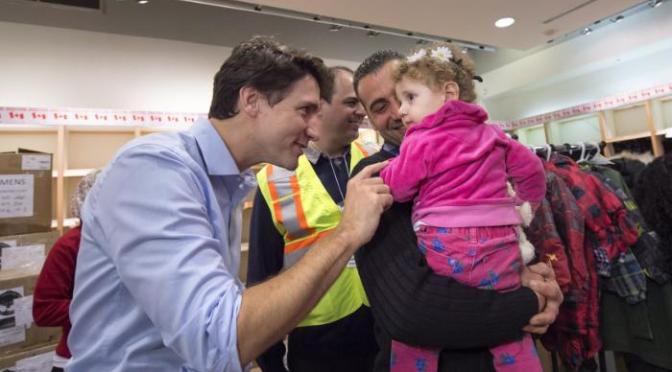
Messiah is taking us in as Prime Ministers and Premiers greet lowly refugees with smiles, hugs, jackets. With love, compassion and welcome.

Messiah is scooping us up off the floor with an inquiry into missing and murdered indigenous women so that we can know what happened to the most vulnerable among us.

And Messiah is gathering us here at Good Shepherd while we grieve the death of  a member of our community this week, we are also finding new ways to care for each other.

And Messiah is taking us in as we collect hampers for those in need, and as we support the work of the Soup Kitchen, Food Bank and Homeless Shelter with year-end donations from our congregation.

And Messiah is scooping us up off the threshing room floor with children who reminded us this morning of the Christmas story and how God is coming into our world.

Messiah is gathering us up, all the mess and dullness of our real-time Advent so that we can see that a real God is coming to us in a real incarnation, and this real broken and suffering flesh that we bear is also born by Messiah.

Messiah is coming. Really coming to this real and dark world. Not into the world of sweet idealistic Christmases that sound more like fantasy that reality. Messiah is really coming to us.

Stir up your power Lord Christ and come.

Why Advent Sucks this Year – Why We Need Advent

Advent is normally my favourite season of the church year. I don’t think that is uncommon for pastors.

Christmas and Easter are of course the big celebrations, but Advent and Lent have a certain depth and richness, that allow Christmas and Easter to be what they are. Advent and Lent add the flavour to the meal.

For me, the richness of Advent is found in the images – the way of Lord, valleys filled up, mountains made low, crooked made straight, broods of vipers, winnowing forks and chaff, angels and virgins, and promises and hints of Messiah.

Advent’s beauty is in the blending of hints and promises of Messiah together with real life. With the messiness of people looking for something better. The people in the desert going to John the Baptist, looking for something different than what they knew. The hypocrisy of religious and political leaders, which is a true as death and taxes. A  teen girl dealing with an unplanned pregnancy and the reality of impossible life choices.

Advent speaks to the real circumstances that people – everyday, average people – deal with all the time.

And Advent weaves the coming of Messiah through it all. Christmas tells us of the extraordinary. Advent brings God close to the ordinary.

But this year, Advent has not felt so hopeful.

This year I feel like I am being dragged into Advent, and the hope and anticipation just isn’t there.

Instead, all the messy, crappy, broken stories of God’s people that we hear in Advent are hitting too close to home.

Terrorism, shootings, bombs, political leaders vowing revenge feels all to close to world of the seeking crowds, the oppressive world of tyrant kings, the violent world of occupied Israel.

Violence being condoned towards women and their bodies simply because they bear the child of a man, sounds too much like the possible stoning that Mary could have endured had Joseph chosen to dismiss her. A pregnant and unmarried woman was basically worthless and damage good… a sentiment that too many entitled white men  still feel about women.

Syrian refugees fleeing the exact part of the world that the holy family was forced to flee because of violent rulers being fearful of young boys growing into terrorists just feels eerie. Somehow this year, we became all the innkeepers who turned the holy family away because they were too different and unsafe.

The callous brutality of Herod and the Romans feels like the unwillingness of American politicians to consider the smallest modicum of gun control. Royal death squads sent to murder infant boys are the price Herod paid for power and money. Daily mass shootings are the price to pay for an unregulated gun industry.

Advent stories are coming at us in the news as often as they are coming from the bible this year.

Advent has always beautifully shown us the interweaving of incarnation and reality. But this year, the stories we read, preach and hear in the church are reality in the world. We have become a people waiting for and in need of a Messiah.

Advent is our reality.

We are living out Advent in real time.

And maybe that is why we need Advent more than ever.

Without Advent, our current troubles would make celebrating Christmas a farce.

Without Advent, our current troubles would be all there is in the world.

Without Advent, our current troubles would eclipse any glimpse God at work among us.

Advent is sucking this year because the world is sucking this year. Somewhere between racist political campaigns in Canada, ISIS, Paris, US Gun Violence, Climate Change realities and all the other stuff our world is suffering from… the illusory veneer of the “Christmas season” was stripped from us.

And maybe that is the point.

Maybe the real the world has to be held out in front of us, maybe we need to see the unvarnished, un-white-washed, naked world to really get it.

Maybe Advent needs to be real so that we can get that the incarnation is real too.

To get that Messiah is coming into this Advent world.

Stir up your power Lord Christ and come.


Are you in the Advent spirit this year? Share in the comments, or on the Facebook Page: The Millennial Pastor or on Twitter: @ParkerErik

The Temple has Been Thrown Down – Paris, Beirut, Baghdad

Mark 13:1-8

As Jesus came out of the temple, one of his disciples said to him, “Look, Teacher, what large stones and what large buildings!” Then Jesus asked him, “Do you see these great buildings? Not one stone will be left here upon another; all will be thrown down.”… For nation will rise against nation, and kingdom against kingdom; there will be earthquakes in various places; there will be famines. This is but the beginning of the birth pangs.” (Read the Whole Passage here)

12227205_983847591654638_5852447112899142260_nSermon

Some weeks as a preacher, you plan one thing, and the breaking news comes. The hourly news on the radio, twitter and Facebook alerts, news articles

19 in Bagdad

43 in Beirut

127 in Paris

Explosions and bullets.

Chaos. Fear. Death.

The world prays for Paris and beyond.

The veneer of business as usual is once again shattered.

Our thoughts and prayers are with the victims and families today as the long slow process of rebuilding life begins.

But as we sit here, tucked away from the danger, yet still with heavy hearts, we know that there are explosions and shootings everyday. Paris feels closer to home, than Beirut or Baghdad, but the violence happens everyday.

(Pause)

Father Angelo has led a number of tours of holy sites in his ministry at St. David’s. Every few years, he offers a chance for a group from the congregation to travel for a couple weeks and to see historical parts of the world. He has taken groups to the Holy Land a number of times, to Rome, and to England. This year, the group was touring the Cathedrals of central Europe. They were headed to the largest gothic cathedral in Northern Europe, the Cologne Cathedral.

As the tour bus approached, the group could see the cathedral towering above the city. With the twin towering spires looking like they were reaching for heaven above, Father Angelo led the group into the church. The Cathedral was bustling with life. There were hundreds of people mingling about. There were a dozen tour guides were lecturing groups in different languages.

And then all of a sudden a loud crash could be heard outside, followed by the whole cathedral shaking, dust scattering everywhere.

And then another explosion… all the people inside the church froze for a moment. And then as if on cue, people began running, screaming and shouting. Father Angelo called for his group to stay calm and stay put.

(Pause)

Next Sunday will be Christ the King, the New Year’s Eve of the church year. And then we will reset the story of Jesus, and begin again with pregnancy as we wait for the birth of Messiah.

But we are not quite there yet… Instead first we must hear the last portion of Mark’s gospel for this year. And in true Markan fashion, it is yet another conversation between Jesus and the disciples, where they miss the point and Jesus gets annoyed.

Paris is exactly what Jesus is talking about with the disciples. As they marvel at grandness of the temple, Jesus points out how they cling to the illusion of security, safety, comfort, and enduringness. They see the temple as a sign of God’s power. Jesus’ words about the temple are not judgement or condemnation. He isn’t hoping for the temple to fall. He is simply warning of the inevitable. He is telling the disciples that if the stones of the temple are where they place their faith… They will not just be disappointed, but one day they will be fleeing the falling stones as they threaten to come down.

On Friday, we bore witness as Paris was another destruction of the temple. A temple built to our own power, our own security, to faith in our own god-likeness. Because unlike Beirut or Bagdad, Paris is the same stadiums and restaurants and concert halls that we believe are safe for us. We are shaken because Paris could be here. We could be the ones out for dinner, watching the game, at a concert when the bullets start flying, or the suicide bombers decide to press the button.

If our faith is in the large stones and tall buildings and in the idea that violence couldn’t happen here, we will be disappointed.

And at the same time, if our fear is that every refugee is a terrorist and that we can close our doors and boarders to be safe while not also closing off some part of our hearts, we have again put our faith in the wrong thing.

Jesus warns us not to be surprised when the stones begin to fall and when the wars begin. But as we try to understand even more senseless violence and death, it is hard to understand what God is up to.

Jesus does give us a clue. The birth pangs.

As we are about to begin Advent, the church’s season of pregnancy, we know that the birth pangs mean that something new is about to happen. We know that the pain and suffering, the aches and stiffness, the loss of control and uncertainty about what is coming might be signs of impending death and destruction. But with God, we know that these are also the signs of something new, something being born into our world.

(Pause)

In just few minutes, the cathedral was nearly emptied out. Father Angelo and his group found an alcove to take shelter in with a few other tourists. There were sirens and the sound of gun fire coming outside. The world seemed to have flipped from wonderful European holiday to surreal chaos in the blink of an eye.

As the group huddled together, the doors to the cathedral burst open. 3 young, dark skinned men with beards and backpacks came pouring in. The St. David’s tour group looked at each other in abject fear. A few started sobbing, one person cried, “This is the end.”

Father Angelo stood up and left the alcove. He waved the three men over to alcove. They came running, and as he ushered them into the alcove, breathing heavily, they sat down next to the others against the wall.

One looked up to Father Anglo and said, “Thank you, Father.”

Father Angelo nodded.

As the St. David’s group slowly began to relax, the three men checked their phones and caught their breath.

As the noises of chaos and sirens continued outside the church, the group settled in. One of the men, looking as scared and worried as anyone in the St. David’s group, looked again towards Father Angelo and said, “Father, will you lead us in prayer.”

“Yes… we should pray, shouldn’t we.” said Father Angelo.

And together, the 3 young dark skinned men, cathedral stragglers and the group of St. David’s began to pray, “Kyrie Eleison. Lord have mercy.”

(Pause)

In the midst to crashing stones, Jesus could have said that these things mean the end. Instead he says they are the birth pangs. That these things mean something beginning, not something ending. We so often see the struggle and pain, the chaos and uncertainty as symptoms of dying. Yet, these are also symptoms of pregnancy.

And with God, the birth pangs points us to a pregnant teen and her carpenter husband travelling the harsh country side in the midst of foreign occupation and population control. The birth pangs herald a baby born in the most inconspicuous of stables in the back corner of the world far away from large temple and large stones.

God’s work happens in the quiet corners. God’s work happens with normal people, like us.

It is like Mr Rogers who reminds us to “look for the helpers”.

It is the Porte Ouverte, Open Door message that Parisians used to let those who were stuck outside know that there was safety to be found.

It is a musician who drags his grand piano on his bike, to play John Lennon’s imagine outside of the bombed out concert hall.

It is hearts that refuse to be closed off even though every instinct tells us it is not safe to be open to the “other”.

But most of all the birth pangs are signs of God’s promise that death does not have the final say. That tall buildings and large stones, nor explosions and the bullets, are the powers that define us.

Instead in the places where we least expect,

God stands where tall buildings and stones have fallen.

God is thwarting the bullets and explosions.

God is birthing new life.

God has already begun the work of reconciliation and resurrection.

Because reconciliation and resurrection always begin in the broken and tragic places.

Because new life must first begin in death.

Because God works with mangers and crosses, with open doors and prayers prayed by helpless and far away neighbours and friends.

God’s life giving work happens in the small places, because that is all God needs. Because that is where death and darkness are defeated. In mangers, on crosses, in empty tombs, on open doors/ Portes Ouvertes, with prayer vigils reminding us to forgive and to hope. The birth pangs are are not the destruction… The birth pangs are the realization that neither our large stones nor our bullets have real power.

The birth pangs are the sign that God is about transform the world with virgins and shepherds, with fishermen, tax collectors and sinners, with words of faith, water, bread and wine. With a praying Body, a praying community spread all over the world, God is making us the Portes Ouvertes / Open Doors of the Kingdom. God is transforming the world in the Body of the One who was laid in the manger but walked out of the tomb. In the One who is there wherever two or three gather to pray, even when the bombs and bullets are falling.

And so today, as the stones fall, as the news breaks, as the fear of the other threatens… we prepare for the birth pangs. God is about to birth something… someone new into the world. Messiah, the One who will truly save us, the One who is greater than any temple, any bomb, any fear. Messiah is on the way.

Amen.

Do Not be Afraid – Christmas will survive Advent

Advent is my favourite season of the church year. 

In fact, I weirdly start longing for Advent sometime in September most years. I get tired of the long season of Green or Ordinary Time. Usually by Thanksgiving (celebrated the 2nd Sunday of October in Canada), I am ready for anything but more parables from the Gospels. I ready to see anything but same-old, same-old green paraments hanging from the chancel furnishings. I am ready for the deep, rich blues of advent to begin. Don’t tell anyone, but by that time of year, I sometimes even long for snow!

As a kid, Advent always bore this mysterious quality for me. The church I grew up in used to hang this huge advent wreath from the 50ft. sanctuary ceiling – like seriously, it was the size of a small kitchen table. And this elderly usher would lower it down using a pulley system during the children’s message so that we could light the appropriate number of candles. The shaky old usher often looked like he was about to let the whole thing go and the wreath would come crashing down on our heads. That was part of the fun for sure.

Yet, I also remember the little seen blue stole that the pastor wore for just a few weeks. I remember the haunting verses of O Come, O Come Emmanuel that we would sing in anticipation of Messiah. I remember hearing the stories of that interesting figure “John the Baptist” and the camel’s hair clothes he wore, and the locusts or giant grass hoppers he ate. I remember the wild sermons he preached, and how the drama of his words seemed to echo in the sanctuary:

       Prepare the way of the Lord
      Make his paths straight

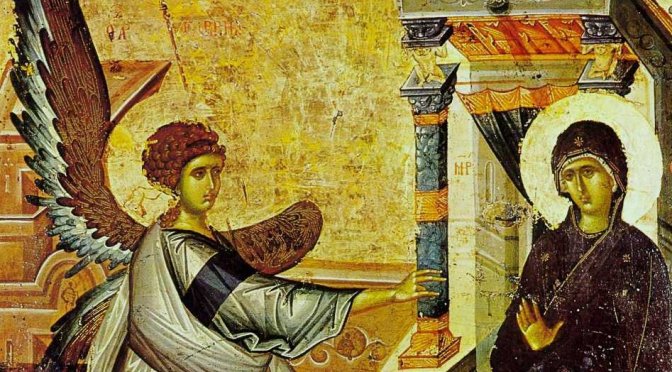
But the exciting images of Advent lessons didn’t end there. The best story of Advent – and one of the best of the whole year – was the story of the Angel coming to Mary. I loved hearing those fist words the angel speaks, I could imagine a young girl just going about her business in her room and suddenly somthing, someone beyond worlds appeared to her:

        Do not be afraid

Of course! Of course, the Angel would say that! Because meeting an angel would be the coolest and most terrifying thing ever!

Advent has the best stories, and they have stuck with me since being a kid. These days as a pastor, I start getting excited weeks ahead of when I have to preach them. I start letting those words of John, those words of the Angel and words of Mary percolate in my mind so that I am ready to preach them when the time comes.

Increasingly the past few years, Christmas has been creeping into Advent. Sure there have always been Christmas parties during advent, and choir/band/orchestra christmas concerts, and Christmas displays in malls. But Christmas seems to more ubiquitous than ever and before Advent even starts.

And maybe I didn’t notice it as much as kid, but it feels like the whole world is joining in the generic Christmas celebration. Almost everyone celebrates Christmas these days, whereas Christmas used to be a mostly churchy thing to do… or at least not a very big deal to non-religious folk.

And who am I to judge? If the secular world needs a cultural celebration to fend off the darkness of winter, to spread joy and cheer, to make an excuse to give and receive gifts, than great! Christians appropriated Christmas from pagan winter solstice traditions, why can’t the secular world borrow Christianity’s holy day in order turn our dark time of year into a celebratory time?

It is even interesting to watch the secular world work out how the commercial and cultural celebration works for it and I am fine with that. This year there was a movement in Canada to keep stores from putting out the Christmas displays until after Remembrance Day (Nov. 11th). Many stores start their Christmas campaign November 1st, right after the halloween campaign has been put to bed with a candy hangover.

Despite my willingness to share Christmas, the people I don’t get are the Christians who start fighting this fictitious “War on Christmas” around November 1st or 12th. Even government officials are capitalizing on this unfounded fear that the phrases “Happy Holidays” or “Season’s Greetings” are going to take the Christ out of Christmas. Or that Xmas isn’t a long held Christian short hand. I think we are afraid of losing something and so we hold on more tightly.

The idea that Christians are in any way persecuted in Canada is about as absurd as saying Canadians don’t care about Hockey. But I will leave the persecution bit for another post.

What bothers me about the War on Christmas is that its real opponent seems to be Advent.

Christians seem to forget that Advent even exists. Maybe instead of being offended by Happy Holidays, we should be correcting Merry Christmas with Happy Advent.

Because here is the thing: Christmas needs Advent.

We need Advent.

Christmas without Advent is like giving birth without pregnancy. It is like opening a novel in the middle of the story. It is like skipping the first half of every movie you watch.

It is like Easter without Good Friday, or the story of the Fall in Genesis without the story of Creation and paradise, or the story of the Israelites coming to the promise land without the story of leaving Egypt.

So often we want to make Christmas about idyllic manger scenes with little drummer boys, sheep and donkeys, angels and shepherds, when Christmas is about un-wed mothers, the oppression of Empire, and the slaughter of children.

I think we want to imagine Christmas an unblemished perfect little story, because we are afraid of the darkness.

Advent reminds us Christmas is not about nostalgia and sentimentalism. It isn’t just singing Silent Night while holding a candle on Christmas Eve.

We need Advent because it tells us the whole story. It tells us the deeper story. John the Baptist, the Angel and Mary are not just cool characters in rich narrative. They are powerful symbols and reminders that we are still Advent people.

Advent reminds us that Christmas – that the birth of Messiah – is for a world still waiting in darkness, still waiting for justice, still waiting for healing. Advent tell us that Messiah isn’t just a cute baby born in a barn to poor parents. Advents tells us that Messiah is God’s answer to human darkness. God’s light sent to people living under the thumb of the Roman Empire, people living under the oppression of white privilege in Ferguson and Staten Island, people living in the systemic poverty imposed on the Indigenous people of Canada, women living under the constant threat of sexism, misogyny and sexual violence, people who practice a religion different than the empire’s being forced to celebrate holy-days that the White Christian Empire accuses them of taking away.

The symbols of Advent still draw me in just like they did as a kid. Even though I am the one putting on the blue stole, and reading the words of John the Baptist, the Angel and Mary. And even when I get crochety because Christmas music is playing in the malls in the middle of November and my Facebook feed is full of people worried that Christmas might lose Christ because someone wished them Happy Holidays, Advent reels me in.

Because I need Advent too.

I need Advent and its promise of a new world, its hope given to a world that feels hopeless too often and because of those four little lights that push away the darkness in order to make room – to make room for Messiah.

Messiah who is already here, but still on the way.

So do not be afraid.


What does Advent mean to you? How do you observe Advent? Share in the comments, on the Facebook Page: The Millennial Pastor or on Twitter: @ParkerErik

Advent Waiting: Ferguson, Sexism and Black Friday

I have been hesitant to add my own privileged commentary to issues surrounding Ferguson and sexual violence against women. I normally try to share and retweet the voices of the oppressed. But as a preacher, I can’t keep silent. Here is the text of the sermon preached to my congregation this morning. 

Mark 13:24-37

“From the fig tree learn its lesson: as soon as its branch becomes tender and puts forth its leaves, you know that summer is near…

Therefore, keep awake– for you do not know when the master of the house will come, in the evening, or at midnight, or at cockcrow, or at dawn, or else he may find you asleep when he comes suddenly. And what I say to you I say to all: Keep awake.” (Read the whole lesson here)

Sermon

Keep Awake. The world is waiting. 

The world is waiting for justice. Waiting for peace. Waiting for healing.

Keep awake. This week we watched as the people of Ferguson waited for answers, waited for justice… and then we saw a system stacked against justice rule to protect the privileged. And we saw the results. As the Rev. Dr. Martin Luther King Jr said, “Rioting is the language of the unheard.”

The world is waiting for Justice.

Keep Awake. This week we witnessed hoards of people flock to malls and stores in order to get Black Friday deals. In order to engage in retail therapy, the attempt to fill empty hearts by emptying full wallets.

The world is waiting for healing.

Keep Awake. This week heard news and reminders that violence against women, misogyny and sexism are not things of the past. We heard the charges laid against CBC radio host and celebrity Jian Ghomeshi, the allegations made by elected MPs of harassment. We have heard that two men have been charged in the case of Rinelle Harper, a 16-year-old girl left for dead on the banks of the Assiniboine left after being assaulted and violated.

The world is waiting for peace. 

Today, is the first Sunday of Advent. And we know it is Advent, not just because of the calendar, but because we are no longer surprised by the Christmas music playing in the malls, or the Christmas lights that light up night-time streets and highways, or the fact that the Santa Claus parade was already two weeks ago.

Last Sunday, we concluded the church year, and today we turn the page onto a new one. As Christians, we observe a calendar slightly offset from the secular one. Our church year begins with Advent in late November, a good month or so ahead of January 1st. And like regular New Year’s, Advent is partly about a chance to start over, to leave behind the baggage of the previous year, and make a fresh beginning.

But Advent is no so much about resolutions, as it is about preparation. Preparation and waiting. Advent is the 4 weeks before Christmas, and is centered around hearing the stories that prepare us for the birth of Messiah. And like the season of Lent before Easter, Advent is season that is toned down, a season for reflection and thoughtfulness. But Advent is not about penitence or preparing ourselves to hear about Christ’s death is like Lent is. Instead, Advent is hopeful and full of anticipation. If Lent is the church season of waiting on Death Row or in Palliative Care, Advent is the season of pregnancy.

And each Advent season, we start on week 1, Sunday 1 hearing about the end. Hearing about the coming of the Son of Man. Advent waiting begins with waiting for Jesus. Waiting for the Messiah to come with the people of Israel, waiting for child to be born in a manger, and waiting for the second coming, for Jesus to return for that big cosmic ending.

And so today, before we get to John the Baptist, or before we get to angels making announcements to virgins, we hear Jesus’ words about the end of time. Keep Awake, he says, because no one knows the day nor the hour.

What an odd place to begin the church year. What an odd place to start Advent. December should start with digging boxes of Christmas lights out of storage, and checking off lists for Christmas shopping. This end of the world stuff doesn’t seem to fit.

As Jesus tells his disciples to Keep Awake, it becomes abundantly clear, that as modern people, we have no idea what waiting really is. The people of ancient Israel lived in a world of waiting so different from ours.

The world of the disciples was full of waiting… as Jesus reminds them of the lesson of the fig tree, we too can learn something. The people of Ancient Israel lived by a lunar calendar. This means that they organized their months by cycles of the moon rather than by the earth moving around the sun. More concretely, their months were all either 29 or 30 days long. Any month could be 29 or 30 days. Their years were either 12 months or 13 months long. Any year could be 12 or 13 months. So how did they know?

Well, when at least couple of people observed the new moon at end of the month, they would tell the temple authorities (the church council) who would then send out messengers to let the people know that the month had changed. And then at the end of the year (which was usually around our February or March), if spring still seemed far off, the temple authorities would just add another month to the end of the year.

Take a moment and think about that. Imagine if we had to read the papers or watch the news to find out which day our months ended on. And imagine if a couple of weeks before the end of the year, we found out there would be another December.

The is why the Ancient Israelites had to watch the leaves of the Fig tree to know when summer began, their calendars couldn’t be trusted. Instead, they had to trust the signs around them, they had to trust their community to keep awake together, trust their leaders to make sure good decisions were made.

We wouldn’t know what to do with ourselves in a world like that. We don’t know how to wait in that way. We don’t live our lives with an openness to things happening sooner than we expect, or not happening when we want them to. We live with set schedules, with fixed time limits, with predictable dates. In fact, you can tell just how bad we are at waiting by the question we love to torture kids with this time of year, “How many sleeps until Christmas?”

And while we are not good at waiting in the same way the people of ancient Israel were used to, we do wait. We wait just like they did. Maybe not for extra days or extra months but we wait for salvation like they did. We wait for Justice like them, we wait for peace, we wait for healing.

And in Advent, we wait for Messiah too.

They waited for Messiah in Jerusalem, on the banks of the Jordan and Bethlehem. They waited to be freed from oppression from Empire, they waited for God’s mercy and love to make them clean, they waited to be lifted up from their suffering.

And we wait for Messiah in Ferguson, in Ottawa, on the banks of the Assiniboine, and here right now among us. And whether we are good at it or not, our waiting is not measured by the number of sleeps until Christmas, nor on calendars, schedules or to do lists.

Like the ancient Israelites, our waiting for Messiah is measured in small glimpses of Hope.

Messiah came to Ancient Israel in the form of a carpenter turned preacher telling of the coming of the son man to expectant crowds. Messiah comes to us as people of faith speak out about the injustices of Ferguson and stand with a community grieving and oppressed.

Messiah was preached by a hermit crying in the wilderness, prepare the way of the Lord, make his paths straight. Messiah is preached today, as we refuse to consume and spend as if it were therapy, as we proclaim a counter-cultural message of waiting and anticipation, instead of immediate gratification.

Messiah was promised and announced to young woman, not yet married. And it was an unremarkable girl, overlooked by the world around her who bore God’s promise into the world with a man who should have stoned her instead of staying faithful.

And Messiah is promised and announced here as a community rallies around a young girl left for dead on the river banks, declaring violence against women and minorities is unacceptable.

Our hopeful waiting is for a Messiah who comes in small unexpected places, who comes no matter how good we are waiting, who comes to bring justice, peace and healing.

Keep Awake, says Messiah. The world is waiting.

Keep awake and see that Advent is not a countdown to Christmas, but a chance to see that the signs of Messiah’s coming, Messiah who may come tomorrow or in a lifetime.

But Jesus also says something else.

Today Jesus declares that no matter how dark the world seems,

The Son of Man is coming.

No matter whether we wait with patience or with anxiousness,

The Messiah is entering our world. 

Regardless the powers of injustice, violence and suffering,

Salvation promised, will come to us. 

Our waiting will not be in vain, our longing for a better world does not go unnoticed by God.

Keep Awake Jesus says, not as command to keep vigilante. But Keep Awake is a promise. A promise that in our Advent waiting, there will ever growing light in our darkness, that our hope is in Messiah and the signs say Messiah is on the way.

Amen, Come Lord Jesus.