Category Archives: Theology & Culture

Can we kill the church?

It is no secret that Christianity in Europe and North America is in decline, at least in terms of numbers, attendance, budgets and societal influence. Christian leaders in the United States, in particular, are really starting to name and deal with this reality more and more. What many Americans may not know, is that Canada is about 20 years ahead  in this process, and the UK 20 years ahead of Canada. In a way, I am speaking from the future of American Christianity, if things continue on the same path of decline.
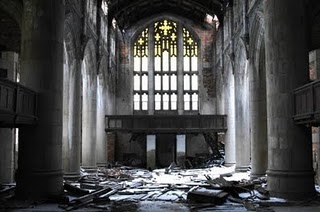
dying churchThere have been a number of articles and/or sermons, making their way across social media, exploring the “Dying Church.” Sojourners (sojo.net) has recently run a series called “Letters to a Dying Church.Mark Sandlin’s letter, in particular, articulates the decline of the influential church of the middle 20th Century that rested at the centre of western society. Mark describes a church that has moved into a fringe community that exists in the largely forgotten margins. The letter also articulates great hope in dying, and promise in God’s resurrecting work.

Meanwhile, while Sojourners was running their series, Nadia Bolz-Weber published a sermon entitled, “Stop Saying the Church is Dying.” Her sermon also articulates the distinction between the social-cultural church of influence, which is in decline, versus the church that proclaims the Gospel, administers the sacraments and declares forgiveness of sins. While her title provocatively suggests the opposite of the Sojourners series, the point is largely the same.

So, we all know that Christendom or imperial Christianity is losing ground and is, by all economic and social measures, dying. 

And we all know that the Church – that is primarily concerned with announcing the Gospel, providing the sacraments, providing the Body of Christ a time and place to gather and reconciling creation with creator – is alive and well.

But there is an aspect to all this dying talk that I find curious, if not troubling. It is hard to argue that the church isn’t dying or transforming from what it was a generation or two ago. However, I think there is a flaw in our diagnosis.

I think there is no small amount of hubris in the notion that the church is dying and we are killing it. Consider the weight of this claim. In nearly 2000 years, the church has survived barely getting off the ground for 400 years, it survived being imperialized, spreading across the known world, going to war, reformations, counter-reformations, splits, scientific revolutions, the discovery of new worlds, nationalism, revival, charismatic movements and global wars.
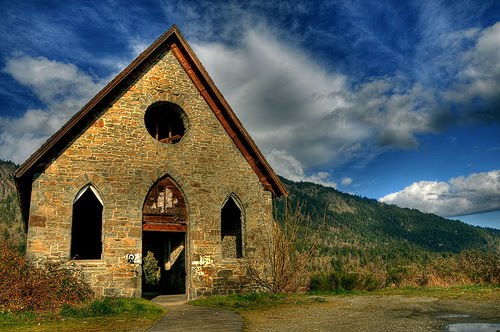
2361002313_58cdf68fffAnd while yes, the church is in decline by all social metrics and economic indicators like membership numbers, budgets and sociopolitical influence, do we really think that because current generations are more interested in iPhones, new age spirituality, worshipping God in sunsets and grocery shopping after kid’s soccer on Sunday mornings, that the church is going to die because of us.

Now let me be clear like Mark Sandlin and Nadia Bolz-Weber were clear, the Church, as the body of Christ, the spirit-led community tasked with proclaiming the gospel, administering the sacraments and declaring forgiveness of sins will continue to exist long after the structures of imperial Christianity are gone, long after the institution is gone.

But even that claim misses the point.

When I hear Christians talk about this institution-less, egalitarian, consensus church to come, I think we are dreaming. I think we have forgotten the realities of human communities. I think we have forgotten that almost immediately after the Ascension, Christian communities started setting up structures and systems to govern church life. And over time, these institutions have grown, changed, become flawed, reformed, and declined. But they are necessary.

Just like the rules of grammar that allow language to convey meaning, foster creativity and breed emotion, the structure, institution even, of the church allows the gospel to be preached, sacraments administered and forgiveness declared. More importantly, the free, open, consensus based community that many Christians hope for in the midst of decline is a church that will cease to exist faster than our current iteration. Without structures to carry on our practice, everything that we believe would be forgotten in a generation.

Even though the institution is guilty of oppression, violence, murder, war, discrimination and many other atrocities, the institution is also what carries the community through history. The institution bears the life of the community in a way that we time-bound humans cannot. The institution has preserved the good along side the perpetration of tremendous evil – a sinner/saint motif. All along the way, the institution has borne the witness of those who have gone before, whose words and music and art and actions are worth remembering beyond the lifespan of their originators. The institution is imbedded in our doctrine, theology and liturgy. The church is one, holy, catholic and apostolic, not because human beings have kept is so, but because in the traditions, structure and institution those four marks have somehow remained, by the guidance of the Holy Spirit. 

So what does this mean for our declining church? As much as many of us would like, we are not headed to a Christianity without buildings, budgets, and constitutions. We won’t get far without hierarchies, structures and systems. We will always need pastors, leaders and teachers. We even need, dare I say, bishops. Here is the thing, we can’t all preach and nor can we all listen. There will always be some doing one and some doing the other – that is structure.

So yeah, our current version of the institutional church will probably continue to decline, at least for a while. But church has never really successfully changed itself… rather the world has changed around it. In in 1950s, the church did nothing to create a society in desperate need of an institution to rely on, to find hope in, to experience reconciliation with. Decline has mostly happened to us as the Church today, and before we can adapt to that, our world will change again.

In fact, as economic inequality grows, as conflict looms in the Middle East and Eastern Europe, as the environment faces crisis, as nations and economies become increasingly globalized, I don’t think it will be long until people start looking for organized communities and institutional structures that proclaim the gospel, administer the sacraments, and declare the forgiveness of sins. Before we can do ourselves in, the world will need us again… in fact, the world needs us now. 

So, can we really kill the church?

We never had a chance.

The Featured Photo at the top of this post is the burned down St. Boniface Cathedral in Winnipeg - this is the new rebuilt one.
The Featured Photo at the top of this post is the burned down St. Boniface Cathedral in Winnipeg – this is the new rebuilt one.

So what do you think about all this dying talk? Is the church dying? Can we kill it? Share in the comments, on Facebook: The Millennial Pastor or on Twitter: @ParkerErik 

 

14 Things I Learned During 2 Days on a High Risk Labor and Delivery Unit

On May 1st, my wife, Courtenay, and I had our first child. We are overjoyed to have our son out in the world and in our arms. But it was quite the ordeal to get him here. For 9 months we did all the pregnancy planning. We filled our world with books, lists, websites, apps, maternity clothes (for my wife), baby stuff and plans for the labour and birth. We filled our hearts with hopes, dreams and fears for this child.

And then as the due date came and went, we were booked for a routine fetal assessment (extra involved ultrasound), and all of a sudden we found ourselves, with potential complications to an otherwise healthy pregnancy, being admitted to a High Risk Labour and Delivery unit – not where we planned on being for the birth.

IMG_0493Throughout the next 48 hours, neither of us slept for more than a couple hours and we endured a medically induced labour, all the way to the pushing stage, when my wife was told to stop pushing (and go back to the really painful part of labour) to help things progress. A few hours later we were faced with more waiting or a riskier than normal C-Section. Over the 48 hours, there were things about labour and delivery that I learned that no one teaches you in prenatal classes and that you cannot read about in a typical pregnancy book or website. They were the hardest 48 hours of my life. Here are some of the things I learned, from a husband’s perspective, about High Risk labour:

1. Things don’t go as planned.  When you are expecting a “normal” birth and show up for a routine ultra sound at a different hospital than your birth hospital and you hear the words: “We are keeping you here, looks like you’re going to have your baby today” – it is NOT COOL.

2. No seriously, when things don’t go as planned (and often they don’t) it sucks. Like the websites and books say, make your birth plan and imagine how you want birth to go when the day comes. And then be prepared to scrap it all, because when it doesn’t happen like you planned, you can be thrown for one of the biggest loops of your life.

3. No amount of preparation will give you a sense of being in control. You can throw out the lists, hospital bags, books, iPhone apps etc… You don’t actually need any of that stuff when doctors start talking about low amniotic fluids and uncertain kidney function. You can show up to have a baby with just your wallet, phone and your wife’s purse – and that is too much stuff.

4. The sounds of labour are… weird and frightening.  Women will generally sound like they are dying, shout profanity and cry out funny and ridiculous things in labour – and you can’t laugh. Well, not too loudly anyways.

5. Sometimes things don’t make sense. If the one questionable issue that landed you in the high risk unit turns out to be false you won’t get to leave. But the totally cool staff is going to come and hang out in your room as a place of refuge because you are friendly and chill. Especially, if your wife loves to chat them up and hear their life stories, even while she is in labour.

6. Singing happy birthday is not funny on a labour and delivery unit. You will think it is funny for about 2.7 seconds and then realize it isn’t. Not at all. Don’t sing it.

IMG_04927. Be prepared to do nothing. Most of labour and delivery can be doing nothing. You will just sit around, check heart beats, do more nothing, drink a glass of water, do nothing, take a walk, do nothing, sit around the hospital room looking at each other having exhausted 13 hours of conversation, then more nothing.

8. There are real life Dr. Houses (from the TV show House M.D.). There are doctors who will decide to admit you, decide your treatment, decide where you go and you will never see them, meet them or speak with them. I have been making hospital visits as a pastor for 6 years and I spent 3 months doing chaplaincy in a mental hospital – the fact that mystery, eye-in-the-sky doctors exist still shocked me.

9. Be funny. All the massaging, birth coaching, breathing stuff, being supportive is not as important as being funny. I don’t mean cracking jokes like an idiot. I mean being funny in ways that make everyone laugh especially the mom-to-be. Humour lightens the mood, keeps people relaxed and adds perspective. If you can keep the mom-to-be, other support people and hospital staff laughing, things will be so much better.

10. Labour does not look like the TV shows, websites, pre-natal class videos or grandmother stories of pre-1950 birth. Contractions can happen every five minutes like clockwork, of feel like general never ending menstrual cramps, or anything in between. Don’t expect anything, and you won’t be surprised.

11. You will not know when it is going to happen. Every time you feel like the baby about to come, it probably isn’t. Every time labour picks up a little steam, the baby is not about to come. The baby only arrives when the baby is good and ready.

12. Birth complications are terrifying and you will feel helpless. Doctors and nurses will be hesitant to give you definite answers. When hospital staff check vitals or labour progress and pause before speaking, the heavy weight of those silences will crush you. You will know that something isn’t right immediately and you will have no power to do anything about it.

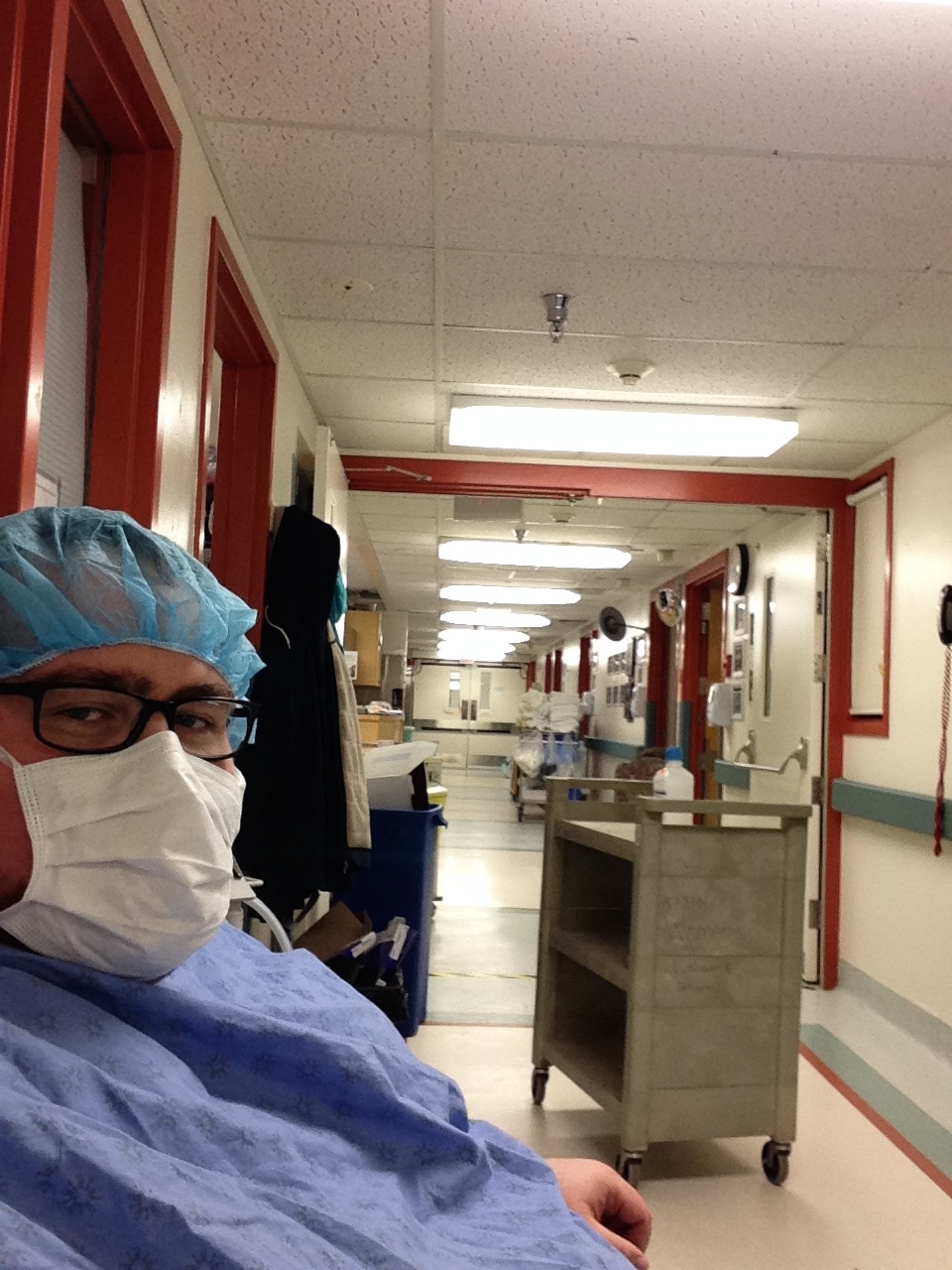
Erik waiting for the c-section to begin.

13. You will not know what worry is until your wife and unborn child are in danger. The fear of something happening to my wife and child were the scariest things I have ever encountered. Even after a few days of parenting now, I know that the extra caution you take while driving with a newborn on board, or the heart-skipping-a-beat moments when you sleepily almost lose your grip on a squirming baby are one thing. But knowing that if circumstances don’t change, as in some kind of extreme medical intervention i.e., C-Section, and the two most important people in your life are in grave danger, is entirely another level of worry.

14. You will never be as grateful for a baby’s crying than at birth. Standing behind the OR screen, with your wife, waiting for the doctors to pull that baby out is an indescribable moment. You only get to be there once, and you only get to feel that feeling with those three people once. Once is enough to last a lifetime.


For Courtenay and I, it had been 48 hours of waiting and labour before we finally got to meet our baby. Forty-eight of the most difficult, tiring, hard hours of our entire lives. But a healthy recovering wife and a healthy and beautiful baby boy was worth every moment of fear, concern, worry, sleeplessness. To see my amazing wife through the whole ordeal only makes me love her all that much more. And today, I look at the little miracle baby that finally emerged from the chaos and I cannot help but feel like Mufasa from the Lion King.

cub-cute-lion-lion-king-mufasa-simba-Favim.com-91525


Have your own hospital birth wisdom? Share in the comments, or on Facebook: The Millennial Pastor or on Twitter: @ParkerErik


Guest Post for April Fiet – My Fears, Dreams and Faith for an Easter Baby

april-fiet-sbBack in February, Rev. April Fiet wrote a great guest post – In Defense of Men in Ministry – here on the blog. I was honoured to have her write here. She is the first blogger that I have connected with over social media to the point that I would call her a friend!

I am honoured she asked me to write for her over at “At the Table with April Fiet.”

Click this link here >My Fears, Dreams and Faith for an Easter Baby

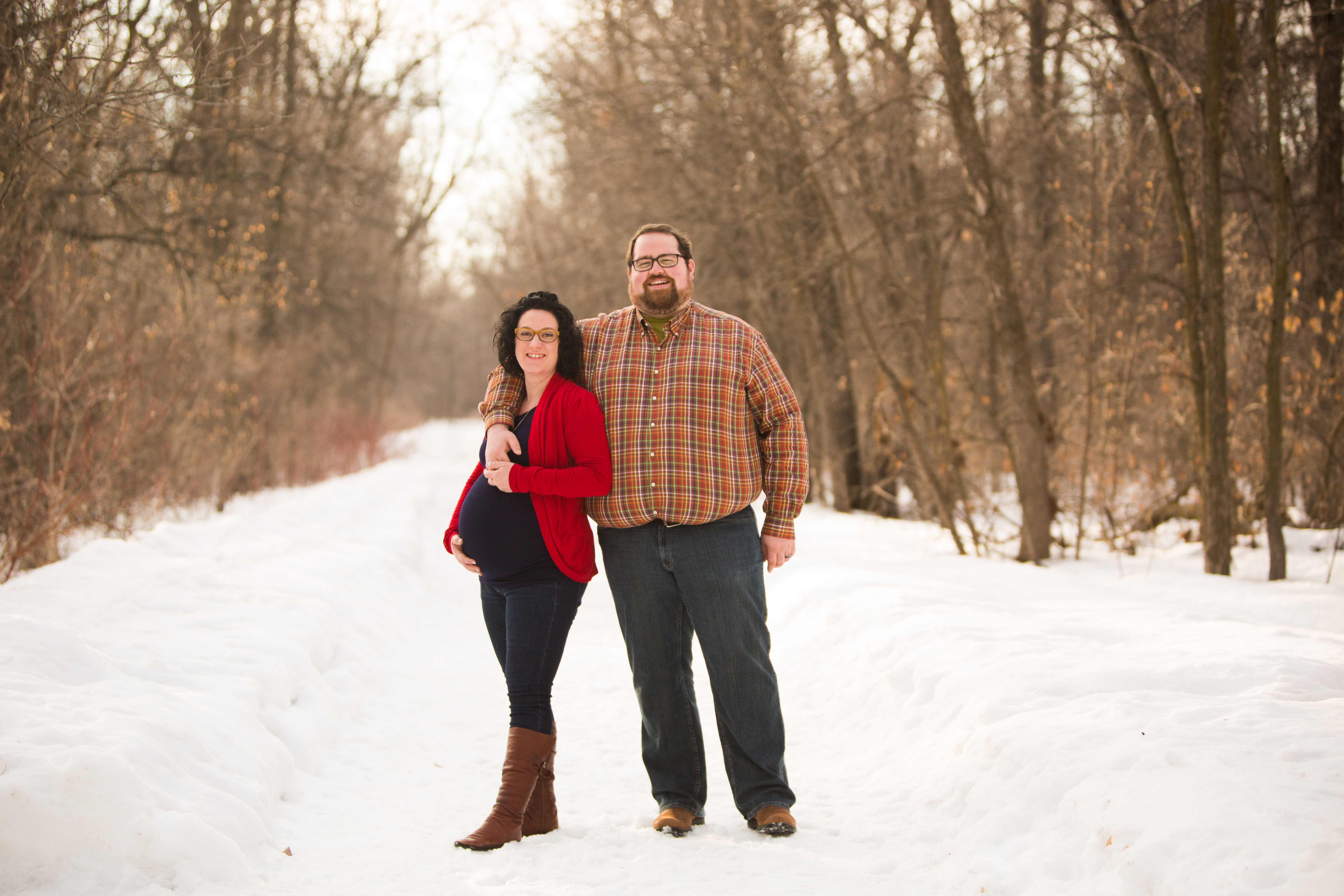
26MaternityFinal

As some of you know, Courtenay and I are expecting our first child. Well, the due date was yesterday and we are still waiting. But as we wait, I have been thinking in new ways about how this child-on-the-way will change our world. I was delighted to share about my hopes, dreams, fears and faith over at April’s blog.

So go read my post there, and then click around on her blog. She has some excellent stuff, like “RIP Women in Ministry” or “At least I’m Better Than You.

You can also find April on Facebook at April Fiet or on Twitter: @aprilfiet

As well, if you want to follow Courtenay, you can find her at @ReedmanParker on Twitter. 

And as usual, you can share here in the comments, find me on Facebook at The Millennial Pastor and on Twitter: @ParkerErik

Noah, the Silence of God, and Holy Week

We are in the last few days of Lent before Holy Week begins. As one who bears the responsibility for planning, preparing, presiding and preaching for Holy Week, the coming days will be busy, full and emotionally draining. As a pastor you carry, whether you like it or not, the emotions of your people. The anticipatory expectation of a saviour on Palm Sunday. The dread of Maundy Thursday. The deep guilt and grief of Good Friday. Finally the joy of Easter Sunday. It can be a roller coaster of emotions through the week.

imagesOn the brink of Palm Sunday, with palm branches ready and Hosannas waiting to be sung, I have been constantly coming back to the movie Noah. Last week I wrote a review of the Movie on some of the Biblical themes, and in particular the Christological symbols. Like I said in the review, I thoroughly enjoyed Noah and found it to be rich and deep movie. However, one symbol I didn’t say too much about was the silence of God.

*SPOILER ALERT*

While God never actually speaks in the movie, God is a noticeable presence. The characters in the film regularly reference the fact that God has not spoken to human beings in a long time. The filmmakers have said that they didn’t want to put words in God’s mouth, and others have noted that none of us hears God’s voice in that way. God’s silence is something we can resonate with. Any person of faith has struggled with feeling God’s absence and experienced God’s silence.

However, the reason I keep coming back to the silence of God in Noah has more to do with the ‘why?’ of the matter. Why has God chosen to be silent with creation and especially silent with human beings? What has driven God to refrain from speaking with these little creatures that God cares so much about?

The opening scene of the movie is Cain’s murder of Abel. This theme of murder in human relationships, with each other, and with creation permeates the movie. Humanity’s ability and capacity to kill becomes the relevant question at the climax of the movie.

I have a theory as to why God remains silent. I think the murder is so offensive to God that God can’t bear to speak to humanity again. God has created this beautiful, fragile, precious thing called ‘life’ and humanity cannot stop destroying it. I think that by the time things devolve into the antediluvian world – where humanity is murdering creation and each other – God is wondering whether creation should continue at all. Or whether human beings should continue being a part of creation. And so God decides to ask the last ‘righteous man’, Noah, to make the decision.

In the end, the film doesn’t really resolve God’s dilemma. Noah chooses to allow humanity to continue, yet does so knowing that humanity still carries the capacity for evil, for murder and death. Noah believes he has failed. Yet, because of Noah’s decision, God undeniably and visibly becomes not silent at the conclusion of the movie – the rainbow becomes the sign of God new word, or new covenant with creation. God has ended the silence with humanity, despite humanity’s flaws.

Which brings us back to Holy Week.

Palm-SundayThere is a certain silence to Holy Week. Through most of Lent, Jesus speaks at length in the gospel readings. He speaks with Satan, with Nicodemus, with the woman at the well, and with the blind man. But in Holy Week, Jesus seems to clam up a bit. And we all get the sense that this unresolved dilemma is facing God again. What is God going to do? What is humanity going to do? Jesus and the authorities are on a collision course towards death. Humanity can’t stop our killing, but this time God isn’t leaving the choice up to us. This time this beautiful, fragile, precious thing of life, this time God will not give us power over it.

This time life will overcome death. 

Palm Sunday IconBut it is going to take some silence on God’s part along the way. God makes room for our voices during Holy Week. Voices like “I do not know him” or “Surely not I, Lord” or “Crucify him!”

But they all begin tomorrow with that first word spoken by the crowds as Jesus enter Jerusalem.

Hosanna.

Hosanna, which we confuse with Hallelujah.

Hosanna, which does not mean praise the lord

But really means ‘Save now’.

In the midst of the silence this coming week, as we re-tell the story of passion. I am going to be thinking about that word – Hosanna.

It is the first word of Holy Week, but it is also a word for every Sunday. A word that we, at least as liturgical Lutherans, sing every time we gather for the Lord’s supper:

Hosanna in the highest. 

Blessed is he who comes in the name of the Lord
Hosanna in the highest

Save now in the highest.

Save us from our sin.

Save us from death.

Save us from ourselves.

And unlike the Noah movie, where the question facing God of what to do with humanity goes unanswered, God will answer.

God will answer our Hosanna.

God will save us now,

With life.


What are your plans for Holy Week? Have more thoughts about Noah? Ever experienced the silence of God? Share in the comments or on Facebook: The Millennial Pastor or on Twitter: @ParkerErik

The Christology of Noah: A Theological Review

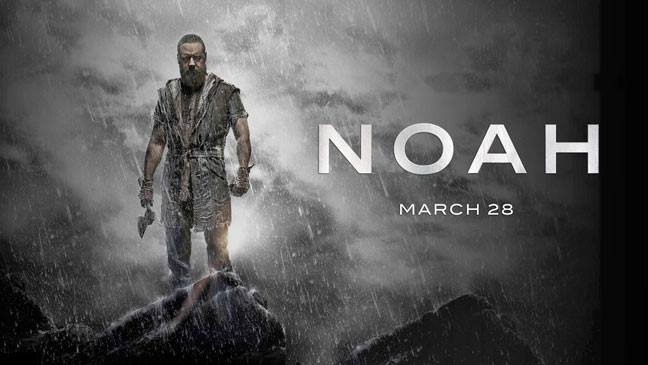
noah-movie-poster-castI saw Noah yesterday.

I loved it.

It was a beautiful story in terms of its cinematography, the visuals were stunning.

Now, a lot of the praise for Noah ends with the visuals. For some reason, many seem to think that Noah doesn’t follow the biblical narrative, and so the critique of Noah then continues with the movie’s faithfulness to the story… or lack there of.  Albert Mohler has written an absurd movie review, which makes me question whether he has even seen the movie or read the story. To all those who are complaining that Noah deviates from the flood narrative, I just want to say,

“Have you read the flood narrative recently?”

Noah is a deeply scriptural AND theological film. It tells the story of the biblical flood in a way that we need to hear it. No… Noah is not a word-for-word retelling of the flood epic found in Genesis 6-9. But any filmmaker who sets out to put Genesis 6-9, as written, to film will have missed the point before beginning.

Director/writer Darren Aronovsky has produced something as faithful and with as much integrity to the text of Genesis as I can imagine. The flood epic’s context (as in the stories that preceded and linger in Noah’s background) is always present in the movie. Aronovsky has not ripped this story out of the bible, but instead uses themes and images from all over Genesis.

Noah shows that Aronovsky has so thoroughly researched this story, that he puts most Christians and some scholars like Mohler to shame. Noah is a very biblical movie. Noah is a brilliantly biblical movie rich in scripture, unlike many other movies about the bible.

But let’s talk about Genesis 6-9 first.

Anyone who has actually read the flood story would know that it is a very redundant story. In fact, everything seems to be repeated over and over. It is almost like two different versions of the story have been layered on top of each other to make one story.

images-2Well, that’s because there are two stories. Two versions, different details. In one version it rains 40 days, another 150 days. Noah is told to take a pair of each kind of animal, then he is given instructions to take 7 pairs of clean and one unclean. The family enters the Ark twice.

Genesis 6-9 is not literal history. Noah was never a real person. Russell Crowe is now the most literal Noah that ever existed. The Biblical story of the flood is a nearly word-for-word, line-by-line rip-off of the Gilgamesh Epic. The Gilgamesh Epic ripped off the Atrahasis epic. The Atrahasis epic was based on the Sumerian flood epic.

The story of the flood does not belong to Christians. It doesn’t belong to Jewish religion. It doesn’t really even belong to the Bible. It is an Ancient Near Eastern story told by the people living in the floodplain of the Tigris and Euphrates rivers.

So when Darren Aronovsky “deviates” from the biblical account of the flood, he is working with a story that already has been re-told with generous liberties taken. The flood is a re-write of another story, which is the re-write of another, etc…  However, the movie Noah does something fascinating – Noah stitches together the early chapters of Genesis with other biblical themes. The biblical flood story doesn’t do this. In fact, Noah is a character hardly referenced outside of the flood narrative itself.

The Biblical Images in Noah’s Background – SPOILER ALERT

Darren Aronovsky has said in interviews, that he sees Noah has his midrash. A mid rash is a Rabbinical narrative sermon. It is the Jewish practice of re-telling the biblical narratives, and filling in the gaps of the story to make a theological point. Pretty much a sermon. If Noah is a sermon, it is brilliant one.

MV5BMjAzMzg0MDA3OF5BMl5BanBnXkFtZTgwNTMzOTYwMTE@._V1_SY630_SX426_The opening scenes of Noah are the first murder in the book of Genesis, and Cain’s murder of Abel becomes the foundation of the movie. This violent reality haunts every relationship, every action taken by Noah and his family. This murder continues being repeated, generation after generation, between brothers, between families, between peoples, between human beings and the earth. The murdering is endless, and thus ‘The Creator’ decides to start over, to wipe wicked human beings from the face of the earth.

Some would accuse Aronovsky of using the movie to spout modern environmentalist rhetoric about care for the earth, veganism even. This is not the case, Aronvosky is simply sticking to the text. Some of the earliest tensions in the Bible are the commands given by God to human beings in the creation stories. In Genesis 1, human beings are told to fill the earth and subdue it, to have dominion over it. In Genesis 2, human beings are told to serve and protect creation, to care for it and keep it. These competing views on the role of human beings towards the planet are not just a modern issue, they have been at odds since the beginning.

Lastly, there is a moment in the movie when Noah looks a lot like Abraham. Noah is Abraham’s ancestor to the 10th generation. At, what could be argued is the climax of the movie, Noah is standing above one of his offspring, knife in hand, ready to kill because of what he understands to be God’s command. This issue of families murdering one another, that begins with Cain and Abel, is not actually resolved with the flood. In fact, the escalation of murder that the flood turns out to be, is no solution to the problem of humanity’s death-dealing ways at all.

And while many would claim that this moment in the movie shows us the power of the human spirit because Noah chooses not to murder out of love, I think this is about God. God, or ‘The Creator’ as God is called in the movie, has no lines. God doesn’t even take a form, but is an implied presence. ‘The Creator’s’ role in the drama is still paramount, and I think Aronovsky is telling us about the important change of mind that God has after the flood. The human problem of death, of violence, of killing one another remains. Noah foreshadows what is to come with Abraham – someone willing to murder his own child for God’s sake.

Instead, God is changed, and God finds mercy towards human beings. The characters of Noah don’t actually change throughout the story. They experience tremendous hardship and tragedy, but they remain, at the end, who they were at the beginning.

In the flood epic and in Noah, it is God who changes. Aronovsky hasn’t missed this part of the story either. Which leads me to:

The Christological Character of Noah.

In a number of scenes in the movie, Noah is shown praying. Noah prays a familiar and biblical prayer – “I can’t do this.”

NOAHAt one point, Noah is on his knees asking God that this burden be removed from him. Noah might be a Genesis character, but this is a New Testament image. Like Jesus in the Garden of Gethsemane, Noah is asking that God would choose someone else.

The burden that Noah is given is not to build an Ark, not to predict a flood, not even to save the animals, as he seems to think is his burden for most of the movie. The real burden is to determine whether humanity is worth saving – whether or not humanity is redeemable.

Ultimately, we discover that this question isn’t answered, at least not by Noah’s actions. He saves his family, but in his mind this is failure. He has failed to perform God’s will for humanity, failed to wipe us all out.

However, as we see that more violence is not the solution or the way to prevent violence, God’s change towards mercy gives us the smallest clue or hint towards the dilemma facing God.

Whether Aronovsky knows it or not (and sometimes this is where stories become more than their tellers can control), God’s change to mercy is a key Christological question. With Noah, God realizes that asking humanity to redeem themselves and to prove themselves worthy of being saved is impossible. Noah realizes too that all humanity has the capability of sin within them.

The question of whether or not to save us all is really not answered until the garden of Gethsemane. As Jesus prays, “I can’t do this” it is not all about a human being afraid of being crucified. Rather, as Douglas John Hall suggests, the question of Gethsemane is whether God is going to complete the incarnation. God has shown up in flesh, God has lived in flesh, but Maundy Thursday is now the moment to decide if that last step – incarnate death – will be taken. Once this step is taken, God is going to complete the redeeming. God is going fulfill the reconciling. God-in-Christ is going to re-join creation with creator, re-join what was one in Eden.

As I watched Noah, I couldn’t help but see this question as the real issue. Is humanity redeemable? Aronovsky seems to have come to the same place that the bible comes to over and over again. Human beings just cannot redeem themselves.

And just maybe, as ‘The Creator’ shifts to mercy, Noah foreshadows a God who now knows this. God will be the one who will choose whether we are worth saving. Asking us to give up violence us will not suffice. God will need to take away the power of our violence by overcoming death. Life will become how we are redeemed. God will allow Godself to succumb – on the cross – to our desire for violence and death. And instead of responding with greater violence, with fire or flood, God will respond with resurrection and new life.

Noah is beautifully rich and beautifully deep. It is scriptural and theological to its core. If you want to see a movie about the bible?

Go see Noah. It will not disappoint.

images-1

Have you seen Noah? What did you think? Share in the comments, or  on Facebook: The Millennial Pastor or on Twitter: @ParkerErik