Category Archives: Theology & Culture

Advent Waiting: Ferguson, Sexism and Black Friday

I have been hesitant to add my own privileged commentary to issues surrounding Ferguson and sexual violence against women. I normally try to share and retweet the voices of the oppressed. But as a preacher, I can’t keep silent. Here is the text of the sermon preached to my congregation this morning. 

Mark 13:24-37

“From the fig tree learn its lesson: as soon as its branch becomes tender and puts forth its leaves, you know that summer is near…

Therefore, keep awake– for you do not know when the master of the house will come, in the evening, or at midnight, or at cockcrow, or at dawn, or else he may find you asleep when he comes suddenly. And what I say to you I say to all: Keep awake.” (Read the whole lesson here)

Sermon

Keep Awake. The world is waiting. 

The world is waiting for justice. Waiting for peace. Waiting for healing.

Keep awake. This week we watched as the people of Ferguson waited for answers, waited for justice… and then we saw a system stacked against justice rule to protect the privileged. And we saw the results. As the Rev. Dr. Martin Luther King Jr said, “Rioting is the language of the unheard.”

The world is waiting for Justice.

Keep Awake. This week we witnessed hoards of people flock to malls and stores in order to get Black Friday deals. In order to engage in retail therapy, the attempt to fill empty hearts by emptying full wallets.

The world is waiting for healing.

Keep Awake. This week heard news and reminders that violence against women, misogyny and sexism are not things of the past. We heard the charges laid against CBC radio host and celebrity Jian Ghomeshi, the allegations made by elected MPs of harassment. We have heard that two men have been charged in the case of Rinelle Harper, a 16-year-old girl left for dead on the banks of the Assiniboine left after being assaulted and violated.

The world is waiting for peace. 

Today, is the first Sunday of Advent. And we know it is Advent, not just because of the calendar, but because we are no longer surprised by the Christmas music playing in the malls, or the Christmas lights that light up night-time streets and highways, or the fact that the Santa Claus parade was already two weeks ago.

Last Sunday, we concluded the church year, and today we turn the page onto a new one. As Christians, we observe a calendar slightly offset from the secular one. Our church year begins with Advent in late November, a good month or so ahead of January 1st. And like regular New Year’s, Advent is partly about a chance to start over, to leave behind the baggage of the previous year, and make a fresh beginning.

But Advent is no so much about resolutions, as it is about preparation. Preparation and waiting. Advent is the 4 weeks before Christmas, and is centered around hearing the stories that prepare us for the birth of Messiah. And like the season of Lent before Easter, Advent is season that is toned down, a season for reflection and thoughtfulness. But Advent is not about penitence or preparing ourselves to hear about Christ’s death is like Lent is. Instead, Advent is hopeful and full of anticipation. If Lent is the church season of waiting on Death Row or in Palliative Care, Advent is the season of pregnancy.

And each Advent season, we start on week 1, Sunday 1 hearing about the end. Hearing about the coming of the Son of Man. Advent waiting begins with waiting for Jesus. Waiting for the Messiah to come with the people of Israel, waiting for child to be born in a manger, and waiting for the second coming, for Jesus to return for that big cosmic ending.

And so today, before we get to John the Baptist, or before we get to angels making announcements to virgins, we hear Jesus’ words about the end of time. Keep Awake, he says, because no one knows the day nor the hour.

What an odd place to begin the church year. What an odd place to start Advent. December should start with digging boxes of Christmas lights out of storage, and checking off lists for Christmas shopping. This end of the world stuff doesn’t seem to fit.

As Jesus tells his disciples to Keep Awake, it becomes abundantly clear, that as modern people, we have no idea what waiting really is. The people of ancient Israel lived in a world of waiting so different from ours.

The world of the disciples was full of waiting… as Jesus reminds them of the lesson of the fig tree, we too can learn something. The people of Ancient Israel lived by a lunar calendar. This means that they organized their months by cycles of the moon rather than by the earth moving around the sun. More concretely, their months were all either 29 or 30 days long. Any month could be 29 or 30 days. Their years were either 12 months or 13 months long. Any year could be 12 or 13 months. So how did they know?

Well, when at least couple of people observed the new moon at end of the month, they would tell the temple authorities (the church council) who would then send out messengers to let the people know that the month had changed. And then at the end of the year (which was usually around our February or March), if spring still seemed far off, the temple authorities would just add another month to the end of the year.

Take a moment and think about that. Imagine if we had to read the papers or watch the news to find out which day our months ended on. And imagine if a couple of weeks before the end of the year, we found out there would be another December.

The is why the Ancient Israelites had to watch the leaves of the Fig tree to know when summer began, their calendars couldn’t be trusted. Instead, they had to trust the signs around them, they had to trust their community to keep awake together, trust their leaders to make sure good decisions were made.

We wouldn’t know what to do with ourselves in a world like that. We don’t know how to wait in that way. We don’t live our lives with an openness to things happening sooner than we expect, or not happening when we want them to. We live with set schedules, with fixed time limits, with predictable dates. In fact, you can tell just how bad we are at waiting by the question we love to torture kids with this time of year, “How many sleeps until Christmas?”

And while we are not good at waiting in the same way the people of ancient Israel were used to, we do wait. We wait just like they did. Maybe not for extra days or extra months but we wait for salvation like they did. We wait for Justice like them, we wait for peace, we wait for healing.

And in Advent, we wait for Messiah too.

They waited for Messiah in Jerusalem, on the banks of the Jordan and Bethlehem. They waited to be freed from oppression from Empire, they waited for God’s mercy and love to make them clean, they waited to be lifted up from their suffering.

And we wait for Messiah in Ferguson, in Ottawa, on the banks of the Assiniboine, and here right now among us. And whether we are good at it or not, our waiting is not measured by the number of sleeps until Christmas, nor on calendars, schedules or to do lists.

Like the ancient Israelites, our waiting for Messiah is measured in small glimpses of Hope.

Messiah came to Ancient Israel in the form of a carpenter turned preacher telling of the coming of the son man to expectant crowds. Messiah comes to us as people of faith speak out about the injustices of Ferguson and stand with a community grieving and oppressed.

Messiah was preached by a hermit crying in the wilderness, prepare the way of the Lord, make his paths straight. Messiah is preached today, as we refuse to consume and spend as if it were therapy, as we proclaim a counter-cultural message of waiting and anticipation, instead of immediate gratification.

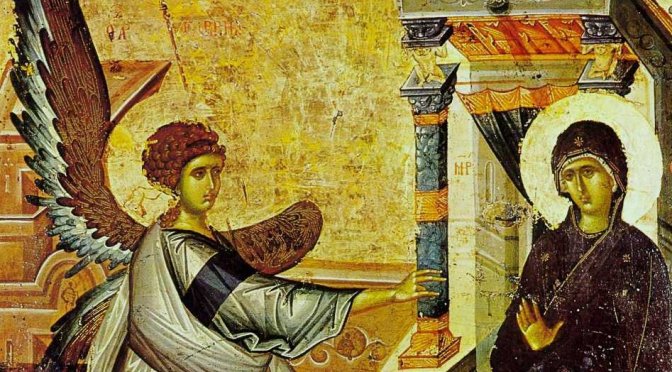
Messiah was promised and announced to young woman, not yet married. And it was an unremarkable girl, overlooked by the world around her who bore God’s promise into the world with a man who should have stoned her instead of staying faithful.

And Messiah is promised and announced here as a community rallies around a young girl left for dead on the river banks, declaring violence against women and minorities is unacceptable.

Our hopeful waiting is for a Messiah who comes in small unexpected places, who comes no matter how good we are waiting, who comes to bring justice, peace and healing.

Keep Awake, says Messiah. The world is waiting.

Keep awake and see that Advent is not a countdown to Christmas, but a chance to see that the signs of Messiah’s coming, Messiah who may come tomorrow or in a lifetime.

But Jesus also says something else.

Today Jesus declares that no matter how dark the world seems,

The Son of Man is coming.

No matter whether we wait with patience or with anxiousness,

The Messiah is entering our world. 

Regardless the powers of injustice, violence and suffering,

Salvation promised, will come to us. 

Our waiting will not be in vain, our longing for a better world does not go unnoticed by God.

Keep Awake Jesus says, not as command to keep vigilante. But Keep Awake is a promise. A promise that in our Advent waiting, there will ever growing light in our darkness, that our hope is in Messiah and the signs say Messiah is on the way.

Amen, Come Lord Jesus.

I have never been more proud of the CBC than I am this week

These have been emotional and heavy days in Canada.

It began in tragedy when two soldiers were killed on home soil, only to be followed by a huge domestic violence scandal involving one of the biggest media personalities in the country. Jian Ghomeshi, host of CBC Radio Q, an arts and culture program that runs each weekday, has been fired from the Canadian Broadcasting Corporation (CBC).

As this story continues to break, with more women coming forward, with more and more accusations, with PR firms running from Jian like he is a leper, with news and opinion pieces detailing just how devastating this has been on CBC employees, with a whole community around Jian having been waiting for years for the truth to come out about him, it is becoming clearer that Jian Ghomeshi is a deeply troubled man.

As an aside, during my training to become a pastor, I took a unit of clinical pastoral education. I spent three months as a student hospital chaplain. I worked in a mental hospital and there I got a first-hand look at their forensic psychiatry unit. Part of the unit was a sex offenders program. As students, we didn’t work with this program, but we did spend time with the health professionals who did work with the program and we were allowed to interact with patients.

What I learned through these experiences is that violent sexual predilections are not really about sex. They are about power and control. They are about deep insecurities and pathologies that can only be dealt with through therapy. Jian Ghomeshi claimed that these allegations were issues of consent (although it is clear they aren’t), even though the Supreme Court of Canada has said that people cannot consent to violence. Given the testimonies of the women who are telling their stories of violence and abuse at Ghomeshi’s hands, I have no doubt that Jian needs help. Lots of help.

But even more so, his victims need help. They need our help, support and compassion.

So much of the story has been about Jian, about his downfall. But this is also another #YesAllWomen, another #GamerGate, another #BringBackOurGirls, another Ray Rice, 10 hours of New York street harassment, Male Privilege and so on. This is about more than Jian, this is about all violence towards all women.

Jian’s victims need us to stand with them. They need us to unreservedly believe them and the accounts of their experiences. They need us to condemn Jian’s acts and all forms of violence against women.

And that is exactly what the CBC did this week.

As Canada struggled through the Ottawa shooting, the CBC covered the story with dignity. They told the stories of the heroism of Kevin Vickers and the sacrifice Nathan Cirillo, more than they told the story of the shooter.

And when CBC executives discovered that Jian Ghomeshi had committed violence against women, the CBC immediately suspended him, and planned to fire him. They did so knowing he was one of their most popular personalities and hosted their flagship radio program. They stood by their actions, they risked a 55 million dollar lawsuit (although not very serious), and they have been willing to risk their brand and image (more serious). And in the days since they have condemned his actions, they have interviewed his victims objectively and reported the story about their former colleague. I couldn’t imagine any news and media corp doing the same dispassionately and objectively.

I couldn’t be more proud of Canada’s public broadcaster. I am sad that it has taken these events to demonstrate just how honourable and upstanding this iconic institution is, but it is the silver lining of these past dark days.

The CBC and its employees have shown tremendous poise and grace in an impossible situation. It is going to be long road past this, but I have full confidence that the CBC will come through it.

Full disclosure: I have been a big fan and regular listener of Q since the very first episode 8 years ago.

Last March, my wife and I attended a live taping of Q in Winnipeg. At the time is was an awesome experience, and now those memories are sullied.

But if anything has been shown in these past days, the Jian that so many Canadian listeners know and love of Q with Jian Ghomeshi, is not Jian Ghomeshi the man. The Jian we know was a carefully scripted and produced personality that took a whole team to create. The host of Q we all loved was just as much the writers, producers and other staff as it was the guy with a smooth voice who greeted us each morning at 10:07am.

If Q continues, I will continue being a fan with whomever becomes the new host. And while CBC is probably considering discontinuing the program entirely, I hope it continues. If it is cut, it will be a small victory for Jian Ghomeshi – vindication that the show couldn’t go on without him. But if it does go on, and we love it and follow it just the same without him, it will show Jian the narcissist that Q was never all about him. It will show him that his perceived power over Canadian media and his perceived power over women was never what he thought it was.

It will show him who we really stand behind and who we really loved.


What do you think of the CBC? Have they done the right thing? Share in the comments, on the Facebook Page: The Millennial Pastor or on Twitter: @ParkerErik

A Reformation Sermon for Canada and the Ottawa Shooting

John 8:31–36

36So if the Son makes you free, you will be free indeed. (Read the whole passage here)

Sermon

This week our nation has endured great tragedy.

On Monday two soldiers were run down with a car, and one of the them, Patrice Vincent died of his injuries. And then on Wednesday we all heard the news come over the radio, tv or internet. There had been a shooting on Parliament hill, a solider had been killed at the National War Memorial, and then there were shots fired inside Parliament. Security officials and police locked down Ottawa for hours as the rest of us waited to hear if there was going to be more… more gunmen, more bullets, more violence, more chaos.

In the days following, we learned just how dangerous this situation was. We learned that shots were fired just outside of the rooms where many of the members of our federal government were meeting. We learned that the gunman had passed by dozens of bystanders and had easily gained access to heart of Canadian democracy and government.

And since then, all Canadians have been shaken to some degree. And we have already seen the beginnings of over-reaction to this incident. We have heard our political leaders declare that our enemies will be punished and that our resolve to defend our freedoms will not be shaken. We have seen increased security measures across the country. We have even seen vandalism of a mosque in Cold Lake, Alberta.

As we are left to sort out what to make of these events, it is perhaps appropriate that today we gather on Reformation Sunday. Reformation Sunday is the day we set aside each year as Lutherans to remembers our 500 year history, and where we came from. We remember the catholic monk Martin Luther, whom we are named after, standing up against the injustices of the pope and the church – the selling of salvation, the abuses by church leaders, the exploration of the faithful. We remember that our faith and our beliefs are important. Important enough to die for, important enough to defend.

But on Reformation Sunday we also remember the division that change caused. We remember that people did die because of Martin Luther’s actions. We remember the between 125,000 to 250,000 people that died in the peasants war that resulted. We remember that after Martin Luther nailed his 95 theses to the door the church in Wittenberg, Christianity was split from 2 denominations (Roman Catholic and Eastern Orthodox) into as many as 25,000 today. And these divisions have been caused violence, chaos, oppression, abuse, suffering and death for 500 years.

Reformation Sunday is day of two realities. Of promise, hope and freedom, contrasted by division, conflict and oppression.

Today, you might notice the red parents that adorn the chancel area. Red is one of the 5 liturgical colours, but it is only used a handful of Sundays each year. Red is the colour we use to symbolize the Holy Spirit. The changing, transforming, reforming work of the holy spirit among us. Red is used on Pentecost when we celebrate the Holy Spirit coming to the disciples, and today Red is for Reformation. However, as Canadians, we might take some liturgical and theological license and think that Red reminds us of our national colour and of the the reality of tragedy, fear and death in our midst. And lastly, Red is used to remember martyrs in the church.

And while the gunman may or may not have considered himself a martyr, we have discovered that Cpl. Nathan Cirillo is in fact the martyr this week, the one who died for principles and for a cause.

Even still, as we are left to make sense of tragedy, Canadians have discovered signs of courage and honour this week. Even as the events of Wednesday unfolded, we saw our news broadcasters deliver calm, respectful, accurate reports of the events, rather than sensationalism. And then the courage of Sergeant at Arms Kevin Vickers was revealed, recounting his dramatic actions that ended the danger and prevented more violence. Then there are the residents of Cold Lake who showed up to clean, repair and show support for the mosque that was vandalized only hours earlier. Then there was the political cartoon from Halifax that captured the emotions of a nation, as it depicted one of the bronze world war one statues on top the of the tomb of the unknown soldier stepping down to Nathan Cirilo below, where only the recognizable feet and argyle socks of his uniform could be seen. It was as if those soldiers from a hundred years ago was saying, “You belong here with us.”

https://twitter.com/sladurantaye/status/525264341168185345

And overwhelmingly, the rhetoric since Wednesday has been for Canadians to remember who we are. To remind us not to lose ourselves to grief and fear, to remember that we are a nation of peace and openness, that our values are about tolerance and freedom.

It was been a week of mixed emotions, of conflicting experiences, of hard-to-make- sense of events. And fittingly, Reformation Sunday is about that too. About the conflicting experiences of division, conflict and war that accompanied the Reformation, as well as the striving for justice, the proclamation of grace and mercy, the hope we have in God’s promises.

God’s promises like we hear Jesus utter today, promises like,

“So if the Son makes you free, you will be free indeed.”

And if there is anything to remember today it is that.

Even as Canada struggles with tragedy and celebrates the heroism born out of it. Even as Reformation Sunday demands that we recall the both the gospel proclamation of Martin Luther and the reformers, the bold declaration of grace through faith alone, that there is nothing we can do to earn God’s love and that this belief is important enough to stand up for contrasted with the division, conflict, violence and suffering caused by the reformation. Even as these realities both this week and 500 years old sit with us, ultimately today is not about those things. Today is about what each Sunday is about for Christians.

Today is firstly about Christ. Today is about God and God’s mighty deeds among God’s people. Today is a reminder we simply cannot save ourselves on our own.

Just as in today’s Gospel readings the Jews said that as descendants of Abraham they were slaves to no one (even though they had been slaves to the Egyptians, Babylonians, Persians and now Romans). Just as Martin Luther declared that he and we we were not slaves to law and freed by God’s grace (even though he was threatened by the Pope and others). Just as Canadians declare that we will not loose ourselves to fear, to revenge, and hate.

We are still slaves to all of those things. We are slaves to enemiy nations. We are slaves to the law. We are slaves to fear, fear of the other, fear for our safety, fear of losing power.

No matter what our leaders declare, no matter the bravery we display, the sacrifices we make, the peace we try to uphold. We simply cannot save ourselves. We simply cannot free ourselves.

We are slaves to sin, slaves to suffering, slaves to death, and there is nothing we can do about it.

And that is why today is ultimately about Christ.

Today is about the promise that God gives to slaves. To those enslaved by sin, those enslaved by suffering, to those enslaved by death. Today, is about the promise that God gives to us. The promise that despite our condition, despite our slavery, that God is showing us mercy, God is giving us grace, God is making us free. Free in the son.

And this promise of freedom comes to us first in baptism. In baptism where we drown and die to sin, and where we rise to new life in Christ.

So perhaps it is fitting today, that we are going to extra lengths to celebrate those promises of baptism, because confirmation is really about baptism, about these young people in our midst recognizing their baptism, recognizing the promises made to them in water and word, made by God.

And just perhaps it is a powerful act of defiance against violence, against oppression, against fear for us to bless and support our confirmands. Perhaps it is beautiful act of hope that not only do we welcome again these young people into the Body of Christ, but we pass on this church, this faith, these promises to them. Even while we are slaves to sin, to suffering and most of all to death, we pass on our hope for the future to these young confirmands. A future promised by God in the midst of slavery. A future given by grace and mercy, even though we are dead. A future found with New Life in Christ.

Amen.

A Sermon for a Confirmation Class that isn’t Coming Back to Church

Matthew 22:15-22

…Then he said to them, “Whose head is this, and whose title?” They answered, “The emperor’s.” Then he said to them, “Give therefore to the emperor the things that are the emperor’s, and to God the things that are God’s.”… (Read the whole passage here).

Sermon

This morning, after hearing 10 faith statements from our confirmands, we hear Jesus and the Pharisees having a discussion. They are debating how to be someone who has faith in God, and someone who lives in a world full of political and economic powers that divide our attention and allegiances. Do we ally ourselves with God, or Caesar, the symbol of world power. It is all part of our journey through the Gospel of Matthew that began last year, but particularly through the summer we have been hearing Jesus’ teaching along side of our human desire for control, power, easy answers, black and white categories and so on.

And it would seem natural at this point to tie confirmation or affirmation baptism that we will celebrate next week with some kind of choice to stand up for faith, for you confirmands to become “adult Christians.” Kind of like the choice between God and Caesar that Jesus is talking about today. And yes, confirmation has that aspect to it. There is something distinctly adult about standing in front of the church and sharing out loud what Jesus means to you. And some think that confirmation is about making the adult choice to stand up for Jesus.

So confirmands, I think it is important to recognize what you have just done. You have been bold and brave to share your faith and to do it in front of the whole church. But not only have you done that, but you have shared your faith statements after more than two years of study and learning, of classes and community, of coming to this strange place with these strange people while most if your peers and friends were sleeping in on Sunday mornings.

Now your bravery this morning is certainly an example to the rest of us, and we are all proud to see you, our young people, standing among us sharing your faith. But some honesty in this moment is called for as well.

This may be difficult to hear, but bear with me. After the last two years of classes and studying and learning about faith, a lot of you, maybe even most of you will not come back to church very often after next Sunday. A few of you might become regular and active church members, but likely not many. And after today, there will be a lot of things, a lot of other options that will pull you, and that pull all of us away from church and away from faith.

But the options and other things to do on Sunday mornings are not the only thing that will pull you away. And again bear with me.

The things that we talked about in confirmation God, faith, church and the bible, are probably not things that your parents talked much about with you. And studies show that if faith is not talked about in the home, the chance of youth staying involved in church is very low. But this is not about blame. Your parents didn’t talk about faith to you, because their parents didn’t talk to them about faith. And your grandparent’s parents didn’t talk to them about faith.

And even though the small catechism that we used in confirmation to help us learn about the ten commandments, lord’s prayer, apostle’s creed, baptism and communion was written by Martin Luther for parents, particularly fathers to use to teach their children about faith… the church for hundreds of years has been making people think that God and the bible can only be talked about and learned about at church. And that is our fault – pastors and church leaders fault – we are to blame for why parents are not teaching the faith to their children.

So confirmands, (and families), you have now heard me say that most of you will probably not be back to church after next Sunday. But I want to be clear that this is not to make you feel bad. In fact, if the reason you and your families come to church is because you feel like you should… then I don’t want you to come. Church is not a should. Faith is not a should. God is not a should. But back to that in a second.

Remember the debate that Jesus has today about the Emperor on the coin, giving to God what is God’s and giving to Caesar what is Caesars. This is not an easy task. If we feel like we should come to church, but we want to sleep in, or do homework, or go shopping, or play sports, or dance, or whatever… we might try to go to church like good little girls and boys should… but that will last only a while until what we want to do seems much more interesting.

Giving to God what is God’s sounds nice, but let me tell you, giving to Caesar what is Caesar’s is a lot more fun.

And here is the thing about church.

If you are looking for great music, the radio will always have something that sounds better. If you are looking for an entertaining sermon, tv and movies will always be more appealing. If you are looking for food that tastes better than bread and wine, any restaurant has better. If you are looking for fun youth events, family programming, or seniors groups, the YMCA, the mall or and most community groups can do more than we can.

The church is just not as cool as the world, as cool as Caesar’s stuff and so the church won’t be entertaining enough to make you come. Guilt won’t be enough to get you out of bed on Sunday mornings. Becoming regular church attenders after next Sunday is something you will have to want to do. And our responsibility is to make this place somewhere that you would want to be.

And so what does the church have offer? What would make you want to come instead of feel like you should?

Remember Jesus talking about Caesar and God. When the Pharisees asked Jesus about paying taxes with Roman coins, he asked for a coin because it has the picture of the Caesar, the emperor on it. And next to emperor’s picture two words were printed – “Caesar God”. The romans thought that their Emperor was God, and so when Jesus said, give to Caesar what is Caesar’s and give to God what is God’s, he wasn’t really talking about this choice between God and the world. Caesar and his image on the coin represented humanity’s desire for control, our desire to be powerful, our desire to define God and Godly power. Jesus is reminding us that this is not true. Jesus is saying that we don’t always get to decide who we are, nor do we get to say who God is.

The world, things like school, sports, shopping, tv, dance. Things like power, money, security, control, black and white answers etc… these things are trying to tell us that we get to decide who we are. That we can be anything we want. A rock star, an NHL hockey player, a marine biologist, a doctor, that we can be rich, young, never sick, famous and powerful.

So what does the church, what does God tell us? Here at church God doesn’t let  us decide who we are, but tells us who we are. God tells is in Baptism that we belong to God. That we are children of God and that is the most important identity we have. In communion, God tells us what we are members of the Body of Christ, of this family of faith that gathers here at Good Shepherd and that gathers as Christians all over the world. God tell us who our family is, God gives us brothers and sisters in faith, who are there for us when we struggle, there for us when we celebrate, there for us in daily life.

In God’s church, we are welcome no matter what. We don’t have to be anyone special, we don’t have to be achieve anything, or commit to anything. In God’s church, we are not told us that we should do anything. In church we hear what God has done for us, we hear how Jesus is working in our lives, and we are promised that when we fail, when we are broken and suffering, and when we die, that God is there putting us back together, giving us new life.

So confirmands, today you have given us your faith statements in front of family, friends and the congregation. You have been brave and bold to speak, and we are proud. And while I reminded you that confirmation is not graduation from church, meaning after next Sunday you are not done church, but invited to engage church more. Don’t hear the message today that you should come to church. Faith, church and God are not things you should do.

Instead, hear today that in this place, with these people, with this God you are welcome no matter what, that you are a part of this family and that you belong here and belong to God. And when all those Caesar things, those world things fail to turn you into the things you want to be, here you will always belong, always be family, always be loved. Here, God will always tell you who you are.

Amen. 


Have thoughts on should go to church vs. want to come to church? Share in the comments, on Facebook: The Millennial Pastor or on Twitter: @ParkerErik

Confessions of a High Church Millennial

I have a confession to make. It will probably be surprising for many to hear from a millennial:

I am a high-church liturgy nerd.

For many of my 31 years in the church, I have been told that my generation is a group of moths attracted to the glitz and glamour of projections screens showing videos in church, electric guitars and drum kits playing the music we can hear on Christian radio and cool, hip preachers who speak “authentically.” And sure, I have been to my fair share of churches, campfires, and youth services that cater to the “youth.” I have even enjoyed them greatly!

Somewhere along the way, this has led to the assumption by everyone (and no one) that my generation’s desire is only for the new. And this desire is often held up along side our narcissistic tendencies to take selfies, post our dinner plans on twitter, and live in our parent’s basements.

It just so happens that these same lazy narcissistic millennials are currently the concern of so many church members. Churches spend a lot of energy worrying about what interests us and wondering why we don’t come to church (anymore).

I know millennials are not the first generation to be the object of the church’s and society’s attention. When I was a little, churches were trying to be contemporary then too… trying to attract boomers and their young families with 70s folk music. As a child of the 80s, my church had more than a few 30-40 something guys standing behind lecterns with guitars, singing special music that sounded like an Eagle’s song with Christian lyrics.

And then Generation X got its 15 minutes of attention…During my tween and teen years, the Gen-Xers were doing Friday night youth services once a month with songs from artists like Brian Doerksen, Petra, Amy Grant, and Third Day. The Gen-Xers, we were told, would come for this. As a teen watching this unfold, I hadn’t quite processed what it meant for the church to be so concerned with making sure 20 somethings stayed in church. I didn’t understand why Friday night youth services, token 20 somethings on church council and money for expensive sound systems and projectors was going to keep the young adults, just a little older than me, in church.

Yet, despite all the catering to what the young people supposedly want, what I do remember from church of my childhood is liturgy.

image source - http://ultraspike.blogspot.ca
image source – http://ultraspike.blogspot.ca

When we were all together as a community, when we gave up as much as we could trying to cater to what will attract the youth, or appease the seniors, or keep the young families interested, or make the boomers happy, we did simple Lutheran liturgy. 

Now don’t get me wrong, it was low-churchly Lutheran liturgy.  Which is to say our worship felt a bit like eating vegetables; it was good for us, but no one really liked it. Or at least we acted like we didn’t like it.

Our worship was billed as being everything from “Bach to Rock,” but the liturgy was more of a timeless aspect of our worship. As a kid and then teen, I could feel the prayers, the liturgical songs, the actions of standing, sitting, praying, responding, receiving were starting to ingrain themselves in my very body. I remember myself starting to set the hymnbook down more and more. I would simply pray or sing or respond. The phrases like “And also with you” or “Thanks be to God” or “Amen” started to come naturally and unbidden.

Interestingly, our low church Lutheran liturgy, that felt like eating vegetables, connected our whole congregation much more deeply than any of the things that we did to attract different generations. Weirdly, we all liked it. We all shared in it. In fact, we came to the same worship service because of it. Liturgy doesn’t distinguish between generations. It’s kind of like how I don’t play Xbox with my grandma, and she doesn’t knit with me. But we both know how to sit down and share a family meal.

Liturgy ties us together, rather than emphasizing our personal or generational experiences. Liturgy is timeless and when we can get past whether we like the tunes or instruments playing them or not, we can realize that these things we do, and repeat together, are biblical, rooted in the ancient Church and are about God. In fact, liturgy at its best makes us forget it is liturgy and instead helps us see God in out midst.

In a recent blog post, Rachel Held Evans, who is an Evangelical trying out Episcopalian worship, writes:

I am folding laundry, its starched, orderly scent a sort of incense, as the hymn rises to my lips. 

“Glory to God in the highest, and peace to his people on earth. Lord God, heavenly King, almighty God and Father, we worship you, we give you thanks, we praise you for your glory…”

I can’t remember the rest of the words exactly, and the tune meanders a bit, so I improvise, prompting Dan to shout from the other room, “Hon?  You okay? You crying about something?” which happens just about every time I burst into spontaneous song because, apparently, my version of a joyful noise remains indistinguishable from a sob.

Still, I sing on.

“….For you alone are the Holy One, you alone are the Lord, you alone are da da da da la la la la.” 

It is a season of new songs.

(Read the rest here…)

Like me, she is a millennial and a Christian (if you haven’t discovered her blog, you are probably living under a rock). If the two of us were to sit down for coffee, I would tell her that this will only get worse (or better). Way worse.

When you become a liturgy person, all those familiar texts like the Gloria (which is what Rachel was singing) start to come to your mind like the baseball stats that so many dads seem to know – they come automatically. Worship starts to take on a rhythm and pattern that you can’t escape. You will eventually find that worship is something where you always know what is going to happen next, or that your body knows what to do next. The things that change start to rise to the surface and catch your attention. After the familiar Kyrie and Gloria, which are the same week after week, the collect and scripture readings, which change each week, stand out. Liturgy helps you to identify the new and changing things of worship, by keeping you grounded with the constants.

And still, it gets worse. When you are a liturgy person, you can show up for Anglican, Episcopalian, Roman Catholic or Lutheran worship and generally know what is going on. You might even find yourself singing songs you have never sung before because you already know the words.

In my development as a liturgy person, my low-church, eating-our-vegetables, experience of liturgy as a child and teen morphed and grew into something more as I went to university and then to seminary. As I learned more and more about the meaning and history of the symbols, I fell in love with the richness of it all. I became high-church. I became a liturgy nerd.

And I am going to make a bold claim because of this.

Liturgy can engage the young people.

I am not saying that non-liturgical worship is wrong, or won’t “attract” millennials. In fact, I know many of my generational cohort who have abandoned liturgy for praise bands. But like Rachel Held Evans shows, some are coming the other way. Contemporary worship is not something I am looking to critique, but rather I am suggesting that all those criticisms of liturgical worship is simply unfounded.

I am a millennial and I am drawn to tradition, to wrote prayers, to words passed on to me from generations before. The symbols and ritual actions point to God in ways that nothing else has in my experience, not sunsets or Christian radio, not preachers with graphic T-shirts and 45 minute sermons. I don’t think I am alone. I am not saying that every millennial wants what I want. Liturgy is what it is, it doesn’t really sell itself. And I think many of my generation are not interested in being sold faith.

So to my liturgically minded brothers and sisters in faith: Let’s stop worrying about being something we are not. Let’s not try to be contemporary like the Baptists down the street while still somehow still being us. And for heaven’s sake, lets not do liturgy like it is eating vegetables. Let’s see liturgy as the beautiful meal of diversity and rich flavours that it can be.

We will never be the mega-church contemporary worship that we think all the millennials have left for. And the narrative that we need to be that to “attract” the young people only shows them that we have an identity crisis, and that what we are, is not worthy of our youth. I am sure many millennials find that off-putting… I do, and I am a pastor in a denomination with an identity crisis.

Instead, let’s be what we are. Let’s use the tools that we know how to use. Let’s preach the Gospel and point to God at work in our world with the liturgy we have been given.

And remember, as surprising as it may be to hear that one millennial is a high church liturgy nerd… it might be even more surprising that there are a lot more out there.


Are you a liturgy nerd? Do you think liturgy can engage millennials? Share in the comments, on the Facebook Page: The Millennial Pastor or on Twitter: @ParkerErik

As usual, thanks to my wife, Courtenay for her edits and insight. Follow her at @ReedmanParker on Twitter.

PS

If you like what you read on The Millennial Pastor, you can vote for this blog on Christian Piatt’s list of top 25 Christian Blogs of 2014. You might have to scroll down the list a bit, but as of this post, I am in the top 50.