Category Archives: Theology & Culture

Finally looking forward after 2 years of pandemic immediacy – Pastor Thoughts

At some point this winter, as we came out of the Omicron shutdown, I realized that I had been planning only from week to week for two years. For two years we had all been planning our lives only a few days, or a few weeks ahead. Last Christmas Eve was the harshest reminder of that, as we made plans that ended up being cancelled at the last minute.

When we began planning our family trip out west months ahead, I had to come to terms with imagining how something three months away might go. I had to force myself to be okay with looking into the future and believing that things wouldn’t be upended by a last minute pandemic development.

As it happens, planning for that trip was my gateway to thinking about the future again, both in my family life and at church.

Back in the “before times”(pre-pandemic), I had become a future planner. It took me a few years of ministry, but I eventually learned to plan for fall programs in late spring, to begin Christmas planning in September/October, to start thinking about Lent and Easter in Advent, to begin thinking about late spring and summer after Christmas.

But even more than that, our somewhat predictable “before times” world allowed us to plan years ahead. I have been writing my Council reports with my successor in ministry in mind, even as I began new calls in new congregations with no intention to going anywhere. When I was in the Interlake, the view of our future that we adopted for shared ministry was a one-year, two-year, five-year, 10-year and 25-year outlook. Our hope was to create a ministry that had long-term generational viability, not just extending the runway by a year or two.

This spring my one-year, two-year, five-year, 10-year, and 25-year thinking has resumed for the church. Even though most of my three-and-a-half years here have been focused on week-to-week decision making, I know that it is time to begin thinking about the longer term.

That doesn’t mean the pandemic is over or the next variant won’t send us into another season of adapting to restrictions. This doesn’t mean that unforeseen realities like the war in Ukraine, inflation and recession, the climate crisis or other things won’t sideswipe us.

But it does mean that we have a future to meet, and so it is time we start planning for it.

Our Congregational Council invited the Assistant to the Bishop from our Synod to come and meet with us, to help walk us through the first step of this future-planning conversation.

I have done these kinds of events before and I have led these kinds of events before. But the difference this time is that the world has changed and the challenges that we are facing have changed.

Over the next few weeks my hope is to reflect on some of the things that I took from that visioning session and to get us thinking about having the visioning conversation as a whole congregation.

We were reminded often that Assisstant to the Bishop wasn’t there to give us all the answers and that one conversation wouldn’t figure much out. But she did say that she hoped that, by the end of the day, we would know that our next step was to have more conversation about who we are as a community, about what and how we want to be together and about where God is calling us to go.

And in the end, that was what we needed more than any five-step, foolproof plan to make all of our problems go away.

I am ready to start planning for the future again. I hope you are, too. Because God is calling us to move into the next step, for us, for the Church and beyond.

Playing Church on different teams – Pastor Thoughts

When I was in grade school there were three things that filled my extra-curricular hours: church, music and sports. I never felt like I an odd kid, in fact I moved pretty easily through social groups from the band geeks, to the video game nerds, to the Young Life group (evangelical club at school), to the jocks. But I knew that I lived an odd extra-curricular life. I don’t recall anyone else playing in the band and playing varsity sports. 

It isn’t just that music and sports attract different sorts of people, they demand teamwork in very different ways. It can be challenging to go from after-school basketball practice to evening orchestra rehearsal.

I started playing in an orchestra in grade 4 and continued through to grade 12. I played in school band from grade 7 to grade 12, then found a semi-professional community band to join through my university years. I also played in a variety of church groups during that time. There is something incredible about playing music in ensembles like that, when all the parts fit seamlessly together to make a unified and beautiful sound, there is nothing like it.

In Junior High, I played basketball and then switched to football in Senior High. (I am sure no one is surprised I played football.)

As I said, sports and music teach teamwork in important ways. There is a similar beauty of a perfectly executed pass and goal to that perfectly in tune chord.

And though I managed to become a fairly accomplished cellist and euphonium player while also being a good basketball and football player, I didn’t really fit either mould. But on some level I usually played the part of musician better than that of athlete. In fact, I kind of played sports like I played music. Playing in orchestra and band teaches you how to intensely focus on what you are doing in the moment and how that fits in with every other part, all while staying in time and following the director.

It was a skill I could bring to sports. When the whistle blew, I could summon an intense focus and awareness of what I was doing and what my teammates were doing. I think that is what allowed me to play on the top basketball and football teams at my school. But it was also something that infuriated my coaches, because they didn’t get what I was doing.

During an orchestra rehearsal, if you play your part correctly, you might be able to get in a few minutes of cracking jokes with your seatmate while the director rehearses the 2nd violins again. As long as we were quiet enough, the director didn’t care. But goofing off between repetitions on the football field infuriates coaches to no end. There is a culture and expectation of being constantly engaged. And in football, there is an expectation of acting like an angry meathead; I mean bringing emotional intensity, during games.

“Angry meathead” was not my style. So while it was a very difficult decision, I choose to turn down a number of offers to play university football after high school. I think a part of me knew that I just didn’t have the temperament to keep playing football.

Besides, even while I dreamed of one day playing in the CFL during those years, it was usually in the context of being a football-playing pastor.

Now, what does this all have to do with church?

Well, coming together as a community of faith is also a kind of teamwork. There are times where a certain emotional intensity is required, as we care for and grieve with those who are suffering or mourning, as we rejoice and celebrate with those who are happy and joyous. There are other times when we need to be in tune with one another, all playing the same song–in worship, in serving our community and in discerning God’s call for us.

There are times when we are working toward a common goal over the long-term, like winning a championship or undertaking a large project.

There are other times when we are simply joining together to make a beautiful sound of praise in the moment, which disappears as quickly as it arrives, but transforms us forever.

And there are times when being together in community creates moments of beauty and awe, allowing us to see something more incredible than we could ever have imagined.

It is clear that there are many challenges in front of us, probably more challenges needing to be dealt with imminently than the Church has faced in a long time.

But as we move into the future, there is also hope to be found in working together. Recognizing that as we come together and strive for the common purpose of following God’s call, the things we can do are by no means small. Instead, the work has already begun and, despite all we have been through these past few years, God has been working through us. The ministry we have already been doing shows that, together and with God’s leading, we will make it through.

Sermon – Jesus and the spirits of fear that possess us all

Luke 8:26-39
Jesus and his disciples arrived at the country of the Gerasenes, which is opposite Galilee. As he stepped out on land, a man of the city who had demons met him. For a long time he had worn no clothes, and he did not live in a house but in the tombs. When he saw Jesus, he fell down before him and shouted at the top of his voice, “What have you to do with me, Jesus, Son of the Most High God? I beg you, do not torment me” — for Jesus had commanded the unclean spirit to come out of the man. (For many times it had seized him; he was kept under guard and bound with chains and shackles, but he would break the bonds and be driven by the demon into the wilds.) Jesus then asked him, “What is your name?” He said, “Legion”; for many demons had entered him. They begged him not to order them to go back into the abyss.

*Note: Sermons are posted in the manuscript draft that they were preached in, and may contain typos or other errors that were resolved in my delivery. See the Sherwood Park Lutheran Facebook Page for video.

The long season of green or Ordinary Time has begun, and for the next 25 weeks or so, we will be hearing the stories of Jesus ministry: his teachings, parables and miracles. In contrast to the stories and pacing of the the first half of the church year,  Ordinary Time or counting time has a way of meandering and lingering with the stories. There is no agenda or place to get to, simply hearing what Jesus is up to week after week is the point. And after a busy Advent through Easter, taking the time to slow down an re-orient ourselves in the Jesus story isn’t such a bad feeling. 

So today, we begin with an infamous and often quoted story from the gospel of Luke. Jesus and the disciples sail across the sea of Galilee to gentile territory and show up in the region of Geresa, a place where no self-respecting Jew would ever want to find themselves.

Geresa was a town on the other side of the sea of Galilee from Judea, it was a mixed territory, where Jews and Gentiles both lived. But Geresa more recently was also a Roman military outpost, where Roman soldiers were stationed. And because occupying soldiers need food and shelter, the towns people were forced to work in service of the army, raising pigs and hosting their oppressors. 

But Jesus doesn’t just show up in Geresa, the first person he meets there is a man possessed by unclean spirits. A man living in the town cemetery. An outsider. 

So when Jesus shows up in Geresa, he is showing up in a place that good jews would avoid at all costs because everything about this place is unclean. The town, the cemetery, the pigs, the possessed man. This isn’t just the discomfort we might feel visiting a poor, impoverished, rundown part of the city. This is about Jesus and the disciples coming into contact with the unholy, about Jesus becoming unholy himself. It isn’t just the possessed man who has an unclean spirit, but everything around this place seems to suffer from unclean spirits. 

And those who lived there, did as much as they could to protect themselves from the unclean spirits around them. The people shackled the possessed man in the cemetery in order to avoid his uncleanliness. The possessed man tries to escape the chains of the townspeople, so that he can avoid their shackles. The pigs are kept near the cemetery so that everyone can avoid the unclean spirits of the Roman occupiers. And by the time people figure out what Jesus is up to in their town, they even ask him to go away too, fearing what kind of unholy power he might possess. Of all the unclean spirits in this place, the greatest is not Legion or the Romans or the pigs. But fear. The unclean spirit of fear has gripped and paralyzed the people of Geresa. 

Certainly, if at any point in our lives we understand those poor folks in Geresa it is now. The unclean spirit of fear has been dwelling among us for a while now. We all remember when it first settled in… at least we think we do. Some might say it appeared the week that the NBA and NHL shut down, the week that the schools and churches and countless businesses closed their doors. 

But maybe it came about later when the protests erupted following the death of George Floyd. Or could it have been November 2020 as the world watched and waiting to see what would happen in the US Election… or then on January 6th on Capitol Hill. Maybe it was the lockdown of June last year, when we could not even meet with people outside our own households. Or this January as the trucker protests rolled towards Ottawa and to border crossings.

Or maybe it is right now as inflation and interest rates rise, making it harder to make ends meet. Maybe it is war going on in Ukraine, refugees arriving on our doorstep, continued calls for help. 

And yet the unclean spirits of fear didn’t just show up in 2020… We can see them all over the place going back in history. The presidential election of 2016, the 2008 financial crisis, 9/11. 

And just like the fearful people of Geresa, the spirits inhabit the world all around us. We know them on a large scale, we know them on the personal scale. We know them in world events, we know them on our streets, in our hospitals, in our community, in our neighbourhoods, in our homes. And as much as try to avoid coming into contact with the unclean spirits of our world, to avoid coming face to face with the things or people we fear the most. We end up possessed in some way or another. We end up ruled by the fears of the day. 

And in case we thought we could forget or pretend the unclean spirits of our fear don’t exist, we have been rocked by tragedy after tragedy these past weeks. Shootings in schools and churches. More unmarked graves discovered on the grounds of residential schools. More warnings of climate change, extreme heat after an extremely wet spring. 

The unclean spirits of fear push and pull at us. They demand that we protect ourselves from anyone or anything different. They make us feel like need to divide ourselves from the other, build walls to keep the other out, destroy the other in order stop feeling threatened. And thus fear begets more fear and violence begets more violence. 

But the most powerful thing that the unclean spirits of fear make us feel is stuck. They make us feel like we can never escape the other unclean spirits around us, like we can never make the dangers go away. 

And that is why Jesus’ presence in Geresa can seem like such a problem… he is too close to all the unclean spirits, too close for our fear’s liking. 

When Jesus shows up in Geresa, he does exactly what the unclean spirits of our fears keep us from doing. Jesus approaches unafraid. 

Jesus is not afraid of the unclean spirits. He doesn’t fear the town, or the cemetery, or the pigs, or the possessed man. And because Jesus is not afraid that the spirits will taint him, he is willing to meet and be with the community of Geresa. He is willing to meet the possessed man on the man’s turf, in the cemetery. When the possessed man begs for mercy, Jesus simply asks his name. 

And because Jesus is willing to brave the uncleanliness around him, Jesus does what we cannot. Jesus begins to reconcile and rebuild the people of Geresa. He sends the unclean spirit of Legion away. He sends the unclean spirits of oppression, division, intolerance and fear away. Jesus restores the man to community and the community to the man. 

Anyone else would have been afraid of becoming unclean in Geresa. Anyone else would have feared the unholy taint of unclean spirits. But when Jesus comes to this unholy place, God comes and meets the unclean and the unholy. And all of sudden, the fears that held everyone back don’t matter anymore. They don’t matter because the God of all creation, the Holy One of Israel, the Christ in whom we are God’s children makes the unclean clean. In Christ, God shows us how not fearing the unclean spirits, the unclean places, the unclean people allows God to see people instead of a condition. God sees beloved children instead of things to be feared and avoided. God shows us what it looks like to see beyond our fear, and how to see one another as brothers and sisters in Christ. 

This past week as council gathered to vision and discern our future, we knew there was a lot of on our plate, and lot challenges to face ahead. But as we talked and unpacked, we began to see that things aren’t all challenges and struggles. We remembered all the things we have been doing during these past years. All the music we made over lockdowns, the small groups that we started, the sermon packages that have been delivered, the continued meeting of youth, confirmation and young adults, even if in new ways. We saw the important work we have done solidifying the foundation, of making ourselves ready and prepared for what comes next, for the exciting opportunities that will undoubtedly come our way.

Sure there is so much to be worried about, so many things to occupy our concerns and fears in this world. Yet, Jesus has habit of showing up right in the middle of our mess, right along side the things that we imagine are insurmountable, and Jesus begins facing and encountering what we cannot do on our own. And from there Jesus begins to show us hope, Jesus shows us all that he is leading us into a hope and future that we would never expect or imagine. 

When the unclean spirits of fear threaten to divide us beyond all hope, to keep us stuck and afraid… God shows up. God shows up despite the uncleanliness. God shows up despite the fear. God shows up to free us to see one another as God sees us. As beloved Children of God. 

Facing challenges one at a time – Pastor Thoughts

I am writing to you back from Monday morning (June 6th). I am preparing to head out to a Study Conference for clergy . It is the first time that we have been able to gather in person since 2019.

Strangely, I actually feel closer to my local Lutheran colleagues now than in 2019. And that is because we gather weekly on zoom to support one another and we started that practice in March of 2020. That support and collegiality has been invaluable during this time. Sometimes it is just nice to commiserate with folks who are going through the same things that you are going through, who are faced with the same struggles as you and who know what it is like to be standing in your shoes.

So, I am looking forward to this week of fellowship and study. Looking forward to getting away for a few days. Looking forward to being challenged by new ideas and having the chance clear the mind while learning some new things.

The other thing that I am anticipating today is something I have been refraining from bringing up for a number of weeks now.

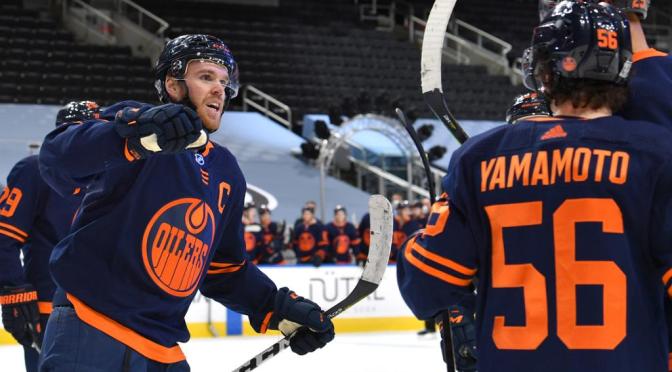
I haven’t written about the Oilers or boasted about my team, lest I jinx them. (I didn’t say anything during the Oilers/Flames series!) The Oilers are facing elimination tonight (you will know if they won by the time you are readings this) from the Western Conference finals of the NHL playoffs down 0 games to 3 to the Colorado Avalanche.

One of the things I do to keep sane and to clear my mind is that I often listen to podcasts and sport radio about Oilers throughout my days. But even as I listen to analysts and sport media endlessly talk about the minutia of hockey teams, sometimes things break through into my thoughts about church.

And as the Oilers face elimination needing to win four games in a row to stay alive in the playoffs, some of the rhetoric coming from the team has sparked my thoughts.

The mantra today is “one game at a time.” Even though they are facing an impossible task of winning four straight games after losing the first three and even though only four times have teams done this before where 198 teams haven’t, they are choosing to focus on the things that are immediately in front of them.

There are lots of things in the world right now that can make us feel like we are facing an impossible mountain to climb, the task of winning four games in a row against the best hockey team in the NHL.

But like the Oilers, we can only face things one at a time. You can’t play all the games at once, you can only go one by one.

Wherever it is in life we feel like there are impossible mountains in front of us, I think it does us well to slow down and focus on what is right in front of us, what the next thing that we need to tackle is. In fact, I think this might be exactly where God calls us into discipleship. We are not called to go out and to preach to all the nations today, but to take the next step in our journey of faith.

And so as we consider what comes next for us, whether at church, at home, at work or in our community, we are only ever called to tend to the next thing, to play the next game, to focus on the upcoming challenge first.

So I am looking forward to this week and looking forward to being back with you on Sunday. But for now, the next thing for me is to pack my suitcase and guitar.

The Different Languages of Church – Pastor Thoughts

Easter is a strangely long season of the church year. It isn’t quite the 25 Sundays of green that we get through the summer and into the fall, but at seven weeks, plus Holy Week, it is about double that of Advent or Lent. 

So here we are coming to 50 days or the 8th Sunday of Easter, which we call Pentecost Sunday. The Sunday on which we hear the story of what happened to these disciples who first met the risen Christ and then were called to take that good news into the world. The Holy Spirit descends on them in tongues and fire granting them the ability to preach in all different languages to the varied crowds of foreigners in Jerusalem for the Pentecost festival. 

One of the things that has been reinforced to me over and over again is that preaching the Gospel in different languages is about more than the difference between English, French, Spanish or German and so on. Sometimes “speaking in a different language” can be the way we communicate differently between generations, between people with different levels of education, between urban and rural contexts, between where people land on the political spectrum, between backgrounds and histories, etc….

The first congregation that I served as a pastor taught me this lesson over and over. The quaint rural congregation set in the middle of a farming community holds a special place in my heart. For me, they were like nothing I had experienced before.  I grew up in the suburbs of Edmonton. I lived near, went to school with and attended church with people straight out of “The burbs.”

But my first call to that farming community church was otherworldly to me. They were the inspiration of my blog’s tagline: An iPhone Pastor for a Typewriter Church. The realization that we spoke different languages, though all in English, came fast and hard. 

In my first few weeks, one of the members invited me to attend the upcoming ELW (Evangelical Lutheran Women) meeting.

“Excuse me?” I said. 

“Well, the pastor usually comes to our meetings and leads the Bible study.”

So, I went.  And pretty soon I looked forward to each monthly meeting. They were a group with whom it was a joy to gather. 

But as someone who had spent the previous eight years attending university and then seminary, I had to learn how to lead a Bible study with many people who had only completed grade 8, maybe grade 12, and just a few with further education. 

I learned that while Canada has a literacy rate in the high 90s, about 45% of the population is only functionally literate. Meaning that people are technically literate, but often rely on context clues and images found in magazines or newspapers or restaurant menus. Close to half of Canadians might find it difficult to navigate a textbook or novel. Or Bible. Or hymnbook. 

I also learned that rural communities could have strong roots in oral tradition. And while some folks might struggle with some reading materials, they could also relate lengthy in-depth oral histories of their community to me. I learned how to speak the language of weather and seeding and harvest. I was taught how to navigate and bridge the divide between folks rooted in their past and a pastor born into, educated in and moving into the future. 

I would do little social experiments to see if putting an announcement in the bulletin but not giving it verbally made a difference. It did. No one came to Bible study the month I did that! (I have also since learned that folks not reading the bulletin was a reality in almost every congregation!). 

Most of all I learned that how we communicate with each other and how I communicate with the people I serve is not always straightforward and easy. Instead it takes work and practice. It takes work to get across the message you want people to hear.

And because of all this, it also shows us that the spirit of Pentecost that pushes the disciples into the streets to preach to people in their own language is a much richer and deeper story than we might imagine. The many languages of Pentecost are not just formal ones. Rather, through the Spirit we are called into relationship and community, and only then can we begin to talk with each other.