Category Archives: Sermon

What have you to do with us Jesus?

Mark 1:21-28

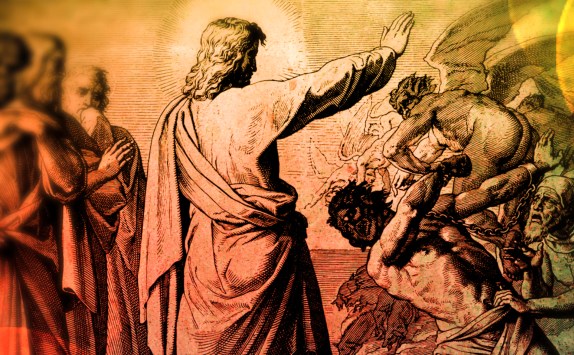
… a man with an unclean spirit, and he cried out, “What have you to do with us, Jesus of Nazareth? Have you come to destroy us? I know who you are, the Holy One of God.” But Jesus rebuked him, saying, “Be silent, and come out of him!”… (Read the whole passage here.)

Sermon

Today, we pick up in Mark’s gospel where we left off last week. Jesus has preached his first sermon, “The Kingdom of God has come near” and called Simon and Andrew, James and John to be disciples.

Now the group of them head to Capernaum, which becomes the home-base for Jesus’ ministry. It is the Sabbath, the day of worship, and they go to the synagogue. Jesus begins teaching, as was the right of any circumcised Jewish man. Usually, it was local scribes or rabbis who preached but sometimes travelling preachers like Jesus would come by to teach.

As Jesus begins, the congregation notices something different. Jesus is not teaching like the scribes. The scribes who were like walking encyclopedias of religious knowledge. The scribes were experts in the law, in the teachings and interpretations of the Jewish faith. The scribes didn’t innovate or interpret, they simply memorized what had been interpreted and written down by rabbis and other authorities long ago. New teaching was dangerous and probably heretical. It was important to stick to what they knew to be tried and true.

Yet, Jesus was preaching something new. Something different. Jesus was preaching from his own authority. Preaching like he had some special access to Moses, Elijah and the other prophets. Like he had special access to God.

While most people weren’t sure what to make of this Jesus guy, who he was or where his authority came from, one person did. Or rather an unclean spirit did. While regular humans don’t see who Jesus really is, the supernatural unclean spirit knows. And the spirit knows that Jesus is a threat to the established order. The spirit knows that Jesus has come to turn things upside down. The spirit knows the world that he and the people around him are stuck in is the past. The comfortable systems, traditions and ways of being that they are used to are over. Jesus is going wreck things.

The spirit is the one who speaks.

What have you to do with us? I know who you are!

The man with a spirit might just be a man with an unclean spirit. But for Mark the man might also represent the ways in which that community, that world, was possessed by tradition. Stuck in past. Unable to introduce any change that threatens the status quo.

Sound familiar?

Churches these days often struggle with this issue. We often long for things to be as they once were. We long to have Sunday schools with 100 kids every Sunday, and services that are standing room only. We long for offering plates to beoverflowing, we hope for more baptisms than funerals. We long for the past, or at least the way we remember things to be.

As a faith community or as individuals we can be possessed by our past. We can fear change, block anything new, strive to keep things the same. As the old joke goes,

How many Lutherans does it take to change a lightbulb?

Change!??! That lightbulb was good enough for my grandfather, so it is good enough for us.

When the unclean spirit names the threat that Jesus is not only to the good deal that the spirit has possessing some poor man, but also the threat that Jesus represents the whole world of the people of Capernaum and beyond, Jesus will have none of it.

Be silent and come out of him!

Jesus will not be deterred by the anxiety and fears, or the unwillingness of the spirit or people to let go. Jesus is preaching a new world, Jesus is calling the people around him into the future, into a new way of living. Jesus’ new teaching is astonishing, radical, unheard of. And it comes from a place that people don’t understand, but that the unclean spirit gets. The unclean spirit knows that the old ways, that the established approved way of doing things is safe, is comfortable, it is known. The spirit knows that people would so often rather be possessed by trying to maintain the past than face the unknown future.

Be Jesus knows that God is calling us into something new and unknown. And Jesus knows that we need to be exorcized of our fears and worries if we are going to see God’s future. Because we are often possessed by maintaining our past, by trying to recreate what we once were. We hold onto the traditions, systems, and ways to doing things that were good for our grandparents and so, we believe, are good enough for us.

Now don’t hear Jesus wrongly. Jesus is not saying that the past is wrong or bad. Jesus is not saying that God wasn’t active in the past, or that God wasn’t working through the ways we used to do things. Often when churches and individuals face change, letting go of what we once were is so hard because it feels like we are dishonouring our forebears. It feels like we are saying our parents and grandparents were wrong, that they weren’t being faithful.

That is not what Jesus is saying. Jesus knows that God has been present among the people, among us the whole time. Jesus isn’t exorcizing us of our past. Jesus is exorcizing us of our holding on, of our resistance to change, of our need for safety and comfort. Of our fears and anxieties.

It is not the past that keeps us from seeing God’s future, it is our efforts to keep things the same, to recreate what once was, what we once were.  And Jesus’s new teaching is really about showing us that new world. Showing us God’s future. Showing that God is coming to, meeting us in the future. God knows we cannot go backwards.

And that is what is so radical to the people in the synagogue in capernaum, so radical for us today. God is not a God of the past, God is not about keeping things, keeping us the same. God is about resurrection, about turning death and forces that hold us back, into new and abundant life.

Let us pray,

O God, you have called your servants to ventures of which we cannot see the ending, by paths as yet untrodden, through perils unknown. Give us faith to go out with good courage, not knowing where we go, but only that your hand is leading us and your love supporting us; through Jesus Christ our Lord.

Amen.

‘Course Jesus isn’t safe. But he’s good.

It has been a while since my last post, but I am hoping to get back into posting after a few weeks of holidays. Welcome to 2015 on The Millennial Pastor. In the meantime, here is my sermon from today. See you around. 

Mark1:14-20

Now after John was arrested, Jesus came to Galilee, proclaiming the good news of God, and saying, “The time is fulfilled, and the kingdom of God has come near; repent, and believe in the good news.”… (read the whole reading here).

Sermon

“Then he isn’t safe?” said Lucy.

“Safe?” said Mr Beaver; “don’t you hear what Mrs Beaver tells you? Who said anything about safe? ‘Course he isn’t safe.

Today, we pick up the story just 14 verses into the Gospel of Mark. In the last two weeks we have heard the story of Jesus’ Baptism, and last week Jesus called Philip and Nathaniel. Today, he continues the call to Andrew and Simon, to James and John sons of Zebedee.

As this story comes 3 weeks after Epiphany, it seems to continue with the Epiphany theme. Epiphany tells the second half of the Christmas story. At Christmas, Christ is revealed to us as the child born in a manger – Christ revealed in flesh. On Epiphany Jesus is revealed to the Wisemen come to meet the Messiah born in Bethlehem – Christ revealed as the Son of God. Today, as Jesus calls these new disciples, he seems to be continuing his Epiphany journey, revealing himself as the Son of God.

But before Jesus calls these fishermen to follow him, he does something else interesting. He preaches his first sermon. The first words that Jesus speaks in the gospel of Mark are:

“The time is fulfilled, and the kingdom of God has come near; repent, and believe in the good news.”

The Kingdom of God has come near.

That sounds simple enough to our modern Christian ear.

But for the Jews that Jesus was preaching to, it was radical. And it was radical because the Kingdom of God was something that didn’t feel near. God was NOT close by. God was far away. God was too righteous, too holy, too big and powerful, to come near to sinful human beings. That was the whole point of the temple of Jerusalem. God lived in the centre, in the holy of holies, and people needed to be purified in order to come near to, to access God. God was dangerous, unsafe. Being in the presence of God would make anyone of us drop dead. The annual tradition of Yom Kippur, the day of atonement, was based on this idea. Some poor priest was send to the Ark of the Covenant at the centre of the temple to purify it of the sin of the people that had accumulated over the year. The priest was sent with a rope tied around his foot, in case he dropped dead being in God’s presence, so that his body could be pulled out.

This holy and righteous God was unsafe and dangerous, being near to God was not necessarily something to be sought out.

And yet Jesus comes preaching, “The Kingdom of God has come near.”

Jesus preaches a radical and dangerous message. One that upset the way the people understood their world, one that made their world unsafe. One with God near by.

eye-of-aslan“Is he a man?” asked Lucy.

“Aslan a man!” said Mr Beaver sternly. Certainly not. I tell you he is King of the wood and the son of the great emperor-beyond-the-sea. Don’t you know who is the King of the Beasts? Aslan is a lion – the Lion, the great lion.”

“ooh!” said Susan, “I’d thought he was a man. Is he – quite safe? I shall feel rather nervous about meeting a lion.”

“That you will, dearie, and no mistake” said Mrs Beaver; “if there’s anyone who can appear before Aslan without their knees knocking, they’re either braver than most or else just silly.”

“Then he isn’t safe?” said Lucy.

“Safe?” said Mr Beaver; “don’t you hear what Mrs Beaver tells you? Who said anything about safe? ‘Course he isn’t safe.”

Most of don’t worry about dropping dead when we come forward for communion, or when we walk behind the Altar. Yet, like the Ancient Hebrews, we too feel far away from God in our own way.

For the Ancient Hebrews, it was that God was too big, too righteous, too holy for human beings.

But for us, it is that we are too unrighteous, too small, too unholy for God.

As a pastor, one of the most common concerns that pastors hear from church people and non-church people alike is about not being good enough. We might not think that God is too good, but we often think we are too bad, too sinful, too flawed for God. So many of us sit in the pews and wonder if God would listen to our prayers. We wonder if God cares about someone like us and all the things we have done in our life. We believe that we have done things that are unforgiveable.

For many Lutherans, it is why we prefer pastors to pray, just incase God ignores a sinner like me. It part of why we hesitate to have communion more than 4 times a year, just incase it becomes corrupt by having regular contact with us. It is why we wait for children to be confirmed before they commune, in case they aren’t good enough.

But most of all, we worry that the selves we present to the world, the selves that we hide – our flaws and imperfections, our history and our baggage, the selves that cover up our shame and weakness… we worry that God sees our true selves. The naked, vulnerable, shameful versions of our selves.

And so while we might not be frightened of dropping dead in front of God, God is just as unsafe for us. For us it is not dropping dead, but dying of shame. Of being vulnerable and exposed in front of God.

This God. This God who is bringing the Kingdom near in a wild and untamed kind of way, is unsafe.

And still Jesus preaches his message.

“The Kingdom of God is near to you.”

And for the people of Ancient Israel, the wild, untamed, unsafe Jesus of Mark, declaring that the Kingdom is near is also declaring a world changing, life altering message. The Kingdom of God is near, not hidden away in the holy of holies of the temple. The King is near, the King who is too holy, too righteous for sinful humanity is coming near anyway. The King doesn’t care about holy or unholy, clean or unclean, this King wants to be with the people.

And so while the Kingdom coming near might have been unsafe, it might have resulted in death, it was also radical, transformational, it was incredible. The great king wanted to be near to humans, to you, to me. This is a King who cares about and is concerned with people. One who breaks the rules of clean and unclean, breaks the rules of lawful and unlawful, of righteous and unrighteous.

It is no wonder the disciples just drop their nets and follow. They were experiencing the presence of God like never before. Maybe they didn’t know in their heads just who Jesus really was, but in their hearts they must have been seized by nearness of God.

6a00d8341ec10c53ef00e54f60744f8834-800wi“Is he a man?” asked Lucy.

“Aslan a man!” said Mr Beaver sternly. Certainly not. I tell you he is King of the wood and the son of the great emperor-beyond-the-sea. Don’t you know who is the King of the Beasts? Aslan is a lion – the Lion, the great lion.”

“ooh!” said Susan, “I’d thought he was a man. Is he – quite safe? I shall feel rather nervous about meeting a lion.”

“That you will, dearie, and no mistake” said Mrs Beaver; “if there’s anyone who can appear before Aslan without their knees knocking, they’re either braver than most or else just silly.”

“Then he isn’t safe?” said Lucy.

“Safe?” said Mr Beaver; “don’t you hear what Mrs Beaver tells you? Who said anything about safe? ‘Course he isn’t safe. But he’s good. He’s the King, I tell you.”

Course he isn’t safe. 

But he’s good. 

He’s the King, I tell you. 

Here is the thing about being safe. It is safe to God stay in the holy of holies, to keep God at distance. And it is safe to keep God contained in neat and cozy Sunday morning church services.

But this morning, God isn’t safe.

Jesus is not preaching a safe sermon. Jesus is preaching a dangerous sermon.

The Kingdom of God has come near.

The Kingdom is near and we are left exposed, sins and all.

The Kingdom is near and God can see our shame and weakness.

The Kingdom is near and we cannot hide our true selves.

And so we come together, come to this place to meet the King who has come near to us. And we confess our sins, we reveal our need for love and forgiveness. We openly admit that we do not have life figured out, that we need God’s Word of eternal life. We declare that we are the hungry masses, that we need to fed by God’s body and blood.

And Jesus comes near to us.

Untamed, wild, unsafe, lion-like Jesus comes near.

And our lives, our worlds are changed.

Jesus comes near and changes us. Transforms us.

Jesus comes near and forgives us.

Jesus comes near and speaks a word of life to us.

Jesus comes near and feeds us with the Body of Christ.

Today, we hear Jesus’ first sermon. We hear Jesus revealed again and again to us. Revealed in flesh, revealed as the son of god, revealed as coming near. Today, we hear an unsafe sermon, one that threatens to knock us dead, or least to make us die of shame.

‘Course he isn’t safe.

But Jesus is Good.

Jesus is the King I tell you.

And this unsafe, untamed God might just make us die, but also shows us untamed and wild New Life.

Amen. 

Advent Waiting: Ferguson, Sexism and Black Friday

I have been hesitant to add my own privileged commentary to issues surrounding Ferguson and sexual violence against women. I normally try to share and retweet the voices of the oppressed. But as a preacher, I can’t keep silent. Here is the text of the sermon preached to my congregation this morning. 

Mark 13:24-37

“From the fig tree learn its lesson: as soon as its branch becomes tender and puts forth its leaves, you know that summer is near…

Therefore, keep awake– for you do not know when the master of the house will come, in the evening, or at midnight, or at cockcrow, or at dawn, or else he may find you asleep when he comes suddenly. And what I say to you I say to all: Keep awake.” (Read the whole lesson here)

Sermon

Keep Awake. The world is waiting. 

The world is waiting for justice. Waiting for peace. Waiting for healing.

Keep awake. This week we watched as the people of Ferguson waited for answers, waited for justice… and then we saw a system stacked against justice rule to protect the privileged. And we saw the results. As the Rev. Dr. Martin Luther King Jr said, “Rioting is the language of the unheard.”

The world is waiting for Justice.

Keep Awake. This week we witnessed hoards of people flock to malls and stores in order to get Black Friday deals. In order to engage in retail therapy, the attempt to fill empty hearts by emptying full wallets.

The world is waiting for healing.

Keep Awake. This week heard news and reminders that violence against women, misogyny and sexism are not things of the past. We heard the charges laid against CBC radio host and celebrity Jian Ghomeshi, the allegations made by elected MPs of harassment. We have heard that two men have been charged in the case of Rinelle Harper, a 16-year-old girl left for dead on the banks of the Assiniboine left after being assaulted and violated.

The world is waiting for peace. 

Today, is the first Sunday of Advent. And we know it is Advent, not just because of the calendar, but because we are no longer surprised by the Christmas music playing in the malls, or the Christmas lights that light up night-time streets and highways, or the fact that the Santa Claus parade was already two weeks ago.

Last Sunday, we concluded the church year, and today we turn the page onto a new one. As Christians, we observe a calendar slightly offset from the secular one. Our church year begins with Advent in late November, a good month or so ahead of January 1st. And like regular New Year’s, Advent is partly about a chance to start over, to leave behind the baggage of the previous year, and make a fresh beginning.

But Advent is no so much about resolutions, as it is about preparation. Preparation and waiting. Advent is the 4 weeks before Christmas, and is centered around hearing the stories that prepare us for the birth of Messiah. And like the season of Lent before Easter, Advent is season that is toned down, a season for reflection and thoughtfulness. But Advent is not about penitence or preparing ourselves to hear about Christ’s death is like Lent is. Instead, Advent is hopeful and full of anticipation. If Lent is the church season of waiting on Death Row or in Palliative Care, Advent is the season of pregnancy.

And each Advent season, we start on week 1, Sunday 1 hearing about the end. Hearing about the coming of the Son of Man. Advent waiting begins with waiting for Jesus. Waiting for the Messiah to come with the people of Israel, waiting for child to be born in a manger, and waiting for the second coming, for Jesus to return for that big cosmic ending.

And so today, before we get to John the Baptist, or before we get to angels making announcements to virgins, we hear Jesus’ words about the end of time. Keep Awake, he says, because no one knows the day nor the hour.

What an odd place to begin the church year. What an odd place to start Advent. December should start with digging boxes of Christmas lights out of storage, and checking off lists for Christmas shopping. This end of the world stuff doesn’t seem to fit.

As Jesus tells his disciples to Keep Awake, it becomes abundantly clear, that as modern people, we have no idea what waiting really is. The people of ancient Israel lived in a world of waiting so different from ours.

The world of the disciples was full of waiting… as Jesus reminds them of the lesson of the fig tree, we too can learn something. The people of Ancient Israel lived by a lunar calendar. This means that they organized their months by cycles of the moon rather than by the earth moving around the sun. More concretely, their months were all either 29 or 30 days long. Any month could be 29 or 30 days. Their years were either 12 months or 13 months long. Any year could be 12 or 13 months. So how did they know?

Well, when at least couple of people observed the new moon at end of the month, they would tell the temple authorities (the church council) who would then send out messengers to let the people know that the month had changed. And then at the end of the year (which was usually around our February or March), if spring still seemed far off, the temple authorities would just add another month to the end of the year.

Take a moment and think about that. Imagine if we had to read the papers or watch the news to find out which day our months ended on. And imagine if a couple of weeks before the end of the year, we found out there would be another December.

The is why the Ancient Israelites had to watch the leaves of the Fig tree to know when summer began, their calendars couldn’t be trusted. Instead, they had to trust the signs around them, they had to trust their community to keep awake together, trust their leaders to make sure good decisions were made.

We wouldn’t know what to do with ourselves in a world like that. We don’t know how to wait in that way. We don’t live our lives with an openness to things happening sooner than we expect, or not happening when we want them to. We live with set schedules, with fixed time limits, with predictable dates. In fact, you can tell just how bad we are at waiting by the question we love to torture kids with this time of year, “How many sleeps until Christmas?”

And while we are not good at waiting in the same way the people of ancient Israel were used to, we do wait. We wait just like they did. Maybe not for extra days or extra months but we wait for salvation like they did. We wait for Justice like them, we wait for peace, we wait for healing.

And in Advent, we wait for Messiah too.

They waited for Messiah in Jerusalem, on the banks of the Jordan and Bethlehem. They waited to be freed from oppression from Empire, they waited for God’s mercy and love to make them clean, they waited to be lifted up from their suffering.

And we wait for Messiah in Ferguson, in Ottawa, on the banks of the Assiniboine, and here right now among us. And whether we are good at it or not, our waiting is not measured by the number of sleeps until Christmas, nor on calendars, schedules or to do lists.

Like the ancient Israelites, our waiting for Messiah is measured in small glimpses of Hope.

Messiah came to Ancient Israel in the form of a carpenter turned preacher telling of the coming of the son man to expectant crowds. Messiah comes to us as people of faith speak out about the injustices of Ferguson and stand with a community grieving and oppressed.

Messiah was preached by a hermit crying in the wilderness, prepare the way of the Lord, make his paths straight. Messiah is preached today, as we refuse to consume and spend as if it were therapy, as we proclaim a counter-cultural message of waiting and anticipation, instead of immediate gratification.

Messiah was promised and announced to young woman, not yet married. And it was an unremarkable girl, overlooked by the world around her who bore God’s promise into the world with a man who should have stoned her instead of staying faithful.

And Messiah is promised and announced here as a community rallies around a young girl left for dead on the river banks, declaring violence against women and minorities is unacceptable.

Our hopeful waiting is for a Messiah who comes in small unexpected places, who comes no matter how good we are waiting, who comes to bring justice, peace and healing.

Keep Awake, says Messiah. The world is waiting.

Keep awake and see that Advent is not a countdown to Christmas, but a chance to see that the signs of Messiah’s coming, Messiah who may come tomorrow or in a lifetime.

But Jesus also says something else.

Today Jesus declares that no matter how dark the world seems,

The Son of Man is coming.

No matter whether we wait with patience or with anxiousness,

The Messiah is entering our world. 

Regardless the powers of injustice, violence and suffering,

Salvation promised, will come to us. 

Our waiting will not be in vain, our longing for a better world does not go unnoticed by God.

Keep Awake Jesus says, not as command to keep vigilante. But Keep Awake is a promise. A promise that in our Advent waiting, there will ever growing light in our darkness, that our hope is in Messiah and the signs say Messiah is on the way.

Amen, Come Lord Jesus.

The Crime of the Parable of the Talents

Matthew 25:14-30

Then the one who had received the one talent also came forward, saying, `Master, I knew that you were a harsh man, reaping where you did not sow, and gathering where you did not scatter seed; so I was afraid, and I went and hid your talent in the ground. Here you have what is yours.’ But his master replied, `You wicked and lazy slave!… (Read the whole passage here).

Sermon

This parable of the talents is a familiar stewardship parable for us. It has been preached that talents are gifts of time, money and abilities that we are to give to the Church. We all have been told that God gives us gifts that we should return to the church, and not just return to the church, but return twice fold. This is stewardship we are told, stewardship at its best. God has given us all that we have and so as good little Christians we should give back twice as much. We should give back twice the amount that God gives us. We limited, finite, terminal creatures of creation must give back to the Almighty creator, twice what we have been given. Surely some of us must be wondering how on earth this will work.

Perhaps it is that preachers seem to like this parable too much. Maybe the chance to use Jesus’ words to scold the poor folks in the pew for not giving enough simply cannot be resisted. Maybe the chance to say something that sounds like good pastoral care advice for those who come asking how they can participate in the life of the church is an opportunity that this parable provides, and an opportunity that should never be wasted. Maybe the chance to guilt those who only take and take from congregations, into giving a little back, is just too tasty to let be.

But, is this parable really about a God who guilts us into giving? Does the God of stable mangers, the God of nail pierced hands and feet, the God of empty tombs and being known in breaking bread really operate with guilt trips? Does this God really say “look at all I have given to you… and now you owe it back twice over… or at least give me the going interest rate”. Is God really like this harsh master who steals from his neighbours, who makes threats like: “For to all those who have, more will be given, and they will have an abundance; but from those who have nothing, even what they have will be taken away.”

The reality of this parable is that it is about real money and not so much about talents  like playing the organ, or hammering nails, knitting sweaters, or public speaking. And making this parable about our gifts and skills is a disservice to the meaning of this parable. The Greek word, “Talonton” can only be understood as a large sum of money. Its measured in gold or silver, its 10 to 15 years wages, one talent can be anywhere from one thousand to a million dollars…  And the rich man who gives talents to his servants seems to be so rich that he is able to play around with millions of dollars. It is estimated that the 5 talents given to the 1st servant could have been worth anywhere from 1.2 million to 5 million dollars today. The rich man is so rich that money has become a toy for him, not to mention the lives of his servants.

Sounds a lot like how God treats us?

No, not really.

This rich landowner can only be passed off as God-like when we make greed and power true God-like qualities. We can only call this money a gift when we imagine money to be more important than anything else in our world. We can only see this parable as having something to do with stewardship when making money is something noble and divine, no matter how we make it.

Like last week’s parable of the 10 Bridesmaids, the parable of the talents cannot be reduced to straight forward comparisons. God is not the rich man, and we are not the servants of varying financial ability. In fact, if we really think about where God is in this parable it is not so easy to see. To demand profit, to make money on the backs of others, to worship greed and power and the almighty dollar are such human qualities.

And yet, when we consider the 3rd servant. The one who buries the 1 talent in the ground in fear… there is more to his story when we take the time to consider it. The 3rd servant is portrayed as a coward, yet he is the only one who refuses to participate in the system of greed, wealth and power. He is the only one who speaks honestly and boldly to the rich man. He is the only one who names the truth, that the rich man is harsh, that he steals and he is judgemental. And what does all this get the 3rd servant? It is gets him cast into the outer darkness with nothing.

Sounds familiar doesn’t it?

In fact, it is the story of the chapter of Matthew that follows this parable. It is the story of Good Friday. The story of another servant we know, one who speaks truth to human power, and who is killed and then buried in the ground, in the tomb, just like that 1 talent.

The parable of the talents when preached as if it were lesson in stewardship is a crime against the people sitting in the pews. Preaching that talents are something we ought to return to two-fold to God does not do justice to the story of God among us, the story of the creator come down to creation.

Earning money or interest has nothing to do with the story of God who entered into our grieving, to grieve with us, to share his own broken body and shed blood, but also to proclaim the unearthing to come. To proclaim that the true things of great value that we bury in ground shall be raised up, with New Life and with New Joy.

The idea of doubling our money for God makes no sense to the God who proclaims us, proclaims all of creation to be of the greatest value and worth. Today, instead of telling us to give our talents, gifts and time to God, God is declaring that the unearthing Christ, the one buried and then raised from the dead is not interested in wealth and power, but instead interested in us. Christ is interested in showing a nothing, failing dead humanity, that even when we are dead and buried, there is New Life unearthed for us.

Amen. 

A Reformation Sermon for Canada and the Ottawa Shooting

John 8:31–36

36So if the Son makes you free, you will be free indeed. (Read the whole passage here)

Sermon

This week our nation has endured great tragedy.

On Monday two soldiers were run down with a car, and one of the them, Patrice Vincent died of his injuries. And then on Wednesday we all heard the news come over the radio, tv or internet. There had been a shooting on Parliament hill, a solider had been killed at the National War Memorial, and then there were shots fired inside Parliament. Security officials and police locked down Ottawa for hours as the rest of us waited to hear if there was going to be more… more gunmen, more bullets, more violence, more chaos.

In the days following, we learned just how dangerous this situation was. We learned that shots were fired just outside of the rooms where many of the members of our federal government were meeting. We learned that the gunman had passed by dozens of bystanders and had easily gained access to heart of Canadian democracy and government.

And since then, all Canadians have been shaken to some degree. And we have already seen the beginnings of over-reaction to this incident. We have heard our political leaders declare that our enemies will be punished and that our resolve to defend our freedoms will not be shaken. We have seen increased security measures across the country. We have even seen vandalism of a mosque in Cold Lake, Alberta.

As we are left to sort out what to make of these events, it is perhaps appropriate that today we gather on Reformation Sunday. Reformation Sunday is the day we set aside each year as Lutherans to remembers our 500 year history, and where we came from. We remember the catholic monk Martin Luther, whom we are named after, standing up against the injustices of the pope and the church – the selling of salvation, the abuses by church leaders, the exploration of the faithful. We remember that our faith and our beliefs are important. Important enough to die for, important enough to defend.

But on Reformation Sunday we also remember the division that change caused. We remember that people did die because of Martin Luther’s actions. We remember the between 125,000 to 250,000 people that died in the peasants war that resulted. We remember that after Martin Luther nailed his 95 theses to the door the church in Wittenberg, Christianity was split from 2 denominations (Roman Catholic and Eastern Orthodox) into as many as 25,000 today. And these divisions have been caused violence, chaos, oppression, abuse, suffering and death for 500 years.

Reformation Sunday is day of two realities. Of promise, hope and freedom, contrasted by division, conflict and oppression.

Today, you might notice the red parents that adorn the chancel area. Red is one of the 5 liturgical colours, but it is only used a handful of Sundays each year. Red is the colour we use to symbolize the Holy Spirit. The changing, transforming, reforming work of the holy spirit among us. Red is used on Pentecost when we celebrate the Holy Spirit coming to the disciples, and today Red is for Reformation. However, as Canadians, we might take some liturgical and theological license and think that Red reminds us of our national colour and of the the reality of tragedy, fear and death in our midst. And lastly, Red is used to remember martyrs in the church.

And while the gunman may or may not have considered himself a martyr, we have discovered that Cpl. Nathan Cirillo is in fact the martyr this week, the one who died for principles and for a cause.

Even still, as we are left to make sense of tragedy, Canadians have discovered signs of courage and honour this week. Even as the events of Wednesday unfolded, we saw our news broadcasters deliver calm, respectful, accurate reports of the events, rather than sensationalism. And then the courage of Sergeant at Arms Kevin Vickers was revealed, recounting his dramatic actions that ended the danger and prevented more violence. Then there are the residents of Cold Lake who showed up to clean, repair and show support for the mosque that was vandalized only hours earlier. Then there was the political cartoon from Halifax that captured the emotions of a nation, as it depicted one of the bronze world war one statues on top the of the tomb of the unknown soldier stepping down to Nathan Cirilo below, where only the recognizable feet and argyle socks of his uniform could be seen. It was as if those soldiers from a hundred years ago was saying, “You belong here with us.”

https://twitter.com/sladurantaye/status/525264341168185345

And overwhelmingly, the rhetoric since Wednesday has been for Canadians to remember who we are. To remind us not to lose ourselves to grief and fear, to remember that we are a nation of peace and openness, that our values are about tolerance and freedom.

It was been a week of mixed emotions, of conflicting experiences, of hard-to-make- sense of events. And fittingly, Reformation Sunday is about that too. About the conflicting experiences of division, conflict and war that accompanied the Reformation, as well as the striving for justice, the proclamation of grace and mercy, the hope we have in God’s promises.

God’s promises like we hear Jesus utter today, promises like,

“So if the Son makes you free, you will be free indeed.”

And if there is anything to remember today it is that.

Even as Canada struggles with tragedy and celebrates the heroism born out of it. Even as Reformation Sunday demands that we recall the both the gospel proclamation of Martin Luther and the reformers, the bold declaration of grace through faith alone, that there is nothing we can do to earn God’s love and that this belief is important enough to stand up for contrasted with the division, conflict, violence and suffering caused by the reformation. Even as these realities both this week and 500 years old sit with us, ultimately today is not about those things. Today is about what each Sunday is about for Christians.

Today is firstly about Christ. Today is about God and God’s mighty deeds among God’s people. Today is a reminder we simply cannot save ourselves on our own.

Just as in today’s Gospel readings the Jews said that as descendants of Abraham they were slaves to no one (even though they had been slaves to the Egyptians, Babylonians, Persians and now Romans). Just as Martin Luther declared that he and we we were not slaves to law and freed by God’s grace (even though he was threatened by the Pope and others). Just as Canadians declare that we will not loose ourselves to fear, to revenge, and hate.

We are still slaves to all of those things. We are slaves to enemiy nations. We are slaves to the law. We are slaves to fear, fear of the other, fear for our safety, fear of losing power.

No matter what our leaders declare, no matter the bravery we display, the sacrifices we make, the peace we try to uphold. We simply cannot save ourselves. We simply cannot free ourselves.

We are slaves to sin, slaves to suffering, slaves to death, and there is nothing we can do about it.

And that is why today is ultimately about Christ.

Today is about the promise that God gives to slaves. To those enslaved by sin, those enslaved by suffering, to those enslaved by death. Today, is about the promise that God gives to us. The promise that despite our condition, despite our slavery, that God is showing us mercy, God is giving us grace, God is making us free. Free in the son.

And this promise of freedom comes to us first in baptism. In baptism where we drown and die to sin, and where we rise to new life in Christ.

So perhaps it is fitting today, that we are going to extra lengths to celebrate those promises of baptism, because confirmation is really about baptism, about these young people in our midst recognizing their baptism, recognizing the promises made to them in water and word, made by God.

And just perhaps it is a powerful act of defiance against violence, against oppression, against fear for us to bless and support our confirmands. Perhaps it is beautiful act of hope that not only do we welcome again these young people into the Body of Christ, but we pass on this church, this faith, these promises to them. Even while we are slaves to sin, to suffering and most of all to death, we pass on our hope for the future to these young confirmands. A future promised by God in the midst of slavery. A future given by grace and mercy, even though we are dead. A future found with New Life in Christ.

Amen.