Category Archives: Sermon

Greenhouse Churches, Scattering Seeds and the Kingdom of God

Mark 4:26-34

Jesus said, “The kingdom of God is as if someone would scatter seed on the ground, and would sleep and rise night and day, and the seed would sprout and grow, he does not know how. (Read the whole passage)

Sermon

Today, we delve again into Mark’s gospel. Last week, we started this long season of green, by hearing how Jesus’ family thought he was crazy. But we also heard that God’s house is the divided house, the one with room for differences and diversity, the one broken open for the sake of the world.

Today, we hear parables. Parable of the Kingdom. And while this teaching may be familiar for us, it wasn’t for those that Jesus was teaching and preaching to. As Jesus tells parables of the Kingdom, lessons that often begin, “The Kingdom of God is like…” we hear them with 2000 years of Christian tradition that has made us ready to hear them. But to the people of 1st century Israel, their understanding of the Kingdom of God was very different than ours. Before unpacking what Jesus said, it is important to know what the people would have expected.

The Kingdom of God for the people of ancient Israel had a very specific form. As we are reminded each Advent, the Israelites were waiting for the Messiah, the Saviour King who would free them from foreign oppressors like the Egyptians, Babylonians, Persians, and Romans. And this Messiah King would establish an earthly Kingdom with divine approval. A powerful kingdom with powerful armies – maybe even powerful enough to do some oppressing itself. A wealthy kingdom with abundance – maybe with enough abundance that other nations would come begging to it. This Kingdom would keep Israel from ever being ruled over by foreigners ever again. This Kingdom would find favour with God, and would therefore be a holy and righteous Kingdom. This Kingdom would be centred in Jerusalem, with the temple, God’s dwelling place as its symbol of power. The Kingdom of God was long hoped for but also had to live up to very specific criteria.

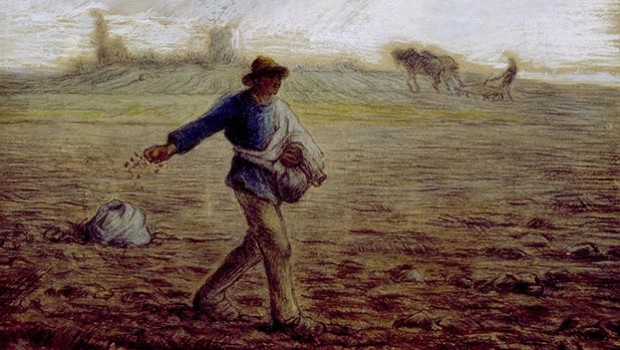
Then Jesus showed up. And he started telling parables about the Kingdom of God being like unknown seeds scattered in a field, with the sower having no clue how it would grow. Jesus told parables of how the Kingdom of God was like the humble mustard seed, the smallest of seeds that would grow into the most unruly of bushes / garden weeds.

These parables would not have described a Kingdom like the crowds would have expected. This is not the Kingdom of God they were looking for.

Even though we have heard all the Kingdom parables, we too can have a pretty narrow definition of what the Kingdom of God should look like. We too often want a Kingdom of power, security and predictability. We expect that God will fit into our narrow vision of what Kingdom will look like.

Now, it would be easy to describe the often narrow expectations that churches and ministries so often operated under, expectations of increasing attendance and finances… but I suspect we “get” that by now.

So perhaps it is more interesting to consider the effects of our narrow view of the Kingdom of God.

So let me ask a question. A question that the Bishop of the Diocese of Rupertsland asked Lutheran and Anglican clergy this week. And it is for the gardners among us, in particular.

Does anyone know of a seed that looks like the plant it produces?

I can’t think of any.

You might never guess what plant a seed turns into until you plant it. In fact, many seeds also look similar to each other and it can be hard to tell them apart without labels. Planting seeds is a bit of a guessing game. And churches, like all human beings, don’t like facing the unknown.

Churches often prefer to know that the things they do, the ministries, outreaches, projects or programs that they start will be predictable, identifiable, manageable.

And to stay with the garden image, this is more like greenhouse gardening. In the controlled environment of a greenhouse, small seedlings are grown, produced and sold. Seedlings are smaller versions of the plants they will become. And churches often like the things we invest ourselves into to look a little more like greenhouse gardening than scattering seeds in fields. We like to grow small known seedlings into larger yet similar plants.

In fact, churches are a lot like greenhouses. They are safe, stable environments. They are good at producing life. They are good growing plants that wouldn’t grow out in fields. They are good are growing with intention and purpose. They are places where life is nurtured. They are places with an an abundance of water – communities born in the waters of baptism. They are places with an abundance of fertilizer or food – bread and wine to be precise. Churches and greenhouses produce predictable, purposeful, rich life.

But Greenhouses are not the only place where plants grow. In fact, Greenhouses prepare plants for life on the outside. And churches prepare the people within them for life on the outside. To grow out in the world.

But even still, greenhouses are not the only place where life grows. In fact, most life grows out in the fields.

And like any good greenhouse, churches are in the seed scattering business too.

But scattering seeds is not predictable, or safe. Scattering seeds is not easily managed. Scattering seeds is a bit of a guessing game. And sometimes we end up planting mustard seeds in the middle of the field. A mustard seed which grows into a wild, weed-like over-powering bush.

And yet, this is what Jesus says the Kingdom of God is like. A sower who scatters seeds, but who isn’t sure just what will grow or how it turns from seed into living plant.

And yet again, this is what Jesus says the Kingdom of God is like. A small unassuming mustard seed, planted in a garden and treating to take over.

As people of faith, as workers and tenders of God’s garden, we declare that the Kingdom of God is near to us. That it is here. But sometimes we imagine that it is only here. That the Kingdom is contained only within the church. Within these four walls. Within communities who clearly and purposely identify themselves as Christian. We imagine that we allow the Kingdom into our world when we read our bibles, or pray, or attend church or gather as community.

We forget that the Kingdom of God is not contained within us. The Kingdom of God is not grown just in the Greenhouse.

Rather the Greenhouse, the church is contained in the Kingdom. We are just one place where God is growing, one place where seeds have been scattered.

The Kingdom is not in us. We are in the Kingdom.

To people that have a very narrow view of what the Kingdom of God looks like. To the Israelites of the 1st century, and to Christians of the 21st century who often have equally narrow views. Jesus reminds us that Kingdom of God is so much more than what we know.

Jesus tells of how the Kingdom of God is spread with seed that is scattered all over.

Jesus tells of how the Kingdom is sprouting in un-expected places.

Jesus tell of how the Kingdom of God is growing into life that we would have never predicted from the seed.

Jesus tells of how the Kingdom of God is teeming with life where we would have only imagined barrenness.

God is scattering seeds of the Kingdom all over. God is growing plants that we would have never have guessed from the seeds. And God’s Kingdom is showing up, taking over, filling the fields with life.

But perhaps most importantly, even as we garden in the greenhouse, even as we continue on as the church, God is growing the Kingdom here too. Not growing a narrow Kingdom within us, but growing us in the wild, broad, surprising and life-filled Kingdom.

Amen

God’s House is the Divided House

Mark 3:20-35

… And if a house is divided against itself, that house will not be able to stand. (Read the whole passage)

Sermon

A house divided cannot stand.

A house divided cannot stand.

Of all the lines to pick out of this passage, why does this one stand out in particular? Why not “he has gone out of his mind”? Or “then indeed the house can be plundered”? Or “Who are my mother and sisters and brothers”?

A house divided cannot stand. We seem to be caught by this line for some reason.

This short vignette in the life of Jesus can strike us as a strange one. As is usual, Mark uses the structure of the story to draw us to the centre. We begin and end with the crowds. The unwashed, poor, unclean and desperate crowds are pushing in on Jesus and his disciples. They are looking for something, someone to give them good news.  And by the end, Jesus names those same crowds as his brothers, sisters and mothers.

The next frame is Jesus’ family. Just after we first hear about the crowds, Jesus’ family comes to take him away because he is out of his mind. And just before the last mention of the crowds, we are reminded that Jesus family is desperate to get him away, to relieve their shame and embarrassment at what Jesus is doing.

And finally the scribes make up the inside frame. He has a demon the scribes claim. And Jesus rebukes the scribes for trying to make claim to actions of the spirit.

Crowds, family scribes. Scribes, family crowds. And right in the middle, Jesus gives us this strange image of Satan’s house. A house divided cannot stand. Satan’s house divided cannot stand. Satan’s house is not divided. Satan’s house, the strongman’s house, IS the undivided house.

As Jesus’ family attempts to restrain Jesus and as the scribes declare that Jesus is acting with a possessed spirit, Jesus reminds all those around him of this fact. It is the house of the strong man that cannot stand if divided, and therefore is not divided. But rather, that Jesus is here to tie up of the strong man in his house and to plunder it.

Jesus speaks to the crowds, his family and the scribes who all believe that they have the world figured out and that they have God figured out. The crowds know that they are on the outside of God’s love, they know that because they are unclean and unable to make sacrifices in the temple that God couldn’t possibly accept them.

Jesus’ family knows that family unity is essential to the Hebrew faith. They know that Jesus’ actions will not only reflect badly on him, but will bring shame to the whole family. They will lose standing in the community.

The scribes know they are part of the religious authority. They know that because they have kept the law that they are permitted to make judgements about who is clean and unclean, who us righteous and who is unrighteous.

Jesus speaks to these groups who believe they have it all figured out and turns their whole world, their whole understanding of God on its head. Jesus tells all of them, they are all wrong.

Like the crowds, Jesus’ family and scribes, we so often think we have things figured out.  Whether we think like the scribes, that we can determine where God begins and ends and make judgements about who is outside of God, or like Jesus’ family that we need to keep from being shamed and embarrassed or like the crowds that we are too sinful for God to possibly love us.

Jesus hears all of that and turns it on his it head. Jesus challenges our assumptions, challenges our claim to be the arbitrators of God’s love and declares a completely different reality.

“Truly I tell you, people will be forgiven for their sins and whatever blasphemies they utter; but whoever blasphemes against the Holy Spirit can never have forgiveness, but is guilty of an eternal sin”

Whatever we think we have figured out, whatever understanding of God’s activity in the world we claim to have Jesus tells the crowds, tells his family, tells the scribes and tells us that it is opposite of what we think. God is usually doing things very differently than we imagine.

A house divided cannot stand.

But God’s house, divided for 2000 years, continues to stand. It has stood despite our inability to agree. It has stood because the Church has been full of people who thought differently.

God’s house stands divided because it is able to hold within it the differences that we bear as the Body of Christ. God’s house stands because even when we cannot hold our differences between us, God can.

God’s house stands because it stands on Christ.

Satan’s house is the undivided house.

But Christ, who ties up the strong man and plunders Satan’s house, is our foundation.

God’s house stands divided between the many members of the body, the many members who serve and live in different ways, the many members whose different gifts are used in different ways, the many members who are each chosen and loved by God.

God’s house stands divided, as the Body of Christ broken and given for the world, as the Blood of christ shed and poured out for a world in need of forgiveness.

Just as we are all guilty of same eternal sin, of the same original sin, of wanting to be God in God’s place, of standing in judgement of others. Just as we are guilty, like the crowds, family and scribes of standing in Judgement of Christ. Jesus is declaring a new reality.

A reality where people will be forgiven for their sins.

The Body of Christ, the House of God, stands broken and divided in the world. And today, Jesus reminds us, that it is not by agreeing or finding unity that we stand. In fact, Jesus reminds us that it is Satan’s house that stands undivided.

Rather, Jesus declares today that God’s house divided and broken house stands only by God’s forgiveness. God’s house stands only by God’s stubborn insistence that we are all brothers and sisters in the Body of Christ. God’s house stands only by the turning of our world upside down.

A house divided cannot stand. But God’s house, broken and divided given and shed for us, has stood, stands now and will stand forever.

Amen.

O dry bones, hear the word of the Lord – Pentecost for Today

Ezekiel 37:1-14

The hand of the Lord came upon me, and he brought me out by the spirit of the Lord and set me down in the middle of a valley; it was full of bones. He led me all around them; there were very many lying in the valley, and they were very dry. He said to me, “Mortal, can these bones live?” I answered, “O Lord GOD, you know.” (Read the whole passage here)

Sermon

Our bones are dried up, and our hope is lost.

For a significant portion of medieval Christianity, there were 4 major Christian Feast Days that all Christians were obligated to attend. Easter, Christmas, All Saints Day and Whitsun Day.

Whitsun Day is also known as the Day of Pentecost. On the 8 Sunday after Easter Sunday, 50 days afterwards, Christians gathered to celebrate the coming of the Holy Spirit to the disciples early in the morning. On that day the disciples spilled out in the streets, with tongues of fire on them, and the preached the Good News in all languages.

It is an incredible story, a miraculous story. Pentecost has more recently become strongly associated with the idea of speaking in tongues. Pentecostals, a movement born in Azuza Street Revival in early 20th century Los Angeles have become strongly associated with Pentecost and speaking in tongues.

As interesting and perplexing the idea of speaking in tongues might be to a bunch of stayed and stoic Lutherans like us, the most interesting part of the Pentecost story comes just after the speaking in tongues part. After Peter finishes his impromptu sermon to the people of Jerusalem, 3000 people are baptized.

And with that Pentecost becomes birthday of the church.

2000 years since that first Pentecost, the church has survived much. 300 years of marginalization in the pluralistic and pagan world of the Roman Empire. The church has kept going despite bing co-opted by that same empire for political reasons. The church has survived schism, crusades and holy wars, upheaval and reformation, renaissance and scientific revolution, World Wars and Great Depressions.

Pentecost shows us the resiliency of the church, or more particularly, the faithfulness of God. This community of faith born in the Good News and nurtured by water, bread and wine is the ongoing sign of God’s great love for world. And while Acts brings us back to the beginning of this community, it is in Ezekiel that we might find more in common.

The idea of 3000 people being baptized today sounds frightening and exciting, but that is not where we are. It is not where the church or where our congregation has been at for a long time – if ever.

The words spoken by the House of Israel in Ezekiel’s vision sound more familiar:

Our bones are dried up, and our hope is lost.

2000 years after Pentecost, the vision that Ezekiel describes, seems to resonate a little more with us. At least the first part, the valley of dry and dead bones part.

Just this week, Pew Research in the US released a report detailing the decline of church attendance. Nothing that we didn’t know of course. Except, the report contradicts the common narrative that evangelical and conservative churches are still growing or maintaining. Attendance is dropping across the board. Declining for every group except one. The ‘Nones’ or the group the group who describe themselves as belonging to no religion.

Christianity is declining around us – our bones are dried up.  And those who are leaving are leaving for nothing – our hope is lost.

The prophet Ezekiel lived in world much more like ours than the Pentecost moment. He was a young man when Jerusalem was sacked by the Babylonians, the temple was destroyed and all the elites of Israel carried off into exile in Babylon. And for 5 years Ezekiel started preaching about and re-enacting the destruction of the temple. 5 years.

It took 5 years for the people to believe that the temple was gone. That the world they once knew was gone. It took 5 years to sink in that there was no going back. It wasn’t  enough to see the temple destroyed. It wasn’t enough to be in Babylon. It wasn’t enough to be conquered and forced to worship new gods. They needed to hear the story over and over again for it sink in. For them to accept their new reality.

Sounds familiar yet?

We too tell the same stories. The stories of our decline. The stories of our destruction. We lament and long for a world that is gone. We grieve for a world that we cannot go back to. And it might take us years to admit to this change, for our new world to sink in. Accepting our reality is just as hard.

Our pews will never be full of the people that filled them before. Our Sunday School and Confirmation classes will never have the students they once had. School children will never pray our prayers again. Sports, music and dance will never be banned during our worship again. Shopping hours will never be reduced to accommodate church attendance in our lifetimes. There are fewer Sunday sermons on radios and prayers at town council meetings. We will feel like we are having to make room for other religions and like we are being pushed out of public space for years to come.

Our bones are drying up, and our hope is lost.

And still,  standing with Ezekiel with the valley of dry bones spread before us, God will speak to us too.

“Mortal, can these bones live?”

Ezekiel’s responses is one of powerlessness. It is a sentiment that we understand. It is an utterance of exasperation that we speak often.

“O Lord God… you know”

50 years ago… if you had been sitting in a full and bustling church on Sunday morning, the only show in town, the place where many of your family, friends and neighbours were week after week, and the preacher stood a the pulpit and said,

“In only a few years this place will be a hallow shell of itself”

You might have laughed. It would seem unbelievable. It would sound crazy.

And yet, here we are.

Here we are with Ezekiel standing at the valley of dry bones and we are admitting, we are giving in, we are hopeless. “Only God knows what is next for us”

And God says,

“Prophesy to these bones, and say to them: O dry bones, hear the word of the Lord. Thus says the Lord GOD to these bones: I will cause breath to enter you, and you shall live. I will lay sinews on you, and will cause flesh to come upon you, and cover you with skin, and put breath in you, and you shall live; and you shall know that I am the Lord.”

Today… as you sit in a church with more empty spots in the pews than occupied ones on Sunday morning, as we are just one Sunday morning activity option among many, where friends, family and neighbours are rarely seen.

And the preachers stands in the pulpit and says,

“In only a few years this place will be full and alive with the spirit again”

You might laugh. It would seem unbelievable. It would sound crazy.

And yet, that is just what God is saying:

Then God said to us, “Mortal, these bones are the whole house of [Good Shepherd], the whole house of [Christianity]. [You] say, `Our bones are dried up, and our hope is lost; we are cut off completely.’ Therefore prophesy, [and hear the word of the Lord for you], Thus says the Lord GOD: I am going to open your graves [I am going to open your doors, open your hearts, open your communities], and bring you up from your graves, O my people; and I will bring you back to the land of [Christ]. And you shall know that I am the Lord [you shall know that your church does not live and die by you], when I open your graves, and bring you up from your graves, O my people. I will put my spirit within you, and you shall live, and I will place you on your own soil; then you shall know that I, the Lord, have spoken and will act,” says the Lord.

Today, a new Pentecost is dawning on us. Today, the spirit is blowing again in our midst. We might feel like our bones are dried up, and our hope is lost. We might only see a dying church… but God is about to do something new among us.

God is setting to the task of making dry bones walk. God making us ready for what is coming next for the church. And that might begin with years of telling the story of our decline and destruction. But like Ezekiel, once the story has been told enough, God will provide a new vision. Ezekiel saw a vision of the new temple and God is even today giving us glimpses of a new church, a new way to be people of faith in a changing world. It still took 200 years before the exiles returned to Israel to rebuild the temple, and it might just as long for the church. But this is how God works. God is making us ready for what is coming next.

Today the Lord says to us, “Prophesy to the breath, prophesy my church, and say to the breath: Thus says the Lord GOD: Come from the four winds, O breath, and breathe upon these slain, that they may live”

Amen.

God is pruning the Church

John 15:1-8

Jesus said, “I am the true vine, and my Father is the vinegrower.” (Read the whole passage here).

Sermon

Today, Jesus is speaking to his disciples using the image of vines and branches. His words come in the many teachings that Jesus leaves with his disciples on the night of the Last Supper. These words are spoken, knowing that very shortly Jesus will be arrested, tried, and sentenced to the cross.

The disciples have no idea about what is the come, they believed they were simply sharing a passover meal with the friend and teacher. Yet, Jesus is preparing them. Preparing them for what it will mean for him to die.

We know the rest of the story for the disciples. We know that they do not present themselves very well. They protest when Jesus says one of them will betray him. Peter rebukes Jesus for talking about dying. They fall asleep in the garden. One of them cuts off the ear of a servant when Jesus is arrested. Peter denies Jesus 3 times. They all scatter when Jesus is taken away.

The disciples are trying to hold on. Trying to hold on to Jesus, trying to hold on to life. But no matter how hard they protest or misunderstand or try to protect, everything seems to be falling apart around them. And Jesus tried to prepare them for this reality.

We still have the same problem as the disciples. We desperately try to hold on to life at all costs. And we are best at doing it right here, right in the church. Many Christians might find it easier to lose a job, or move out of a family home, or send kids away to university than to imagine closing down their local church. And Jesus is talking about just that today. Jesus is speaking about what it means to be the body of Christ, to be a community that at times needs to be pruned and needs to die.

It is hard for us to imagine letting go. The disciples could not let Jesus go to the cross. The tried in every way they could to keep him from dying, and we are no different. We try to hold on to life at all costs. We search for ways keep alive just a little longer, we want a little more, more time, more people, more resources.

But Jesus is preparing us for what it means to live AND what it means to die as the body of Christ.

The image of the vine and the branches shows us the fullness of life in the church. As the body of Christ we are in a constant state of dying and rising, of life and death. As people of faith we must learn when to let go.

For you see, life in the Church is to practice letting go, not to practice holding on. We know that generations come and go. We know that people and members come and go. We know that pastors come and go. We even know that congregations come and go. And that is why each Sunday we join together and we practice letting go.

We practice letting go through forgiveness. We ask for and receive, we offer and give. We let go of our guilt and sin, we set aside the hurts and grief we carry because of what others have done to us. We ask to be released from the hurt and suffering we have caused to our neighbours and loved ones.

We practice letting go by giving up of self-righteousness. We come to the baptismal font as unclean sinners, and God makes us clean, God declares us forgiven. We come with hands open, as beggars hoping to be fed, and God feeds us with God’s own body and blood. And there is nothing that we bring to earn this gift.

We practice letting go by giving up control. We remind ourselves that there are things that we have done and things we have left undone. We admit that much of what happens to us, to this church, to our community is simply beyond us. And the world marches on with or without us.

This is the life of Church. This is where God meets us. As we let go, as we die to our sin, as we die to our need to control and as we simply die, God meets and gathers, God takes hold of us and makes us alive.

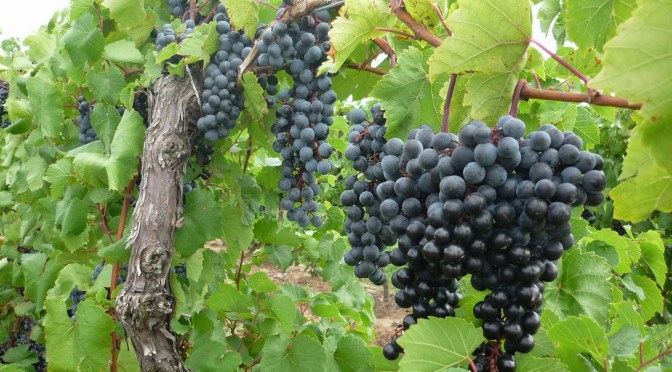
This is how God works in the world. God turns death into life. Like the grape vine that is left out for winter, with branches and rotten grapes still clinging, we hold on to life, any kind of life, even if it is rotten.

But Christ says, “You have already been cleansed , You have been pruned, by the word that I have spoken to you.” Eve while we still hold on, God is doing the work of pruning us, God is making us let go of all the excess, the rotten fruit, the dead leaves, all the things that keep us from dying AND because of that keep us from living. Like a vine-grower that knows how to not only make us alive, but knows how to make us bear good fruit, God knows how to cut away from us all the things that keep us from bearing fruit. God prunes us of our sin, of our self righteousness and God prepares us to die.

And so it is with us. We also die, so that we can become alive again. We live and die as the Body of Christ, as a congregation of believers. We come each week to die to our sin, only to be forgiven with new life. We watch as members go from our community, and generations get older, only to see new members join our community, only to welcome new generations in our midst.

And all the while, even as we do our best to hold on to rotten fruit and the dying memories of the past long gone, God is pruning us and burying us. But God does not put us in the ground in order to end us, but we die and are buried so that we can bear new life once again. New and luscious, green and leafy, fruit filled life.

Amen. 

I am the Good Sheep

John 10:11-18

Jesus said, “I am the good shepherd. The good shepherd lays down his life for the sheep.”… (read the whole passage)

Sermon

Today, is Good Shepherd Sunday. Each fourth Sunday in the season of Easter, Christians around the world and through time celebrate Jesus as our Shepherd. Good Shepherd Sunday is the middle Sunday of Easter connecting those first resurrection accounts to Jesus preparing his disciples for the beginning of the church. And as such, our focus today shifts from the resurrection accounts that we have been hearing for the past 3 weeks to the Gospel of John and to Jesus’ sayings regarding the Good Shepherd.

A shepherd can be a bit of an odd image for Jesus to use to describe God’s relationship with the community of believers. For us, Shepherds conjure up images of idyllic meadow scenes. We imagine that male model in a robe version Jesus holding a lamb in his arms. You don’t even have to look around here much to find that kind of image.

Yet, for the people hearing Jesus’ speak, shepherds were more complicated image. One the one hand, King David the greatest king of Israel, had been a shepherd and so the image applied, from then on, to the kings of Israel. But being a shepherd in Jesus day was not an ideal career path. Shepherds lived out in the fields with their sheep. They were dirty, smelly, and uncivilized. They were mysterious nomads who only came into towns and villages on occasion. Shepherd were something between beggars and gang members. So it is odd that Jesus would choose that image, and odder still that he wouldn’t immediately tie it to the kingly side of the image.

Instead, Jesus talks about the Good Shepherd who lays down his life for the sheep, not the shepherd who sends his sheep to war demanding they lay down their lives for king and country.

Yet, along side the Good Shepherd, it is the contrasting figures that Jesus’ hearers would have known. The Good Shepherd who is willing to die for his sheep stands against the bad shepherd, who is willing to sacrifice the weak sheep for the flock. The Good Shepherd stands against the hired man who cuts and runs at the first sign of trouble. The Good Shepherd stands between the sheep and wolves, the wolves who are out to kill the sheep.

Jesus’ audience lived in a world full of bad shepherds, hired men and wolves. Their world was dangerous and threatening. A Good Shepherd, a Good leader, a Good King was a rare blessing to sheep flocks and nations alike.

We too know what it is like to be sheep and to have bad shepherds, hired men and wolves around us. We know it in our families, our workplaces, our communities, our political leaders, our churches. In fact, we know the bad shepherds, hired men and wolves so well, that we find it hard to imagine or to identify Good Shepherds at all. We find it hard to trust that our Shepherds are Good, and often we are waiting for a Good Shepherd to reveal themselves as a bad one.

Good Shepherd Sunday is a certainly a day to talk about the shepherd-like qualities of God. To name the ways in which God cares for, loves and looks after us. Yet, the point of the day may just as much be the sheep as it is the shepherd. But not that solitary sheep safe and comfortable in the arms of the shepherd, like those paintings on the walls of so many churches would suggest. No, it is the flocks, the way that sheep are a group that is truly significant.

While bad shepherds, hired men and wolves are dangers for flocks, often it can be other sheep who might pose just as much risk. Sheep, individually can be intelligent, caring, delightful animals. It is when sheep are in groups that they have problems.

Sheep flocks are poor decisions makers, they are jumpy herd animals, easily tricked by predators. Sheep flocks will stand and let predators hunt them down out of fear. Sheep flocks will run from the one wolf nipping at their heals, into the mouths of the waiting pack in the other direction. Sheep will follow a leader off a cliff because they are taught from an early age to follow no matter what.

Sound familiar? Like how people act in groups.

And so often, because we have experienced the dangers before, because many churches and faithful people have been sacrificed by bad shepherds, abandoned by hired men, eaten up by hungry wolves. Because we know what it is like to stand and do nothing in the face of danger when no sheep wants to be the first to act, because we know what it is like to run from a small problem only to be faced with a much bigger one, because we know what it is like to follow our panic off a cliff… because we know these things — we have real trust issues.

We have been hurt as sheep, and we find it hard to trust. We find it hard to risk ourselves. And sometimes we even sabotage our shepherds and our flocks so that the bad thing that we know is bound to come is at least something in our control.

Despite our trust issues, Jesus says a curious thing today about sheep and shepherds.

“I am the good shepherd. I know my own and my own know me, just as the Father knows me and I know the Father.“

It is curious, because throughout the gospels it is pretty clear that the disciples, the crowds, the pharisees and scribes, the temple priests, the Romans… none of them really know who Jesus is. None of them really understand what Jesus is doing.

In fact, if the sheep really knew the shepherd… we wouldn’t be celebrating the season of Easter right now. We wouldn’t be celebrating Easter because the sheep wouldn’t have put the shepherd to death on Good Friday.

If Good Shepherd Sunday is really just as much about being a good flock as it is about Jesus being a Good Shepherd, there is a disconnect. Because human beings are not usually good sheep.

But Jesus knows that. That is why when Jesus starts talking about the Good Shepherd he doesn’t begin by saying that the sheep know the shepherd.

Jesus starts by saying this,

I am the good shepherd. The good shepherd lays down his life for the sheep.”

The Good Shepherd lays down his life for the sheep. The Good Shepherd is not a King to rule over the sheep. The Good Shepherd is not an uninvested caregiver like a hired man. The Good Shepherd is willing to not only stand between the wolves and the sheep… The Good Shepherd is willing to stand between sheep and sheep, even when that leads him to a cross.

Jesus, the Good Shepherd, is willing to die for his sheep… is willing to die for us. And only a few weeks ago we told that story. We heard that Jesus did in fact die and it wasn’t the wolves that killed him… it was the sheep, it was us.

For us, that just doesn’t add up. A Good Shepherd who dies? Wouldn’t a good shepherd just make the problems go away? Wouldn’t a Good Shepherd keep the sheep away from the dangers?

Well, not if the sheep are the problem.

Jesus’ doesn’t make the problems go away. Jesus faces them head on. Jesus faces us head on.

Jesus faces our sheep problems right along side us. Jesus faces them by becoming a sheep along with us.

Jesus confronts our sheep problems, our trust issues with Shepherds, by becoming part of flocks.

Jesus the Good Sheep has come to lay down his life for the sheep, with the sheep. Jesus the Good Sheep comes to show us a new way to be sheep, a way of trust, forgiveness and grace. Jesus shows us to the other side.

Even in a dangerous world. Even if we are expecting the worst and treat Jesus like a bad shepherd, even if we turn into wolves and want him dead. Even if we have trust issues… Jesus comes to lay down his life for us. Jesus comes to give himself to us. Jesus comes to wash, to forgive us, to feed us, to go out into the dangerous world with us. Jesus comes not take the dangers away, but to face them with us. To show us to the other side. To show us that even when there is a cross, what follows is an empty tomb.

The Good Shepherd lays down his life for the sheep, but the Good Shepherd also rises again on the third day. And the Good Shepherd, the Good Sheep rises so that we will know what is it is like to rise too. The Good Shepherd knows his sheep because he has been through life and death with us, and we will know the Good Shepherd when we rise to new life.

Amen.