Category Archives: Pastor Thoughts

The Gimli Glider and Leading the Church

Throughout the summer, I intend to share some of my reflections on my trip to Germany and reformation sites. However, I promise I won’t write about Luther and Germany every week. 

Rather, this week I have some thoughts about the clergy study conference that I attended in Gimli, Manitoba this week. For folks of a certain age, there is one thing above all else that Gimli is well known for. No, it is not the Crown Royal Distillery, not the big Viking statue. No, Gimli is known for the Gimli Glider. 

Our keynote presenter, Rev. Dr. Kyle Schiefelbein-Guerrero, Professor at Lutheran Theological Seminary in Saskatoon (AND my Doctor of Ministry thesis advisor!) began his keynote by talking about his love of plane crash documentaries. What a happy accident that our conference was in Gimli and our hotel even contained the official Gimli Glider museum!

But it wasn’t just for the sake of coincidence that Dr. KSG (as his students often call him) shared with us the fact that he has seen several documentaries about the Gimli Glider, it was to note that there is something important to learn from plane crashes. Something important for leaders in the church. 

Now that isn’t to say that the church, in its current state, is akin to a plane about to crash. But in these days of struggle and challenge, the church isn’t totally unlike a plane headed for disaster. 

Rather, two factors contribute the most to how serious plane crashes end up being. The first is “crew resource management” which is how well the crew can organize in a crisis. The second is “plan continuation bias.” This is the ability of leadership to adapt in the face of changing circumstances around them.

And certainly, there is something in those two factors that feels true about those things for the church in this moment. We can easily think of moments when churches have failed to organize and tend to the community they serve. And we can easily think of churches that have stuck to the plan at all costs, even when they were headed for doom. 

But in the converse, we see what things help us navigate the crisis moment – tending and caring for community while adapting to changing circumstances and innovating new pathways into the future. 

In the case of the Gimli Glider, the crew assured the passengers while preparing them for what was about to happen, while the pilot and co-pilot prepared to fly a plane like a glider while landing on a long-forgotten RCAF runway. 

In the case of the church, we have yet to fully prepare ourselves for what is happening. New pathways or alternate plans are still being worked out. Yet, even in free fall, God’s call to us is to continue sharing the gospel in word, sacrament and in our care for one another. Maybe we will be surprised with a landing as surprising and miraculous as the Gimli Glider’s. 

A home I didn’t know I had – Pastor Thoughts

It has been almost 3 weeks since I returned from the Reformation Study Tour to Germany that I was on in the first half of May. 

While I have told a few stories of my trip here and there and many photos of the trip were posted to Facebook, I am still processing and unpacking all that I had the chance to see and experience.  I had a busy few weeks immediately after my return, and it has only been the past few days that have had some time to reflect and ponder. 

I have been fortunate enough to travel some in my life. I have been lucky to be able to explore a fair bit of western Canada, to travel to the US for school, family holidays and work conferences. But it is my two high school band trips to Europe and my seminary cross-cultural trip to Peru that stand out. They were chances to be immersed in rich cultures, languages and histories different than my own (to a degree). 

There was something different about this trip to Germany, particularly to many of the important sites of the Reformation and to Martin Luther’s life. Even though I don’t have an ounce of German heritage, there was something familiar, something known that felt like I was connected to these places. 

After three connecting flights and three connecting trains, as we walked from the train station into the town of old Wittenberg, our tour leader and professor kept exclaiming, “I feel like I am home!”

Wittenberg is just a small town of 44,000 people, smaller than Brandon, Manitoba. Other than in 2017, it certainly isn’t the most sought-after tourist destination. Like so much of Europe, when you walk into the town, the buildings and architecture span the centuries in ways that we usually don’t see as Canadians. Buildings that are five, six or seven hundred years old might be right next to other structures built only in recent decades. 

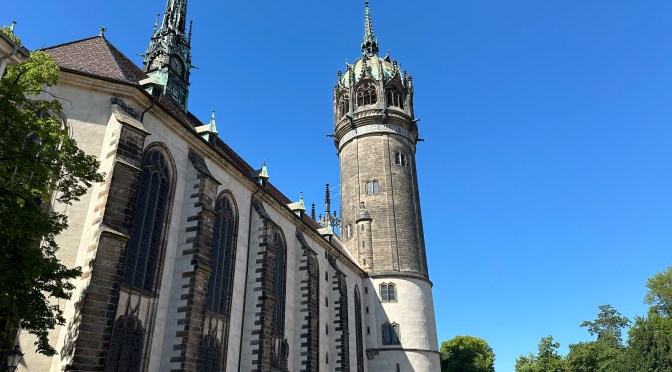
But Old Wittenberg is much more of a time warp. Within five minutes of leaving the very modern train station, it feels like you step into the 16th century. Within moments our tour leader was pointing out various sites: Luther’s house, the University of Wittenberg where Luther was a professor, St. Marien’s Church where Luther was the pastor, etc…

We finally wound up at the Colleg Wittenberg, a dorm-style residence across the alley from the Lutheran World Federation office in Wittenberg. Two fairly unassuming buildings just around the corner from St. Marien’s and across the street from a donair shop.

It all felt so surreal. 

The history and origin story that is so central to my Lutheran identity, yet for me that had always been one found in books, lecture halls, church basements and in my imagination, was now real. The history and theology that have been so central to my academic, vocational and professional life for the past 20 years came alive in a way I did not anticipate. I was standing where Luther had lived. I was walking the streets where he walked, looking in on the church he served, just like he was an old seminary friend that I had come to visit. 

I couldn’t help but feel, just like the professor leading the trip, that this place was home too. A home that I didn’t know that I had until now. 

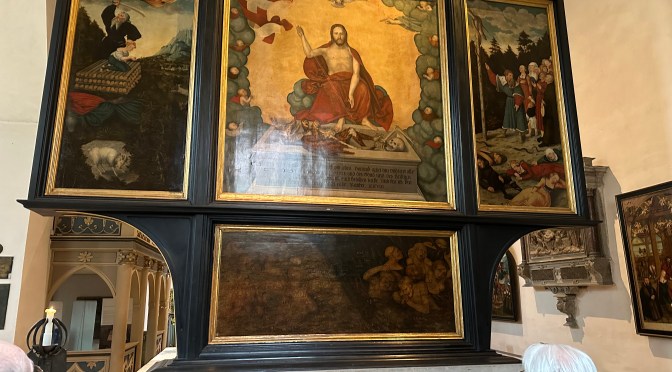
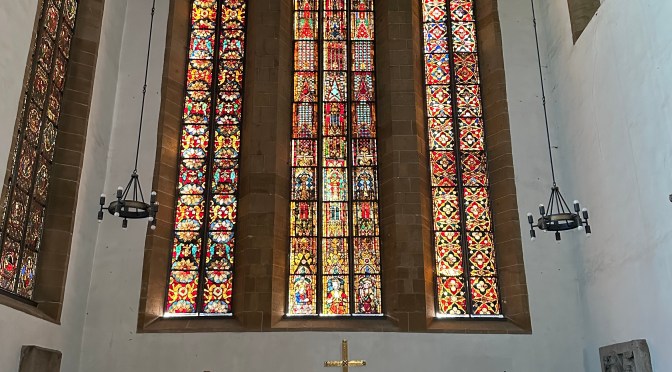
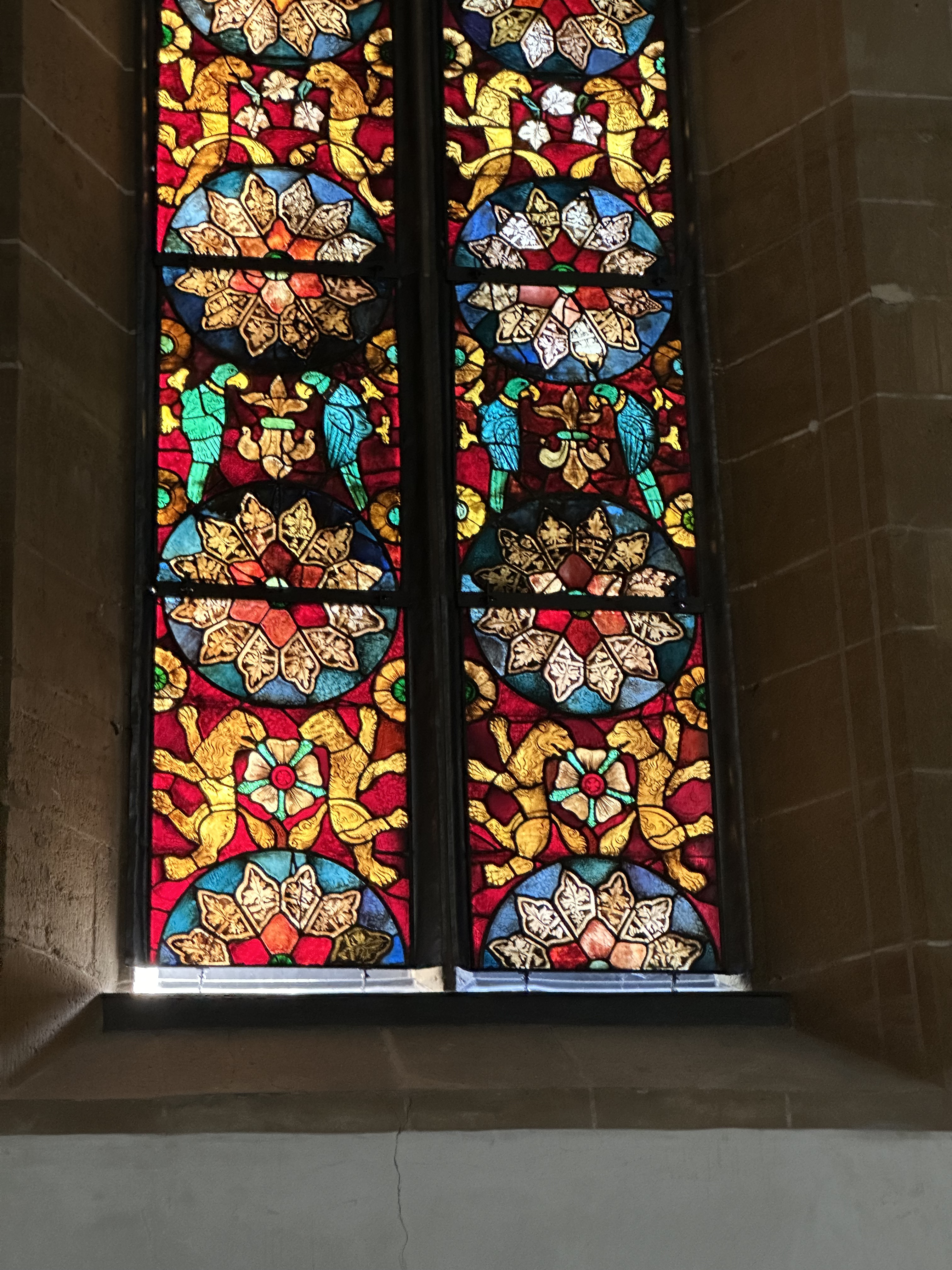
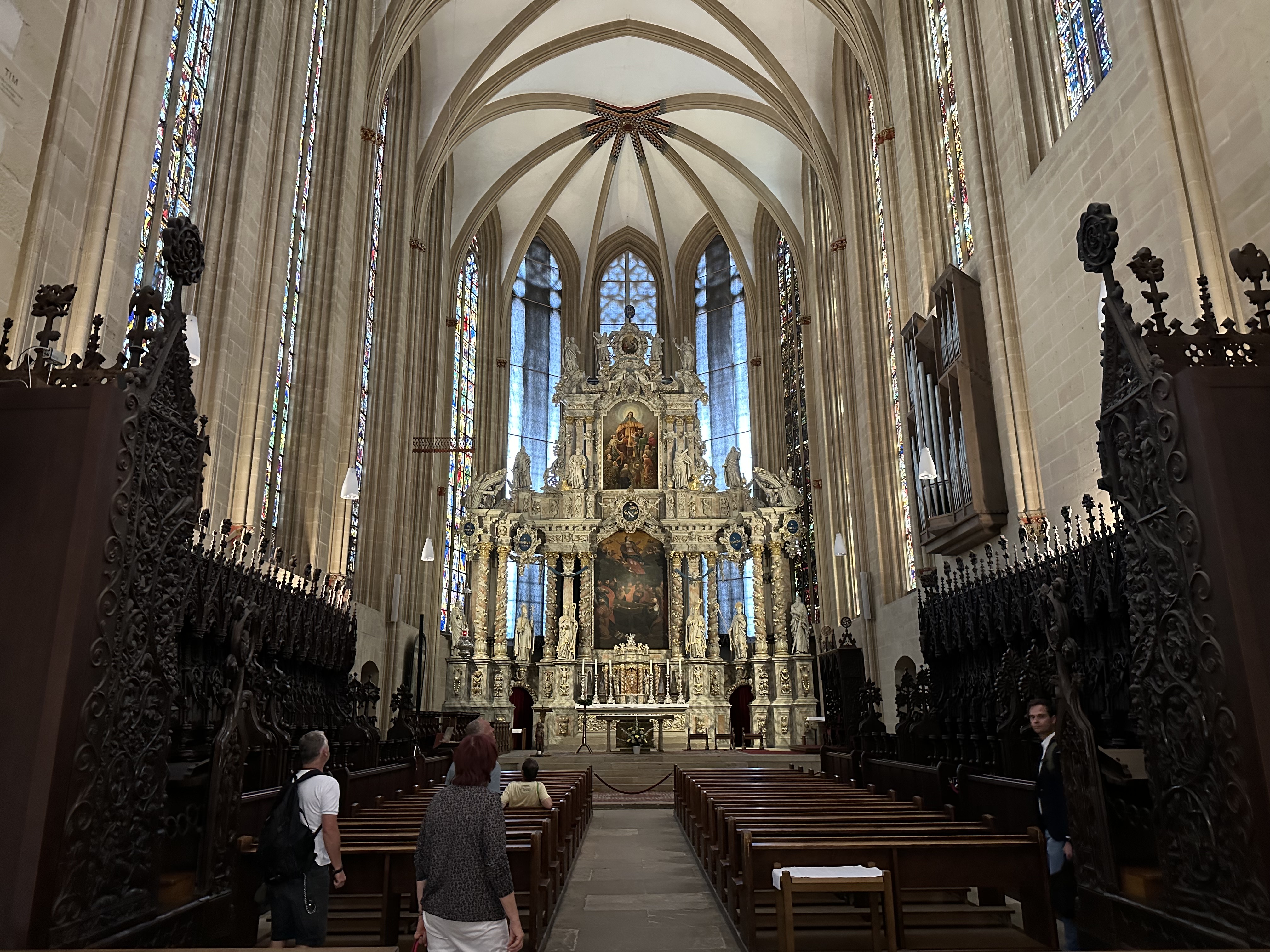
PS Here are photos from Germany: Some of the paintings of Lucas Cranach the Elder, who was the court painter of Fredrich the Elector of Saxony and a good friend of Luther’s. He was the most prolific artist of his day, credited with doing much to promote the Reformation through his art and art house which mass-produced his work.

Cranach’s art

Electing Bishops in a time of change – Pastor Thoughts

Just as my congregation is in a time of discerning God’s future for us, so it is with many of our sibling congregations, synods and the Evangelical Lutheran Church in Canada (ELCIC) as a whole. 

In fact, over the coming weeks and months, four of the five ELCIC Synods will be electing bishops. In all but ours, the incumbent bishops have announced they will not be serving another term.  Stepping down will be Bishop Larry Kochendorfer in Alberta and Bishop Sid Haugen in Saskatchewan who have each served 12 years and Bishop Michael Pryse of the Eastern Synod who has served 26 years! Additionally, after 18 years National Bishop Susan Johnson will be stepping down as National Bishop after the National Convention next summer. 

By next summer, four of six Bishops will be in the first year of their first terms. Bishop Kathy Martin of BC will have been serving for three years and Bishop Jason will be the old experienced hand with six years of service. 

This will represent a significant change in leadership among Lutherans in the ELCIC, especially so in a time of significant change for the church.

Unlike the calling of a pastor, where a congregation or ministry enters into an intentional time of discernment through an extensive call process, where candidates are considered and interviewed before being voted on, Bishops are elected in the space of a few days at a Synod or National Convention. In the ecclesiastical election process, any pastor on the roster of the church is eligible to be elected. 

In advance of these upcoming elections, materials for discernment have been provided and some synods are soliciting nominations ahead of time – though still any pastor can be nominated on the first ballot. After that, successive rounds of balloting occur with only the top vote-getters proceeding to the next round. It is similar to processes used by political parties electing leaders except without campaigning and hopefully more of the Holy Spirit. 

The task of stepping into the leadership roles of newly elected Bishops (and relatively recently elected ones) will be to help guide the church through the rough waters ahead. It won’t be enough to simply keep our ship of the church steady ahead, as we already know that we need to change and adapt. Bishops will be called to lead the transformation of the church, envisioning new directions, lifting up and amplifying innovators, and making space for those who have been historically excluded from leading. 

The task of conventions discerning and electing new bishops will be to avoid seeking safe and comfortable choices. When it feels like we are in crisis, we long for things that make us feel comfortable and safe. We long for easy and known choices. When faced with the need to change, options that feel like the least amount of change or the easiest path to change can be very tempting. 

But the reality is that God is calling us to transformation that will not be easy or comfortable. Bishops and other leaders who will guide us through will need to be willing to push us to uncomfortable and difficult places. 

They will need to help us seek faithfulness. And faithfulness will mean giving up a lot of ourselves and a lot of our baggage as the church. 

But faithful is what God continues to call us to be, even in this changing world. 

And faithful is what God promises to be, especially in the time of change ahead. 

Pastor Erik+

PS The MNO Synod has prepared some materials for discernment here: 

Learning from our past – Pastor Thoughts

This week has been a big week for my Doctor of Ministry studies. For a good chunk of the winter, I have been working on a course on the Gospel of Mark, a lot of learning which I incorporated into my preaching (and will continue to) and into our Lenten study. I handed in the paper for that course early (something the 22 to 26-year-old me never achieved in Seminary). Our class cohort was also informed of our thesis project advisors, which is a big deal. My project advisor is the professor who will be walking with me through the development of my fully formed research question and proposal, through actual research and into the writing phase. All of that starts this fall and will take me through to the winter of 2026. So, very exciting indeed! 

This week I completed another smaller paper on the ‘Invocavit’ Sermons of Martin Luther, the most famous of his sermons during the Reformation. This paper was the first for a class where the bulk of the “class time” will happen in Germany for two weeks in May. I will be travelling on a study tour with world-renowned Luther scholar Rev. Dr. Gordon Jensen, who was also a much-beloved seminary professor of mine. We will visit Wittenberg primarily, the town where Martin Luther lived when he was doing much of his Reformation writing. We will also see several other Reformation places and other sights in East Germany. 

We will get to do things like see (and maybe hold) Martin Luther’s very own Bible, see the church he preached in, and the university he taught at. We will also go to Leipzig to see one of the places where Johann Sebastian Bach lived and worked.  It is all very exciting for this history nerd. 

As I was preparing the first paper for this class, I was surprised (even after studying Luther in seminary) to learn about Luther’s approach to dealing with change. His ‘Invocavit’ sermons were eight sermons he preached in eight days to the people of Wittenberg after months of unrest and conflict over how to go about making changes together to their lives of faith. They were arguing over how to worship and what church rules they ought to follow. 

It all sounded so very familiar. We are still negotiating and sometimes arguing over very similar things today. Ironically, it also sounds like what we will read in The Book of Acts about the early Church as the new Christians sorted out how they would be a community, too. 

Luther’s message to the people of Wittenberg amid all the chaos was to remain committed to the Gospel. Like the folk then, we have challenges and difficult waters to navigate ahead. Also like the folk then, I think Luther’s message applies to us. Whatever challenges come, we too, are called to remember the Gospel, that the whole reason we are doing all this church stuff, the reason we are being a community together, is because of our call to proclaim the Gospel to one another, to our siblings in faith and to our neighbours and the world around us.

It sounds like a good lesson to learn from our own history. 

Easter Surprises – Pastor Thoughts

I know that Easter Sunday is supposed to be a day of surprise; the empty tomb is a reality that changes everything. But I didn’t expect the Easter surprise I woke up to on Easter Sunday morning this year. 

Knowing that this is the time of year when snow mould and spring allergies are beginning and that colds and cases of flu are going around, it should not have been surprising that I tested positive for COVID on Sunday morning. 

So, thank you to Bishop Jason for stepping in to preach and preside at the last minute. 

Also thankfully, my course of illness hasn’t been that bad, with the primary symptoms being very low energy and a very runny rose. 

So, my first week of Easter has been spent in the basement of our house, isolating from my family, working when I can, and napping when I am tired. 

While certainly COVID isolation isn’t the same as an experience of the empty tomb and the Resurrection, it does occur to me that there are some similarities to that of disciples. 

As I stared down at my positive test result at about 7:30 on Sunday morning, it was hard to process what I was seeing. Part of me didn’t want to believe it and part of me knew that all the plans I had made for that day and the days ahead were about to come crashing down. Still, it took me time to sort out what was going on in my own mind and then to begin to respond outwardly. I needed my wife to come and see the test, as well to confirm what I was seeing. 

In a similar way, with the story of Jesus appearing to the disciples and then again to Thomas, it is clear that they did not know how to process the news of the empty tomb either. I have been hiding in my basement; they hid in the upper room. 

Thankfully, my COVID will probably go away soon enough. In contrast, the Easter morning surprise of the disciples changed them all for the rest of their lives. It is easy to overlook that part of the story. As we sing and praise with Alleluias, we can miss the mind-blowing experience of seeing something totally unexpected (even if Jesus regularly told his disciples he would rise on the third day).

That empty tomb moment changed everything for the women who went to bring spices to anoint Jesus’ body. Jesus appearing in the upper room changed everything for the scared disciples. From the moment of not quite being sure what they were seeing, Jesus’ Resurrection meant that all other plans, all the thoughts and sense of the future that anyone had had just a moment before,  came crashing down. 

The world became an Easter world in the blink of an eye and those who first saw the tomb and then witnessed the risen Christ firsthand were now responsible to live new lives because of it. 

Though we have known our whole lives that the Resurrection happened over two thousand years ago, the transformation of our world and our lives is still going on. Jesus is still ushering us into ways of being and living this Easter, too.

Alleluia! Christ is risen!