Category Archives: Pastor Thoughts

Imagining the Worst to Alleviate Stress – Pastor Thoughts

This week I handed in the first paper for my Doctor of Ministry program. It has been 15 years since I last had to produce papers or complete assignments for school. While it is certainly different and new at the doctoral level, a lot of those memories and feelings from another time in my life have been on my mind. 

When I was in high school, I remember the pressure I felt to do well. I was a busy kid with sports, music and church. Most nights of the week I had one or two practices for either a sports team, orchestra or musical group. I also remember how classes and homework started to take on more importance, as doing well was an important step in getting into university. 

When I would feel particularly stressed or burdened trying to balance school and extracurricular activities, I would workshop with myself worst-case scenarios: What if I failed a test? Failed a class? Couldn’t graduate? Didn’t get into university? 

Somehow imagining the worst of what could happen and then thinking of backup plans allowed me to worry less about the things on my plate and actually get them done. 

At present, worst-case scenarios globally and all the problems that the world is facing these days are not a good place to start. For instance: What would happen if just one of the many people with their hands on the little red button actually pressed it? Or what would happen if COVID suddenly became two or three times as deadly? Or what if the Earth’s temperature keeps rising? 

Those are worst-case scenarios for which only prayer and mutual consolation can help. 

Then there are those of us who are worried about the cost of bananas, losing a job, sharing with a loved one a particularly vulnerable feeling, singing the wrong note in choir, making a mistake on our taxes or any number of things. Sometimes just playing out the worst that could happen is a way to realize that the worst might not be as bad as we feared, or that following through with a plan B might not be so difficult. 

As congregations and faith communities face a lot of change and big questions, it is easy for us to fear bad things happening and do everything we can to avoid worst-case scenarios. 

However, allowing ourselves the time and space to slow down and consider just what might come next after the worst-case scenario could alleviate a lot of our worries and stress. 

In fact, as followers of Jesus, we know that God is not one to run away from a worst-case scenario, but to face it head-on… and then surprise us all on the Third Day with the news that on the other side of the worst-case scenario, there is new life. 

I don’t know what to think about Israel and Palestine – Pastor Thoughts

I am sure many of us have been paying attention to the news this week with heavy hearts and uncertainty about what to think. 

As news of the attacks by Hamas on Israeli citizens⎯rockets, soldiers, kidnappings and murders⎯it felt like yet another setback in an already shaky and unstable world.

Reports of the violence and tragedies have been dominating the news headlines. They were hard to hear and see. Yet, people started taking sides as soon as images, reports and videos of the violence were released. 

The safety and security of Israel, and the horrific acts of Hamas are claimed to be justification for Israel’s response in kind. The occupation and blockade of the Gaza Strip are claimed to be the cause of Hamas’s actions. While there is truth in each claim, neither are those claims the whole story of this complicated situation. 

I cannot help but think of that childhood refrain, “Two wrongs don’t make a right.”

I also cannot help but think of the story of Noah’s flood. A story baked into the DNA of people of the book – Judaism, Christianity and Islam. A story rooted in the decision of God to blot out the wickedness in all the earth. Because of the wickedness of humankind (after God had done the work of creation only four chapters prior in Genesis), God decides to wipe out all of creation. 

God determines to wipe out the wickedness of humankind with an even greater act of violence by drowning all creation in a flood, save a few righteous families and animals. God erases one wickedness with an even greater wickedness. God responds to the corruption and violence of humankind with even greater⎯though righteous⎯violence. 

Significantly, as God gives Noah and his family meat to eat after the flood (Genesis 9), God adds the caveat that the blood must be properly drained from the animals – a reference to Kosher or Halal food preparation. The implication being that a part of humanity’s pre-flood wickedness was the improper worship of God and failure to keep the purity laws. These issues persisted throughout the Old and New Testament, and remained issues at play between Jews, Muslims and Christians throughout history to today.

This cycle of responding to violence with greater and righteous violence has been a part of the human story for 3,500 years. Versions of the flood story are not only told in the Torah, Old Testament and Qu’ran but in many of the mythologies of the Ancient Near East like the Gilgamesh Epic and Atrahasis Epic. It is part of the DNA of humanity and it is part of the cycle of history of that part of the world. 

Violent acts committed by the righteous in the name of blotting out the wicked and unfaithful are condoned by God… at least that is the rationale. 

Of course, the point of the flood story is that God realizes God’s mistake. God realizes that responding to wickedness with greater wickedness, to violence with greater violence, doesn’t solve anything. 

Instead, it takes the remainder of the Old Testament and the beginning of the Gospels to see what that rainbow covenant truly means. God’s promise never to flood the earth again is realized in the Christ who finally answers humanity’s death-dealing ways with Resurrection and New Life. 

In response to news headlines that we are seeing and hearing, let us pray for Peace and Reconciliation. We pray for Resurrection and New Life to take hold among us now.

A Prayer for Peace Among the Nations:
Gracious God, grant peace among nations. Cleanse from our own hearts the seeds of strife: greed and envy, harsh misunderstandings and ill will, fear and desire for revenge. Make us quick to welcome ventures in cooperation among the peoples of the world, so that there may be woven the fabric of a common good too strong to be torn by the evil hands of war. In the time of opportunity, make us be diligent; and in the time of peril, let not our courage fail; through Jesus Christ our Lord.

Amen.
(ELW Occasional Services for the Assembly)

Change is coming – Pastor Thoughts

Change is in the air. It is that time in the fall when the lingering warm summer days are interrupted by cool winds blowing from new directions. Some might say, “Winter is Coming” but there is still the fullness of fall to experience. The leaves are mostly fully changed and falling now. But the turnover of seasons is in the air in other ways. 

Manitobans have just voted in a new Premier and governing party. Change and new directions have been promised. 

Climate change is never far from our minds these days, with hurricanes, floods, and hotter-than-ever months on record. 

More local to us, we are surrounded by sister congregations in transition, with pastoral vacancies dotting the Lutheran landscape in significant ways. 

Change has arrived, and I don’t know about you but I can feel it in my bones. Things that were headed our way in 2019, but that were delayed or re-directed by the pandemic are finally landing at our feet. 

You have heard me say this before, we will not escape these forces of change. Congregations and communities of faith are experiencing all kinds of change too. There is a lot of technical or functional change that is happening. Declining resources have meant that congregations are re-working how they provide ministry. Re-configured staff, partnerships with sister congregations, building rentals and so on. But it isn’t just technical change, it is just a matter of figuring out the puzzle of how to match the available resources to the possible ministry configurations.

There is also deep change afoot. The kind of change that requires true deep transformation. Transformation in how we understand ourselves as people of faith. It is no longer enough to feel obligated to come to church out of a sense of duty or habit. We have too little precious time to spend on things we don’t care about these days. I can see that following Jesus is more and more at the center of why people are coming to church in 2023 than at any other time in my ministry. 

And with that shift, the ways we do ministry are changing. I can see people who no longer receive or consume the ministry of the church but are rather fed by it. Fed to turn around and serve in their own expressions of the gospel promise. 

If there is any part of all this stressful change that is going on around us that is life-giving, it is this one. As we are stripped of our excess as communities of faith, our focus is shifting to that central experience of being forgiven sinners trying to follow Jesus’ call to serve the world. 

Of all the change that is in the air these days, that is the one that gives me the most hope!

Thanksgiving? – Pastor Thoughts

As someone who grew up with cats, I confess that I did not piece together that when a dog needs to go outside, so does the dog owner (at least while she is a puppy). Now as a puppy owner, I find myself standing out in the backyard waiting for the dog to do her business far more than I thought would ever be necessary. Between that and twice daily walks to the school pick-up/drop-off location, I have found myself standing out in the rain more than I ever imagined necessary this week. 

All the grey skies, fall leaves and rainy streets give the sense of a dreary fall movie, maybe a movie about a family coming home for Thanksgiving and being stuck together for a comedic and/or miserable weekend. 

Thanksgiving is one of those occasions that we celebrate without thinking too deeply about, lest we get lost in a vortex of existential turmoil. Think about it too much and it might start to hurt your brain. 

Taking an opportunity to give thanks for the blessings that we have received in life is certainly a worthwhile endeavour. But where does the duty to give thanks begin and end? And just what are we thankful for? 

Thankful for our material possessions, or that we aren’t unfortunate enough to be poor?

Thankful for an abundance of family and friends in our lives, or thankful that we are not alone?

Thankful because Jesus or Grandma or our 3rd-grade teacher told us to be, or thankful because of genuine gratefulness?

Thanksgiving, in that sense, is an odd occasion then. It could perhaps come across as mandatory gratefulness. Yet, gratefulness is a learned skill that needs to be practiced to truly embody it. 

It makes sense then that, as Canadians (and Americans a little later), we make sense of this occasion for gratefulness by gathering around a meal. The opportunity to eat together is the great equalizer, putting the strong and mighty next to the weak and lowly, all the same at the table. 

And even though Thanksgiving is not a church holiday, gratitude and thanksgiving are deeply connected to faith. In fact, ‘Thanksgiving’ is one of the names that we call Holy Communion. The Greek word for Holy Communion, Eucharist, means thanksgiving. In the Eucharist, we pray, giving thanks to God for all that God has done for us. Yet we also recognize that our thanks are insufficient. Somehow, God still comes and joins us to the Body of Christ in the Bread and Wine. 

The true Thanksgiving might just be that of God towards us. God’s faithfulness toward and gratefulness for creation. 

Maybe that is the best way to understand Thanksgiving. We can never express our true gratitude and thanks to God for this life of abundance, but God’s love and gratefulness given for our sake make true Thanksgiving possible.

A Contextual and Practical Theologian – Pastor Thoughts

For 9 days in September, I was at the Lutheran Theological Seminary in Saskatoon, with 8 other Doctor of Ministry students beginning a journey together. The cohort of students was comprised of people from BC, Saskatchewan, Manitoba, Ontario and even Tanzania. There are Lutherans, Anglicans, United Church and Evangelical folks. 

As I have been already talking and writing about the program, I still had a lot to learn and understand myself. For instance, what is a Doctor of Ministry in Contextual and Practical Theology all about?

Well, now I can say that I have a much better sense of what this program of study will actually entail. And that is to become a Practical Theologian. Practical Theology is a relatively new field of study – only 150 years old! Compared to Systematic Theology or Biblical Studies, which can trace their roots back to the early days of Christianity, Practical Theology is just coming onto the scene as a formal discipline.

And yet, it really isn’t new. Theologians, clergy and even ordinary people of faith have been taking insights from Scripture and the Tradition of the Church and bringing them into conversation with the lived practices of everyday faith. Reflection on how what we believe and confess to be true and how that impacts the things we do in faithful community – and vice versa – has always been something that is happening among congregations and faith communities. 

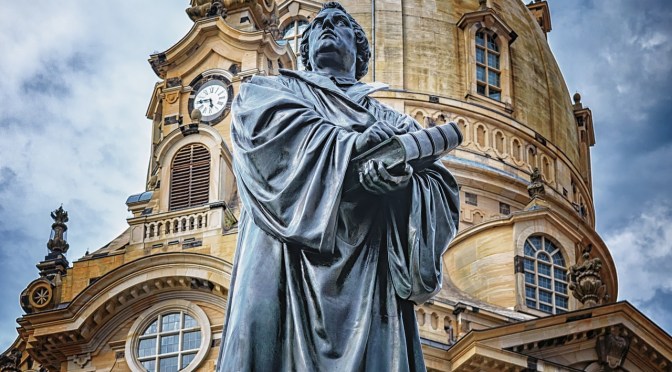
As Lutherans, we have a strong example of a practical and contextual theologian in Martin Luther. So much of what he wrote and did was about bringing his understanding of scripture and the theology of the church into conversations about how the church of his day practiced the sale of indulgences (tickets to heaven), how the mass or Holy Communion was celebrated and observed, who could read the bible, how faith was passed on and so much more. 

Modern Practical Theology goes a little further using the tools and methods of the social sciences to do research that provides qualitative data. Surveys, focus groups, interviews, asset mapping, appreciative inquiry, and more generate data about the practices of real-life communities. It is a way to bring theological reflection into the real and ordinary things that we do in our faith community. 

What does this mean for the research I will be doing? Well, Practical Theologians do their research not to or on, but with the community. So I will be doing aspects of my research together with my congregation and folks in our area, with the goal that reflection and new understandings will bring about real transformation. 

There is a part of me that is nervous about this. What might happen if we intentionally seek transformation through learning and reflecting together? I don’t know… and that is the point.

Because I am also very excited… for what we might discover and how that might change us along the way.