Category Archives: covid-19

Sermon on the Wedding of Cana – Running Out on the 3rd Day

John 2:1-11
On the third day there was a wedding in Cana of Galilee, and the mother of Jesus was there. Jesus and his disciples had also been invited to the wedding. When the wine gave out, the mother of Jesus said to him, “They have no wine.” And Jesus said to her, “Woman, what concern is that to you and to me? My hour has not yet come.” His mother said to the servants, “Do whatever he tells you.” Now standing there were six stone water jars for the Jewish rites of purification, each holding twenty or thirty gallons. Jesus said to them, “Fill the jars with water.” And they filled them up to the brim. He said to them, “Now draw some out, and take it to the chief steward.” So they took it. When the steward tasted the water that had become wine, and did not know where it came from (though the servants who had drawn the water knew), the steward called the bridegroom and said to him, “Everyone serves the good wine first, and then the inferior wine after the guests have become drunk. But you have kept the good wine until now.” Jesus did this, the first of his signs, in Cana of Galilee, and revealed his glory; and his disciples believed in him.

On the 3rd day of the wedding in Cana, they ran out of wine. It might seem strange to be talking about a party running out of wine today. Last week, we heard the story of Jesus’ baptism where God spoke to the crowds and to us. It was a big deal. And then between Sundays, our world continued on through our collision course with the Omicron variant. Some have called it a new pandemic. 

Parties and gatherings and running out of wine, seems trivial in the face of governments seemingly giving up on managing the pandemic and the feeling of being left to fend for ourselves. Forget thinking about parties and gathering as friends and family, daily life has become serious business, stress filled and difficult business. So talking about a miracle where Jesus turns some water into wine at a wedding sounds almost trivial. 

Yet, despite being a place known mostly for its poor party planning, Cana is also a place a place where life is serious, stress filled and difficult too. Cana knows the dangers of the world. They too worry if there will be enough on the table, worry about bills and taxes, work and family. Cana was a small town in the middle of nowhere. They lived under and paid taxes to the Romans, to Herod, to the Temple, to the Synagogue, to the local authorities and to soldiers. 

And here they were, trying to have a nice celebration for the community. To set a couple off right for the start of their marriage. A small celebration in an otherwise dark, serious, and difficult world. 

But on the 3rd day of the wedding they run out of wine. 

Mary and Jesus and the disciples are in Cana for a wedding. They are probably at the wedding of a distant relative, but for Cana this would have been a whole community affair. Like weddings today, the weddings of ancient Israel were big celebrations. It was expected that a fortune would be spent on the party. Wine and food was to flow for a week – literally 7 days. The Bridegroom was meant to be broke by the end of the party. The hospitality, celebration and the extravagance were meant to be sign of blessing. If it was a good party, it would be a blessed marriage. 

Except it is only day 3 in Cana, and they have no wine. 

Mary points this out to Jesus in only the way a mother could. And Jesus responds in only the way a son could, “Woman, what concern is that to you and me? My hour has not yet come”. Jesus has different idea of timing than his mother. But, she doesn’t care. She tells the servants, “Do whatever he tells you”. 

Jesus seems to only to see a party that has been poorly planned. A party that has run out. But Mary sees something different. Mary knows that the wine has run out on day 3, not even half way through. If were only a matter of poor planning, the wine might run out on day 6, but not day 3. The family is probably too poor to throw a proper wedding. 

Maybe they didn’t know about Manitoba wedding socials in Cana. Maybe they didn’t come together as people have done here, knowing that if everyone contributes a little to everyone else, when the time comes to host your own, the burden won’t be so great. But the people of Cana almost certainly did know this, and probably had all already chipped in to the party. 

And Mary sees that this community is too poor, they don’t even have enough reserves to have one party for these newlyweds. 

Mary and Jesus embody the moments of scarcity that we face every day. We know what it is like to need for more, to fear running out, to know that the time isn’t right, to hope for something different and to long for change. We have been living small lives, the fullness and busyness of what we used to know having been curtailed dramatically. We know what it is like to have celebration plans come crashing down (just think back to Christmas Eve!).  We have experienced a kind of scarcity of living and relationship these past two years that seemed inconceivable before. 

And we know that we too are closer to running out than we like to admit. Running out of patience, and resolve, and resilience. 

Running out of hope. 

Running out is something we all fret about, and yet it is connected to a much deeper fear. At the core of our being is a fearful sense that there is not enough. That if we run out, we will suffer, we will lose, we will be alone, we will die. We fear not having enough so much that it can make us crazy. It is the fear of running out that makes fight with each other, that makes us stubborn and unable to see the needs of those people around us, that makes us hold on with all our might, even when holding on is what is killing us. 

So when Mary pushes Jesus to act and even though he resists… it is because she must see that it isn’t really about the wine or the party ending 4 days early. It is about a community without much else to hold on to, a people without hope. If there is not enough wine, then there is not enough to eat or drink. There isn’t enough to live on. The world will have overcome them. There is no future, no hope, only death. 

Mary sees this deep connection between running out of wine, and how Cana itself is not that far away from death. She sees a community that needs some hope, that needs a future. And she knowns the only person who can truly provide. 

And so Mary presses the issue, not with Jesus, but with us. 

“Do whatever he tells you.”

Easy instructions for the servants… but words that should take our breath away. 

As we face challenges and struggles of this most difficult moment of a long pandemic, of making ends meet and just keeping it together day to day…
As we wonder if there is any hope for us, if there is a future here…
If all we have to look forward to is death…
“Do whatever Jesus tells you.” is a word that demands faith from us. Faith that we really don’t know how to give. 

But God does. 

Even when it doesn’t seem like Jesus’ hour… Jesus steps into the void.

And it isn’t just an abundance of wine that Jesus provides. Instead, God breaks into the world. God comes to a small community that is forgotten by everyone else. And God blesses the wedding, blesses the whole community. 

It is not about the wine. It is about the blessing. About God’s presence in that moment. Mary seemed to know that with God present at that wedding in Cana, running out of wine was something that Jesus needed to do something about. 

And all of a sudden on the 3rd day of the wedding, when hope was lost, when there was no future… God breaks into the world and provided wine. God meets that community and gives them hope. God creates a new future. 

And if we haven’t recognized it yet, let us be clear. Our 3rd day moment of scarcity is upon us too. 

And here… today…  God is breaking into our world here and now.
God is here among us, here with us wherever we are are.
And God is offering hope.
God is offering us a future.

Even as things feel dire, God offering us life found in the gospel word. The word that finds us today wherever we are. God is meeting us friends and community that have practiced being there for each other, even over a distance, even in the midst of struggle. God is reminding us that we have been here before, and God has weathered the storm with us. God has already shown us the other side, that we do not go forward alone but together with God. 

Sp yes, the wine ran out on the 3rd of wedding at Cana.
Today, our wine, our hope, our self-propelled future is running out. 

But make no mistake. As we gather on the 3rd day, on this Sunday, the Lord’s day,  we  are meant to be reminded of that other 3rd day miracle. 

When life itself seemed to run out, when the life of God in Christ ran out on the cross, the 3rd revealed something new and something unexpected. When all hope was lost, God emerged from the empty tomb. And like the servants drawing the water turned into wine, New abundant life was revealed to us in the most surprising of ways. When we didn’t seem to have a future, God provided new life in the resurrection. 

Here on this 3rd day, here in our world, here in our community, it might feel like we are running out of wine. It might feel like there is no hope and no future. But God is revealing to us the Christ who brings delicious and abundant wine, who fill the jars of our hope, who makes sure that there is future – because Jesus has saved good wine until now, he has saved it for us. 
Pastor’s Thoughts – Running on Empty

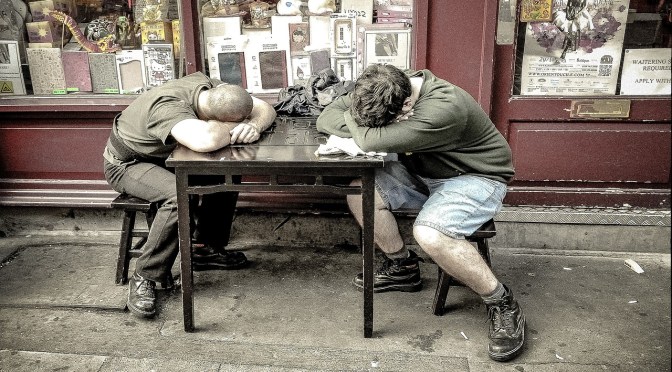
This week has been a lot of sitting at my kitchen table on my computer while the kids go to school or do activities close by. 

Remote learning has been some of the hardest ever stretches of parenthood. Having to become a sub-par replacement kindergarten teacher, and then a kind of Educational Assistant for subsequent grades has taken all my resolve.

Still, I know that others are also facing again their most difficult moments of this pandemic. Whether it is business owners pivoting, paring back, or just shutting down. Care home residents being locked down again, care home workers barely scraping by short staffed, teachers facing the impossible shift from remote, to in-person, and then to likely hybrid due to chronic widespread absenteeism. And of course, health-care workers. What more is to be said about the unending herculean task being dumped on them? The only comparable I can imagine are the soldiers forever in the trenches during World War I. 

This fall, I had finally felt like the ground was stabilizing under my feet. We had hope for the future, light and the end of the tunnel. Even as Omicron loomed and then appeared just before Christmas, I still maintained a level of optimism. 

But this week I am no longer in that optimistic place. 

I will be honest in saying that our political leaders’ decisions to ostensibly give in to the spread of Omicron was demoralizing. Like so many, I am struggling with sending our kids back to school knowing that they will almost certainly be exposed to the virus. I am heartbroken for health-care workers, who are being left to just manage. I have empathy for all those folks who have been doing everything they possibly can to keep themselves and their community safe, only to now find themselves sick. I am standing with all those facing impossible choices between staying sane by seeing friends and family, putting food on the table, caring for family and almost certainly being exposed to the virus. 

Hope is scarce right now. We are near empty. 

This week, the lectionary comes to us with a story all about running out. 

The wedding at Cana is a key story in the post-Epiphany season. We hear it normally with an ear to the revelation of Christ in the miraculous. 

But this year, that small community of Cana just trying to throw a party and then running out of wine only 3 days into the 7 day affair feels very on point. 

Could we ever use grumpy Jesus and his mom right now! In the midst of emptiness Jesus shows up and provides an abundance. When I use this story at weddings, I usually point out that Jesus provided about 7 bottles of wine per wedding guest. That is an abundance indeed!

It is often at our lowest point, when all there seems to be is emptiness that Jesus has the habit of revealing himself to us. I suspect that right now will be no different. 

Even as we are feeling abandoned, even as we are running out and running on empty…  Jesus will certainly surprise us with abundance. When we are certain that we have run out, Christ will provide us the resolve to care for each other. Jesus will show up with the catalyst of love, mercy and grace that gives us what we need to make it through.  

Okay, so maybe there is sill some optimism in me after all. 

Voices Piercing the Chaos – A Sermon for the Baptism of our Lord

GOSPEL: Luke 3:15-17, 21-22
As the people were filled with expectation, and all were questioning in their hearts concerning John, whether he might be the Messiah, 16John answered all of them by saying, “I baptize you with water; but one who is more powerful than I is coming; I am not worthy to untie the thong of his sandals. He will baptize you with the Holy Spirit and fire. 17His winnowing fork is in his hand, to clear his threshing floor and to gather the wheat into his granary; but the chaff he will burn with unquenchable fire.”
21Now when all the people were baptized, and when Jesus also had been baptized and was praying, the heaven was opened, 22and the Holy Spirit descended upon him in bodily form like a dove. And a voice came from heaven, “You are my Son, the Beloved; with you I am well pleased.”

Imagine with me for moment. That we are far away from the cold winter, and in a warmer place with more comfortable weather. We step down into knee deep water, a gentle stream rolling by. The water swirls around our feet. It is cool, and refreshing. The movement is gentle and easy. It feels good to be in the water. 

We have been floating down the river for a while now. Each year, we hop into the boat together and start the trip all over again in Advent. We float towards Christmas and through Epiphany. It is a journey that is familiar yet also new each time we take it. It is a Journey that begins with end times, that stops to hear John’s sermons and questions. Then it makes its way, with Mary and Joseph to the stable manger. We hear Simeon and Anna’s song of promise upon seeing the Messiah they waited a life time for. Then we see the magi follow the star to the child. 

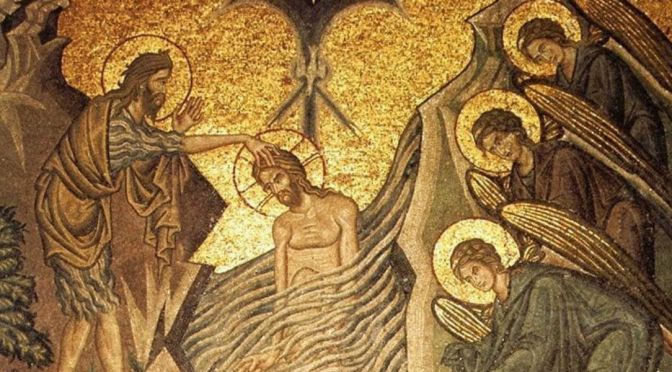
Today we pick up speed and fast forward 30 years, we float down the river Jordan where Jesus is baptized by John. Jesus’ baptism is an unusual story, an uncomfortable scene for Christians. Why does Jesus need to be baptized? For forgiveness of sins? Repentance? What does it say about John as he baptizes instead of being baptized? In many ways the story of Jesus’ baptism invites more questions as we hear it again. 

In Advent, we heard John’s preaching on the river bank. His stiff condemnation of the crowds and his warnings of the Messiah. This time, Jesus shows up at the end of the sermon. The spirit of God descends upon him and along with John, the crowds witness an incredible thing. 

But John and the crowds do not see what is going on. They are full of expectation. They are wondering if John is the one they are waiting for. They looking for a fixes to their problems, for hope and salvation. They are hoping for a powerful Messiah. A warrior who will end injustice and who will remove foreign powers from control in Israel, but Jesus is not those things. It is the beginning of the problems that John, the disciples, the crowds, the Pharisees, scribes and temple authorities will have with Jesus. Some will want an ally, some will want a powerful warlord, some will want Jesus to go away. But Jesus simply refuses to fit their categories. Jesus is going to show us God in ways that don’t see… that we can’t see… that we refuse to see. 

Remember the feeling of standing in the water, feeling the cool fresh flow around our legs? Well the further we float, the more the current picks up. The gentleness is replaced by force and weight. The water doesn’t smoothly pass by. It pushes and grabs, it pulls and drags. The cool gentle stream that cooled our feet now pulls us in and drag us along. The power of the river is more than we could have ever imagined. 

Like the crowds who gathered along the banks of the Jordan, we gather to wait also. We are waiting for the world to get better. But it doesn’t. We are full of expectation, searching for hope and promise, looking for fixes to problems and an end to struggles. 

As we hoped for a more normal Christmas, the pandemic kept rolling on. Plans were dashed and changed in a hurry. And then many became sick, maybe even friends and family sent those texts or made those phone calls, ‘I tested positive.” And worry and anxiety ensued,  It has all felt like a great setback. 

Our world hasn’t changed all that much since John and Jesus met in the river. Sure, we drive cars, live in heated houses and can talk to anyone on the other side of the planet instantly. But, we are no different than those crowds standing on the rive bank, full of expectation, wanting our world to be different, wanting our problems to disappear. 

The weight of all of this threatens to drown us in the inability to care any more. We hear the reports, read the news articles and it is too much to take, too much to grieve for. Not only is it hard to see what is going on as Jesus is baptized by John, it is hard to see where God is at all. 

Today, it might feel like the cool refreshing water of the river has pulled us in and dragged us under. The current is churning and spins us about. We bounce in all directions, sputtering for air, aimed over the cliff, over the waterfall. 

This is not what the river journey begun in Advent is supposed to be like. 

This is not what God is supposed to allow to happen in the world.

We are not supposed to drown in the waters of grief and apathy.

(Pause)

And a voice pierces the chaos.

“You are my beloved. With you I am well pleased”. 

Words of promise, words of hope. 

As John dunks Jesus down into and then brings him up out of the water, as breath and air flood back into empty lungs, God speaks. God speaks in a way that hasn’t been heard since the beginning of creation. God speaks and the world is transformed. 

We tumble over the waterfall, we plunge into the deep pool at the bottom. We are squeezed and crushed under the weight, we can’t tell which direction is up. Death under the waters seems imminent. 

And then all of a sudden, while we are tossed about in the churn, not knowing which direction is up or down, we pop up and out of the water. Air rushes back into our lungs. This is where God’s action begins. In drowning, in death. This is as strange a place as we can imagine God to be working. And yet, God speaks as Jesus comes out of the water “You are my beloved children and with you I am well pleased”. What a weird and wonderful God who can push us below the surface in order to make us His own. In order to give us new names as child of God, as Christian, as beloved. 

This is why John doesn’t know what is going on when Jesus asks to be baptized. This is why we cannot see God working in the world. It is too radical, too unbelievable. 

And yet, this is promise that was made to us in the waters of Baptism, and it is the promise that is renewed each day and remembered each time we witness another child being drowned AND raised in these waters of life. It is a promise made that in the place we lease expect it, in death God is showing us something new, something life filled, something surprising. Something that can come only from a God like ours. 

A God who comes into the world as baby born to a unwed teenage mother, 

a God who lives a poor carpenter in 1st century Israel, 

a God who died on a Roman cross as a common criminal, 

a God who was raised from the dead and who in turn calls us to be drowned and then raised, 

New life can only come from a God who does not act like we believe God should.

The radical God of water and Baptism comes to us in ways that are so unimaginable and so crazy, that we can hardly make them out. The journey that God is promises is not easy or gentle. The results of God’s work in the world is rarely what we imagine or hope for. Yet, as this unexpected God meets us in our world, and on our terms, we cannot help but be drawn in to this unexpected God whose story has become our story. Whose story we tell over and over again. 

As we float down the river of Advent and Christmas, as we pass by Jesus and John in the river, we see again and anew the marvel of God’s love for us. We see a God who not only pushes us below the water to die, but who pulls us out again so that we may rise into new life. And today, we hear a God who speaks through chaos

“You are my beloved Children. With you I am well pleased.”

Amen. 

Pastor Thoughts – Christmas Eve and Pandemic Timing

As a kid, Christmas Eve was one of my favourite services of the church year. I can still hear the congregation and choir singing “Glo-o-o-o-ria, in excelsis deo” in 4 parts. I can close my eyes and easily picture the darkened sanctuary, with stained glass dimly glowing in the night. The crowded and full congregation often meaning that we didn’t get to sit in our familiar family pew, but instead a new spot that afforded a new view of proceedings. It was fun to go to church at night for some reason. 

Combine that special service with all the family traditions: our Norwegian menu for Christmas Eve dinner (thankfully Lutefisk was a rare sight), gathering with grandparents, uncles, aunts and cousins, opening presents, singing carols and staying up late!

Christmas Eve was indeed a special night, filled with memories and nostalgia. I am sure many of you feel the same way. 

And then came my first Christmas Eve as a pastor. Things had already been a little dicey. The congregation was used to having a pageant on Christmas Eve, but didn’t have the kids or teachers to pull it off that year. So I was roped into coming up with something, and we decided on the Sunday school kids singing some Christmas carols and reading the nativity gospel. Let me assure you, conducting a kids choir is not a seminary class. Regardless, we practiced and prepared for the big night. 

Knowing that there would be a lot going on, I planned to arrived 15 minutes earlier than I usually did for most Sundays. On my first Christmas Eve, I walked into the church at 5:45 PM for a 7PM service expecting to have a few minutes to myself. Being an hour early most Sundays gave me that opportunity. 

But when I walked over to the church (across the field from the parsonage) the lights were already on, the doors open and several cars already in the parking lot. 

Inside and already sitting in the pews where about 15 people, none of whom I had seen before. This totally threw me. I wasn’t ready to be welcoming and greeting people for over an hour before the service started. We made it through, but it wasn’t my most enjoyable Christmas Eve. 

The next year I got to the church 2 hours early, which left me with 30 minutes to myself, but the night was still a challenge. 

I will confess that, since becoming a pastor, Christmas Eve has taken a sharp fall off my list of favourite services of the year. Most Sundays folks don’t arrive with a complete vision of what is going to happen in worship. And as a pastor it is hard to live up to all those expectations (let alone my own Christmas Eve memories) on the most highly attended service of the year. 

It is also hard to find something to preach that cuts through all that expectation. 

All this adds up to a night that usually fails to live up to my own Christmas Eve desires, and a lot of stress about trying to provide something that meets the desires of others. 

Now, you probably know where I am going with this. 

After last year, when no one’s hopes and dreams for Christmas were met, we find ourselves in a place that we did not expect to be this year. Even just last week, we were pretty sure we were going to get something a whole lot better than watching our computer screens or iPads. Today, as I write this, we are living under a cloud of uncertainty. We have decided to suspend our in-person services.

Once again, this Christmas Eve will not meet the expectations of our memories and nostalgia.  

But a secret that I learned after those first couple of challenging Christmas Eves as a pastor… unmet and unrealized expectations are, in fact, at the heart of the Christmas story. 

The first Christmas was nothing but things not going as folks expected. An unwed teenage mother, a fiancée who was not the father, no room at the inn, shepherds and sheep crashing a birth, and the Messiah born into this mess in the back corner of this supremely unimportant place in the world. 

Leaning into all the ways that this story of Messiah’s birth challenges our expectations and challenges our versions of what Christmas ought to be is sometimes precisely what we need. 

Sure, I would rather just be trying to meet all the regular expectations about Christmas Eve than having to deal with a relentless pandemic with bad timing. 

But I also know that the promised Messiah is born regardless. Born to a people walking in darkness. Born to be our new light in the world. 

If Messiah could be born in a stable in 1st Century Judea, Messiah can meet us wherever we are and how ever we worship on Christmas Eve. 

Advent 4 Sermon – The Messiness of Advent

Luke 1:39-45(46-55)
In those days Mary set out and went with haste to a Judean town in the hill country, where she entered the house of Zechariah and greeted Elizabeth. When Elizabeth heard Mary’s greeting, the child leaped in her womb. And Elizabeth was filled with the Holy Spirit and exclaimed with a loud cry, “Blessed are you among women, and blessed is the fruit of your womb. And why has this happened to me, that the mother of my Lord comes to me? For as soon as I heard the sound of your greeting, the child in my womb leaped for joy. And blessed is she who believed that there would be a fulfillment of what was spoken to her by the Lord.”

We have come to the end of Advent. Advent has been rough this year. We have endured talk of the end times and John the Baptist’s fiery preaching from the river banks.

Finally today, on this last Sunday of Advent things start to sound a little more Christmasy. Elizabeth, a woman thought to be too old to conceive and barren, is pregnant with John. Mary, a virgin still only engaged to be married, is pregnant with the Messiah. 

Today’s story sounds beautiful and picturesque. It is easy for us to imagine two delightfully pregnant women greeting one another lovingly; a scene that makes us smile.

But we forget to consider the struggles these two women are facing. Elizabeth is older than a pregnant woman should be. She and Zechariah will be raising a child in their old age, more like grandparents who have unexpectedly found themselves raising children again. While Mary is a young unmarried teen girl, and her fiancé is not the father of her child. Joseph could call off the marriage off at best… maybe forcing Mary to a life of begging on streets, with a child to care for. At worst, both she and her unborn child could be stoned for adultery. For both women in their day, child birth was dangerous and all too often women would not survive the birth experience without some luck. There is probably more relief than joy while the women greet one another, as Mary has gone with haste to see her cousin, to avoid the judgement of her hometown family and friends.

The story of Mary and Elizabeth is not one of those Christmas movies. Rather it is story full of fear and danger, one that stands in contrast to the Christmas image we generally try to present. Mary and Elizabeth challenge the notion that we usually hold about Christmas: shopping, baking, decorating and hosting. Mary and Elizabeth introduce things we don’t want to talk about this time of year. Fear, danger, shame and uncertainty. 

(Pause)

Marlena’s mind was wandering, thinking about Christmas things. Father Angelo’s voice snapped her back to attention, “These two reveal to us the ways in which the spirit is pregnant with possibilities among us.” Marlena was sitting in the pews at St. David’s, listening to the sermon on the last Sunday before Christmas. 

With her was her husband Jim and to two kids, Lizzie and David. The world had been slowly finding a new equilibrium. Even with masks in church, showing their vaccine passports, sitting one household to a pew… simply being at church with other people was such an improvement over the year before. 

As she began scanning the congregation scattered throughout the amphitheatre style seating, she caught the eyes of a good friend Miriam. Miriam and her family had become quite close to Marlena’s family this past year. Miriam was holding a bouncing one year old girl in her lap while keeping a precocious 4 year old busy in the pew below her. 

Marlena smiled, though she knew that smiling happened mostly with the eyes while wearing a mask. Miriam seemed to be smiling back, but she couldn’t help but look tired. Marlena was too. They all were. 

(Pause)

The real story of Mary discovering that she is pregnant unravels and upsets our vision of the Christmas story. We don’t want Christmas to be like real life, it supposed to something different, or least that is what we hope to create. The perfect and ideal vision of the perfect family preparing for a new baby. This was supposed to be the Christmas that we have been desperately hoping for after our zoom Christmas last year. Yet, once again our plans are disrupted and real life will not come close to matching our expectations, our hopes and dreams. We easily imagine calm and peaceful expectant mothers, Mary and Elizabeth, as if they this is the way the planned to have children all along. 

Just as we imagine our own family gatherings, Christmas parties, and holidays traditions that we used know. But that is our version of Christmas. NOT necessarily God’s. 

God is telling a different story at this time of year. God is telling a real story, about real people. About people who have big problems, and no easy way out. It is about poverty, about unmarried parents, about unwanted babies, about couples too old to raise a child, about judgment and the threat of death. It is about tiresome pandemics, exhausted poeple, a longing for our trials tribulations to be over. And it is about how God’s people respond to fear and danger. 

(Pause)

After church Marlena and Miriam met in the in parking lot. The kids were playing on the windrows that surrounded the cars. Jim and Miriams’ husband Jesse were chatting about work. Marlena looked to her friend. 

“Have you heard from your family yet?:” Marlena asked. 

“They aren’t going to make it.”

“What about Jesse’s family?

“They can’t either.” Said Miriam. 

The two friends looked at each other. 

“Well, then it is settled.” Marlena declared. “You all will come us to the lakehouse.”

“I feel like we are imposing on your family Christmas, we have done that enough already.” Responded Miriam. 

“Nonsense. You are family. Christmas without you would hardly be Christmas.”

(Pause)

Sometimes the real world can get in the way of Christmas. While we try to create perfect memories with seemingly perfect families, God is discarding the rules about pregnancy before marriage in order to send us a messiah. As we stress and worry and prepare for the perfect Christmas, God is sending divine messengers to an old woman and unwed teen mom living in poverty.

God does not wait for the everything to be perfect or to fall into place in order to begin the work of the incarnation. God does not come only when it is safe and there is nothing to fear. God’s activity of taking on our flesh and becoming like us starts now. God comes to us, whether we want God to or not. 

Mary’s and Elizabeth’s real life shoves aside our idyllic nativity scenes, visions of perfect Christmases. Mary and Elizabeth show us a real story about real people. A story about shame, and danger and betrayal. But also a story about mercy, and compassion and grace.

(pause)

Miriam looked at her friend Marlena. 

“Why do you keep taking care of us?” Miriam asked. “Aren’t you tired of us yet? Aren’t we more work than we are worth?”

Marlena laughed. “Ridiculous. We aren’t the ones stuck with you, you are the ones stuck with us. Ever since that roadside motel, when I got to hold newborn Christopher in my arms, when I see the way my kids and Jim come alive with you all. Your family is special to us. I see hope and joy and promise when we are together.”

Miriam sighed. “The spirit pregnant with possibilities, just like Father Angelo said, I guess.” 

The two friends smiled and laughed, and this time they could see each others’ faces. 

(pause)

For when Mary gets past the shame of pregnancy before marriage, when she get spast the fear of death for adultery, she with her husband to be Joseph, with her elderly cousins Elizabeth and Zechariah, they all become guardians of God’s promise, bearers of the Good News made flesh. 

And it is the same for us, when our fears and worries get out in the way, when we can’t see what God is up to. God comes anyways.  And God bears grace and mercy for the world in us. God makes us the messengers of the Good News of God’s love and compassion for all. God sends Messiah to frightened world.  

And because of what God is doing, with Mary, we can sing:

“My soul magnifies the Lord,

and my spirit rejoices in God my Savior,

for he has looked with favor on the lowliness of his servant.”