
Lenten Devotion
READING: Ezekiel 37:1-14
In our exploration of places along the way, we began in Eden. Like Eden, the Valley of the Dry Bones is more a place of mythological existence. Our journey has taken us from Eden with Adam and Eve to Ur with Sarah and Abraham, to Meribah and Massah with Moses and the Israelites, to Bethlehem and the prophet Samuel seeking out the one who would be king of Israel.
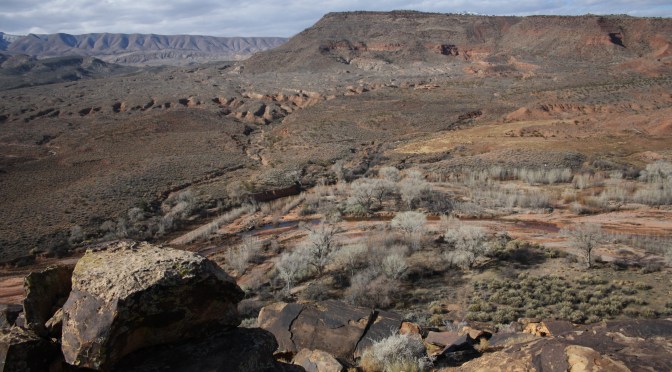
This week, the Prophet Ezekiel takes us to the Valley of Dry Bones.
Ezekiel was a prophet born in Israel who spoke to the King, not David, but one of the many unremarkable kings that followed. Ezekiel warned of the destruction of the temple in Jerusalem. The one that had been built by Solomon, David’s Son, and that had become the focal point of Israel’s worship. It was understood to be the dwelling place of God.
Yet, Ezekiel’s warning went unheeded.
Then came the Babylonians under the rule of King Nebuchadnezzar. They came and conquered Israel, destroyed the temple, and then took thousands of Israelites with them back to Babylon. Ezekiel’s family was among those exiled.
There in exile, Ezekiel continued to prophesy. To proclaim that harsh reality that the temple was indeed gone, but also to proclaim hope and comfort – that God was still at work in the world.
It is this wound of exile that grounds this vision of Ezekiel’s. Babylon, far from the promised land of Israel, is where this vision of Dry Bones takes place.
As we hear Ezekiel’s vision, as we imagine the valley of Dry Bones, and their miraculous rebuilding by the Spirit of God, their flesh reconstructed, the breath brought back into them, we can hear a promise of our own resurrection. Especially, paired with the Gospel stories that we have heard this Lenten season.
In Jesus’ meeting with Nicodemus, in Jesus asking for water from the Samaritan woman at the well, in Jesus healing the sight of a blind man, in Jesus meeting Mary and Martha on the road of grief, on his way to raise Lazarus from the dead, these encounters are all one-on-one.
The resurrection promise in these encounters feels close and personal, intimate and individual, a promise that God in Christ makes to each one of us.
Yet, as Ezekiel’s vision takes him to the Valley of Dry Bones, he arrives there with the collective weight of his people’s experience of exile. The wound of exile encompassed the destruction of the temple, the dwelling place of God, the violence of Babylon’s destruction, and the countless who fell victim to that conquering nation. Then the thousands who were carried away into Babylon, away from their community, away from the homeland, away from their place of worship and faith. These things are always in the background.
The dry bones are not just many individuals scattered throughout the valley; they are together a nation and a people. They are the descendants of Abraham and Sarah, who bore the covenant; they are the people who were led out of Egypt by Moses; they are the people who clamoured for a King that would eventually be anointed by Samuel.
These are the bones in the valley of Ezekiel’s vision. When God tells Ezekiel to prophesy to these bones, it is not an accident that the Spirit – the Breath – of God is invoked. When we imagine the breath going into these bones, we cannot help but also go back in our minds to Eden. To the place where we began this Lenten journey, and the place where God created Adam from the mud and dirt and then breathed life into the first creature.
In this vision of Ezekiel’s given to a people who are lost in exile, whose temple has been destroyed, whose hope is gone, it takes nothing less than an act of re-creation to know that the Spirit of God has not left God’s people. Just as God creates with Spirit or Breath in Eden, God creates life from nothing in Babylon. Even with God’s dwelling place destroyed, the Spirit still breathes life.
We don’t always know it, but the Spirit’s work, breathing life into a people who bear the wound of destruction and exile, is just as deeply a part of the church’s stories, our stories that we tell 2000 years later.
The Gospels, the books that tell us the stories of Jesus’ life and ministry, were written in a time when the temple of Jerusalem had been destroyed for the second and final time. When the followers of Jesus had been cast out across the Mediterranean.
As we prepare for Holy Week, to hear the story of Jesus’ triumphal entry into Jerusalem, into the temple of Jerusalem… the background and frame of that story changes dramatically when we remember that for the first readers of the gospels, the temple had been raised to the ground by the Romans. That the wound of exile had been reopened, and is always in the background of the stories of Jesus’ life and ministry.
The prophecies of Ezekiel to the dry bones that the Spirit would breathe new life into them carry a different weight when we hear them anew in Holy Week. When we hear the promise of resurrection through the Good Friday and Easter story, we know that this too is not a promise only for individuals, a promise made just one by one to each of the faithful, but a promise made to the whole of God’s people. A collective promise to the whole Church, to all of creation.
From the Valley of the Dry Bones, we will go with God’s people to discover a new home, a new dwelling place of God. On the cross, in the Messiah nailed there, the spirit of God is breathing new life into the Body of Christ – breathing new life into us.
 The Millennial Pastor