
READING: 1 Samuel 16:1-13
We began our Lenten journey in Eden, a place of myth and memory that Adam and Eve left behind. We moved to Ur with Abram and Sarai, who were called to get up and go. Then to Massah and Meribah, where Moses provided the complaining Israelites with water from the rock.
Now we come to Bethlehem. The city of Joseph’s ancestor, King David. Bethlehem is a place familiar to us; we were just there at Christmas. It is a place that can be visited today, a place to walk on the paths that Jesus walked, a place to go and see where Jesus was born.
Bethlehem is a place of gravity, a place linked to lineage and prophecy, a place that bears the imagination of the faithful throughout the generations. It is the home of Joseph’s family, the place where Mary gave birth, the place of incarnation and visits from the Magi.
Yet, the story that brings us to Bethlehem is one that might be fuzzy or hidden by the cobwebs of Sunday School memories.
It is not David or Joseph and Mary that bring us to Bethlehem. But the prophet Samuel who brings us Bethlehem’s origin story. The same Samuel who slept in the temple under Eli and who was called to by the Lord, “Samuel, Samuel.” And who responded, “Here am I, Lord, your servant is listening.”
Samuel’s call came in a time when the word of the Lord was scarcely heard among God’s people. Samuel was called to lead the Israelites when they lived under the occupation of the Philistines. Though he was reluctant, the people begged him to anoint a King.
The same Israelites who were descended from Abraham and Sarah. The same Israelites who had complained to Moses. These Israelites demanded a King.
It is only after being reassured by the Lord in a dream that Samuel is convinced. Samuel anoints the first King of Israel – Saul. Saul, who is tall and handsome and looks like a King and a leader. Saul, who leads the Israelites in great military victories, but who eventually falls out of favour with the Lord.
Reluctant Samuel is then tasked with choosing another King, even as Saul’s reign continues. Samuel eventually makes his way to Bethlehem, to the family of Jesse and his sons.
Samuel takes stock of Jesse’s family and sees a kingly specimen again. Eliab, the oldest, is tall and handsome like Saul… but this time the Lord stops Samuel from anointing this one. Instead, the Lord proclaims that it is not what can be seen from the outside that matters, but what the Lord sees within.
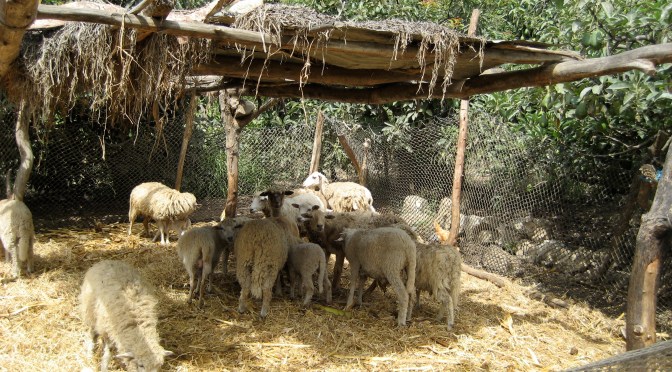
One by one, seven of Jesse’s sons present themselves to Samuel. Yet, none of them is the one the Lord chooses. But there is one more son, the youngest, unsuitable to be a king. The ruddy shepherd boy – David.
David, who would defeat Goliath, who would lead Israel to great victories, who would write psalms, and who would be the Lord’s favourite. David, who was also a sinner, who lusted after Bathsheeba and sent Uriah to die… this David would become the greatest King of Israel.
Thus, Bethlehem was cemented into the prophetic imagination. Isaiah proclaimed that a servant of God would come from Bethlehem, the city of David.
Bethlehem reminds us that in small things God is doing great wonders. From the stump of Jesse, all of Israel will be redeemed. Great kings are born in Bethlehem, the great King of Israel and the Messiah King who was foretold by prophets and desert preachers.
In the feast of the Incarnation, on Christmas Eve, Bethlehem is a small town of great wonder, one visited by shepherds singing the songs of Angels. In Advent, Bethlehem is the place on the horizon, the town to which the star and songs of Mary call us to follow.
In Lent, Bethlehem remains the birthplace of Kings, yet here it reveals contrast. Bethlehem is not on the horizon, but is a signpost along the way. A reminder that God’s people have longed for salvation before. It is a place where the anointing Spirit of God meets the world in ruddy shepherd boys and Messiah infants born to virgins.
And in Lent, Bethlehem reminds us that the One prophesied and the One sent to save will meet creation in the space of a single human body. In Jesus, born to Mary and to Joseph. A body that will bear the sins and suffering of the whole world, that will take up his throne on a cross and confront the great occupying power – death.
Today, Bethlehem points us again to the heart God bears for God’s people, in sending a king to lead us, in sending a king to die for us. Bethlehem point us to what is coming – to Jerusalem, to Golgatha and to Good Friday.
But Bethlehem also reminds us that in a forgotten shepherd boy out tending sheep, in babe in a manger, and soon mocked and crucified King in a grave…God will bring salvation for God’s people.
 The Millennial Pastor