
The Fourth Sunday in the season of Easter is the middle Sunday. It is usually called “Good Shepherd Sunday” because we hear a lot of shepherd-related readings on this Sunday. They serve as a means to turn us from the immediate stories of resurrection that we have been hearing for three Sundays to the next question that the church has to answer: What comes next?
Often, Good Shepherd Sunday is used as an opportunity for pastors (from the word ‘pastoral’ related to the word ‘shepherd’) to tell our stories of call.
My own story is fairly undramatic. No lightning storms like Martin Luther, no voices from heaven or burning bushes. Simply a lot of time spent in and among church folk who gently and subtly encouraged me to explore the calling that was clearly bouncing around my heart and mind at a young age.
Now, as I come up to my 16th anniversary of ordination, I realize that being called isn’t so much a one-time event like the legendary lightning storm where Luther promised to become a monk, or the literal calling of Jesus to his disciples. Rather, being called is something that happens over and over again. We heard this last Sunday when Peter and the other disciples, after being given the Holy Spirit by Jesus in the upper room, decided to go back to being fishermen. They needed to be called again!
Our calling begins in baptism, and we are called into ministry over and over by the Holy Spirit. Some of us are called to a ministry that extends out into the world from our secular work and vocations. Some are called to be set apart, to attend to the baptized and called community. These ones held back in the church are pastors – our focus is on feeding and equipping the baptized.
A year ago, on May 7th, 2024, I found myself standing in St. Mary’s town church in Wittenberg. When you first walk in, the narthex serves as a gift shop and admission desk. It is a little dark, and the ceiling is low, as you are underneath the balcony. Past that, you step into the sanctuary with its distinct green pews, high late-gothic pillars and ceiling. The Lucas Cranach Altar piece stands out in the chancel.
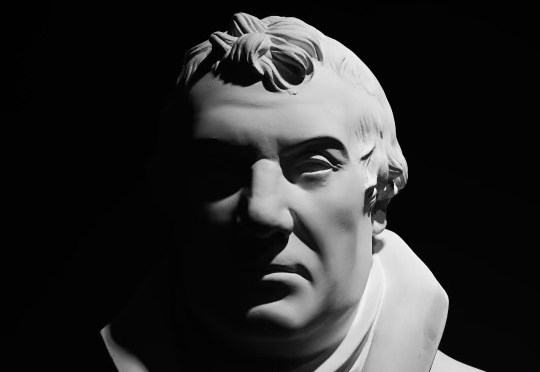
St. Mary’s is where Martin Luther served as the pastor. I will admit that prior to about a month before that moment, I hadn’t really imagined that being a pastor was a significant part of Luther’s life. I had always imagined him primarily as a professor and debater, writing and speaking out against the abuses of the church. But in preparation for travelling to Wittenberg, I researched some of Luther’s most important sermons and was starting to see how influential his pastoral ministry was to his writing and speaking.
It was in the context of congregational community and life where I began to feel the call to ordained ministry. Being active and included in all the things that our congregation had going on: Sunday school, children’s choir, confirmation, youth, youth orchestra, praise band, college and careers, serving on council when I was 18, career shadowing my pastor in grade nine, regular potlucks, Christmas pageants, family Bible studies, curling bonspiels, church picnics and campouts, adult studies, ushering, reading lessons, serving communion, etc.
Being a part of a church was different than any other community that I was a part of. Not quite family, not quite friends and peers, not like a school or workplace, not like a neighbourhood. Church was like church, and I could sense a call to serve that unique community.
It wasn’t until I was standing in St. Mary’s Church, thinking of Luther preaching his sermons on how to be a community that goes about changing and reforming, that I could see this was probably where his sense of call came from too. After 40 years of being a Lutheran and fifteen years of ordained ministry, I felt connected to Luther in a new way that I did not expect. I could see how, in all the things that he wrote about reforming the Church, he was looking through the lens of his ministry to the people of St. Mary’s and Wittenberg. His call came from the same place as mine, from the Holy Spirit through the congregation he served. A call repeated and reaffirmed regularly by being a part of the life of congregations and faith communities, where he could see the lives of his people sharing in their joys and sorrows. Luther’s community was often the motivation behind his calls for reform. He wanted to create a world where the people he served and cared for could hear the Good News of God’s forgiveness, life and salvation given for them. Luther wasn’t an academic tucked away in an ivory tower (or the Wartburg Castle!) thinking abstractly, but a pastor seeking the best for the people entrusted to his care.
This is a Luther I can identify with: A Shepherd called to tend to his sheep and live his life in community.
 The Millennial Pastor