Advent, Annunciation and Apoclaypse

The arc of Advent can be frustrating to those who see Advent as a countdown or barrier to the season of Christmas—four weeks of doing things that are Christmas adjacent but decidedly not Christmas. At church, we don’t tend to sing Christmas music; we decorate with hints of what is come, and we tell Apocalyptic stories different from the familiar Christmas ones. Only on this Fourth Sunday of Advent, when we are introduced to Mary, do we finally meet a familiar character from the Christmas story. 

Advent in the Church can feel like a counter-example to Christmas. In public, we notice the Christmas muzzak blaring on radios and store speakers from November onward, the ubiquitous Christ decor, Christmas menus, Christmas concerts and parties. Advent in the Church is slower, quieter, more reverent and expectant. Christmas is all about joy and celebration. 

Yet, is a Christmas that starts November 1st all that different from Advent? Even with weeks and weeks of “Christmas stuff” going on, there is still a secular understanding that Christmas does not truly come until December 25. Even though we try to have two months of Christmas, it is more like two months of stressed consumerism, extra cooking, baking, cleaning, hosting, socializing and preparation. It is almost like all the worst parts of Advent—a mountain of preparation for something that we are trying to convince ourselves has arrived already.

That is why, even though we meet Mary and her cousin Elizabeth this week, they piercingly represent a different kind of Advent. This isn’t pregnant Mary bouncing down the road to Bethlehem on the back of a donkey; this is Mary at the beginning of her pregnancy. Pregnancy is one of the most Advent experiences of all, where preparing for a new child involves a complete transformation of the self—physically, psychologically and spiritually. I pregnancy there is nothing that can be done to hurry the process along, instead, we live by the adage that “things happen when they happen.” 

When we let our human desires and fears guide our approach to Christmas, we try to jump to the ending right away. Instead, we create two months of stress and extra chores for ourselves. Because we can feel like we are in control of that version of Christmas, at least we are the ones choosing what we do and when we do it. But the version of Christmas that needs Advent to come first forces us to admit that we are not in control, that we do not get to decide when the apocalyptic in-breaking of God in incarnate flesh happens. Rather, Advent is a process of letting go of our control, and the Spirit opening us up to the revealing of Emmanuel—God with us. 

As we come to the end of Advent, Mary models for us that experience of letting go. Certainly, her encounter with the Angel Gabriel and the news that she would bear Emmanuel was life-altering—in both good and terrible ways. Her recourse is to let go, for her to receive the gift of faith in the Spirit and to know that God’s intention for her and for us is mercy and goodness. This is something she would have heard about over and over again in her faith community and from her ancestors—just as her song declares. One almost wonders if she believes it herself yet; but that, too, is part of the process. Mary prays back to God the Word of Promise that a faithful God has first given to all of us, so that we continually hear the Gospel. 

In this way, Advent, Annunciation and Apocalypse are intertwined. In our waiting, God’s promises are revealed. God breaks into human history, breaks into our lives, and delivers news that changes our reality. God in flesh is coming, in the space of the love between unexpectedly pregnant cousins and the space of a child growing in a mother’s womb, preparing to enter our world. 

*** I am grateful to daughter/father podcasting team, of theologians Sarah Hinlicky-Wilson and Paul Hinlikcy for there articluation of Apocalypse (which of coruse, they would attribute ultimately to Paul!) Check out their podcast here: https://www.queenofthesciences.com ***

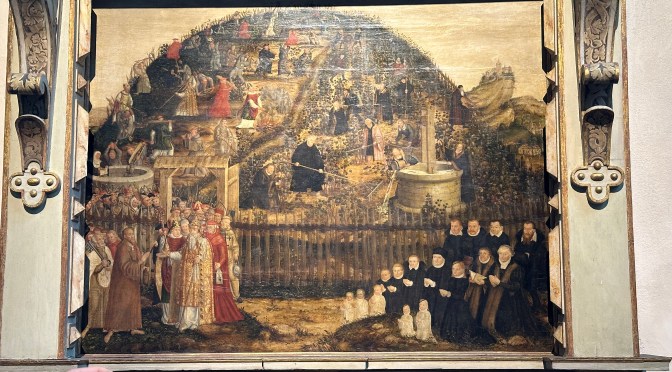
Photo: “The Vineyard of the Lord” from St. Mary’s Church in Wittenberg

The Apocalypse of John the Baptizer’s Community

You may have noticed that for a few weeks now, the titles of my weekly reflections have had mention of Apocalypse in them. You may be thinking that I am starting to sound like one of those Hellfire and Brimstone types. Maybe that is true. However, unlike in the movies, Apocalypse biblically carries a different definition than just the end of the world. Apocalypse comes from the Greek meaning ‘uncovering’ or ‘revealing.’ Apocalyptic literature speaks to the revealing of God’s plan or designs for the world or God’s intention to make right. This lands at the heart of created existence, where this ‘making right’ is contested or in a state of conflict. The Apocalypse or revealing is where God’s Kingdom coming to make the world righteous is in conflict with the powers of sin, death and the devil – forces that we experience in this world that are in opposition to God’s great love for us. 

Phew…

With that understanding of Apocalypse, we pick up with John the Baptist. Who is speaking to the crowds who have come out into the wilderness to hear him and be baptized for repentance and the forgiveness of sins. This follows with the long history of Israel seeking out prophets sent by God in times of crisis and seeking to repent of the ways in which God’s people have turned away from God. John is standing in a role they know and can identify from the Scriptures, and they are seeking to repent just as good people of faith should. 

Yet, they don’t quite get there. John isn’t just preaching repentance like the prophets of old. He is also preaching the coming of another, a Messiah. 

The crowd responds peculiarly. They ask John, “What then should we do?”

They ask this three times: “What should we do?”

In a time of crisis, when the world feels like everything is falling down around them, when the powers are threatening to crush them, when the future feels terribly uncertain, they want to know what they can do. Each of John’s answers is unsatisfying. 

Sounds familiar doesn’t it?

In a time of great uncovering and revealing the deep and uncomfortable truths at the heart of our existence, the apocalyptic conflict between God’s making right and the powers of sin, death and the devil that we can feel palpable in our world… the answers to our wonderings of, “what should we do?” have proven equally unsatisfying.

Maybe that is the point. It seems to be John’s point. Maybe what we need to do isn’t the chief issue. In this moment of Apocalypse, what we do just might be secondary to our salvation. The uncovering of what is really happening to us as God’s people is still in process, still being made known to us. But as we turn to the second half of Advent, I am sure it has something to do with the One we are waiting for, the One who is coming. 

The Messiah is on the way. 

The Apocalypse of John (the Baptizer)

Apocalypse of John 

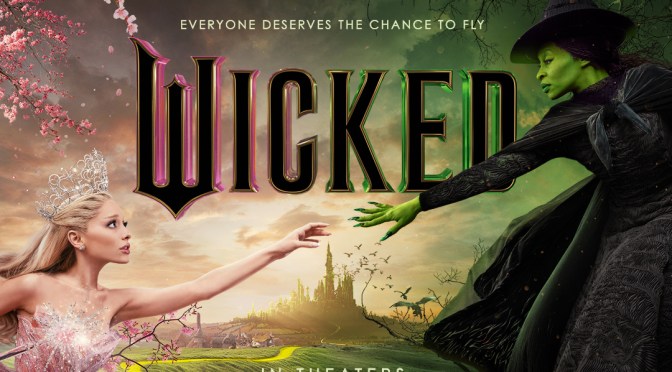
This week, our family went to the movie Wicked. For those who don’t know it (or who have been living under a rock!), this is the recently released movie based on the Broadway musical Wicked (which debuted in 2004), which itself is an adaptation of the Wizard of Oz. The movie tells the stories of Elphaba, the Wicked Witch of the West and Glinda the Good Witch of the North. As you might be able to surmise by the name, the twist of the story is to give depth and context to the Wicked Witch of the West we remember from the Wizard of Oz

As I have often found in movies and stories, it turns out that the villains or antagonists seem to be the people that I find the most interesting. Maybe that is  why Darth Vader is a favourite of Star Wars fans and the Joker a favourite of comic book fans. Heroes or protagonists can often be kind of boring and one-dimensional in movies, TV and literature. Heroes do what is right and good because it is right and good. Villans are more often portrayed as dynamic and complicated, their backstories providing deep motivations for their actions, and they do what they do for various reasons. 

As we come to the Second Week of Advent, we will hear about John the Baptist, a character who is an interesting figure in the narrative of Advent. He isn’t a villain; nor is he a hero. He might even fill the role of anti-hero. He certainly is a character who challenges the norms and expectations of his day. He was born to be a temple priest like his father Zachariah, yet he eschews that calling and power to go into the wilderness. He takes on the role of hermit prophet, to preach against the powers of his world, but also to leave questions as to whether he is really speaking with the authority of God or whether he is simply a lunatic out in the desert. 

He is exactly the kind of character that we find interesting, the kind of character who isn’t a hero just because it is right and good. But he is also one that challenges us, too. We wouldn’t want to become the target of his ire – as what happens to some in the third week of Advent when we hear from John again.

What John does do is serve an important rhetorical or narrative purpose. Luke paints him as a figure that we simply have to listen to; he demands that we go out into the wilderness like the rest of the crowds to hear what he has to say. And yet, he bears the apocalyptic weight of Advent that Jesus gave us last week. The Kingdom of God is breaking into our world to reclaim it from the powers of sin, suffering and death. John turns us from seeing the signs and alarm bells all around and pin-points us to Jesus, the promised Messiah who is bringing that Apocalyptic Kingdom to bear on us now.

Pastor Erik+

Apocalypse is waiting

This week, we have stepped fully into Advent, the season that begins each liturgical year with waiting and watching for Messiah. Advent is the favourite season of most pastors and deacons, and I know more than a few lay folks who love Advent as well. There is something about those shades of blue that captures the essence of the night sky in this season of darkness. The Advent hymns of hope and longing speak deeply to the reality of our world. Advent doesn’t rush us to the good part of the story… rather, it takes its time unfolding. We are just starting this season now in the Church, whereas many in the world have been celebrating Christmas since November 1st. 

I think this love and connection to Advent is precisely because of the contrast it offers to the expectations of Christmas that begin ramping up in November with Christmas parties, concerts, baking, decorating, Hallmark movies and holiday muzak playing on radios everywhere. Our calendars fill up; we have to summon the energy to be social, to be good guests and hosts, and to be present physically, mentally, and emotionally at events with family, friends, acquaintances and strangers. It can be delightful, difficult, busy, tiring, fun or all of those things at once.

Conversely, Advent is about preparation and anticipation. Not in the frantic getting-the-house-ready-for-company kind of way, but in the quiet-stillness-of- your-own-thoughts-and-a-hot-cup-of-coffee-at-dawn kind of way. Advent calls us to slow down, to be present in our own minds and thoughts, in our bodies and hearts. Advent calls us to watch and listen for God, to prepare our hearts for Messiah, to attend to pregnant possibilities of divine activity in our world. 

In the four weeks of Advent, we journey from big to small. In the first week, we begin in the cosmic and apocalyptic realm, where Jesus calls us to pay attention. God is at work bringing the Kingdom of God to confront the kingdoms of sin, death and the devil. 

In the second week, we hear John the Baptist preach about the Kingdom of Israel, of empires and rulers, of politics and nations. 

In the third week, we keep shrinking down: John addresses the crowds before him on the River Jordan. 

Finally, in the fourth week, we witness an intimate conversation between Elizabeth and her cousin Mary, two women pregnant with miraculous babies. 

In Advent, divine activity is revealed in all the levels of our existence, from the cosmic, to the political, to the communal, down to the intimate. And yet, divine activity begins in this final and special place—in the wombs of our mothers. In this most intimate and closest of relationships we can have as human beings, God enters into creation in order to meet us in Christ. From this smallest and closest of beginnings, Christ proceeds to encounter the fullness of creation, joining God once again in divine fullness to every part of our existence. From incarnation and birth to crucifixion and death, Christ becomes one with us. And then, in the Resurrection, Christ’s apocalyptic renewal and reordering of our world in a new creation, we become one in Christ.