Tag Archives: Jesus

Rebuking Peter – Giving Up Humanity

Mark 8:27-38

…Peter answered him, “You are the Messiah.” And he sternly ordered them not to tell anyone about him.

Then he began to teach them that the Son of Man must undergo great suffering, and be rejected by the elders, the chief priests, and the scribes, and be killed, and after three days rise again. He said all this quite openly. And Peter took him aside and began to rebuke him. But turning and looking at his disciples, he rebuked Peter and said, “Get behind me, Satan!… (read the whole passage)


This is the halfway point of Mark’s gospel. The end of chapter 8 with 8 more chapters to go… and Jesus is taking a moment to see what his disciples have actually learned so far. And as we continue through Mark’s Gospel it won’t get any easier. Not that Mark is ever really easy on us during this long season of Green… yet as we head into the home stretch of the season, the challenge to what it means to be disciple will only get more pointed with Mark as he asks what it means to give up our lives for the sake of the gospel.

Jesus ask his disciples a question that is both normal and odd. Normal because we all want to know what others think of us. Odd because it should be obvious given what we have heard about Jesus so far. What are people saying about me? Who do they say that I am?

And Peter steps up, as usual, to speak for the group. He knows what people have been saying, “Elijah, John the Baptist or a prophet.”

Then the real question comes, who do you say that I am?

“You are the Messiah” Peter says, sounding like he passes the test. 

But within moments, Jesus is calling Peter “Satan”, and telling Peter to leave the circle of disciples.

What happened?

Peter doesn’t actually get it, even though it seems he passed the test just moments before.

Peter is living in a crisis… a crisis of identity and purpose. He didn’t really pass the test and he doesn’t really know who Jesus really is or what Jesus is doing in the world. You see, when Jesus asks the question, Peter knows all the answers, he knows what all the people out there are saying, which means he has been listening and trying to figure out Jesus is for himself. And when Peter says that Jesus is the Messiah, it is hardly a specific answer. The people of Israel have many different and varied understandings of who the Messiah actually was. The judges who were the first protestors of Israel followed by Kings. But then also foreign conquering kings had been called Messiahs, and prophets like Elijah, but also the suffering servant of Isaiah’s prophecy, and of course recently John the Baptist. Peter doesn’t give a conclusive answer to Jesus’ question. 

Yet, the fact that Peter (and the other disciples) don’t have a specific answer really points to the fact that they don’t really know what is coming next for Jesus and them. So when Jesus tells them what comes next – that Jesus is going to suffer and die at the hands of the chief priests and elders – Peter doesn’t like that idea at all. He might not have a specific idea about who the Messiah is, but knows Jesus’ idea isn’t his vision of following the Messiah. 

And so when Peter rebukes Jesus for his silly ideas about dying, Jesus turns his back on Peter… sends him out of the group, away from the community. Now, Peter is back and part of the group only two verses later… so what is Jesus really banishing from the circle? Peter’s self-concern and vision of discipleship. Peter doesn’t want Jesus to talk about dying… Peter is thinking about himself, how he can continue up the mountain towards the goal as Jesus’ disciple. 

In fact, it is up a real mountain, the mountain of Transfiguration, that Jesus and Peter are about to go, where Peter will want to build an altar and stay believing he has finally arrived at the pinnacle of discipleship. And again Peter will miss the point and not fully understanding what comes next. 

As readers of Mark’s gospel today, we share in common a few things with the first readers of his gospel nearly 2000 years ago. Mark was writing to a community of Christians for whom their visions and hopes for what they would become were not realized. It had been about 30 years since the crucifixion and resurrection. The early church community eagerly awaited the return of Jesus, yet the first witnesses were beginning to die off. The ones who remembered Jesus first hand were getting to be fewer and fewer. The community was beginning to wonder, what comes next? If Jesus wasn’t going to return any day now, what were they to do?

We might not be waiting for return of Jesus any day, but we too are at a moment for Christians where we don’t know what to do next. Our hopes and dreams for the future have not been realized, and if this is where Jesus is taking us… we might want to rebuke him too. 

We surely don’t like the idea of giving up our lives for the sake of the gospel… we have been waiting for a return to the mountain top, for a seat back at the table of power, to be important and respected in the world again… taking up a cross and giving up our lives does not sound like what we have been waiting for as Christians in North America, Lutherans in Manitoba, a Shared Ministry in the Interlake. 

We are as confused and frustrated as Peter is about who Jesus is and what is means to be followers of his. And we just want know what comes next for us. 

Yet as Jesus banished Peter’s self-concern… Jesus is also stripping us of all the things we think are part of the vision of discipleship, numbers and power, in order to get us to see what is really coming next. 

Peter wants to hold on to vision of grandeur, discipleship that comes with perks… but Jesus is giving things up, giving everything up, giving up his very life for the mission. 

Because the thing is, Jesus has come to offer Peter so much more than a home on the mountain top or a place of power and influence or the adoration of the crowds. Jesus is coming to give Peter, the disciples, the people of Israel and all of creation new life. 

If only Peter could get over himself and his vision to see it. But he doesn’t. Peter gets rebuked by Jesus today, only to be rebuked again on the mountain of transfiguration and then again at the Last Supper and then even again after the resurrection. 

But it isn’t just Peter, no one gets it for the rest of the gospel of Mark. The Gospel ends with the women fleeing the empty tomb and telling no one because they were afraid. 

No one gets what Jesus is doing… and just maybe that is what Jesus is coming to understand. We aren’t able to let go of our visions for ourselves, we aren’t able to stop dreaming of the numbers and the power and then importance. We aren’t able to get out of our own way. We hold on to that stuff at all costs. 

And so Jesus gives it all up for us… Jesus gives up all power and importance for the sake of love, in order to come near to creation, in order to come close to us. And Jesus gives us up too. 

Jesus comes down to us in order to give us up. 

To give up our sin and suffering and death because we cannot. 

To give us up to new life. 

To give us up to God. 

To give up on our old sinful selves, in order to make us the new creations that God intended. 

For those who lose their lives for my sake… will save it. 

Jesus tries to send away Peter and his self-concern, his holding on to the wrong things. But Jesus can’t… because that is not who Jesus is… Jesus is THE Messiah, the one who has come to save… to save us by giving us up to God. 

And so when Peter doesn’t know what is coming next and doesn’t like what Jesus has in mind, and when we don’t know and don’t like what Jesus has in mind for us either…

Jesus goes ahead with us anyways. And Jesus  goes to the cross for us anyways… and Jesus transforms us anyways, from sinners into forgiven, and from dead into alive. 

Jesus doesn’t Peter twisting in the wind, even if Peter doesn’t like what is coming. And nor does Jesus leave us twisting in the wind, even if we don’t like where we are these days.

Because Jesus does know who he is and Jesus knows who we are. 

And Jesus does know what comes next for us…  New Life in the Kingdom of God. 
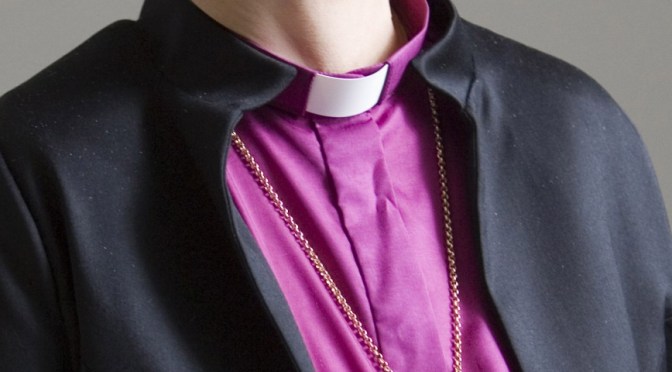
A Sermon for the Ordination of a Bishop

On the Occasion of the Ordination of the Rev. Jason Zinko as Bishop
Manitoba Northwestern Ontario Synod
Evangelical Lutheran Church in Canada

John 13:2-17 

 He came to Simon Peter, who said to him, “Lord, are you going to wash my feet?” Jesus answered, “You do not know now what I am doing, but later you will understand.” Peter said to him, “You will never wash my feet.” Jesus answered, “Unless I wash you, you have no share with me.” Simon Peter said to him, “Lord, not my feet only but also my hands and my head!” 10 Jesus said to him, “One who has bathed does not need to wash, except for the feet, but is entirely clean. (Read the whole passage)

Sermon

It is a delight that the MNO synod has elected you and called you Jason, as our next Bishop.

I remember the first time I met Jason back in seminary. It was a gathering of students during the seminary’s open house. We were at the home of one of our classmates and here was some guy from Winnipeg cracking jokes from the lazy boy in the corner of the living room.

And trust me, “Now here is someone who is Bishop material” was not a thought that crossed my mind. But not for the reasons you might think. Firstly, no one thinks that when meeting seminary students. But as I got to know you, Jason, I remember your struggle with the call to ministry. Not with the fact that you clearly had gifts and abilities for ministry, but particularly how following the call to Word and Sacrament ministry might set you above in some way. That idea seemed to contradict your nature. And the Jason of those days is pretty much the same as today: approachable, thoughtful and down to earth. And also not super formal. 

Which is funny because here we are at your ordination as a Bishop… So, would you have gone through with it all back then if you knew you would be here today? Never the less, here you and we are. 

And I am honoured that you have asked me to preach on this day of your ordination to the office of Bishop. However, what do I know about being a bishop?

So I looked to Martin Luther for some insight. And you know what? Luther has a lot to say about Bishops… None of what he says is good. Mostly stuff about how Bishops just want to be lazy princes and lords and don’t do their jobs… 

Yet, like a lot of church folks and rostered ministers, I DO have lots of opinions about bishops and thus Luther for good company. Maybe that’s all that is needed for this occasion. //

This story from the Gospel John, despite being a recommended ordination reading, is a bit odd, ins’t it? It is odd because of “when” it brings us to in the story. Maundy Thursday, a day on which we would never schedule an ordination!

Regardless, it is this surprising and unexpected thing that Jesus does that seems relevant. He gets up from the supper table to wash the disciples feet. Normally, a task reserved for the house slave, Jesus reverses the order of things and takes the posture of a servant. 

Finally, after washing the disciples’ feet, Jesus exhorts his friends and followers to do what he has done for them, wash one another’s feet.

Here is a metaphor about the life of faith, or the experience of ministry. That our callings are not to higher and higher things, but to service and getting down into the dirty, muddy, not so nice places.  

And surely, as we gather to celebrate an ordination of a Bishop today, we celebrate that God has called you Jason, to this office of ministry in our synod. We also celebrate that this call is a renewal of our call to the work of the Kingdom and the ministry of the Gospel.

This exhortation by Jesus to the disciples gives roots to our celebration today by reminding us that the call to the office of Bishop is not a bigger and fuller call than that of the call to Word and Sacrament or Word and Service ministry. 
And those two callings are not bigger and fuller calls than our first calling. 
And that is the calling we all share, the calling given in baptism. 

Baptism is the calling that most fully expresses God’s call to us to serve one another in the kingdom… it is certainly no coincidence that washing feet looks more like baptism than laying on of hands. And the call to these particular set-apart-ministries within the church, to be Deacons, Pastors and Bishops are all about narrowing and confining —  restricting even — the call of the baptized to a particular and limited set of responsibilities within the body.

And as such, a synod only needs one Bishop, and congregation or ministry only needs one or a few rostered ministers, but there is always need of and room for more of the baptized in our midst. 

Now… having said all of this… and how lovely an image foot washing is… I am not really sure that it is the main point of this story.

While there is something to Jesus’ exhortation to service, it is the interaction between Peter and Jesus that is really interesting and that really has something to say about us and about the church and the world. 

As Jesus kneels down to wash feet in this Maundy Thursday moment the disciples are probably confused, but Peter is the one to say it out loud.

In a moment between the high of Palm Sunday and the crushing low of Good Friday, Jesus and Peter begin arguing over a bucket of water between them. 

“You will never wash my feet” Peter protests. 

He must know that something is about to happen, something big. And he wants to go back. Back to the last 3 years of following Jesus around the country side with crowds in tow. Back to the simpler, easier times, when ministry was straightforward and the results were obvious. 

Peter longs for the past. He understands the past, he can see how good he had it then (even as he was often speaking first, thinking second). He doesn’t want whatever big thing is coming, whatever change is on the way. 

“Unless I wash you, you have no share with me” Jesus says.
“Lord, not my feet only, but also my hands and my head.”

When Jesus won’t back down, Peter moves from avoiding what scares him to changing it. He tries to get Jesus to wash him as a religious leader would wash someone for ritual purity, not as a servant would wash dinner guests. If Peter cannot put his head in the sand and pretend that the scary things around him aren’t happening, he will recreate the past. He will re-make Jesus back into the Rabbi and teacher that Peter is comfortable with. Peter is going to hold on to the way things were at just about any cost. 

Sounds familiar doesn’t it?

Like Peter we too are very uncomfortable with Jesus taking this position, being in this posture. Like Peter we are very uncomfortable with the Body of Christ looking like it is down on the bottom, and we would much rather the Body of Christ of those glory days when the crowds just came, and the miracles were easy and the teachings enthralled the masses. 

Like Peter we would rather that the Body of Christ never have to wash feet. If only Sunday Schools and Youth groups were full again, if only people came back to do the work we are tired of doing. If only there was no Sunday shopping or hockey practices or dance lessons. If only our pews were full and offering plates fuller… there wouldn’t be need of foot washing.

Like Peter, we would rather change what the Body of Christ is doing so it looks and feels better. If only we tried the next program or bible study or trendy church growth tactic. If only we put up some screens and updated the music, if only we invested in some professional church organists and choir directors. If only we preached more biblically and worked more for justice, if only we changed the right part of ourselves, we could go back to the way things were… and the Body of Christ wouldn’t be kneeling before the world.

Peter on Maundy Thursday shows us who we really are. //

Here we are as the church as embodied in this gathering to celebrate the ordination of a new bishop, as the MNO Synod and ecumenical partners, as the Evangelical Lutheran Church in Canada. Big change is upon us, much of what we once knew is already no longer the same, the glory days are behind us… and what is coming… it’s scary. 

But let’s make no mistake, Jason isn’t our new saviour. 
Jason isn’t Jesus. 
Jesus is Jesus. 

Instead, along with Jason, we are standing before Jesus, before the Body of Christ brought low, in this posture that makes us uncomfortable. And we too have a sense that this is not the way things should be.

And Jesus’ response to Peter in the moment?

“This is happening. I am going to wash your feet and just your feet, you don’t get to be in control”

Because it isn’t just about foot washing is it?

Because this moment is the grand reversal of the incarnation, of God coming down to our level, in human flesh, in order to show us love. This is the creator kneeling before creation in order to say, “I love you.” 

This is creation betraying God because we will not open our eyes to what is happening. This is the best that humanity has to offer, religious and political leaders, rejecting the divine, and putting God on a cross because we will not accept what is about to happen. 

Because this moment is nothing less than cross and empty tomb. God taking and holding creation in God’s hands — 

dirty, muddy, tired, sore, sinful, suffering, creation — 
and God washing away a little dirt here, 
scrubbing out the soreness there, 
bringing life and wholeness in a way that we never thought possible and in a way that we firmly tried to prevent. 

So, no pressure Jason, and no pressure to the rest of you. 

But this is our foot washing moment. 

Jesus is telling you Jason, Jesus is telling all of us… 

“This is happening. I am going to wash your feet and just your feet, you don’t get to be in control.”

Because Jason, when you make those vows to the office of Bishop, and we make promises in return, and when that cope is placed on your shoulders and that staff is placed in your hand… it won’t be because this ministry is something that you get to form and shape into your vision, or something that we get to shape and form into ours. 

Rather, it is going to be Jesus taking hold of your feet in order to show you how much God loves you. 

And then Jesus will do nothing less than bring God’s Word of Life into the world through your ministry, 
and God will wash, feed and nourish the people entrusted to you through your ministry, 
and the Spirit with breathe new directions and visions and dreams for us into your leadership. 

Because this moment is nothing less than the spirit of God breathing new life into the church. Nothing less than God declaring that in this Body of Christ, 
this segment of the Church brought low and kneeling on the ground, 
that this is precisely where Jesus is about to transform us and all of creation. 
That cross and empty tomb are being lived out right in our midst. 
And Jesus is making us alive while moving us into the future, no matter how much we yearn for the past.

And as God takes hold of us, of this Body of faith brought low and dying… 
God is washing away a little fear and trepidation here, 
scrubbing out a little resistance to change there, 
and breathing new life into us…. 
new life in the ministry of a new bishop 
and in the renewed ministry of this synod and its members.//

So while Luther didn’t say much positive about bishops, he did point us to the heart of this ministry. He says:

“We will now return to the Gospel, 
which not merely in one way gives us counsel and aid against sin; 
for God is superabundantly rich [and liberal] in grace [and goodness]. 
First, through the spoken Word by which the forgiveness of sins is preached in the whole world; 
which is the peculiar office of the Gospel. 
Secondly, through Baptism. 
Thirdly, through the holy Sacrament of the Altar…”

So with Luther’s reminder of the centrality of the gospel, and Christ’s words to Peter, we are reminded again that our call to the ministry of the gospel does not lift us higher or push us lower and is not even OUR call. 

The call is God’s, 
the Call is Christ’s, 
and it comes from a servant brought low, 
washing and raising us to New Life. 

Amen. 

Wash your hands or don’t – it doesn’t matter to God

Mark 7:1-8, 14-15, 21-23

So the Pharisees and the scribes asked him, “Why do your disciples not live according to the tradition of the elders, but eat with defiled hands?” He said to them, “Isaiah prophesied rightly about you hypocrites, as it is written,

‘This people honours me with their lips,
but their hearts are far from me;
in vain do they worship me,
teaching human precepts as doctrines.’

You abandon the commandment of God and hold to human tradition.”

(Read the whole passage here)

This story is not about washing hands. 

After a 5 week detour into the Gospel of John to hear the story of the feeding of the 5000 and then 4 more weeks of conversation about the bread of life, we are rudely dumped back into Mark’s gospel.

John has been giving us gentle rolling theological poetry of Jesus, hoping to unravel and expand our understanding of God. 

Yet, as we are dumped back into Mark this morning, it is kind of like being woken up by a harsh alarm clock in the middle of a great dream. 

Mark is not about expanding and unravelling the story of Jesus. Mark only gives us the minimum of details. He wants us to wonder. If we aren’t wondering what on earth is going on after hearing a passage of Mark’s gospel, we aren’t listening. 

So be forewarned, this story is not about washing hands. 

Today, Jesus and his disciples are just minding their own business while they eat lunch. Some of the Pharisees and scribes from Jerusalem had come down to see what Jesus is up to, probably hearing of the crowds he had been drawing. 

And when these Pharisees and scribes see that the disciples are eating with unwashed hands, they begin to make a stink about it with Jesus. And Jesus is not impressed.

He berates the accusers of the disciples: “Listen to me, all of you, and understand: there is nothing outside a person that by going in can defile, but the things that come out are what defile.”

Then Jesus goes on to name an extensive list of sinful behaviours and concludes with this gem: “All these evil things come from within, and they defile a person.” 

We left the philosopher poet of John behind last week, and this week we get Mark’s angry lawyer-like Jesus, who is sticking it to the Pharisees and scribes about what it is the really defiles. 

But lest we forget, this story is not about washing hands. 

The judgemental question or accusation that the Pharisees make about hand washing is what sets Jesus off on his tirade about the things that truly defile human beings. And while his response is to swiftly condemn the things that truly defile, hand washing is only the pretext for the Pharisees, the reason they give for their judgement is not the real reason. 

If they really cared about hand washing, they would have stopped the disciples before they started eating. Or at the very least their question to Jesus would have been, “Why are they eating with dirty hands, that can make them sick?”

Instead, the Pharisees and scribes are asking about something that is not really about hand washing. 

“Why do your disciples not live according to the tradition of the elders?”, they ask.

Jesus is upset because first of all the Jews believed that the law had been given to them by God through Moses. The Pharisees are placing their faith in the elders and ancestors. 

But not just that. The Pharisees have a confused understanding of faithfulness. They are trying to be faithful by appearing like they follow the rules, by being faithful to their ancestors and they way they practiced their faith. The Pharisees have intermingled their faithfulness and their understanding of being good, righteous and faithful Jews with being faithful children, with being good, righteous and faithful descendants. 

They live in a world that values staying the same. They learned their way of life from their parents, who learned from their parents, who learned from their parents. And they learned that it is important to refrain from change. The way of life they know is what worked for generations before them, what right do they have to change it? 

And while washing hands among the other rules of ritual cleanliness were first instituted as a way of keeping the people of Israel safe and healthy – the rules were meant to be of service to humans beings – the Pharisees had become servants to the rules. 

Faithfulness was no longer about living in right and healthy relationships which each other, with creation and God. 

Faithfulness, righteousness, knowing that you were in right standing with God was now about keeping the rules, the rules that made your parents, and grandparents and great grand parents righteous too. 

Even while Jesus lectures the Pharisees about what truly defiles them, he is challenging how they understand righteousness, how they understand the way that they are saved, how they understand the ways they are faithful. 

The Pharisees think it is following the rules handed down generation after generation is what makes them faithful, is what makes them worthy of being forgiven and loved by God. 

It goes without saying that this is something that people of faith, that church communities, that we struggle with too. Ask any couple bringing their child for a baptism why they want their baby baptized? Not one will say it is because through Water and the Word we are made children of God receiving God’s tangible sign of forgiveness, life and salvation. No, they will mostly say they are coming because it is what happens in their family, it is just the right thing to do. 

It is very easy for us to lose sight of big picture. We can get stuck in ruts and fear change out of a sense of loyalty to our ancestors, forgetting why they did the things they did in the first place. 

And so when Jesus challenges this idea that following the rules of the ancestors is not what earns us forgiveness, life and salvation – that being good rule followers is not why God loves us, we have to wonder… what does make God love us? 

God’s love for us is not earn or achieved. God gives us love freely.  Washing our hands or having our babies baptized doesn’t earn it. Mowing cemetery lawns or keeping the faith of our ancestors unchanged doesn’t make us righteous. 

In fact God’s love for us has nothing to do with those things. It has to do with who God is and who we are. It has to with God loving us because we belong to God. It is the love of the creator for the created, the love of a parent for a child.  

Jesus’ challenges our understanding of faithfulness so that we don’t have to live out to the faithfulness of our ancestors. We don’t have be good Christians because our grandparents were. We are loved by God first and that is what makes us good. 

Today’s story is not about washing hands. 

Today Jesus is reminding us that it is not what we do or don’t do that earns God’s love. Our faith in the traditions of the ancestors won’t save us, nor make us righteous. 

Only God can do that. 

And clean or unclean, defiled or undefiled, faithful to the ancestors or failing them, God chooses to love us no mater what. 

Bread for the sake of the world

John 6:56-69

Jesus said, “Those who eat my flesh and drink my blood abide in me, and I in them. Just as the living Father sent me, and I live because of the Father, so whoever eats me will live because of me. This is the bread that came down from heaven, not like that which your ancestors ate, and they died. But the one who eats this bread will live forever.”…

 Because of this many of his disciples turned back and no longer went about with him. So Jesus asked the twelve, “Do you also wish to go away?” Simon Peter answered him, “Lord, to whom can we go? You have the words of eternal life. We have come to believe and know that you are the Holy One of God.” (Read the whole passage)

In the last 5 weeks we have been given our five loaves. For the last five weeks we have been slowly making our way through the 6th chapter of the Gospel of John. 5 weeks that started with 5 loaves and 2 fish, followed by ongoing argument between Jesus and the crowds. Arguments over what is the true bread, about who can receive the power of God, about trying to be God in God’s place, about where we abide and in whom we abide. 

But today Jesus has ramped up his argument, and Jesus has challenged the crowds and they do not like it. Instead of backing down, Jesus has pushed back. Pushed back so hard that the crowds give in and walk away. The crowds were impressed with the miracles, but were not impressed with Christ’s teaching. But the crowds aren’t the only ones who walk away in disgust, some of the disciples walk away too. Not the 12, but some of the larger group of followers that had been with Jesus. The same ones who had collected the excess of the five loaves and two fish, they too turn and walk away.

So what is the fuss about? What has caused not only the crowds, but some of the disciples to walk away? Jesus said to the crowds,

 “Those who eat my flesh and drink my blood abide in me, and I in them. Just as the living Father sent me, and I live because of the Father, so whoever eats me will live because of me” 

Or in other words Jesus has said to the crowds:

Come and meet me, 
come and be a part of me, 
and you will see God, 
you will meet God, 
you will be a part of God. 

Jesus has offered God in flesh to a Jewish audience. An audience who does not understand Yahweh to be a God that suffers the unclean, Yahweh does not get dirty, Yahweh does not forgive the unrighteous. And Yahweh would become a lowly human being. But still here is Jesus offering himself, offering God the Father as bread. 

And for five weeks we have been hearing how Jesus offers bread to us too. Bread for the Hebrew people 2000 years ago, and bread for the Church today. Bread for the Church and bread for the world. The body of Christ for the world. As the Body of Christ, as the Church and as Lutherans, we are defined by the presence of that bread, that body. In the Augsburg Confession, Martin Luther and the Reformers defined the Church as, 

“…the assembly of saints in which the gospel is taught purely and the sacraments are administered rightly.” 

The Church is place where the grace and forgiveness of God is preached. The Church is the place where we are washed and forgiven of our sin by Holy Baths. The Church is the place where we share with each other Holy Meals. Bread and life for all that are hungry. The body of Christ found in bread, and the body of Christ that is this community, one in the same, given to us by God. 

It is these three things, the preaching of the Gospel, Holy Baptism and the Lord’s Supper that make us the Church, the body of Christ. And yet, like those disciples who walked away from this radical gift we walk away from it as well. We walk away from the promise and the gift that we are given by Christ. We walk away because its too free. We walk away like the crowds and disciples because we cannot imagine that such an amazing and radical gift could be given to us at no cost, that it could be given completely freely out of God’s love for us. 

We live in a world that tells us “you get what you pay for”, that “there is no such thing as a free lunch”, that “you have to pull yourself up by your own bootstraps”. We are so conditioned to believe that nothing is free, that when something free is given to us, we cannot accept it. It almost as it we need to pay a price for God’s love, for God’s bread. We want to have to know enough, understand enough, pray enough, feel it enough, come to church enough, be good enough, believe it enough. If we only do enough, God just might love us.  

And somewhere in the midst of all that. In midst of arguing about bread, in the midst of walking away because the promise is too radical, in the midst of trying to be enough, we find our selves asking, “Lord, to whom shall we go?”

 Where do we go God? We do not know the way! Who will do it for us? We cannot do it on our own!

We ask with Peter, “Lord, to whom shall we go?” And somehow, not by ourselves, not as individuals, but as a community of faith, somehow by the Holy Spirit we then say. “You have the words of eternal life”. 

In fact the same spirit in us proclaims it every Sunday, the same spirit draws us to the Father and we are given Christ the Word, Christ the Bread of Life.

And by these words of eternal life, Jesus leads us to the cross. The Gospel, Holy Baptism and the Lord’s Supper, these three signs of the Church, they all lead us to the cross. 

They all lead us to the cross of promise and new life. 

70 years ago, an expressionist painter and poet by the name of Oskar Kokoschka, sketched a drawing. The inscription on the drawing reads “In memory of all the children of have to die of cold and hunger this Christmas”. The picture is of a cross. A cross on which Jesus hangs, surround by children. Poor grubby children. Cold and Hungry Children. And with one hand ripped free of its nail on the cross, Jesus reaches out to a child below him. Jesus reaches out and puts his hand into the child’s mouth. Jesus, while dying on the cross, is still offering himself, offering the Bread of Life to the cold and hungry child who stand before him. 

Today, Jesus reaches down from the cross for us. Jesus reaches down with word, water and bread.

We the cold and hungry before the cross, we the Church, we the beggars who stand before the cross, we who are defined by the Gospel, by Holy Baptism, and by the Lord’s Supper, we are shown the cross week after week, year after year, because on the cross we find hanging the Word and Body of God. There in the unlikeliest of places, we are given bread, we are given New Life. 

It is, of course, too radical to accept, too much to believe, it does make sense to walk away from craziness of this gift. But this is the radicalness of God. This is who God is, showing us the most radical love of all, by becoming bread, and by giving Godself up on the cross. 

And so here are. Five loaves. Fives small of loaves bread and five weeks of one conversation in the Gospel of John. And yet in five loaves we discover that God is doing so much more than we can imagine. God is giving us more than we can accept. And no matter if we walk away from it all, or whether we find ourselves asking “Lord, to whom shall we go?” or both… God continues to give us this the gift of forgiveness, of grace and of love, Gifts of the Gospel, Holy Baptism and the Lord’s Supper. 

“Lord to whom shall we go? You have ARE the Word of Eternal Life. You are the Bread of Life given on a cross, for the sake of the world. 

Amen.

The Bread of Life: The hardest loaf to swallow

John 6:51-58

… So Jesus said to them, “Very truly, I tell you, unless you eat the flesh of the Son of Man and drink his blood, you have no life in you. Those who eat my flesh and drink my blood have eternal life, and I will raise them up on the last day; for my flesh is true food and my blood is true drink. Those who eat my flesh and drink my blood abide in me, and I in them. Just as the living Father sent me, and I live because of the Father, so whoever eats me will live because of me…. (Read the whole passage)

Today we receive our fourth loaf of bread. We have been abiding in the 6th chapter of John’s gospel for 4 weeks now, and still there is one more week to go. The ongoing discussion that we have been eavesdropping in on, between Jesus and the crowds, began with the feeding of the 5 thousand, with 5 loaves and two fish. But soon after the food had been eaten and the baskets of leftovers collected, the crowds and Jesus get into a debate. A debate about what the bread means. A debate about who Jesus is. A debate about who God is. A debate about life in the community of faith. 

And now, instead of just celebrating the simple and beautiful miracles of 5 loaves and 2 fish becoming enough for all and then moving on, we have delved deep into the heart of the issue between Jesus and crowds. We are dealing with the big issue for the people listening: Abandon all they know to be truth, and accept the promise of life and grace, a promise made by wandering carpenter turned preacher. Abandon their families, friends, culture and all sense of security that exists in a troubled world and life, for a promise that has no guarantee. 

For the crowds listening to Jesus, the idea of eating flesh and blood would have made them squirm, as it does us. Yet, for the Jewish crowds, the challenge to their religious practice and tradition would have been equally hard to accept. The eating of flesh and blood was something done in pagan temples. The pagans believe that by ingesting the sacrifices made to their gods, they could acquire their god’s powers. 

In the temple in Jerusalem, some of meat that was sacrificed was permitted to be eaten and it was not because it had any special power, but because it was good food. And the blood used in temple rituals was understood to have purifying effect, not magical powers. 

But what Jesus was talking about was on a whole other level. Eating my flesh. Drinking my blood. This is a direct challenge to the way the Jerusalem Temple and religion operated. Jesus is suggesting that there are other ways to obtain God’s forgiveness than temple sacrifices. There are new ways of acting and being under the law. That there is a new understanding of how God feels about sinners and the unclean. 

Eat this bread, eat his flesh, and you will live forever Jesus says. But at what risk? Giving up the system, the traditions, the practices, the worship that everyone knew and understood. Give up knowing how the world works, even if it is hard and exclusive world. Even if often the poor and common people cannot obtain forgiveness or be made clean or find God’s love because it is simply too far from reach. 

_______________

American Lutheran Pastor and Professor Joseph Sittler wrote about his experience with a parishioner who held fast to her understanding of prayer. Sittler’s congregant often boasted about her prayers for parking spots. 

“Whenever I am going to work or to the mall or to church or to the theatre, I pray for parking spot. And without fail there is always one waiting for me when I get there.”

This understanding of prayer bothered Sittler, and often he would try to show her different ways to view prayer and how God answers it.

“Have you ever not found a spot? What about others praying for parking?” he once asked. Yet these questions did not sway the woman’s view. 

Another time Sittler asked, 

“What if there was a mother with a sick child driving to the hospital? And what if you were on your way to a routine doctor’s appointment? What if you took her spot? Which prayer did God answer?”

“Well mine of course” responded the woman fiercely. “Because I prayed harder and had more faith”. 

_______________

As modern Christians, we understand Jesus’ words today in a eucharistic context. We know, we can feel it in our bones that Jesus is pointing us to the Lord’s Supper. To that holy meal that we share each week that feeds our faith, that binds us together as a community and that gives us strength for service in the world. 

But we also know what it is to squirm with the crowds who are debating with Jesus. We may feel icky at the idea of eating flesh and drinking blood, but we can place this idea within a larger understanding of what Jesus is getting at. 

Yet, like the crowds, we too have our own views and understandings. We have traditions and our system for religion. Like the crowds, we know how good faithful people worship and pray, how we keep the laws and rules and act morally. We know who among us has the sincerest faith and the most studied understandings. And when we begin to differ, we also know the arguments that prop up our point of view best are the ones that condemn others. 

And so while we share in Jesus body and blood, we don’t escape the challenge that Jesus presents today. We don’t escape the challenge that Jesus gives to our traditions and systems, to our abilities to keep the rules and judge those who don’t. And most importantly, we cannot escape the fact that Jesus is telling us today, that it is God and God alone who obtains, who gives, and who allows us to be forgiven. It is God alone who gives us life. It is not by our own merits, or faithfulness, or acceptance of Jesus that saves us or makes us pure. It isn’t by being a good Christian that we save ourselves. It is always in the moment we think we can wrap our hands around this faith stuff and the moment we think we know what God wants and likes, that we lose it all. It is in the moment when we think we have got the right understanding, that Jesus steps in and reminds us that it is always different than we think.  

_______________

Over the course of years, Joseph Sittler tried again and again to convince his parishioner that parking spots were not likely to be one of God’s chief concerns. And again and again, he was rebuffed. “You need to pray harder and more sincerely” was the response he got over and over again. 

Until finally, one day in Advent, and the topic of praying for parking came up again, Sittler knew how he would respond to this certain and self-assured parishioner. After hearing once again, that when this woman prayed for parking spots God always provided, Sittler said, 

“What do you suppose a very pregnant Mary was praying for as she bounced along on the back of that donkey while riding to Bethlehem.”

“I don’t understand what you mean, Pastor”, the woman replied. 

“Luke 2 verse 7” Sittler offered. “And she gave birth to her firstborn and wrapped him in bands of cloth, and laid him in a manger, because there was no place for them in the inn.”

_______________

Just when we think we have the world figured out, just when we think we have God figured out. Just when we think we can point to God and say, if you worship, or pray, or act, or serve in this way, you will be in God’s good books, Jesus lands in front of us again. Jesus lands in a manger when there are no room at the inn. Jesus lands on a mountain top with hungry people needing bread, but needing God’s love even more. Jesus lands on a cross, and transforms death into life. And here, Jesus lands as body and blood in our midst, at our table, in our mouths and into our bodies. Jesus lands in, with and under us, reminding us that just when we think we have God figured out… Jesus is the one who is giving us life, and we are forgiven, not because of our efforts or faith or ability to know, but solely because of God’s love for us. 

This fourth loaf of bread might be the hardest to swallow. The first loaf was a miracle, a miracle reminding us that with Jesus there is enough for all, enough for us. But today, as we hear again of the Bread of Life, as we hear about who the bread of life is and what it means for us to eat this bread… we are stripped of our comforts, of our traditions and systems that help us to be self assured and certain of our understandings. Today, Jesus feeds us bread from the living Father, and we will live. It might not be comfortable and it might make us squirm, but in this Jesus, this God who turns what we know upside down, in Christ there is life.