
Apocalypse of John
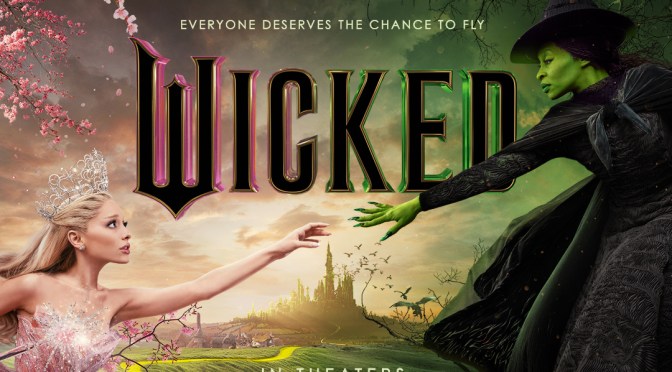
This week, our family went to the movie Wicked. For those who don’t know it (or who have been living under a rock!), this is the recently released movie based on the Broadway musical Wicked (which debuted in 2004), which itself is an adaptation of the Wizard of Oz. The movie tells the stories of Elphaba, the Wicked Witch of the West and Glinda the Good Witch of the North. As you might be able to surmise by the name, the twist of the story is to give depth and context to the Wicked Witch of the West we remember from the Wizard of Oz.
As I have often found in movies and stories, it turns out that the villains or antagonists seem to be the people that I find the most interesting. Maybe that is why Darth Vader is a favourite of Star Wars fans and the Joker a favourite of comic book fans. Heroes or protagonists can often be kind of boring and one-dimensional in movies, TV and literature. Heroes do what is right and good because it is right and good. Villans are more often portrayed as dynamic and complicated, their backstories providing deep motivations for their actions, and they do what they do for various reasons.
As we come to the Second Week of Advent, we will hear about John the Baptist, a character who is an interesting figure in the narrative of Advent. He isn’t a villain; nor is he a hero. He might even fill the role of anti-hero. He certainly is a character who challenges the norms and expectations of his day. He was born to be a temple priest like his father Zachariah, yet he eschews that calling and power to go into the wilderness. He takes on the role of hermit prophet, to preach against the powers of his world, but also to leave questions as to whether he is really speaking with the authority of God or whether he is simply a lunatic out in the desert.
He is exactly the kind of character that we find interesting, the kind of character who isn’t a hero just because it is right and good. But he is also one that challenges us, too. We wouldn’t want to become the target of his ire – as what happens to some in the third week of Advent when we hear from John again.
What John does do is serve an important rhetorical or narrative purpose. Luke paints him as a figure that we simply have to listen to; he demands that we go out into the wilderness like the rest of the crowds to hear what he has to say. And yet, he bears the apocalyptic weight of Advent that Jesus gave us last week. The Kingdom of God is breaking into our world to reclaim it from the powers of sin, suffering and death. John turns us from seeing the signs and alarm bells all around and pin-points us to Jesus, the promised Messiah who is bringing that Apocalyptic Kingdom to bear on us now.
Pastor Erik+
 The Millennial Pastor